Bạn đã bao giờ đứng trong siêu thị, nhìn chằm chằm vào những kệ hàng chật kín nước hầm xương, băn khoăn không biết nên chọn loại nào chưa? Tôi cũng từng trải qua tình huống đó, phân vân giữa nước dùng xương gà và nước dùng xương bò, cố gắng tìm ra loại nào là “thần dược” giúp tôi đạt được mục tiêu sức khỏe. Nước dùng xương đã trở thành “ngôi sao” trong lĩnh vực chăm sóc sức khỏe, được ca ngợi vì nhiều lợi ích, từ làm dịu cơn đau họng đến giúp làn da sáng mịn. Nhưng khi phải lựa chọn giữa nước dùng xương gà và nước dùng xương bò, bạn sẽ chọn loại nào? Hãy cùng đắm chìm vào thế giới sôi sục của nước hầm xương, khám phá điều gì làm nên sự độc đáo của từng loại, những lợi ích sức khỏe của chúng, và liệu bạn có nên thưởng thức cả hai hay không. Spoiler: không có câu trả lời chung cho tất cả mọi người, nhưng tôi sẽ giúp bạn tìm ra lựa chọn phù hợp nhất với bản thân.
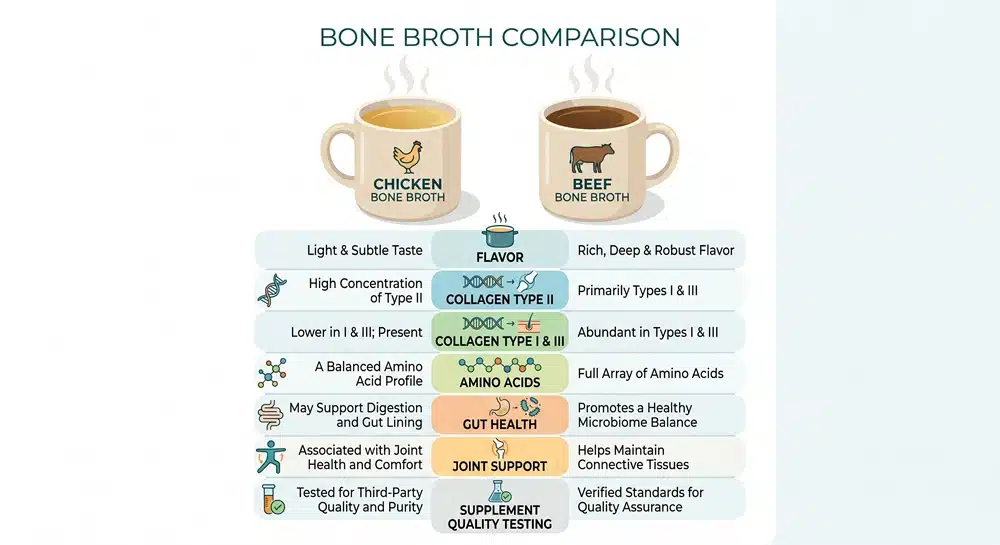
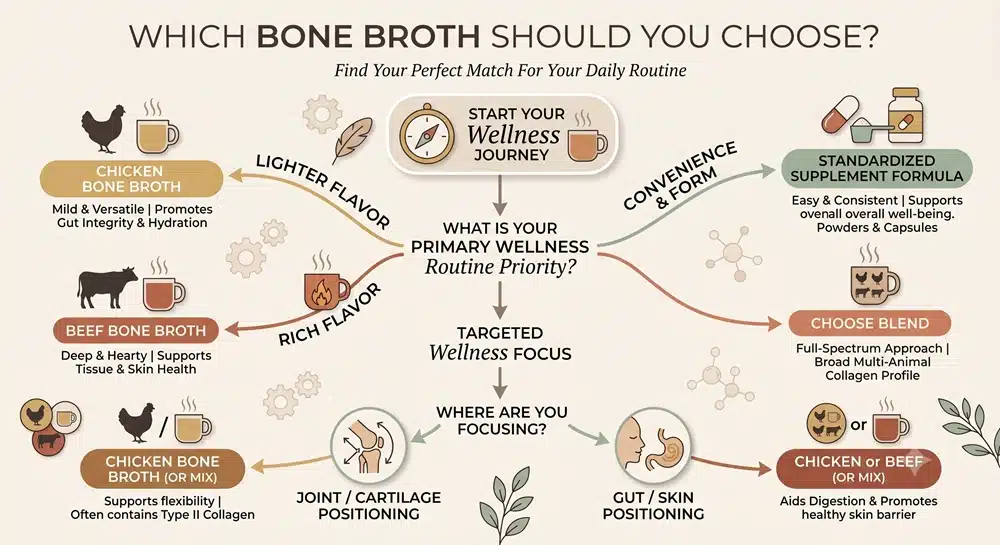
Câu trả lời ngắn gọn: Nước dùng xương gà thường là lựa chọn tốt hơn nếu bạn muốn hương vị thanh nhẹ, thời gian nấu nhanh hơn và công thức tập trung vào sụn, trong khi nước dùng xương bò thường phù hợp hơn nếu bạn muốn hương vị đậm đà hơn và thành phần collagen bò. Tuy nhiên, việc xác định loại nước dùng “tốt nhất” không chỉ phụ thuộc vào nguồn gốc động vật mà còn phụ thuộc nhiều hơn vào thành phần axit amin, hàm lượng protein, natri, kết quả kiểm tra kim loại nặng, cũng như dạng sản phẩm là nước dùng lỏng, bột hay protein nước dùng xương thủy phân.
Nước hầm xương là gì?
Nước hầm xương giống như một cái ôm ấm áp trong chiếc cốc, được chế biến bằng cách hầm xương động vật — như gà, bò, heo hay thậm chí là cá — cùng rau củ, thảo mộc và một chút giấm trong vòng 12 đến 24 giờ hoặc lâu hơn. Quá trình hầm chậm này giúp chiết xuất ra một kho tàng dinh dưỡng: collagen, axit amin, gelatin và các khoáng chất như canxi và magiê. Không giống như nước dùng thông thường, được làm từ thịt và đun nhỏ lửa chỉ trong vài giờ, thời gian nấu lâu của nước dùng xương khiến nó trở thành một nguồn dinh dưỡng dồi dào. Nó cũng không chỉ là nước dùng thông thường — nước dùng thông thường được nấu trong 4–6 giờ, trong khi nước dùng xương được nấu lâu hơn để chiết xuất từng chút dinh dưỡng.
Tại sao lại được ưa chuộng đến vậy? Nước hầm xương là một loại thực phẩm đa dụng thành phần của thực phẩm bổ sung, được sử dụng trong mọi món ăn, từ súp đến sinh tố. Đây là một thành phần không thể thiếu trong dinh dưỡng thể thao nhờ các axit amin hỗ trợ cơ bắp và thường được ca ngợi vì vai trò của nó trong Thực phẩm bổ sung cho sức khỏe khớp. Dù bạn đang nhâm nhi để giảm triệu chứng cảm lạnh hay dùng làm nền cho món hầm đậm đà, nước hầm xương chính là “ngôi sao sáng” trong bếp.
Những điều cơ bản: Nước dùng xương gà so với nước dùng xương bò
Hãy đi thẳng vào vấn đề chính: về mặt dinh dưỡng, nước dùng xương gà và nước dùng xương bò có gì khác biệt? Cả hai đều chứa rất nhiều chất dinh dưỡng, nhưng thành phần dinh dưỡng của chúng có những điểm khác biệt có thể ảnh hưởng đến quyết định của bạn.
So sánh giá trị dinh dưỡng
Hàm lượng dinh dưỡng trong nước dùng xương không cố định. Nó thay đổi tùy thuộc vào phần xương được cắt, hàm lượng sụn, thời gian nấu hoặc thủy phân, tỷ lệ cô đặc, lượng natri được bổ sung, cũng như sản phẩm cuối cùng là nước dùng sẵn uống hay bột protein nước dùng xương sấy phun. So sánh dưới đây tóm tắt những điểm khác biệt phổ biến, nhưng các thương hiệu thực phẩm bổ sung nên xác minh quyết định cuối cùng bằng Giấy chứng nhận phân tích (COA) cụ thể cho từng lô sản phẩm, đặc biệt là đối với các thành phần như axit amin, protein, natri, tro và kim loại nặng.
| Yếu tố | Nước dùng xương gà | Nước dùng xương bò | Trường hợp sử dụng tốt nhất |
|---|---|---|---|
| Hương vị đặc trưng | Nhẹ hơn, tinh khiết hơn, dễ sử dụng hơn trong các món súp, nước sốt và các sản phẩm uống. | Vị đậm đà hơn, sâu lắng hơn, thơm ngon hơn, phù hợp hơn cho các món ăn thịnh soạn và định vị nước dùng cao cấp. | Thịt gà vì tính linh hoạt; thịt bò vì hương vị đậm đà. |
| Các vị trí thường gặp của collagen | Thường được liên kết với collagen loại II có nguồn gốc từ sụn khi sử dụng chân gà, xương ức hoặc các bộ phận giàu sụn. | Thường được liên kết với các nguồn collagen loại I và III từ xương và mô liên kết của bò. | Thịt gà dùng để tác động lên khớp và sụn; thịt bò dùng để nuôi dưỡng da, đường ruột và cung cấp peptide collagen. |
| Lượng protein trong mỗi cốc | Thường khoảng 9–12 g mỗi cốc, nhưng có thể thay đổi tùy theo công thức và nồng độ. | Thường khoảng 8–10 g mỗi cốc, nhưng có thể thay đổi tùy theo công thức và nồng độ. | Luôn kiểm tra nhãn thông tin dinh dưỡng hoặc COA. |
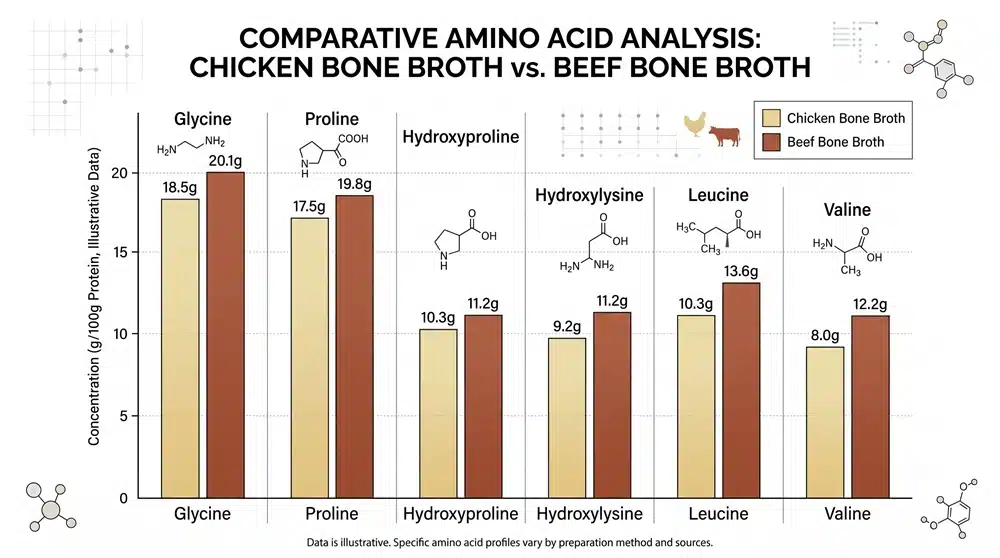
| Thành phần axit amin | Theo các dữ liệu mẫu thương mại đã công bố, nước dùng gà có hàm lượng glycine, proline, hydroxyproline, leucine, isoleucine và valine cao hơn một chút so với nước dùng bò. | Theo dữ liệu mẫu thương mại đã công bố, nước dùng thịt bò có hàm lượng hydroxylysine cao hơn một chút. | Đừng chỉ dựa vào nguồn gốc động vật; hãy yêu cầu bản báo cáo phân tích (COA) về các axit amin. |
| Khoáng chất và natri | Điều này phụ thuộc rất nhiều vào công thức, lượng muối được thêm vào, nồng độ và quá trình lọc. | Điều này phụ thuộc rất nhiều vào công thức, lượng muối được thêm vào, nồng độ và quá trình lọc. | Kiểm tra hàm lượng natri, tro, canxi, magiê và kali trong mỗi khẩu phần. |
| Vấn đề về chất lượng trong ngành công nghiệp | Vi sinh học, natri, độ ổn định khi sấy phun, khả năng truy xuất nguồn gốc từ gia cầm, và các tuyên bố về chất gây dị ứng/nhãn mác. | Kiểm tra hàm lượng kim loại nặng, truy xuất nguồn gốc từ bò, tuyên bố về chăn nuôi bằng cỏ, độ ổn định của phương pháp sấy phun và vi sinh học. | Cả hai đều yêu cầu phải thực hiện phân tích thành phần (COA) và kiểm tra chất gây ô nhiễm ở cấp lô. |
- Protein: Nước dùng xương gà có hàm lượng protein cao hơn một chút, khoảng 12 gam trên 250 ml so với 10 gam của nước dùng xương bò. Điều này khiến nó trở thành lựa chọn tuyệt vời cho những ai quan tâm đến việc phục hồi cơ bắp, đặc biệt là trong lĩnh vực dinh dưỡng thể thao.
- Collagen: Nước dùng xương bò, thường được nấu từ những loại xương dày đặc hơn, thường chứa nhiều collagen hơn, đặc biệt là collagen loại I và III, vốn rất quan trọng đối với làn da và sức khỏe đường ruột. Nước dùng xương gà rất giàu collagen loại II, một thành phần chủ chốt trong các sản phẩm bổ sung dành cho sức khỏe khớp.
- Axit amin: Nước dùng gà chứa hàm lượng cao hơn các axit amin chuỗi nhánh (BCAA) như leucine, giúp hỗ trợ sự phát triển cơ bắp. Ngược lại, nước dùng bò lại chứa nhiều glycine và proline hơn, giúp phục hồi hệ tiêu hóa và cải thiện giấc ngủ.
- Chất điện giải: Nước dùng xương gà chứa nhiều chất điện giải giúp bù nước như kali và magiê, khiến nó trở thành lựa chọn hàng đầu để bù nước.
- Axit béo: Nước dùng xương bò từ những con bò được chăn thả tự nhiên thường có tỷ lệ omega-3 so với omega-6 tốt hơn, điều này có thể giúp giảm viêm so với nước dùng gà từ những con gà được nuôi bằng ngũ cốc.
Cả hai loại đều có hàm lượng calo thấp, thường dao động từ 30–60 calo mỗi cốc, tùy thuộc vào cách chế biến. Nước dùng tự nấu có thể chứa ít chất phụ gia hơn, trong khi các sản phẩm mua sẵn có thể khác nhau về hàm lượng natri và protein.
Tại sao COA của axit amin lại quan trọng hơn nguồn gốc động vật
Nhiều bài báo đơn giản hóa việc so sánh bằng cách khẳng định rằng “thịt gà tốt cho khớp” và “thịt bò tốt cho ruột và da”. Điều này có giá trị định hướng, nhưng chưa đủ để xây dựng công thức thực phẩm bổ sung. Một phân tích năm 2019 về nước hầm xương thương mại do Shaw và Flynn thực hiện đã định lượng 19 loại axit amin trong các mẫu nước hầm xương bò, gà và gà tây, và cho thấy rằng thành phần axit amin cuối cùng có thể khác với những giả định phổ biến trong tiếp thị.
Ví dụ, trong các mẫu thương mại được phân tích, nước dùng xương gà có hàm lượng glycine, proline, hydroxyproline, leucine, isoleucine và valine cao hơn một chút so với nước dùng xương bò, trong khi nước dùng xương bò lại có hàm lượng hydroxylysine cao hơn một chút. Điều này không có nghĩa là mọi loại nước dùng gà đều tốt hơn. Điều này có nghĩa là nguồn gốc động vật đơn thuần không phải là một tiêu chí đáng tin cậy. Đối với các thương hiệu thực phẩm bổ sung, câu hỏi đúng không chỉ là “gà hay bò?” mà là “báo cáo phân tích (COA) cụ thể của lô hàng đó cho thấy điều gì?”
| Axit amin, mg/g sản phẩm | Nước dùng xương bò | Nước dùng xương gà | Giải thích thực tiễn |
|---|---|---|---|
| Glycine | 3,709 ± 0,059 | 4,063 ± 0,027 | Hàm lượng thịt gà trong bộ mẫu này cao hơn; hãy kiểm tra lại bằng COA. |
| Proline | 2,211 ± 0,034 | 2,440 ± 0,078 | Trong bộ mẫu này, hàm lượng thịt gà cao hơn; điều này có liên quan đến vị trí của collagen. |
| Hydroxyproline | 1,967 ± 0,314 | 2,158 ± 0,017 | Trong bộ mẫu này, hàm lượng thịt gà cao hơn; đây là một chỉ số hữu ích để đánh giá collagen. |
| Hydroxylysine | 0,285 ± 0,006 | 0,276 ± 0,003 | Trong bộ mẫu này, hàm lượng thịt bò cao hơn một chút. |
| Leucine | 0,726 ± 0,011 | 1,053 ± 0,036 | Thịt gà có hàm lượng protein cao hơn, nhưng nước dùng xương vẫn chưa phải là một nguồn protein thể thao hoàn chỉnh. |
| Valine | 0,487 ± 0,008 | 0,645 ± 0,022 | Hàm lượng protein trong thịt gà cao hơn, điều này khẳng định sự cần thiết phải tiến hành xét nghiệm đầy đủ các axit amin. |
Ghi chú nguồn: Các giá trị này được trích dẫn từ nghiên cứu của Shaw & Flynn (2019), dựa trên các mẫu nước hầm xương thương mại. Chúng nên được trích dẫn như một ví dụ từ phân tích đã công bố, chứ không phải là một đảm bảo chung cho mọi sản phẩm.
Những điểm tương đồng và khác biệt trong Nước dùng xương gà so với nước dùng xương bò Lợi ích cho sức khỏe?

Cả hai loại nước dùng đều có những lợi ích cơ bản giống nhau, nhưng thành phần dinh dưỡng riêng biệt của mỗi loại mang lại những ưu điểm riêng.
Lợi ích chung
- Sức khỏe đường ruột: Chất gelatin và các axit amin có trong cả hai loại nước dùng đều giúp phục hồi niêm mạc ruột, từ đó có thể làm giảm các vấn đề như hội chứng ruột rò rỉ. Điều này khiến chúng trở thành những thành phần bổ sung dinh dưỡng quý giá cho sức khỏe hệ tiêu hóa.
- Sức khỏe xương khớp: Collagen hỗ trợ sụn và mô liên kết, từ đó có thể giúp giảm đau và cứng khớp.
- Sức khỏe làn da: Collagen giúp tăng cường độ đàn hồi và độ ẩm cho da, từ đó có thể làm giảm nếp nhăn.
- Hỗ trợ hệ miễn dịch: Các chất dinh dưỡng như axit amin và khoáng chất giúp tăng cường hệ miễn dịch, hỗ trợ cơ thể chống lại cảm lạnh và các bệnh nhiễm trùng.
Những lợi ích độc đáo
Nước dùng xương gà:
- Sức khỏe xương khớp: Rich in chicken collagen type II, it’s particularly effective for joint health. A study published in Chất dinh dưỡng đã phát hiện ra rằng collagen loại II có thể làm giảm cơn đau đầu gối ở bệnh nhân bị viêm khớp thoái hóa.
- Sức khỏe làn da: Loại collagen này có thể giúp cải thiện độ ẩm cho da và làm mờ nếp nhăn, nhờ đó trở thành một chất hỗ trợ làm đẹp tự nhiên.
- Phục hồi cơ bắp: Hàm lượng BCAA cao giúp hỗ trợ sự phát triển và phục hồi cơ bắp, rất lý tưởng cho các vận động viên hoặc những người quan tâm đến dinh dưỡng thể thao.
Nước dùng xương bò:
- Sức khỏe đường ruột: Hàm lượng glycine cao giúp thúc đẩy quá trình sản xuất axit dạ dày và phục hồi niêm mạc ruột, khiến nó trở thành lựa chọn hàng đầu cho sức khỏe hệ tiêu hóa.
- Giấc ngủ và tâm trạng: Glycine có thể giúp rút ngắn thời gian đi vào giấc ngủ và cải thiện chất lượng giấc ngủ, đồng thời tăng cường serotonin để cải thiện tâm trạng.
- Mức năng lượng: Xương dày đặc hơn cung cấp nhiều khoáng chất hơn, điều này có thể giúp tăng cường năng lượng và dinh dưỡng tổng thể.
Những lợi ích này phụ thuộc vào các yếu tố như chất lượng xương và thời gian nấu. Xương từ gia súc được nuôi bằng cỏ hoặc chăn thả thường cho ra nước dùng giàu dinh dưỡng hơn.
Hương vị và cách sử dụng trong ẩm thực của nước dùng xương gà và xương bò
Hương vị có thể là yếu tố quyết định khi phải lựa chọn giữa nước dùng xương gà và bò. Dưới đây là so sánh giữa chúng:
- Nước dùng xương gà: Vị nhẹ nhàng, tinh tế khiến nó trở thành một nguyên liệu đa năng trong bếp. Bạn có thể dùng nó trong súp, nước sốt, risotto, hay thậm chí là sinh tố để bổ sung dinh dưỡng mà không làm lấn át hương vị của các nguyên liệu khác. Nó cũng rất ngon khi thưởng thức nguyên chất cùng một chút muối và tiêu.
- Nước dùng xương bò: Vị đậm đà và nồng nàn, loại nước dùng này rất phù hợp với các món ăn đậm đà như thịt bò hầm, món chili hay súp hành kiểu Pháp. Vị đậm đà của nó có thể không phù hợp lắm với các công thức nấu ăn nhẹ nhàng, nhưng lại tỏa sáng trong các món ăn ấm cúng.
Tôi thấy nước dùng xương gà là lựa chọn hàng đầu của mình cho những món súp nhanh gọn vào các buổi tối trong tuần, trong khi nước dùng xương bò lại làm tăng thêm hương vị cho các công thức nấu ăn bằng nồi hầm chậm vào cuối tuần. Sự lựa chọn của bạn có thể phụ thuộc vào việc bạn thích hương vị nhẹ nhàng hay đậm đà.
Sử dụng chúng cùng nhau có tốt hơn không?
Tại sao phải chọn một trong hai khi bạn có thể có cả hai? Kết hợp nước dùng xương gà và xương bò có thể mang lại sự cân bằng dinh dưỡng. Ví dụ, bạn sẽ nhận được collagen loại II giúp hỗ trợ khớp từ gà và glycine giúp phục hồi hệ tiêu hóa từ bò. Cách làm này giống như việc tạo ra một công thức tùy chỉnh Vì sức khỏe của bạn, kết hợp những điều tốt nhất từ cả hai thế giới.
Trong thực tế, bạn có thể dùng nước dùng xương gà cho các món ăn nhẹ nhàng và nước dùng xương bò cho các món đậm đà hơn, hoặc kết hợp cả hai trong công thức nấu ăn để tạo ra hương vị phong phú. Một số công ty thậm chí còn cung cấp các sản phẩm nước dùng xương pha trộn, thường được quảng cáo là chứa peptide collagen từ xương bò để mang lại thêm lợi ích cho sức khỏe.
Cuối cùng, quyết định phụ thuộc vào mục tiêu của bạn. Nếu bạn quan tâm đến sức khỏe khớp, hãy chọn thịt gà. Còn nếu muốn cải thiện sức khỏe đường ruột hoặc giấc ngủ, thịt bò có thể là lựa chọn phù hợp. Hoặc, nếu bạn cũng giống tôi và thích sự đa dạng, hãy dự trữ cả hai loại trong tủ lạnh để phục vụ cho các công thức nấu ăn và nhu cầu sức khỏe khác nhau.
Từ góc nhìn của nhà sản xuất: Cách đánh giá chất lượng bột nước hầm xương
Đối với người tiêu dùng, việc lựa chọn giữa nước dùng xương gà và nước dùng xương bò có thể phụ thuộc vào khẩu vị và mục tiêu sức khỏe. Đối với các thương hiệu thực phẩm bổ sung, quyết định này mang tính kỹ thuật hơn. Một sản phẩm bột nước dùng xương cao cấp cần được đánh giá dựa trên các tiêu chí như khả năng truy xuất nguồn gốc, thành phần axit amin, hàm lượng protein, hàm lượng tro, hàm lượng natri, độ hòa tan, khả năng che lấp hương vị, giới hạn vi sinh vật và kiểm tra kim loại nặng.
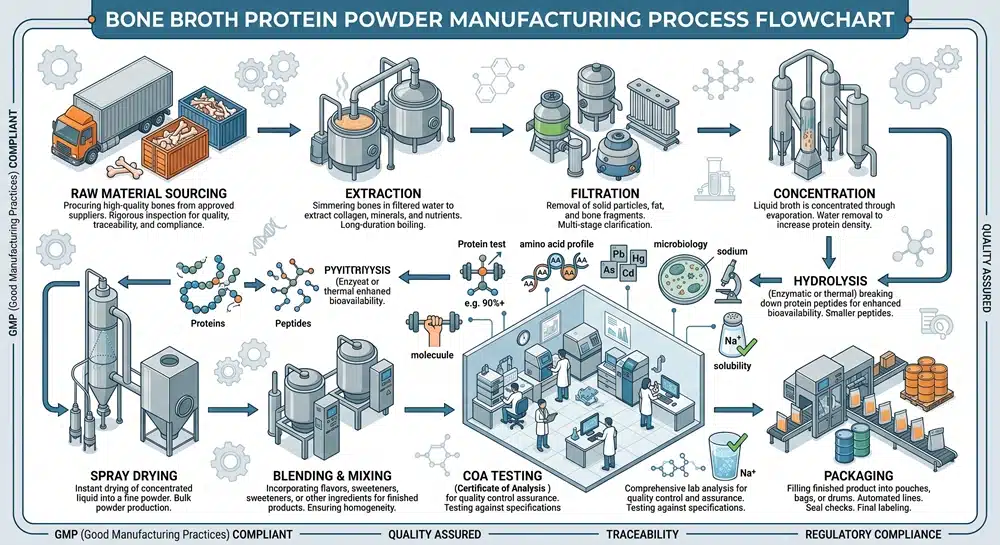
Trong sản xuất công nghiệp, xương và mô liên kết được chiết xuất, lọc, cô đặc và thường được sấy phun thành bột. Một quy trình được kiểm soát chặt chẽ cần đảm bảo chất lượng protein đồng thời loại bỏ lượng mỡ dư thừa, kiểm soát mùi và duy trì tính ổn định của bột thành phẩm khi đóng gói trong thùng, gói nhỏ, viên nang hoặc các hỗn hợp đồ uống chức năng.
| Chỉ số chất lượng | Những câu hỏi cần đặt ra cho nhà cung cấp | Tại sao điều này lại quan trọng |
|---|---|---|
| Nguồn nguyên liệu | Bò ăn cỏ, gà nuôi thả vườn, cam kết không sử dụng kháng sinh, nước xuất xứ, giấy tờ chứng nhận sức khỏe động vật. | Hỗ trợ các thông tin trên nhãn sản phẩm, khả năng truy xuất nguồn gốc và định vị sản phẩm cao cấp. |
| Hàm lượng protein và thành phần axit amin | Xác định hàm lượng protein theo phương pháp Kjeldahl hoặc Dumas; báo cáo phân tích thành phần (COA) đầy đủ về các axit amin, bao gồm glycine, proline, hydroxyproline, leucine, valine và isoleucine. | Giúp tránh những tuyên bố mơ hồ về collagen và đảm bảo tính chính xác của công thức. |
| Tro và natri | Tổng hàm lượng tro, natri trên mỗi khẩu phần, canxi, magiê, kali, phốt pho. | Hàm lượng tro hoặc natri cao có thể khiến sản phẩm trông “giàu khoáng chất” nhưng lại làm giảm mức độ phù hợp với người tiêu dùng. |
| Phản ứng thủy phân và độ hòa tan | Mức độ thủy phân, phân bố khối lượng phân tử, khả năng hòa tan tức thì, khả năng phân tán và thử nghiệm lắng cặn. | Rất quan trọng đối với các sản phẩm bột pha sẵn, gói nhỏ, kem pha cà phê, súp và gói dạng que. |
| Kim loại nặng | Xét nghiệm ICP-MS theo lô để xác định hàm lượng chì, cadmium, asen và thủy ngân. | Xương động vật có thể tự nhiên tích tụ các chất ô nhiễm từ môi trường, do đó việc kiểm nghiệm là điều cần thiết để tạo niềm tin. |
| Vi sinh học | Tổng số vi sinh vật, nấm men và nấm mốc, E. coli, Salmonella, Staphylococcus aureus và vi khuẩn coliform. | Yêu cầu đối với các loại bột có thể bảo quản ở nhiệt độ phòng và các thủ tục giấy tờ xuất khẩu quốc tế. |
| Hồ sơ cảm quan | Màu sắc, mùi, hương vị, dư vị và khả năng che lấp. | Xác định xem thành phần đó có phù hợp với các công thức có hương vani, sô-cô-la, cà phê, súp hay các món mặn hay không. |
Cách tự nấu nước hầm xương
Bạn muốn thử làm nước hầm xương? Việc này dễ hơn bạn tưởng, dù có tốn chút thời gian. Dưới đây là hướng dẫn nhanh:
Công thức nấu nước dùng xương gà
- Thành phần: 2–3 lbs xương gà (xương thân, cổ, chân), 1 củ hành tây, 2 củ cà rốt, 2 cọng cần tây, 2 muỗng canh giấm táo, các loại thảo mộc (lá nguyệt quế, cỏ xạ hương), nước.
- Các bước: Cho xương vào nồi hoặc nồi hầm chậm, thêm rau củ, giấm và các loại thảo mộc. Đổ nước ngập mặt. Đun sôi, sau đó để lửa nhỏ trong 12–24 giờ. Lọc lấy nước và bảo quản.
Công thức nấu nước dùng xương bò
- Thành phần: 2–3 lbs xương bò (xương tủy, xương khớp), 1 củ hành tây, 2 củ cà rốt, 2 cọng cần tây, 2 muỗng canh giấm táo, các loại rau thơm, nước.
- Các bước: Tùy chọn: Nướng xương ở nhiệt độ 400°F trong 30 phút. Cho vào nồi, thêm rau củ, giấm và các loại thảo mộc. Đổ nước ngập mặt. Đun nhỏ lửa trong 24–48 giờ. Lọc lấy nước và bảo quản.
Sử dụng xương chất lượng cao, từ gia súc được nuôi bằng cỏ hoặc chăn thả tự nhiên sẽ đảm bảo nước dùng giàu dinh dưỡng và không chứa chất phụ gia.
Nước dùng tự nấu so với bột protein nước dùng xương sản xuất công nghiệp
Nước hầm xương tự làm rất tuyệt vời để nấu ăn và uống hàng ngày, nhưng chất lượng của nó không đồng đều. Hai mẻ nước hầm xương tự làm có thể khác nhau về hàm lượng protein, natri, độ đặc của gelatin, hàm lượng chất béo, hương vị và nồng độ axit amin. Bột protein nước hầm xương công nghiệp được thiết kế để đảm bảo tính nhất quán: nhà sản xuất có thể kiểm tra từng lô sản phẩm, kiểm soát độ ẩm, giảm nguy cơ nhiễm vi sinh vật và cung cấp Báo cáo Phân tích Thành phần (COA) về protein, axit amin, kim loại nặng và vi sinh vật.
- Hãy chọn nước dùng tự nấu nếu bạn muốn tận hưởng hương vị tươi ngon, sự linh hoạt trong nấu nướng và một nghi thức ẩm thực từ thực phẩm nguyên chất.
- Chọn bột nước hầm xương nếu bạn cần hàm lượng protein được kiểm soát chính xác, thời hạn sử dụng ổn định, công thức có thể tái tạo và dễ sử dụng hơn trong các sản phẩm thực phẩm bổ sung.
- Chọn hỗn hợp thịt gà và thịt bò Nếu mục tiêu là trình bày một bức tranh toàn cảnh hơn về vị trí của collagen: thịt gà để truyền tải thông điệp về sụn và collagen loại II, còn thịt bò để trình bày về vị trí của collagen loại I và III ở bò.
Câu hỏi thường gặp
Nước dùng xương gà hay xương bò tốt hơn?
Không có loại nào được coi là tốt hơn một cách tuyệt đối. Nước dùng xương gà thường có hương vị nhạt hơn và phù hợp với các công thức tập trung vào sụn, trong khi nước dùng xương bò có hương vị đậm đà hơn và rất hiệu quả trong việc cung cấp collagen bò. Đối với các thương hiệu thực phẩm bổ sung, lựa chọn tốt hơn phụ thuộc vào Báo cáo phân tích thành phần (COA): hàm lượng protein, axit amin, natri, tro, các chỉ tiêu vi sinh và kết quả kiểm tra kim loại nặng.
Loại nước hầm xương nào chứa nhiều collagen nhất?
Nước dùng xương bò thường được quảng cáo là giàu collagen vì xương và mô liên kết của bò là những nguồn dồi dào collagen loại I và III. Tuy nhiên, hàm lượng collagen trong nước dùng lỏng có sự dao động rất lớn. Nước dùng gà được nấu từ chân gà, xương ức hoặc các bộ phận giàu sụn cũng có thể chứa hàm lượng cao các axit amin có nguồn gốc từ collagen. Hãy kiểm tra dữ liệu về protein và hydroxyproline trên Bảng phân tích thành phần (COA).
Nước dùng xương gà có tốt hơn cho việc giảm cân không?
Nước dùng xương gà có thể hữu ích trong các chế độ ăn kiêng kiểm soát cân nặng vì nó nhẹ, ấm, đậm đà và thường ít calo, đồng thời cung cấp một lượng protein nhất định. Tuy nhiên, nó không trực tiếp giúp giảm mỡ. Việc kiểm soát cân nặng vẫn phụ thuộc vào tổng lượng calo, lượng protein nạp vào, mức độ hoạt động thể chất và sự kiên trì trong chế độ ăn uống.
Tôi có thể dùng nước dùng xương gà thay cho nước dùng xương bò được không?
Đúng vậy, đối với nhiều món súp, nước sốt, các loại ngũ cốc và các công thức đồ uống, nước dùng xương gà có thể thay thế cho nước dùng xương bò. Hương vị sẽ nhẹ nhàng hơn và thiếu đi độ đậm đà từ hương vị nướng. Đối với các món ăn có hương vị đậm đà như thịt bò hầm, món chili, nước sốt thịt hoặc súp hành kiểu Pháp, nước dùng xương bò thường mang lại hương vị đậm đà hơn.
Nước hầm xương có giống với nước dùng gà hoặc bò thông thường không?
Không hẳn vậy. Nước dùng thông thường thường được nấu trong thời gian ngắn hơn và có thể được chế biến với lượng thịt nhiều hơn xương. Nước dùng xương thường được hầm trong thời gian dài hơn nhiều cùng với xương và mô liên kết, giúp chiết xuất được nhiều gelatin và các axit amin có nguồn gốc từ collagen hơn. Giá trị dinh dưỡng cụ thể vẫn phụ thuộc vào công thức chế biến.
Có nên kiểm tra hàm lượng kim loại nặng trong bột nước hầm xương không?
Đúng vậy. Vì xương có thể tích tụ các chất từ môi trường, nên các thành phần của nước dùng xương cần được kiểm tra hàm lượng chì, cadmium, asen và thủy ngân. Đối với các sản phẩm thực phẩm chức năng, hãy yêu cầu bản báo cáo phân tích (COA) dành riêng cho từng lô sản phẩm, tốt nhất là sử dụng các phương pháp đã được xác nhận như ICP-MS, kèm theo dữ liệu về vi sinh vật và hàm lượng protein.
Nước hầm xương có phải là nguồn protein hoàn chỉnh không?
Nước hầm xương có thể cung cấp protein, nhưng protein có nguồn gốc từ collagen tự nhiên lại thiếu một số axit amin thiết yếu, đặc biệt là tryptophan. Do đó, nó không nên thay thế các nguồn protein hoàn chỉnh như whey, protein bò, trứng, các sản phẩm từ sữa, cá hoặc các loại đậu nếu mục tiêu là một chế độ dinh dưỡng hoàn chỉnh để xây dựng cơ bắp.
Các thương hiệu có thể pha trộn nước dùng xương gà và xương bò với nhau không?
Đúng vậy. Một công thức pha trộn theo tỷ lệ 1:1 hoặc được tùy chỉnh có thể mở rộng câu chuyện về định vị collagen bằng cách kết hợp thông điệp về sụn gà và collagen loại II với định vị collagen loại I và III từ bò. Đối với các sản phẩm mang nhãn hiệu riêng, cần xác nhận các chỉ tiêu về hương vị, độ hòa tan, hàm lượng natri và axit amin trước khi hoàn thiện công thức.
Kết luận
Trong cuộc đối đầu giữa Nước dùng xương gà so với nước dùng xương bò, không có loại nào thực sự vượt trội hơn – cả hai đều là những nguồn dinh dưỡng dồi dào với những lợi ích riêng biệt. Nước hầm xương gà là người bạn đồng hành đắc lực cho sức khỏe khớp, làn da rạng rỡ và quá trình phục hồi cơ bắp, trong khi nước hầm xương bò lại nổi trội trong việc hỗ trợ sức khỏe đường ruột, giấc ngủ và tăng cường năng lượng. Việc bạn chọn một trong hai, cả hai hay kết hợp cả hai đều phụ thuộc vào sở thích, mục tiêu sức khỏe và phong cách nấu nướng của bạn. Vậy nên, hãy chuẩn bị một chiếc cốc, thử nghiệm cả hai loại và khám phá xem loại nước hầm xương nào sẽ khiến cơ thể và vị giác của bạn thực sự hài lòng.
Tài liệu tham khảo
[1] Current target page – Chicken Bone Broth vs Beef Bone Broth: https://collagensei.com/chicken-bone-broth-vs-beef-bone-broth/
[2] Harvard Health – Savoring the benefits of bone broth: https://www.health.harvard.edu/diet-and-nutrition/savoring-the-benefits-of-bone-broth-worth-a-taste
[3] Shaw & Flynn, 2019 – Amino acid content of beef, chicken, and turkey bone broth: https://www.westmont.edu/sites/default/files/users/user1231/V19No4/Nick%20Flynn_final.pdf
[4] Alcock et al., 2019 – Bone broth unlikely to provide reliable concentrations of collagen precursors: https://pubmed.ncbi.nlm.nih.gov/29893587/
[5] Verywell Health – Bone broth benefits and limitations: https://www.verywellhealth.com/bone-broth-7967614
[6] FDA – Environmental contaminants in food and dietary supplements: https://www.fda.gov/food/chemical-contaminants-pesticides/environmental-contaminants-food
[7] FDA – Testing results for arsenic, lead, cadmium and mercury: https://www.fda.gov/food/environmental-contaminants-food/testing-results-arsenic-lead-cadmium-and-mercury
[8] NSF – Supplement and vitamin certification: https://www.nsf.org/consumer-resources/articles/supplement-vitamin-certification
[9] Hsu et al., 2017 – Essential and toxic metals in animal bone broths: https://pubmed.ncbi.nlm.nih.gov/28804437/
[10] Schwartz & Park, 2012 – Hydrolyzed chicken sternal cartilage extract: https://pubmed.ncbi.nlm.nih.gov/22956862/

Warren Wan là một chuyên gia dày dạn với kinh nghiệm phong phú trong chuỗi cung ứng thực phẩm bổ sung, sở hữu kinh nghiệm thực tiễn sâu rộng trong nghiên cứu, phát triển, kiểm soát quy trình và tìm nguồn cung ứng toàn cầu các thành phần cốt lõi như peptit collagen, protein từ nước hầm xương và keratin. Với tư cách là tác giả của chuyên mục này, ông cam kết loại bỏ những lớp bao bọc tiếp thị, biến những kiến thức khoa học phức tạp về thành phần và các tiêu chuẩn kiểm soát chất lượng sản xuất thành những nội dung phổ biến khoa học dễ hiểu nhưng sâu sắc, giúp độc giả hiểu rõ sự thật đằng sau các nhãn mác và đưa ra những lựa chọn sức khỏe hợp lý hơn.