
Have you ever stood in the grocery store, staring at shelves packed with bone broth, wondering which one to grab? I’ve been there, torn between chicken and beef, trying to figure out which is the magic elixir for my health goals. Bone broth has become a wellness darling, praised for everything from soothing sore throats to boosting skin glow. But when it comes to chicken bone broth vs beef bone broth, how do you choose? Let’s dive into the simmering world of bone broth, exploring what makes each unique, their health benefits, and whether you might want to sip both. Spoiler: there’s no one-size-fits-all answer, but I’ll help you find what’s best for you.
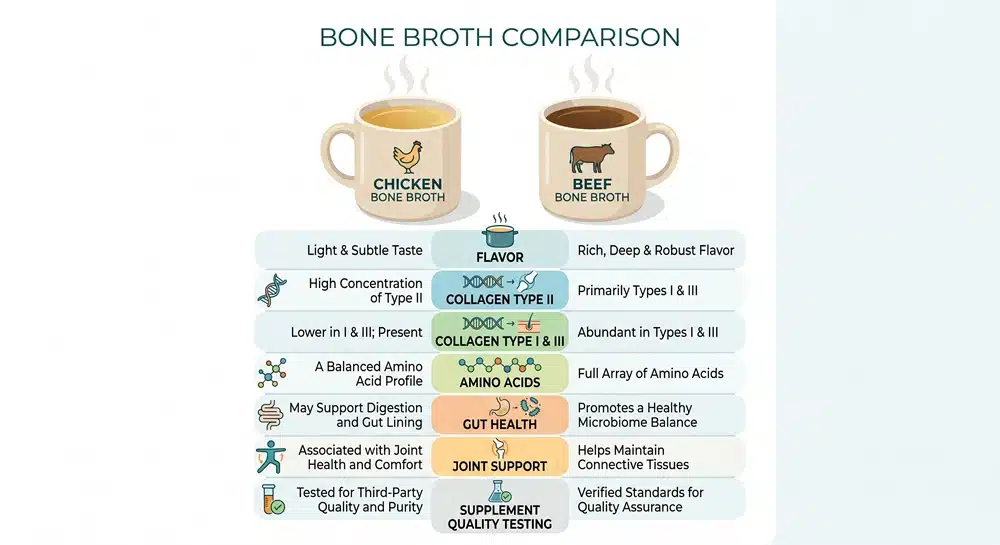
Quick answer: Chicken bone broth is usually the better choice for a lighter flavor, faster cooking, and cartilage-focused formulas, while beef bone broth is usually better for a richer taste and bovine collagen positioning. However, the “best” broth depends less on the animal source alone and more on the amino acid profile, protein level, sodium, heavy-metal testing, and whether the product is liquid broth, powder, or hydrolyzed bone broth protein.
What is Bone Broth?
Bone broth is like a warm hug in a mug, crafted by simmering animal bones—think chicken, beef, pork, or even fish—with veggies, herbs, and a splash of vinegar for 12 to 24 hours or more. This slow process pulls out a treasure trove of nutrients: collagen, amino acids, gelatin, and minerals like calcium and magnesium. Unlike regular broth, which is made from meat and simmers for just a couple of hours, bone broth’s long cook time makes it a nutrient powerhouse. It’s not just stock either—stock cooks for 4–6 hours, while bone broth goes the extra mile to extract every bit of goodness.
Why the hype? Bone broth is a versatile dietary supplement ingredient, used in everything from soups to smoothies. It’s a staple in sports nutrition for its muscle-supporting amino acids and is often touted for its role in joint health supplements. Whether you’re sipping it to soothe a cold or using it as a base for a hearty stew, bone broth is a kitchen MVP.
The Basics: Chicken Bone Broth vs Beef Bone Broth
Let’s get to the meat (or bones) of the matter: how do chicken and beef bone broth stack up nutritionally? Both are packed with nutrients, but their profiles differ in ways that might sway your choice.
Nutritional Comparison
Nutrition in bone broth is not fixed. It changes with the bone cut, cartilage level, cooking or hydrolysis time, concentration ratio, sodium addition, and whether the final product is a ready-to-drink broth or a spray-dried bone broth protein powder. The comparison below summarizes common differences, but supplement brands should verify the final decision with a lot-specific Certificate of Analysis (COA), especially for amino acids, protein, sodium, ash, and heavy metals.
| Factor | Chicken Bone Broth | Beef Bone Broth | Best Use Case |
|---|---|---|---|
| Typical flavor | Lighter, cleaner, easier to use in soups, sauces, and sipping products. | Richer, deeper, more savory, better for hearty recipes and premium broth positioning. | Chicken for versatility; beef for rich flavor. |
| Common collagen positioning | Often associated with cartilage-derived type II collagen when chicken feet, sternum, or cartilage-rich parts are used. | Often associated with bovine type I and III collagen sources from bones and connective tissue. | Chicken for joint/cartilage messaging; beef for skin/gut/collagen peptide positioning. |
| Protein per cup | Often around 9-12 g per cup, but varies by recipe and concentration. | Often around 8-10 g per cup, but varies by recipe and concentration. | Always verify the nutrition label or COA. |
| Amino acid profile | Published commercial sample data found chicken broth slightly higher than beef in glycine, proline, hydroxyproline, leucine, isoleucine, and valine. | Published commercial sample data found beef broth slightly higher in hydroxylysine. | Do not rely on animal source alone; request an amino acid COA. |
| Minerals and sodium | Depends heavily on formulation, added salt, concentration, and filtration. | Depends heavily on formulation, added salt, concentration, and filtration. | Check sodium, ash content, calcium, magnesium, and potassium per serving. |
| Industrial quality concern | Microbiology, sodium, spray-drying stability, poultry-source traceability, and allergen/label claims. | Heavy metal testing, bovine-source traceability, grass-fed claims, spray-drying stability, and microbiology. | Both require batch-level COA and contaminant testing. |
- Protein: Chicken bone broth edges out with slightly more protein, around 12 grams per 250ml compared to beef’s 10 grams. This makes it a great choice for those focused on muscle recovery, especially in sports nutrition.
- Collagen: Beef bone broth, often made from denser bones, tends to have more collagen, particularly types I and III, which are key for skin and gut health. Chicken bone broth is rich in type II collagen, a star in joint health supplements.
- Amino Acids: Chicken broth boasts higher levels of branched-chain amino acids (BCAAs) like leucine, which support muscle growth. Beef broth, however, has more glycine and proline, aiding gut repair and sleep.
- Electrolytes: Chicken bone broth contains more hydrating electrolytes like potassium and magnesium, making it a go-to for hydration.
- Fatty Acids: Beef bone broth from grass-fed cattle often has a better omega-3 to omega-6 ratio, which may reduce inflammation compared to chicken broth from grain-fed birds.
Calories in both are low, typically 30–60 per cup, depending on preparation. Homemade broths may have fewer additives, while store-bought versions can vary in sodium and protein content.
Why the Amino Acid COA Matters More Than the Animal Source
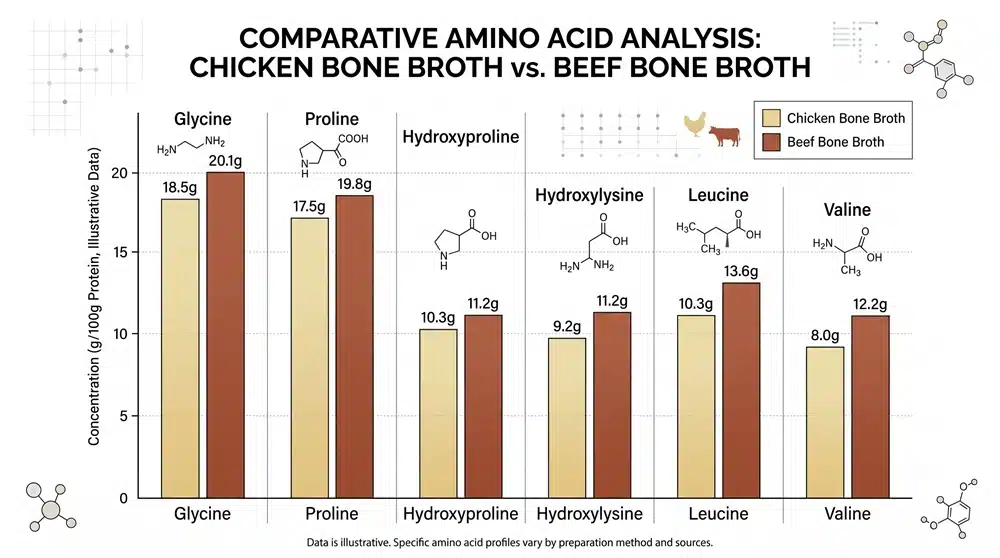
Many articles simplify the comparison by saying “chicken is for joints” and “beef is for gut and skin.” That is directionally useful, but it is not enough for dietary supplement formulation. A 2019 commercial bone broth analysis by Shaw and Flynn quantified 19 amino acids in beef, chicken, and turkey bone broth samples and showed that the final amino acid profile can differ from common marketing assumptions.
For example, in the commercial samples analyzed, chicken bone broth was slightly higher than beef bone broth in glycine, proline, hydroxyproline, leucine, isoleucine, and valine, while beef bone broth was slightly higher in hydroxylysine. This does not mean every chicken broth is superior. It means the animal source alone is not a reliable specification. For supplement brands, the correct question is not only “chicken or beef?” but “what does the lot-specific COA show?”
| Amino Acid, mg/g product | Beef Bone Broth | Chicken Bone Broth | Practical Interpretation |
|---|---|---|---|
| Glycine | 3.709 ± 0.059 | 4.063 ± 0.027 | Chicken was higher in this sample set; verify by COA. |
| Proline | 2.211 ± 0.034 | 2.440 ± 0.078 | Chicken was higher in this sample set; relevant to collagen positioning. |
| Hydroxyproline | 1.967 ± 0.314 | 2.158 ± 0.017 | Chicken was higher in this sample set; useful as a collagen marker. |
| Hydroxylysine | 0.285 ± 0.006 | 0.276 ± 0.003 | Beef was slightly higher in this sample set. |
| Leucine | 0.726 ± 0.011 | 1.053 ± 0.036 | Chicken was higher, but bone broth is still not a complete sports protein. |
| Valine | 0.487 ± 0.008 | 0.645 ± 0.022 | Chicken was higher, supporting the need for full amino acid testing. |
Source note: Values are from Shaw & Flynn, 2019, using commercial bone broth samples. They should be cited as an example from published analysis, not as a universal guarantee for every product.
Similarities and differences in chicken vs beef bone broth health benefits?

Both broths share a core set of benefits, but their unique nutrient profiles give each some distinct advantages.
Shared Benefits
- Gut Health: The gelatin and amino acids in both broths help repair the gut lining, potentially easing issues like leaky gut syndrome. This makes them valuable dietary supplement ingredients for digestive health.
- Joint Health: Collagen supports cartilage and connective tissue, which can reduce joint pain and stiffness.
- Skin Health: Collagen boosts skin elasticity and hydration, potentially reducing wrinkles.
- Immune Support: Nutrients like amino acids and minerals bolster the immune system, helping fight off colds and infections.
Unique Benefits
Chicken Bone Broth:
- Joint Health: Rich in chicken collagen type II, it’s particularly effective for joint health. A study published in Nutrients found that type II collagen can reduce knee pain in osteoarthritis patients.
- Skin Health: The same collagen type may improve skin hydration and reduce wrinkles, making it a natural beauty booster.
- Muscle Recovery: Higher BCAA content supports muscle growth and repair, ideal for athletes or those into sports nutrition.
Beef Bone Broth:
- Gut Health: Higher glycine levels promote stomach acid production and gut lining repair, making it a top pick for digestive wellness.
- Sleep and Mood: Glycine may shorten sleep onset and improve sleep quality, while also boosting serotonin for better mood.
- Energy Levels: The denser bones provide more minerals, which may enhance energy and overall nourishment.
These benefits depend on factors like bone quality and cooking time. Grass-fed or pasture-raised bones often yield a more nutrient-dense broth.
Taste and Culinary Uses of Chicken and Beef Bone Broth
Taste can be a dealbreaker when choosing between chicken and beef bone broth. Here’s how they compare:
- Chicken Bone Broth: Its light, delicate flavor makes it a kitchen chameleon. Use it in soups, sauces, risottos, or even smoothies for a nutrient boost without overpowering other ingredients. It’s also great for sipping with a pinch of salt and pepper.
- Beef Bone Broth: Bold and hearty, it’s perfect for robust dishes like beef stew, chili, or French onion soup. Its richer taste might be less versatile for lighter recipes but shines in comfort foods.
I’ve found chicken bone broth to be my go-to for quick weeknight soups, while beef bone broth elevates my weekend slow-cooker recipes. Your choice might depend on whether you prefer a subtle or strong flavor profile.
Is It Better to Use Them Together?
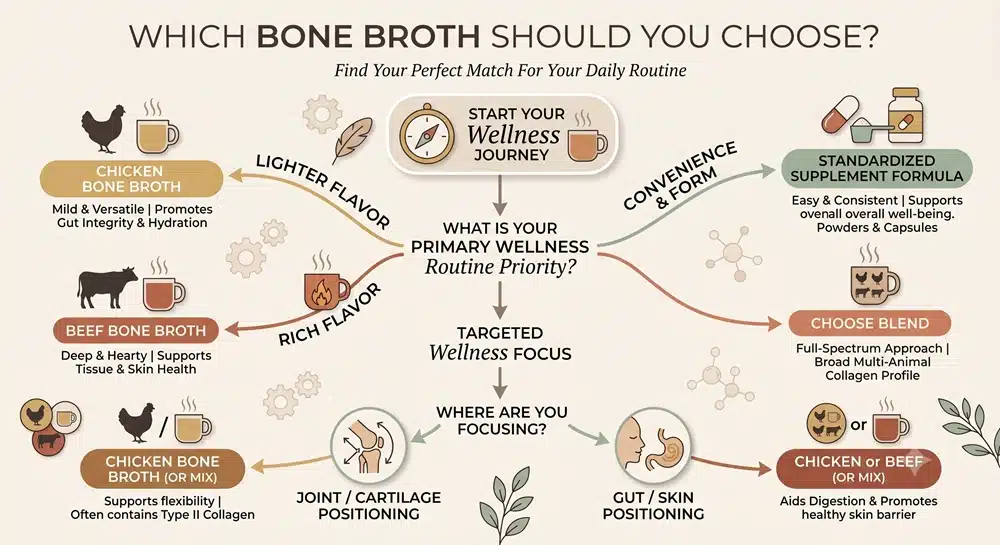
Why choose when you can have both? Combining chicken and beef bone broth can offer a balanced mix of nutrients. For example, you get the joint-supporting type II collagen from chicken and the gut-healing glycine from beef. This approach is like creating a custom formula for your health, blending the best of both worlds.
In practice, you might use chicken bone broth for lighter dishes and beef for heartier ones, or mix them in recipes for a nuanced flavor. Some companies even offer blended bone broth products, often marketed as containing bovine bone collagen peptide for added health benefits.
Ultimately, the decision comes down to your goals. If you’re focused on joint health, lean toward chicken. For gut health or better sleep, beef might be your pick. Or, if you’re like me and love variety, keep both in your pantry for different recipes and health needs.
From a Manufacturer’s Perspective: How to Evaluate Bone Broth Powder Quality
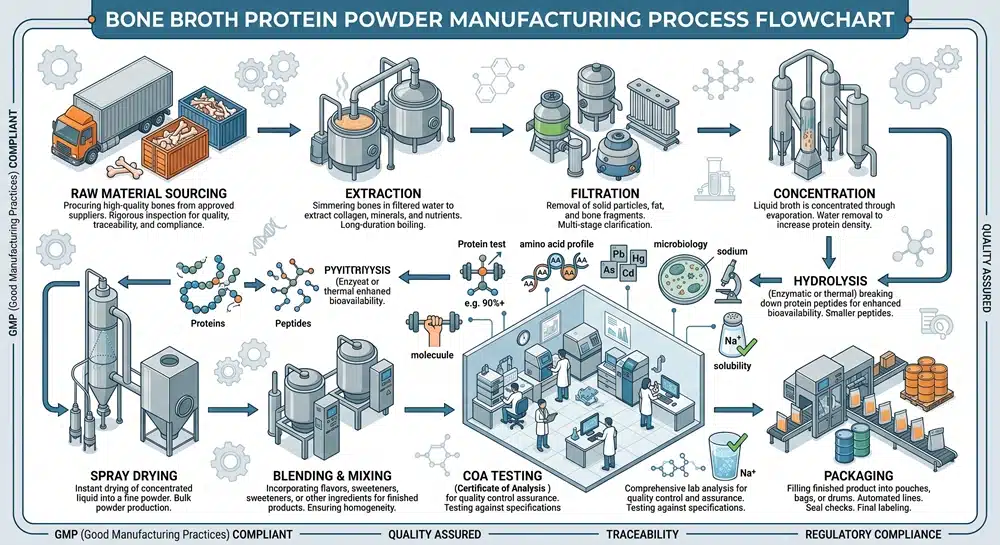
For consumers, the choice between chicken and beef bone broth may come down to taste and health goals. For supplement brands, the decision is more technical. A premium bone broth powder should be evaluated by source traceability, amino acid profile, protein level, ash content, sodium level, solubility, flavor masking, microbial limits, and heavy-metal testing.
In industrial production, bones and connective tissues are extracted, filtered, concentrated, and often spray-dried into powder. A well-controlled process should protect protein quality while removing excess fat, controlling odor, and keeping the finished powder stable in tubs, sachets, capsules, or functional beverage blends.
| Quality Metric | What to Ask the Supplier | Why It Matters |
|---|---|---|
| Raw material source | Grass-fed bovine, pasture-raised chicken, antibiotic-free claim, country of origin, animal health documentation. | Supports label claims, traceability, and premium positioning. |
| Protein and amino acid profile | Protein by Kjeldahl or Dumas; full amino acid COA including glycine, proline, hydroxyproline, leucine, valine, and isoleucine. | Prevents vague collagen claims and supports formulation accuracy. |
| Ash and sodium | Total ash, sodium per serving, calcium, magnesium, potassium, phosphorus. | High ash or sodium can make a product look “mineral-rich” but reduce consumer suitability. |
| Hydrolysis and solubility | Degree of hydrolysis, molecular weight distribution, instantization, dispersibility, and sediment testing. | Critical for ready-to-mix powders, sachets, coffee creamers, soups, and stick packs. |
| Heavy metals | Batch-level ICP-MS testing for lead, cadmium, arsenic, and mercury. | Animal bones can naturally accumulate environmental contaminants, so testing is essential for trust. |
| Microbiology | Total plate count, yeast and mold, E. coli, Salmonella, Staphylococcus aureus, and coliforms. | Required for shelf-stable powders and global export documentation. |
| Sensory profile | Color, odor, flavor, aftertaste, and masking compatibility. | Determines whether the ingredient works in vanilla, chocolate, coffee, soup, or savory formulas. |
Making Your Own Bone Broth
Want to try your hand at making bone broth? It’s easier than you think, though it takes time. Here’s a quick guide:
Chicken Bone Broth Recipe
- Ingredients: 2–3 lbs chicken bones (carcass, necks, feet), 1 onion, 2 carrots, 2 celery stalks, 2 tbsp apple cider vinegar, herbs (bay leaves, thyme), water.
- Steps: Place bones in a pot or slow cooker, add veggies, vinegar, and herbs. Cover with water. Bring to a boil, then simmer for 12–24 hours. Strain and store.
Beef Bone Broth Recipe
- Ingredients: 2–3 lbs beef bones (marrow, knuckles), 1 onion, 2 carrots, 2 celery stalks, 2 tbsp apple cider vinegar, herbs, water.
- Steps: Optionally roast bones at 400°F for 30 minutes. Place in a pot, add veggies, vinegar, and herbs. Cover with water. Simmer for 24–48 hours. Strain and store.
Using high-quality, grass-fed, or pasture-raised bones ensures a nutrient-rich broth, free from additives.
Home Broth vs Industrial Bone Broth Protein Powder
Homemade bone broth is excellent for cooking and daily sipping, but it is not standardized. Two home batches can differ in protein, sodium, gelatin strength, fat level, flavor, and amino acid concentration. Industrial bone broth protein powder is designed for consistency: the manufacturer can test each lot, control moisture, reduce microbial risk, and provide a COA for protein, amino acids, heavy metals, and microbiology.
- Choose homemade broth if you want fresh flavor, culinary flexibility, and a whole-food kitchen ritual.
- Choose bone broth powder if you need measured protein, stable shelf life, repeatable formulation, and easier use in supplement products.
- Choose a chicken + beef blend if the goal is to cover a broader collagen-positioning story: chicken for cartilage/type II messaging and beef for bovine type I/III collagen positioning.
FAQs
Is chicken or beef bone broth better?
Neither is universally better. Chicken bone broth is usually lighter in flavor and useful for cartilage-focused formulas, while beef bone broth is richer and works well for bovine collagen positioning. For supplement brands, the better choice depends on the COA: protein, amino acids, sodium, ash, microbiology, and heavy-metal results.
Which bone broth has the most collagen?
Beef bone broth is often marketed as collagen-rich because bovine bones and connective tissues are dense sources of type I and III collagen. However, liquid broth collagen content is highly variable. Chicken broth made with feet, sternum, or cartilage-rich parts can also be high in collagen-derived amino acids. Check the protein and hydroxyproline data on the COA.
Is chicken bone broth better for weight loss?
Chicken bone broth can be helpful in weight-management diets because it is light, warm, savory, and often low in calories while providing some protein. But it does not directly cause fat loss. Weight management still depends on total calories, protein intake, activity, and dietary consistency.
Can I use chicken bone broth instead of beef bone broth?
Yes, for many soups, sauces, grains, and sipping recipes, chicken bone broth can replace beef bone broth. Expect a lighter taste and less roasted depth. For bold dishes such as beef stew, chili, gravy, or French onion soup, beef bone broth usually gives a richer flavor.
Is bone broth the same as regular chicken or beef broth?
Not exactly. Regular broth is usually cooked for a shorter time and may be made with more meat than bones. Bone broth is typically simmered much longer with bones and connective tissue, which can extract more gelatin and collagen-derived amino acids. Exact nutrition still depends on the recipe.
Should bone broth powder be tested for heavy metals?
Yes. Because bones can accumulate environmental elements, bone broth ingredients should be tested for lead, cadmium, arsenic, and mercury. For supplement products, request a batch-specific COA, preferably using validated methods such as ICP-MS, along with microbiology and protein data.
Is bone broth a complete protein?
Bone broth can contribute protein, but collagen-derived protein is naturally low in certain essential amino acids, especially tryptophan. It should not replace complete protein sources such as whey, beef protein, eggs, dairy, fish, or legumes if the goal is complete muscle-building nutrition.
Can brands blend chicken and beef bone broth?
Yes. A 1:1 or customized blend can create a broader collagen-positioning story by combining chicken-based cartilage/type II messaging with bovine type I and III collagen positioning. For private-label products, confirm flavor, solubility, sodium, and amino acid targets before finalizing the formula.
Conclusion
In the showdown of chicken bone broth vs. beef bone broth, there’s no clear winner—both are nutritional powerhouses with unique strengths. Chicken bone broth is your ally for joint health, skin glow, and muscle recovery, while beef bone broth shines for gut health, sleep, and energy. Whether you choose one, both, or a mix depends on your taste, health goals, and cooking style. So, grab a mug, experiment with both, and discover which bone broth makes your body and taste buds sing.
References
[1] Current target page – Chicken Bone Broth vs Beef Bone Broth: https://collagensei.com/chicken-bone-broth-vs-beef-bone-broth/
[2] Harvard Health – Savoring the benefits of bone broth: https://www.health.harvard.edu/diet-and-nutrition/savoring-the-benefits-of-bone-broth-worth-a-taste
[3] Shaw & Flynn, 2019 – Amino acid content of beef, chicken, and turkey bone broth: https://www.westmont.edu/sites/default/files/users/user1231/V19No4/Nick%20Flynn_final.pdf
[4] Alcock et al., 2019 – Bone broth unlikely to provide reliable concentrations of collagen precursors: https://pubmed.ncbi.nlm.nih.gov/29893587/
[5] Verywell Health – Bone broth benefits and limitations: https://www.verywellhealth.com/bone-broth-7967614
[6] FDA – Environmental contaminants in food and dietary supplements: https://www.fda.gov/food/chemical-contaminants-pesticides/environmental-contaminants-food
[7] FDA – Testing results for arsenic, lead, cadmium and mercury: https://www.fda.gov/food/environmental-contaminants-food/testing-results-arsenic-lead-cadmium-and-mercury
[8] NSF – Supplement and vitamin certification: https://www.nsf.org/consumer-resources/articles/supplement-vitamin-certification
[9] Hsu et al., 2017 – Essential and toxic metals in animal bone broths: https://pubmed.ncbi.nlm.nih.gov/28804437/
[10] Schwartz & Park, 2012 – Hydrolyzed chicken sternal cartilage extract: https://pubmed.ncbi.nlm.nih.gov/22956862/

Warren Wan is a seasoned expert with extensive experience in the dietary supplement supply chain, possessing rich practical experience in the research, development, process control, and global sourcing of core ingredients such as collagen peptides, bone broth protein, and keratin. As the author of this column, he is dedicated to stripping away the marketing packaging, transforming obscure ingredient science and production quality control standards into easy-to-understand, hardcore science popularization, helping readers understand the truth behind the labels and make more rational health choices.