
Resposta rápida: O óleo de onagra faz bem ao cabelo?
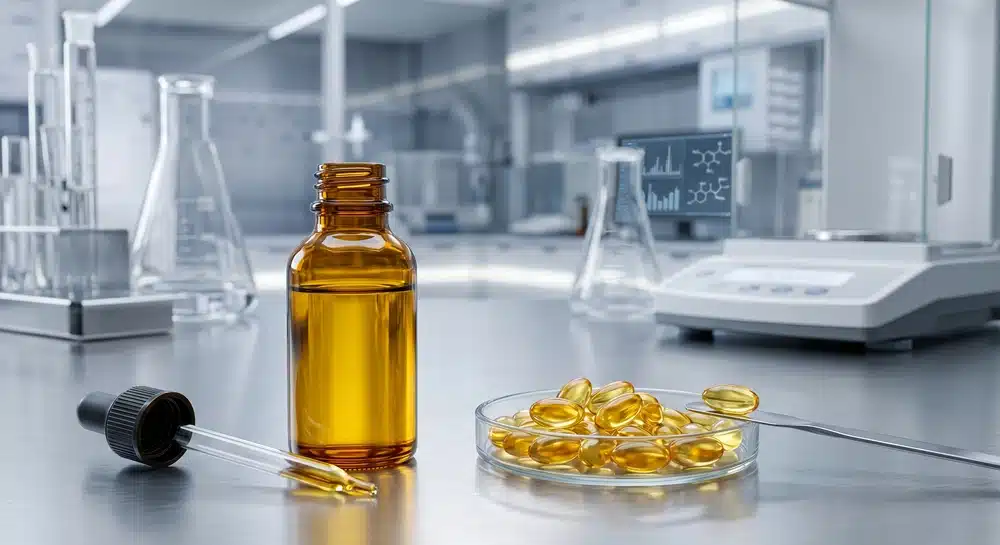
O óleo de prímula (EPO) é um óleo de sementes vegetais naturalmente rico em ácido gama-linolénico (GLA), um ácido gordo ómega-6 utilizado em suplementos destinados à pele, ao couro cabeludo e à beleza interior. No que diz respeito aos produtos destinados ao cabelo, o EPO deve ser entendido, acima de tudo, como um ingrediente que apoia o couro cabeludo e como fonte de ácidos gordos, e não como um tratamento garantido para o crescimento do cabelo.
Para os consumidores, o EPO pode ajudar a promover um ambiente mais saudável no couro cabeludo, especialmente quando a secura, a irritação ou uma ingestão insuficiente de ácidos gordos constituem motivo de preocupação. No entanto, não deve ser apresentado como uma cura para a queda de cabelo, a alopecia ou o enfraquecimento capilar de origem hormonal.
Para as marcas de suplementos, o EPO reveste-se de maior valor como ingrediente de formulação para cápsulas moles destinadas ao cuidado do cabelo, suplementos de beleza, produtos de bem-estar para mulheres e misturas de óleos para o cuidado do couro cabeludo. O fundamental é verificar o teor de GLA, o estado de oxidação, o método de extração, a qualidade do Certificado de Análise (COA), a proteção da embalagem e a formulação das alegações antes de o transformar num produto acabado.
O que é o óleo de onagra?
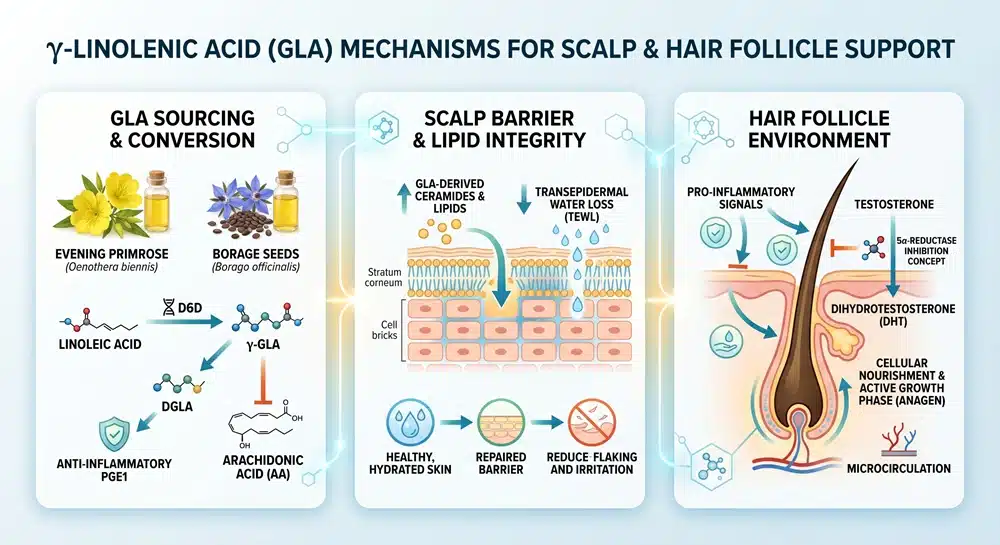
Evening primrose oil is extracted from the seeds of Oenothera biennis. Its main nutritional value comes from linoleic acid and gamma-linolenic acid (GLA), a fatty acid often used in skin-barrier, scalp-comfort, and women’s wellness formulations.
Na produção de suplementos, o EPO é normalmente fornecido sob a forma de óleo líquido para o enchimento de cápsulas moles ou como ingrediente em misturas de óleos para uso tópico. Um ingrediente de EPO de alta qualidade deve indicar a sua percentagem de GLA, o método de extração, o índice de peróxidos, o índice de acidez, o país de origem, as condições de armazenamento e os resultados do Certificado de Análise (COA).
No que diz respeito aos produtos para o cabelo, a questão não se resume simplesmente a saber se o óleo de EPO é “bom para o cabelo”. A questão mais relevante é saber se o óleo é padronizado, estável, devidamente embalado e se é comercializado com alegações realistas.
Prímula da noite Vs. Prímula Comum
A prímula da noite (Oenothera biennis) e a prímula comum (Primula vulgaris) são plantas diferentes, muitas vezes confundidas devido a nomes semelhantes. A onagra é uma planta alta, bienal, com flores amarelas que se abrem ao fim da tarde. As suas sementes são prensadas para produzir EPO, rico em GLA. A prímula comum, uma planta perene de crescimento baixo com flores amarelas ou cor-de-rosa, é sobretudo ornamental e não é utilizada para a produção de óleo. Embora a prímula comum tenha algumas utilizações medicinais tradicionais (por exemplo, para a tosse), não tem o teor de GLA que torna a EPO valiosa para a saúde do cabelo. Verifique sempre os rótulos dos produtos para se certificar de que está a obter óleo de onagra e não um extrato de onagra comum.
No que diz respeito aos produtos botânicos e aos óleos de sementes, fabrico de suplementos de ervas A nossa experiência pode ajudar as marcas a gerir a identificação dos ingredientes, o abastecimento e a documentação relativa à qualidade.O que o óleo de onagra pode e não pode fazer pelo cabelo
O óleo de onagra pode contribuir indiretamente para a saúde do cabelo e do couro cabeludo, ajudando a manter a ingestão de ácidos gordos e apoiando a função de barreira da pele e do couro cabeludo. Uma vez que o couro cabeludo é pele, os ingredientes que promovem o conforto e a hidratação da pele podem ser relevantes para o posicionamento dos produtos de cuidado capilar.
O que a EPO pode apoiar:
– hidratação e conforto do couro cabeludo,
– um penteado que transmita uma aparência saudável,
– fórmulas para a beleza interior,
– aporte de ácidos gordos para a pele e o couro cabeludo,
– ideias para suplementos de bem-estar para mulheres.
O que não se deve alegar que a EPO faz:
– tratar a queda de cabelo,
– reverter a alopecia androgenética,
– tratar a alopecia areata,
– bloquear a DHT através de um mecanismo semelhante ao de um fármaco,
– estimular o crescimento do cabelo em utilizadores que sofrem de condições médicas que provocam a queda de cabelo.
Esta distinção é importante. Um suplemento para o cabelo pode ser promovido com base no conforto do couro cabeludo, no apoio à barreira cutânea, na beleza interior e na aparência saudável do cabelo. Não deve ser comercializado como um tratamento para a queda de cabelo de origem médica, a menos que seja apoiado por uma aprovação regulamentar adequada e por evidências clínicas.
Dosagem de óleo de onagra para a queda de cabelo
A dosagem correta de óleo de onagra depende se o está a tomar por via oral ou se o está a aplicar no couro cabeludo. Para suplementos orais, uma dose comum é de 500-1000 mg por dia, com cápsulas padronizadas para conter 8-10% GLA. Comece com uma dose mais baixa, como 500 mg, e aumente se necessário. Tomar EPO com alimentos para melhorar a absorção e reduzir as perturbações gástricas. A consistência é fundamental - os resultados podem demorar 2-3 meses a aparecer.
Para utilização tópica, misturar algumas gotas de EPO com um óleo de base como o óleo de coco ou de jojoba. Aplicar no couro cabeludo 2-3 vezes por semana, massajando suavemente para estimular a circulação. Deixe atuar durante 30 minutos ou durante a noite antes de lavar. Alguns produtos capilares já contêm EPO, por isso verifique os rótulos para evitar o seu uso excessivo.
Fale sempre com um médico antes de começar a tomar EPO, especialmente se tiver problemas de saúde ou se estiver a tomar medicamentos. O médico pode recomendar uma dosagem adequada às suas necessidades, especialmente se a queda de cabelo estiver associada a problemas hormonais ou médicos.
Cápsulas moles para ingestão vs. óleos capilares tópicos: qual é o formato mais adequado?
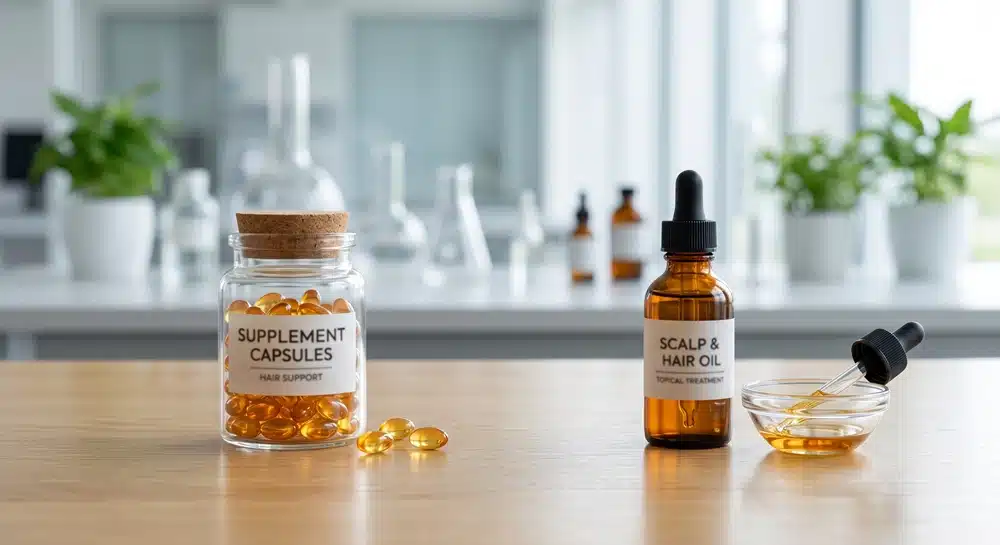
O óleo de onagra pode ser encontrado em dois formatos diferentes: suplementos orais e óleos tópicos para o couro cabeludo. Estes dois formatos não devem ser considerados como o mesmo produto.
As cápsulas moles de EPO para administração oral são mais adequadas para o posicionamento de «beleza interior», bem-estar feminino e apoio na ingestão de ácidos gordos. São mais fáceis de dosear, mais fáceis de embalar e mais familiares para os consumidores de suplementos.
Os óleos tópicos de EPO são mais adequados para o conforto do couro cabeludo, rotinas de cuidados capilares e aplicações cosméticas. No entanto, os óleos tópicos exigem um trabalho de formulação diferente, incluindo a seleção do óleo veicular, a compatibilidade com a fragrância, a sensação na pele, a viscosidade, o controlo da oxidação e considerações relativas aos conservantes ou à embalagem.
Para as marcas, a escolha depende do modelo de negócio. Uma marca de suplementos alimentares pode preferir cápsulas moles de EPO. Uma marca de cuidados capilares pode preferir uma mistura de óleos para o couro cabeludo. Uma marca de beleza híbrida pode utilizar ambos: uma cápsula mole para ingestão e um óleo capilar tópico, como parte de uma rotina combinada.
Como utilizar o óleo de onagra para o cabelo
Utilizar óleo de onagra é fácil e pode integrar-se na sua rotina diária. Para uso oral, tome as cápsulas durante uma refeição para facilitar a absorção. Combine o óleo de onagra com outros nutrientes benéficos para o cabelo, como a biotina, o zinco ou vitamina D para obter melhores resultados. Uma alimentação rica em frutas, legumes e gorduras saudáveis também contribui para a saúde do cabelo.
Para utilização tópica, experimente um tratamento DIY para o couro cabeludo. Misture 5-10 gotas de EPO com uma colher de sopa de óleo de base (por exemplo, coco, jojoba ou amêndoa). Massaje no couro cabeludo, concentrando-se nas áreas secas ou com queda de cabelo. Deixe atuar durante 30-60 minutos, ou durante a noite para uma nutrição mais profunda, e depois aplique o champô como habitualmente. Também pode adicionar algumas gotas de EPO ao seu amaciador para uma hidratação extra.
Para obter os melhores resultados, utilize a EPO de forma consistente. Combine-a com práticas de cuidados capilares suaves, como evitar champôs agressivos ou penteados com calor. Uma abordagem holística - boa nutrição, gestão do stress e cuidados regulares com o couro cabeludo - irá maximizar os benefícios da EPO.
Segurança e efeitos secundários do óleo de onagra
O óleo de onagra é geralmente seguro para a maioria das pessoas, mas podem ocorrer efeitos secundários. Os mais comuns incluem ligeiras perturbações gástricas, náuseas ou dores de cabeça. Tomar EPO com alimentos pode reduzir estes problemas. Em casos raros, pode causar reacções alérgicas, como erupções cutâneas. Interrompa o uso se isso acontecer.
A EPO pode interagir com alguns medicamentos, incluindo anticoagulantes (por exemplo, varfarina) e medicamentos para a epilepsia (por exemplo, fenitoína). Pode também aumentar o risco de hemorragia, pelo que deve ser evitada antes de uma cirurgia. As mulheres grávidas ou a amamentar só devem utilizar EPO sob supervisão médica, uma vez que pode afetar as hormonas.
Escolha EPO de alta qualidade para evitar contaminantes. Procure produtos com testes de pureza e potência efectuados por terceiros. Os fabricantes de suplementos de baixa MOQ (quantidade mínima de encomenda) podem oferecer fórmulas personalizadas e de alta qualidade para necessidades específicas. Siga sempre as diretrizes de dosagem e consulte um médico se não tiver a certeza.
Notas de formulação B2B para produtos capilares à base de óleo de onagra
Para as marcas de suplementos, o óleo de onagra não é um ingrediente difícil de compreender, mas requer um manuseamento cuidadoso, uma vez que se trata de uma matéria-prima à base de óleo.
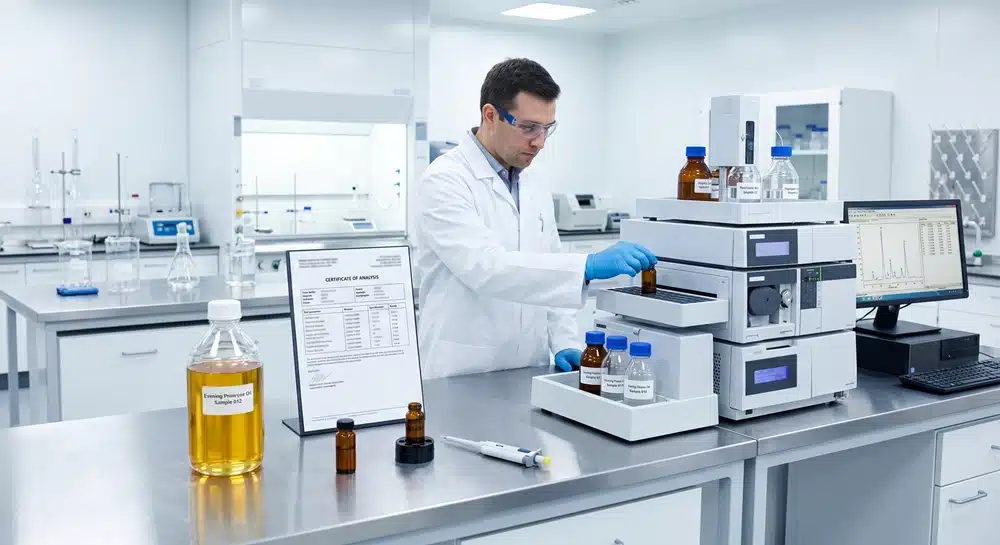
Antes de adquirir EPO para uma fórmula de apoio ao crescimento do cabelo, solicite:
– percentagem de GLA,
– índice de peróxido,
– índice de acidez,
– método de extração,
– Certificado de conformidade e ficha técnica,
– declaração sobre alergénios,
– análises para detecção de pesticidas ou solventes, se for o caso,
– país de origem,
– temperatura de armazenamento recomendada,
– e dados relativos ao prazo de validade.
No caso dos produtos em cápsulas moles, as marcas devem também avaliar o tamanho da cápsula, o peso do conteúdo, a compatibilidade entre invólucros de gelatina e invólucros vegetarianos, o risco de fuga, o sistema antioxidante e a proteção da embalagem contra o calor, a luz e o oxigénio.
No que diz respeito aos óleos tópicos para o couro cabeludo, as marcas devem avaliar a sensação na pele, a compatibilidade com o óleo veicular, o sistema de fragrância, o risco de oxidação, a embalagem com conta-gotas ou bomba e se o produto deve ser posicionado como um cosmético em vez de um suplemento alimentar.
Quando procurar ajuda profissional
O óleo de onagra pode apoiar a saúde do cabelo, mas não é uma cura para toda a queda de cabelo. Se notar uma queda de cabelo súbita ou acentuada, manchas calvas ou dores no couro cabeludo, consulte um médico ou dermatologista. Estas situações podem indicar doenças como distúrbios da tiroide, deficiência de ferro ou doenças auto-imunes, que necessitam de tratamento médico.
Um profissional também pode fazer testes para detetar deficiências de nutrientes ou desequilíbrios hormonais que estejam a causar problemas de cabelo. Se a EPO ou outros remédios não melhorarem o seu cabelo ao fim de 3-6 meses, o médico pode recomendar tratamentos mais fortes, como o minoxidil ou a terapia hormonal. Não confie apenas nos suplementos se a queda de cabelo estiver a afetar a sua qualidade de vida.
Evidências científicas e limitações
As evidências relativas ao óleo de onagra e ao crescimento capilar são limitadas. Alguns estudos sobre combinações de ácidos gordos e antioxidantes relataram melhorias na densidade capilar ou em resultados relacionados com a queda de cabelo, mas estas fórmulas incluem frequentemente vários nutrientes, em vez de apenas óleo de onagra. Isso significa que os resultados não devem ser interpretados como prova de que o óleo de onagra, por si só, faz o cabelo voltar a crescer.
O principal argumento a favor do EPO é o seu papel como fonte de GLA e a sua importância para o reforço da barreira protetora da pele e do couro cabeludo. Isto torna-o útil em fórmulas destinadas à beleza interior e ao conforto do couro cabeludo, mas não constitui uma solução isolada para a queda de cabelo de origem médica.
No que diz respeito às alegações relativas ao conteúdo e aos produtos, a abordagem mais segura consiste em descrever o EPO como um ingrediente que contribui para o conforto do couro cabeludo, a função de barreira da pele e um cabelo com aspeto saudável, ao mesmo tempo que se indica claramente que os utilizadores com queda de cabelo súbita, grave, em manchas ou persistente devem consultar um profissional de saúde.
Conclusão: Como as marcas devem utilizar o óleo de onagra nos produtos para o cabelo
O óleo de onagra pode ser um ingrediente útil em produtos para o cuidado do cabelo e para a beleza interior, mas deve ser utilizado com cuidado. O seu valor reside no GLA e no aporte de ácidos gordos, e não num efeito garantido de regeneração capilar.
Para os consumidores, o EPO pode ser considerado parte de uma rotina mais ampla de cuidados com o couro cabeludo e de beleza. Para as marcas, o EPO reveste-se de maior interesse como ingrediente em cápsulas moles, óleo para o couro cabeludo ou suplemento de beleza para mulheres, desde que a fórmula seja acompanhada de documentação de COA sólida, controlo da oxidação, embalagem adequada e linguagem realista nas alegações.

Precisa de ajuda para desenvolver um produto para o cabelo com patente da EPO?
A Gensei pode fornecer cápsulas de óleo de onagra, suplementos para a beleza interior, misturas de óleos para o couro cabeludo, formulações personalizadas e produtos para o cuidado do cabelo sob marca própria. Envie-nos a forma farmacêutica pretendida, as especificações de GLA, o plano de embalagem e o posicionamento no mercado para que possamos avaliar a viabilidade antes da produção.
FAQs
O óleo de onagra faz o cabelo ficar mais espesso?
Não se deve afirmar que o óleo de onagra engrossa diretamente o cabelo. Pode contribuir para o bem-estar do couro cabeludo, para a ingestão de ácidos gordos e para uma aparência saudável do cabelo, mas não é um tratamento comprovado para o engrossamento do cabelo.
O óleo de onagra pode fazer o cabelo voltar a crescer?
Não há provas suficientes para afirmar que a EPO, por si só, promova o crescimento do cabelo. Se a queda de cabelo for causada por fatores genéticos, problemas da tiróide, deficiência de ferro, doenças autoimunes ou medicação, é improvável que a EPO resolva a causa subjacente. É mais adequado considerá-la um ingrediente de apoio à beleza e à saúde do couro cabeludo.
O óleo de onagra é melhor na forma de cápsulas ou de óleo para aplicação tópica?
As cápsulas são mais indicadas para promover a beleza a partir de dentro e para o aporte de ácidos gordos. Os óleos tópicos são mais indicados para o conforto do couro cabeludo e para as rotinas cosméticas de cuidados capilares. As marcas devem escolher o formato com base nas alegações, na embalagem, no público-alvo e na categoria regulamentar.
O óleo de onagra contém biotina?
Não. O óleo de onagra não contém biotina de forma natural. É valorizado principalmente pelo seu teor de GLA e ácido linoleico. Uma fórmula para o cuidado do cabelo pode combinar o óleo de onagra com biotina, zinco, vitamina D, peptídeos de colagénio ou outros ingredientes de beleza, desde que a combinação seja adequada e comprovada.
O que devem as marcas verificar antes de adquirir óleo de onagra?
As marcas devem verificar o teor de GLA, o índice de peróxido, o índice de acidez, o método de extração, o certificado de análise (COA), o país de origem, a declaração relativa a alergénios, os testes a pesticidas ou solventes, se aplicável, e as condições de armazenamento.
Um suplemento à base de EPO pode alegar que trata a queda de cabelo?
Não. Os suplementos alimentares não devem alegar que diagnosticam, tratam, curam ou previnem a queda de cabelo ou a alopecia. Formulações mais seguras, do tipo «estrutura/função», incluem expressões como «contribui para o conforto do couro cabeludo», «contribui para a função de barreira da pele» e «contribui para um cabelo com aspeto saudável».
Qual é a melhor forma farmacêutica para produtos capilares com EPO de marca própria?
As cápsulas moles são normalmente a opção mais prática para os suplementos alimentares, uma vez que protegem o óleo, controlam a dose e reduzem os problemas de sabor. Os óleos tópicos para o couro cabeludo podem ser adequados para marcas de cosméticos, mas exigem testes de estabilidade e de embalagem diferentes.
Quem deve evitar o óleo de onagra?
As consumidoras grávidas ou a amamentar, que estejam a tomar anticoagulantes, a preparar-se para uma cirurgia ou a utilizar medicamentos anticonvulsivos devem consultar um profissional de saúde antes de utilizarem a EPO. As marcas devem incluir avisos de precaução adequados, de acordo com a regulamentação do mercado-alvo.
Referências
- NCCIH. Óleo de prímula: utilidade e segurança.
https://www.nccih.nih.gov/health/evening-primrose-oil - PubMed. Efeito de um suplemento nutricional na queda de cabelo nas mulheres.
https://pubmed.ncbi.nlm.nih.gov/25573272/ - PubMed. O óleo de onagra, tomado por via oral, melhora os parâmetros biofísicos da pele em adultos saudáveis.
https://pubmed.ncbi.nlm.nih.gov/18492193/ - PMC. O papel do ácido linoleico na saúde da pele e do cabelo: uma revisão.
https://pmc.ncbi.nlm.nih.gov/articles/PMC11719646/ - PMC. Ingredientes naturais na alopecia / revisão da eficácia dermatológica.
https://pmc.ncbi.nlm.nih.gov/articles/PMC10761108/ - FDA. Alegações relativas à estrutura/função.
https://www.fda.gov/food/nutrition-food-labeling-and-critical-foods/structurefunction-claims - FDA. Perguntas e respostas sobre suplementos alimentares.
https://www.fda.gov/food/information-consumers-using-dietary-supplements/questions-and-answers-dietary-supplements - PMC. Suplementos para a pele, cabelo e unhas: questões relacionadas com o marketing e a rotulagem.
https://pmc.ncbi.nlm.nih.gov/articles/PMC7802115/
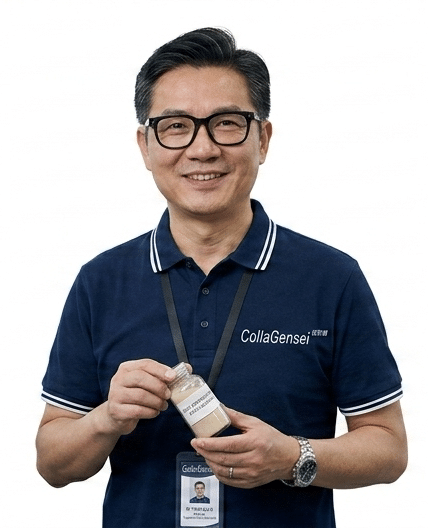
Warren Wan é um especialista experiente com vasta experiência na cadeia de abastecimento de suplementos alimentares, possuindo uma rica experiência prática na investigação, desenvolvimento, controlo de processos e aquisição global de ingredientes essenciais, tais como peptídeos de colagénio, proteína de caldo de ossos e queratina. Como autor desta coluna, dedica-se a ir além do discurso de marketing, transformando a ciência obscura dos ingredientes e as normas de controlo de qualidade da produção numa divulgação científica rigorosa e de fácil compreensão, ajudando os leitores a compreender a verdade por trás dos rótulos e a fazer escolhas mais racionais em matéria de saúde.


