
Quick Answer: Is evening primrose oil good for hair?

Evening primrose oil (EPO) is a plant seed oil naturally rich in gamma-linolenic acid (GLA), an omega-6 fatty acid used in skin, scalp, and beauty-from-within supplement positioning. For hair-focused products, EPO is best understood as a scalp-support and fatty-acid ingredient, not a guaranteed hair regrowth treatment.
For consumers, EPO may help support a healthier scalp environment, especially when dryness, irritation, or poor fatty-acid intake is part of the concern. However, it should not be presented as a cure for hair loss, alopecia, or hormonal hair thinning.
For supplement brands, EPO is more valuable as a formulation ingredient for hair-support softgels, beauty supplements, women’s wellness products, and scalp-care oil blends. The key is to verify GLA content, oxidation status, extraction method, COA quality, packaging protection, and claim language before turning it into a finished product.
What is Evening Primrose Oil?
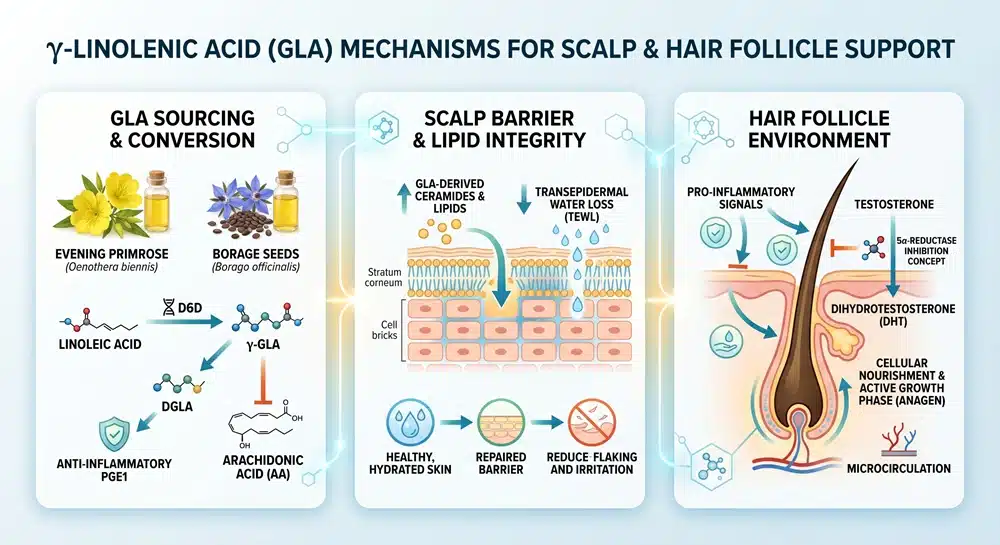
Evening primrose oil is extracted from the seeds of Oenothera biennis. Its main nutritional value comes from linoleic acid and gamma-linolenic acid (GLA), a fatty acid often used in skin-barrier, scalp-comfort, and women’s wellness formulations.
In supplement manufacturing, EPO is usually supplied as a liquid oil for softgel filling or as an ingredient in topical oil blends. A high-quality EPO ingredient should disclose its GLA percentage, extraction method, peroxide value, acid value, country of origin, storage conditions, and COA results.
For hair-focused products, the question is not simply whether EPO is “good for hair.” The more useful question is whether the oil is standardized, stable, properly packaged, and positioned with realistic claims.
Evening Primrose Vs. Common Primrose
Evening primrose (Oenothera biennis) and common primrose (Primula vulgaris) are different plants, often confused due to similar names. Evening primrose is a tall, biennial plant with yellow flowers that open in the evening. Its seeds are pressed to make EPO, rich in GLA. Common primrose, a low-growing perennial with pale yellow or pink flowers, is mostly ornamental and not used for oil production. While common primrose has some traditional medicinal uses (e.g., for coughs), it lacks the GLA content that makes EPO valuable for hair health. Always check product labels to ensure you’re getting evening primrose oil, not a common primrose extract.
For botanical and seed-oil products, herbal supplement manufacturing expertise can help brands manage ingredient identity, sourcing, and quality documentation.What evening primrose oil can and cannot do for hair
Evening primrose oil may support hair and scalp health indirectly by helping maintain fatty-acid intake and supporting skin and scalp barrier function. Because the scalp is skin, ingredients that support skin comfort and moisture can be relevant to hair-care positioning.
What EPO may support:
– scalp moisture and comfort,
– healthy-looking hair positioning,
– beauty-from-within formulas,
– fatty-acid support for skin and scalp,
– women’s wellness supplement concepts.
What EPO should not be claimed to do:
– cure hair loss,
– reverse androgenetic alopecia,
– treat alopecia areata,
– block DHT as a drug-like mechanism,
– regrow hair in users with medical hair-loss conditions.
This distinction is important. A hair-support supplement can be positioned around scalp comfort, skin barrier support, beauty-from-within, and healthy hair appearance. It should not be marketed as a treatment for medical hair loss unless supported by appropriate regulatory approval and clinical evidence.
Evening Primrose Oil Dosage for Hair Loss
The right dosage of evening primrose oil depends on whether you’re taking it orally or applying it to your scalp. For oral supplements, a common dose is 500–1,000 mg per day, with capsules standardized to contain 8–10% GLA. Start with a lower dose, like 500 mg, and increase if needed. Take EPO with food to improve absorption and reduce stomach upset. Consistency is key—results may take 2–3 months to show.
For topical use, mix a few drops of EPO with a carrier oil like coconut or jojoba oil. Apply it to your scalp 2–3 times a week, massaging gently to boost circulation. Leave it on for 30 minutes or overnight before washing out. Some hair products already contain EPO, so check labels to avoid overusing it.
Always talk to a doctor before starting EPO, especially if you have health conditions or take medications. They can recommend a dosage that fits your needs, especially if hair loss is linked to hormonal or medical issues.
Oral softgels vs topical hair oils: Which format makes more sense?
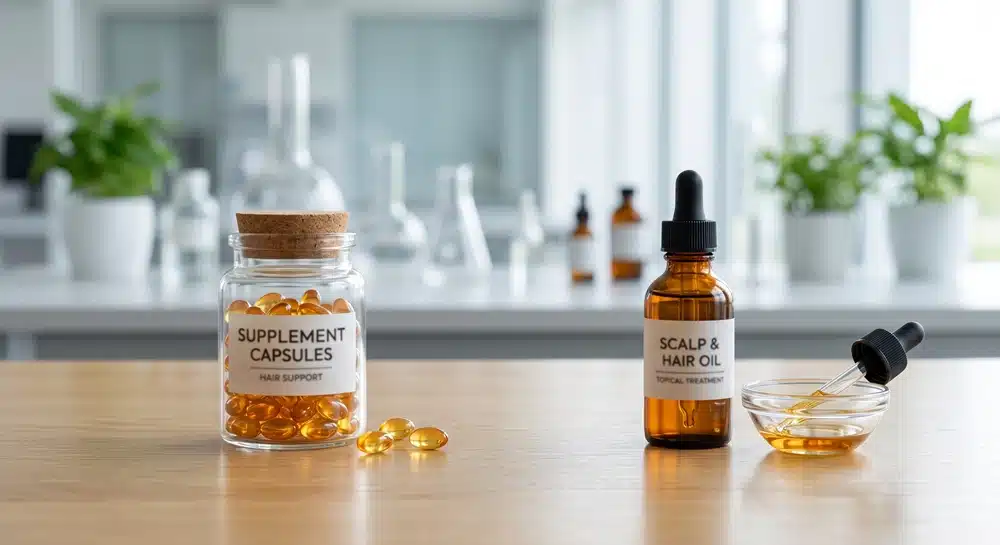
Evening primrose oil can appear in two different product formats: oral supplements and topical scalp oils. These two formats should not be treated as the same product.
Oral EPO softgels are better suited for beauty-from-within, women’s wellness, and fatty-acid support positioning. They are easier to dose, easier to package, and more familiar to supplement consumers.
Topical EPO oils are better suited for scalp comfort, hair-care routines, and cosmetic positioning. However, topical oils require different formulation work, including carrier oil selection, fragrance compatibility, skin feel, viscosity, oxidation control, and preservative or packaging considerations.
For brands, the choice depends on the business model. A dietary supplement brand may prefer EPO softgels. A hair-care brand may prefer a scalp oil blend. A hybrid beauty brand may use both: an oral softgel plus a topical hair oil as a bundled routine.
How to Use Evening Primrose Oil for Hair
Using evening primrose oil is easy and can fit into your daily routine. For oral use, take capsules with a meal to help absorption. Pair EPO with other hair-supporting nutrients like biotin, zinc, or vitamin D for better results. A diet rich in fruits, vegetables, and healthy fats also boosts hair health.
For topical use, try a DIY scalp treatment. Mix 5–10 drops of EPO with a tablespoon of carrier oil (e.g., coconut, jojoba, or almond). Massage it into your scalp, focusing on thinning or dry areas. Let it sit for 30–60 minutes, or overnight for deeper nourishment, then shampoo as usual. You can also add a few drops of EPO to your conditioner for extra moisture.
For best results, use EPO consistently. Combine it with gentle hair care practices, like avoiding harsh shampoos or heat styling. A holistic approach—good nutrition, stress management, and regular scalp care—will maximize EPO’s benefits.
Safety and Side Effects of Evening Primrose Oil
Evening primrose oil is generally safe for most people, but side effects can occur. Common ones include mild stomach upset, nausea, or headaches. Taking EPO with food can reduce these issues. In rare cases, it may cause allergic reactions, like skin rashes. Stop using it if this happens.
EPO can interact with certain medications, including blood thinners (e.g., warfarin) and epilepsy drugs (e.g., phenytoin). It may also increase bleeding risk, so avoid it before surgery. Pregnant or breastfeeding women should only use EPO under medical supervision, as it may affect hormones.
Choose high-quality EPO to avoid contaminants. Look for products with third-party testing for purity and potency. Low MOQ (minimum order quantity) supplement manufacturers can offer custom, high-quality formulations for specific needs. Always follow dosage guidelines and consult a doctor if you’re unsure.
B2B formulation notes for evening primrose oil hair products
For supplement brands, evening primrose oil is not difficult to understand as an ingredient, but it does require careful handling as an oil-based raw material.
Before purchasing EPO for a hair-support formula, request:
– GLA percentage,
– peroxide value,
– acid value,
– extraction method,
– COA and specification sheet,
– allergen statement,
– pesticide or solvent testing if applicable,
– country of origin,
– recommended storage temperature,
– and shelf-life data.
For softgel products, brands should also evaluate capsule size, fill weight, gelatin vs vegetarian shell compatibility, leakage risk, antioxidant system, and packaging protection from heat, light, and oxygen.
For topical scalp oils, brands should evaluate skin feel, carrier oil compatibility, fragrance system, oxidation risk, dropper or pump packaging, and whether the product should be positioned as a cosmetic rather than a dietary supplement.

When to Seek Professional Help
Evening primrose oil can support hair health, but it’s not a cure for all hair loss. If you notice sudden or severe hair loss, patchy bald spots, or scalp pain, see a doctor or dermatologist. These could signal conditions like thyroid disorders, iron deficiency, or autoimmune diseases, which need medical treatment.
A professional can also test for nutrient deficiencies or hormonal imbalances causing hair issues. If EPO or other remedies don’t improve your hair after 3–6 months, a doctor can recommend stronger treatments, like minoxidil or hormone therapy. Don’t rely on supplements alone if your hair loss is affecting your quality of life.
Scientific Evidence and Limitations
The evidence for evening primrose oil and hair growth is limited. Some studies on fatty acids and antioxidant combinations have reported improvements in hair density or shedding-related outcomes, but these formulas often include multiple nutrients rather than EPO alone. That means the results should not be interpreted as proof that evening primrose oil by itself regrows hair.
The strongest support for EPO is its role as a source of GLA and its relevance to skin and scalp barrier positioning. This makes it useful for beauty-from-within and scalp-comfort formulas, but not a standalone solution for medical hair loss.
For content and product claims, the safest approach is to describe EPO as supporting scalp comfort, skin barrier function, and healthy-looking hair, while clearly stating that users with sudden, severe, patchy, or persistent hair loss should consult a healthcare professional.
Conclusion: How brands should use evening primrose oil for hair products
Evening primrose oil can be a useful ingredient for hair-support and beauty-from-within products, but it should be positioned carefully. Its value comes from GLA and fatty-acid support, not from a guaranteed hair-regrowth effect.
For consumers, EPO may be considered as part of a broader scalp and beauty routine. For brands, EPO is more interesting as a softgel, scalp oil, or women’s beauty supplement ingredient when the formula is supported by strong COA documentation, oxidation control, appropriate packaging, and realistic claim language.

Need help developing an EPO hair-support product?
Gensei can support evening primrose oil softgels, beauty-from-within supplements, scalp oil blends, custom formulations, and private label hair-support products. Send us your target dosage form, GLA specification, packaging plan, and market positioning to review feasibility before production.
FAQs
Does evening primrose oil thicken hair?
Evening primrose oil should not be claimed to directly thicken hair. It may support scalp comfort, fatty-acid intake, and healthy-looking hair positioning, but it is not a proven hair-thickening treatment.
Can evening primrose oil regrow hair?
There is not enough evidence to say that EPO alone regrows hair. If hair loss is caused by genetics, thyroid issues, iron deficiency, autoimmune disease, or medication, EPO is unlikely to solve the root cause. It is better positioned as a supportive beauty and scalp-health ingredient.
Is evening primrose oil better as a capsule or topical oil?
Capsules are better for beauty-from-within and fatty-acid support positioning. Topical oils are better for scalp comfort and cosmetic hair-care routines. Brands should choose the format based on claim, packaging, target customer, and regulatory category.
Does evening primrose oil contain biotin?
No. Evening primrose oil does not naturally contain biotin. It is primarily valued for GLA and linoleic acid. A hair-support formula may combine EPO with biotin, zinc, vitamin D, collagen peptides, or other beauty ingredients if the combination is appropriate and substantiated.
What should brands check before sourcing evening primrose oil?
Brands should check GLA content, peroxide value, acid value, extraction method, COA, country of origin, allergen statement, pesticide or solvent testing if applicable, and storage conditions.
Can an EPO supplement claim to treat hair loss?
No. Dietary supplements should not claim to diagnose, treat, cure, or prevent hair loss or alopecia. Safer structure/function-style language includes supports scalp comfort, supports skin barrier function, and supports healthy-looking hair.
What is the best dosage form for private label EPO hair products?
Softgels are usually the most practical option for dietary supplements because they protect the oil, control dose, and reduce taste issues. Topical scalp oils can work for cosmetic brands but require different stability and packaging tests.
Who should avoid evening primrose oil?
Consumers who are pregnant or breastfeeding, taking blood thinners, preparing for surgery, or using seizure medications should consult a healthcare professional before using EPO. Brands should include appropriate caution language based on target market regulations.
References
- NCCIH. Evening Primrose Oil: Usefulness and Safety.
https://www.nccih.nih.gov/health/evening-primrose-oil - PubMed. Effect of a nutritional supplement on hair loss in women.
https://pubmed.ncbi.nlm.nih.gov/25573272/ - PubMed. Systemic evening primrose oil improves the biophysical skin parameters of healthy adults.
https://pubmed.ncbi.nlm.nih.gov/18492193/ - PMC. The role of linoleic acid in skin and hair health: A review.
https://pmc.ncbi.nlm.nih.gov/articles/PMC11719646/ - PMC. Natural ingredients in alopecia / dermatologic effectiveness review.
https://pmc.ncbi.nlm.nih.gov/articles/PMC10761108/ - FDA. Structure/Function Claims.
https://www.fda.gov/food/nutrition-food-labeling-and-critical-foods/structurefunction-claims - FDA. Questions and Answers on Dietary Supplements.
https://www.fda.gov/food/information-consumers-using-dietary-supplements/questions-and-answers-dietary-supplements - PMC. Skin, hair, and nail supplements: marketing and labeling concerns.
https://pmc.ncbi.nlm.nih.gov/articles/PMC7802115/

Warren Wan is a seasoned expert with extensive experience in the dietary supplement supply chain, possessing rich practical experience in the research, development, process control, and global sourcing of core ingredients such as collagen peptides, bone broth protein, and keratin. As the author of this column, he is dedicated to stripping away the marketing packaging, transforming obscure ingredient science and production quality control standards into easy-to-understand, hardcore science popularization, helping readers understand the truth behind the labels and make more rational health choices.


