O que é a gelatina vegetariana?
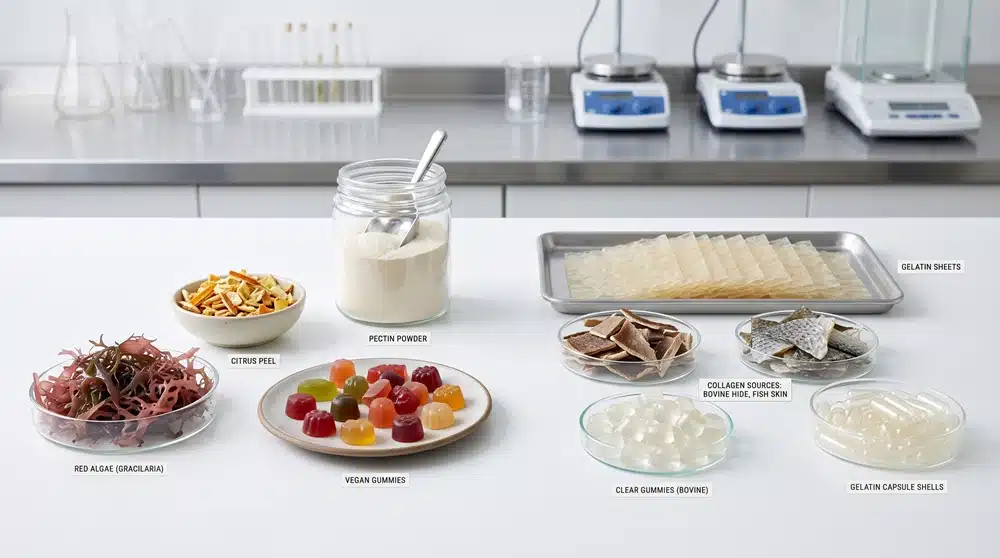
A gelatina vegetariana é um termo utilizado pelos consumidores para designar agentes gelificantes sem origem animal que imitam a função gelificante da gelatina. Normalmente, não se trata de verdadeira gelatina, uma vez que não é constituída pela proteína colagénio. A maioria dos sistemas de gelatina vegetariana ou vegana consiste em polissacarídeos, tais como o ágar proveniente de algas vermelhas, a pectina das paredes celulares dos frutos, a carragenina proveniente de algas marinhas ou materiais à base de celulose utilizados em cápsulas vegetarianas.
Na formulação de alimentos, a escolha certa depende do produto final: o ágar cria um gel firme e estável ao calor; a pectina é frequentemente utilizada em gomas e compotas com sabor acentuado a fruta; a carragenina contribui para texturas cremosas ou elásticas em sistemas lácteos e de substitutos lácteos à base de plantas; e os materiais de celulose são utilizados principalmente em cápsulas, em vez de em géis para sobremesas.
O que é a gelatina animal?
A gelatina animal é um agente gelificante à base de proteínas, produzido através da hidrólise parcial do colagénio proveniente da pele, dos ossos e do tecido conjuntivo de animais. As marcas de alimentos, produtos de confeitaria e suplementos recorrem à gelatina animal quando necessitam de géis transparentes, textura elástica e mastigável, estabilização de espumas, textura de gomas, elasticidade de marshmallows, invólucros de cápsulas moles ou duras e géis termorreversíveis que derretem na boca.
Ao contrário do ágar, da pectina e da carragenina, a gelatina animal é medida pela força de Bloom. A gelatina comestível comercial varia normalmente entre graus de Bloom baixos e elevados, e o valor de Bloom ajuda os formuladores a prever a firmeza do gel, o nível de dosagem e a textura em gomas, sobremesas e invólucros de cápsulas.
Origem e composição
Gelatina animal: A gelatina animal é obtida a partir do colagénio por hidrólise. As matérias-primas mais comuns incluem couro bovino, pele suína, ossos bovinos e pele ou escamas de peixe, dependendo da qualidade e dos requisitos do mercado. Quimicamente, a gelatina é uma mistura de fragmentos de proteínas à base de aminoácidos, em vez de uma única molécula. O seu desempenho é afetado pela distribuição do peso molecular, pelo pH, pela concentração, pelo histórico de aquecimento e pela resistência de Bloom.
Alternativas vegetarianas ou veganas à gelatina: As alternativas à gelatina de origem vegetal são, geralmente, hidrocoloides e não proteínas de colagénio. O ágar é obtido a partir de algas vermelhas e forma um gel firme após aquecimento e arrefecimento. A pectina é um polissacarídeo presente nas paredes celulares de frutas e vegetais, sendo a pectina comercial normalmente extraída da casca de citrinos ou do bagaço de maçã. A carragenina é extraída de algas vermelhas e é utilizada como agente gelificante, espessante e estabilizante, especialmente em produtos lácteos, produtos lácteos à base de plantas, géis à base de água e alimentos transformados.
Distinção importante: Uma vez que o ágar, a pectina e a carragenina são polissacarídeos, não apresentam o perfil de aminoácidos derivado do colagénio, característico da gelatina animal. Podem substituir a função texturizante da gelatina em muitos produtos, mas não substituem a gelatina animal como fonte de proteína de colagénio.
| Atributo | Sistemas gelificantes vegetarianos/veganos | Gelatina animal | Implicação da fórmula |
|---|---|---|---|
| Matéria-prima | Polissacarídeos, tais como ágar, pectina e carragenina; materiais de celulose para cápsulas | Peptídeos/proteínas derivados do colagénio | Não se deve chamar aos hidrocoloides vegetais “colagénio” ou “gelatina verdadeira”. |
| Fonte típica | Algas vermelhas, casca de citrinos/bagaço de maçã, algas marinhas, celulose vegetal | Colagénio de origem bovina, suína, de peixe ou de outros animais | A origem influencia as alegações, a análise dos alergénios, a religião e a aceitação por parte dos consumidores. |
| Medição da resistência do gel | Normalmente não é medido pela escala de Bloom; cada hidrocoloide tem o seu próprio teste de gel | Densidade de Bloom; a gelatina comestível comercial tem frequentemente uma densidade de 50 a 300 Bloom | O Bloom é útil para a aquisição de gelatina animal e para o controlo das receitas. |
| Textura | Ágar: firme/quebradiço; pectina: textura semelhante à de fruta fresca; carragenina: cremosa/elástica, dependendo do tipo | Elástico, transparente, macio, que se derrete na boca | O alvo de textura determina o melhor sistema. |
| Comportamento térmico | O ágar solidifica após arrefecer até cerca de 30-40 °C e derrete a cerca de 90-95 °C; a pectina e a carragenina variam consoante a fórmula | Termorreversível; o aquecimento prolongado em solução pode enfraquecer a resistência e a viscosidade do gel | O ágar mantém-se melhor à temperatura ambiente; a gelatina proporciona uma melhor dissolução na boca. |
| Alimentação saudável | Normalmente vegetariano/vegano, mas a certificação e os adjuvantes de transformação continuam a ser importantes | Não é vegano nem vegetariano; a certificação halal/kosher depende da origem animal e da certificação | Evite afirmações categóricas sobre a conformidade com as normas halal/kosher sem verificar os certificados. |
| Aplicações mais adequadas | Gomas veganas, fruit gels, jelly cups, jams, plant-based dairy, vegetarian capsules | Gomas clássicas, marshmallows, sobremesas, cápsulas moles, cápsulas duras, produtos que contêm proteínas | Utilize recomendações de produtos baseadas na aplicação. |
Textura e utilização
A gelatina animal é normalmente escolhida quando um produto necessita de elasticidade, elasticidade, transparência e um acabamento suave que se derrete na boca. É por isso que continua a ser comum em gomas clássicas, marshmallows, sobremesas de gelatina, cápsulas moles e cápsulas duras. A gelatina com valor de Bloom mais elevado pode criar géis mais firmes com doses mais baixas, enquanto a gelatina com valor de Bloom mais baixo permite obter texturas mais macias.
As alternativas vegetarianas à gelatina podem funcionar muito bem, mas a textura depende dos ingredientes utilizados. O ágar é firme, de textura bem definida e mais estável ao calor, mas pode parecer frágil quando comparado com a gelatina animal. A pectina é útil para géis de fruta e gomas de pectina, com uma textura mais curta e definida. A carragenina é útil quando os formuladores precisam de espessamento, estabilização ou de uma estrutura de gel cremosa em sistemas lácteos e de substitutos lácteos à base de plantas. Como cada sistema se comporta de forma diferente, uma fórmula à base de plantas deve ser desenvolvida em torno do hidrocoloide escolhido, em vez de ser convertida grama a grama a partir de uma fórmula à base de gelatina.
| Aplicação | O melhor ponto de partida | Porquê | Nota sobre o fabrico |
|---|---|---|---|
| Goma de mastigar clássica | Gelatina animal | Elástico, saltitante, com uma textura familiar ao mastigar e boa clareza. | No caso das gomas veganas, experimente utilizar pectina ou misturas de pectina e ágar, em vez de uma substituição direta. |
| Gomas veganas | Pectina ou mistura vegetal personalizada | Um rótulo mais adequado para os consumidores veganos e vegetarianos. | Controle o pH, os sólidos, a humidade e a secagem para evitar a formação de condensação ou uma textura pouco firme. |
| Copos de gelatina / fatias firmes | Ágar | Consistência firme e maior estabilidade térmica. | Pode ser mais quebradiço e menos cremoso na boca do que a gelatina. |
| Compotas e geleias de fruta | Pectina | Funciona com os sistemas de acidez e doçura da fruta. | A seleção da pectina HM/LM depende do sistema de açúcar, ácido e cálcio. |
| Géis cremosos à base de produtos lácteos | Carragenina | Contribui para o espessamento, a estabilização e uma textura cremosa. | Escolha kappa/iota/lambda consoante o alvo do gel e os iões/proteínas. |
| Cápsulas duras | Cápsula à base de gelatina ou de celulose vegetal | A gelatina é comum; o HPMC e o pullulan permitem uma abordagem vegetariana/vegana. | Saiba mais sobre fabrico de cápsulas considerações. |
| Cápsulas moles | Cápsula de gelatina animal; as opções vegetarianas requerem sistemas especializados | A gelatina animal continua a ser comum na fabricação de cápsulas moles. | Crítica fabrico de cápsulas de gelatina mole viabilidade por fórmula. |
Considerações alimentares e éticas
Para os consumidores veganos e vegetarianos, a gelatina animal convencional não é adequada, uma vez que é derivada do colagénio animal. Os sistemas de origem vegetal, tais como o ágar, a pectina, a carragenina e as cápsulas à base de celulose, constituem melhores pontos de partida para o posicionamento de marcas vegetarianas ou veganas.
No que diz respeito aos mercados halal e kosher, não se deve partir do princípio de que toda a gelatina animal é inaceitável ou que todos os sistemas à base de plantas cumprem automaticamente os requisitos. A gelatina animal só pode ser halal ou kosher quando a origem animal, os controlos de abate/processamento, o manuseamento nas instalações e a certificação cumprem as normas do mercado-alvo. Os hidrocoloides de origem vegetal podem ainda assim necessitar de uma análise de certificação, uma vez que os auxiliares de processamento, os excipientes e a contaminação cruzada podem afetar a declaração de conformidade.
No caso de projetos de suplementos B2B, a abordagem mais segura consiste em selecionar primeiro o sistema gelificante e, em seguida, verificar as especificações, a declaração de origem, a presença de alergénios, a presença de OGM, quando relevante, o certificado halal/kosher e a adequação para veganos/vegetarianos, antes de imprimir as alegações no rótulo.
Considerações sobre a saúde
A gelatina animal é um ingrediente proteico derivado do colagénio. Contém aminoácidos como a glicina, a prolina e a hidroxiprolina, que estão associados à estrutura do colagénio. No entanto, os benefícios da gelatina não devem ser exagerados num artigo sobre alimentos ou suplementos, a menos que essa afirmação seja corroborada pela fórmula do produto final, pela dosagem, pela regulamentação do mercado e por evidências científicas.
As alternativas vegetarianas à gelatina, tais como o ágar, a pectina e a carragenina, são principalmente polissacarídeos e não proteínas. Podem conferir textura, espessar e formar géis, mas não fornecem proteínas derivadas do colagénio nem o mesmo perfil de aminoácidos que a gelatina animal.
Para as marcas de suplementos, isto significa que a escolha envolve tanto uma decisão relativa à textura como uma decisão de posicionamento: a gelatina animal reforça a identidade da proteína derivada do colagénio, enquanto os sistemas à base de plantas apoiam as alegações veganas ou vegetarianas e podem ser mais adequados para produtos em que a função gelificante é mais importante do que o teor proteico.
Substituição: a gelatina vegetariana pode substituir a gelatina animal?
As alternativas vegetarianas à gelatina podem substituir a gelatina animal em muitas fórmulas, mas não devem ser consideradas como um substituto universal na proporção de 1:1. A resistência da gelatina depende do índice de Bloom, da concentração, do pH, do teor de açúcar, da temperatura de processamento e do tempo de solidificação. Os hidrocoloides de origem vegetal dependem de diferentes variáveis: o ágar necessita de calor suficiente para se dissolver, a pectina depende do pH, do açúcar e/ou do sistema de cálcio, e a carragenina depende do tipo, dos iões e da interação com proteínas ou outras gomas.
- Defina primeiro a textura de destino: mastigável e elástico, fatia firme, gel que se come à colher, textura cremosa, invólucro de cápsula ou gelatina resistente ao calor.
- Escolha a família de hidrocoloides com base nesse objetivo, e não apenas na palavra “vegano”.”
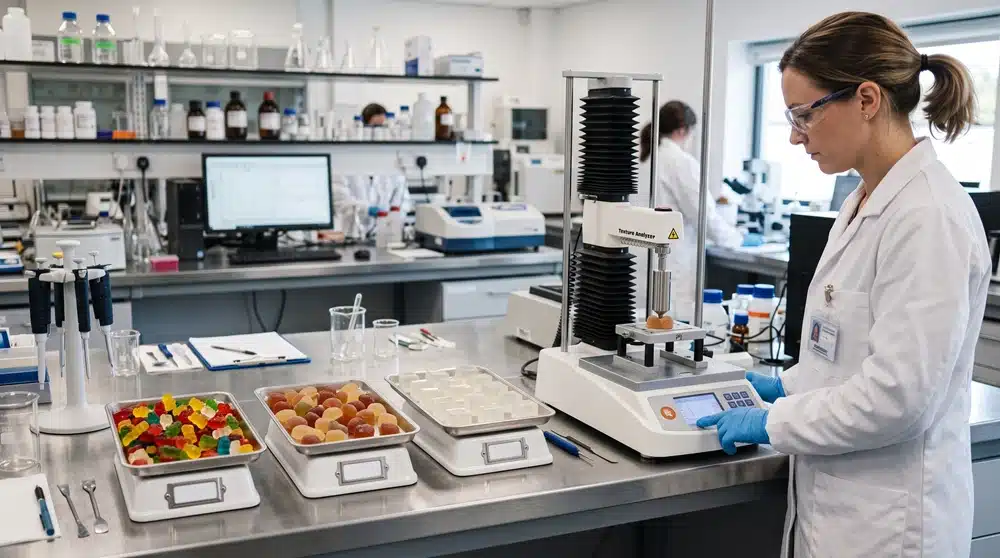
- Faça um pequeno lote piloto antes de aumentar a escala. Monitorizar a temperatura de hidratação, a temperatura de cozedura, o pH, os sólidos solúveis, o perfil de arrefecimento, o tempo de desmoldagem, a atividade da água, a sinérese e a textura após o armazenamento.
- Validar antes da aprovação: Não aprove um substituto à base de plantas até que o produto seja submetido a uma avaliação do sabor, da textura, da estabilidade e das alegações do rótulo.
Entre os erros comuns de substituição contam-se a utilização de ágar quando o objetivo é obter uma textura macia semelhante à da gelatina, a adição de pectina sem controlar a acidez ou o cálcio, o aquecimento excessivo da gelatina animal durante demasiado tempo ou a suposição de que o material de uma cápsula vegetariana se comportará como um gel alimentar.
Estabilidade térmica, endurecimento a frio e diferenças de processamento
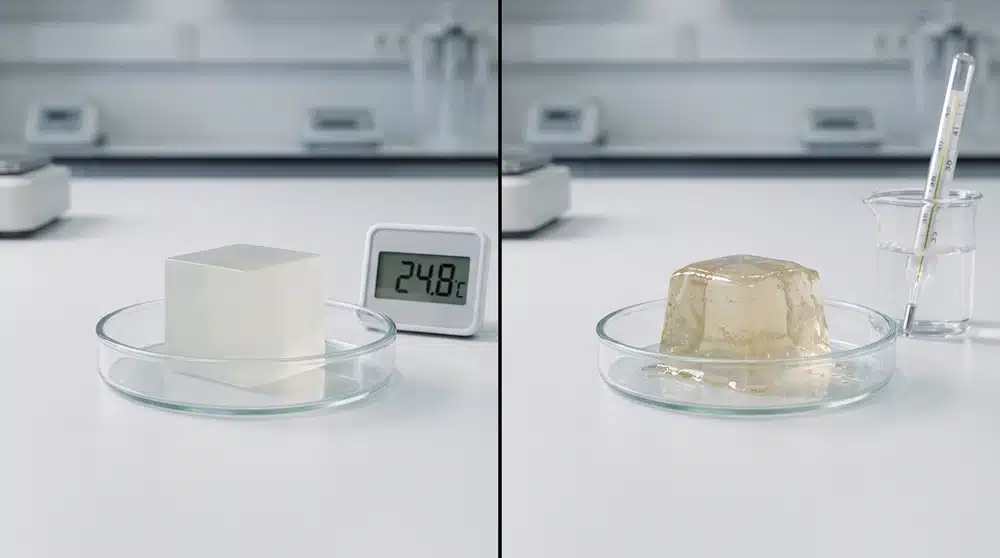
A estabilidade térmica é uma das principais diferenças entre a gelatina animal e os sistemas gelificantes de origem vegetal. O ágar é conhecido pela sua forte histerese térmica: forma um gel quando uma solução quente arrefece e só volta a derreter a temperaturas muito mais elevadas. Isto torna o ágar útil para géis firmes que necessitam de maior estabilidade à temperatura ambiente, mas também confere-lhes uma textura mais firme e menos derretida na boca.
A gelatina de origem animal comporta-se de forma diferente. Forma um gel termorreversível e é apreciada pela sua textura suave que se derrete na boca, mas o aquecimento prolongado em solução pode reduzir gradualmente a resistência e a viscosidade do gel. No caso das fórmulas à base de gelatina, evite tempos de permanência desnecessariamente longos a temperaturas elevadas e valide o processo quando a fórmula for ácida ou contiver enzimas.
As sobremesas de solidificação a frio também apresentam diferenças. A gelatina animal pode ser hidratada, dissolvida num líquido morno e solidificada por arrefecimento. O ágar, normalmente, tem de ser totalmente hidratado através de fervura antes de solidificar. A pectina e a carragenina exigem controlos específicos para cada fórmula, pelo que o melhor sistema de solidificação a frio depende da acidez, dos minerais, das proteínas, do nível de açúcar e da textura pretendida.
fAQs
Conclusão
Se estiver interessado em adquirir ou quiser saber mais sobre gelatina vegetariana de alta qualidade e matérias-primas de gelatina animal, contacte-nos através de sales@collagensei.com. Na Gensei Global Industries, somos um fabricante certificado pela FDA que oferece certificações ISO, HALAL, KOSHER e MSC. Com armazéns na Califórnia e em Nova Iorque, fornecemos um fornecimento fiável de matérias-primas, apoiado por testes de terceiros e certificação completa para maior tranquilidade. Explore a nossa extensa gama de produtos, incluindo serviços OEM e ODM, para encontrar as soluções certas para as suas necessidades comerciais.
referências
- Manual da GMIA sobre a Gelatina: https://nitta-gelatin.com/wp-content/uploads/2018/02/GMIA_Gelatin-Handbook.pdf
- Origem do ágar FAO e propriedades térmicas: https://www.fao.org/4/ab730e/ab730e03.htm
- Pectina do USDA ARS: https://www.ars.usda.gov/news-events/news/research-news/2007/great-expectations-for-pectin/
- Relatório técnico do USDA AMS sobre a carragenina: https://www.ams.usda.gov/sites/default/files/media/Carrageenan%20TR%202011.pdf
- PubMed: Colagénio e gelatina: https://pubmed.ncbi.nlm.nih.gov/25884286/
- PETA: De que é feita a gelatina?: https://www.peta.org/faq/what-is-gelatin-made-of/
- The Humane League: O que é a gelatina?: https://thehumaneleague.org/article/what-is-gelatin
- Simply Desserts: gelatina vs. gelatina de origem vegetal: https://simplydesserts.us/sd-blog/gelatin-everything-you-need-to-know/
- Healthline: Colagénio vs. gelatina: https://www.healthline.com/nutrition/collagen-vs-gelatin
- VegNews: A gelatina é vegana?: https://vegnews.com/guides/gelatin-vegan
- Collagensei: Fabricante de suplementos em gomas: https://collagensei.com/gummy-supplement-manufacturer/
- Collagensei: Fabricante de suplementos em cápsulas: https://collagensei.com/capsule-supplement-manufacturer/
- Collagensei: Cápsulas de gel mole Fabricante: https://collagensei.com/softgel-capsule-manufacturer/
- Collagensei: Fabricante de suplementos com fórmulas personalizadas: https://collagensei.com/custom-formula-supplement-manufacturer/
- Collagensei: Controlo de qualidade dos suplementos: https://collagensei.com/supplement-quality-control/
- Collagensei: Colagénio VS Gelatina: https://collagensei.com/collagen-vs-gelatin/
- Collagensei: Ingredientes para a saúde das articulações: https://collagensei.com/joint-health-ingredients/
- Collagensei: Peptídeos de colagénio por grosso: https://collagensei.com/wholesale-collagen-peptides/
- Collagensei: Suplemento personalizado de marca própria: https://collagensei.com/custom-private-label-supplement/

Warren Wan é um especialista experiente com vasta experiência na cadeia de abastecimento de suplementos alimentares, possuindo uma rica experiência prática na investigação, desenvolvimento, controlo de processos e aquisição global de ingredientes essenciais, tais como peptídeos de colagénio, proteína de caldo de ossos e queratina. Como autor desta coluna, dedica-se a ir além do discurso de marketing, transformando a ciência obscura dos ingredientes e as normas de controlo de qualidade da produção numa divulgação científica rigorosa e de fácil compreensão, ajudando os leitores a compreender a verdade por trás dos rótulos e a fazer escolhas mais racionais em matéria de saúde.