Đối với người tiêu dùng, hỗn hợp này có thể là một lựa chọn protein thuần chay hoặc không chứa sữa rất thiết thực. Đối với các thương hiệu thực phẩm bổ sung, tỷ lệ chính xác cần được tính toán dựa trên dữ liệu axit amin cụ thể của từng nhà cung cấp và sau đó được kiểm chứng trong công thức thành phẩm — chứ không phải sao chép từ quy tắc chung 70:30 hay 60:40.
Tổng quan về protein từ đậu Hà Lan và gạo lứt
| Yếu tố | Protein đậu Hà Lan | Protein gạo lứt | Những điều mà Blend có thể làm |
|---|---|---|---|
| Nguồn điển hình | Đậu vàng, Pisum sativum | Gạo lứt, Oryza sativa | Tạo ra một hệ thống protein thực vật từ nhiều nguồn khác nhau |
| Các dạng phổ biến | Loại cô đặc, cô lập, thủy phân hoặc dạng hòa tan ngay | Loại cô đặc, cô lập, đã nảy mầm hoặc dạng hòa tan ngay | Giúp các thương hiệu cân bằng giữa hàm lượng protein, kết cấu và chi phí |
| Xu hướng axit amin | Thường có hàm lượng lysine tương đối cao nhưng hàm lượng methionine và cysteine lại thấp hơn | Thường có hàm lượng lysine thấp hơn nhưng có thể cung cấp nhiều axit amin chứa lưu huỳnh hơn | Có thể cải thiện mô hình axit amin hạn chế khi tỷ lệ này được tính toán chính xác |
| Hồ sơ cảm quan | Có thể có vị đậu, vị đất, đậm đà hoặc gây khô miệng | Có thể có kết cấu giống ngũ cốc, như cát, có hạt hoặc dễ lắng đọng | Có thể khắc phục những điểm yếu của một nguyên liệu, nhưng vẫn cần phải điều chỉnh về hương vị và kết cấu |
| Vị trí của các chất gây dị ứng | Không phải dị ứng với sữa hay đậu nành, nhưng có thể xảy ra dị ứng với đậu Hà Lan và phản ứng chéo với các loại đậu khác | Gạo không phải là một trong những chất gây dị ứng chính tại Mỹ, nhưng vấn đề nhiễm chéo và việc kiểm soát nhà cung cấp vẫn rất quan trọng | Chỉ có thể hỗ trợ việc định vị sản phẩm “không chứa” đã chọn khi các tài liệu và biện pháp kiểm soát tại cơ sở sản xuất đủ điều kiện để hỗ trợ điều này |
| Các ứng dụng phù hợp nhất | Bột protein, thực phẩm thay thế bữa ăn, thanh dinh dưỡng và thực phẩm dinh dưỡng thể thao | Bột protein, hỗn hợp dinh dưỡng, thanh dinh dưỡng và bột pha đồ uống | Bột protein thuần chay, dinh dưỡng hàng ngày, lối sống năng động và các công thức thay thế bữa ăn |
Protein đậu là gì?
Protein đậu Hà Lan là một loại protein thực vật cô đặc thường được sản xuất từ đậu Hà Lan vàng. Các nguyên liệu thương mại có thể được bán dưới dạng cô đặc, phân lập, dạng thủy phân hoặc bột hòa tan ngay. Tên gọi “protein đậu Hà Lan” không quy định một tỷ lệ protein cố định, thành phần axit amin hay chỉ số tiêu hóa cụ thể; các giá trị này phụ thuộc vào nguyên liệu thô, quy trình sản xuất, phương pháp phân tích và thông số kỹ thuật của từng lô sản phẩm.
Nguồn cung ứng các thương hiệu thực phẩm bổ sung Thông số kỹ thuật của protein đậu Hà Lan dạng số lượng lớn Cần xem xét các chỉ tiêu như định lượng protein, thành phần axit amin, mùi vị, độ hòa tan, kích thước hạt, hàm lượng kim loại nặng, các chỉ tiêu vi sinh, chất gây dị ứng và tài liệu chứng nhận hữu cơ hoặc không biến đổi gen trước khi lựa chọn loại sản phẩm.
Protein gạo lứt là gì?
Protein gạo lứt được sản xuất bằng cách tách và cô đặc phần protein của Oryza sativa. Tùy thuộc vào nhà cung cấp, nguyên liệu này có thể là chất cô đặc, chất cô lập, protein gạo nảy mầm, chất thủy phân hoặc có kích thước hạt được điều chỉnh theo yêu cầu. Không nên đánh giá nguyên liệu này dựa trên dữ liệu dinh dưỡng của gạo lứt đã nấu chín, vì nguyên liệu protein thương mại đã trải qua quá trình phân đoạn đáng kể.
Khi xem xét Thông số kỹ thuật của protein gạo lứt dạng số lượng lớn, người mua nên xác nhận phương pháp kiểm tra hàm lượng protein, hàm lượng lysine, thành phần axit amin đầy đủ, giới hạn hàm lượng asen và kim loại nặng, các chỉ tiêu vi sinh, đặc tính cảm quan, nguồn gốc và tính nhất quán giữa các lô hàng.
Protein từ đậu và gạo lứt có phải là protein hoàn chỉnh không?
Có thể, nhưng câu trả lời phụ thuộc vào từng sản phẩm cụ thể. Cả protein đậu Hà Lan và protein gạo đều chứa các axit amin thiết yếu. Câu hỏi quan trọng là liệu hàm lượng của từng loại axit amin thiết yếu có thể tiêu hóa được trong một khẩu phần dự kiến có đáp ứng được tiêu chuẩn tham chiếu liên quan hay không. Do đó, chất lượng protein không chỉ phụ thuộc vào việc liệu có phát hiện được cả chín loại axit amin này hay không.
Protein đậu thường được mô tả là có hàm lượng các axit amin chứa lưu huỳnh tương đối hạn chế, trong khi protein gạo thường bị hạn chế bởi lysine. Việc kết hợp các thành phần này có thể cải thiện sự cân bằng axit amin. Tuy nhiên, các yếu tố sau đây quyết định liệu hỗn hợp thành phẩm có thể đáp ứng tiêu chuẩn “protein hoàn chỉnh” hay khẳng định về chất lượng protein hay không:
- hàm lượng axit amin của từng lô hàng từ nhà cung cấp cụ thể hoặc theo tiêu chuẩn đã thỏa thuận;
- tỷ lệ protein do từng thành phần cung cấp — chứ không chỉ đơn thuần là trọng lượng bột;
- khả năng tiêu hóa và lịch sử chế biến của từng thành phần;
- lượng protein tổng và các axit amin thiết yếu có trong mỗi khẩu phần được ghi trên nhãn;
- mô hình tham chiếu và phương pháp tính toán được áp dụng cho thị trường mục tiêu;
- sự hiện diện của các chất tạo hương vị, chất xơ, carbohydrate hoặc các thành phần khác làm giảm hàm lượng protein.
Tại sao không có tỷ lệ 70:30 chung cho tất cả các trường hợp
Các hướng dẫn trực tuyến thường khuyến nghị sử dụng protein đậu Hà Lan 70% và protein gạo 30%, hoặc theo tỷ lệ 60:40. Những con số này có thể phù hợp với một cặp thành phần cụ thể, nhưng chúng không phải là tiêu chuẩn công thức chung cho mọi trường hợp. Các loại protein đậu Hà Lan và gạo khác nhau về hàm lượng protein và thành phần axit amin. Do đó, tỷ lệ chỉ dựa trên trọng lượng bột có thể không đạt được mục tiêu về lysine, methionine, leucine hoặc tổng lượng axit amin thiết yếu như mong muốn.
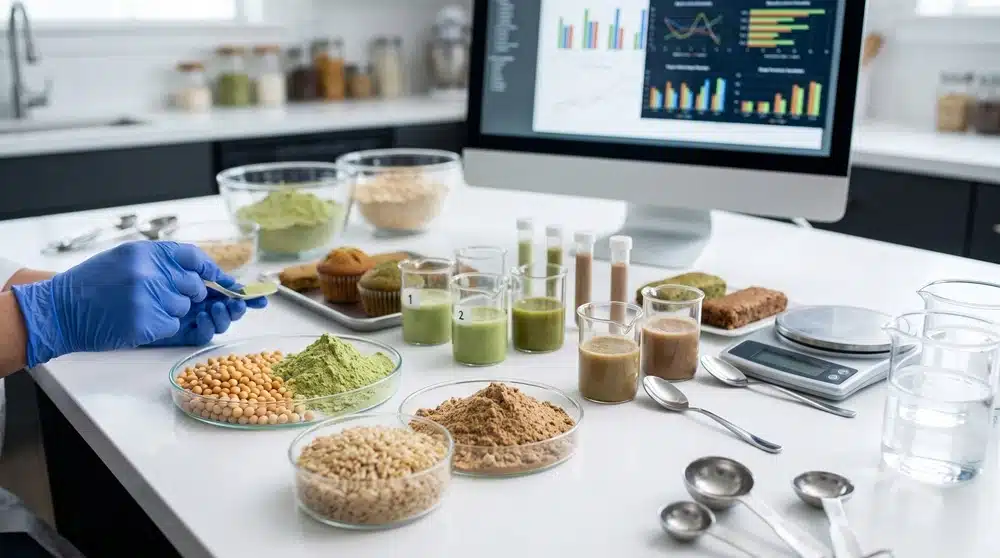
Một quy trình xây dựng công thức hiệu quả hơn là thu thập dữ liệu về axit amin của cả hai thành phần, tính toán lượng axit amin cung cấp cho mỗi khẩu phần, lựa chọn tỷ lệ phù hợp với các mục tiêu về dinh dưỡng và cảm quan, đồng thời kiểm chứng hỗn hợp cuối cùng thông qua các thử nghiệm thích hợp.

Protein đậu Hà Lan so với protein gạo lứt: Loại nào tốt hơn?
Không có thành phần nào là tốt hơn một cách tuyệt đối. Lựa chọn phù hợp phụ thuộc vào công thức.
| Mục tiêu sản phẩm | Điểm khởi đầu có thể | Lý do | Những điều cần kiểm tra |
|---|---|---|---|
| Tỷ lệ lysine cao hơn | Hỗn hợp có hương vị đậu Hà Lan nổi bật | Protein đậu thường có hàm lượng lysine cao hơn so với protein gạo | Hàm lượng lysine thực tế trên mỗi gam protein |
| Sự đóng góp nhiều hơn của các axit amin chứa lưu huỳnh | Thêm protein gạo | Protein gạo có thể bổ sung cho cấu trúc methionine/cysteine của đậu Hà Lan | Dữ liệu về methionine và cysteine cùng điểm số cuối cùng |
| Hương vị đậu Hà Lan nhẹ nhàng hơn | Sử dụng hệ thống kết hợp | Gạo có thể làm thay đổi hương vị và kết cấu | Hội đồng đánh giá cảm quan, dư vị và hệ thống đánh giá độ ngọt |
| Độ sạn hoặc cặn thấp hơn | Không chỉ phụ thuộc vào nguồn | Quá trình tạo hạt, kích thước hạt và chất ổn định là những yếu tố then chốt | Các thử nghiệm về khả năng phân tán, lắng đọng và thời hạn sử dụng |
| Nhãn nguồn duy nhất | Chỉ có đậu hoặc chỉ có gạo | Cách ghi thành phần đơn giản hơn | Mức độ đầy đủ của axit amin và sự chấp nhận của người tiêu dùng |
| Bột protein thuần chay cân bằng | Hỗn hợp đậu Hà Lan và gạo đã được tính toán | Có thể cải thiện sự cân bằng axit amin và tính linh hoạt về cảm quan | Thông số hỗn hợp thành phẩm, liều lượng và chất lượng protein |
Protein từ đậu và gạo lứt có tốt cho việc xây dựng cơ bắp không?
Hỗn hợp đậu Hà Lan và gạo có thể cung cấp protein và các axit amin thiết yếu cho công thức dành cho lối sống năng động. Tuy nhiên, kết quả phát triển cơ bắp còn phụ thuộc vào tổng lượng protein tiêu thụ hàng ngày, hàm lượng các axit amin thiết yếu và leucine trong mỗi khẩu phần, việc tập luyện sức bền, lượng năng lượng nạp vào và từng người tiêu dùng cụ thể.
Các thử nghiệm lâm sàng đã đánh giá các loại protein đậu Hà Lan cô lập cụ thể và các sản phẩm protein gạo cụ thể trong quá trình tập luyện sức bền. Những nghiên cứu này không chứng minh rằng mọi hỗn hợp đậu Hà Lan và gạo đều có hiệu quả tương tự như whey hoặc mang lại kết quả giống nhau cho mọi người dùng. Các thương hiệu nên sử dụng chính xác thành phần, liều lượng và thiết kế nghiên cứu đã được kiểm chứng khi đưa ra các tuyên bố về hiệu quả dành riêng cho sản phẩm.
Khả năng tiêu hóa và khả năng dung nạp
Trong một nghiên cứu có kiểm soát trên người, protein đậu Hà Lan tinh chế đã cho thấy khả năng tiêu hóa axit amin ở hồi tràng cao, nhưng mức độ tiêu hóa này thay đổi tùy theo từng thành phần và từng loại axit amin. Khả năng tiêu hóa và hiệu quả của protein gạo cũng phụ thuộc vào quy trình chế biến, kích thước hạt và cấp độ sản phẩm. Việc pha trộn hai thành phần không tự động loại bỏ được tình trạng khó chịu khi tiêu hóa.
Các yếu tố cần xem xét liên quan đến khả năng chịu đựng bao gồm:
- Dị ứng hoặc nhạy cảm với đậu Hà Lan: Đậu Hà Lan không nằm trong danh sách chín chất gây dị ứng chính tại Hoa Kỳ, nhưng vẫn có thể gây ra phản ứng dị ứng, đặc biệt là ở những người bị dị ứng với một số loại đậu.
- Lượng carbohydrate còn lại: Các nguyên liệu dạng cô đặc có thể chứa nhiều thành phần phi protein hơn so với các sản phẩm cô lập.
- Khẩu phần: Với một số người dùng, việc dùng liều lượng bột quá lớn có thể gây cảm giác no hoặc khó chịu.
- Công thức hoàn chỉnh: Các chất tạo ngọt, chất làm đặc, chất xơ, hương liệu và rượu đường có thể ảnh hưởng đến khả năng dung nạp nhiều hơn so với chính hỗn hợp protein.
- Các chất gây ô nhiễm có nguồn gốc từ gạo: Việc đánh giá năng lực nhà cung cấp cần bao gồm các biện pháp kiểm soát thích hợp đối với asen và kim loại nặng.
Tránh mô tả bất kỳ thành phần nào là “không gây dị ứng”, “dễ tiêu hóa” hay an toàn cho mọi người. Hãy sử dụng các nguồn tham khảo có chứng cứ và các tuyên bố về chất gây dị ứng, đồng thời khuyến cáo người tiêu dùng bị dị ứng hoặc có vấn đề sức khỏe nên tìm kiếm sự tư vấn chuyên môn.
Hương vị, kết cấu, độ hòa tan và khả năng hòa trộn
Tỷ lệ đậu Hà Lan và gạo cũng là một quyết định dựa trên cảm quan và quy trình sản xuất. Protein từ đậu Hà Lan có thể tạo ra hương vị đặc trưng của đậu, độ sánh và cảm giác khô ráo trong miệng. Protein từ gạo có thể mang lại hương vị ngũ cốc, cảm giác sạn và cặn. Việc pha trộn có thể cải thiện hương vị tổng thể, nhưng ngay cả khi tỷ lệ axit amin được cân bằng về mặt kỹ thuật, sản phẩm vẫn có thể thất bại về mặt thương mại nếu thức uống lắc không ngon miệng.
Các thương hiệu hợp tác với một đối tác sản xuất thực phẩm bổ sung protein cần kiểm tra:
- khả năng phân tán trong nước và các loại sữa thực vật thông dụng;
- quá trình lắng cặn sau 5, 15 và 30 phút;
- quá trình tạo bọt và quá trình tan bọt;
- độ nhớt ở mức khẩu phần ghi trên nhãn;
- vị sạn, vị bột phấn, vị chát và dư vị;
- hiện tượng che lấp hương vị và tương tác giữa các chất tạo ngọt;
- tốc độ dòng chảy của bột, độ chính xác khi múc, hiện tượng vón cục và khả năng hấp thụ độ ẩm;
- tính chất rào cản của bao bì và độ ổn định trong thời gian bảo quản.
How Consumers Can Evaluate a Pea and Rice Protein Powder
- Check the protein per serving. Compare grams of protein at the actual labeled serving size.
- Read the full ingredient list. A product may contain small amounts of protein alongside large amounts of flavors, carbohydrates or other ingredients.
- Look for relevant testing. Third-party testing can be useful when the scope covers identity, protein, contaminants and label accuracy.
- Consider dietary needs. Vegan, gluten-free, dairy-free, soy-free and organic positioning should be supported by the product’s documentation and manufacturing controls.
- Assess tolerance and taste. The best formula is one that fits the diet and can be used consistently.
Hướng dẫn xây dựng công thức dành cho các thương hiệu thực phẩm bổ sung
A commercial plant-protein blend requires more than selecting two powders. A qualified Nhà sản xuất thực phẩm bổ sung dạng bột should connect the nutritional target with flavor, processing and packaging.
| Development Stage | Câu hỏi chính | Required Evidence or Test |
|---|---|---|
| Product brief | Who is the consumer and what is the protein target? | Target market, serving size, claims and dosage format |
| Ingredient selection | Which pea and rice grades fit the formula? | Specifications, COAs, amino acid profiles and samples |
| Ratio design | What proportion meets the amino acid and sensory target? | Protein-basis calculation, not powder-weight guesswork |
| Bench formulation | Can the formula taste and mix acceptably? | Sensory, solubility, viscosity, foam and sediment tests |
| Pilot batch | Does the blend remain uniform at production scale? | Blend uniformity, bulk density, flow and fill-weight data |
| Sản phẩm hoàn thiện | Does the product meet label and safety specifications? | Protein, microbiology, heavy metals, allergens and stability |
| Commercial release | Can the same quality be repeated? | Master manufacturing record, change control and batch review |

Danh sách kiểm tra nhà cung cấp và Giấy chứng nhận nguồn gốc (COA)
Before approving a pea-rice system, request the following for each ingredient and, where appropriate, the finished blend:
- exact ingredient name, botanical source and country of origin;
- concentrate, isolate, hydrolyzed, instantized, organic or germinated status;
- protein assay specification, test method and reporting basis;
- full amino acid profile with units and test method;
- particle size, bulk density, color, taste and odor limits;
- solubility or dispersibility data relevant to the application;
- heavy metals, including an appropriate arsenic review for rice-derived material;
- microbiological limits and pathogen testing;
- allergen and cross-contact statement;
- organic, non-GMO, gluten-free or vegan support documents when claimed;
- pesticide-residue and solvent information when relevant;
- packaging, shelf life, storage, MOQ and lead time;
- change-notification and traceability procedures.
Brands sourcing multiple plant proteins can also review a broader sports nutrition ingredient sourcing program to align protein ingredients, amino acids, flavors and manufacturing requirements.
Claims and Labeling Considerations
- Do not claim that the blend treats disease, repairs medical conditions or guarantees weight loss.
- Do not state that every pea-rice blend is complete, equal to whey or clinically proven.
- Do not call a dietary supplement “FDA approved.”
- Support muscle, satiety, digestive or performance claims with evidence relevant to the finished product and labeled serving.
- Review “high protein,” “complete protein,” vegan, allergen-free, gluten-free, organic and non-GMO wording under the rules of the target market.
- Use the mandatory dietary-supplement disclaimer when required for U.S. structure/function claims.
Câu hỏi thường gặp
Is pea and brown rice protein a complete protein?
It can provide a balanced essential amino acid profile, but completeness depends on the actual ingredient specifications, ratio, digestibility and serving size. A product-specific calculation is more reliable than assuming every blend is complete.
What is the best ratio of pea protein to brown rice protein?
There is no universal best ratio. The ratio should be calculated from the amino acid and protein data of the selected ingredients and then adjusted for taste, texture, cost and serving size.
Is pea protein better than brown rice protein?
Pea protein generally contributes more lysine, while rice protein can complement sulfur-containing amino acids. Pea may be better for some single-source formulas; a calculated blend may be better when amino acid balance and sensory flexibility are priorities.
Can pea and rice protein support muscle growth?
They can contribute protein and essential amino acids to a diet that supports training. Results depend on the total daily diet, dose, leucine and essential amino acids, exercise program and the specific product.
Is pea and brown rice protein safe every day?
Many adults use plant protein powders regularly, but safety and tolerance are product- and person-specific. Follow the product label and seek professional advice for allergies, pregnancy, kidney disease, medication use or other medical concerns.
Is a pea-rice protein blend gluten-free?
Peas and rice are not gluten grains, but a finished product should only use a gluten-free claim when supplier documents, facility controls and any required testing support it.
What should brands request from a supplier?
Request a specification, batch COA, protein test method, amino acid profile, heavy-metal and microbiology results, allergen statement, certification documents, sensory data, packaging details, MOQ and lead time.
Can pea and rice protein be used in bars or ready-to-mix drinks?
Yes, but each format needs application testing. Bars require texture and water-activity control, while drink powders require dispersibility, sedimentation, flavor masking and packaging evaluation.
Kết luận
Pea and brown rice protein can be a useful complementary plant-protein system, but the value of the blend depends on the actual ingredients and finished formula. Consumers should compare protein per serving, ingredients, testing and tolerance. Brands should calculate the amino acid balance from supplier data, verify contaminants and allergens, optimize sensory performance and substantiate every label claim. The strongest product is not the one with a fashionable ratio—it is the one supported by specifications, testing and a clear consumer use case.
Tài liệu tham khảo
- FAO: Đánh giá chất lượng protein trong chế độ ăn uống đối với dinh dưỡng con người
- Real Ileal Amino Acid Digestibility of Pea Protein Compared with Casein
- Pea Protein Supplementation During Resistance Training
- Rice or Whey Protein and Resistance Training Adaptations
- Processing Effects on Pea and Rice Protein Digestibility and Amino Acids
- FDA Dietary Supplement CGMP Compliance Guide
- Các tuyên bố về cấu trúc và chức năng của FDA
- Hướng dẫn tuân thủ của FTC về các sản phẩm chăm sóc sức khỏe

Warren Wan là một chuyên gia dày dạn với kinh nghiệm phong phú trong chuỗi cung ứng thực phẩm bổ sung, sở hữu kinh nghiệm thực tiễn sâu rộng trong nghiên cứu, phát triển, kiểm soát quy trình và tìm nguồn cung ứng toàn cầu các thành phần cốt lõi như peptit collagen, protein từ nước hầm xương và keratin. Với tư cách là tác giả của chuyên mục này, ông cam kết loại bỏ những lớp bao bọc tiếp thị, biến những kiến thức khoa học phức tạp về thành phần và các tiêu chuẩn kiểm soát chất lượng sản xuất thành những nội dung phổ biến khoa học dễ hiểu nhưng sâu sắc, giúp độc giả hiểu rõ sự thật đằng sau các nhãn mác và đưa ra những lựa chọn sức khỏe hợp lý hơn.