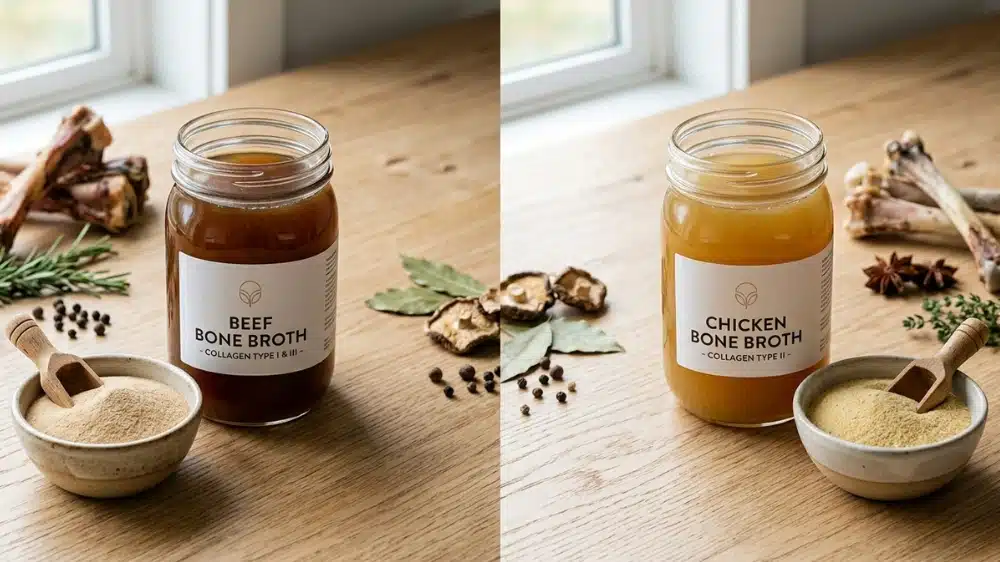
The debate over whether beef or chicken bone broth is superior for supplement formulation hinges not on a simple “better” or “worse” verdict, but on the specific therapeutic targets of your product line—primarily the distinction between Type I/III collagen for skin and gut health versus Type II for joint support. While beef offers a robust profile of amino acids like glycine and proline for structural integrity, chicken bone broth provides a unique matrix of chondroitin and glucosamine essential for cartilage repair. Success in the 2026 nutraceutical market requires moving beyond generic sourcing toward a data-driven approach, where the “best” ingredient is defined by its molecular weight, peptide bioavailability, and the verifiable transparency found in a Certificate of Analysis (COA).
When formulating a high-performance supplement, the distinction between beef and chicken bone broth isn’t just about the animal of origin—it’s about the collagen polymorphism and the associated non-collagenous proteins that survive the extraction process. In the B2B sector, we look past the marketing “buzz” to the specific peptide chains that will drive the consumer’s clinical results.
The Beef Matrix: Structural Integrity and Epithelial Repair
Beef bone broth is the industry standard for Type I and Type III collagen. From a molecular standpoint, beef provides a dense concentration of the “proline-hydroxyproline” dipeptide. This is the structural backbone of human skin and the intestinal lining.
Collagen loại IThe most abundant collagen in the human body. Its high tensile strength makes it the primary choice for “Beauty from Within” formulations.
Collagen loại IIICrucial for the elasticity of blood vessels and the gut wall.
Expert Insight
For formulators targeting Leaky Gut Syndrome or post-surgical recovery, beef bone broth is superior because of its high L-Glutamine content paired with Type III fibers. This combination supports re-epithelialization—the process of resurfacing the intestinal membrane—more effectively than avian sources.
The Chicken Matrix: The Glycosaminoglycan (GAG) Advantage
Chicken bone broth (specifically when derived from sternal cartilage) is the premier source of Type II collagen. However, the “hidden” value for formulators lies in its naturally occurring matrix of muco-polysaccharides.
Collagen loại IIDirectly targets the chondrocytes (cartilage cells) in human joints.
In 2026, we are seeing a shift toward “Matrix-Whole” formulations. Instead of adding synthetic glucosamine to a blend, formulators are using premium chicken bone broth because the sinh khả dụng of these compounds is significantly higher when consumed within their natural food matrix than as isolated USP ingredients.
Tính năng
Beef Bone Broth (Bovine)
Chicken Bone Broth (Avian)
Primary Collagen
Type I & III
Type II
Target Tissue
Skin, Hair, Gut Lining, Arteries
Articular Cartilage, Joint Fluid
Key Amino Acids
High Glycine, Proline, Hydroxyproline
High Arginine, Hydroxylysine
Unique Bio-Actives
High L-Glutamine levels
Chondroitin & Hyaluronic Acid
Trọng lượng phân tử
Typically 2,000–5,000 Daltons
Typically 1,500–3,000 Daltons
The Formulator’s Perspective: Why Source Matters
In my experience working with pilot batches, the density of the peptide sequence in beef bone broth allows for a “cleaner” amino acid profile in powdered greens or meal replacement shakes. However, if your target demographic is the aging “Active Nutrition” consumer, chicken bone broth offers a functional advantage that beef cannot replicate: the support of the extracellular matrix in the joints.
Note on Data Transparency:
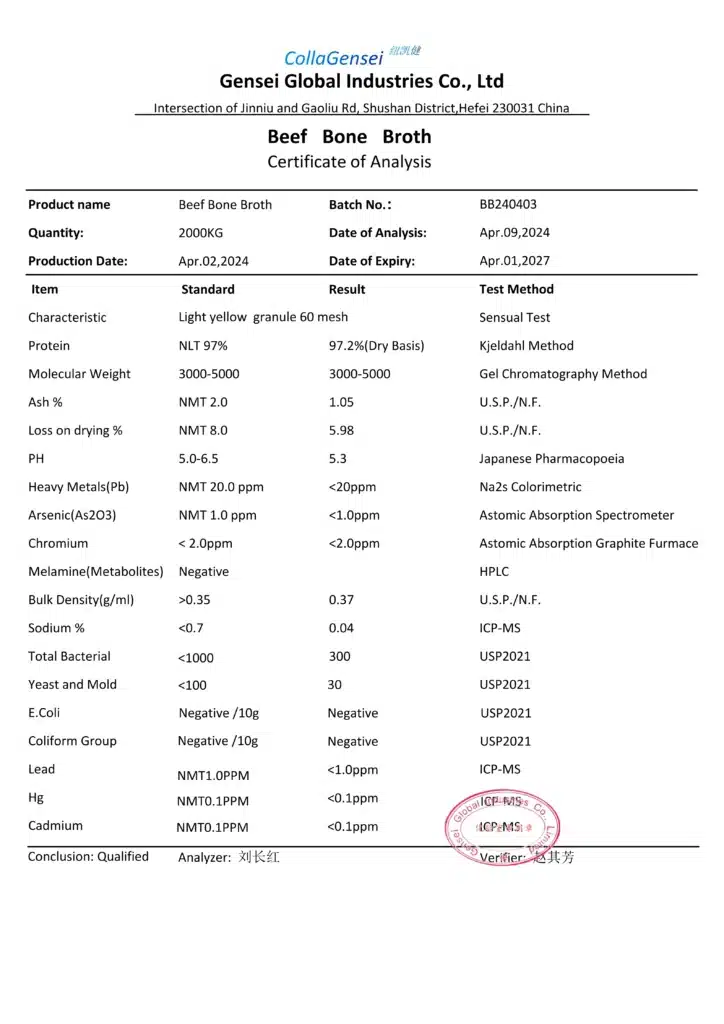
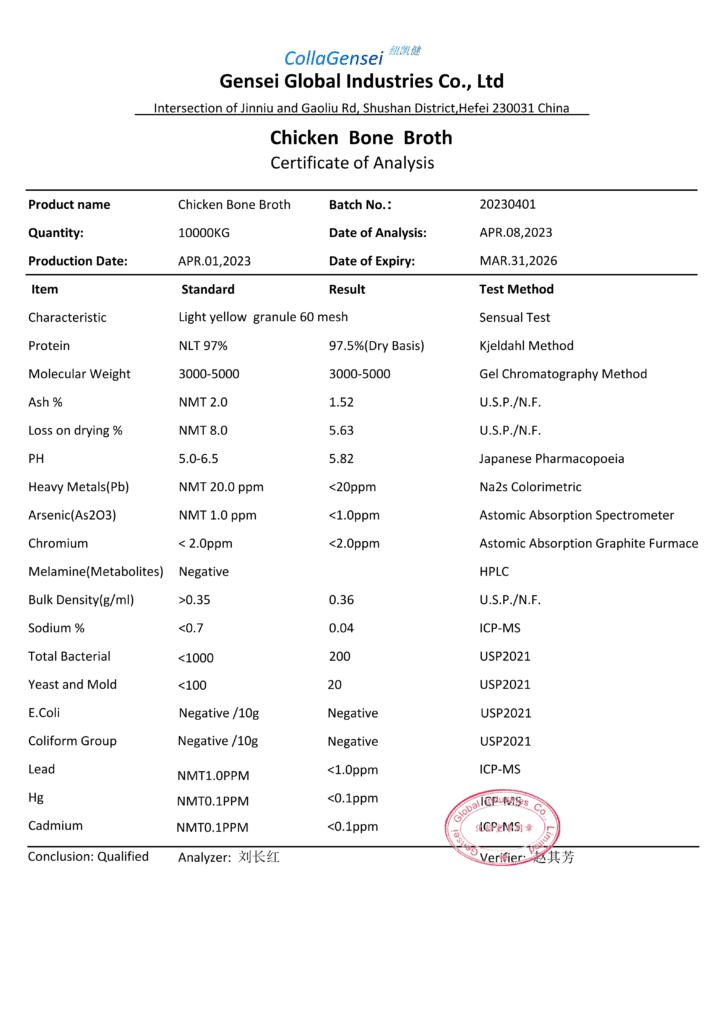
To truly understand the molecular weight distribution and the purity of these ingredients, one must look at the laboratory breakdown. Below, I have provided space to compare the typical analytical outputs for both sources.
When you review the beef COA in this section, pay close attention to the Hydroxyproline levels. Hydroxyproline is an amino acid almost exclusive to collagen. In a premium bovine source, you want to see this at a high percentage of the total amino acid profile. If the beef broth COA shows high levels of Glycine but low Hydroxyproline, it’s a red flag that the product may be cut with cheaper, non-collagenous proteins.
For the chicken COA, the “Hero Marker” isn’t just protein—it’s Chondroitin Sulfate. As I mentioned earlier, chicken bone broth is sought after for joint health. A legitimate COA should quantify the Glycosaminoglycans (GAGs). If your chicken broth supplier cannot provide a standardized percentage for Chondroitin or Hyaluronic Acid, you are likely buying “chicken soup” rather than a functional nutraceutical ingredient.
By analyzing these COAs, a formulator can ensure they aren’t just buying “protein,” but a specific biological tool designed for a specific human outcome.
The Cost of Ignoring the COA
I once consulted for a brand that saw a 15% drop in customer retention. We traced it back to a new “low-cost” chicken bone broth supplier whose COA looked identical to the previous one on the surface. However, a deeper molecular analysis revealed the bio-actives (Type II collagen markers) were 60% lower. The customers literally stopped “feeling” the joint relief.
15%Retention Drop
60%Bio-Active Deficit
Tiêu chuẩn Gensei
We provide transparent, batch-specific COAs for both our beef and chicken bone broth. We don’t just tell you it’s premium; we provide the chemical signature to prove it.
Choosing the Right Ingredient for Your Target Indication
In the B2B nutraceutical space, “general wellness” is no longer a viable marketing strategy. Precision is the new gold standard. As a formulator, you must align your raw material selection with the specific clinical outcome promised on your label.Choosing between beef and chicken bone broth is essentially a decision about which biological signaling you want to trigger in the end-consumer.
The Strategic Indication Matrix
The following table serves as a decision-making framework for product development teams to determine which source aligns with their primary “Hero” claim.
Target Indication
Recommended Source
Primary Bio-Active Driver
Why This Choice?
Dermal Elasticity & Anti-Aging
Beef
Type I & III Collagen Peptides
Provides the specific “building blocks” for the human extracellular matrix (ECM) in skin.
Osteoarthritis & Joint Mobility
Chicken
Type II + Chondroitin Sulfate
Mimics the composition of human articular cartilage to reduce inflammation and friction.
Intestinal Permeability (Gut Health)
Beef (High-Proline)
L-Glutamine & Glycine
These amino acids act as “fuel” for colonocytes and help seal tight junctions in the gut lining.
Hỗ trợ hệ miễn dịch
Chicken
Hyaluronic Acid & Amino-Sugars
Chicken broth contains cysteine and GAGs that help thin mucus and support the respiratory system.
Case Study (2025-2026)The “Gut-First” Reformulation
A mid-sized supplement brand recently approached us to analyze their flagship “Digestive Reset” powder. They were using a generic “collagen blend” that yielded inconsistent results in consumer focus groups regarding bloating and gut comfort.
The Intervention
We advised switching to a 100% Beef Bone Broth Peptide source. Why? Because their COA showed a significant deficit in Hydroxyproline-to-Proline ratios—the specific amino acid sequence required for rapid “re-epithelialization” of the intestinal wall.
Kết quả40% Faster
Documented “sensation of relief” in users compared to their previous multi-source blend by utilizing Gensei’s highly bioavailable beef peptides.
Expert Insight: Synergy is secondary to specificity. While “multi-collagen” sounds good on a label, a concentrated single-source often delivers superior clinical efficacy for gut-specific indications.
Expert Perspective: The Bioavailability “Threshold”
One mistake I frequently see in formulation is focusing solely on the grams of protein. In reality, the human body can only process so much large-chain protein at once.
At Gensei, we prioritize low-dalton weight peptides. Whether you choose beef or chicken, if the molecular weight is too high (above 5,000 Daltons), your “premium” ingredient will simply be digested as a standard food protein rather than acting as a signaling molecule for collagen synthesis.
Pro-Tip for Procurement:
When reviewing your next batch, don’t just look at the protein percentage. Look at the Peptide Map. A high-quality beef bone broth for gut health should show a distinct peak in small-chain peptides that bypass the stomach’s harsh acidic environment to reach the small intestine intact.
Real-World Formulation Tip: The “Neutralization” Factor
If you are developing a ready-to-mix (RTM) beverage, chicken bone broth tends to have a more savory, “home-style” flavor profile which can be difficult to mask with fruit flavors. Beef bone broth, when processed correctly into a refined powder, often provides a more neutral “umami” base that pairs exceptionally well with chocolate or coffee-flavored performance powders.
Which indication are you currently prioritizing for your Q3 product launch? Understanding this will help us narrow down the specific COA markers you should be demanding from your suppliers.
From a B2B procurement standpoint, a bone broth ingredient can have a stellar nutritional profile on paper, but if it fails in the “mixing tank,” it fails the product launch. In my years of overseeing pilot runs, the two biggest hurdles for brand owners are solubility and organoleptic (sensory) stability.The molecular structure of beef versus chicken creates distinct challenges during the blending and encapsulation processes.
The “Clumping” Factor: Molecular Weight & Agglomeration
One of the most frequent complaints in the RTM (Ready-to-Mix) market is clumping. This is usually a symptom of using bone broth with high molecular weight or poor surface porosity.
Nước dùng xương bò
Bovine peptides tend to be slightly more “hygroscopic” (moisture-absorbing). If the powder isn’t properly agglomerated, it can form “fish eyes”—dry clumps of powder surrounded by a wet outer layer that refuse to dissolve.
Nước dùng xương gà
Because chicken broth contains naturally occurring muco-polysaccharides (like Hyaluronic Acid), it can create a slightly more “viscous” hoặc “slick” mouthfeel.
While this is great for “creamer” style supplements, it can complicate high-speed sachet filling machines by causing the powder to stick to the seals.
Organoleptics: The “Bone” vs. “Broth” Flavor Profile
When we talk about “organoleptics,” we are measuring the taste, smell, and color of the ingredient.
The Beef Umami
Beef bone broth carries a deep, savory umami profile. In B2B formulation, this is a double-edged sword. It is excellent for savory protein broths or “keto” soups.
Formulator’s Note: This profile requires significant “flavor masking” if you intend to use it in a berry-flavored collagen drink.
The Chicken Neutrality
Chicken bone broth is often perceived as “lighter.” However, low-quality chicken broth can carry a distinct “poultry” aftertaste that is difficult to neutralize.
The Color Shift
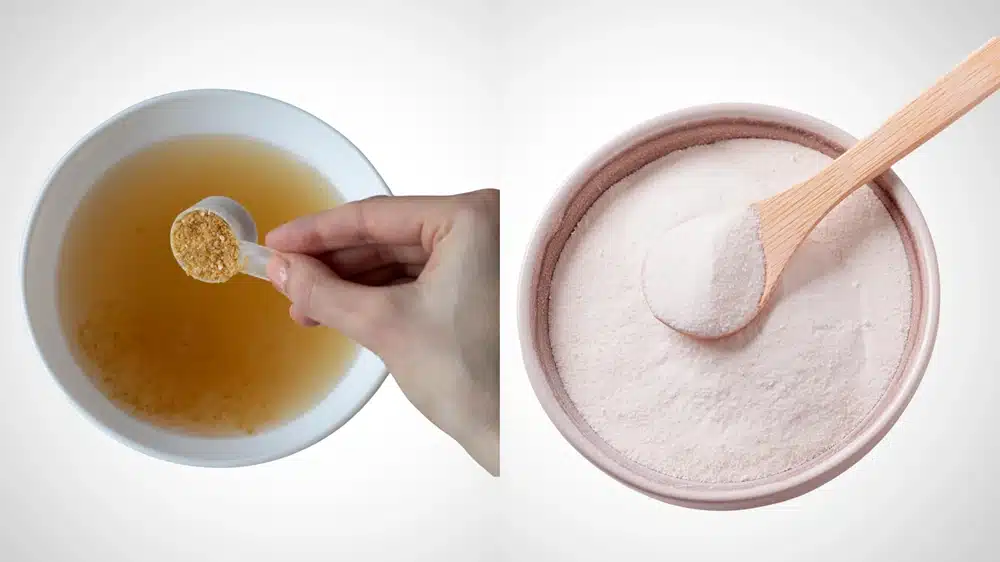
Beef yields a darker, tan powder, while chicken is typically lighter/yellowish. This impacts the aesthetics of your final blend, especially in unflavored “naked” products.
Comparison: Manufacturing Specifications
Tham số
Beef Bone Broth Powder
Bột nước dùng xương gà
Mật độ khối
Generally higher; better for smaller capsules.
Lower; requires more “filler” or larger capsules.
Solubility (Cold Water)
Moderate (requires aggressive stirring).
High (if hydrolyzed correctly).
Heat Stability
Exceptional; ideal for “instant soup” formats.
Good; but GAGs can degrade under extreme heat.
Mixing Synergy
Pairs well with chocolate/vanilla/coffee.
Pairs well with savory/unflavored/creamer bases.
The Gensei Solution: Precision Enzymatic Hydrolysis
At Gensei, we address these challenges before the ingredient ever reaches your warehouse. By utilizing enzymatic hydrolysis, we break down the long-chain collagen fibers into smaller peptides (typically under 3,000 Daltons).
Efficiency & ProfitabilityWhy this matters for your bottom line
Reduced Masking Costs
Our peptides are processed to be virtually odorless and tasteless, meaning you use 15–20% less flavoring and sweetener in your final formulation.
Faster Throughput
Our powders are engineered for high flowability, reducing downtime on your encapsulation or sachet-packing lines.
Expert Case Study
We recently assisted a client who was struggling with a “gritty” texture in their beef-based meal replacement. By switching to a Gensei peptide with a tighter Dalton weight distribution—verified by our COA—they achieved a 100% smooth dissolution in cold almond milk without changing their existing mixing equipment.
kết luận
.Selecting the right bone broth is a strategic decision that aligns specific molecular profiles—beef’s Type I & III for gut and skin, or chicken’s Type II for joints—with your product’s clinical goals. At Gensei, we move beyond the role of a traditional supplier to become a strategic partner, providing the high-purity, bioavailable powders and transparent, data-backed COAs necessary to navigate the rigorous demands of the 2026 nutraceutical market. Whether your product roadmap prioritizes dermal elasticity, gut integrity, or joint mobility, our consistent supply of precision-engineered collagen allows you to focus on innovation while we guarantee the molecular excellence of your raw materials.
Precision Formulation Starts Here
Ready to elevate your product with the Gensei Standard?
Request Batch-Specific COAs
Consult with our formulation experts to identify the optimal molecular profile for your target indication.