
This guide explains what P5P is, how it compares with pyridoxine hydrochloride, what supplement users should know about vitamin B6 intake and what brands should verify when sourcing bulk pyridoxal 5 phosphate powder.
P5P là gì?
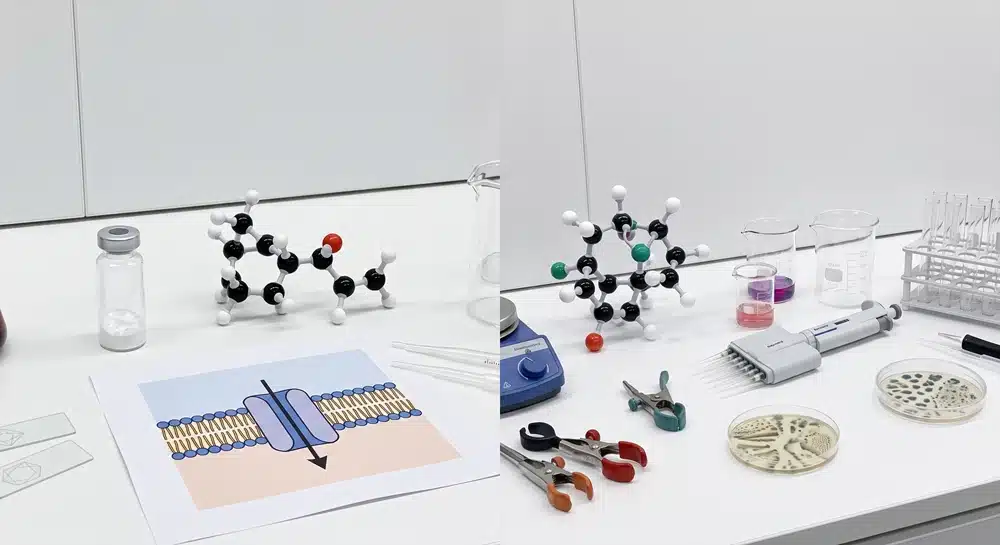
P5P is the common abbreviation for pyridoxal 5′-phosphate. Scientific references also use the abbreviation PLP. Vitamin B6 is not a single compound; it is a family of related vitamers, including pyridoxine, pyridoxal and pyridoxamine and their phosphate esters. PLP and pyridoxamine 5′-phosphate are active coenzyme forms of vitamin B6.
In commercial supplement ingredients, the exact chemical identity must be confirmed rather than assumed from the term “P5P.” Anhydrous pyridoxal 5′-phosphate is associated with CAS 54-47-7, while pyridoxal 5′-phosphate monohydrate is commonly associated with CAS 41468-25-1. Buyers should verify the hydrate status, molecular weight, assay basis and CAS number on the specification and batch Certificate of Analysis.
P5P is used in standalone vitamin B6 supplements, B-complex formulas, multivitamins, capsules, tablets, powders and premixes. Brands comparing P5P with conventional B6 can also review available vitamin B6 ingredient options.

P5P vs Pyridoxine HCl: Key Differences
| Yếu tố | P5P / PLP | Pyridoxine HCl | What Brands Should Verify |
|---|---|---|---|
| Vitamin B6 form | Coenzyme form of vitamin B6 | Common supplemental form that is converted through normal vitamin B6 metabolism | Ingredient identity and intended label declaration |
| Common commercial identity | Often pyridoxal 5′-phosphate monohydrate | Pyridoxine hydrochloride | CAS, formula, hydrate or salt status and molecular weight |
| Hấp thụ | Phosphorylated forms are dephosphorylated before intestinal absorption | Well absorbed in commonly used supplement forms | Do not claim superior absorption without product-specific evidence |
| Định vị | Often used in “active B6” or premium B-complex concepts | Widely used in conventional B-complex and multivitamin formulas | Target market, claim strategy, cost and consumer expectations |
| Công thức | May require added attention to light, moisture and stability | Commonly selected for broad compatibility and cost efficiency | Stability data, overage rationale, packaging and finished-product testing |
| An toàn | Still contributes to total vitamin B6 exposure | Still contributes to total vitamin B6 exposure | Total daily B6 from all ingredients and products |
Does P5P Have Better Absorption or Bioavailability?
P5P is correctly described as a coenzyme form of vitamin B6, but this biochemical status should not be turned into an automatic “superior absorption” claim. The NIH Office of Dietary Supplements notes that phosphorylated vitamin B6 forms are dephosphorylated before absorption and that absorption from supplements does not differ substantially among common vitamin B6 forms.
Therefore, a responsible comparison is:
- P5P provides a vitamin B6 form used in coenzyme-related positioning.
- Pyridoxine HCl is a common, well-absorbed and widely used vitamin B6 ingredient.
- The best form for a finished product depends on formula goals, serving size, stability, cost, destination-market rules and the evidence supporting the intended claims.
Brands developing multi-ingredient formulas can compare P5P with other nutrients through custom B-complex ingredient blends.
What Does P5P Do in the Body?
Vitamin B6 coenzymes participate in more than 100 enzyme reactions. Their established nutritional roles include amino acid metabolism, carbohydrate and lipid metabolism, neurotransmitter biosynthesis, glycogen breakdown, hemoglobin formation, immune function and the maintenance of normal homocysteine metabolism.
These are functions of vitamin B6 in human nutrition. They do not prove that a particular P5P product treats depression, anxiety, hormonal disorders, cardiovascular disease, sleep disorders or any other medical condition. Product claims must match the ingredient, dose, finished formula, evidence and applicable regulations.
Energy and Protein Metabolism
P5P-dependent enzymes are involved in amino acid and glycogen metabolism. This supports a general nutrient-function explanation, but it does not establish that P5P directly increases energy, muscle growth, exercise recovery or athletic performance in people who already have adequate vitamin B6 status.
Nervous System and Neurotransmitter Pathways
PLP participates in reactions used to synthesize several neurotransmitters. Supplement brands may describe substantiated normal physiological roles, but should not convert this mechanism into claims that P5P treats anxiety, depression, insomnia or neurological disease.
Homocysteine and Blood Formation
Vitamin B6 is involved in homocysteine metabolism and hemoglobin formation. These functions do not justify claims that a P5P supplement prevents cardiovascular disease or treats anemia without appropriate evidence and regulatory authorization.
P5P Benefits: What Can and Cannot Be Claimed?
| Tuyên bố | Recommended Treatment |
|---|---|
| “P5P is a coenzyme form of vitamin B6.” | Generally supportable when the ingredient identity is correct. |
| “Vitamin B6 supports normal energy and protein metabolism.” | Potential structure/function positioning; substantiate and review destination-market wording. |
| “P5P is always more bioavailable than pyridoxine.” | Avoid unless the exact claim is supported by relevant comparative evidence. |
| “P5P lowers prolactin, raises testosterone or prevents gynecomastia.” | Do not use as a general supplement claim. This moves toward treatment and hormone-modification claims. |
| “P5P treats anxiety, depression or sleep disorders.” | Do not use. These are disease or treatment claims. |
| “P5P improves bodybuilding results or muscle recovery.” | Do not promise performance outcomes based only on vitamin B6’s metabolic role. |
P5P Dosage, Daily Value and Labeling
There is no universal P5P dose that is appropriate for every consumer or every product. In the United States, the Daily Value for vitamin B6 is 1.7 mg. Adult Recommended Dietary Allowances generally range from 1.3 to 1.7 mg per day depending on age and sex, with different needs during pregnancy and lactation.
These reference values are not instructions to self-treat a condition. Supplement formulators should calculate the total vitamin B6 contribution from P5P and every other B6-containing ingredient in the formula. They should also review the label amount, percent Daily Value, serving frequency and target-market upper-intake guidance.
Raw-material weight, assay percentage and the amount of vitamin B6 declared on the Supplement Facts panel should not be treated as interchangeable without a documented calculation. The supplier should state whether the material is anhydrous or monohydrate, whether the assay is reported as-is or on a dried basis and how the nutrient-equivalent calculation is supported.
P5P Side Effects and Safety Considerations
Vitamin B6 is water-soluble, but water solubility does not make unlimited supplemental intake safe. Long-term excessive vitamin B6 intake can cause sensory neuropathy, with symptoms such as tingling, numbness, burning sensations, balance changes or difficulty coordinating movement. Users should stop use and seek medical advice if neurological symptoms occur.
Safety limits differ by jurisdiction. The U.S. Food and Nutrition Board established an adult upper intake level of 100 mg per day, while European guidance is substantially lower. International supplement brands should not copy a U.S. serving level into other markets without regulatory review.
Consumers should also consider total vitamin B6 exposure from multivitamins, B-complex products, magnesium blends, energy products, fortified foods and standalone P5P supplements. People who are pregnant or breastfeeding, have medical conditions, or use medications should discuss supplementation with a qualified healthcare professional. Vitamin B6 can interact with or be affected by certain medications, including some tuberculosis and antiepileptic drugs.
P5P for Bodybuilding, Testosterone or Prolactin
Searches for P5P frequently include bodybuilding, testosterone, prolactin and gynecomastia. These queries represent a high compliance risk. P5P’s role in protein metabolism does not demonstrate that supplementation increases testosterone, directly improves muscle gain, lowers prolactin or treats gynecomastia.
Brands should not build marketing pages around unapproved hormone-treatment claims or suggest that P5P is a substitute for medical evaluation. A safer content approach is to explain vitamin B6’s normal metabolic roles, clarify the limits of the evidence and direct readers with hormone-related concerns to a healthcare professional.
How Supplement Brands Should Choose a P5P Ingredient
A P5P sourcing decision should be based on identity, assay, stability, compliance and manufacturing fit rather than the phrase “active vitamin B6” alone.
1. Confirm the Exact Chemical Form
- Is the material anhydrous P5P or P5P monohydrate?
- Do the CAS number, formula and molecular weight agree across the specification, SDS and COA?
- Is the ingredient name suitable for the intended market and label?
2. Review the Assay and Test Method
- What assay range is guaranteed?
- Is the result reported as-is or on a dried basis?
- Which validated method is used, such as an appropriate chromatographic method?
- How is the declared vitamin B6 amount calculated from the raw material?
3. Evaluate Stability and Packaging
- Request stability data relevant to the proposed dosage form.
- Review sensitivity to light, moisture, oxygen, pH and processing temperature.
- Confirm whether opaque, moisture-barrier or oxygen-control packaging is required.
- Validate potency through the intended shelf life rather than relying only on raw-material assay.
4. Match P5P to the Dosage Form
P5P can be considered for capsules, tablets, powders and premixes. Gummies and liquids may require additional work on taste, pH and stability. Brands planning finished products can review Sản xuất gia công vitamin options or evaluate a Nhà sản xuất thực phẩm bổ sung dạng viên nang for powder-filled P5P and B-complex formats.
5. Request Complete Quality Documentation
- Batch-specific COA and current specification
- Identity and assay methods
- Giới hạn về kim loại nặng và vi sinh vật
- Residual solvents or process-related impurity data when relevant
- Allergen, GMO and origin statements
- Stability, storage and shelf-life information
- GMP and quality-system documentation
- MOQ, lead time, packaging and change-control process
P5P Supplier Red Flags
- The supplier uses one CAS number for every P5P form without confirming hydrate status.
- The COA reports an assay but does not state the method or basis.
- Marketing promises “100% absorption,” “no toxicity” or guaranteed clinical outcomes.
- The supplier calls itself “FDA approved” or “FDA certified” as proof of supplement efficacy.
- No stability data are available for the proposed dosage form.
- The supplier cannot explain how raw-material assay relates to the label-declared vitamin B6 amount.
- Health claims rely on biochemical mechanisms without relevant human or finished-product evidence.
Câu hỏi thường gặp
Is P5P the same as vitamin B6?
P5P is one form within the vitamin B6 family. More precisely, pyridoxal 5′-phosphate is an active coenzyme form of vitamin B6.
Is P5P better than pyridoxine HCl?
Not automatically. P5P has a valid coenzyme-form positioning, while pyridoxine HCl is common, well absorbed and widely used. The better choice depends on evidence, formulation goals, stability, cost, labeling and target-market requirements.
Is P5P water-soluble?
Vitamin B6 is water-soluble. However, water solubility does not prove superior absorption and does not eliminate the risk associated with excessive long-term supplemental intake.
How much P5P should a person take?
There is no single dose suitable for everyone. Consumers should follow the product label and professional advice, while formulators should review the total vitamin B6 amount, Daily Value, upper-intake guidance and all other B6 sources in the finished formula.
P5P có thể gây ra tác dụng phụ không?
Excessive vitamin B6 intake over time can cause sensory neuropathy and other adverse effects. Total intake from all supplements and fortified products matters, including products that use P5P.
Does P5P lower prolactin or increase testosterone?
P5P should not be promoted as a proven treatment for elevated prolactin, low testosterone, gynecomastia or other hormone-related conditions. People with these concerns should seek medical evaluation.
What documents should P5P buyers request?
Buyers should request a batch COA, specification, identity and assay methods, hydrate-status confirmation, contaminant limits, stability and storage data, origin and allergen statements, quality certifications and commercial details such as MOQ and lead time.
Kết luận
P5P is an important coenzyme form of vitamin B6, but its value should be explained accurately. The strongest page does not rely on “superior absorption,” hormone claims or universal dosage recommendations. It distinguishes nutrient function from clinical outcomes and helps consumers and supplement brands evaluate total vitamin B6 exposure, label calculations, ingredient identity, quality testing and formulation suitability.
Tài liệu tham khảo
- Văn phòng Phụ gia Dinh dưỡng thuộc Viện Y tế Quốc gia Hoa Kỳ (NIH): Tờ thông tin về vitamin B6 dành cho các chuyên gia y tế
- FDA: Daily Value on the Nutrition and Supplement Facts Labels
- PubChem: Pyridoxal 5′-Phosphate
- PubChem: Pyridoxal 5′-Phosphate Monohydrate
- FDA: Các tuyên bố về cấu trúc/chức năng
- FTC: Hướng dẫn tuân thủ đối với các sản phẩm chăm sóc sức khỏe
Disclaimer: This content is for ingredient education and supplement formulation reference. It is not medical advice and is not intended to diagnose, treat, cure or prevent any disease. Product dosage, claims, warnings and labeling require review for the intended market.

Warren Wan là một chuyên gia dày dạn với kinh nghiệm phong phú trong chuỗi cung ứng thực phẩm bổ sung, sở hữu kinh nghiệm thực tiễn sâu rộng trong nghiên cứu, phát triển, kiểm soát quy trình và tìm nguồn cung ứng toàn cầu các thành phần cốt lõi như peptit collagen, protein từ nước hầm xương và keratin. Với tư cách là tác giả của chuyên mục này, ông cam kết loại bỏ những lớp bao bọc tiếp thị, biến những kiến thức khoa học phức tạp về thành phần và các tiêu chuẩn kiểm soát chất lượng sản xuất thành những nội dung phổ biến khoa học dễ hiểu nhưng sâu sắc, giúp độc giả hiểu rõ sự thật đằng sau các nhãn mác và đưa ra những lựa chọn sức khỏe hợp lý hơn.