
維生素 D 對於強健的骨骼、免疫健康及整體健康至關重要,然而許多人卻難以維持足夠的維生素 D 水平。 談到補充維生素D時,該選擇處方藥還是非處方藥(OTC)往往令人感到困惑。本指南將探討兩者的差異、益處、風險及最佳適用情境,協助您根據自身健康需求做出明智的決定。.
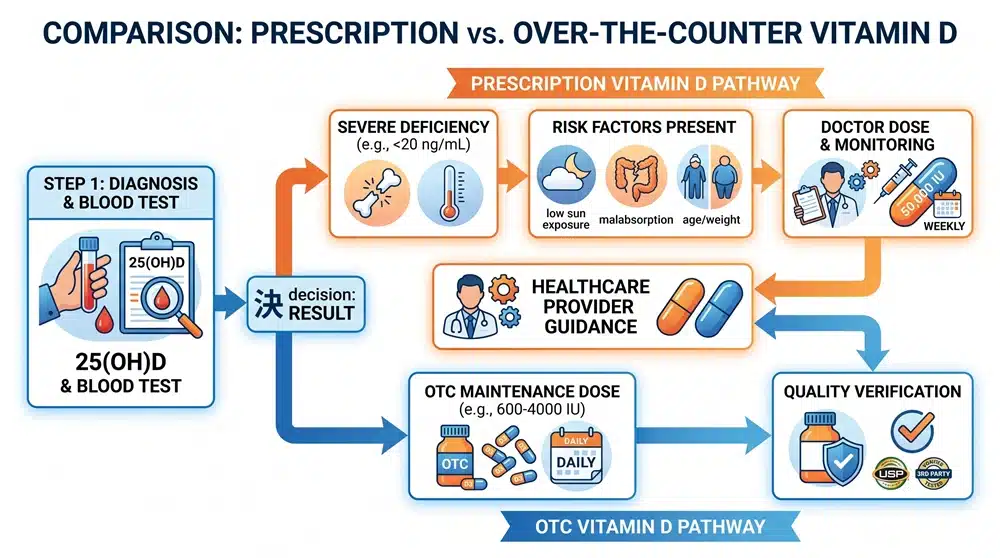
簡要摘要: 處方用維生素 D 通常是用於確診缺乏症的短期、高劑量醫療治療,通常在臨床醫師監測下,每週給予 50,000 IU。 非處方維生素 D(通常為每份 400–5,000 IU 的 D3)則更適合用於日常維持、輕度缺乏,或需要彈性長期補充的人群。最安全的选择取決於您的 25(OH)D 血液檢測結果、病史、正在服用的藥物以及營養補充品的品質。.
瞭解維他命 D
維生素 D 常被稱為「陽光維生素」,有助於鈣的吸收、骨骼健康和免疫功能。它主要以兩種形式存在: 維生素 D2 (麥角骨化醇)和 維生素 D3 (膽鈣化醇)。D3 能更有效地提高血液中的維生素 D 含量,是皮膚在陽光照射下自然產生的維生素 D。維生素 D 的來源包括陽光、高脂魚和強化乳製品等食物,以及補充劑。
維生素 D 缺乏症很常見,在某些族群中,受影響的成人高達 40%,尤其是陽光照射有限、膚色較深或患有某些疾病的人。缺乏維生素 D 會導致骨頭脆弱(骨質疏鬆症或佝瞀症)、肌肉無力和感染風險增加。測量 25- 羥基維生素 D 水準 (以 ng/mL 為單位) 的血液檢測可判斷是否缺乏,水準低於 20 ng/mL 通常需要介入治療。
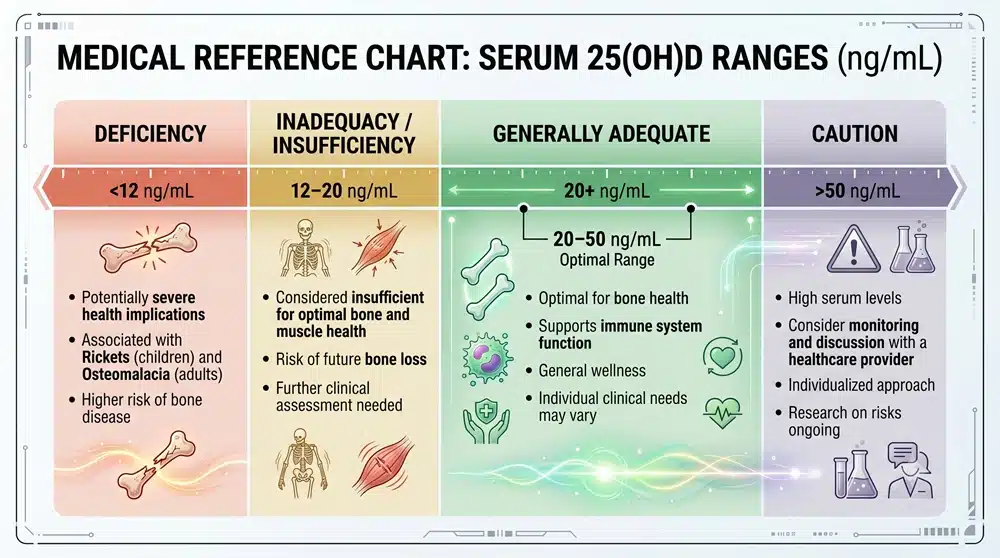
| 25(OH)D 濃度 | 一般解釋 | 這對本文的意義為何 |
| <12 ng/mL (<30 nmol/L) | 與維生素 D 缺乏有關。. | 請勿自行服用隨意的非處方藥;可能需要接受醫療評估。. |
| 12–20 ng/mL (30–50 nmol/L) | 對某些人來說,這可能不夠。. | 在某些情況下可使用非處方維生素D3,但需考量風險因素並遵循臨床醫師的建議。. |
| ≥20 ng/mL (≥50 nmol/L) | 對於大多數健康人士而言,通常已足夠。. | 對許多人來說,以維持健康為目的的非處方藥使用可能已足夠。. |
| >50 ng/mL (>125 nmol/L) | 在某些情況下,可能會伴隨不良影響。. | 請避免同時服用多種維生素 D 產品;應與臨床醫師討論攝取量及檢測事宜。. |
為何 25(OH)D 血液檢測比症狀更重要
關於維生素 D 的決策不應僅基於症狀。主要的實驗室指標是血清 25-羥基維生素 D,簡寫為 25(OH)D。 根據美國國家衛生研究院(NIH)膳食補充劑辦公室的資料,低於 12 ng/mL 的數值表示缺乏;12–20 ng/mL 對某些人而言可能不足;而 20 ng/mL 或更高,一般而言對大多數健康人士來說已屬充足。 然而,目標數值會因健康狀況、年齡、腎功能、用藥情況以及實驗室採用的檢測方法而有所不同。.
因此,處方用維生素 D 最好被視為一種在醫療監測下進行矯正的工具,而非處方維生素 D 則通常是維持健康或預防疾病的選擇。若您患有腎臟疾病、吸收不良、骨質疏鬆症、有結石病史,或正在服用會影響鈣或維生素 D 代謝的藥物,請在自行調整劑量前諮詢醫療專業人員。.
處方維他命 D
這是什麼?
處方藥 維生素 D 是由醫生處方的高劑量補充劑,通常是維生素 D2 或 D3,用來治療嚴重的缺乏症或特定的醫療狀況。常見的劑量包括每週 50,000 IU,連續 8-12 週,但療程會根據病患的需求而有所不同。
重要劑量注意事項: 50,000 IU 的維生素 D 處方藥與日常保健補充劑並不相同。它通常用於確診缺乏症的短期補充劑量,應嚴格依照指示服用。 若在無醫師監督下每日服用高劑量維生素 D,可能會增加高鈣血症、腎結石、心律不整及其他併發症的風險。.
誰需要?
處方維他命 D 通常建議用於:
- 嚴重缺乏者 (血液濃度低於 12 ng/mL)。
- 患有影響維生素 D 吸收的疾病的患者,例如克羅恩氏病、乳糜瀉或囊腫纖維化。
- 患有慢性腎臟病的人,身體很難將維生素 D 轉換成活性形式。
- 骨質疏鬆症或有骨折病史的人,需要快速矯正以支持骨骼健康。
優點
- 快速修正:高劑量可迅速提高維生素 D 的濃度,對嚴重缺乏者非常重要。
- 醫療監督:醫生會監測血液濃度並調整劑量,以降低中毒風險。
- 量身訂做的治療:根據病患的狀況量身訂做處方,確保有效的效果。
風險
- 毒性風險:過量的維生素 D 會造成高鈣血症(血鈣過高),導致噁心、腎結石或心臟問題。必須進行監測。
- 成本:處方維他命 D 通常比較昂貴,尤其是在沒有保險的情況下。
- 存取:需要看醫生和開藥方,可能不方便。
使用提示
- 請嚴格遵照處方的時間表,因為大劑量不適合每天使用。
- 定期進行血液檢測 (每 3-6 個月一次) 可確保水平維持在安全範圍 (30-50 ng/mL)。
- 立即向醫生報告噁心或疲勞等副作用。
非處方維生素 D
這是什麼?
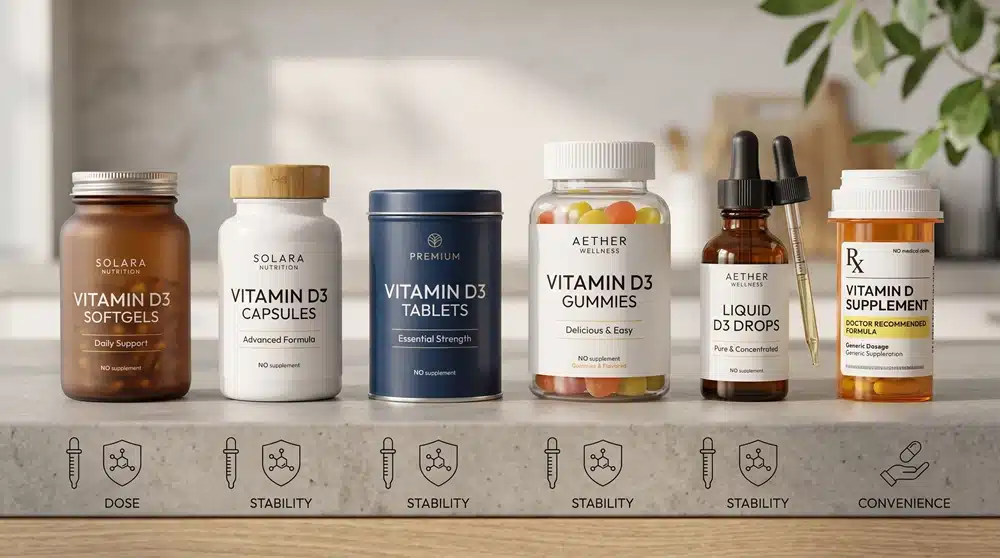
OTC 維生素 D 補充劑通常是 D3,可在藥房、超級市場或網路上購買,無需處方。一般劑量為每日 400 至 5,000 IU,其中 1,000 至 2,000 IU 最為普遍。
非處方維生素 D 有軟膠囊、膠囊、錠劑、軟糖、液體滴劑及噴霧劑等多種劑型。維生素 D3 是最常見的非處方劑型,因為它容易取得,且常被視為維持長期血中濃度首選。 對消費者而言,最重要的品質指標包括第三方驗證、清晰的「營養成分表」標示、適當的服用份量,以及能保護脂溶性維生素D免受熱、光和氧化影響的包裝。.
對於營養補充品品牌而言,非處方維生素 D 可根據劑量、目標客群及保存期限的需求,開發成多種劑型。一種可靠的 維生素合約製造 合作夥伴可在產品上市前協助審查劑型、成分相容性、包裝及成品檢測。.誰需要?
OTC 維生素 D 套裝:
- 尋求維持足夠水準的健康人士,尤其是在冬季或曬太陽有限的情況下。
- 輕度缺乏者(水平介於 12-20 ng/mL)。
- 旨在支援一般健康的人,例如免疫功能或骨骼強度。
優點
- 無障礙:可廣泛取得,不需看醫生即可輕鬆購買。
- 負擔能力:OTC 補充劑通常比較便宜,一瓶的價格為 $5-20 個月的供應量。
- 彈性:劑量較低,可每天使用,是長期保養的理想選擇。
風險
- 品質變異:不是所有的品牌都是一樣的。劣質的營養補充品可能含有不一致的效力或污染物。
- 自我管理風險:在沒有醫療指導的情況下,使用者可能會服用不正確的劑量,不是劑量太低而無效,就是劑量太高而有中毒的危險。
- 藥物交互作用:維生素 D 可能與類固醇或他汀類等藥物產生交互作用,使用者可能會在沒有專業建議的情況下忽略這一點。
使用提示
- 選擇通過 USP 或 NSF 等第三方認證的知名品牌。
- 堅持建議膳食攝取量 (RDA):除非另有建議,否則成人攝取 600-800 IU,或維持攝取 2,000 IU。
- 與含有脂肪的餐點一起服用,以促進吸收。
比較處方藥與 OTC 維生素 D
下表概述了主要差異:
| 比較因子 | 處方維他命 D | 非處方維生素 D | 最佳實際應用 |
|---|---|---|---|
| 典型劑量 | 通常為高劑量,例如每週 50,000 IU,用於短期缺乏症的矯正(需經醫師處方) | 每份通常含 400–5,000 國際單位,通常每日服用 | 經確診之缺乏症需處方用藥;維持治療或輕度不足則可使用非處方藥 |
| 常見形式 | 通常由臨床醫師開立的維生素 D2 或 D3 膠囊 | 通常為 D3 軟膠囊、膠囊、軟糖、錠劑、滴劑或噴霧劑 | D3 常用於日常補充;D2 則較常出現在處方級產品中 |
| 監控 | 需在醫護人員監督下進行,並需重複進行血液檢測 | 通常可自行管理,但若劑量較高或屬於高風險群體,進行檢測仍具實用價值 | 若涉及營養缺乏、腎臟疾病、吸收不良或高劑量攝取的情況,應進行血液檢測 |
| 安全風險 | 劑量越高,若使用不當,風險就越大,但整個過程會受到監控 | 每份的劑量較低,但若同時服用多種營養補充品,風險會隨之增加 | 除非經醫療專業人員指示,否則應避免每日服用高劑量的維生素 D |
| 產品品質 | 透過藥房管道供應,並根據特定的治療計畫開立處方 | 品質可能因品牌、批次、驗證、配方及包裝而有所不同 | 請選擇信譽良好的品牌,並確認營養成分標示清晰,如有 USP/NSF 認證則更佳 |
| 費用與使用方式 | 需就醫並取得處方箋;費用視保險及藥局而定 | 無論是線上或實體店面都容易買到;每瓶的價格通常較低 | 處方藥用於醫療治療;非處方藥則用於日常長期使用,以求方便 |
| 製造方面的考量 | 高效力意味著必須更嚴格地確保給藥精準度並做好記錄 | 劑型、穩定性、載體油、包裝及標籤的準確性,皆會對品質產生重大影響 | 品牌應驗證產品的有效性、均勻性、污染物含量及保存期限的穩定性 |
劑量與吸收
處方維他命 D(通常是 D2)是以高劑量給予,以快速提高水平。研究顯示 D2 和 D3 在高劑量時同樣有效,但 D3 維持的時間較長。非處方補充劑通常是 D3,由於劑量較低且可每天使用,因此更適合逐步增加和維持。
成本和可及性
處方維他命 D 需要醫療保健提供者的參與,可能會涉及諮詢費用和有限的保險承保範圍。舉例來說,50,000 IU D2 的 12 週療程在沒有保險的情況下可能需要 $50-100 的費用。OTC 選項則便宜許多,2,000 IU D3 的 90 天劑量只需 $10。
安全與法規
處方維他命 D 受到嚴格管制,醫生會透過血液檢驗確保安全使用。非處方補充劑雖然一般而言是安全的,但 FDA 的監督並不那麼嚴格。2013 年的一項研究發現,某些 OTC 品牌的維生素 D 與標示劑量的偏差高達 30%,這凸顯了對有信譽品牌的需求。
對於脂溶性維生素而言,標籤準確性尤為重要,因為消費者可能會連續數月每天服用。我們的 補充品品質控制 該流程可能包含效力審查、外觀檢查、微生物檢測、重金屬檢測,以及其他針對特定專案的品質文件。.為何非處方維生素 D 的品質會有所差異
在美國,非處方維生素 D 產品被歸類為膳食補充劑,而非處方藥。美國食品藥物管理局(FDA)不會在膳食補充劑上市前審核其安全性和有效性;製造商有責任確保產品安全、標示正確,並依照膳食補充劑現行良好製造規範(cGMP)的要求進行生產。.
這就是為什麼第三方驗證至關重要。2013年《美國醫學會內科雜誌》(JAMA Internal Medicine)的一封研究信函指出,經檢測的非處方藥及複方維生素D產品,其實際含量與標示量的差異範圍介於9%至146%之間。 對於真正缺乏維生素D的消費者而言,效力不足的產品可能會延遲症狀改善;而對於同時服用多種營養補充劑的人來說,效力過高的產品則可能增加安全風險。若條件允許,請選擇具備可信度驗證計畫(如美國藥典[USP]或國家科學基金會[NSF])的產品,特別是高劑量或長期使用時。.
製造業觀點:什麼才算高品質的維生素 D 補充劑?
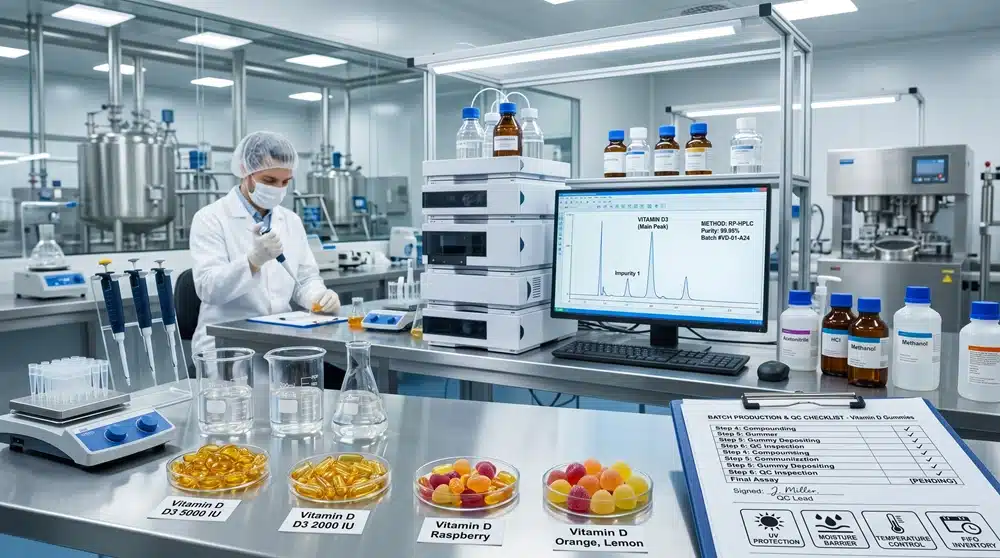
從營養補充品製造的角度來看,可靠的維生素 D 產品與效果不佳的產品之間的差異,不僅僅在於標示的國際單位(IU)含量。各品牌應在成品送達消費者手中之前,嚴格控管原料的真偽、含量分析、劑量均一性、氧化風險、包裝防護、微生物限值以及重金屬規格。.
維生素 D 屬於脂溶性,因此通常以油基軟膠囊、液態滴劑,或適用於錠劑、膠囊、粉末及軟糖的乾式微珠形式製成。每種劑型皆面臨不同的穩定性風險。 軟膠囊需控制油質載體及過氧化物;軟糖則需控制溫度和濕度;錠劑與膠囊則需確保混合均勻並進行崩解性評估。對品牌所有者而言,最佳劑型取決於劑量、目標客群、保存期限、包裝、標籤聲明以及檢測預算。.
一份實用的品質檢查清單應包含:活性維生素 D 測定、成分鑑定、劑量均勻性、重金屬檢測、微生物檢測、適用的崩解度或溶出度測試、穩定性評估、包裝相容性,以及批次文件。 當品牌希望銷售高活性非處方(OTC)維生素 D 產品,或將維生素 D 與鈣、K2、鎂、Omega-3 或免疫支持成分結合時,此製造層面尤為重要。.
適用情境
- 處方藥:最適合用於嚴重缺乏症的快速矯正,或在醫療狀況 (例如吸收不良症候群) 需要高劑量時使用。
- OTC:適合曬太陽最少的健康人士、處於北方氣候的人士,或任何維持正常水平的人士。
如何選擇
簡單的決策流程:該選擇處方藥還是非處方維生素 D?
- 首先進行 25(OH)D 血液檢測。. 若您的血清濃度嚴重偏低,或出現骨痛、肌肉無力或骨折風險等症狀,請在選擇劑量前諮詢臨床醫師。.
- 檢查醫療風險因素。. 吸收不良、腎臟疾病、肝臟疾病、減重手術、骨質疏鬆症、副甲狀腺機能亢進,或某些藥物的使用,可能需要專業人員進行監測。.
- 當需要快速矯正時,請使用處方用維生素 D。. 高劑量治療通常為短期治療,治療後應進行重複檢測。.
- 請使用非處方維生素 D 進行日常補充。. 當您的臨床醫師認同自我管理式維持療法是合適的選擇時,每日補充維生素D3 通常是長期維持健康的一種實用方式。.
- 選擇品質,而不僅是劑量。. 選擇非處方藥時,請留意標籤是否清晰透明、品牌是否信譽良好、是否經第三方驗證,以及劑型是否符合您的生活方式。.
評估您的需求
從驗血開始,檢查您的 25- 羥基維生素 D 水準。美國國家衛生研究院 (NIH) 定義:
- 不足:<20 ng/mL
- 足夠:20-50 ng/mL
- 高(潛在毒性): >50 ng/mL
嚴重缺乏通常需要處方維他命 D,而輕微個案或預防則適合 OTC 補充劑。
諮詢醫生
如果您有慢性疾病(如腎病、發炎性腸病)或服用影響維生素 D 代謝的藥物(如糖皮質激素),請諮詢醫生。他們可以建議處方劑量或指導 OTC 使用。
考慮生活方式
曬太陽的時間有限 (每天少於 15-30 分鐘)、膚色較深或飲食中維生素 D 含量較低的食物 (例如鮭魚、強化奶),都會增加補充維生素 D 的需求。在這些情況下,OTC 選項通常就足夠了。
短期 vs 長期
處方維他命 D 通常是短期 (8-12 週) 用來矯正缺乏症,之後再以 OTC 維持。若要長期使用,每日服用 1,000-2,000 IU 的 OTC D3 對大多數成人而言是有效且安全的。
針對營養補充品品牌:如何定位非處方維生素 D 產品
對消費者而言,選擇通常在於「醫療治療」與「日常保健」之間。對營養補充品品牌來說,決策範圍則更為廣泛:劑量水平、劑型、目標使用者、品質檢測、包裝以及宣稱用語都必須相互配合。 每日 1,000–2,000 IU 的維生素 D3 軟膠囊可能適合一般成人保健產品線,而軟糖或滴劑則可能適合兒童或家庭營養產品。高濃度產品在標籤標示、服用說明及品質驗證方面,則需格外謹慎。.
品牌應避免將非處方維生素 D 定位為嚴重缺乏時的醫療替代方案。相反地,更有效的宣傳角度應著重於日常的可靠支援:明確的劑量說明、透明的品質管控、在可行情況下進行第三方檢測,以及透過教育引導消費者在需要時進行檢測並諮詢醫療專業人員。.
如果您不確定該選擇哪種形式的維生素 D 產品——軟膠囊、膠囊、軟糖、錠劑、粉末或液體——我們的 客製化配方補充品製造商 該團隊可在生產前協助評估劑量、劑型、穩定性、包裝及商業可行性。.總結
最佳的維生素 D 選擇並非單純取決於劑量最強的那種。處方用維生素 D 是為了在醫療監督下,針對已確診的缺乏症或特殊臨床情況進行矯正而設計的。非處方維生素 D 則更適合用於維持健康、方便取得,以及在劑量適當的情況下進行長期每日補充。 最安全的做法是先進行 25(OH)D 血液檢測、檢視用藥情況與健康狀況,並確認產品品質。.
參考資料
- 美國國家衛生研究院(NIH)膳食補充劑辦公室——供醫療專業人員參考的維生素 D 資料單張: https://ods.od.nih.gov/factsheets/VitaminD-HealthProfessional/
- 美國食品藥物管理局(FDA)——關於膳食補充劑的問答: https://www.fda.gov/food/information-consumers-using-dietary-supplements/questions-and-answers-dietary-supplements
- 美國食品藥物管理局(FDA)——關於使用膳食補充劑的消費者資訊: https://www.fda.gov/food/dietary-supplements/information-consumers-using-dietary-supplements
- eCFR – 《聯邦法規彙編》第 21 編第 111 部分《膳食補充劑製造、包裝、標示或儲存作業之現行良好製造規範》: https://www.ecfr.gov/current/title-21/chapter-I/subchapter-B/part-111
- 內分泌學會——《維生素 D 預防疾病指南》資源,2024 年: https://www.endocrine.org/clinical-practice-guidelines/vitamin-d-for-prevention-of-disease
- 梅奧診所 – 維生素 D: https://www.mayoclinic.org/drugs-supplements-vitamin-d/art-20363792
- 梅奧診所——維生素 D 中毒:攝取過量會怎麼樣?: https://www.mayoclinic.org/healthy-lifestyle/nutrition-and-healthy-eating/expert-answers/vitamin-d-toxicity/faq-20058108
- LeBlanc 等人——非處方及複方維生素 D:其效力是否符合預期?《JAMA 內科醫學》2013 年: https://jamanetwork.com/journals/jamainternalmedicine/fullarticle/1570096
- 凱撒永久醫療集團(Kaiser Permanente)——膳食補充劑中的維生素 D 效力差異極大: https://research.kpchr.org/News/Press-Releases/Vitamin-D-Potency-Varies-Widely
- USP – 膳食補充品驗證計畫/USP 驗證標章: https://www.usp.org/verification-services/dietary-supplements-verification-program
- NSF – 膳食補充劑與維生素認證: https://www.nsf.org/consumer-resources/articles/supplement-vitamin-certification

萬華仁(Warren Wan)是一位資深專家,在膳食補充劑供應鏈領域擁有豐富經驗,並在膠原蛋白肽、骨湯蛋白及角蛋白等核心成分的研發、製程控制及全球採購方面具備深厚的實務經驗。 身為本專欄的作者,他致力於剝去行銷包裝的表象,將晦澀難懂的成分科學與生產品質控制標準,轉化為淺顯易懂的硬核科普,協助讀者看清標籤背後的真相,並做出更理性的健康選擇。.


