
Vitamin D là yếu tố thiết yếu để có xương chắc khỏe, hệ miễn dịch khỏe mạnh và sức khỏe tổng thể, song nhiều người vẫn gặp khó khăn trong việc duy trì mức độ vitamin D đủ cho cơ thể. Khi nói đến việc bổ sung vitamin D, việc lựa chọn giữa các loại vitamin D theo toa và các sản phẩm bán tự do (OTC) có thể gây bối rối. Hướng dẫn này sẽ phân tích sự khác biệt, lợi ích, rủi ro và các trường hợp sử dụng phù hợp nhất cho từng loại, giúp bạn đưa ra quyết định sáng suốt dựa trên nhu cầu sức khỏe của bản thân.
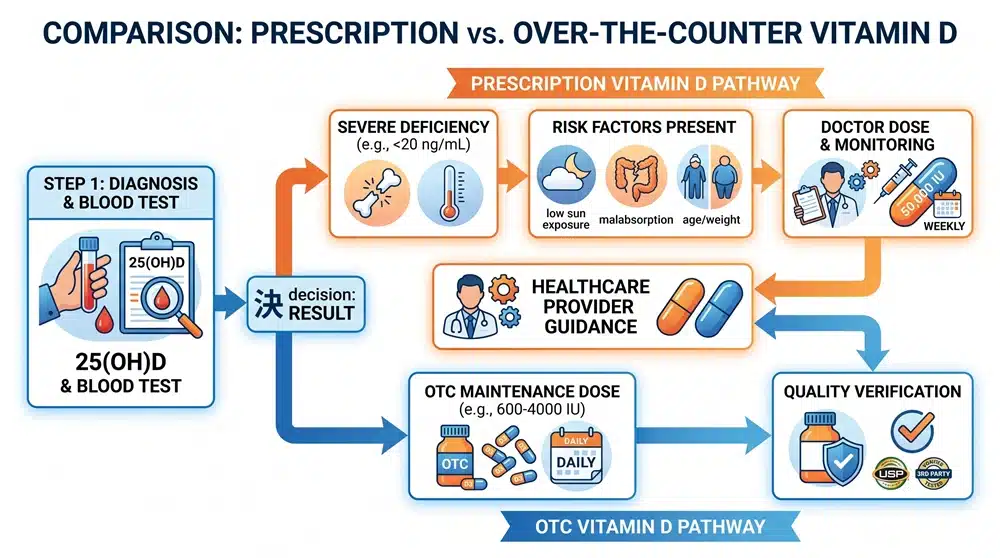
Tóm tắt nhanh: Vitamin D theo toa thường là phương pháp điều trị y tế ngắn hạn với liều cao dành cho các trường hợp thiếu hụt đã được chẩn đoán xác định, thường được dùng với liều 50.000 IU mỗi tuần dưới sự theo dõi của bác sĩ. Vitamin D bán tự do, thường là dạng D3 với liều lượng 400–5.000 IU mỗi lần dùng, phù hợp hơn cho việc duy trì hàng ngày, tình trạng thiếu hụt nhẹ hoặc những người cần hỗ trợ linh hoạt trong thời gian dài. Lựa chọn an toàn nhất phụ thuộc vào kết quả xét nghiệm nồng độ 25(OH)D trong máu, tiền sử bệnh lý, các loại thuốc đang dùng và chất lượng của thực phẩm bổ sung.
Hiểu về vitamin D
Vitamin D, thường được gọi là “vitamin ánh nắng”, giúp hỗ trợ quá trình hấp thu canxi, sức khỏe xương và chức năng miễn dịch. Vitamin D tồn tại dưới hai dạng chính: vitamin D2 (ergocalciferol) và vitamin D3 (cholecalciferol). Vitamin D3 có hiệu quả hơn trong việc tăng nồng độ trong máu và là dạng được da sản sinh tự nhiên khi tiếp xúc với ánh nắng mặt trời. Các nguồn cung cấp vitamin D bao gồm ánh nắng mặt trời, các loại thực phẩm như cá béo và các sản phẩm sữa được bổ sung vitamin D, cũng như các loại thực phẩm chức năng.
Tình trạng thiếu hụt vitamin D khá phổ biến, ảnh hưởng đến tới 40% người trưởng thành trong một số nhóm dân số, đặc biệt là những người ít tiếp xúc với ánh nắng mặt trời, có làn da sẫm màu hoặc mắc một số bệnh lý nhất định. Thiếu hụt vitamin D có thể dẫn đến xương yếu (loãng xương hoặc còi xương), suy nhược cơ bắp và tăng nguy cơ nhiễm trùng. Xét nghiệm máu đo nồng độ 25-hydroxyvitamin D (tính bằng ng/mL) giúp xác định tình trạng thiếu hụt; nồng độ dưới 20 ng/mL thường cần can thiệp điều trị.
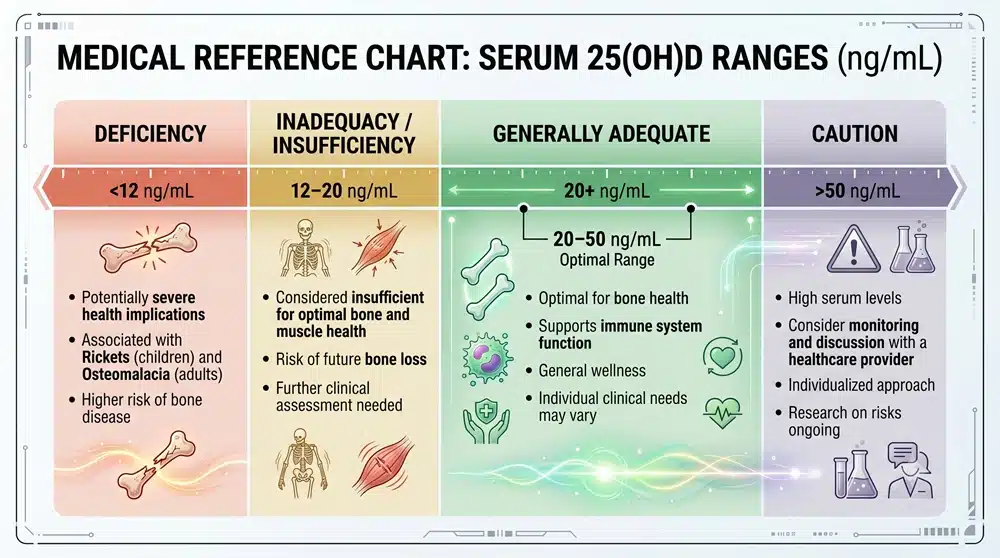
| Nồng độ 25(OH)D | Giải thích chung | Ý nghĩa của điều này đối với bài viết này |
| <12 ng/mL (<30 nmol/L) | Có liên quan đến tình trạng thiếu vitamin D. | Không nên tự ý điều trị bằng cách dùng thuốc không kê đơn một cách tùy tiện; có thể cần phải khám bác sĩ. |
| 12–20 ng/mL (30–50 nmol/L) | Có thể không phù hợp với một số người. | Trong một số trường hợp, có thể sử dụng OTC D3, nhưng cần lưu ý các yếu tố nguy cơ và lời khuyên của bác sĩ. |
| ≥20 ng/mL (≥50 nmol/L) | Nói chung là đủ cho hầu hết những người khỏe mạnh. | Việc sử dụng thuốc không kê đơn (OTC) nhằm mục đích duy trì sức khỏe có thể là đủ đối với nhiều người. |
| >50 ng/mL (>125 nmol/L) | Có thể đi kèm với các tác dụng phụ trong một số trường hợp. | Tránh dùng đồng thời nhiều sản phẩm chứa vitamin D; hãy tham khảo ý kiến bác sĩ về liều lượng và việc xét nghiệm. |
Tại sao xét nghiệm nồng độ 25(OH)D trong máu lại quan trọng hơn các triệu chứng
Việc quyết định bổ sung vitamin D không nên chỉ dựa trên các triệu chứng. Chỉ số xét nghiệm chính là nồng độ 25-hydroxyvitamin D trong huyết thanh, được ký hiệu là 25(OH)D. Theo Văn phòng Bổ sung Dinh dưỡng của Viện Y tế Quốc gia (NIH), nồng độ dưới 12 ng/mL được coi là thiếu hụt, mức 12–20 ng/mL có thể không đủ đối với một số người, và mức 20 ng/mL trở lên thường được coi là đủ đối với hầu hết những người khỏe mạnh. Tuy nhiên, mức mục tiêu có thể thay đổi tùy theo tình trạng sức khỏe, độ tuổi, chức năng thận, việc sử dụng thuốc và phương pháp xét nghiệm được phòng thí nghiệm áp dụng.
Vì lý do này, vitamin D theo toa nên được xem là một biện pháp điều chỉnh dưới sự giám sát y tế, trong khi vitamin D không cần toa thường là lựa chọn để duy trì sức khỏe hoặc phòng ngừa. Nếu bạn mắc bệnh thận, rối loạn hấp thu, loãng xương, có tiền sử sỏi hoặc đang dùng các loại thuốc ảnh hưởng đến quá trình chuyển hóa canxi hoặc vitamin D, hãy tham khảo ý kiến của chuyên gia y tế trước khi tự ý điều chỉnh liều lượng.
Vitamin D theo toa
Đó là gì?
Đơn thuốc vitamin D là một loại thực phẩm bổ sung liều cao, thường là vitamin D2 hoặc D3, được bác sĩ kê đơn để điều trị tình trạng thiếu hụt nghiêm trọng hoặc các bệnh lý cụ thể. Liều lượng thông thường là 50.000 IU mỗi tuần trong 8–12 tuần, mặc dù phác đồ điều trị có thể thay đổi tùy theo nhu cầu của bệnh nhân.
Lưu ý quan trọng về liều lượng: Một đơn thuốc vitamin D 50.000 IU không giống như một loại thực phẩm chức năng bổ sung sức khỏe hàng ngày. Loại thuốc này thường được sử dụng như một liều bổ sung ngắn hạn trong trường hợp thiếu hụt đã được chẩn đoán xác định và cần được sử dụng đúng theo chỉ dẫn. Việc dùng vitamin D liều cao hàng ngày mà không có sự giám sát y tế có thể làm tăng nguy cơ tăng canxi máu, sỏi thận, rối loạn nhịp tim và các biến chứng khác.
Ai cần nó?
Thuốc vitamin D theo toa thường được khuyến nghị cho:
- Những người bị thiếu hụt nghiêm trọng (nồng độ trong máu dưới 12 ng/mL).
- Bệnh nhân mắc các bệnh lý làm suy giảm khả năng hấp thu vitamin D, chẳng hạn như bệnh Crohn, bệnh celiac hoặc bệnh xơ nang.
- Những người mắc bệnh thận mãn tính, trong đó cơ thể gặp khó khăn trong việc chuyển hóa vitamin D thành dạng hoạt tính.
- Những người bị loãng xương hoặc có tiền sử gãy xương, cần được điều trị kịp thời để duy trì sức khỏe xương.
Lợi ích
- Sửa chữa nhanh chóng: Liều cao giúp nhanh chóng tăng nồng độ vitamin D, điều này đặc biệt quan trọng đối với các trường hợp thiếu hụt nghiêm trọng.
- Giám sát y tế: Các bác sĩ theo dõi nồng độ trong máu và điều chỉnh liều lượng, từ đó giảm nguy cơ ngộ độc.
- Phương pháp điều trị phù hợp: Các đơn thuốc được điều chỉnh phù hợp với tình trạng sức khỏe của bệnh nhân, đảm bảo mang lại hiệu quả điều trị.
Rủi ro
- Nguy cơ độc tính: Lượng vitamin D quá cao có thể gây ra tình trạng tăng canxi máu (nồng độ canxi trong máu cao), dẫn đến buồn nôn, sỏi thận hoặc các vấn đề về tim. Việc theo dõi là rất cần thiết.
- Chi phí: Vitamin D theo toa thường đắt hơn, đặc biệt là khi không có bảo hiểm y tế.
- Truy cập: Cần phải đến gặp bác sĩ và có đơn thuốc, điều này có thể gây bất tiện.
Mẹo sử dụng
- Hãy tuân thủ nghiêm ngặt lịch trình đã được chỉ định, vì liều cao không dành cho việc sử dụng hàng ngày.
- Việc xét nghiệm máu định kỳ (cứ 3–6 tháng một lần) giúp đảm bảo nồng độ duy trì trong ngưỡng an toàn (30–50 ng/mL).
- Hãy báo ngay cho bác sĩ nếu gặp các tác dụng phụ như buồn nôn hoặc mệt mỏi.
Vitamin D bán không cần đơn
Đó là gì?
Các loại thực phẩm chức năng chứa vitamin D bán tự do (OTC), chủ yếu là dạng D3, có thể mua tại các hiệu thuốc, siêu thị hoặc trên mạng mà không cần đơn thuốc. Liều lượng thông thường dao động từ 400 đến 5.000 IU mỗi ngày, trong đó liều 1.000–2.000 IU là phổ biến nhất cho mục đích sử dụng chung.
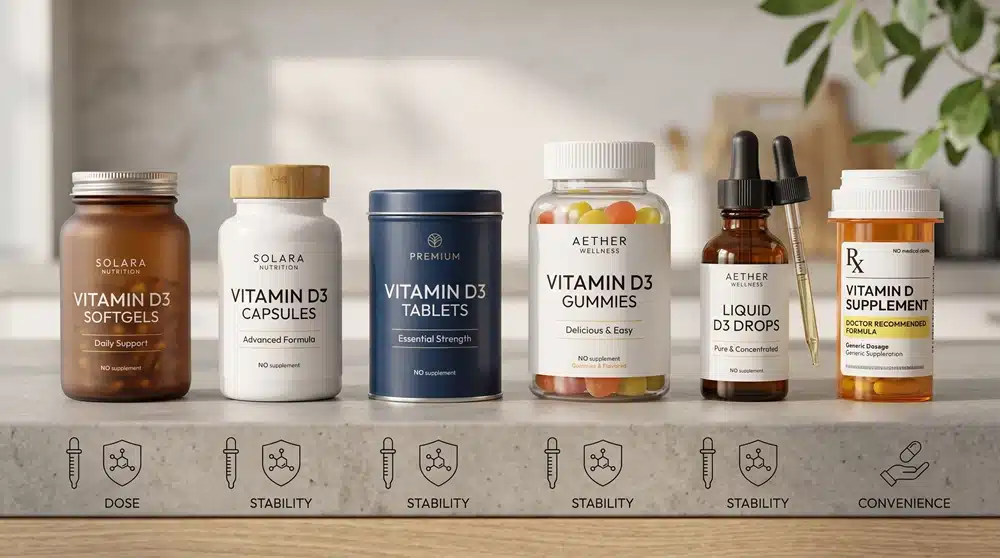
Vitamin D bán không cần toa có sẵn dưới dạng viên nang mềm, viên nang cứng, viên nén, kẹo dẻo, giọt lỏng và dạng xịt. Vitamin D3 là dạng bán không cần toa phổ biến nhất vì dễ tìm mua và thường được ưa chuộng hơn để duy trì nồng độ trong máu ổn định theo thời gian. Đối với người tiêu dùng, các dấu hiệu chất lượng quan trọng nhất bao gồm chứng nhận từ bên thứ ba, nhãn thông tin dinh dưỡng rõ ràng, liều lượng phù hợp và bao bì bảo vệ vitamin D tan trong chất béo khỏi nhiệt, ánh sáng và quá trình oxy hóa.
Đối với các thương hiệu thực phẩm chức năng, vitamin D bán không cần toa có thể được phát triển dưới nhiều dạng bào chế khác nhau tùy thuộc vào liều lượng, đối tượng mục tiêu và yêu cầu về thời hạn sử dụng. Một sản phẩm đáng tin cậy Sản xuất gia công vitamin Đối tác có thể hỗ trợ đánh giá dạng bào chế, tính tương thích của các thành phần, bao bì và việc kiểm tra sản phẩm hoàn thiện trước khi ra mắt.Ai cần nó?
Các sản phẩm vitamin D bán không cần toa:
- Những người khỏe mạnh mong muốn duy trì mức độ phù hợp, đặc biệt là vào mùa đông hoặc khi tiếp xúc với ánh nắng mặt trời hạn chế.
- Những người bị thiếu hụt nhẹ (nồng độ từ 12–20 ng/mL).
- Những người mong muốn duy trì sức khỏe tổng thể, chẳng hạn như chức năng miễn dịch hoặc sức khỏe xương.
Lợi ích
- Khả năng tiếp cận: Dễ dàng tìm mua và mua được mà không cần đến bác sĩ.
- Khả năng chi trả: Các loại thực phẩm chức năng bán tự do thường có giá rẻ hơn, với mỗi lọ có giá từ $5–20, đủ dùng trong vài tháng.
- Tính linh hoạt: Liều lượng thấp hơn cho phép sử dụng hàng ngày, rất phù hợp cho việc duy trì lâu dài.
Rủi ro
- Sự biến động về chất lượng: Không phải tất cả các thương hiệu đều như nhau. Các sản phẩm bổ sung chất lượng kém có thể có hàm lượng hoạt chất không ổn định hoặc chứa tạp chất.
- Rủi ro trong việc tự quản lý: Nếu không có sự hướng dẫn của bác sĩ, người dùng có thể dùng liều lượng không đúng, hoặc quá thấp để phát huy tác dụng, hoặc quá cao đến mức có nguy cơ gây ngộ độc.
- Tương tác thuốc: Vitamin D có thể tương tác với các loại thuốc như corticosteroid hoặc statin, và người dùng có thể bỏ qua điều này nếu không có sự tư vấn của chuyên gia.
Mẹo sử dụng
- Hãy chọn các thương hiệu uy tín đã được các tổ chức độc lập như USP hoặc NSF chứng nhận.
- Hãy tuân thủ mức khuyến nghị hàng ngày (RDA): 600–800 IU đối với người lớn, hoặc tối đa 2.000 IU để duy trì, trừ khi có chỉ định khác.
- Nên dùng cùng với bữa ăn có chứa chất béo để tăng cường sự hấp thu.
So sánh vitamin D kê đơn và vitamin D không kê đơn
Bảng dưới đây tóm tắt những điểm khác biệt chính:
| Yếu tố so sánh | Vitamin D theo toa | Vitamin D bán không cần đơn | Ứng dụng thực tiễn tốt nhất |
|---|---|---|---|
| Liều lượng thông thường | Thường là liều cao, chẳng hạn như 50.000 IU mỗi tuần để khắc phục tình trạng thiếu hụt trong thời gian ngắn khi được bác sĩ kê đơn | Thông thường từ 400–5.000 IU mỗi liều, thường được dùng hàng ngày | Thuốc kê đơn dành cho trường hợp thiếu hụt đã được chẩn đoán; thuốc không kê đơn dành cho việc duy trì hoặc trường hợp thiếu hụt nhẹ |
| Mẫu chung | Thường là các viên nang vitamin D2 hoặc D3 do bác sĩ kê đơn | Thông thường là viên nang mềm D3, viên nang, kẹo dẻo, viên nén, giọt hoặc xịt | D3 thường được dùng để bổ sung hàng ngày; D2 có thể xuất hiện thường xuyên hơn trong các sản phẩm có hàm lượng theo đơn thuốc |
| Giám sát | Cần có sự giám sát y tế và phải xét nghiệm máu định kỳ | Thông thường việc tự quản lý là đủ, tuy nhiên việc xét nghiệm vẫn rất hữu ích đối với những trường hợp dùng liều cao hơn hoặc thuộc nhóm có nguy cơ cao | Nên thực hiện xét nghiệm máu trong các trường hợp thiếu hụt, bệnh thận, rối loạn hấp thu hoặc khi sử dụng liều cao |
| Rủi ro an toàn | Liều lượng cao hơn đồng nghĩa với rủi ro cao hơn nếu sử dụng sai cách, nhưng quá trình này được giám sát chặt chẽ | Liều lượng mỗi lần dùng thấp hơn, nhưng nguy cơ sẽ tăng lên khi kết hợp nhiều loại thực phẩm chức năng với nhau | Tránh uống vitamin D liều cao hàng ngày trừ khi có chỉ định của chuyên gia y tế |
| Chất lượng sản phẩm | Được phân phối qua các kênh nhà thuốc và được kê đơn theo một phác đồ điều trị cụ thể | Chất lượng có thể khác nhau tùy theo thương hiệu, lô sản phẩm, quy trình kiểm định, công thức và bao bì | Hãy tìm các thương hiệu uy tín, thông tin thành phần bổ sung rõ ràng và chứng nhận USP/NSF (nếu có) |
| Chi phí và quyền truy cập | Cần đi khám bác sĩ và có đơn thuốc; chi phí tùy thuộc vào bảo hiểm và nhà thuốc | Dễ dàng mua trực tuyến hoặc tại các cửa hàng; giá mỗi chai thường rẻ hơn | Thuốc kê đơn dùng để điều trị y tế; thuốc không kê đơn dùng để tiện lợi trong việc sử dụng lâu dài hàng ngày |
| Các yếu tố cần xem xét trong sản xuất | Hiệu lực cao đòi hỏi phải đảm bảo độ chính xác cao trong việc định liều và ghi chép | Dạng bào chế, độ ổn định, dầu mang, bao bì và độ chính xác của nhãn mác có ảnh hưởng rất lớn đến chất lượng | Các thương hiệu cần kiểm định hàm lượng hoạt chất, độ đồng nhất, các chất gây ô nhiễm và độ ổn định trong thời hạn sử dụng |
Liều lượng và sự hấp thu
Vitamin D theo toa, thường là D2, được kê đơn với liều cao để nhanh chóng nâng cao nồng độ trong cơ thể. Các nghiên cứu cho thấy D2 và D3 đều có hiệu quả như nhau khi dùng với liều cao, nhưng D3 giúp duy trì nồng độ trong thời gian dài hơn. Các loại thực phẩm chức năng bán tự do, thường là D3, phù hợp hơn để tăng nồng độ từ từ và duy trì nồng độ do liều lượng thấp hơn và được sử dụng hàng ngày.
Chi phí và khả năng tiếp cận
Việc kê đơn vitamin D đòi hỏi sự tham gia của nhân viên y tế, điều này có thể đi kèm với phí khám bệnh và phạm vi bảo hiểm hạn chế. Ví dụ, một liệu trình 12 tuần với liều 50.000 IU vitamin D2 có thể tốn từ $50–100 nếu không có bảo hiểm. Các sản phẩm bán tự do (OTC) rẻ hơn nhiều, với một lọ dùng trong 90 ngày chứa 2.000 IU vitamin D3 chỉ có giá từ $10.
An toàn và Quy định
Việc kê đơn vitamin D được quản lý chặt chẽ, với các bác sĩ đảm bảo việc sử dụng an toàn thông qua xét nghiệm máu. Các loại thực phẩm chức năng bán tự do, dù nhìn chung là an toàn, lại chịu sự giám sát ít nghiêm ngặt hơn từ Cục Quản lý Thực phẩm và Dược phẩm Hoa Kỳ (FDA). Một nghiên cứu năm 2013 cho thấy một số nhãn hiệu bán tự do có hàm lượng vitamin D chênh lệch so với liều lượng ghi trên nhãn lên đến 30%, nhấn mạnh sự cần thiết phải lựa chọn các nhãn hiệu uy tín.
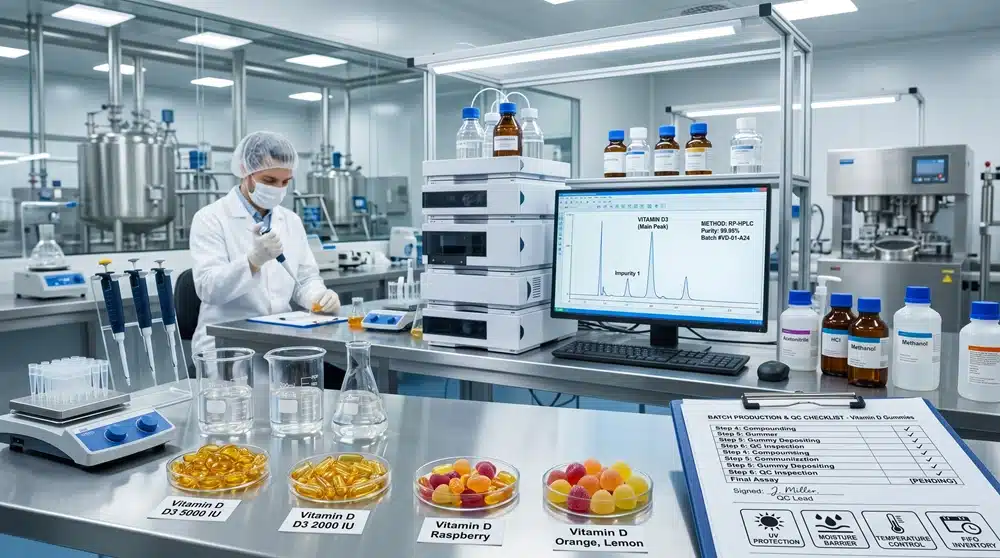
Độ chính xác của nhãn mác đặc biệt quan trọng đối với các loại vitamin tan trong chất béo, bởi vì người tiêu dùng có thể sử dụng chúng hàng ngày trong nhiều tháng. Công ty chúng tôi kiểm soát chất lượng thực phẩm bổ sung Quy trình này có thể bao gồm việc đánh giá hàm lượng hoạt chất, kiểm tra hình thức, xét nghiệm vi sinh, xét nghiệm kim loại nặng và các tài liệu chất lượng khác liên quan cụ thể đến dự án.Tại sao chất lượng vitamin D bán không cần toa lại có thể khác nhau
Tại Hoa Kỳ, các sản phẩm vitamin D bán không cần toa được quản lý như thực phẩm chức năng, chứ không phải là thuốc kê đơn. Cục Quản lý Thực phẩm và Dược phẩm Hoa Kỳ (FDA) không phê duyệt thực phẩm chức năng về mặt an toàn và hiệu quả trước khi chúng được đưa ra thị trường; các nhà sản xuất có trách nhiệm đảm bảo rằng sản phẩm an toàn, được dán nhãn đúng quy định và được sản xuất theo các yêu cầu cGMP dành cho thực phẩm chức năng.
Đây chính là lý do tại sao việc xác minh bởi bên thứ ba lại quan trọng. Một bài báo nghiên cứu trên tạp chí JAMA Internal Medicine năm 2013 cho biết các sản phẩm vitamin D bán tự do (OTC) và được pha chế đã được kiểm tra có hàm lượng dao động từ 9% đến 146% so với lượng ghi trên nhãn. Đối với người tiêu dùng thực sự bị thiếu hụt vitamin D, sản phẩm có hàm lượng thấp hơn mức quy định có thể làm chậm quá trình phục hồi; đối với những người đang sử dụng nhiều loại thực phẩm bổ sung, sản phẩm có hàm lượng cao hơn mức quy định có thể làm tăng nguy cơ an toàn. Hãy tìm kiếm các chương trình xác minh đáng tin cậy như USP hoặc NSF khi có sẵn, đặc biệt là đối với các sản phẩm có liều lượng cao hoặc dùng trong thời gian dài.
Góc nhìn từ ngành sản xuất: Điều gì tạo nên một sản phẩm bổ sung vitamin D chất lượng cao?
Từ góc độ sản xuất thực phẩm chức năng, sự khác biệt giữa một sản phẩm vitamin D đáng tin cậy và một sản phẩm kém chất lượng không chỉ nằm ở hàm lượng IU ghi trên nhãn. Các thương hiệu cần kiểm soát nguồn gốc nguyên liệu, hàm lượng hoạt chất, độ đồng đều của liều lượng, nguy cơ oxy hóa, khả năng bảo vệ của bao bì, giới hạn vi sinh vật và các tiêu chuẩn về kim loại nặng trước khi sản phẩm hoàn chỉnh đến tay người tiêu dùng.
Vitamin D là chất tan trong chất béo, do đó thường được bào chế dưới dạng viên nang mềm chứa dầu, giọt lỏng hoặc dạng hạt khô cho viên nén, viên nang, bột và kẹo dẻo. Mỗi dạng bào chế đều tiềm ẩn những rủi ro về độ ổn định khác nhau. Viên nang mềm cần chất mang dầu và kiểm soát peroxide; kẹo dẻo cần kiểm soát nhiệt độ và độ ẩm; viên nén và viên nang cần đảm bảo sự đồng nhất trong quá trình trộn và đánh giá khả năng tan rã. Đối với các chủ sở hữu thương hiệu, dạng bào chế phù hợp nhất phụ thuộc vào liều lượng, đối tượng mục tiêu, thời hạn sử dụng, bao bì, thông tin trên nhãn và ngân sách thử nghiệm.
Một danh sách kiểm tra chất lượng thực tiễn nên bao gồm: xét nghiệm vitamin D hoạt tính, xác nhận danh tính, độ đồng nhất liều lượng, kim loại nặng, kiểm tra vi sinh, thử nghiệm độ tan rã hoặc độ hòa tan (nếu có liên quan), đánh giá độ ổn định, tính tương thích của bao bì và hồ sơ lô sản phẩm. Giai đoạn sản xuất này đặc biệt quan trọng khi một thương hiệu muốn bán các sản phẩm vitamin D không kê đơn (OTC) có hàm lượng cao hoặc kết hợp vitamin D với canxi, K2, magiê, omega-3 hoặc các thành phần hỗ trợ hệ miễn dịch.
Các tình huống áp dụng
- Đơn thuốc: Phù hợp nhất để điều trị nhanh chóng trong trường hợp thiếu hụt nghiêm trọng hoặc khi các tình trạng y tế (ví dụ: hội chứng kém hấp thu) đòi hỏi phải sử dụng liều cao.
- OTC: Phù hợp nhất cho những người khỏe mạnh ít tiếp xúc với ánh nắng mặt trời, những người sống ở các vùng khí hậu phía bắc, hoặc bất kỳ ai đang duy trì mức độ bình thường.
Cách chọn
Quy trình ra quyết định đơn giản: Nên dùng vitamin D theo toa hay vitamin D không cần toa?
- Hãy bắt đầu bằng việc làm xét nghiệm nồng độ 25(OH)D trong máu. Nếu nồng độ của bạn ở mức rất thấp hoặc bạn có các triệu chứng như đau xương, yếu cơ hoặc nguy cơ gãy xương, hãy tham khảo ý kiến bác sĩ trước khi quyết định liều lượng.
- Kiểm tra các yếu tố nguy cơ về mặt y tế. Tình trạng kém hấp thu, bệnh thận, bệnh gan, phẫu thuật giảm cân, loãng xương, tăng chức năng tuyến cận giáp hoặc một số loại thuốc nhất định có thể cần được theo dõi bởi chuyên gia.
- Sử dụng vitamin D theo đơn khi cần điều chỉnh nồng độ nhanh chóng. Điều trị liều cao thường chỉ diễn ra trong thời gian ngắn và cần tiến hành xét nghiệm lại sau đó.
- Sử dụng vitamin D bán tự do để duy trì sức khỏe. Việc bổ sung vitamin D3 hàng ngày thường là phương pháp thiết thực để hỗ trợ lâu dài khi bác sĩ của bạn đồng ý rằng việc tự quản lý để duy trì nồng độ vitamin D3 là phù hợp.
- Hãy chọn chất lượng, chứ không chỉ là liều lượng. Đối với các sản phẩm không kê đơn (OTC), hãy chú ý đến nhãn mác rõ ràng, các thương hiệu uy tín, chứng nhận từ bên thứ ba và các dạng bào chế phù hợp với lối sống của bạn.
Đánh giá nhu cầu của bạn
Hãy bắt đầu bằng việc làm xét nghiệm máu để kiểm tra nồng độ 25-hydroxyvitamin D của bạn. Viện Y tế Quốc gia Hoa Kỳ (NIH) định nghĩa:
- Sự thiếu hụt: <20 ng/mL
- Phù hợp: 20–50 ng/mL
- Cao (độc tính tiềm ẩn): >50 ng/mL
Trong trường hợp thiếu hụt nghiêm trọng, thường cần phải dùng vitamin D theo toa, còn đối với các trường hợp nhẹ hoặc để phòng ngừa thì có thể dùng các loại thực phẩm chức năng bán tự do.
Hãy tham khảo ý kiến bác sĩ
Nếu bạn mắc các bệnh mãn tính (ví dụ: bệnh thận, bệnh viêm ruột) hoặc đang dùng các loại thuốc ảnh hưởng đến quá trình chuyển hóa vitamin D (ví dụ: glucocorticoid), hãy tham khảo ý kiến bác sĩ. Bác sĩ có thể đề xuất liều lượng theo toa hoặc hướng dẫn cách sử dụng các loại thuốc không cần toa.
Hãy xem xét lối sống
Việc tiếp xúc với ánh nắng mặt trời hạn chế (dưới 15–30 phút mỗi ngày), làn da sẫm màu hoặc chế độ ăn ít thực phẩm giàu vitamin D (ví dụ: cá hồi, sữa bổ sung vitamin) làm tăng nhu cầu bổ sung vitamin D. Trong những trường hợp này, các sản phẩm không cần kê đơn thường là đủ.
Ngắn hạn so với dài hạn
Việc kê đơn vitamin D thường chỉ áp dụng trong thời gian ngắn (8–12 tuần) để khắc phục tình trạng thiếu hụt, sau đó chuyển sang dùng thuốc không kê đơn để duy trì nồng độ. Đối với việc sử dụng lâu dài, vitamin D3 dạng thuốc không kê đơn với liều 1.000–2.000 IU mỗi ngày là hiệu quả và an toàn đối với hầu hết người trưởng thành.
Dành cho các thương hiệu thực phẩm chức năng: Cách định vị các sản phẩm vitamin D bán tự do
Đối với người tiêu dùng, sự lựa chọn thường là giữa điều trị y tế và chăm sóc sức khỏe hàng ngày. Đối với các thương hiệu thực phẩm bổ sung, quyết định này có phạm vi rộng hơn: mức liều, dạng bào chế, đối tượng người dùng, kiểm định chất lượng, bao bì và ngôn ngữ trên nhãn sản phẩm phải phối hợp hài hòa với nhau. Một viên nang mềm D3 với liều lượng 1.000–2.000 IU mỗi ngày có thể phù hợp với dòng sản phẩm chăm sóc sức khỏe tổng quát dành cho người lớn, trong khi kẹo dẻo hoặc giọt có thể phù hợp với dinh dưỡng dành cho trẻ em hoặc gia đình. Các sản phẩm có hàm lượng cao hơn đòi hỏi sự thận trọng đặc biệt trong việc ghi nhãn, hướng dẫn sử dụng và kiểm định chất lượng.
Các thương hiệu nên tránh định vị vitamin D bán không cần toa (OTC) như một giải pháp thay thế cho điều trị y tế trong trường hợp thiếu hụt nghiêm trọng. Thay vào đó, hướng tiếp cận hiệu quả hơn là tập trung vào việc hỗ trợ hàng ngày một cách có trách nhiệm: liều lượng rõ ràng, kiểm soát chất lượng minh bạch, kiểm nghiệm bởi bên thứ ba khi có thể, cùng với các hoạt động giáo dục khuyến khích người tiêu dùng đi kiểm tra và tham khảo ý kiến của các chuyên gia y tế khi cần thiết.
Nếu bạn chưa chắc chắn nên chọn dạng vitamin D nào – viên nang mềm, viên nang, kẹo dẻo, viên nén, bột hay dung dịch lỏng – thì dịch vụ của chúng tôi Nhà sản xuất thực phẩm bổ sung theo công thức riêng Đội ngũ này có thể hỗ trợ đánh giá liều lượng, dạng bào chế, độ ổn định, bao bì và tính khả thi về mặt thương mại trước khi đưa vào sản xuất.Kết luận
Lựa chọn vitamin D tốt nhất không chỉ đơn thuần là loại có hàm lượng cao nhất. Vitamin D theo toa được thiết kế để điều trị tình trạng thiếu hụt đã được xác nhận hoặc các tình huống lâm sàng đặc biệt dưới sự giám sát y tế. Vitamin D không cần toa (OTC) phù hợp hơn cho việc duy trì nồng độ, mang lại sự tiện lợi và sử dụng hàng ngày trong thời gian dài khi liều lượng được điều chỉnh phù hợp. Quyết định an toàn nhất bắt đầu từ việc xét nghiệm nồng độ 25(OH)D trong máu, đánh giá các loại thuốc đang dùng và tình trạng sức khỏe, cùng với việc kiểm tra chất lượng sản phẩm.
Tài liệu tham khảo
- Văn phòng Phụ gia Dinh dưỡng thuộc Viện Y tế Quốc gia Hoa Kỳ (NIH) – Tờ thông tin về Vitamin D dành cho các chuyên gia y tế: https://ods.od.nih.gov/factsheets/VitaminD-HealthProfessional/
- FDA – Câu hỏi và câu trả lời về thực phẩm chức năng: https://www.fda.gov/food/information-consumers-using-dietary-supplements/questions-and-answers-dietary-supplements
- FDA – Thông tin dành cho người tiêu dùng về việc sử dụng thực phẩm chức năng: https://www.fda.gov/food/dietary-supplements/information-consumers-using-dietary-supplements
- eCFR – 21 CFR Phần 111: Các nguyên tắc thực hành sản xuất tốt hiện hành trong các hoạt động sản xuất, đóng gói, dán nhãn hoặc lưu trữ thực phẩm chức năng: https://www.ecfr.gov/current/title-21/chapter-I/subchapter-B/part-111
- Hiệp hội Nội tiết – Tài liệu hướng dẫn về việc sử dụng vitamin D để phòng ngừa bệnh tật, 2024: https://www.endocrine.org/clinical-practice-guidelines/vitamin-d-for-prevention-of-disease
- Bệnh viện Mayo – Vitamin D: https://www.mayoclinic.org/drugs-supplements-vitamin-d/art-20363792
- Mayo Clinic – Ngộ độc vitamin D: Phải làm gì nếu bạn nạp quá nhiều?: https://www.mayoclinic.org/healthy-lifestyle/nutrition-and-healthy-eating/expert-answers/vitamin-d-toxicity/faq-20058108
- LeBlanc và cộng sự – Vitamin D bán tự do và vitamin D pha chế: Liệu hàm lượng có đúng như mong đợi? Tạp chí JAMA Internal Medicine 2013: https://jamanetwork.com/journals/jamainternalmedicine/fullarticle/1570096
- Kaiser Permanente – Hàm lượng vitamin D trong các sản phẩm bổ sung dinh dưỡng có sự chênh lệch rất lớn: https://research.kpchr.org/News/Press-Releases/Vitamin-D-Potency-Varies-Widely
- USP – Chương trình xác nhận thực phẩm bổ sung / Dấu chứng nhận USP: https://www.usp.org/verification-services/dietary-supplements-verification-program
- NSF – Chứng nhận thực phẩm bổ sung và vitamin: https://www.nsf.org/consumer-resources/articles/supplement-vitamin-certification
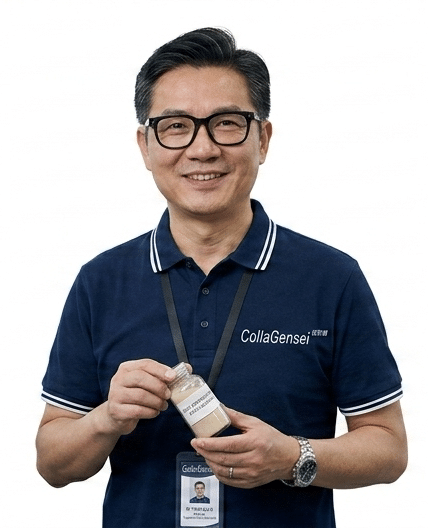
Warren Wan là một chuyên gia dày dạn với kinh nghiệm phong phú trong chuỗi cung ứng thực phẩm bổ sung, sở hữu kinh nghiệm thực tiễn sâu rộng trong nghiên cứu, phát triển, kiểm soát quy trình và tìm nguồn cung ứng toàn cầu các thành phần cốt lõi như peptit collagen, protein từ nước hầm xương và keratin. Với tư cách là tác giả của chuyên mục này, ông cam kết loại bỏ những lớp bao bọc tiếp thị, biến những kiến thức khoa học phức tạp về thành phần và các tiêu chuẩn kiểm soát chất lượng sản xuất thành những nội dung phổ biến khoa học dễ hiểu nhưng sâu sắc, giúp độc giả hiểu rõ sự thật đằng sau các nhãn mác và đưa ra những lựa chọn sức khỏe hợp lý hơn.


