
يُعد فيتامين د ضروريًا لقوة العظام وصحة الجهاز المناعي والرفاهية العامة، ومع ذلك يواجه الكثير من الناس صعوبة في الحفاظ على مستويات كافية منه. وعندما يتعلق الأمر بالمكملات الغذائية، قد يكون الاختيار بين فيتامين د الذي يُصرف بوصفة طبية والخيارات المتاحة دون وصفة طبية (OTC) أمرًا مربكًا. يستكشف هذا الدليل الاختلافات والفوائد والمخاطر وأفضل حالات الاستخدام لكل منهما، مما يساعدك على اتخاذ قرار مستنير بناءً على احتياجاتك الصحية.
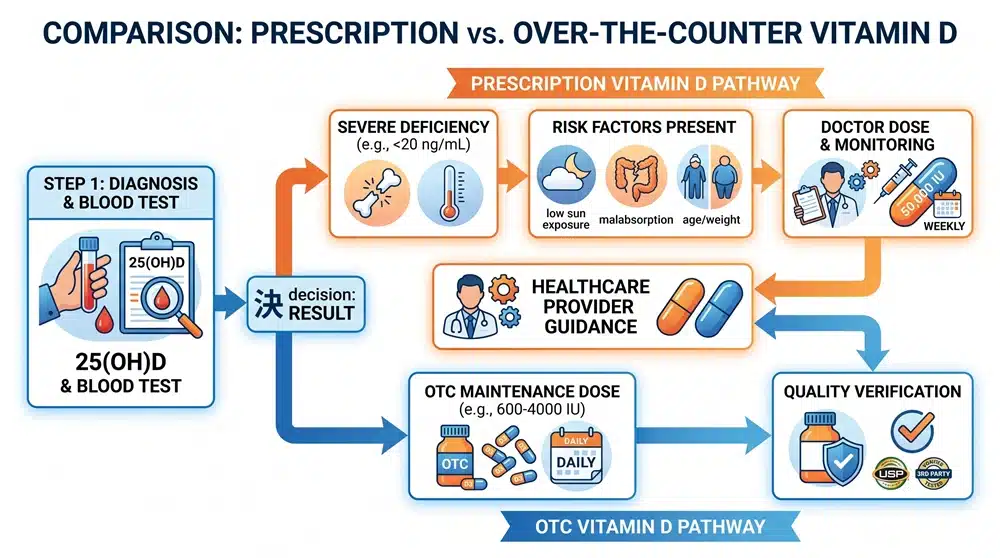
ملخص سريع: عادةً ما يكون فيتامين د الموصوف طبيًّا علاجًا قصير الأمد بجرعات عالية لحالات النقص المؤكدة، وغالبًا ما يُعطى بجرعة 50,000 وحدة دولية أسبوعيًا تحت إشراف الطبيب. أما فيتامين د المتاح دون وصفة طبية، وعادةً ما يكون من نوع D3 بجرعة تتراوح بين 400 و5,000 وحدة دولية لكل جرعة، فهو الأنسب للحفاظ على المستويات اليومية، أو في حالات النقص الخفيف، أو للأشخاص الذين يحتاجون إلى دعم مرن على المدى الطويل. ويعتمد الخيار الأكثر أمانًا على نتيجة فحص 25(OH)D في الدم، والتاريخ الطبي، والأدوية التي تتناولها، وجودة المكملات الغذائية.
فهم فيتامين (د)
يدعم فيتامين د، الذي يُطلق عليه غالبًا "فيتامين أشعة الشمس"، امتصاص الكالسيوم وصحة العظام ووظيفة المناعة. ويوجد في شكلين رئيسيين: فيتامين D2 (إرغوكالسيفيرول) و فيتامين D3 (كوليكالسيفيرول). يعتبر D3 أكثر فعالية في رفع مستوياته في الدم وهو الشكل الذي ينتجه الجلد بشكل طبيعي عند التعرض لأشعة الشمس. تشمل مصادر فيتامين د أشعة الشمس والأطعمة مثل الأسماك الدهنية والألبان المدعمة والمكملات الغذائية.
يعد نقص فيتامين د شائعًا، حيث يصيب ما يصل إلى 401 تيرابايت في المائة من البالغين في بعض السكان، خاصةً أولئك الذين يعانون من التعرض المحدود للشمس أو البشرة الداكنة أو بعض الحالات الطبية. يمكن أن يؤدي النقص إلى ضعف العظام (هشاشة العظام أو الكساح) وضعف العضلات وزيادة خطر الإصابة بالعدوى. تحدد اختبارات الدم التي تقيس مستويات 25-هيدروكسي فيتامين د (بالنانوغرام/ملل) النقص، وعادةً ما تتطلب المستويات التي تقل عن 20 نانوغرام/ملل التدخل.
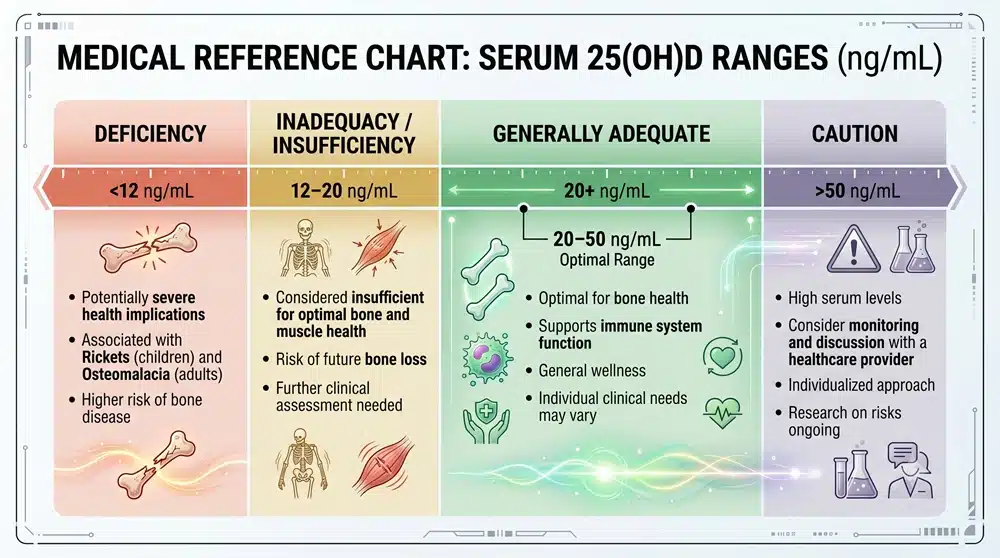
| مستوى 25(OH)D | التفسير العام | ماذا يعني ذلك بالنسبة لهذه المقالة |
| <12 نانوغرام/مل (<30 نانومول/لتر) | يرتبط بنقص فيتامين د. | لا تقم بالعلاج الذاتي باستخدام جرعات عشوائية من الأدوية المتاحة دون وصفة طبية؛ فقد تكون هناك حاجة إلى تقييم طبي. |
| 12–20 نانوغرام/مل (30–50 نانومول/لتر) | قد لا يكون كافياً بالنسبة لبعض الأشخاص. | يمكن استخدام فيتامين D3 المتاح دون وصفة طبية في بعض الحالات، لكن يجب مراعاة عوامل الخطر ونصائح الطبيب. |
| ≥20 نانوغرام/مل (≥50 نانومول/لتر) | يُعتبر كافياً بشكل عام لمعظم الأفراد الأصحاء. | قد يكون استخدام الأدوية المتاحة دون وصفة طبية (OTC) بهدف الصيانة كافياً بالنسبة لكثير من الناس. |
| >50 نانوغرام/مل (>125 نانومول/لتر) | قد يرتبط بآثار سلبية في بعض السياقات. | تجنب تناول عدة منتجات تحتوي على فيتامين د في آن واحد؛ وراجع مع الطبيب كمية تناولك لهذا الفيتامين ونتائج الفحوصات. |
لماذا يعتبر فحص 25(OH)D في الدم أكثر أهمية من الأعراض
لا ينبغي أن تستند قرارات تناول فيتامين د إلى الأعراض وحدها. المؤشر المختبري الرئيسي هو مستوى 25-هيدروكسي فيتامين د في مصل الدم، ويُكتب بالصيغة 25(OH)D. ووفقًا لمكتب المكملات الغذائية التابع للمعاهد الوطنية للصحة (NIH)، فإن المستويات التي تقل عن 12 نانوغرام/مل ترتبط بنقص في الفيتامين، وقد تكون المستويات التي تتراوح بين 12 و20 نانوغرام/مل غير كافية لبعض الأشخاص، أما المستويات التي تبلغ 20 نانوغرام/مل أو أعلى فهي كافية عمومًا لمعظم الأفراد الأصحاء. ومع ذلك، قد تختلف المستويات المستهدفة حسب الحالة الصحية، والعمر، ووظيفة الكلى، واستخدام الأدوية، وطريقة الفحص التي يستخدمها المختبر.
ولهذا السبب، يُفضل النظر إلى فيتامين د الموصوف طبيًّا على أنه أداة تصحيحية تخضع للمراقبة الطبية، في حين أن فيتامين د المتاح دون وصفة طبية يُعد عادةً خيارًا للصيانة أو الوقاية. إذا كنت تعاني من مرض في الكلى، أو سوء الامتصاص، أو هشاشة العظام، أو لديك تاريخ من الإصابة بالحصوات، أو تتناول أدوية تؤثر على استقلاب الكالسيوم أو فيتامين د، فاستشر أخصائي الرعاية الصحية قبل تعديل الجرعة بنفسك.
وصفة طبية لفيتامين د
ما هو؟
الوصفة الطبية فيتامين (د) عبارة عن مكمل غذائي بجرعات عالية، وغالبًا ما يكون فيتامين D2 أو D3، ويصفه الطبيب لعلاج نقص كبير أو حالات طبية معينة. تشمل الجرعات الشائعة 50,000 وحدة دولية أسبوعيًا لمدة 8-12 أسبوعًا، على الرغم من أن الأنظمة تختلف بناءً على احتياجات المريض.
ملاحظة مهمة بشأن الجرعة: وصفة طبية لفيتامين د بجرعة 50,000 وحدة دولية تختلف عن المكملات الغذائية اليومية المخصصة للصحة العامة. فهي تُستخدم عادةً كجرعة تعويضية قصيرة الأمد في حالات النقص المؤكدة، ويجب تناولها بالضبط وفقًا للتعليمات. تناول جرعات عالية من فيتامين د يوميًا دون إشراف طبي قد يزيد من خطر الإصابة بفرط كالسيوم الدم، وحصوات الكلى، واضطراب نظم القلب، ومضاعفات أخرى.
من يحتاج إليه؟
يوصى عادةً بفيتامين D بوصفة طبية في الحالات التالية:
- الأفراد الذين يعانون من نقص حاد (مستويات الدم أقل من 12 نانوغرام/ملليتر).
- المرضى الذين يعانون من حالات مرضية تضعف امتصاص فيتامين D، مثل داء كرون أو الداء البطني أو التليف الكيسي.
- أولئك الذين يعانون من أمراض الكلى المزمنة، حيث يكافح الجسم لتحويل فيتامين (د) إلى شكله النشط.
- الأشخاص الذين يعانون من هشاشة العظام أو لديهم تاريخ من الكسور التي تتطلب تصحيحاً سريعاً لدعم صحة العظام.
المزايا
- التصحيح السريع: الجرعات العالية ترفع مستويات فيتامين د بسرعة، وهو أمر بالغ الأهمية في حالات النقص الحاد.
- الإشراف الطبي: يراقب الأطباء مستويات الدم ويضبطون الجرعات، مما يقلل من خطر التسمم.
- علاج مصمم خصيصاً: يتم تخصيص الوصفات الطبية حسب حالة المريض، مما يضمن نتائج فعالة.
المخاطر
- مخاطر السمية: يمكن أن يسبب الإفراط في تناول فيتامين (د) فرط كالسيوم الدم (ارتفاع الكالسيوم في الدم)، مما يؤدي إلى الغثيان أو حصى الكلى أو مشاكل في القلب. المراقبة ضرورية.
- التكلفة: غالبًا ما تكون الوصفة الطبية لفيتامين (د) أكثر تكلفة، خاصةً بدون تغطية تأمينية.
- الوصول: يتطلب زيارة الطبيب ووصفة طبية، الأمر الذي قد يكون غير مريح.
نصائح الاستخدام
- اتبع الجدول الزمني الموصوف بدقة، حيث أن الجرعات العالية غير مخصصة للاستخدام اليومي.
- تضمن اختبارات الدم المنتظمة (كل 3-6 أشهر) بقاء المستويات ضمن النطاق الآمن (30-50 نانوغرام/مللتر).
- أبلغ طبيبك فوراً عن الآثار الجانبية مثل الغثيان أو التعب.
فيتامين د الذي لا يحتاج إلى وصفة طبية
ما هو؟
تتوفر مكملات فيتامين د التي تصرف بدون وصفة طبية، وعادةً ما تكون D3، في الصيدليات أو محلات السوبر ماركت أو عبر الإنترنت بدون وصفة طبية. وتتراوح الجرعات الشائعة من 400 إلى 5000 وحدة دولية يوميًا، مع كون 1000 إلى 2000 وحدة دولية هي الأكثر شيوعًا للاستخدام العام.
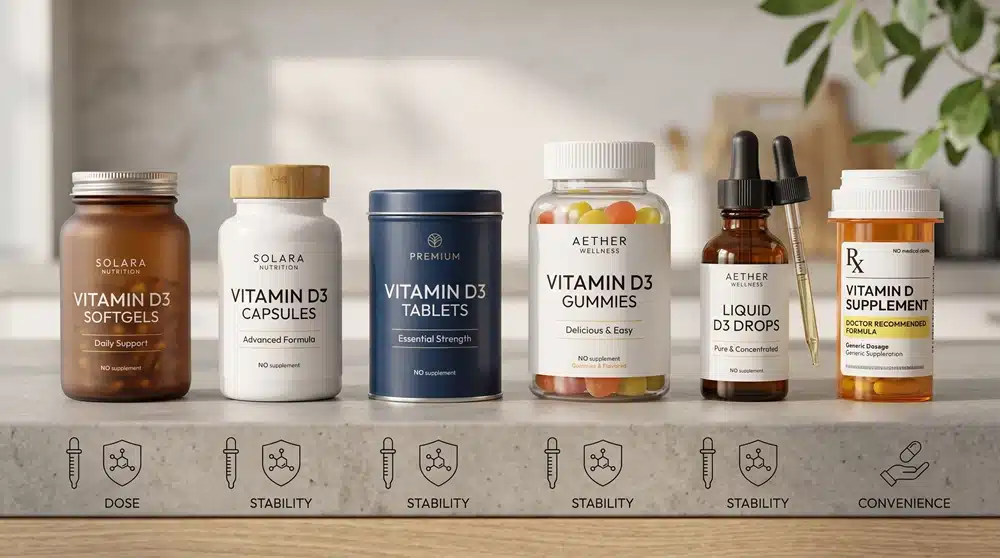
يتوفر فيتامين د الذي يُصرف دون وصفة طبية في شكل كبسولات هلامية، وكبسولات، وأقراص، وعلكات، وقطرات سائلة، وبخاخات. ويُعد فيتامين د3 الشكل الأكثر شيوعًا من بين المنتجات التي تُصرف دون وصفة طبية، نظرًا لتوافره على نطاق واسع وكونه الخيار المفضل غالبًا للحفاظ على مستوياته في الدم على المدى الطويل. بالنسبة للمستهلكين، تتمثل أهم مؤشرات الجودة في التحقق من قبل جهة خارجية، ووضوح ملصقات «حقائق المكملات»، وحجم الجرعة المناسب، والتغليف الذي يحمي فيتامين د القابل للذوبان في الدهون من الحرارة والضوء والأكسدة.
بالنسبة لعلامات المكملات الغذائية، يمكن تطوير فيتامين د المتاح دون وصفة طبية في أشكال متعددة وفقًا للجرعة والجمهور المستهدف ومتطلبات مدة الصلاحية. منتج موثوق التصنيع التعاقدي للفيتامينات يمكن للشريك المساعدة في مراجعة شكل الجرعة، وتوافق المكونات، والتعبئة والتغليف، واختبار المنتج النهائي قبل طرحه في السوق.من يحتاج إليه؟
بدلات فيتامين د بدون وصفة طبية:
- الأفراد الأصحاء الذين يسعون للحفاظ على مستويات كافية، خاصةً في فصل الشتاء أو مع التعرض المحدود لأشعة الشمس.
- أولئك الذين يعانون من نقص طفيف (مستويات تتراوح بين 12-20 نانوغرام/ملليتر).
- الأشخاص الذين يهدفون إلى دعم الصحة العامة، مثل وظيفة المناعة أو قوة العظام.
المزايا
- إمكانية الوصول: متوفر على نطاق واسع ويسهل شراؤه دون زيارة الطبيب.
- القدرة على تحمل التكاليف: المكملات الغذائية التي تصرف بدون وصفة طبية أرخص بشكل عام، حيث تبلغ تكلفة الزجاجات من $5-20 لشهور من الإمداد.
- المرونة: تسمح الجرعات المنخفضة بالاستخدام اليومي، وهي مثالية للمحافظة على المدى الطويل.
المخاطر
- تباين الجودة: ليست كل العلامات التجارية متساوية. قد تحتوي المكملات الغذائية ذات الجودة الرديئة على فاعلية غير متناسقة أو ملوثات.
- مخاطر الإدارة الذاتية: من دون إرشادات طبية، قد يتناول المستخدمون جرعات غير صحيحة، إما منخفضة للغاية بحيث لا تكون فعالة أو عالية بما يكفي لخطر التسمم.
- التفاعلات الدوائية: يمكن أن يتفاعل فيتامين د مع أدوية مثل الستيرويدات أو الستاتين، وقد يغفل المستخدمون عن ذلك دون استشارة مختصين.
نصائح الاستخدام
- اختر العلامات التجارية ذات السمعة الطيبة والمعتمدة من جهات خارجية مثل USP أو NSF.
- التزم بالكمية الغذائية الموصى بها (RDA): 600-800 وحدة دولية للبالغين، أو ما يصل إلى 2,000 وحدة دولية للمحافظة على الوزن، ما لم يُنصح بخلاف ذلك.
- تناوله مع وجبة تحتوي على دهون لتحسين الامتصاص.
المقارنة بين الوصفة الطبية وفيتامين د الذي يُصرف بدون وصفة طبية
يلخص الجدول أدناه الاختلافات الرئيسية:
| عامل المقارنة | وصفة طبية لفيتامين د | فيتامين د الذي لا يحتاج إلى وصفة طبية | أفضل استخدام عملي |
|---|---|---|---|
| الجرعة النموذجية | غالبًا ما تكون بجرعات عالية، مثل 50,000 وحدة دولية أسبوعيًا لتصحيح النقص على المدى القصير عند وصفها | تتراوح الكمية عادةً بين 400 و5,000 وحدة دولية لكل جرعة، وغالبًا ما تُستخدم يوميًا | وصفة طبية في حالات النقص المؤكد؛ أدوية متاحة دون وصفة طبية للصيانة أو في حالات القصور الخفيف |
| النموذج الشائع | غالبًا ما تكون كبسولات فيتامين D2 أو D3 التي يصفها الطبيب | عادةً ما تكون على شكل كبسولات هلامية D3، أو كبسولات، أو حلوى هلامية، أو أقراص، أو قطرات، أو بخاخات | يُستخدم D3 عادةً في المنتجات المخصصة للاستخدام اليومي؛ أما D2 فقد يظهر بشكل أكثر تواترًا في المنتجات التي تتطلب وصفة طبية |
| الرصد | يتطلب إشرافًا طبيًّا وإجراء فحوصات دم متكررة | عادةً ما يتم إدارتها ذاتيًا، على الرغم من أن إجراء الاختبارات لا يزال مفيدًا في حالة الجرعات العالية أو الفئات المعرضة للخطر | يجب إجراء فحوصات الدم في حالات نقص الفيتامينات، أو أمراض الكلى، أو سوء الامتصاص، أو تناول جرعات عالية |
| مخاطر السلامة | ارتفاع الجرعة يعني ارتفاع المخاطر في حالة إساءة الاستخدام، لكن العملية تخضع للمراقبة | الجرعة لكل حصة أقل، لكن المخاطر تزداد عند تناول عدة مكملات غذائية في آن واحد | تجنب تناول جرعات عالية من فيتامين د يوميًا ما لم يوصي بذلك أخصائي رعاية صحية |
| جودة المنتج | يتم توزيعه عبر قنوات الصيدليات ويوصف كجزء من خطة علاج محددة | قد تختلف الجودة باختلاف العلامة التجارية، والدفعة، وعملية التحقق، والتركيبة، والتعبئة والتغليف | ابحث عن العلامات التجارية ذات السمعة الطيبة، وبيانات مكونات المكملات الغذائية الواضحة، وشهادة الاعتماد من USP/NSF إن توفرت |
| التكلفة وإمكانية الوصول | يتطلب زيارة الطبيب ووصفة طبية؛ وتختلف التكلفة حسب التأمين والصيدلية | يسهل شراؤها عبر الإنترنت أو من المتاجر؛ وعادةً ما تكون تكلفة الزجاجة الواحدة أقل | وصفة طبية للعلاج الطبي؛ أدوية تُصرف دون وصفة طبية لتوفير الراحة في الاستخدام الروتيني على المدى الطويل |
| اعتبارات التصنيع | تؤدي الفعالية العالية إلى زيادة الحاجة إلى الدقة الشديدة في تحديد الجرعات وتوثيقها | تؤثر شكل المستحضر، والاستقرار، والزيت الحامل، والتعبئة، ودقة الملصق تأثيرًا كبيرًا على الجودة | يجب على العلامات التجارية التحقق من الفعالية، والتجانس، والملوثات، واستقرار مدة الصلاحية |
الجرعة والامتصاص
يُعطى فيتامين D2، وغالبًا ما يكون D2، بجرعات عالية لرفع مستوياته بسرعة. تشير الدراسات إلى أن فيتامين D2 وفيتامين D3 متساويان في الفعالية عند تناول جرعات عالية، لكن فيتامين D3 يحافظ على مستوياته لفترة أطول. أما المكملات التي تصرف دون وصفة طبية، وعادةً ما تكون D3 أفضل للزيادة التدريجية والمحافظة على مستوياته، وذلك بسبب انخفاض جرعاته واستخدامه اليومي.
التكلفة وإمكانية الوصول
تتطلب الوصفة الطبية لفيتامين د مشاركة مقدم الرعاية الصحية، الأمر الذي قد ينطوي على رسوم استشارة وتغطية تأمينية محدودة. على سبيل المثال، قد تكلف دورة مدتها 12 أسبوعًا من 50,000 وحدة دولية من فيتامين D2 $50-100 بدون تأمين. أما الخيارات المتاحة دون وصفة طبية فهي أرخص بكثير، حيث تبلغ تكلفة جرعة من 2,000 وحدة دولية من فيتامين D3 لمدة 90 يومًا ما لا يتجاوز $10.
السلامة والتنظيم
يخضع فيتامين (د) الموصوف بوصفة طبية لرقابة صارمة، حيث يضمن الأطباء الاستخدام الآمن من خلال اختبارات الدم. بينما تخضع المكملات الغذائية التي تصرف بدون وصفة طبية لرقابة أقل صرامة من إدارة الغذاء والدواء الأمريكية. وقد وجدت دراسة أجريت في عام 2013 أن بعض العلامات التجارية التي تصرف بدون وصفة طبية انحرفت عن الجرعات الموصوفة بما يصل إلى 301 تيرابايت و3 أضعاف، مما يسلط الضوء على الحاجة إلى العلامات التجارية ذات السمعة الطيبة.
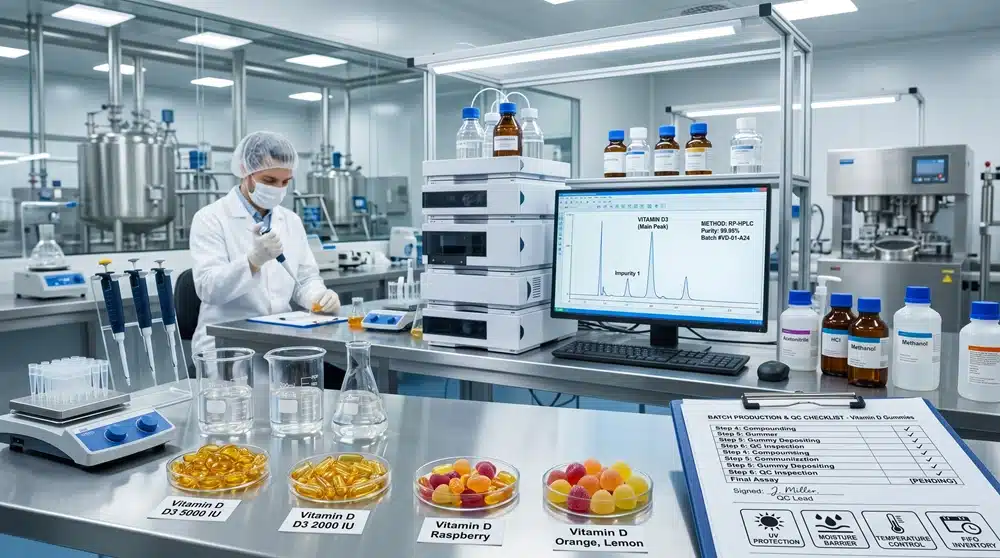
تعد دقة الملصقات أمرًا بالغ الأهمية بالنسبة للفيتامينات القابلة للذوبان في الدهون، لأن المستهلكين قد يتناولونها يوميًا على مدار أشهر. إن مراقبة جودة المكملات الغذائية ويمكن أن تشمل العملية مراجعة الفعالية، وفحوصات المظهر، والاختبارات الميكروبية، واختبارات المعادن الثقيلة، وغيرها من وثائق الجودة الخاصة بالمشروع.لماذا قد تختلف جودة فيتامين د المتاح دون وصفة طبية
تخضع منتجات فيتامين د المتاحة دون وصفة طبية للتنظيم باعتبارها مكملات غذائية في الولايات المتحدة، وليس كأدوية تُصرف بوصفة طبية. ولا تقوم إدارة الغذاء والدواء (FDA) بالموافقة على المكملات الغذائية من حيث السلامة والفعالية قبل طرحها في السوق؛ حيث تقع على عاتق الشركات المصنعة مسؤولية ضمان أن تكون المنتجات آمنة، ومُعلَّمة بشكل صحيح، ومصنعة وفقًا لمتطلبات ممارسات التصنيع الجيدة الحالية (cGMP) الخاصة بالمكملات الغذائية.
ولهذا السبب فإن التحقق من قبل جهة خارجية أمر مهم. فقد أفادت رسالة بحثية نُشرت عام 2013 في مجلة «JAMA Internal Medicine» أن منتجات فيتامين د المتاحة دون وصفة طبية والمركبة التي خضعت للاختبار تراوحت نسبتها بين 9% و146% من الكمية المذكورة على الملصق. بالنسبة للمستهلك الذي يعاني من نقص حقيقي، قد يؤدي المنتج ذو الفعالية المنخفضة إلى تأخير معالجة هذا النقص؛ أما بالنسبة لمن يتناول مكملات غذائية متعددة، فقد يؤدي المنتج ذو الفعالية المفرطة إلى زيادة المخاطر على السلامة. ابحث عن برامج التحقق الموثوقة مثل USP أو NSF عند توفرها، خاصةً في حالة الجرعات العالية أو الاستخدام طويل الأمد.
نظرة على عملية التصنيع: ما الذي يجعل مكمل فيتامين د عالي الجودة؟
من منظور تصنيع المكملات الغذائية، لا يقتصر الفرق بين منتج فيتامين د الموثوق به والمنتج الضعيف على الكمية المحددة بالوحدات الدولية (IU) المذكورة على الملصق فحسب. بل يجب على العلامات التجارية التحقق من هوية المواد الخام، وقوة التركيز، وتوحيد الجرعات، ومخاطر الأكسدة، وحماية العبوة، والحدود المسموح بها للميكروبات، ومواصفات المعادن الثقيلة، قبل وصول المنتج النهائي إلى المستهلكين.
فيتامين د قابل للذوبان في الدهون، لذا غالبًا ما يتم تصنيعه في شكل كبسولات هلامية زيتية، أو قطرات سائلة، أو حبيبات جافة تُستخدم في صناعة الأقراص، والكبسولات، والمساحيق، والعلكات. ويواجه كل شكل من هذه الأشكال مخاطر استقرار مختلفة. تحتاج الكبسولات اللينة إلى مادة حاملة زيتية والتحكم في مستويات البيروكسيد؛ بينما تحتاج العلكات إلى التحكم في الحرارة والرطوبة؛ أما الأقراص والكبسولات فتحتاج إلى مزج متجانس ومراجعة للتفكك. وبالنسبة لمالكي العلامات التجارية، يعتمد الشكل الأمثل على الجرعة، والجمهور المستهدف، ومدة الصلاحية، والتعبئة والتغليف، والادعاءات المذكورة على الملصق، وميزانية الاختبارات.
ينبغي أن تتضمن قائمة مراجعة الجودة العملية ما يلي: تحليل فيتامين د النشط، والتحقق من الهوية، وتوحيد الجرعة، والمعادن الثقيلة، والاختبارات الميكروبية، واختبار التفكك أو الذوبان عند الاقتضاء، ومراجعة الاستقرار، وتوافق التغليف، وتوثيق الدُفعات. وتكتسب هذه المرحلة من عملية التصنيع أهمية خاصة عندما ترغب علامة تجارية ما في بيع منتجات فيتامين د عالية الفعالية متاحة دون وصفة طبية، أو دمج فيتامين د مع الكالسيوم، أو فيتامين ك2، أو المغنيسيوم، أو أوميغا 3، أو المكونات الداعمة للمناعة.
السيناريوهات القابلة للتطبيق
- الوصفة الطبية: الأفضل للتصحيح السريع في حالات النقص الحاد أو عندما تتطلب الحالات الطبية (مثل متلازمات سوء الامتصاص) جرعات عالية.
- OTC: مثالي للأفراد الأصحاء الذين لا يتعرضون لأشعة الشمس إلا قليلاً، أو أولئك الذين يعيشون في المناخات الشمالية، أو أي شخص يحافظ على المستويات الطبيعية.
كيفية الاختيار
مسار اتخاذ القرار البسيط: فيتامين د بوصفة طبية أم بدون وصفة طبية؟
- ابدأ بإجراء فحص الدم لقياس مستوى 25(OH)D. إذا كان مستواك منخفضًا جدًّا أو كنت تعاني من أعراض مثل آلام العظام أو ضعف العضلات أو خطر الإصابة بالكسور، فاستشر طبيبًا قبل تحديد الجرعة.
- تحقق من عوامل الخطر الطبية. قد يتطلب كل من سوء الامتصاص، وأمراض الكلى، وأمراض الكبد، وجراحات السمنة، وهشاشة العظام، وفرط نشاط الغدة الجار درقية، أو بعض الأدوية، مراقبة طبية متخصصة.
- استخدم فيتامين د الموصوف طبيًّا عندما تكون هناك حاجة إلى تصحيح سريع. عادةً ما يكون العلاج بجرعات عالية قصير الأمد، ويجب أن يتبعه إجراء فحوصات متكررة.
- استخدم فيتامين د المتاح دون وصفة طبية للحفاظ على مستوياته. غالبًا ما يكون تناول فيتامين D3 يوميًا خيارًا عمليًّا لتوفير الدعم على المدى الطويل، عندما يوافق الطبيب المعالج على أن إدارة العلاج الذاتي مناسبة.
- اختر الجودة، لا تكتفِ بالجرعة فحسب. بالنسبة للمنتجات المتاحة دون وصفة طبية، ابحث عن ملصقات شفافة، وعلامات تجارية مرموقة، وتصديق من جهات خارجية، وأشكال جرعات تتناسب مع نمط حياتك.
تقييم احتياجاتك
ابدأ بفحص الدم للتحقق من مستوى 25-هيدروكسي فيتامين د. تُعرّف المعاهد الوطنية للصحة (NIH):
- النقص: <20 نانوغرام/ملليتر
- كافٍ:: 20-50 نانوغرام/ملليتر
- عالية (سمية محتملة): >50 نانوغرام/مل
وغالباً ما يستدعي النقص الحاد وصفة طبية لفيتامين D، بينما الحالات الخفيفة أو الوقاية تناسب المكملات الغذائية التي تصرف بدون وصفة طبية.
استشر الطبيب
إذا كنت تعاني من أمراض مزمنة (مثل أمراض الكلى أو مرض التهاب الأمعاء) أو تتناول أدوية تؤثر على استقلاب فيتامين د (مثل الجلوكوكوكورتيكويد)، استشر الطبيب. ويمكنه أن يوصي بالجرعات التي تُصرف بوصفة طبية أو يرشدك إلى استخدام الدواء بدون وصفة طبية.
ضع في اعتبارك نمط الحياة
التعرض المحدود لأشعة الشمس (أقل من 15-30 دقيقة يوميًا)، أو البشرة الداكنة، أو اتباع نظام غذائي منخفض في الأطعمة الغنية بفيتامين د (مثل السلمون والحليب المدعم) يزيد من الحاجة إلى المكملات الغذائية. غالبًا ما تكون الخيارات المتاحة بدون وصفة طبية كافية لهذه الحالات.
قصير الأجل مقابل طويل الأجل
وعادةً ما تكون الوصفة الطبية لفيتامين D قصيرة الأجل (من 8 إلى 12 أسبوعًا) لتصحيح النقص، تليها المداومة على تناول فيتامين D3 بدون وصفة طبية. للاستخدام طويل الأمد، يعتبر فيتامين D3 بدون وصفة طبية بمقدار 1,000-2,000 وحدة دولية يوميًا فعالاً وآمنًا لمعظم البالغين.
بالنسبة لعلامات الفيتامينات التجارية: كيفية تسويق منتجات فيتامين د المتاحة دون وصفة طبية
بالنسبة للمستهلكين، عادةً ما يكون الاختيار بين العلاج الطبي والرعاية اليومية. أما بالنسبة لعلامات المكملات الغذائية، فإن القرار أوسع نطاقًا: حيث يجب أن تتكامل عوامل مثل مستوى الجرعة، وشكل الجرعة، والفئة المستهدفة من المستخدمين، واختبارات الجودة، والتعبئة والتغليف، وصياغة الادعاءات. قد تكون كبسولة هلامية تحتوي على 1,000–2,000 وحدة دولية من فيتامين D3 يومياً مناسبة لخط منتجات العافية العامة للبالغين، في حين أن العلكات أو القطرات قد تكون مناسبة لتغذية الأطفال أو العائلة. وتتطلب المنتجات ذات الفعالية الأعلى مزيداً من الحذر في وضع الملصقات، وتعليمات الاستخدام، والتحقق من الجودة.
ينبغي على العلامات التجارية تجنب الترويج لفيتامين د المتاح دون وصفة طبية باعتباره بديلاً عن العلاج الطبي في حالات النقص الحاد. وبدلاً من ذلك، فإن النهج الأكثر فعالية هو التركيز على الدعم اليومي المسؤول: تحديد الجرعة بوضوح، ومراقبة الجودة بشفافية، وإجراء اختبارات من قبل جهات خارجية حيثما أمكن ذلك، وتوفير التوعية التي تشجع المستهلكين على إجراء الفحوصات واستشارة أخصائيي الرعاية الصحية عند الحاجة.
إذا كنت غير متأكد مما إذا كان يجب أن يكون منتج فيتامين د الذي تبحث عنه على شكل كبسولة هلامية، أو كبسولة عادية، أو حلوى جيلاتينية، أو قرص، أو مسحوق، أو سائل، فإن الشركة المصنعة للمكملات الغذائية المخصصة يمكن للفريق المساعدة في تقييم الجرعة، والشكل، والاستقرار، والتعبئة، والجدوى التجارية قبل بدء الإنتاج.الخاتمة
أفضل خيار لفيتامين د ليس بالضرورة أقوى منتج. فقد صُمم فيتامين د الذي يُصرف بوصفة طبية لتصحيح حالات النقص المؤكدة أو الحالات السريرية الخاصة تحت إشراف طبي. أما فيتامين د المتاح دون وصفة طبية فهو الأفضل للحفاظ على المستوى الصحي، ولراحتك، وللاستخدام اليومي على المدى الطويل شريطة أن تكون الجرعة مناسبة. يبدأ القرار الأكثر أمانًا بإجراء فحص دم لقياس مستوى 25(OH)D، ومراجعة الأدوية والحالات الصحية، والتحقق من جودة المنتج.
المراجع
- مكتب المكملات الغذائية التابع للمعاهد الوطنية للصحة (NIH) – نشرة معلومات عن فيتامين د موجهة للمهنيين الصحيين: https://ods.od.nih.gov/factsheets/VitaminD-HealthProfessional/
- إدارة الغذاء والدواء الأمريكية (FDA) – أسئلة وأجوبة حول المكملات الغذائية: https://www.fda.gov/food/information-consumers-using-dietary-supplements/questions-and-answers-dietary-supplements
- إدارة الغذاء والدواء (FDA) – معلومات للمستهلكين حول استخدام المكملات الغذائية: https://www.fda.gov/food/dietary-supplements/information-consumers-using-dietary-supplements
- eCFR – 21 CFR الجزء 111: الممارسات التصنيعية الجيدة الحالية في عمليات التصنيع أو التعبئة أو وضع الملصقات أو التخزين الخاصة بالمكملات الغذائية: https://www.ecfr.gov/current/title-21/chapter-I/subchapter-B/part-111
- جمعية الغدد الصماء – موارد المبادئ التوجيهية الخاصة بفيتامين د للوقاية من الأمراض، 2024: https://www.endocrine.org/clinical-practice-guidelines/vitamin-d-for-prevention-of-disease
- مايو كلينك – فيتامين د: https://www.mayoclinic.org/drugs-supplements-vitamin-d/art-20363792
- مايو كلينك – تسمم فيتامين د: ماذا لو تناولت كمية زائدة؟: https://www.mayoclinic.org/healthy-lifestyle/nutrition-and-healthy-eating/expert-answers/vitamin-d-toxicity/faq-20058108
- LeBlanc وآخرون – فيتامين د المتاح دون وصفة طبية والمركب: هل فعاليته كما نتوقع؟ مجلة JAMA Internal Medicine 2013: https://jamanetwork.com/journals/jamainternalmedicine/fullarticle/1570096
- كايزر بيرماننت – تباين كبير في تركيز فيتامين د في المكملات الغذائية: https://research.kpchr.org/News/Press-Releases/Vitamin-D-Potency-Varies-Widely
- USP – برنامج التحقق من المكملات الغذائية / علامة «USP Verified»: https://www.usp.org/verification-services/dietary-supplements-verification-program
- NSF – شهادة المكملات الغذائية والفيتامينات: https://www.nsf.org/consumer-resources/articles/supplement-vitamin-certification
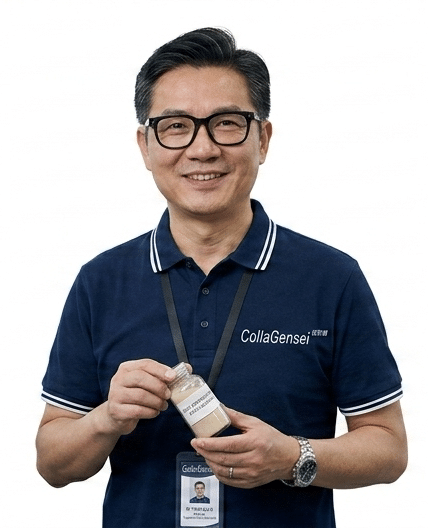
وارن وان خبير متمرس يتمتع بخبرة واسعة في سلسلة توريد المكملات الغذائية، ولديه خبرة عملية غنية في مجالات البحث والتطوير ومراقبة العمليات والتوريد العالمي للمكونات الأساسية مثل ببتيدات الكولاجين وبروتين مرق العظام والكيراتين. وبصفته كاتب هذه الزاوية، يكرس جهوده لتجريد الموضوعات من غلافها التسويقي، وتحويل العلوم الغامضة المتعلقة بالمكونات ومعايير مراقبة جودة الإنتاج إلى معلومات علمية متعمقة وسهلة الفهم، مما يساعد القراء على فهم الحقيقة الكامنة وراء الملصقات واتخاذ خيارات صحية أكثر عقلانية.


