
If you are developing a collagen beauty powder, joint support product, gut health formula or immune-positioned supplement, this guide compares collagen peptides and colostrum from both a consumer education and B2B formulation perspective. For custom formula support, you can also review our wholesale collagen peptides, gut health supplement manufacturing and immune support supplement manufacturing capabilities.
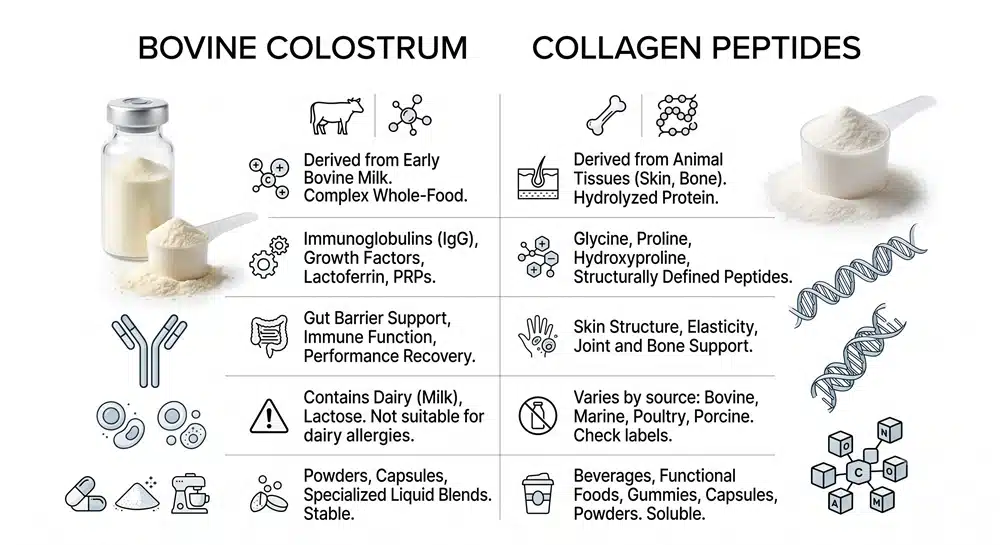
Quick Comparison: Colostrum vs Collagen Peptides
| Factor | Collagen Peptides | Bovine Colostrum | Brand Formulation Note |
|---|---|---|---|
| Ingredient type | Hydrolyzed collagen protein fragments | Early bovine milk fraction with proteins and bioactives | Use collagen when the hero story is structural protein; use colostrum when the story is gut and immune support. |
| Core actives | Glycine, proline, hydroxyproline and collagen-derived peptides | Immunoglobulins, lactoferrin, growth factors, milk proteins and other fractions | Ask suppliers for peptide molecular weight for collagen and IgG/lactoferrin specifications for colostrum. |
| Common positioning | Skin hydration, skin elasticity, joint comfort, connective tissue and protein support | Gut barrier support, immune system support and recovery-positioned products | Use careful structure/function language; avoid disease treatment claims. |
| Allergen/diet fit | Animal-derived; source may be bovine, marine, porcine or poultry | Dairy-derived; not suitable for dairy-free or vegan positioning | Colostrum requires stronger allergen and sourcing review. |
| Typical format fit | Powders, stick packs, capsules, tablets, gummies, RTD concepts | Powders, sachets, capsules and premium wellness blends | Colostrum can be more sensitive to processing and flavor constraints. |
| Quality documents | COA, protein assay, molecular weight range, heavy metals, microbiology, allergen statement | COA, IgG or bioactive marker assay, lactoferrin where applicable, microbiology, dairy allergen, sourcing statement | Do not compare only by price per kg; compare by active specification and finished-dose economics. |
What Are Collagen Peptides?
Collagen peptides are short chains of amino acids produced by hydrolyzing collagen from animal connective tissues such as bovine hide, fish skin or scale, porcine skin or poultry cartilage. Hydrolysis breaks larger collagen proteins into smaller peptides, improving dispersibility and making the ingredient easier to use in powders, drinks, capsules and functional foods.
From a formulation perspective, collagen peptides are usually selected when a brand wants to build a product around beauty-from-within, skin hydration, skin elasticity, joint comfort, connective tissue support or protein enrichment. They are not a complete substitute for a balanced diet, and they should not be described as treating arthritis, reversing aging or curing skin problems.

What Is Bovine Colostrum?
Bovine colostrum is the first milk produced by cows shortly after calving. It is different from collagen because it is not a purified structural protein ingredient. Instead, it is a complex dairy-derived material that may contain immunoglobulins, lactoferrin, growth factors, milk proteins, carbohydrates, fats and minerals, depending on sourcing and processing.
In dietary supplements, bovine colostrum is often used in gut health, immune support, sports recovery and premium wellness formulas. However, the evidence base for adult colostrum supplementation is still developing, product specifications vary widely and dairy allergen considerations are important. Brands should avoid implying that colostrum treats leaky gut, cures digestive disorders, prevents infection or replaces medical care.
Is Colostrum the Same as Collagen?
No. Colostrum and collagen are both animal-derived supplement ingredients, but they are chemically and functionally different. Collagen peptides provide collagen-derived amino acids and peptides. Colostrum provides a broader dairy-derived bioactive matrix. In simple terms, collagen peptides are usually used as structural support ingredients, while colostrum is used as a gut and immune support ingredient.
Which Is Better: Colostrum or Collagen Peptides?
Neither is universally better. The right choice depends on the product goal.
- Choose collagen peptides when the formula is positioned around skin hydration, skin elasticity, joint comfort, connective tissue, active lifestyle or protein support.
- Choose bovine colostrum when the formula is positioned around gut comfort, immune system support, premium wellness or dairy-derived bioactive nutrition.
- Consider both when building a premium beauty-from-within, gut-skin axis or sports recovery formula, as long as the final label, allergen profile and claims are reviewed carefully.
Evidence Strength: What Is Better Supported?
| Use Case | Collagen Peptides | Bovine Colostrum | Practical Claim Boundary |
|---|---|---|---|
| Skin hydration and elasticity | Supported by multiple human studies and meta-analyses, though results vary by dose, peptide source and study design. | Less direct adult evidence for skin outcomes; often positioned indirectly through gut and recovery narratives. | Use “may support skin hydration and elasticity” for collagen; be cautious with colostrum skin claims. |
| Joint comfort and connective tissue | Human research suggests potential support for joint comfort and function in some populations. | Not typically the primary ingredient for joint positioning. | Do not claim to treat arthritis or repair cartilage. |
| Gut health | May support formula protein content and connective tissue narratives, but it is not the most targeted gut ingredient. | More relevant for gut barrier and immune-support positioning, although adult evidence is still emerging and product quality matters. | Avoid “heals leaky gut” or disease-specific digestive claims. |
| Immune support | Not the core reason to use collagen peptides. | More relevant due to immunoglobulins and lactoferrin, depending on specification. | Use “supports normal immune function” only when substantiated. |
| Weight management | Can contribute protein and satiety to a broader nutrition plan. | Not a proven weight-loss ingredient. | Do not market either ingredient as a weight-loss treatment. |
Can You Take Collagen and Colostrum Together?
For many healthy adults, collagen peptides and bovine colostrum can be used in the same wellness routine or formula, but that does not mean every person or every product concept should combine them. The main issues are dairy allergen labeling, cost, sensory profile, claim substantiation, protein dose, serving size and whether the final product still has a clear consumer promise.
For brands, a combined formula can work when the concept is specific, such as a gut-skin powder, active recovery sachet or premium healthy-aging blend. The concept is weaker when the product tries to claim everything at once: skin, gut, joints, immunity, detox, weight loss and hormones. A focused product is easier to substantiate, easier to explain and easier to sell.
Formulation Matrix for Supplement Brands
| Product Concept | Best Hero Ingredient | Recommended Format | Key Specifications to Ask For |
|---|---|---|---|
| Beauty-from-within powder | Collagen peptides | Stick pack, jar powder, drink mix | Source, molecular weight, protein content, solubility, sensory profile, heavy metals, microbiology. |
| Gut-skin premium blend | Collagen peptides + colostrum | Flavored sachet or premium powder | Peptide specification, IgG marker, dairy allergen, flavor masking, stability and claim review. |
| Joint and active lifestyle product | Collagen peptides | Powder, capsule, tablet, ready-to-mix beverage | Collagen type/source, dosage feasibility, third-party testing and complementary actives such as vitamin C. |
| Immune support powder | Colostrum | Capsule, sachet or dairy-compatible powder | IgG level, lactoferrin, processing method, pathogen testing, dairy allergen statement and sourcing documentation. |
| Mass-market gummy | Collagen peptides, if dose and texture allow | Gummy or chewable | Dose per serving, heat process tolerance, sugar system, texture impact and label claim realism. |
Safety, Allergens and Label Claim Considerations
Both ingredients are dietary supplement ingredients, not drugs. Supplement brands should keep claims truthful, substantiated and within structure/function boundaries. Avoid language that suggests either ingredient treats disease, prevents infection, cures gut disorders, reverses aging or provides guaranteed results.
Who Should Be Cautious?
- People with dairy allergy or significant lactose intolerance should be cautious with bovine colostrum.
- People with fish allergy should avoid marine collagen unless the source and allergen controls are appropriate.
- Pregnant or breastfeeding consumers, children, people with chronic medical conditions and people taking medications should consult a healthcare professional before using new supplements.
- Brands selling into the US, EU, UK, Canada or Australia should review local claim rules before using immune, gut, skin or joint claims.
High-Risk Claims to Avoid
| Avoid This | Use This Instead |
|---|---|
| Colostrum heals leaky gut. | Colostrum is studied for its potential role in supporting gut barrier function. |
| Collagen reverses aging. | Collagen peptides may support skin hydration and elasticity as part of a consistent routine. |
| Colostrum prevents infections. | Colostrum contains immune-related components and may support normal immune function when substantiated. |
| Collagen repairs damaged joints. | Collagen peptides may support joint comfort and connective tissue health. |
| FDA-approved collagen or colostrum supplement. | Dietary supplements are not approved by FDA for safety and effectiveness before marketing. |
Quality Checklist Before Choosing a Supplier
For B2B buyers, the best ingredient is not simply the one with the most attractive marketing story. It is the one with clear specifications, reliable documentation and a realistic finished-product plan.
- Identity: Confirm source species, raw material origin and ingredient manufacturing process.
- Specification: For collagen, check protein content, peptide molecular weight range and source. For colostrum, check IgG level or other meaningful markers.
- Safety testing: Review heavy metals, microbiology, allergens, residual solvents where applicable and contaminants relevant to animal-derived materials.
- Processing: Ask whether heat, spray drying or other processing steps may affect sensory profile or bioactive markers.
- Claims: Match every marketing claim to the ingredient specification and evidence type.
- Commercial fit: Compare cost per finished serving, not only cost per kilogram.
- Format: Confirm solubility, flavor, mouthfeel, dosage, moisture sensitivity and packaging requirements.
RFP Questions to Ask Before You Request a Quote
- What is the source species and country of origin for the collagen or colostrum?
- Can you provide a recent COA, allergen statement, heavy metals report and microbiology report?
- For collagen peptides, what is the molecular weight range and protein assay method?
- For bovine colostrum, what marker do you standardize or test, such as IgG or lactoferrin?
- What dosage forms can you support: powder, capsules, tablets, gummies, sachets or ready-to-mix formats?
- Do you support formula review for US structure/function claims and label compliance?
- What are the MOQ, lead time, sample policy, packaging options and stability requirements?
- Can the ingredient be used in flavored formulas without excessive bitterness, dairy notes or texture problems?

Where Collagensei Fits
Collagensei supports supplement brands with collagen peptide ingredient supply and finished supplement manufacturing across powders, capsules, tablets, gummies and other dosage formats. If your brand is comparing collagen peptides, bovine colostrum or a combined gut-skin concept, our team can help review ingredient specifications, dosage form fit, quality testing needs and scalable manufacturing options.
Explore bulk collagen peptide sourcing, powder supplement manufacturing, capsule supplement manufacturing or custom private label supplements to plan your next product.
FAQ
Is colostrum the same as collagen?
No. Collagen peptides are hydrolyzed structural protein fragments. Colostrum is a dairy-derived bioactive matrix that contains immunoglobulins, lactoferrin, growth factors and milk proteins.
Is colostrum better than collagen?
Colostrum is not automatically better than collagen. Collagen peptides are usually a better fit for skin, joint and connective tissue positioning. Colostrum is usually a better fit for gut and immune support positioning, as long as the product’s claims are substantiated.
Can you take collagen and colostrum together?
Many healthy adults may use both, but individual tolerance, dairy allergy, digestive sensitivity, pregnancy status, medications and health conditions matter. Consumers should follow label directions and consult a healthcare professional when appropriate.
Which is better for skin: collagen or colostrum?
Collagen peptides have more direct human evidence for supporting skin hydration and elasticity. Colostrum may appear in skin or gut-skin concepts, but brands should be cautious with direct skin claims unless they have adequate substantiation.
Which is better for gut health?
Bovine colostrum is more commonly used for gut health positioning because of its dairy-derived immune and growth-factor profile. Collagen peptides can support protein and connective tissue concepts, but they are not a direct substitute for a gut health ingredient strategy.
Is colostrum or collagen better for weight loss?
Neither ingredient should be marketed as a weight-loss treatment. Collagen peptides may help increase protein intake in a broader nutrition plan, while colostrum is not a proven weight-loss ingredient. Weight management claims require careful substantiation and regulatory review.
What should supplement brands verify before using colostrum?
Brands should verify dairy allergen status, source, calf-first sourcing policy, processing method, IgG or other marker testing, microbiology, heavy metals, stability, flavor impact and claim substantiation.
What should supplement brands verify before using collagen peptides?
Brands should verify source species, collagen type if relevant, peptide molecular weight, protein content, solubility, heavy metals, microbiology, allergen controls, flavor profile and finished-dose economics.
References
- FDA: Questions and Answers on Dietary Supplements
- FDA: Dietary Supplements
- FTC: Health Products Compliance Guidance
- Effects of Oral Collagen for Skin Anti-Aging: A Systematic Review and Meta-Analysis
- 24-Week study on the use of collagen hydrolysate as a dietary supplement in athletes with activity-related joint pain
- Bovine Colostrum Applications in Sick and Healthy People: A Systematic Review
- Bovine Colostrum: Its Constituents and Uses
- Mayo Clinic Press: Colostrum – super supplement or overhyped?

Warren Wan is a seasoned expert with extensive experience in the dietary supplement supply chain, possessing rich practical experience in the research, development, process control, and global sourcing of core ingredients such as collagen peptides, bone broth protein, and keratin. As the author of this column, he is dedicated to stripping away the marketing packaging, transforming obscure ingredient science and production quality control standards into easy-to-understand, hardcore science popularization, helping readers understand the truth behind the labels and make more rational health choices.


