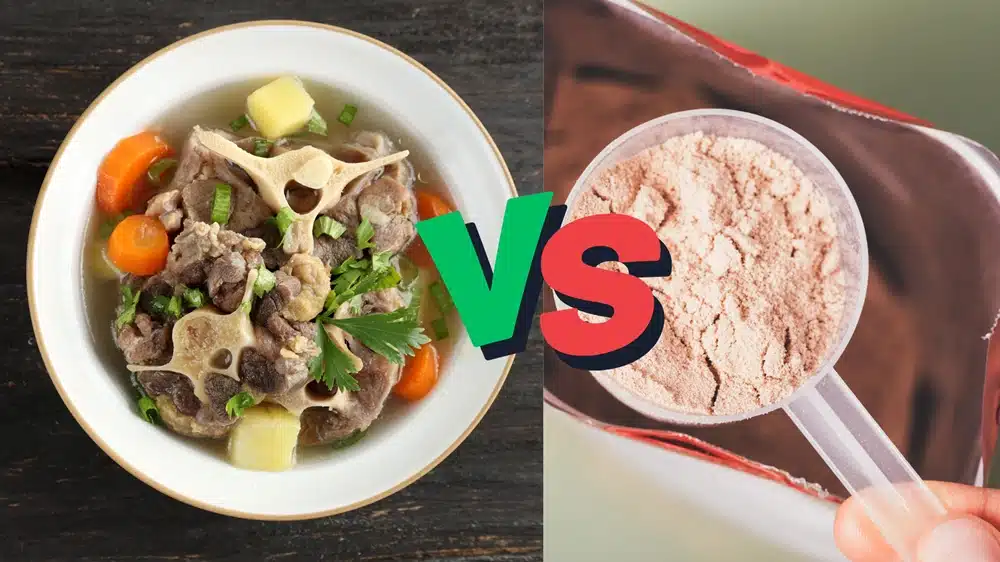
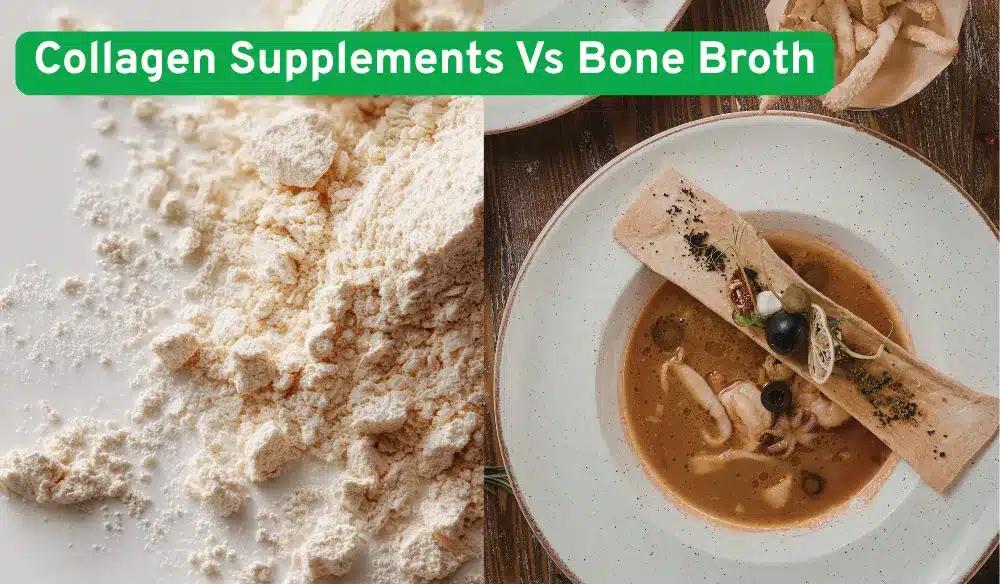
In the modern wellness landscape, the ongoing debate regarding collagen supplements vs bone broth is frequently oversimplified as a battle between lab-made convenience and traditional, holistic nutrition. Intuitively, consumers are drawn to the romanticized image of a 12-hour simmered broth, assuming that “natural” inherently translates to superior physiological benefits. However, when examined through the lens of modern cellular biology and metabolic efficiency, this assumption falls into a profound efficacy trap.
The definitive conclusion of this debate is not about choosing between chemical extraction and natural nourishment; it is a choice between delivering a precise “cellular command” versus processing “nutritional redundancy.” In our high-stress, fast-paced modern environment—where our bodies are often managing elevated cortisol levels and systemic micro-inflammation—the way we metabolize nutrients has fundamentally shifted. Here is where the traditional narrative breaks down:
- Collagen Supplements as “Signal Peptides”: High-quality, hydrolyzed collagen is not merely a structural building block; it acts as a highly efficient biological messenger. Specialized dipeptides (like Pro-Hyp) bypass digestive degradation, cross the intestinal barrier, and act as direct “blueprints,” actively instructing fibroblasts in the skin and joints to synthesize new collagen.
- Bone Broth as a “Metabolic Tax”: Conversely, bone broth provides unstructured, bulk amino acids. Before the body can utilize them for collagen production, it must invest significant energy into breaking them down. Furthermore, acquiring a clinically effective dose of collagen from broth often requires ingesting excess sodium, saturated fats, and potentially bioaccumulated heavy metals—a metabolic burden that can trigger the very inflammation that degrades existing collagen.
Ultimately, traditional bone broth offers systemic, generalized nourishment at a high digestive cost, whereas advanced collagen supplements offer targeted, bio-active signaling. To understand why precision must sometimes outpace tradition, we must look beyond basic ingredient labels and examine the unseen biological mechanisms at play.
Section 1: Signal Peptides vs. Bulk Raw Materials: The Command System
To truly understand the divergence in efficacy between these two sources, we must abandon the outdated notion that “eating collagen makes collagen.” The human body does not work like a simple transfer system; it operates on complex metabolic priorities.
When you consume a bowl of traditional bone broth, you are ingesting long-chain, complex gelatin and proteins. Your digestive system must work exhaustively to break these massive molecules down into singular, raw amino acids. Once in the bloodstream, these amino acids are “unassigned.” They are essentially biological “bricks.” In a stressed or fatigued body, these bricks will be prioritized for critical survival functions—repairing a micro-tear in a muscle, synthesizing liver enzymes, or balancing blood serum levels. Rebuilding the structural matrix of your skin or joint cartilage is often at the very bottom of the body’s triage list.
Collagen supplements, specifically high-quality enzymatically hydrolyzed collagen, operate on an entirely different biological pathway. Through advanced hydrolysis, the long protein chains are precisely cleaved into specific dipeptides and tripeptides, most notably Proline-Hydroxyproline (Pro-Hyp) and Hydroxyproline-Glycine (Hyp-Gly).
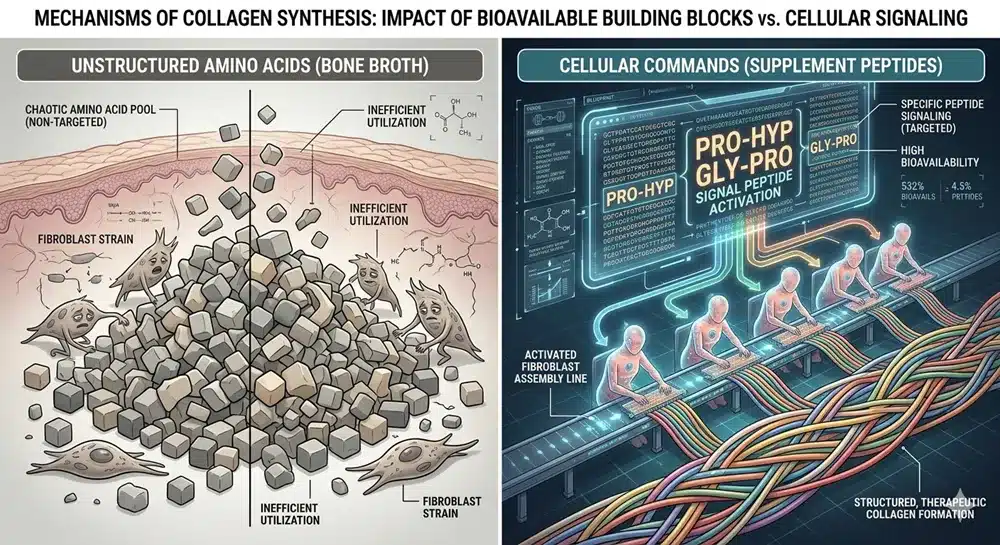
These specialized peptides are small enough to survive gastric digestion and cross the intestinal barrier intact. Once in the bloodstream, they do not act merely as raw materials; they act as “blueprints” or cellular commands. They bind directly to the receptors on the surface of fibroblasts (the cells responsible for making collagen), actively stimulating them to ramp up endogenous collagen production and synthesize hyaluronic acid.
To illustrate this physiological divergence, the following table breaks down the core biological mechanics:
The Efficacy Matrix: Hydrolyzed Peptides vs. Bone Broth
| Biological Attribute | Hydrolyzed Collagen Supplements | Traditional Bone Broth |
| Primary Mechanism | Cellular Signaling (“The Blueprint”) | Nutritional Supply (“The Bricks”) |
| Molecular Weight | < 3,000 Daltons (Optimized for rapid mucosal absorption) | 10,000 to 100,000+ Daltons (Requires heavy enzymatic breakdown) |
| Bioactive Peptides (e.g., Pro-Hyp) | Highly Concentrated & Clinically Intact | Negligible (Largely degraded during long simmering and digestion) |
| Fibroblast Activation | Direct & Targeted (Triggers synthesis) | Indirect & Non-specific (Depends on systemic availability) |
| Metabolic Cost | Near-Zero (Pre-digested via enzymatic hydrolysis) | High (Requires intense gastric acid and protease activity) |
As the data suggests, relying on bone broth for targeted tissue repair is akin to dumping a pile of bricks at a construction site without a foreman or a blueprint. The raw materials are present, but the structural execution is left entirely to chance. Hydrolyzed collagen supplements provide both the specific materials and the urgent command to start building.
Section 2: The “Metabolic Tax” and the Irony of Micro-Inflammation
In the realm of clinical nutrition and advanced product formulation, we evaluate efficacy not merely by the raw ingredients you consume, but by your Net Nutritional Return on Investment (ROI). When we apply this rigorous metric to traditional bone broth, a significant “Metabolic Tax” is revealed—a hidden physiological cost that frequently counteracts the intended structural benefits.
The fundamental biological flaw in relying on bone broth as a primary collagen source is its unstandardized yield. In professional supplement manufacturing, raw materials undergo precise enzymatic extraction and strict quality control to guarantee a reliable, therapeutic dose—typically 10 to 15 grams of pure collagen peptides per serving, with zero peripheral caloric burden.
Bone broth, conversely, is a nutritional gamble. Depending on the density of the bones, the exact simmer time, and the solvent ratio, the actual amino acid profile fluctuates wildly. To secure that critical 10-gram therapeutic threshold of collagen from homemade or commercial broth, you are forced to consume large volumes of liquid. In doing so, you are paying a steep metabolic tax:
- The Sodium Tax: To make bone broth palatable, it typically requires heavy seasoning. Chronic high sodium intake leads to cellular dehydration and extracellular water retention. This disrupts the delicate osmotic balance in the dermis, making the skin appear puffy rather than plump, and hindering optimal collagen cross-linking.
- The Saturated Fat Tax: Animal marrow and connective tissues are inherently rich in saturated fats. Chasing an effective collagen yield through broth inadvertently introduces a dense lipid load to your daily macros, taxing the liver and digestive system.
- The Inflammation Irony: Herein lies the most critical biological paradox. A diet burdened by excessive sodium and saturated fats is a well-documented trigger for systemic micro-inflammation. This inflammatory state stimulates the overproduction of Matrix Metalloproteinases (MMPs)—a class of enzymes that actively degrade and break down existing collagen networks in your skin and joints.
The Bottom Line: By consuming high volumes of unstandardized broth to build collagen, you may inadvertently cultivate an inflammatory internal environment that destroys your existing collagen matrix faster than the broth can repair it. Advanced, highly purified collagen supplements bypass this metabolic tax entirely, delivering the isolated bioactive compound without the inflammatory baggage.
Section 3: The Gut Microbiome: Who is the More Efficient “Translator”?
The conversation surrounding collagen is incomplete without addressing the primary gateway of human health: the gastrointestinal tract. For decades, traditional wellness circles have championed bone broth as the ultimate remedy for soothing digestion and healing a compromised gut lining. However, when we examine this through the lens of modern gastroenterology and microbiome science, a more complex—and sometimes contradictory—picture emerges.
The gut is not merely a passive absorption tube; it is a highly intelligent, selective barrier and a sophisticated “translator” of the nutrients we consume. How this translator reacts to collagen depends entirely on the molecular format of the input.
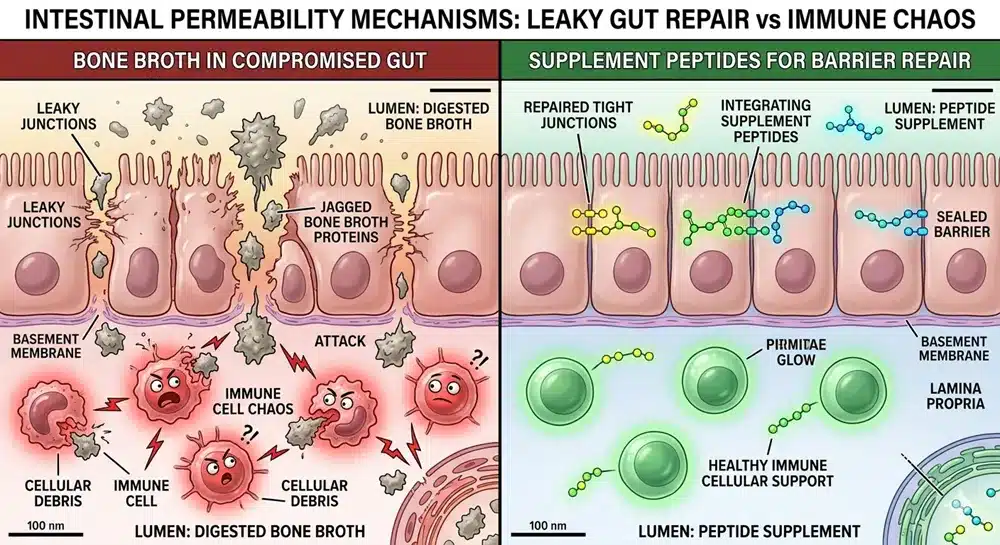
The Paradox of Bone Broth in a Compromised Gut Many individuals seeking collagen are already dealing with sub-optimal gut health, chronic stress, or Increased Intestinal Permeability (commonly known as Leaky Gut Syndrome). In this state, the mucosal lining is inflamed, and the digestive fire (stomach acid and protease enzyme production) is often weakened.
When you introduce the heavy, complex gelatin and large protein macromolecules found in traditional bone broth to a fragile gut, you create a heavy digestive burden. If these large protein structures are not fully broken down due to weak digestion, they can seep through the compromised gut lining into the bloodstream. The body’s immune system identifies these undigested macromolecules as foreign invaders, triggering an immune response and further exacerbating systemic inflammation—the exact opposite of the intended healing effect.
Hydrolyzed Peptides: The Precision Architects of the Gut Barrier This is where clinical-grade, enzymatically hydrolyzed collagen supplements demonstrate a profound biological advantage. By pre-digesting the collagen into micro-peptides (typically under 3,000 Daltons), the supplement bypasses the need for heavy enzymatic breakdown in the stomach.
More importantly, these specific micro-peptides act as targeted therapeutic agents for the gut lining:
- Upregulation of Tight Junctions: Advanced studies indicate that specific collagen peptides actively stimulate the expression of tight junction proteins (such as Claudins and Occludins). These proteins are the literal “glue” that seals the gaps in a leaky gut.
- Immune Modulation: Because the peptides are already broken down to a molecular size that the body recognizes as safe and bioavailable, they cross the intestinal barrier smoothly without triggering an autoimmune flare-up.
- Microbiome Harmony: Unlike rich, fatty bone broths that can sometimes feed bacterial overgrowth (such as SIBO) if not carefully prepared, pure collagen peptides provide a clean, non-fermentable amino acid profile that supports the regeneration of enterocytes (intestinal lining cells) without disrupting the delicate bacterial balance.
The Verdict on Gut Health: If your digestive system is the translator, bone broth is a dense, archaic novel that takes immense energy to decode, with a high risk of misinterpretation (inflammation). Hydrolyzed collagen supplements are clear, concise, and direct cellular commands that the gut can instantly read and use to repair its own borders.
Section 4: Modern Toxicology: Bioaccumulation vs. Lab-Grade Purity
When advocating for dietary interventions, “natural” is frequently conflated with “safe.” However, in the context of modern industrial agriculture, we must critically evaluate the source of our raw materials through the lens of environmental toxicology. This brings us to the most uncomfortable truth about traditional bone broth: the issue of bioaccumulation.
Bones are biologically designed to act as the body’s mineral reservoir. Unfortunately, they do not only store calcium and phosphorus; they also act as a sponge for heavy metals—most notably lead and cadmium—sequestering these toxins away from vital organs over the animal’s lifespan.
When you simmer animal bones for 12 to 24 hours in an acidic medium (like the commonly added apple cider vinegar), you are effectively performing a deep-tissue extraction. You are not just pulling out collagen; you are leaching these accumulated heavy metals directly into the broth. Several independent consumer studies have highlighted that organic, slow-cooked bone broths often contain significantly higher concentrations of lead compared to the water they were cooked in.
The Superiority of Lab-Grade Purification In stark contrast, clinical-grade collagen supplements operate under rigorous, standardized quality control protocols. Advanced manufacturing processes do not rely on crude boiling. Instead, they utilize precise enzymatic hydrolysis and multi-stage micro-filtration.
- Traceability & COAs: Premium collagen peptide sourcing requires comprehensive batch testing. A legitimate Certificate of Analysis (COA) guarantees that heavy metals are filtered down to absolute minimum parts-per-million (PPM) thresholds, far below what a home-cooked broth could ever guarantee.
- Targeted Extraction: Laboratory extraction isolates the specific amino acid chains required for cellular signaling, leaving behind the unwanted lipid profiles and toxic bio-residues found in animal marrow.
If optimal health is the goal, subjecting the body to chronic, low-dose heavy metal exposure via “natural” broth is a counterproductive strategy. Precision-engineered purity is not a compromise; in the modern era, it is a biological necessity.
Section 5: Behavioral Psychology: Ritualistic Comfort vs. Efficiency Compensation
To present a truly objective analysis, we must acknowledge the one dimension where traditional bone broth holds a distinct advantage: its psychobiological impact.
Skin and joint health are intimately tied to our nervous system. Cortisol, the primary stress hormone, is notoriously catabolic—it actively breaks down collagen fibers and accelerates intrinsic aging. The act of sourcing ingredients, preparing a pot of soup, and letting it simmer fills the home with a comforting aroma. This slow, deliberate process provides a psychological anchoring effect, engaging the parasympathetic nervous system (“rest and digest”) and effectively lowering cortisol levels. For those with the luxury of abundant free time, this ritualistic comfort offers genuine physiological benefits.
The Reality of the Modern Wellness Seeker However, we must design wellness protocols for reality. The modern consumer is often a time-poor professional—perhaps navigating intense international business demands during the week and dedicating their weekends entirely to family and parenting. For this demographic, the demand to source grass-fed bones and monitor a 12-hour simmer is not a stress-reliever; it is an additional, overwhelming chore.
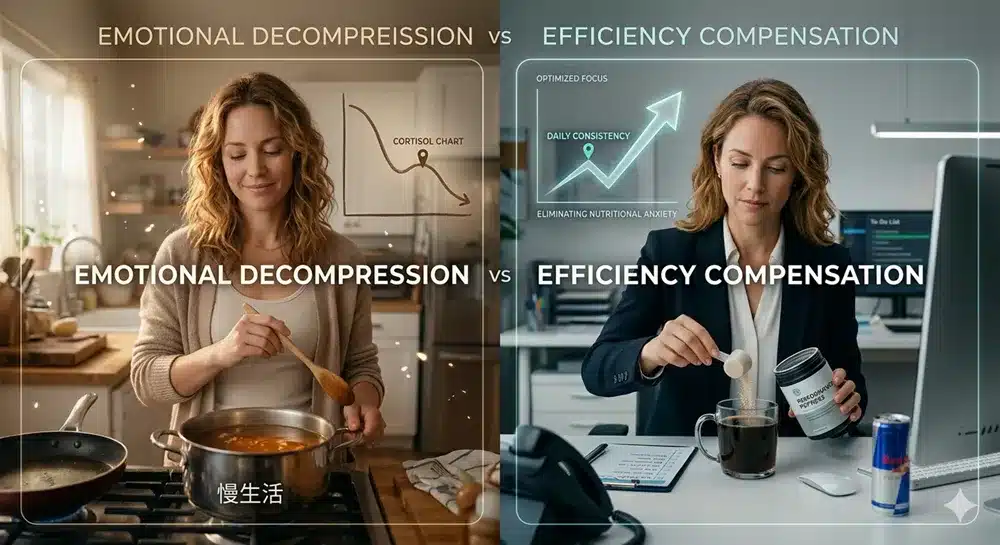
Herein lies the psychological value of the collagen supplement: Efficiency Compensation.
- Taking a highly bioavailable scoop of collagen peptides in your morning coffee takes five seconds.
- It eliminates the “wellness guilt” of not having time to cook from scratch.
- It provides a guaranteed, therapeutic dose of cellular commands without disrupting a tightly packed schedule.
Ultimately, the best structural repair protocol is the one you can consistently maintain. While bone broth serves beautifully as an occasional weekend culinary ritual, high-quality collagen supplements provide the reliable, daily micro-habits required to build resilient tissue in a high-stress world.
Ready to Formulate Your Next Premium Supplement?
Stop compromising on quality. Whether your next flagship product requires highly purified Bone Broth Collagen Peptides or a nutrient-dense Bone Broth Protein matrix, we supply industry-leading raw ingredients. Partner with us for clean-label, fully traceable sourcing.
Conclusion
The debate between collagen supplements vs bone broth is ultimately not a question of which is “better” in a vacuum, but rather which is the most biologically appropriate tool for the modern human ecosystem.
If we strip away the romanticized wellness marketing and look strictly at cellular signaling, metabolic efficiency, and modern toxicology, the winner for targeted tissue repair is unequivocally clear. High-quality, enzymatically hydrolyzed collagen supplements provide a standardized, therapeutic dose of bioactive peptides. They deliver the precise “blueprint” required to activate fibroblasts, bypass the digestive burden of a compromised gut, and avoid the inflammatory “metabolic tax” of excess sodium, saturated fats, and bioaccumulated heavy metals.
However, optimal wellness rarely exists in absolutes. Instead of a binary choice, modern consumers should adopt a Hybrid Repair Protocol:
- The Daily Driver (Efficacy & Precision): Rely on clinical-grade hydrolyzed collagen supplements as your foundational, daily non-negotiable. This guarantees your body receives the exact signal peptides it needs to maintain skin elasticity, joint integrity, and gut health amidst a high-stress lifestyle, without adding caloric or toxic load.
- The Occasional Ritual (Psychology & Culinary Tradition): Reserve bone broth for what it truly is: a comforting, mineral-rich culinary tradition. Enjoy a slow-simmered, high-quality organic broth on a relaxed weekend when your primary goal is down-regulating your nervous system, lowering cortisol, and enjoying the slow pace of life, rather than demanding rapid cellular regeneration.
In the pursuit of longevity and structural health, we must differentiate between generalized nourishment and targeted cellular commands. Bone broth is food; hydrolyzed collagen is functional information. Choose your tools accordingly.
FAQs
References
- Lead Contamination in Bone Broth: Monro, J. A., Leon, R., & Puri, B. K. (2013). The risk of lead contamination in bone broth diets. Medical Hypotheses, 80(4), 389-390. View Study on PubMed
- Pro-Hyp Peptides and Fibroblast Activation: Ohara, H., et al. (2010). Collagen-derived dipeptide, proline-hydroxyproline, stimulates cell proliferation and hyaluronic acid synthesis in cultured human dermal fibroblasts. The Journal of Dermatology, 37(4), 330-338. View Study on PubMed
- Collagen Peptides and Gut Barrier Integrity: Knefati, M., et al. (2022). Effect of a Daily Collagen Peptide Supplement on Digestive Symptoms in Healthy Women: 2-Phase Mixed Methods Study. JMIR Formative Research, 6(5), e36339. View Study on PMC
- Bioavailability of Bioactive Peptides: Visconti, M. J., et al. (2026). Immune-Modulatory Effects of Bioactive Collagen Peptides Improve Skin Health in Middle-Aged Women. Clinical, Cosmetic and Investigational Dermatology. View Study on PMC

Warren Wan is a seasoned expert with extensive experience in the dietary supplement supply chain, possessing rich practical experience in the research, development, process control, and global sourcing of core ingredients such as collagen peptides, bone broth protein, and keratin. As the author of this column, he is dedicated to stripping away the marketing packaging, transforming obscure ingredient science and production quality control standards into easy-to-understand, hardcore science popularization, helping readers understand the truth behind the labels and make more rational health choices.