
You spend $50 on a beautifully packaged collagen powder, chasing that promised “glass skin” glow. But a few weeks in, instead of a radiant complexion, you’re dealing with deep, painful cystic acne along your jawline.
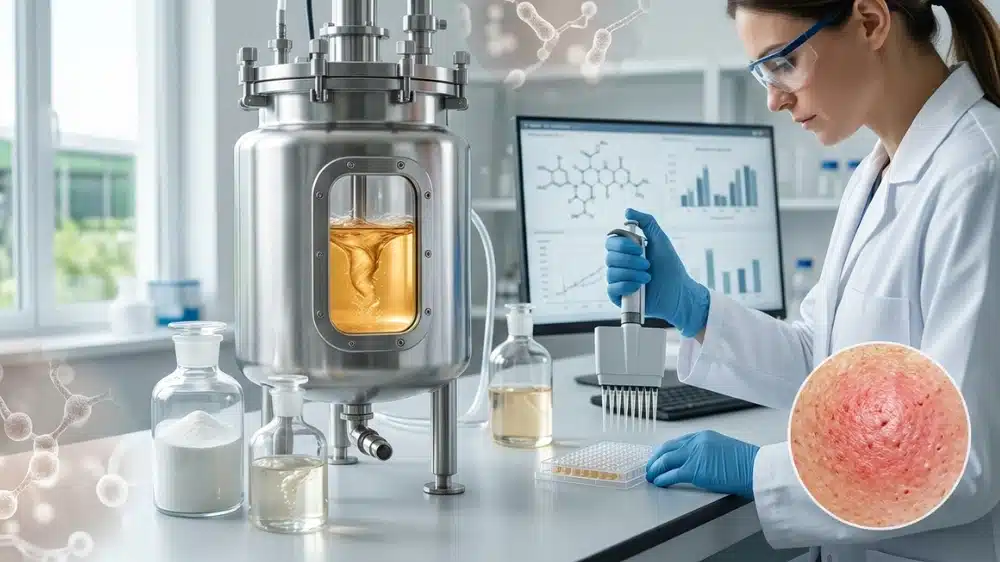
If you are frantically searching whether collagen can cause pimples, you aren’t alone. The internet is full of conflicting advice, usually pointing the finger at the protein itself. But as someone who spends their days looking at raw material specifications, formulation sheets, and manufacturing protocols, I’m going to give you the unvarnished truth:Collagen doesn’t cause breakouts. Cheap, poorly manufactured collagen does.
It is time to strip away the glossy marketing jargon. Here is the exact science behind why your current supplement might be wrecking your skin, the manufacturing red flags brands don’t want you to know about, and how to spot the formulas that actually work.
3 Reasons Why Collagen Can Cause Pimples
1. The Dalton Weight Trap (Incomplete Hydrolysis)
The “Dalton” Breakdown
| Molecular Weight (Daltons) | Classification | Bioavailability Score | Acne/Breakout Risk |
|---|---|---|---|
| 1,000 – 3,000 Da | Ultra-Low Peptides | 95% – 100% | Negligible (Optimal) |
| 3,000 – 5,000 Da | Standard Hydrolyzed | 70% – 85% | Low (Safe for most) |
| 5,000 – 10,000 Da | Partially Hydrolyzed | 40% – 60% | Moderate (Gut fermentation risk) |
| 10,000 – 300,000 Da | Native/Gelatin State | < 20% | High (Severe inflammatory risk) |
Most consumers look for the word “hydrolyzed” on a label and assume it’s ready for absorption. In reality, hydrolysis is a spectrum. Native collagen in its raw form is a massive molecule—roughly 300,000 Daltons. To be effective, it must be broken down into peptides.
- The Industry Shortcut: Many high-volume manufacturers stop the enzymatic hydrolysis process early to save on energy and time. This results in “partially hydrolyzed” collagen with a molecular weight between 5,000 and 10,000 Daltons.
- Why it causes pimples: These molecules are too large to pass through the intestinal wall efficiently. Instead of being absorbed, they sit in the gut and undergo fermentation by your microbiome. This creates a “leaky gut” inflammatory response that triggers systemic inflammation, which almost immediately manifests as cystic acne along the jawline and chin.
- The Expert Standard: You should look for raw materials strictly refined to under 3,000 Daltons. At this size, the peptides are “bio-ready,” meaning they enter the bloodstream without causing the digestive distress that leads to skin flare-ups.
2. The Histamine Spike from “Lag-Time” Sourcing
This is the “secret” most marine collagen brands never discuss. A breakout isn’t always acne; sometimes it’s a localized histamine reaction that looks identical to a pimple.
- The Industry Shortcut: In low-cost manufacturing, raw materials like fish scales or bovine hides may sit in collection bins for days before being processed. As animal tissue breaks down, histamines skyrocket.
- Why it causes pimples: If the raw material isn’t processed while it is exceptionally fresh, the finished powder carries a high “histamine load.” When you ingest it, your body reacts with an inflammatory flush. This can cause small, red, itchy bumps that are often mistaken for traditional acne.
- The Expert Standard: Quality isn’t just about the machine; it’s about the supply chain. The best collagen is processed within hours of sourcing. If a manufacturer doesn’t mention their “time-to-process” or cold-chain logistics, they are likely hiding a high-histamine byproduct.
3. The “Label Dressing” Additive Paradox (The Biotin Problem)
In a race to provide “all-in-one” beauty solutions, brands often stuff their collagen powders with a cocktail of vitamins—most notably Biotin (Vitamin B7).
- The Industry Shortcut: Brands add 5,000% or more of your daily value of Biotin because it’s a cheap way to claim “hair and nail support” on the front of the bottle.
- Why it causes pimples: Biotin and Vitamin B5 (Pantothenic Acid) share the same receptors in the gut. When you flood your system with high doses of Biotin, you effectively “crowd out” Vitamin B5. B5 is responsible for regulating the skin’s barrier and oil production. A B5 deficiency—induced by your “beauty” supplement—causes your sebaceous glands to go into overdrive, resulting in oily skin and clogged pores.
- The Expert Standard: Avoid collagen powders that look like multivitamins. A premium collagen should be “clean”—focused on the protein itself. If you need Biotin, take it separately at a controlled dose so it doesn’t compete with the nutrients your skin needs to stay clear.
B2C Brand Recommendations: Who to Trust When Your Skin is Acne-Prone
| Recommended Brand | Ideal Clinical Situation | Strategic Formulation Advantage |
|---|---|---|
|
Sensitive gut or adverse reactions to bovine (beef) sources.
|
|
|
|
Vital Proteins
Original Peptides (Blue Tub)
Pasture-Raised
|
Seeking a reliable, pasture-raised baseline for general health.
|
|
|
Puori
CP1 Pure Collagen
Clean Label Certified
|
Highly reactive to impurities, heavy metals, or histamines.
|
|
How to Read a Collagen Label Like a Formulator
Additive “Watchlist” for Acne-Prone Skin
| Ingredient to Avoid | Common Label Name | Why It Triggers Pimples |
|---|---|---|
| Biotin | Vitamin B7 / Vitamin H | Competes with Vitamin B5, causing excess sebum (oil) production. |
| Fillers | Maltodextrin / Corn Syrup Solids | Spikes insulin (IGF-1), which signals pores to clog and inflame. |
| Sweeteners | Sucralose / Aspartame | Disrupts the gut microbiome (Gut-Skin Axis) leading to inflammation. |
| Thickeners | Carrageenan / Guar Gum | Known gut irritant; can trigger systemic inflammatory responses in skin. |
| Hormonal Traces | Non-Pasture Bovine Hide | May contain trace hormones that disrupt your natural androgen balance. |
1. The “Other Ingredients” Audit: The 2-Item Rule
In the world of functional ingredients, less isn’t just more—it’s a safety net.
- The Rule: If the “Other Ingredients” section contains more than two items, put the tub back on the shelf.
- The Detail: Manufacturers often add Maltodextrin or clumping agents (like Silicon Dioxide) to make the powder flow better through high-speed packaging machines. Maltodextrin has a higher glycemic index than table sugar. It spikes your insulin, which in turn triggers an increase in IGF-1 (Insulin-like Growth Factor 1). For an acne-prone individual, this is like pouring gasoline on a fire; it tells your pores to produce more oil immediately.
- What to look for: Ideally, you want the label to say: Ingredients: Hydrolyzed Collagen Peptides (Bovine/Marine). That’s it.
2. The Biotin “Red Flag”
We’ve discussed why Biotin (Vitamin B7) causes breakouts by competing with Vitamin B5, but brands still hide it under names like “Beauty Blend” or “Pro-Skin Complex.”
- The Detail: If you see a “Proprietary Blend” that doesn’t list the exact milligram breakdown of each ingredient, it’s a formulator’s trick to hide low-quality collagen behind a curtain of cheap vitamins.
- The Pro-Tip: If the label lists Biotin at anything over 500mcg (and many beauty collagens go up to 5,000mcg), you are likely going to experience “Biotin acne.” A pure collagen peptide doesn’t need a vitamin “booster” if the protein itself is high quality.
3. The Solubility & Smell Test (The “Human Touch” Detail)
You can’t see Daltons with the naked eye, but you can see the result of poor hydrolysis.
- The Detail: Take a scoop of your collagen and drop it into room-temperature water. Do not stir it for sixty seconds.
- High-Quality (Low Dalton): It should begin to sink and dissolve on its own, leaving the water clear or very pale amber. It should have almost zero scent.
- Low-Quality (High Dalton): It will clump into “glue-balls” at the surface. If you smell a strong “meaty” or “wet dog” odor, the material was likely processed from older hides or scales with a high histamine count.
- Why it matters: If it won’t dissolve in a glass of water, your gut is going to have a nightmare trying to break it down. That digestive “heavy lifting” is exactly what leads to the systemic inflammation that causes pimples.
4. Certification Beyond the Basics
Don’t just look for “Natural.” That word has no legal definition in the supplement world.
- The Detail: Look for NSF Certified for Sport or Informed-Choice seals. These aren’t just for athletes. These certifications mean a third-party lab has verified that the product isn’t contaminated with “fillers” or unlisted hormones. In my experience, “mystery” breakouts from collagen are often traced back to trace contaminants that shouldn’t have been in the raw material in the first place.
Is Your Skin Detoxing or Is the Product Trash
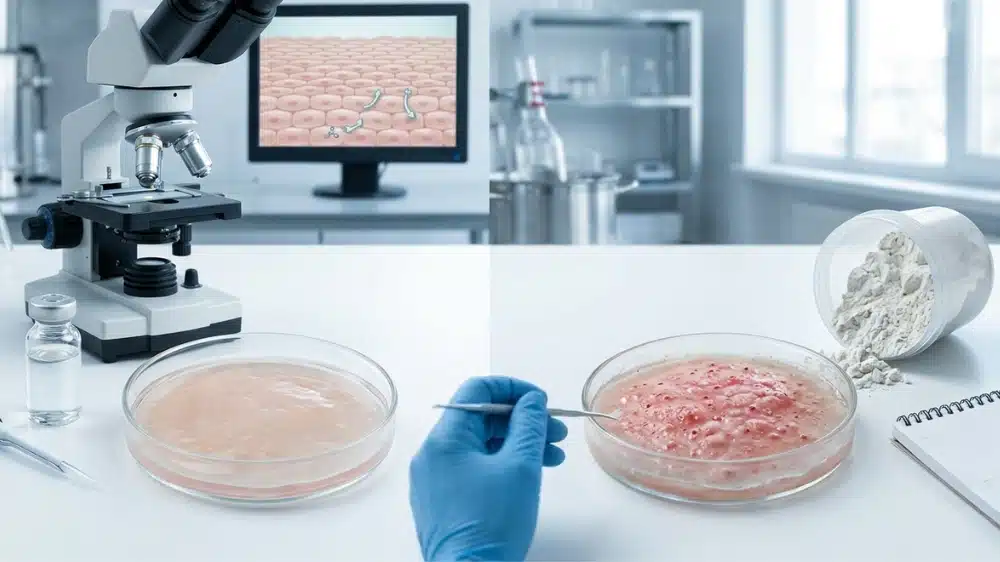
The “Map Test” Reference Chart
| Biological Purge (Keep Going) | Product Reaction (Stop Now) |
|---|---|
| Location Your “usual” breakout zones (e.g., T-zone or hormonal chin area). | Location “New Map” zones where you never break out (e.g., cheeks, neck, forehead). |
| Duration Individual spots resolve within 3-5 days; total purge ends in 28 days. | Duration Spots persist, cluster, or continue to appear after 4-6 weeks of use. |
| Texture Small whiteheads or “dry” seeds that surface easily. | Texture Deep, itchy, painful, or “blind” cystic lumps that feel hot to the touch. |
The “Purge” is About Speed, Not Toxins
A true “purge” only happens when a substance increases the rate of cell turnover. Collagen peptides—specifically those rich in Proline, Glycine, and Hydroxyproline—are the building blocks of skin. When you flood your system with high-quality, bioavailable peptides, your skin can theoretically speed up its renewal process.If you have micro-comedones (tiny, invisible blockages) already living deep in your pores, an accelerated turnover cycle will push them to the surface all at once.
How to Tell the Difference: The “Map” Test
This is the single most important detail I tell anyone testing a new formulation. You have to map your face.
- The Purge (Keep Going): The spots appear in your “usual” zones—the places you always get a pimple before your period or when you’re stressed. These are typically small whiteheads or “seeds” that surface and heal quickly, usually within 3 to 5 days.
- The Reaction (Stop Immediately): You start seeing “New Map” acne. If you usually have a clear forehead but suddenly develop deep, painful, red cysts there, that is not a purge. That is systemic inflammation. Your body is telling you that it cannot process the molecular weight of the collagen you’ve ingested, or it is reacting to a contaminant in the raw material.
The 28-Day Hard Rule
The human skin cycle is roughly 28 days.
- A purge should peak in week two and be completely resolved by the end of the first month. Your skin should look better than it did before you started.
- A reaction will persist. If you are in week five or six and still seeing “collagen pimples,” the product is trash. Continuing to take it won’t “clear the toxins”; it will simply keep your gut in a state of chronic inflammation, which can lead to long-term scarring and a damaged skin barrier.
The “Human Touch” Insight: In my experience, 90% of what people call “collagen purging” is actually just a reaction to high-Dalton peptides or high-histamine raw materials. If it hurts, if it’s itchy, or if it’s in a brand-new location, it’s the product, not your “detox.”
How to Biohack Your Dosage for Zero Breakouts
1. The “5g Rule” (The Gut Adaptation Phase)
Your gut microbiome is a finely tuned ecosystem. When you suddenly flood it with a concentrated dose of specific amino acids like Glycine and Proline, you can trigger a “metabolic traffic jam.” If your gut can’t process the volume, it creates the very inflammation that leads to breakouts.
- The Protocol: For the first 7 days, take only 5 grams (usually about a quarter-scoop) per day.
- The Detail: This “micro-dosing” period allows your digestive enzymes and transport proteins to upregulate. Think of it like warming up an engine before hitting 100 mph. By Week 2, move to 10g. Only hit the full 20g dose once your skin has proven it can handle the influx.
2. The Formulator’s Secret: Enzyme Stacking
If you suspect your collagen has a slightly higher molecular weight (Daltons), you can effectively “fix” the product in your own kitchen by stacking it with a Protease-rich digestive enzyme.
- The Detail: Protease is the specific enzyme that cleaves protein bonds into absorbable peptides. By taking a protease supplement 15 minutes before your collagen, you are essentially finishing the hydrolysis process that the manufacturer might have rushed.
- Why it works: It ensures that zero high-Dalton fragments reach your lower intestine, effectively neutralizing the “fermentation” risk that causes jawline acne.
3. Choose Your Source Based on Your “Hormonal Map”
Not all collagen sources are created equal when it comes to your endocrine system.
- Bovine (Beef) Collagen: Excellent for gut healing and joint repair. However, land-animal sources can occasionally carry trace amounts of IGF-1 (Insulin-like Growth Factor). If you suffer from PCOS or oily, hormonal acne, IGF-1 is your enemy—it tells your sebaceous glands to produce more “sticky” sebum.
- Marine (Fish) Collagen: This is my “Safe Bet” for acne sufferers. Marine collagen is hormonally neutral. It provides the same skin-plumping benefits as bovine sources but without the risk of triggering an androgenic response in the skin.
4. The Timing Hack: Don’t Mix with Dairy
Many people put their collagen in a latte. This is a mistake for the breakout-prone.
- The Detail: Dairy is a known insulin-spiker. When you combine the insulin spike of dairy with the concentrated amino acids in collagen, you create a “perfect storm” for pore clogging.
- The Pro-Tip: Take your collagen in water, herbal tea, or a Vitamin C-rich juice. Vitamin C is a co-factor for collagen synthesis—it’s like giving your skin the “instruction manual” along with the building blocks.
FAQs
conclusion
The reason collagen can cause pimples is rarely due to the collagen itself, but rather the quality of the raw material and the lack of precision during the manufacturing process. As we have explored, the difference between a radiant glow and a painful breakout often comes down to a few thousand Daltons or a couple of hours in the supply chain.
For consumers, the takeaway is clear: stop buying “beauty” blends filled with skin-disrupting additives like high-dose Biotin and synthetic sweeteners. Stick to pure, low-molecular-weight peptides, start with a conservative 5g dose, and trust your body’s “Map Test”—if it’s a new type of acne in a new location, your supplement is the culprit.
Ultimately, the B2C brands you trust are only as good as the raw materials they source. At Gensei, we occupy a unique position as a global leader in collagen manufacturing because we understand that purity isn’t just a marketing claim—it’s a biological necessity.While many suppliers allow raw materials to sit, leading to the histamine spikes that trigger skin reactions, Gensei operates with a robust, integrated supply chain. We source premium raw materials—from sustainable bovine hides to fish scales and poultry cartilage—and process them with a level of rigor that few can match.
We don’t just “break down” proteins. Our advanced enzymatic processing ensures a consistently low molecular weight, guaranteeing the bioavailability needed for skin repair without the gut-induced inflammation that causes acne.
From monitoring the exact pH of our vats to ensuring our finished powders are odorless and highly soluble, we provide the “human touch” details that result in a superior product.
Our facilities meet the highest international benchmarks, providing brands worldwide with the bioactive, high-purity collagen required to create effective, non-comedogenic formulas.
If you are a brand owner looking to develop a collagen product that promises results without the risk of breakouts, the foundation starts with the raw material. By choosing Gensei, you are choosing a partner dedicated to the cutting-edge research and rigorous quality standards that the global beauty and nutrition sectors demand.
Don’t let inferior raw materials compromise your customer’s skin health. Partner with Gensei to access ultra-low Dalton peptides, bioactive purity, and a transparent supply chain that eliminates the risk of supplement-induced acne.
Request Technical Specificationsreferences
- National Center for Biotechnology Information (NCBI): A comprehensive study on the absorption and effectiveness of hydrolyzed collagen peptides.
- ScienceDirect (Food Science): An academic breakdown of the enzymatic hydrolysis process used in functional food production.
- National Institutes of Health (NIH) Office of Dietary Supplements: Official fact sheet on Biotin, including upper limits and its metabolic relationship with other B-vitamins.
- World Health Organization (WHO) Food Standards: Codex Alimentarius standards for food additives and protein derivatives.

Warren Wan is a seasoned expert with extensive experience in the dietary supplement supply chain, possessing rich practical experience in the research, development, process control, and global sourcing of core ingredients such as collagen peptides, bone broth protein, and keratin. As the author of this column, he is dedicated to stripping away the marketing packaging, transforming obscure ingredient science and production quality control standards into easy-to-understand, hardcore science popularization, helping readers understand the truth behind the labels and make more rational health choices.