
Für Verbraucher bedeutet dies, dass der niedrigste Preis pro Packung nicht immer das beste Preis-Leistungs-Verhältnis bietet. Für Hersteller von Nahrungsergänzungsmitteln bedeutet dies, dass die richtige Frage nicht nur lautet: “Wie günstig können wir das Produkt anbieten?”, sondern auch: “Wie hoch sind die Kosten pro Gramm verwertbarem Protein, und welches Qualitätsniveau verspricht die Marke?”
In diesem Leitfaden wird erläutert, warum die Preise für Proteinpulver gestiegen sind, wie man das Preis-Leistungs-Verhältnis bewertet und wie Hersteller von Nahrungsergänzungsmitteln kosteneffiziente Rezepturen entwickeln können, ohne dabei Abstriche bei der Qualität zu machen. Wenn Sie ein Proteinprodukt unter eigener Marke entwickeln, kann Gensei Sie dabei unterstützen. Herstellung von Protein-Nahrungsergänzungen, Herstellung von Nahrungsergänzungsmitteln in Pulverformund Individuelle Formulierung von Ergänzungsmitteln.
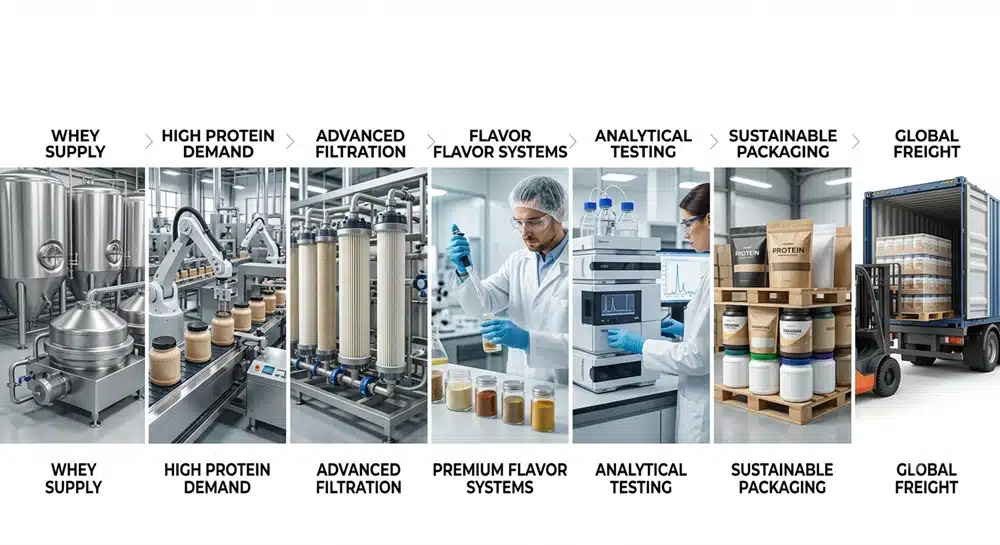
Kurzantwort: Warum Proteinpulver im Jahr 2026 teurer ist
Die Preise für Proteinpulver steigen, da mehrere Kostenfaktoren gleichzeitig zum Tragen kommen: eine zunehmende Nachfrage nach Protein im Mainstream-Bereich, eine knappe Versorgung mit proteinreichen Molkenzutaten, höhere Anforderungen an die Verarbeitung von Isolaten und reinen Proteinformen, teurere Aroma- und Süßungsmittelsysteme, strengere Anforderungen an die Qualitätsprüfung, Verpackungskosten sowie längere Beschaffungsvorlaufzeiten.
Produkte auf Molkebasis reagieren besonders empfindlich auf den Marktdruck, da Molkenprotein an die Verarbeitungskapazitäten der Milchindustrie gebunden ist. Marken, die Molkenisolat, instantisierte Molke, klare Molke, trinkfertige Proteinshakes oder proteinreiche Snacks verwenden, sind oft dem stärksten Kostendruck ausgesetzt.
Die 6 Hauptgründe für den Preisanstieg bei Proteinpulver
| Kostentreiber | Warum das zu einer Preiserhöhung führt | Was die Verbraucher sehen | Was Marken beachten sollten |
|---|---|---|---|
| Hoher Proteinbedarf | Protein ist längst nicht mehr nur auf den Bodybuilding-Bereich beschränkt; es wird in Shakes, Riegeln, Snacks, Getränken und Produkten zur Gewichtsregulierung verwendet. | Höhere Regalpreise und weniger Sonderangebote. | Prognostizieren Sie den Bedarf und sichern Sie sich frühzeitig die Zuteilung der Zutaten. |
| Engpässe bei der Molkenversorgung | Proteinreiche Molkezutaten sind von den Milchströmen und speziellen Verarbeitungskapazitäten abhängig. | Molkenkonzentrat und Molkenisolat werden teurer. | Vergleichen Sie WPC, WPI, klares Molkenprotein, Kollagen, Rindfleisch und pflanzliche Alternativen. |
| Höherer Eiweißanteil | Isolate und klare Proteine erfordern eine intensivere Filtration und Aufbereitung als Pulver mit geringerem Proteingehalt. | Premium-Produkte kosten pro Portion mehr. | Berechnen Sie die Kosten pro Gramm Protein und nicht die Kosten pro Behälter. |
| Aroma- und Löslichkeitssysteme | Proteinpulver erfordern Geschmacksverstärker, Süßungsmittel, Stabilisatoren und manchmal auch Agglomeration, um den Geschmack und die Löslichkeit zu verbessern. | Besserer Geschmack und eine bessere Konsistenz sind in der Regel mit höheren Kosten verbunden. | Prüfen Sie Geschmack, Nachgeschmack, Mundgefühl und Wasserlöslichkeit vor der Produktionssteigerung. |
| Prüfung und Konformität | Die Überprüfung des Analysenzertifikats (COA), Identitätsprüfungen, mikrobiologische Untersuchungen, Schwermetalluntersuchungen und die Überprüfung der Etikettierung verursachen zusätzliche Kosten. | Hochwertigere Marken verlangen möglicherweise höhere Preise. | Chargenprotokolle, Analysezertifikate, Allergenkontrollen und die Überprüfung von Produktangaben sind erforderlich. |
| Verpackung und Logistik | Proteinpulver sind sperrig, feuchtigkeitsempfindlich und haben ein hohes Frachtgewicht. | Große Behälter, Beutel und trinkfertige Formate können im Versand teurer sein. | Optimieren Sie die Portionsanzahl, die Behältergröße, die Portionsgröße und die Kartoneffizienz. |
Preisanstieg bei Molkenprotein im Jahr 2026: Was Marken wissen sollten
Molke gehört nach wie vor zu den beliebtesten Proteinzutaten, da sie ein vollständiges Aminosäureprofil aufweist und sich gut in Sporternährungsformeln einsetzen lässt. Für Molkenproteinkonzentrat und Molkenproteinisolat sind jedoch Milchströme, Filterkapazitäten, Trocknungskapazitäten und Qualitätskontrollen erforderlich. Wenn die Nachfrage schneller steigt als das Angebot, kann sich der Preis für proteinreiche Molkezutaten rasch verändern.
Für eine Marke bedeutet dies, dass die wichtigste Entscheidung nicht einfach darin besteht, ob Molke “gut” oder “schlecht” ist. Die praktischere Frage ist vielmehr, ob Molke die richtige Zutat für die Zielgruppe, die Preisklasse, die Proteinangabe, das Allergenprofil, die Textur und das Geschmacksprofil ist.
So berechnen Sie die tatsächlichen Kosten von Proteinpulver
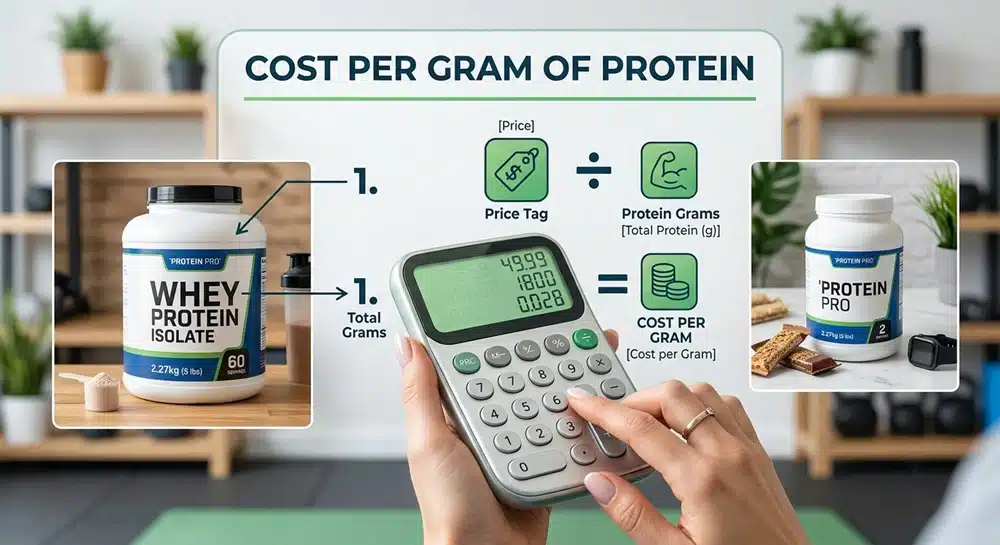
Verbraucher vergleichen Proteinpulver oft anhand des Preises pro Dose, doch das kann irreführend sein. Besser ist es, die Kosten pro Gramm Protein zu berechnen.
Formel: Kosten pro Gramm Protein = Produktpreis / Gesamtmenge an Protein in Gramm in der Verpackung.
| Beispielprodukt | Preis | Portionen | Eiweiß pro Portion | Gesamtprotein | Kosten pro Gramm Protein |
|---|---|---|---|---|---|
| Günstiges Pulver | $45 | 30 | 20 g | 600 g | $0.075 |
| Proteinreicheres Isolat | $65 | 30 | 27 g | 810 g | $0.080 |
| Premium-Aromamischung | $72 | 25 | 25 g | 625 g | $0.115 |
Ein teureres Produkt kann dennoch ein besseres Preis-Leistungs-Verhältnis bieten, wenn es mehr Protein pro Portion, eine bessere Löslichkeit, weniger Füllstoffe, strengere Qualitätskontrollen und eine Rezeptur aufweist, die die Verbraucher tatsächlich regelmäßig verwenden.
Checkliste zum Verbraucherwert: Lohnt sich ein teures Proteinpulver?
Nutzen Sie diese Checkliste, bevor Sie entscheiden, ob ein Proteinpulver seinen Preis wert ist:
- Proteinausbeute: Wie viele Gramm Eiweiß sind in einer Portion und in der gesamten Packung enthalten?
- Proteinquelle: Handelt es sich um Molkenkonzentrat, Molkenisolat, Kollagen, Rindfleischprotein, Erbsenprotein, Reisprotein oder eine Mischung?
- Aminosäure-Transparenz: Gibt der Hersteller Angaben zu den Aminosäuren oder zumindest eine klare Angabe zur Proteinquelle?
- Süßungsmittel und Aromen: Bezahlen Sie für ein „Clean-Label“-Geschmackssystem, eine einfache Rezeptur oder ein stark aromatisiertes Produkt im Dessert-Stil?
- Prüfung: Geht die Marke auf Schwermetalle, mikrobiologische Untersuchungen, Allergenkontrollen oder Überprüfungen durch unabhängige Stellen ein?
- Verdauungsgesundheit: Ist die Rezeptur für Ihre Laktoseverträglichkeit, Ihre Ernährungsgewohnheiten und den vorgesehenen Verwendungszweck geeignet?
- Anwendungsfall: Dient es der bequemen Nahrungsaufnahme nach dem Training, als Ergänzung zu den Mahlzeiten, als proteinreicher Snack oder der allgemeinen Ernährung?
Leitfaden zur Produktformulierung: Was beeinflusst die Herstellungskosten von Proteinpräparaten?
Bei Herstellern von Nahrungsergänzungsmitteln hängen die Kosten für das Endprodukt von mehr als nur Rohprotein Preis. Ein realistisches Kostenmodell sollte die Komplexität der Rezeptur, die Geschmacksentwicklung, Verkostungsrunden, die Prüfung der Zutaten, die Verpackungsform, den Produktionsumfang und die Überprüfung der Einhaltung gesetzlicher Vorschriften berücksichtigen.
| Kostenbereich | Beispiele | Option zur Kostenkontrolle |
|---|---|---|
| Protein-Zutat | WPC, WPI, Molkenkonzentrat, Kollagenpeptide, Rindfleischproteinisolat, Erbsen-Reis-Mischung. | Wählen Sie die Proteinquelle nach ihrer Verwendungszweck und nicht nur nach dem aktuellen Trend. |
| Aromasystem | Schokolade, Vanille, Obst, klares Getränk, Maskierungsmittel, Süßungsmittel. | Reduzieren Sie die Geschmacksvielfalt oder konzentrieren Sie sich auf 1–2 Einführungsgeschmacksrichtungen. |
| Funktionale Erweiterungen | Kreatin, Elektrolyte, Probiotika, Ballaststoffe, Enzyme, Vitamine. | Fügen Sie nur Zutaten hinzu, die mit dem Markenversprechen und der Werbestrategie im Einklang stehen. |
| Prüfung | Identität, Analyse, mikrobiologische Untersuchung, Schwermetalle, Allergene, Stabilität. | Erstellen Sie einen Testplan, der auf den Risiken und den Anforderungen der Vertriebskanäle basiert. |
| Verpackung | Becher, Gläser, Beutel, Sachets, Stickpacks, Messlöffel, Einlagen. | Wählen Sie das Verpackungsformat, das hinsichtlich Haltbarkeit, Transportkosten und Benutzererlebnis am besten geeignet ist. |
| Produktionsumfang | Mindestbestellmenge, Losgröße, Lieferzeit, Rohstoffzuteilung. | Prognostizieren Sie die Nachfrage und fassen Sie Varianten nach Möglichkeit zusammen. |
Marken, die Unterstützung bei der Rezepturentwicklung benötigen, können mit einem Hersteller zusammenarbeiten, der sich damit auskennt Pulvermischung, Herstellung von Proteinpräparaten, Aromasysteme, Verpackung und Qualitätskontrolle.
Alternativen zu Molke bei hohen Molkepreisen
Wenn die Molkepreise steigen, müssen Marken nicht immer auf Molke verzichten. Sie können Mischstrategien, alternative Proteinquellen oder Änderungen der Produktformate in Betracht ziehen.
| Zutatenoption | Optimaler Anwendungsfall | Hinweise zur Formulierung |
|---|---|---|
| Molkenproteinkonzentrat | Klassische Sporternährung und allgemeine Proteinpulver. | Guter Geschmack und gutes Aminosäureprofil, allerdings können Preis und Verfügbarkeit schwanken. |
| Molkenproteinisolat | Positionierung als hochwertiges, proteinreiches Produkt mit geringerem Laktosegehalt. | Höherer Eiweißanteil, jedoch in der Regel höhere Kosten. |
| Klares Molkenprotein | Leichte Proteinprodukte im Getränkestil. | Erfordert einen höheren technischen Aufwand und mehr Arbeit an der Geschmacksausgestaltung. |
| Erbsen-Reis-Proteinmischung | Vegane oder milchfreie Produkte. | Möglicherweise sind eine Geschmacksmaskierung und ein Aminosäureausgleich erforderlich. |
| Kollagen-Peptide | Positionierung in den Bereichen Schönheit, Gelenke, Haut und gesundes Altern. | Kein vollständiges Protein; sollte nicht wie Molke zur Muskelproteinsynthese eingesetzt werden. |
| Rinderproteinisolat | Positionierung von milchfreiem tierischem Eiweiß. | Achten Sie auf das Aminosäureprofil, den Geschmack und die Transparenz bei der Herkunft. |
Qualitätsanforderungen, die vor der Markteinführung eines Proteinpräparats zu prüfen sind
Steigende Kosten können Marken dazu verleiten, an der Qualität zu sparen. Das ist riskant. Hinter einem günstigeren Angebot können mangelhafte Tests, schlechter Geschmack, eine geringe Proteinausbeute, unklare Herkunftsangaben oder Verpackungsprobleme stecken.
- Analysezertifikat für jede Charge eines wichtigen Rohstoffs.
- Proteinbestimmung und Überprüfung der Angaben auf dem Etikett.
- Mikrobiologische Untersuchungen und Schwermetalluntersuchungen.
- Allergenkontrollen, insbesondere hinsichtlich der Exposition gegenüber Milchprodukten, Soja und Gluten.
- Zielwerte für Feuchte und Wasseraktivität zur Gewährleistung der Pulverstabilität.
- Partikelgröße, Schüttdichte und Fließfähigkeit beim Abfüllen und Mischen.
- Stabilitätsprüfungen hinsichtlich Geschmack, Klumpenbildung und Haltbarkeit.
- Chargenprotokolle und Dokumentation zur Rückverfolgbarkeit.
Gensei unterstützt qualitätsorientierte Marken durch Qualitätskontrolle der Beilagen, Überprüfung der Beschaffungsprozesse und Fertigungsunterlagen.
Wie Hersteller von Nahrungsergänzungsmitteln ihre Kosten kontrollieren können, ohne Abstriche bei der Qualität zu machen
- Beginnen Sie mit der Positionierung: Entscheiden Sie, ob es sich bei dem Produkt um ein preisgünstiges Produkt, ein leistungsorientiertes Produkt, ein Clean-Label-Produkt, ein Produkt im klinischen Stil, ein veganes Produkt, ein Beauty-Produkt, ein Produkt zur Gewichtsregulierung oder ein Lifestyle-Ernährungsprodukt handelt.
- Berechnung der Wirtschaftlichkeit von Eiweiß: Vergleichen Sie die Kosten pro Gramm Protein und nicht nur die Kosten pro Kilogramm Rohstoff.
- Anzahl der SKUs bei Markteinführung begrenzen: Bringen Sie zunächst weniger Geschmacksrichtungen auf den Markt, um das Risiko bei der Geschmacksentwicklung und bei den Lagerbeständen zu verringern.
- Portionsgröße optimieren: Vermeiden Sie überdimensionierte Portionen, die die Kosten in die Höhe treiben, ohne den Nutzen für den Nutzer zu steigern.
- Verpackung frühzeitig prüfen: Die Wahl zwischen Beutel, Tiegel und Stickpack wirkt sich auf Frachtkosten, Mindestbestellmenge, Haltbarkeit und das Verbrauchererlebnis aus.
- Prüfung der Nutzungsansprüche: Achten Sie darauf, dass Angaben zu Struktur und Funktion korrekt, belegt und nicht krankheitsbezogen sind.
- Rohstoffzuordnung planen: Arbeiten Sie frühzeitig mit Lieferanten zusammen, wenn Molke, Aromen oder Spezialzutaten knapp sind.
Fragen, die man einem Hersteller von Proteinpräparaten im Rahmen einer Ausschreibung stellen sollte
Bevor sie ein Angebot anfordern, sollten Hersteller von Nahrungsergänzungsmitteln folgende Fragen stellen:
- Mit welchen Proteinquellen lässt sich eine Rezeptur entwickeln, und welche sind derzeit am stabilsten in der Versorgung?
- Welche Mindestbestellmenge gilt für Behälter, Beutel, Sachets und Stickpacks?
- Können Sie vor Beginn der Serienproduktion Muster zur Prüfung bereitstellen?
- Welche Prüfungen sind im Angebot enthalten und welche sind optional?
- Bieten Sie Unterstützung bei der Prüfung von Echtheitszertifikaten (COA) und bei der Festlegung der Spezifikationen für Fertigprodukte an?
- Wie gehen Sie bei pflanzlichen Proteinen, Kollagen, Rindfleischprotein oder klarem Protein mit der Geschmacksmaskierung um?
- Wie lange beträgt die voraussichtliche Vorlaufzeit für die Beschaffung von Rohstoffen, die Herstellung von Testmustern und die Serienproduktion?
- Können Sie uns bei der Überprüfung von Etiketten, der Erstellung der Nährwerttabelle und der Prüfung von Angaben unterstützen?
- Welche Verpackungsmöglichkeiten gibt es für feuchtigkeitsempfindliche Proteinpulver?
- Wie gehen Sie mit Chargenprotokollen, Rückverfolgbarkeit und Qualitätsdokumentation um?
Überlegungen zu Sicherheit, Kennzeichnung und Angaben
Proteinpräparate sollten als Ernährungsprodukte und nicht als Mittel zur Behandlung von Krankheiten positioniert werden. Vermeiden Sie Aussagen, die den Eindruck erwecken, ein Proteinpulver könne Fettleibigkeit behandeln, Muskelabbau verhindern, Verdauungsprobleme heilen oder medizinische Ernährungsempfehlungen ersetzen. Zu den sichereren Formulierungen gehören “unterstützt die tägliche Proteinaufnahme”, “hilft dabei, die Proteinziele zu erreichen” oder “unterstützt die Muskelregeneration in Verbindung mit Sport und einer ausgewogenen Ernährung”, sofern dies belegt und angemessen ist.
Marken sollten außerdem Allergene, Portionsgrößen, zugesetzten Zucker, die Verträglichkeit, den Gehalt an Koffein oder anderen Stimulanzien sowie die Eignung des Produkts für die Zielgruppe berücksichtigen. Personen mit Nierenerkrankungen, Stoffwechselstörungen, Schwangere, Stillende sowie Personen mit Lebensmittelallergien oder unter Medikamenteneinnahme sollten vor größeren Umstellungen bei der Einnahme von Nahrungsergänzungsmitteln einen qualifizierten Arzt konsultieren.
FAQ
Warum ist Proteinpulver derzeit so teuer?
Proteinpulver ist derzeit teuer, da die Nachfrage nach proteinreichen Produkten gestiegen ist, während das Angebot an proteinreichen Zutaten – insbesondere Molkenkonzentrat und -isolat – knapper geworden ist. Auch Kosten für Qualitätsprüfungen, Aromasysteme, Verpackung und Herstellung wirken sich auf den endgültigen Verkaufspreis aus.
Warum ist Molkenprotein im Jahr 2026 so teuer?
Molkenprotein ist teuer, da es von Milchströmen und speziellen Verarbeitungskapazitäten abhängt. Proteinreiche Molkenzutaten wie WPC 80 und Molkenproteinisolat erfordern eine zusätzliche Verarbeitung, und die Nachfrage nach Pulvern, Shakes, Riegeln und funktionellen Lebensmitteln ist gestiegen.
Ist Proteinpulver teurer geworden?
Ja, viele Proteinpulver sind teurer geworden, insbesondere Produkte auf Molkebasis. Die genaue Preissteigerung hängt von der Proteinquelle, dem Proteingehalt, der Portionsgröße, der Verpackung, der Markenpositionierung und den Prüfstandards ab.
Ist teures Proteinpulver immer besser?
Nein. Teures Proteinpulver ist nicht automatisch besser. Vergleichen Sie die Kosten pro Gramm Protein, die Herkunft der Inhaltsstoffe, das Aminosäureprofil, die Süßungsmittel, die Prüfverfahren, die Löslichkeit, die Allergenverträglichkeit und ob die Rezeptur Ihren tatsächlichen Ernährungsbedürfnissen entspricht.
Wie kann man am günstigsten an Eiweiß kommen?
Vollwertige Lebensmittel wie Eier, Milchprodukte, Geflügel, Fisch, Bohnen, Linsen, Sojaprodukte und griechischer Joghurt bieten oft eine kostengünstigere Proteinquelle. Proteinpulver sind vor allem aus Gründen der Bequemlichkeit, der einfachen Mitnahme, zur Erreichung bestimmter Rezepturziele und für eine spezifische Produktpositionierung nützlich.
Wie können Hersteller von Nahrungsergänzungsmitteln die Herstellungskosten für Proteinpulver senken?
Marken können ihre Kosten kontrollieren, indem sie die richtige Proteinquelle auswählen, die Anzahl der bei der Markteinführung angebotenen Geschmacksrichtungen begrenzen, die Portionsgröße optimieren, die Mindestbestellmenge planen, effiziente Verpackungen auswählen, unnötige Zusatzkomponenten vermeiden und mit einem Hersteller zusammenarbeiten, der die Qualität der Rezeptur mit den Kostenzielen in Einklang bringen kann.
Benötigen Sie Hilfe bei der Entwicklung einer kostengünstigen Proteinmischung?
Wenn Sie ein Nahrungsergänzungsmittel auf Basis von Molke, pflanzlichen Proteinen, Kollagen, Rindfleisch, Knochenbrühe, reinem Protein oder einer Proteinmischung planen, kann Gensei Sie bei der Bewertung der Inhaltsstoffoptionen, der Angaben zu den Proteinen, der Aromasysteme, der Testpläne, der Verpackung und der Mindestbestellmenge unterstützen.
Entdecken Sie unser Herstellung von Protein-Nahrungsergänzungen, Herstellung von Nahrungsergänzungsmitteln in Pulverform, kundenspezifische Eigenmarkenergänzungenund Kontaktieren Sie uns Seiten, auf denen Sie Ihr nächstes Projekt besprechen können.
Referenzen
- USDA Agricultural Marketing Service – Molkenproteinkonzentrat, mittlerer und westlicher Teil der USA.
- USDA Agricultural Marketing Service – Wöchentlicher Bericht zu den Milchmarktnachrichten
- FDA – Fragen und Antworten zu Nahrungsergänzungsmitteln
- FDA – Angaben zu Struktur und Funktion
- FDA – Leitfaden zur Einhaltung der CGMP-Vorschriften für kleine Unternehmen im Bereich Nahrungsergänzungsmittel
- FTC – Leitlinien zur Einhaltung der Vorschriften für Gesundheitsprodukte
- NIH-Büro für Nahrungsergänzungsmittel – Nahrungsergänzungsmittel für Sport und sportliche Leistung
- NielsenIQ – Verbrauchertrends im Bereich Gesundheit und Wellness 2026

Warren Wan ist ein versierter Experte mit umfassender Erfahrung in der Lieferkette für Nahrungsergänzungsmittel und verfügt über fundierte praktische Kenntnisse in den Bereichen Forschung, Entwicklung, Prozesskontrolle und weltweite Beschaffung von Kerninhaltsstoffen wie Kollagenpeptiden, Knochenbrüheprotein und Keratin. Als Autor dieser Kolumne hat er es sich zur Aufgabe gemacht, den Marketing-Hype zu durchschauen und komplexe wissenschaftliche Erkenntnisse über Inhaltsstoffe sowie Standards der Produktionsqualitätskontrolle in leicht verständliche, fundierte Wissenschaftspopularisierung zu verwandeln, um den Lesern zu helfen, die Wahrheit hinter den Etiketten zu erkennen und rationalere Gesundheitsentscheidungen zu treffen.


