
For consumers, this means the lowest tub price is not always the best value. For supplement brands, it means the right question is not only “How cheap can we make it?” but “What is the cost per gram of usable protein, and what quality level does the brand promise?”
This guide explains why protein powder prices increased, how to evaluate value, and how supplement brands can design cost-smart formulas without sacrificing quality. If you are developing a private label protein product, Gensei can support sản xuất thực phẩm bổ sung protein, Sản xuất thực phẩm bổ sung dạng bột, và công thức chế phẩm bổ sung tùy chỉnh.
Quick Answer: Why Protein Powder Costs More in 2026
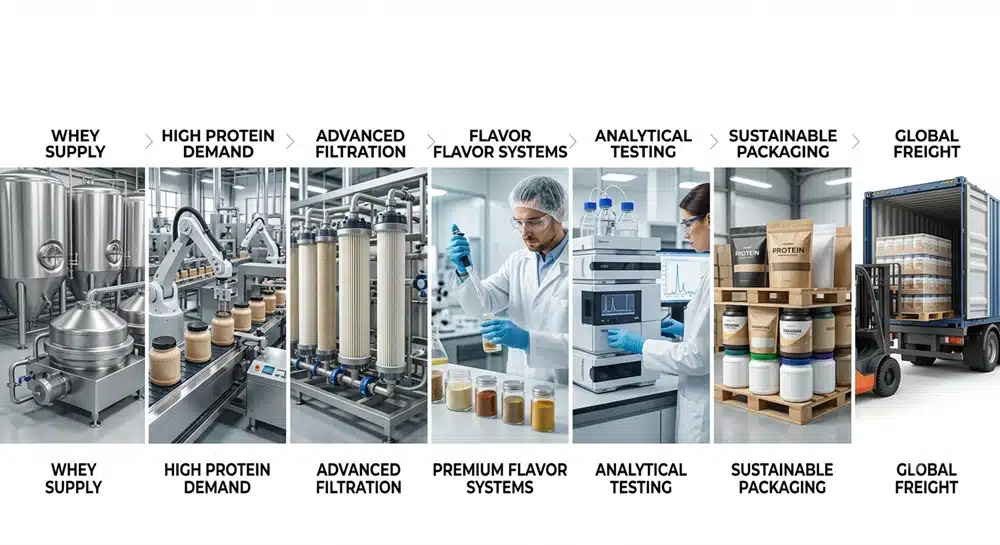
Protein powder prices are rising because several cost pressures are happening at the same time: more mainstream demand for protein, tight high-protein whey ingredient supply, higher processing requirements for isolates and clear protein formats, more expensive flavor and sweetener systems, stricter quality testing expectations, packaging costs, and longer procurement lead times.
Whey-based products are especially sensitive to market pressure because whey protein is connected to dairy processing capacity. Brands that use whey isolate, instantized whey, clear whey, RTD protein shakes, or high-protein snack formats often feel the strongest cost pressure.
The 6 Main Reasons Protein Powder Prices Increased
| Cost driver | Why it raises price | What consumers see | What brands should check |
|---|---|---|---|
| High-protein demand | Protein is no longer limited to bodybuilding; it is used in shakes, bars, snacks, beverages and weight-management nutrition. | Higher shelf prices and fewer promotions. | Forecast demand and secure ingredient allocation early. |
| Whey supply constraints | High-protein whey ingredients depend on dairy streams and specialized processing capacity. | Whey concentrate and isolate products become more expensive. | Compare WPC, WPI, clear whey, collagen, beef and plant alternatives. |
| Higher protein percentage | Isolates and clear proteins need more filtration and processing than lower-protein powders. | Premium products cost more per serving. | Calculate cost per gram of protein, not cost per tub. |
| Flavor and solubility systems | Protein powders require masking, sweeteners, stabilizers and sometimes agglomeration to improve taste and mixing. | Better taste and texture usually cost more. | Test flavor, aftertaste, mouthfeel and water solubility before scale-up. |
| Testing and compliance | COA review, identity testing, microbial testing, heavy metal screening and label review add cost. | Higher-quality brands may charge more. | Require batch records, COA, allergen controls and claim review. |
| Packaging and logistics | Protein powders are bulky, moisture-sensitive and freight-heavy. | Large tubs, pouches and RTD formats can be more expensive to ship. | Optimize serving count, container size, scoop size and carton efficiency. |
Whey Protein Price Increase in 2026: What Brands Should Know
Whey remains one of the most popular protein ingredients because it offers a complete amino acid profile and works well in sports nutrition formulas. However, whey protein concentrate and whey protein isolate require dairy streams, filtration capacity, drying capacity and quality control. When demand rises faster than supply, the price of high-protein whey ingredients can move quickly.
For a brand, this means the most important decision is not simply whether whey is “good” or “bad.” The more practical question is whether whey is the right ingredient for the target user, price point, protein claim, allergen profile, texture and flavor system.
How to Calculate the Real Cost of Protein Powder
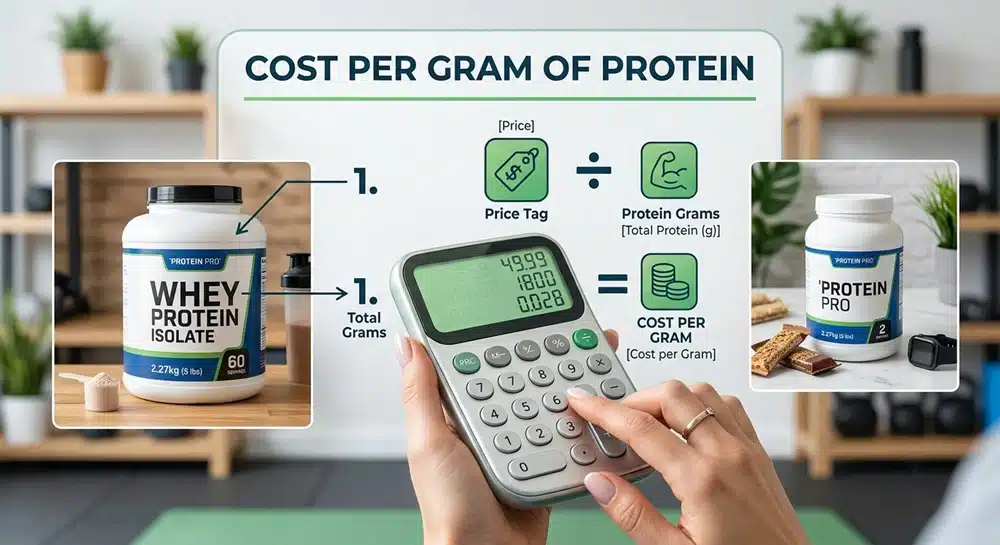
Consumers often compare protein powders by tub price, but that can be misleading. A better method is to calculate the cost per gram of protein.
Công thức: Cost per gram of protein = product price / total grams of protein in the container.
| Example product | Giá | Servings | Lượng protein trong mỗi phần ăn | Tổng lượng protein | Cost per gram protein |
|---|---|---|---|---|---|
| Budget powder | $45 | 30 | 20 g | 600 g | $0.075 |
| Higher-protein isolate | $65 | 30 | 27 g | 810 g | $0.080 |
| Premium flavored blend | $72 | 25 | 25 g | 625 g | $0.115 |
A more expensive tub may still be a better value if it has more protein per serving, better solubility, fewer fillers, stronger testing, and a formula that consumers actually use consistently.
Consumer Value Checklist: Is an Expensive Protein Powder Worth It?
Use this checklist before deciding whether a protein powder is worth the price:
- Protein yield: How many grams of protein are in each serving and in the full container?
- Nguồn protein: Is it whey concentrate, whey isolate, collagen, beef protein, pea protein, rice protein or a blend?
- Amino acid transparency: Does the brand provide amino acid information or at least a clear protein source?
- Sweeteners and flavors: Are you paying for a clean-label taste system, a simple formula or a heavily flavored dessert-style product?
- Kiểm tra: Does the brand discuss heavy metals, microbial testing, allergen controls or third-party verification?
- Digestive fit: Is the formula appropriate for your lactose tolerance, dietary preference and intended use?
- Use case: Is it for post-workout convenience, meal support, high-protein snacking or general nutrition?
Brand Formulation Guide: What Drives Protein Supplement Manufacturing Cost?
For supplement brands, finished product cost depends on more than protein thô price. A realistic cost model should include formula complexity, flavor development, sampling rounds, ingredient testing, packaging format, production scale and compliance review.
| Cost area | Ví dụ | Cost control option |
|---|---|---|
| Protein ingredient | WPC, WPI, clear whey, collagen peptides, beef protein isolate, pea/rice blend. | Choose protein source by positioning, not only by trend. |
| Flavor system | Chocolate, vanilla, fruit, clear beverage, masking agents, sweeteners. | Reduce flavor complexity or prioritize 1-2 launch flavors. |
| Functional add-ons | Creatine, electrolytes, probiotics, fiber, enzymes, vitamins. | Add only ingredients that match the brand promise and claim strategy. |
| Kiểm tra | Identity, assay, microbial, heavy metals, allergen, stability. | Build a testing plan around risk and channel requirements. |
| Đóng gói | Tubs, jars, pouches, sachets, stick packs, scoops, liners. | Choose the packaging format that fits shelf life, freight and user experience. |
| Production scale | MOQ, batch size, lead time, raw material allocation. | Forecast demand and consolidate variants when possible. |
Brands that need formulation support can work with a manufacturer that understands powder blending, protein supplement production, flavor systems, packaging and quality control.
Ingredient Options When Whey Prices Are High
When whey prices rise, brands do not always need to abandon whey. They can consider blended strategies, alternative protein sources or format changes.
| Ingredient option | Trường hợp sử dụng tốt nhất | Ghi chú về công thức |
|---|---|---|
| Whey protein concentrate | Classic sports nutrition and general protein powders. | Good taste and amino acid profile, but price and availability can fluctuate. |
| Protein whey cô đặc | Premium, high-protein, lower-lactose positioning. | Higher protein percentage but usually higher cost. |
| Clear whey protein | Light, beverage-style protein products. | Requires more technical processing and flavor work. |
| Pea/rice protein blend | Vegan or dairy-free products. | May need flavor masking and amino acid balancing. |
| Peptide collagen | Beauty, joint, skin and healthy-aging positioning. | Not a complete protein; should not be positioned like whey for muscle protein synthesis. |
| Protein bò tinh khiết | Dairy-free animal protein positioning. | Check amino acid profile, taste and sourcing transparency. |
Quality Specifications to Check Before Launching a Protein Supplement
Rising costs can tempt brands to cut corners. That is risky. A lower quote may hide weak testing, poor flavor, low protein yield, unclear sourcing or packaging problems.
- COA for each major raw material batch.
- Protein assay and label claim verification.
- Microbial testing and heavy metal screening.
- Allergen controls, especially for dairy, soy and gluten exposure.
- Moisture and water activity targets for powder stability.
- Particle size, bulk density and flowability for filling and mixing.
- Stability testing for flavor, clumping and shelf-life performance.
- Batch records and traceability documentation.
Gensei supports quality-focused brands through kiểm soát chất lượng thực phẩm bổ sung, sourcing review and manufacturing documentation.
How Supplement Brands Can Control Cost Without Lowering Quality
- Start with positioning: Decide whether the product is budget, performance, clean-label, clinical-style, vegan, beauty, weight-management or lifestyle nutrition.
- Calculate protein economics: Compare cost per gram protein, not only cost per kilogram of raw material.
- Limit launch SKUs: Launch fewer flavors first to reduce flavor development and inventory risk.
- Optimize serving size: Avoid oversized scoops that increase cost without improving user value.
- Review packaging early: Pouch vs tub vs stick pack affects freight, MOQ, shelf life and consumer experience.
- Use claim review: Keep structure/function claims accurate, substantiated and non-disease-oriented.
- Plan raw material allocation: Work with suppliers early when whey, flavors or specialty ingredients are tight.
Các câu hỏi trong hồ sơ yêu cầu đề xuất (RFP) cần đặt ra cho nhà sản xuất thực phẩm bổ sung protein
Before requesting a quote, supplement brands should ask:
- What protein sources can you formulate with, and which are currently most stable in supply?
- What MOQ applies to tubs, pouches, sachets and stick packs?
- Can you provide lab samples before full production?
- What testing is included in the quote, and what testing is optional?
- Do you provide COA review and finished product specification support?
- How do you manage flavor masking for plant proteins, collagen, beef protein or clear protein?
- What is the estimated lead time for raw material sourcing, pilot samples and full production?
- Can you support label review, Supplement Facts panel development and claim review?
- What packaging options are available for moisture-sensitive protein powders?
- How do you handle batch records, traceability and quality documentation?
Safety, Labeling and Claim Considerations
Protein supplements should be positioned as nutrition products, not as disease treatments. Avoid claims that imply a protein powder treats obesity, prevents muscle loss, cures digestive problems or replaces medical nutrition advice. Safer language includes “supports daily protein intake,” “helps meet protein goals,” or “supports muscle recovery when used with exercise and adequate nutrition,” when substantiated and appropriate.
Brands should also consider allergens, serving size, added sugars, digestive tolerance, caffeine or stimulant additions, and whether the product is appropriate for the target audience. People with kidney disease, metabolic conditions, pregnancy, breastfeeding, food allergies or medication use should consult a qualified healthcare professional before making major dietary supplement changes.
Câu hỏi thường gặp
Why is protein powder so expensive now?
Protein powder is expensive now because demand for high-protein products has increased while high-protein ingredient supply, especially whey concentrate and isolate, has become tighter. Testing, flavor systems, packaging and manufacturing costs also affect the final retail price.
Why is whey protein so expensive in 2026?
Whey protein is expensive because it depends on dairy streams and specialized processing capacity. High-protein whey ingredients such as WPC 80 and whey protein isolate require additional processing, and demand from powders, shakes, bars and functional foods has increased.
Did protein powder get more expensive?
Yes, many protein powders have become more expensive, especially whey-based products. The exact increase depends on protein source, protein percentage, serving size, packaging, brand positioning and testing standards.
Is expensive protein powder always better?
No. Expensive protein powder is not automatically better. Compare cost per gram of protein, ingredient source, amino acid profile, sweeteners, testing, solubility, allergen fit and whether the formula matches your actual nutrition needs.
What is the cheapest way to get protein?
Whole foods such as eggs, dairy, poultry, fish, beans, lentils, soy foods and Greek yogurt can often provide lower-cost protein. Protein powders are mainly useful for convenience, portability, formulation targets and specific product positioning.
How can supplement brands lower protein powder manufacturing cost?
Brands can control cost by choosing the right protein source, limiting launch flavors, optimizing serving size, planning MOQ, selecting efficient packaging, avoiding unnecessary add-ons and working with a manufacturer that can balance formula quality with cost targets.
Need Help Building a Cost-Smart Protein Formula?
If you are planning a whey, plant, collagen, beef, bone broth, clear protein or blended protein supplement, Gensei can help you evaluate ingredient options, protein claims, flavor systems, testing plans, packaging and MOQ.
Khám phá sản xuất thực phẩm bổ sung protein, Sản xuất thực phẩm bổ sung dạng bột, Thực phẩm bổ sung mang nhãn hiệu riêng theo yêu cầu, và Liên hệ với chúng tôi pages to discuss your next project.
Tài liệu tham khảo
- USDA Agricultural Marketing Service – Whey Protein Concentrate Central and West U.S.
- USDA Agricultural Marketing Service – Dairy Market News Weekly Report
- FDA – Câu hỏi và câu trả lời về thực phẩm chức năng
- FDA – Các tuyên bố về cấu trúc/chức năng
- FDA – Dietary Supplement CGMP Small Entity Compliance Guide
- FTC – Hướng dẫn tuân thủ đối với các sản phẩm chăm sóc sức khỏe
- NIH Office of Dietary Supplements – Dietary Supplements for Exercise and Athletic Performance
- NielsenIQ – Health and Wellness Consumer Trends 2026

Warren Wan là một chuyên gia dày dạn với kinh nghiệm phong phú trong chuỗi cung ứng thực phẩm bổ sung, sở hữu kinh nghiệm thực tiễn sâu rộng trong nghiên cứu, phát triển, kiểm soát quy trình và tìm nguồn cung ứng toàn cầu các thành phần cốt lõi như peptit collagen, protein từ nước hầm xương và keratin. Với tư cách là tác giả của chuyên mục này, ông cam kết loại bỏ những lớp bao bọc tiếp thị, biến những kiến thức khoa học phức tạp về thành phần và các tiêu chuẩn kiểm soát chất lượng sản xuất thành những nội dung phổ biến khoa học dễ hiểu nhưng sâu sắc, giúp độc giả hiểu rõ sự thật đằng sau các nhãn mác và đưa ra những lựa chọn sức khỏe hợp lý hơn.


