
Risposta veloce: L'olio di enotera fa bene ai capelli?

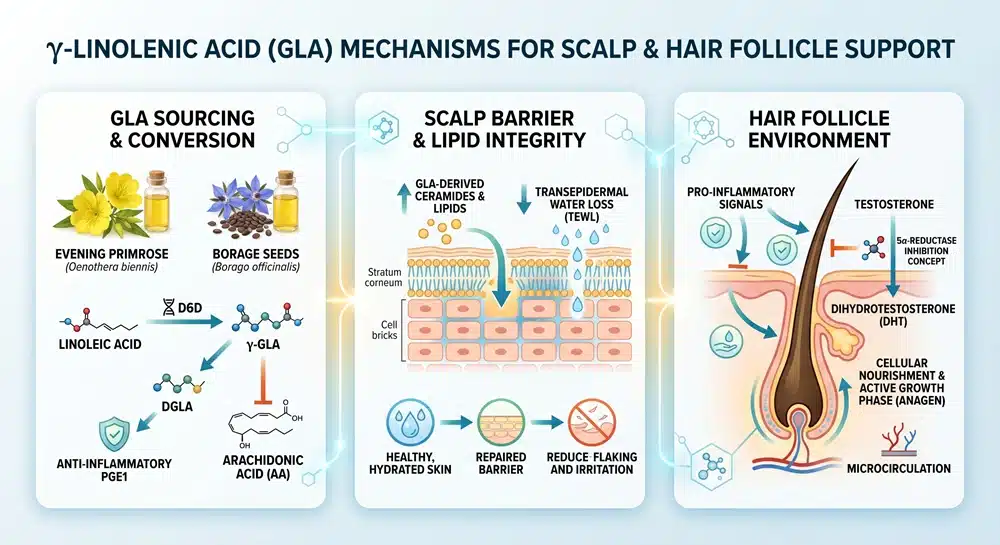
L'olio di enotera (EPO) è un olio vegetale ricavato dai semi, naturalmente ricco di acido gamma-linolenico (GLA), un acido grasso omega-6 utilizzato nei prodotti per la cura della pelle, del cuoio capelluto e negli integratori per la bellezza dall'interno. Per quanto riguarda i prodotti specifici per i capelli, è bene considerare l’EPO come un ingrediente che favorisce il benessere del cuoio capelluto e apporta acidi grassi, non come un trattamento garantito per la ricrescita dei capelli.
Per i consumatori, l’EPO può contribuire a mantenere il cuoio capelluto in condizioni più salutari, soprattutto nei casi in cui si riscontrino secchezza, irritazione o un apporto insufficiente di acidi grassi. Tuttavia, non dovrebbe essere presentato come una cura per la caduta dei capelli, l’alopecia o il diradamento dei capelli di origine ormonale.
Per i marchi di integratori, l’EPO è particolarmente preziosa come ingrediente nelle formulazioni di capsule molli per la cura dei capelli, integratori di bellezza, prodotti per il benessere femminile e miscele di oli per la cura del cuoio capelluto. È fondamentale verificare il contenuto di GLA, lo stato di ossidazione, il metodo di estrazione, la qualità del certificato di analisi (COA), la protezione della confezione e la formulazione delle indicazioni prima di trasformarla in un prodotto finito.
Che cos'è l'olio di enotera?
Evening primrose oil is extracted from the seeds of Oenothera biennis. Its main nutritional value comes from linoleic acid and gamma-linolenic acid (GLA), a fatty acid often used in skin-barrier, scalp-comfort, and women’s wellness formulations.
Nella produzione di integratori, l’EPO viene solitamente fornito sotto forma di olio liquido per il riempimento di capsule molli o come ingrediente in miscele di oli per uso topico. Un ingrediente EPO di alta qualità dovrebbe riportare la percentuale di GLA, il metodo di estrazione, l’indice di perossido, l’indice di acidità, il paese di origine, le condizioni di conservazione e i risultati del certificato di analisi (COA).
Per quanto riguarda i prodotti per la cura dei capelli, la questione non è semplicemente se l’EPO sia “benefico per i capelli”. La domanda più utile è se l’olio sia standardizzato, stabile, confezionato in modo adeguato e presentato con affermazioni realistiche.
Enotera Vs. Primula comune
L'enotera (Oenothera biennis) e la primula comune (Primula vulgaris) sono piante diverse, spesso confuse a causa dei nomi simili. L'enotera è una pianta alta e biennale con fiori gialli che si aprono la sera. I suoi semi vengono pressati per ottenere l'EPO, ricco di GLA. L'enotera, una pianta perenne a bassa crescita con fiori gialli o rosa, è per lo più ornamentale e non viene utilizzata per la produzione di olio. Sebbene l'enotera comune abbia alcuni usi medicinali tradizionali (ad esempio, per la tosse), non ha il contenuto di GLA che rende l'EPO prezioso per la salute dei capelli. Controllate sempre l'etichetta dei prodotti per assicurarvi di assumere l'olio di enotera e non un estratto di enotera comune.
Per i prodotti botanici e gli oli da semi, produzione di integratori a base di erbe La nostra competenza può aiutare i marchi a gestire l'identificazione degli ingredienti, l'approvvigionamento e la documentazione relativa alla qualità.Cosa può e cosa non può fare l'olio di enotera per i capelli
L'olio di enotera può favorire indirettamente la salute dei capelli e del cuoio capelluto, contribuendo a mantenere l'apporto di acidi grassi e sostenendo la funzione di barriera della pelle e del cuoio capelluto. Poiché il cuoio capelluto è parte della pelle, gli ingredienti che favoriscono il benessere e l'idratazione della pelle possono essere rilevanti per il posizionamento dei prodotti per la cura dei capelli.
Cosa può sostenere l'EPO:
– idratazione e benessere del cuoio capelluto,
– una pettinatura che doni un aspetto sano ai capelli,
– formule per la bellezza che viene dall’interno,
– apporto di acidi grassi per la pelle e il cuoio capelluto,
– idee per integratori per il benessere delle donne.
Cosa non si dovrebbe affermare che l'EPO sia in grado di fare:
– curare la caduta dei capelli,
– invertire l'alopecia androgenetica,
– curare l'alopecia areata,
– bloccare il DHT con un meccanismo simile a quello dei farmaci,
– favorire la ricrescita dei capelli nei soggetti affetti da condizioni mediche che causano la caduta dei capelli.
Questa distinzione è importante. Un integratore per la cura dei capelli può essere proposto per il benessere del cuoio capelluto, il sostegno della barriera cutanea, la bellezza dall’interno e l’aspetto sano dei capelli. Non dovrebbe essere commercializzato come trattamento per la caduta dei capelli di origine medica, a meno che non sia supportato da un’adeguata approvazione normativa e da prove cliniche.
Dosaggio dell'olio di enotera per la perdita di capelli
Il giusto dosaggio dell'olio di enotera dipende dall'assunzione per via orale o dall'applicazione sul cuoio capelluto. Per gli integratori orali, una dose comune è di 500-1.000 mg al giorno, con capsule standardizzate per contenere 8-10% GLA. Iniziate con una dose più bassa, come 500 mg, e aumentate se necessario. Assumere l'EPO con il cibo per migliorare l'assorbimento e ridurre i disturbi gastrici. La costanza è fondamentale: i risultati possono richiedere 2-3 mesi per manifestarsi.
Per uso topico, mescolare alcune gocce di EPO con un olio vettore come l'olio di cocco o di jojoba. Applicare sul cuoio capelluto 2-3 volte alla settimana, massaggiando delicatamente per favorire la circolazione. Lasciare agire per 30 minuti o per tutta la notte prima di sciacquare. Alcuni prodotti per capelli contengono già l'EPO, quindi controllate le etichette per evitare un uso eccessivo.
Parlare sempre con un medico prima di iniziare l'EPO, soprattutto se si hanno condizioni di salute o si assumono farmaci. Il medico può consigliare un dosaggio adatto alle vostre esigenze, soprattutto se la perdita di capelli è legata a problemi ormonali o medici.
Capsule molli per uso orale vs oli per capelli topici: quale formato è più indicato?
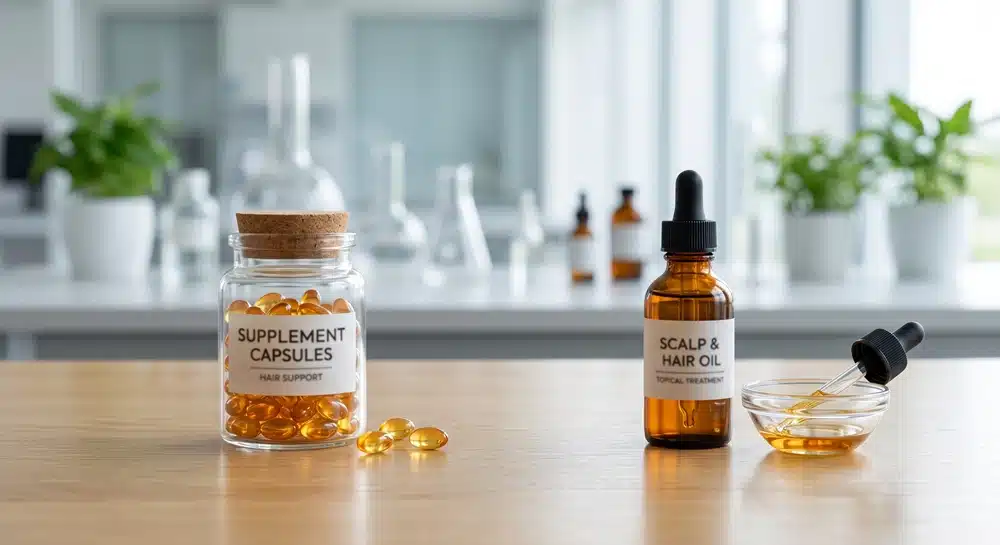
L'olio di enotera è disponibile in due diverse forme di presentazione: integratori per via orale e oli topici per il cuoio capelluto. Queste due forme non devono essere considerate come lo stesso prodotto.
Le capsule molli di EPO per uso orale sono più adatte a un approccio incentrato sulla bellezza dall’interno, sul benessere femminile e sul supporto agli acidi grassi. Sono più facili da dosare, più semplici da confezionare e più familiari ai consumatori di integratori.
Gli oli topici a base di EPO sono più indicati per il benessere del cuoio capelluto, le routine di cura dei capelli e l'impiego in prodotti cosmetici. Tuttavia, gli oli topici richiedono un lavoro di formulazione diverso, che comprende la selezione dell'olio vettore, la compatibilità con le fragranze, la sensazione sulla pelle, la viscosità, il controllo dell'ossidazione e le considerazioni relative ai conservanti o al confezionamento.
Per i marchi, la scelta dipende dal modello di business. Un marchio di integratori alimentari potrebbe preferire le capsule molli EPO. Un marchio di prodotti per la cura dei capelli potrebbe preferire una miscela di oli per il cuoio capelluto. Un marchio di bellezza ibrido potrebbe utilizzare entrambi: una capsula molle da assumere per via orale e un olio per capelli da applicare localmente, come routine combinata.
Come usare l'olio di enotera per i capelli
L'uso dell'olio di enotera è facile e può essere inserito nella routine quotidiana. Per uso orale, assumere le capsule con un pasto per favorirne l'assorbimento. Abbinate l'EPO ad altre sostanze nutritive che favoriscono i capelli, come la biotina, lo zinco o l'acido folico. vitamina D per ottenere risultati migliori. Anche una dieta ricca di frutta, verdura e grassi sani favorisce la salute dei capelli.
Per uso topico, provare un trattamento fai da te per il cuoio capelluto. Mescolare 5-10 gocce di EPO con un cucchiaio di olio vettore (ad esempio, cocco, jojoba o mandorle). Massaggiare il cuoio capelluto, concentrandosi sulle zone diradate o secche. Lasciare agire per 30-60 minuti o per tutta la notte per un nutrimento più profondo, quindi procedere allo shampoo come di consueto. È anche possibile aggiungere qualche goccia di EPO al balsamo per una maggiore idratazione.
Per ottenere risultati ottimali, utilizzare l'EPO con costanza. Abbinatela a pratiche delicate per la cura dei capelli, come evitare shampoo aggressivi o acconciature a caldo. Un approccio olistico - alimentazione corretta, gestione dello stress e cura regolare del cuoio capelluto - massimizzerà i benefici dell'EPO.
Sicurezza ed effetti collaterali dell'olio di enotera
L'olio di enotera è generalmente sicuro per la maggior parte delle persone, ma possono verificarsi effetti collaterali. Quelli più comuni includono lievi disturbi di stomaco, nausea o mal di testa. L'assunzione di EPO con il cibo può ridurre questi problemi. In rari casi può causare reazioni allergiche, come eruzioni cutanee. In tal caso, interrompere l'assunzione.
L'EPO può interagire con alcuni farmaci, tra cui gli anticoagulanti (ad esempio, il warfarin) e i farmaci per l'epilessia (ad esempio, la fenitoina). Può anche aumentare il rischio di emorragie, quindi va evitata prima di un intervento chirurgico. Le donne in gravidanza o in fase di allattamento devono usare l'EPO solo sotto controllo medico, poiché può influire sugli ormoni.
Scegliere EPO di alta qualità per evitare i contaminanti. Cercate prodotti con test di purezza e potenza eseguiti da terzi. I produttori di integratori a basso MOQ (quantità minima ordinabile) possono offrire formulazioni personalizzate di alta qualità per esigenze specifiche. Seguire sempre le linee guida sul dosaggio e consultare un medico in caso di dubbi.
Note di formulazione B2B per prodotti per capelli a base di olio di enotera
Per i marchi di integratori, l'olio di enotera non è un ingrediente difficile da comprendere, ma richiede un trattamento accurato in quanto materia prima a base di olio.
Prima di acquistare l'EPO per un prodotto per la cura dei capelli, richiedi:
– Percentuale di GLA,
– indice di perossido,
– indice di acidità,
– metodo di estrazione,
– Certificato di analisi e scheda tecnica,
– dichiarazione sugli allergeni,
– analisi dei pesticidi o dei solventi, se del caso,
– paese di origine,
– temperatura di conservazione consigliata,
– e i dati relativi alla durata di conservazione.
Per i prodotti in capsule molli, i marchi dovrebbero inoltre valutare le dimensioni delle capsule, il peso del contenuto, la compatibilità tra involucro in gelatina e involucro vegetale, il rischio di perdite, il sistema antiossidante e la protezione della confezione dal calore, dalla luce e dall’ossigeno.
Per quanto riguarda gli oli topici per il cuoio capelluto, i marchi dovrebbero valutare la sensazione sulla pelle, la compatibilità con gli oli vettori, la composizione della fragranza, il rischio di ossidazione, il tipo di confezione (con contagocce o dosatore) e se il prodotto debba essere posizionato come cosmetico piuttosto che come integratore alimentare.

Quando rivolgersi a un professionista
L'olio di enotera può favorire la salute dei capelli, ma non è una cura per tutte le perdite di capelli. Se notate una perdita di capelli improvvisa o grave, chiazze di calvizie o dolore al cuoio capelluto, rivolgetevi a un medico o a un dermatologo. Questi sintomi potrebbero segnalare condizioni come disturbi della tiroide, carenza di ferro o malattie autoimmuni, che richiedono un trattamento medico.
Un professionista può anche verificare la presenza di carenze nutritive o squilibri ormonali che causano problemi ai capelli. Se l'EPO o altri rimedi non migliorano i capelli dopo 3-6 mesi, il medico può raccomandare trattamenti più forti, come il minoxidil o la terapia ormonale. Non affidatevi solo agli integratori se la perdita di capelli influisce sulla qualità della vostra vita.
Prove scientifiche e limiti
Le prove a sostegno dell'efficacia dell'olio di enotera nella crescita dei capelli sono limitate. Alcuni studi sulle combinazioni di acidi grassi e antiossidanti hanno riportato miglioramenti nella densità dei capelli o in parametri correlati alla caduta, ma queste formule spesso includono più sostanze nutritive anziché il solo olio di enotera. Ciò significa che i risultati non dovrebbero essere interpretati come una prova che l'olio di enotera, da solo, favorisca la ricrescita dei capelli.
Il principale punto di forza dell’EPO è il suo ruolo come fonte di GLA e la sua importanza nel mantenimento della barriera protettiva della pelle e del cuoio capelluto. Ciò lo rende utile nelle formule dedicate alla bellezza dall’interno e al benessere del cuoio capelluto, ma non costituisce una soluzione autonoma per la caduta dei capelli di origine medica.
Per quanto riguarda le indicazioni relative ai contenuti e ai prodotti, l’approccio più prudente consiste nel descrivere l’EPO come un ingrediente che favorisce il benessere del cuoio capelluto, la funzione di barriera cutanea e un aspetto sano dei capelli, precisando chiaramente che gli utenti che soffrono di perdita di capelli improvvisa, grave, a chiazze o persistente dovrebbero consultare un medico.
Conclusione: come i marchi dovrebbero utilizzare l'olio di enotera nei prodotti per capelli
L'olio di enotera può essere un ingrediente utile nei prodotti per la cura dei capelli e per la bellezza dall'interno, ma va utilizzato con cautela. Il suo valore deriva dal GLA e dal suo apporto di acidi grassi, non da un effetto garantito di ricrescita dei capelli.
Per i consumatori, l’EPO può essere considerato parte integrante di una routine più ampia dedicata alla cura del cuoio capelluto e alla bellezza. Per i marchi, l’EPO risulta più interessante come ingrediente di capsule molli, oli per il cuoio capelluto o integratori di bellezza per donne, a condizione che la formula sia supportata da una solida documentazione COA, da un controllo dell’ossidazione, da un imballaggio adeguato e da indicazioni realistiche.

Hai bisogno di aiuto per sviluppare un prodotto EPO per la cura dei capelli?
Gensei è in grado di fornire capsule molli all'olio di enotera, integratori per la bellezza dall'interno, miscele di oli per il cuoio capelluto, formulazioni personalizzate e prodotti per la cura dei capelli con marchio privato. Inviateci la forma di dosaggio desiderata, le specifiche relative al GLA, il piano di confezionamento e il posizionamento di mercato, affinché possiamo valutarne la fattibilità prima della produzione.
Domande frequenti
L'olio di enotera rende i capelli più folti?
Non si dovrebbe affermare che l'olio di enotera renda i capelli più folti in modo diretto. Può contribuire al benessere del cuoio capelluto, all'apporto di acidi grassi e a un aspetto sano dei capelli, ma non è un trattamento comprovato per aumentare la foltezza dei capelli.
L'olio di enotera può favorire la ricrescita dei capelli?
Non ci sono prove sufficienti per affermare che l'EPO, da sola, favorisca la ricrescita dei capelli. Se la caduta dei capelli è causata da fattori genetici, problemi alla tiroide, carenza di ferro, malattie autoimmuni o farmaci, è improbabile che l'EPO risolva la causa alla radice. È più indicata come ingrediente di supporto per la bellezza e la salute del cuoio capelluto.
L'olio di enotera è più efficace sotto forma di capsule o di olio per uso topico?
Le capsule sono più indicate per la bellezza dall’interno e per l’apporto di acidi grassi. Gli oli per uso topico sono più indicati per il benessere del cuoio capelluto e per le routine cosmetiche di cura dei capelli. I marchi dovrebbero scegliere il formato in base alle proprietà dichiarate, alla confezione, al target di riferimento e alla categoria normativa.
L'olio di enotera contiene biotina?
No. L'olio di enotera non contiene naturalmente biotina. È apprezzato soprattutto per il GLA e l'acido linoleico. Una formula per la cura dei capelli può combinare l'olio di enotera con biotina, zinco, vitamina D, peptidi di collagene o altri ingredienti di bellezza, purché la combinazione sia appropriata e supportata da prove scientifiche.
Cosa dovrebbero verificare i marchi prima di approvvigionarsi di olio di enotera?
I marchi dovrebbero verificare il contenuto di GLA, l'indice di perossido, l'indice di acidità, il metodo di estrazione, il certificato di analisi (COA), il paese di origine, le informazioni sugli allergeni, eventuali test relativi a pesticidi o solventi, se applicabili, e le condizioni di conservazione.
Un integratore a base di EPO può vantare proprietà contro la caduta dei capelli?
No. Gli integratori alimentari non devono affermare di diagnosticare, trattare, curare o prevenire la caduta dei capelli o l’alopecia. È preferibile utilizzare formulazioni più sicure incentrate sulla struttura e sulla funzione, come ad esempio: “contribuisce al benessere del cuoio capelluto”, “sostiene la funzione di barriera cutanea” e “contribuisce a mantenere i capelli dall’aspetto sano”.
Qual è la forma farmaceutica più indicata per i prodotti per capelli a base di EPO a marchio privato?
Le capsule molli sono solitamente l'opzione più pratica per gli integratori alimentari perché proteggono l'olio, consentono di dosare con precisione la quantità e riducono i problemi legati al sapore. Gli oli topici per il cuoio capelluto possono essere efficaci per i marchi cosmetici, ma richiedono test di stabilità e di confezionamento diversi.
Chi dovrebbe evitare l'olio di enotera?
Le consumatrici in stato di gravidanza o che allattano, che assumono anticoagulanti, che si stanno preparando a un intervento chirurgico o che assumono farmaci antiepilettici dovrebbero consultare un operatore sanitario prima di utilizzare l'EPO. I marchi dovrebbero includere avvertenze adeguate in base alle normative del mercato di riferimento.
Riferimenti
- NCCIH. Olio di enotera: utilità e sicurezza.
https://www.nccih.nih.gov/health/evening-primrose-oil - PubMed. Effetto di un integratore alimentare sulla caduta dei capelli nelle donne.
https://pubmed.ncbi.nlm.nih.gov/25573272/ - PubMed. L'olio di enotera assunto per via sistemica migliora i parametri biofisici della pelle negli adulti sani.
https://pubmed.ncbi.nlm.nih.gov/18492193/ - PMC. Il ruolo dell'acido linoleico nella salute della pelle e dei capelli: una rassegna.
https://pmc.ncbi.nlm.nih.gov/articles/PMC11719646/ - PMC. Ingredienti naturali nell'alopecia / revisione dell'efficacia dermatologica.
https://pmc.ncbi.nlm.nih.gov/articles/PMC10761108/ - FDA. Indicazioni sulla struttura/funzione.
https://www.fda.gov/food/nutrition-food-labeling-and-critical-foods/structurefunction-claims - FDA. Domande e risposte sugli integratori alimentari.
https://www.fda.gov/food/information-consumers-using-dietary-supplements/questions-and-answers-dietary-supplements - PMC. Integratori per pelle, capelli e unghie: aspetti relativi al marketing e all’etichettatura.
https://pmc.ncbi.nlm.nih.gov/articles/PMC7802115/

Warren Wan è un esperto di grande esperienza nel settore della filiera degli integratori alimentari, con una vasta esperienza pratica nella ricerca, nello sviluppo, nel controllo dei processi e nell’approvvigionamento globale di ingredienti fondamentali quali i peptidi di collagene, le proteine del brodo d’ossa e la cheratina. In qualità di autore di questa rubrica, si impegna a smascherare le strategie di marketing, trasformando la complessa scienza degli ingredienti e gli standard di controllo della qualità della produzione in una divulgazione scientifica approfondita e di facile comprensione, aiutando i lettori a comprendere la verità che si cela dietro le etichette e a compiere scelte più razionali in materia di salute.


