Cụm từ peptide collagen tơ tằm thuật ngữ này thường được sử dụng như một tên gọi thương mại, nhưng fibroin tơ tằm không phải là collagen loại I, II hay III. Các thương hiệu nên nêu rõ thành phần thực tế thay vì kết hợp các tên protein không liên quan với nhau. Hướng dẫn này so sánh ba loại này dành cho người tiêu dùng, các nhà bào chế và người mua thực phẩm chức năng.
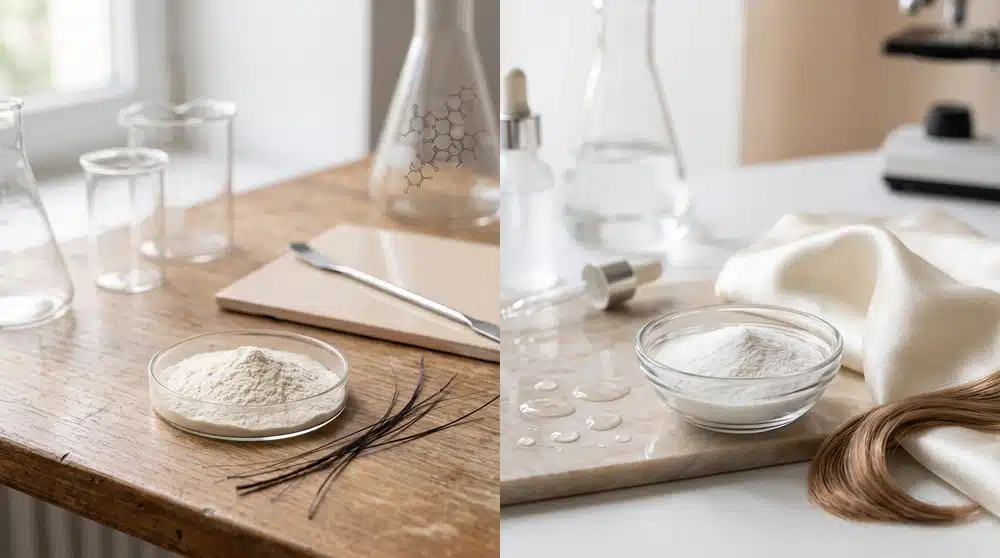
So sánh nhanh giữa Keratin, Collagen và Peptide tơ tằm
| Yếu tố | Keratin thủy phân | Peptide tơ tằm | Peptide collagen |
|---|---|---|---|
| Nguồn gốc protein | Các nguyên liệu động vật giàu keratin như len hoặc lông vũ | Fibroin hoặc protein tơ tằm chiết xuất từ kén tằm | Các mô bò, lợn, thủy sản hoặc gia cầm giàu collagen |
| Đó là gì | Các đoạn thủy phân của một loại protein cấu trúc dạng sợi | Fibroin tơ tằm thủy phân hoặc protein tơ tằm thủy phân | Collagen thủy phân hoặc các peptit chiết xuất từ gelatin |
| Đó có phải là collagen không? | Không | Không, mặc dù có tên thương mại là “collagen tơ tằm” | Đúng vậy, nó được sản xuất từ collagen |
| Sự phân bố điển hình của các axit amin | Thường chứa nhiều axit amin chứa lưu huỳnh hơn so với collagen | Often characterized by glycine, alanine and serine-rich silk sequences | Thường chứa nhiều glycine, proline và hydroxyproline |
| Lĩnh vực có bằng chứng thuyết phục nhất | Chăm sóc sợi tóc tại chỗ và thử nghiệm cơ học đối với các loại sợi tóc cụ thể | Sử dụng trong lĩnh vực làm đẹp để chăm sóc tóc và da; các tuyên bố về lợi ích làm đẹp khi dùng đường uống nói chung vẫn phụ thuộc vào từng sản phẩm cụ thể | Kết quả về độ ẩm và độ đàn hồi của da vùng miệng khi sử dụng một số sản phẩm tiêu chuẩn hóa |
| Bằng chứng về sự mọc tóc | Không đủ cơ sở để đưa ra tuyên bố chung về khả năng mọc lại tóc | Không đủ cơ sở để đưa ra tuyên bố chung về khả năng mọc lại tóc | Có tính chất hạn chế và chưa được xác lập rõ ràng bằng các bằng chứng về da |
| Tình trạng ăn chay thuần chay | Thông thường không phải là thực phẩm thuần chay | Không phải thực phẩm thuần chay; có nguồn gốc từ côn trùng | Thông thường không phải là thực phẩm thuần chay |
| Yêu cầu kỹ thuật chính của người mua | Nguồn gốc, phân bố khối lượng phân tử, protein, thành phần axit amin và độ hòa tan | Bản chất, nguồn gốc, quá trình tách chất nhầy/thủy phân, phân bố peptit, trạng thái sericin và độ hòa tan | Loài, cấu trúc peptit, hydroxyproline, protein, độ hòa tan và đặc tính cảm quan |
Keratin thủy phân là gì?
Keratin là một họ protein dạng sợi có trong tóc, móng tay, len, lông chim và các mô động vật tương tự. Keratin nguyên chất có cấu trúc liên kết chéo rất chặt chẽ và khó phân tán trong các công thức thông thường. Quá trình thủy phân sẽ phân tách nó thành các phân đoạn peptit nhỏ hơn và các hỗn hợp chứa axit amin.
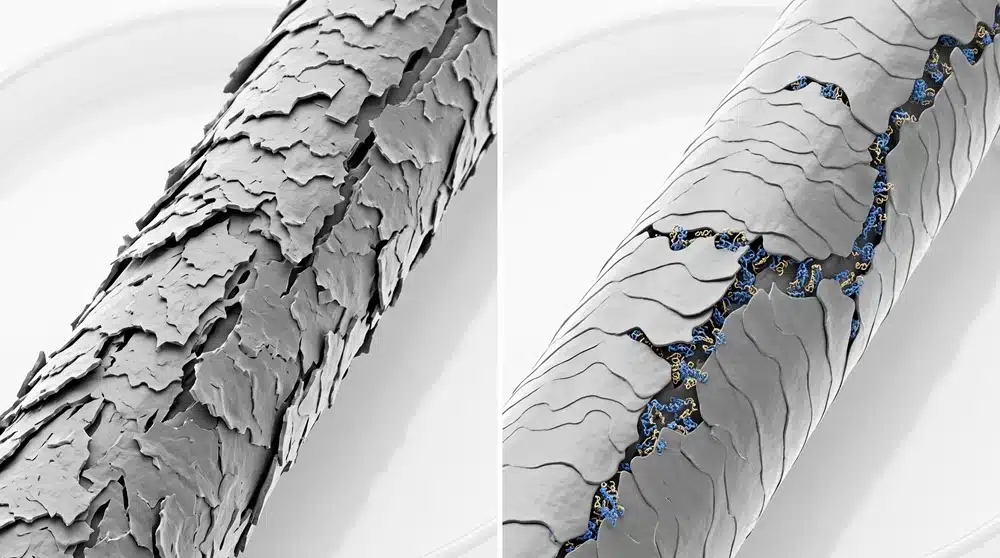
Chỉ riêng tên thành phần không thể dự đoán được hiệu quả. Một nghiên cứu có kiểm soát trên sợi tóc cho thấy các phân đoạn keratin có trọng lượng phân tử thấp và trung bình chiết xuất từ len thấm sâu hơn vào tóc đã được duỗi thẳng, trong khi phân đoạn có trọng lượng phân tử cao chủ yếu bám dính trên bề mặt. Các tác động cơ học cũng khác nhau tùy theo từng phân đoạn. Điều này ủng hộ giả thuyết dựa trên trọng lượng phân tử thay vì khẳng định chung chung rằng mọi sản phẩm thủy phân keratin đều “tái tạo các liên kết bị đứt gãy”.”
Để tìm hiểu thêm về bản sắc và nguồn gốc, hãy đọc Keratin thủy phân là gì?.
Peptide tơ tằm hay “Collagen tơ tằm” là gì?
Peptide tơ tằm thường là fibroin tơ tằm đã thủy phân hoặc protein tơ tằm đã thủy phân, được sản xuất từ kén tằm. Fibroin và sericin là hai loại protein chính trong tơ tằm, mặc dù các thành phần thương mại có thể khác nhau tùy thuộc vào điều kiện tẩy nhựa, tinh chế và thủy phân.
Peptide tơ tằm không phải là collagen thực sự. Cụm từ “collagen tơ tằm” là một tên gọi trên thị trường và không nên được sử dụng để ngụ ý rằng thành phần này chứa collagen từ bò, động vật biển, lợn hoặc gia cầm. Trong danh mục thành phần mỹ phẩm, tên gọi chính xác có thể là “Hydrolyzed Silk” (Collagen tơ tằm thủy phân) hoặc “Hydrolyzed Fibroin” (Fibroin thủy phân), tùy thuộc vào nguyên liệu và thị trường tiêu thụ. Trong các sản phẩm thực phẩm chức năng, mô tả thành phần cần nêu rõ nguồn gốc từ tơ tằm.
Các thương hiệu đang xem xét thành phần này nên xem xét lại Thông số kỹ thuật của bột peptide tơ tằm, bao gồm nguồn gốc, phương pháp thủy phân, thành phần axit amin, phân bố khối lượng phân tử, tình trạng sericin, các chỉ tiêu vi sinh và kim loại nặng.
Peptide collagen là gì?
Peptide collagen được sản xuất thông qua quá trình thủy phân các nguyên liệu động vật hoặc thủy sản giàu collagen. Về mặt hóa học và dinh dưỡng, chúng khác biệt so với keratin và fibroin tơ tằm. Các sản phẩm thủy phân collagen thường được đặc trưng bởi cấu trúc liên quan đến glycine-proline-hydroxyproline, mặc dù loài nguồn gốc, quy trình chế biến và phân bố peptide có thể khác nhau giữa các sản phẩm.
Các thử nghiệm ngẫu nhiên trên người đã ghi nhận sự cải thiện về một số chỉ số liên quan đến độ ẩm, độ đàn hồi của da hoặc nếp nhăn sau khi sử dụng đường uống các sản phẩm peptide collagen cụ thể. Những kết quả này chỉ áp dụng cho thành phần, liều lượng, đối tượng thử nghiệm và thời gian sử dụng đã được kiểm chứng. Chúng không chứng minh rằng mọi loại bột collagen đều mang lại hiệu quả cải thiện cho mọi vấn đề về da hoặc tóc.
Các thương hiệu đang tìm nguồn cung ứng trong danh mục này có thể tham khảo Hướng dẫn về các nhà cung cấp peptide collagen để xem xét các yếu tố liên quan đến loài, độ hòa tan, peptit và tài liệu tham khảo.
Keratin có giống collagen không?
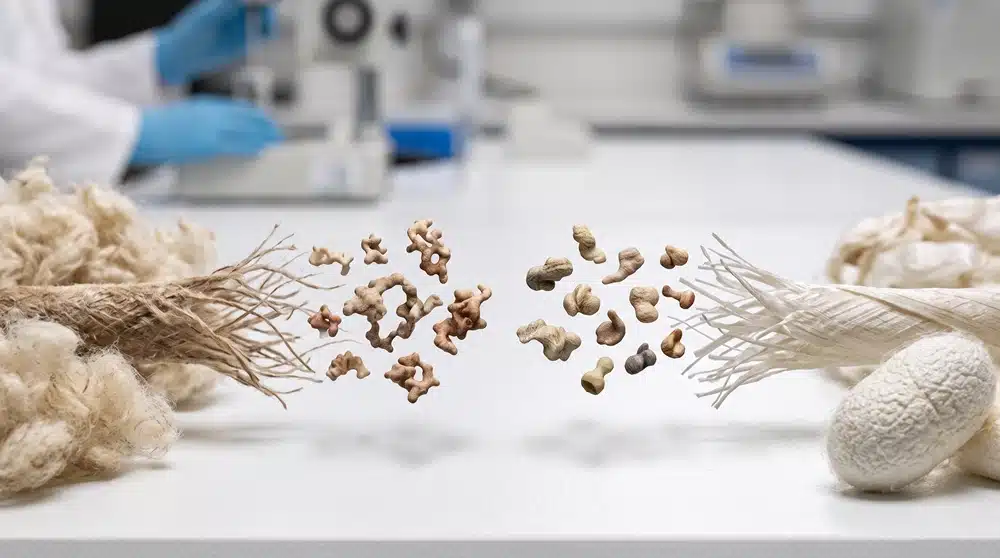
Không. Keratin và collagen đều thuộc các họ protein cấu trúc, nhưng chúng có cấu trúc axit amin, vị trí sinh học và tính chất vật lý khác nhau. Thân tóc chủ yếu được cấu tạo từ keratin. Collagen là một loại protein chính của ma trận ngoại bào trong da, mô liên kết, xương và sụn, và có mặt trong môi trường mô xung quanh nang tóc, nhưng nó không phải là protein cấu trúc chính của thân tóc nhìn thấy được.
Sự phân biệt này rất quan trọng đối với ý định tìm kiếm. “Keratin so với collagen cho tóc” không phải là sự so sánh giữa hai thành phần chăm sóc tóc có thể thay thế cho nhau. Bôi ngoài da keratin thủy phân thường được đánh giá về tác dụng dưỡng tóc, trong khi các nghiên cứu về peptide collagen đường uống lại tập trung nhiều hơn vào các kết quả liên quan đến da nhất định hơn là vào việc kích thích mọc tóc trực tiếp.
Cái nào tốt hơn cho tóc?
Dùng làm dầu xả hoặc mặt nạ dưỡng tóc
Việc lựa chọn đúng loại keratin thủy phân có thể là giải pháp trực tiếp nhất khi công thức nhắm đến việc cải thiện cảm giác trên tóc hư tổn, khả năng chải mượt hoặc tăng cường cơ học tạm thời. Peptide tơ tằm có thể được lựa chọn để tạo màng, tăng độ trơn, mang lại cảm giác mềm mượt hoặc tạo nên trải nghiệm cảm quan cao cấp. Các sản phẩm thủy phân collagen cũng có thể hoạt động như các protein tạo màng hoặc dưỡng tóc, nhưng chính công thức thành phẩm — chứ không phải chỉ riêng tên gọi của protein — mới quyết định hiệu quả sử dụng.
Đối với một loại thực phẩm chức năng làm đẹp
Không nên mô tả bất kỳ thành phần nào là giải pháp mọc tóc đã được chứng minh hiệu quả nếu không có bằng chứng lâm sàng trên người liên quan đến sản phẩm đó. Keratin thủy phân cung cấp các axit amin và peptide liên quan đến keratin, peptide collagen cung cấp các peptide có nguồn gốc từ collagen, và peptide tơ tằm cung cấp các peptide có nguồn gốc từ fibroin tơ tằm. Sau khi được tiêu hóa, các protein và peptide trong chế độ ăn uống sẽ được xử lý qua hệ tiêu hóa; chúng không di chuyển nguyên vẹn đến một sợi tóc cụ thể nào.
Khi phát triển công thức thực phẩm thương mại dùng đường uống, cần so sánh thành phần, khẩu phần, hàm lượng protein, cấu trúc axit amin, độ an toàn, cảm quan và các bằng chứng khoa học. Một sản phẩm có thể kết hợp các peptit protein, nhưng thương hiệu không nên ngụ ý rằng việc kết hợp chúng sẽ đảm bảo hiệu quả hiệp đồng.
Cái nào tốt hơn cho da?
Trong ba nhóm này, các peptit collagen đường uống đã được tiêu chuẩn hóa có cơ sở bằng chứng lâm sàng trên người vững chắc nhất đối với một số kết quả thẩm mỹ da cụ thể. Một số thử nghiệm ngẫu nhiên đã ghi nhận sự cải thiện về độ ẩm và một số chỉ số liên quan đến độ đàn hồi hoặc nếp nhăn, mặc dù kết quả phụ thuộc vào từng thành phần cụ thể và từng nghiên cứu.
Các protein tơ tằm được công nhận là thành phần dưỡng da và dưỡng tóc trong mỹ phẩm, và Hội đồng Chuyên gia Đánh giá Thành phần Mỹ phẩm đã kết luận rằng một số thành phần protein tơ tằm, bao gồm Protein tơ tằm thủy phân (Hydrolyzed Silk) và Fibroin thủy phân (Hydrolyzed Fibroin), là an toàn khi được sử dụng với liều lượng và cách thức như đã báo cáo trong các sản phẩm mỹ phẩm. Kết luận về tính an toàn mỹ phẩm này không phải là bằng chứng cho thấy có tác dụng chống lão hóa khi dùng đường uống.
Các bằng chứng hỗ trợ cho các tuyên bố về keratin thủy phân dùng đường uống và khả năng bảo vệ hàng rào da toàn diện còn khá hạn chế. Các thương hiệu không nên áp dụng các kết quả lâm sàng của peptide collagen vào keratin hay peptide tơ tằm chỉ vì cả ba đều là protein.
Cái nào tốt hơn cho móng tay?
Keratin là một loại protein cấu trúc chính trong móng tay, nhưng sự tương đồng về cấu trúc bản thân nó chưa đủ để khẳng định rằng việc bổ sung keratin qua đường uống sẽ giúp cải thiện sự phát triển hoặc độ cứng của móng tay. Các nghiên cứu về peptide collagen và các loại thực phẩm chức năng làm đẹp khác đôi khi cũng đo lường các chỉ số liên quan đến móng tay, nhưng vẫn cần có bằng chứng cụ thể về từng thành phần. Peptide tơ tằm không nên được quảng bá là thành phần hỗ trợ sự phát triển của móng tay nếu không có bằng chứng xác thực phù hợp.
Các cách diễn đạt an toàn hơn dành cho người tiêu dùng bao gồm “hỗ trợ công thức dinh dưỡng làm đẹp” hoặc “cung cấp các peptit có nguồn gốc từ protein”, trong khi những tuyên bố mạnh mẽ hơn như giảm tình trạng móng bị tách lớp, thúc đẩy sự phát triển hoặc khắc phục tình trạng móng giòn thì cần phải dựa trên bằng chứng đáng tin cậy từ sản phẩm hoàn chỉnh.
Bằng chứng về việc bôi ngoài da so với bằng chứng về việc bổ sung đường uống
| Bằng chứng hay việc sử dụng | Những tính năng mà nó có thể hỗ trợ | Những tính năng mà nó không thể hỗ trợ tự động |
|---|---|---|
| Thử nghiệm trên sợi tóc đối với keratin thủy phân bôi ngoài da | Khả năng thấm, khả năng lắng đọng hoặc hiệu suất cơ học trong các điều kiện thử nghiệm | Sự hấp thu qua đường miệng, sự phát triển của nang lông hoặc điều trị rụng tóc |
| Đánh giá an toàn mỹ phẩm đối với thành phần Tơ tằm thủy phân | Sử dụng làm thành phần mỹ phẩm dưỡng tóc hoặc dưỡng da trong các điều kiện đã được đánh giá | Hiệu quả khi dùng đường uống, thực phẩm chức năng chống lão hóa hoặc các tuyên bố về tính không gây dị ứng phổ quát |
| Thử nghiệm ngẫu nhiên về peptide collagen đường uống | Kết quả đo lường trên da đối với sản phẩm collagen và phác đồ điều trị được thử nghiệm | Các kết quả tương đương từ keratin, peptide tơ tằm hoặc một loại collagen chưa được kiểm nghiệm |
| Hàm lượng axit amin | Phân tích thành phần và so sánh công thức | Bằng chứng về hiệu quả lâm sàng hoặc khả năng đưa thuốc đến đích là tóc, da hoặc móng tay |
Có thể sử dụng ba nguyên liệu này cùng nhau không?
Đúng vậy, chúng có thể được kết hợp khi công thức, khẩu phần và cơ sở thương mại phù hợp với nhau. Một loại bột làm đẹp đa protein có thể sử dụng peptit collagen làm hoạt chất chính có nguồn gốc từ protein, cùng với keratin hoặc peptit tơ tằm làm thành phần chuyên biệt với hàm lượng nhỏ hơn. Tuy nhiên, việc bổ sung thêm protein không phải lúc nào cũng mang lại hiệu quả tốt hơn.
Các nhà bào chế cần đánh giá tổng hàm lượng protein, mùi vị, mùi, màu sắc, độ hòa tan, tính hút ẩm, hiện tượng tạo bọt, hiện tượng lắng cặn và khẩu phần dùng. Đối với viên nang hoặc viên nén, hàm lượng hoạt chất thấp có thể khiến công thức chứa ba loại protein trở nên không hiệu quả về mặt thương mại. Đối với kẹo dẻo, nhiệt độ, độ hoạt động của nước và hương vị có thể tạo ra những hạn chế bổ sung.
Các lưu ý về nguồn gốc, thực phẩm thuần chay, Halal và Kosher
- Keratin thủy phân: thường có nguồn gốc từ động vật. Loài và nguồn mô phải được khai báo và ghi chép đầy đủ.
- Peptide tơ tằm: Có nguồn gốc từ tằm, do đó không phải là sản phẩm thuần chay. Việc người ăn chay có chấp nhận hay không có thể phụ thuộc vào tiêu chuẩn áp dụng và cách hiểu của người tiêu dùng.
- Peptide collagen: có nguồn gốc từ bò, lợn, động vật biển hoặc gia cầm và không phải là thực phẩm thuần chay.
- Halal và Kosher: Không phải là tự động. Chứng nhận phải bao gồm nguồn gốc cụ thể, cơ sở sản xuất, các chất phụ gia chế biến và chuỗi cung ứng.
- Đánh giá về các chất gây dị ứng và mức độ nhạy cảm: đánh giá các rủi ro liên quan đến nguồn gốc, nguy cơ nhiễm chéo, các chất phụ gia chế biến và các yêu cầu của thị trường đích. Không được sử dụng cụm từ “không chứa chất gây dị ứng” nếu không có bằng chứng được ghi chép đầy đủ.
Các thương hiệu thực phẩm bổ sung nên lựa chọn như thế nào
| Mục tiêu thương hiệu | Thành phần chính | Tại sao | Cần xác minh |
|---|---|---|---|
| Dầu xả bôi ngoài da dành cho tóc hư tổn | Keratin thủy phân hoặc hệ thống keratin/tơ tằm | Cơ sở lý luận về sợi tóc và dưỡng tóc | INCI, phân bố khối lượng phân tử (MW), hàm lượng chất rắn hoạt tính, tính tương thích và thử nghiệm tại salon |
| Khái niệm về việc dưỡng ẩm cho da bằng đường uống | Peptide collagen đã được nghiên cứu lâm sàng | Các bằng chứng mới về sự phát triển của da người | Sự khớp chính xác về thành phần, liều lượng, tính phù hợp với thử nghiệm và đánh giá tuyên bố |
| Mỹ phẩm cao cấp với thành phần tơ tằm | Tơ tằm thủy phân hoặc fibroin | Câu chuyện về cảm giác và quá trình điều kiện hóa có nguồn gốc từ tơ tằm | Xác định chính xác thành phần, đánh giá tình trạng sericin, đánh giá an toàn mỹ phẩm và thử nghiệm công thức |
| Thực phẩm bổ sung cho tóc, da và móng | Công thức dựa trên bằng chứng, thường lấy collagen làm trọng tâm | Cho phép xây dựng công thức dinh dưỡng đa dạng hơn | Bằng chứng về sản phẩm hoàn chỉnh, công thức tổng thể, khẩu phần và các tuyên bố tuân thủ |
| Sản phẩm làm đẹp thuần chay | Theo mặc định, không có tùy chọn nào trong ba tùy chọn này | Tất cả đều có nguồn gốc từ động vật hoặc côn trùng | Hãy sử dụng một sản phẩm thay thế thực sự có nguồn gốc từ thực vật hoặc quá trình lên men và kiểm tra kỹ từng thành phần |
Danh sách kiểm tra nhà cung cấp và Giấy chứng nhận nguồn gốc (COA)
Trước khi phê duyệt nguyên liệu thô, hãy yêu cầu những điều sau đây:
- Tên thương mại chính xác và thông tin nhận dạng theo quy định.
- Tuyên bố về nguồn gốc loài, mô hoặc nguồn gốc từ tằm.
- Quy trình sản xuất, bao gồm phương pháp thủy phân và các chất phụ trợ chế biến liên quan.
- Phương pháp định lượng và thử nghiệm protein hoặc peptit.
- Phân bố khối lượng phân tử và phương pháp phân tích — không chỉ là một con số trung bình dùng cho mục đích tiếp thị.
- Hàm lượng axit amin, bao gồm các dấu hiệu nhận dạng thích hợp.
- Độ ẩm, hàm lượng tro, pH, màu sắc, mùi, độ hòa tan và mật độ thể tích.
- Kim loại nặng, vi sinh vật và các chất gây ô nhiễm liên quan.
- Thông tin về chất gây dị ứng, BSE/TSE, GMO và nguồn gốc xuất xứ (nếu có).
- Phạm vi chứng nhận Halal hoặc Kosher khi có kế hoạch đưa ra tuyên bố.
- Độ ổn định, thời gian kiểm tra lại, các yêu cầu về bảo quản và đóng gói.
- Sự nhất quán giữa COA và thông số kỹ thuật trên nhiều lô sản phẩm thương mại.
Đối với một dự án tập trung vào keratin, hãy xem xét peptide keratin thủy phân dạng số lượng lớn dựa trên nguồn gốc thực tế, phương pháp thử nghiệm và tài liệu về lô sản phẩm, thay vì chỉ dựa vào tuyên bố về “trọng lượng phân tử thấp”.
Danh sách kiểm tra sản phẩm hoàn thiện
- Bột: độ đồng nhất của hỗn hợp, kiểm tra hàm lượng protein, hương vị, mùi, khả năng hòa trộn, hiện tượng lắng cặn, độ ẩm và khả năng ngăn cách của bao bì.
- Viên nang và viên nén: khối lượng nạp, độ tan rã, độ chảy, tính chất nén và tải trọng hoạt tính thực tế.
- Kẹo dẻo: tiếp xúc với nhiệt, độ hoạt động của nước, kết cấu, tương tác protein, hương vị và vi sinh.
- Chất lỏng: pH, độ kết tủa, khả năng bảo quản, quá trình oxy hóa, mùi và tính tương thích với bao bì.
- Chăm sóc tóc tại chỗ: độ nhớt, sự bám dính, chải tóc khi ướt/khô, gãy rụng, thử nghiệm độ bền kéo, sự tích tụ, màu sắc và thử nghiệm cảm quan của người tiêu dùng.
Các thương hiệu đang chuyển từ giai đoạn lựa chọn nguyên liệu sang sản xuất sản phẩm dùng đường uống hoàn chỉnh có thể sử dụng một Nhà sản xuất thực phẩm bổ sung protein để đánh giá khẩu phần, hương vị, khả năng hòa tan, bao bì và các thông số kỹ thuật của sản phẩm thành phẩm.
Các vấn đề cần lưu ý về tuyên bố và ghi nhãn
Các tuyên bố về cấu trúc và chức năng của thực phẩm bổ sung phải trung thực, không gây hiểu lầm và có cơ sở khoa học. Các sản phẩm này không được tuyên bố có khả năng chẩn đoán, điều trị, chữa khỏi hoặc phòng ngừa bệnh tật. Các tuyên bố quảng cáo cũng cần có bằng chứng khoa học có cơ sở và đáng tin cậy, liên quan đến thành phần được quảng bá, liều lượng, dạng bào chế và đối tượng mục tiêu.
Hãy tránh hoặc làm rõ các phát biểu như:
- “phục hồi các liên kết tóc từ bên trong”;
- “ngăn rụng tóc” hoặc “kích thích mọc tóc lại”;
- “đã được chứng minh lâm sàng” trong khi sản phẩm thương mại hoặc sản phẩm hoàn chỉnh chưa được thử nghiệm;
- “collagen tơ tằm” được giới thiệu như một loại collagen thực sự;
- “khả năng hấp thụ vượt trội” chỉ dựa trên tiêu chuẩn trọng lượng phân tử thấp hơn;
- “an toàn cho mọi người”, “không chứa chất gây dị ứng” hoặc “đảm bảo hiệu quả”;
- liều lượng cố định và khung thời gian đạt kết quả được áp dụng từ các sản phẩm không liên quan.
Câu hỏi thường gặp
Keratin có phải là collagen không?
Không. Chúng là các họ protein cấu trúc khác nhau, có thành phần axit amin và chức năng sinh học khác nhau.
Collagen tơ tằm có phải là collagen thật không?
Thông thường là không. “Collagen tơ tằm” thường là tên gọi thương mại của fibroin tơ tằm thủy phân hoặc peptide protein tơ tằm, chứ không phải collagen loại I, II hay III.
Keratin hay collagen tốt hơn cho tóc?
Đối với việc dưỡng tóc hư tổn tại chỗ, keratin thủy phân có thể mang lại tác dụng trực tiếp hơn đối với sợi tóc. Đối với các sản phẩm dùng đường uống, collagen có nhiều nghiên cứu trên người về tác dụng đối với da hơn là về việc kích thích mọc tóc trực tiếp. Cả hai đều không phải là thành phần kích thích mọc tóc đã được chứng minh một cách phổ quát.
Có thể dùng collagen và keratin cùng lúc không?
Các thành phần này có thể được phối hợp với nhau, nhưng sự kết hợp đó cần phải có liều lượng hợp lý, đánh giá an toàn, thử nghiệm cảm quan và chứng minh tính xác thực của các tuyên bố. Chỉ riêng việc kết hợp thôi chưa đủ để chứng minh hiệu ứng hiệp đồng.
Peptide tơ tằm có tốt cho tóc không?
Tơ tằm thủy phân được sử dụng làm thành phần dưỡng tóc trong mỹ phẩm. Hiệu quả phụ thuộc vào loại cụ thể và công thức thành phẩm. Chưa có đủ bằng chứng để khẳng định tác dụng kích thích mọc tóc nói chung.
Protein thủy phân có được hấp thu tốt hơn không?
Quá trình thủy phân làm thay đổi kích thước của peptide và có thể cải thiện độ hòa tan hoặc quá trình chế biến. Tuy nhiên, bản thân điều này không chứng minh được khả năng hấp thu lâm sàng, hiệu quả hoặc khả năng phân phối đích vượt trội so với các sản phẩm protein khác.
Keratin, peptide tơ tằm và collagen có phải là các thành phần thuần chay không?
Không. Keratin và collagen có nguồn gốc từ động vật, trong khi peptide tơ tằm có nguồn gốc từ côn trùng. Để định vị sản phẩm là thuần chay, cần phải sử dụng một hệ thống thành phần khác.
Chúng có tác dụng nhanh như thế nào?
Không có khung thời gian chung nào cả. Có thể nhận thấy những thay đổi về cảm giác tại chỗ sau khi sử dụng, trong khi các kết quả lâm sàng được đo lường phụ thuộc vào từng sản phẩm cụ thể, liều lượng, thời gian nghiên cứu và từng cá nhân. Tránh hứa hẹn một khoảng thời gian đạt kết quả cố định nếu không có bằng chứng cụ thể về sản phẩm đó.
Khuyến nghị cuối cùng
Hãy lựa chọn dựa trên thông tin xác thực về thành phần và mục đích sử dụng — chứ không phải dựa vào tên protein nào nghe có vẻ gần gũi nhất với tóc, da hay móng. Keratin thủy phân phù hợp nhất để dưỡng tóc; peptide tơ tằm là một thành phần dưỡng tóc đặc trưng có nguồn gốc từ tơ tằm; còn peptide collagen có bằng chứng lâm sàng đầy đủ nhất về các tác dụng cụ thể đối với da. Một bản mô tả sản phẩm có trách nhiệm cần nêu rõ dạng bào chế, nguồn gốc, cấu trúc peptit, bằng chứng khoa học, phạm vi tuyên bố và các thử nghiệm trên sản phẩm hoàn chỉnh trước khi lựa chọn nhà cung cấp.
Tài liệu tham khảo
- Khả năng thâm nhập của các loại keratin thủy phân có trọng lượng phân tử khác nhau vào sợi tóc
- CIR: Đánh giá an toàn đối với các thành phần protein tơ tằm được sử dụng trong mỹ phẩm
- Việc uống peptide collagen phân tử lượng thấp: Nghiên cứu ngẫu nhiên có đối chứng
- FDA: Các tuyên bố về cấu trúc/chức năng
- FTC: Hướng dẫn tuân thủ đối với các sản phẩm chăm sóc sức khỏe
Warren Wan là một chuyên gia dày dạn với kinh nghiệm phong phú trong chuỗi cung ứng thực phẩm bổ sung, sở hữu kinh nghiệm thực tiễn sâu rộng trong nghiên cứu, phát triển, kiểm soát quy trình và tìm nguồn cung ứng toàn cầu các thành phần cốt lõi như peptit collagen, protein từ nước hầm xương và keratin. Với tư cách là tác giả của chuyên mục này, ông cam kết loại bỏ những lớp bao bọc tiếp thị, biến những kiến thức khoa học phức tạp về thành phần và các tiêu chuẩn kiểm soát chất lượng sản xuất thành những nội dung phổ biến khoa học dễ hiểu nhưng sâu sắc, giúp độc giả hiểu rõ sự thật đằng sau các nhãn mác và đưa ra những lựa chọn sức khỏe hợp lý hơn.