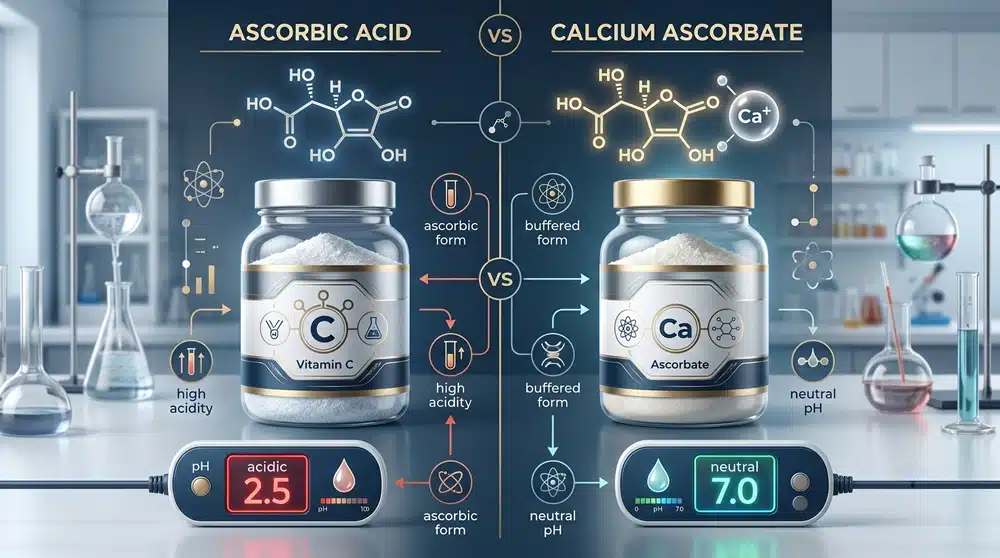
Câu trả lời ngắn gọn: Canxi ascorbat là một dạng muối khoáng có tính đệm của vitamin C, trong khi axit ascorbic là vitamin C tinh khiết ở dạng axit. Hãy chọn axit ascorbic khi bạn muốn loại vitamin C có nồng độ cao nhất và tiết kiệm chi phí nhất; hãy chọn canxi ascorbate khi sự thoải mái cho dạ dày, độ axit thấp hơn hoặc công thức chứa canxi là yếu tố quan trọng hơn.
Vitamin C là một chất dinh dưỡng thiết yếu cho chức năng miễn dịch, quá trình tổng hợp collagen và khả năng chống oxy hóa. Khi lựa chọn thực phẩm bổ sung vitamin C, việc so sánh giữa Calcium Ascorbate và Ascorbic Acid là rất quan trọng, vì mỗi dạng đều có những đặc tính riêng biệt. Ascorbic Acid là dạng vitamin C tinh khiết, có tính axit, được sử dụng rộng rãi nhờ hiệu quả cao và giá cả phải chăng. Calcium Ascorbate, một lựa chọn trung hòa, không chứa axit, kết hợp vitamin C với canxi để giảm kích ứng đường tiêu hóa. Bài viết này cung cấp so sánh chi tiết về thành phần, lợi ích, nhược điểm, tác dụng phụ, nguồn nguyên liệu, dạng thực phẩm bổ sung và các yếu tố thực tiễn để giúp bạn đưa ra quyết định.
Axit ascorbic là gì?
Tóm tắt nổi bật: Axit ascorbic là L-vitamin C tinh khiết (C6H8O6), một chất chống oxy hóa tan trong nước và là đồng yếu tố của enzyme. Chất này có hiệu quả rất cao, thường có giá cả phải chăng và được hấp thu tốt ở liều lượng vừa phải; tuy nhiên, độ pH thấp của nó có thể gây kích ứng dạ dày nhạy cảm hoặc men răng khi được sử dụng trong các sản phẩm nhai có hàm lượng cao.
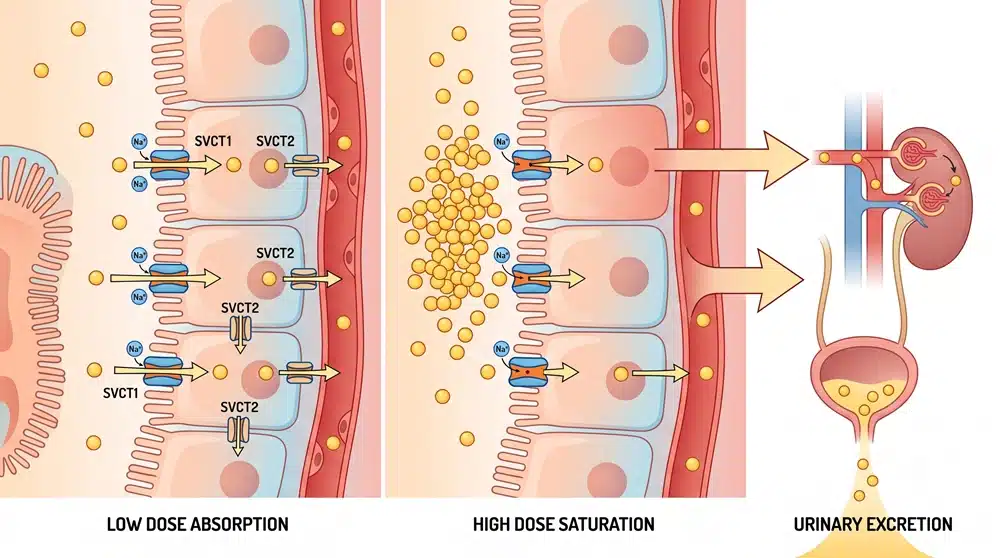
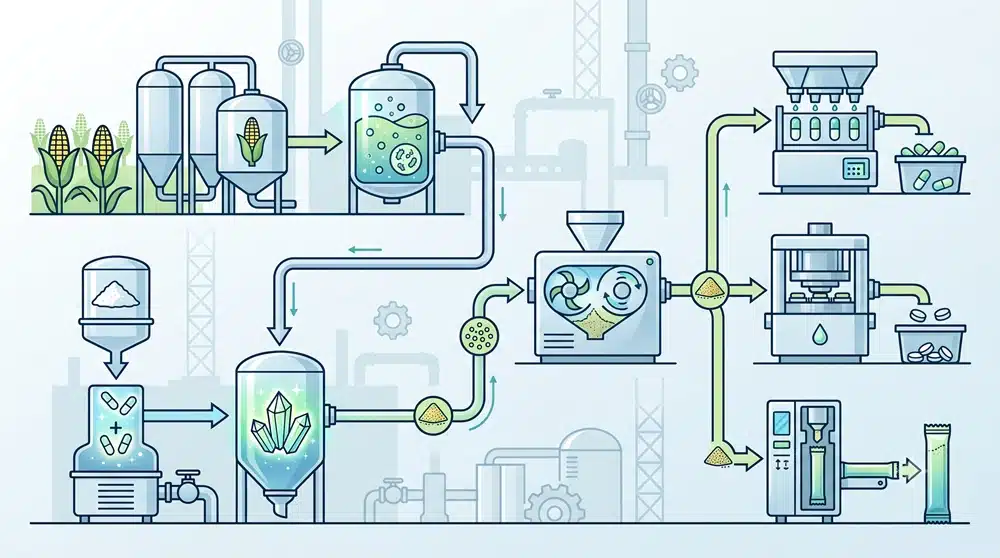
Axit ascorbic (C6H8O6) là tên hóa học của dạng tinh khiết vitamin C, một loại vitamin tan trong nước có sẵn tự nhiên trong các loại thực phẩm như trái cây họ cam quýt, kiwi, ớt chuông và bông cải xanh. Trong các sản phẩm bổ sung, nó được tổng hợp từ glucose, thường được chiết xuất từ ngô, thông qua quá trình lên men với sự tham gia của các vi khuẩn như Gluconobacter oxydans. Điều này tạo ra một hợp chất có tính axit cao (pH 2,1–2,5) được hấp thu tại ruột non thông qua các chất vận chuyển vitamin C phụ thuộc natri (SVCT1 và SVCT2). Khả năng hấp thu của nó rất tốt ở liều lượng vừa phải (100–200 mg), nhưng hiệu quả hấp thu sẽ giảm khi dùng liều cao hơn do hiện tượng bão hòa của các chất vận chuyển. Tính đơn giản của axit ascorbic khiến nó trở thành một thành phần không thể thiếu trong thực phẩm bổ sung, được đánh giá cao nhờ khả năng cung cấp vitamin C trực tiếp.
Canxi ascorbat là gì?
Tóm tắt nổi bật: Canxi ascorbat là vitamin C được trung hòa bằng canxi, chứ không phải là “canxi thay thế cho vitamin C”. Chất này cung cấp ascorbat cùng với một lượng nhỏ canxi, nhờ đó có tính axit thấp hơn so với axit ascorbic và thường dễ dung nạp hơn khi dùng dưới dạng viên nang, bột và các công thức hỗ trợ miễn dịch hàng ngày.
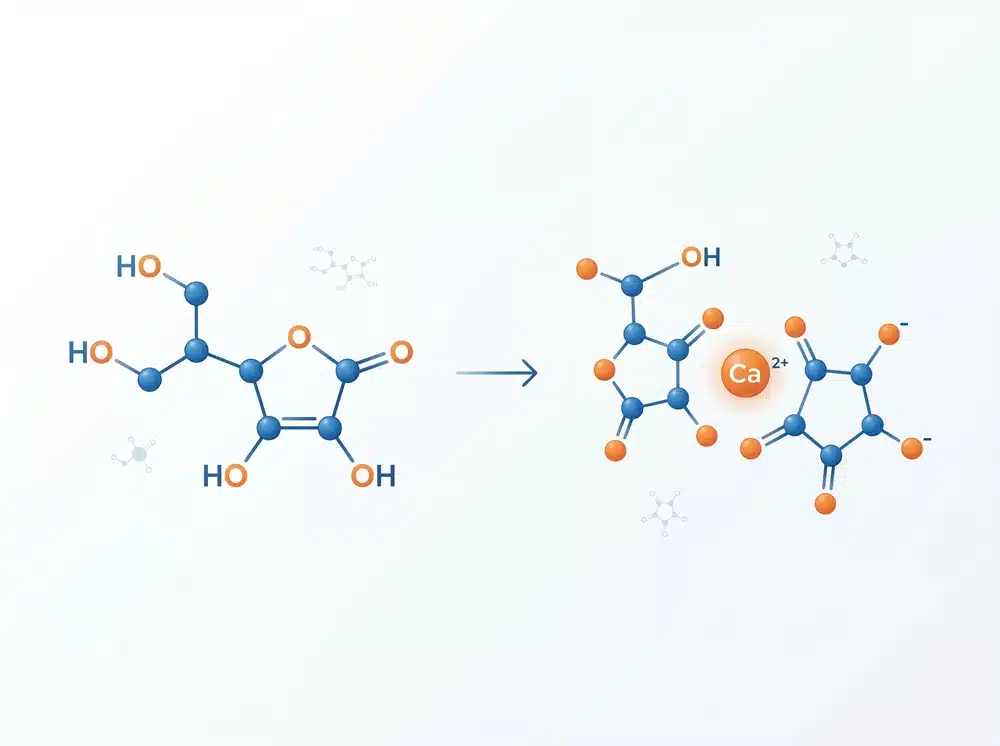
Canxi Ascorbate ((C6H7O6)2Ca) là một dạng vitamin C được trung hòa, được tạo ra bằng cách kết hợp Axit Ascorbic với canxi cacbonat, giúp trung hòa độ axit của nó xuống mức pH khoảng 6,8–7,4. Hợp chất này cung cấp cả vitamin C và một lượng nhỏ canxi (khoảng 100 mg trên 1.000 mg Canxi Ascorbate). Nguyên liệu để sản xuất Calcium Ascorbate bắt đầu từ axit ascorbic, được chiết xuất từ glucose có nguồn gốc từ ngô, trong khi canxi cacbonat thường được lấy từ đá vôi hoặc vỏ hàu. Khả năng hấp thu của nó tương đương với axit ascorbic, mặc dù hàm lượng canxi có thể làm chậm quá trình hấp thu một chút. Calcium Ascorbate được ưa chuộng trong các sản phẩm bổ sung dành cho những người có hệ tiêu hóa nhạy cảm hoặc những ai muốn tận dụng thêm lợi ích từ canxi.
Nguyên liệu thô và các dạng thực phẩm bổ sung
Axit ascorbic
- Nguyên liệu thô: Được tổng hợp chủ yếu từ glucose chiết xuất từ ngô thông qua một quy trình nhiều bước bao gồm quá trình hydro hóa và lên men vi sinh. Ngô không biến đổi gen (non-GMO) ngày càng được sử dụng rộng rãi để đáp ứng nhu cầu của người tiêu dùng về các sản phẩm có nhãn mác sạch hơn.
- Mẫu đơn xin trợ cấp: Có dạng viên nén, viên nang, dạng bột, dạng nhai, kẹo dẻo và dạng sủi bọt máy tính bảng. Nó cũng được sử dụng trong các loại thực phẩm và đồ uống bổ sung dinh dưỡng, cũng như trong các liệu pháp truyền tĩnh mạch vitamin C trong môi trường y tế.
Canxi ascorbat
- Nguyên liệu thô: Bắt đầu từ axit ascorbic (từ glucose ngô) và canxi cacbonat, được chiết xuất từ đá vôi khai thác hoặc các nguồn có nguồn gốc từ biển như vỏ hàu. Canxi cacbonat có độ tinh khiết cao đảm bảo hàm lượng tạp chất ở mức tối thiểu.
- Mẫu đơn xin trợ cấp: Có trong dạng viên nén, viên nang, bột, và một số loại thuốc nhai. Tình trạng này ít gặp hơn ở kẹo dẻo do hương vị trung tính và giá thành cao hơn. Thường được sử dụng trong các sản phẩm cao cấp hoặc thực phẩm bổ sung chuyên biệt nhằm mang lại sự thoải mái cho hệ tiêu hóa hoặc hỗ trợ sức khỏe xương.
Canxi ascorbat có phải là vitamin C hay canxi không?
Không. Canxi ascorbate là một dạng của vitamin C, nhưng nó không phải là canxi. Về mặt hóa học, đây là một loại muối ascorbate kết hợp giữa axit ascorbic và canxi. Điều này có nghĩa là nó có thể góp phần vào cả lượng vitamin C và lượng canxi tiêu thụ, nhưng khi thiết kế bảng thành phần dinh dưỡng trên nhãn sản phẩm, nó vẫn nên được tính chủ yếu là thành phần vitamin C.
Theo Viện Linus Pauling, để tính toán thực tế trên nhãn sản phẩm, 1.000 mg canxi ascorbate thường cung cấp khoảng 890–910 mg axit ascorbic và 90–110 mg canxi. Đây là lý do tại sao viên nén hoặc viên nang canxi ascorbate có thể cần phải lớn hơn một chút so với các sản phẩm axit ascorbic tinh khiết khi cung cấp cùng một lượng vitamin C.
Phù hợp nhất với ý định tìm kiếm: Những người dùng thắc mắc “vitamin C và canxi có phải là một không?” thường cần một câu trả lời đơn giản: vitamin C và canxi là hai chất dinh dưỡng khác nhau, và canxi ascorbate là một dạng vitamin C đã được trung hòa, chứa một lượng nhỏ canxi.
Lợi ích của axit ascorbic
Ascorbic Acid is a potent antioxidant, neutralizing reactive oxygen species (ROS) that contribute to cellular damage and chronic diseases like cardiovascular disease and cancer. It supports immune function by enhancing neutrophil activity and lymphocyte proliferation, with studies showing a 50% reduction in cold duration at doses of 1,000–2,000 mg daily [1]. It’s a cofactor in collagen synthesis, critical for skin elasticity, joint health, and wound healing, with research indicating improved wound closure rates at 500 mg/day [2]. Ascorbic Acid also enhances non-heme iron absorption by reducing it to a more absorbable form, benefiting those with iron deficiency anemia. Its widespread availability and low cost (often $0.02–$0.05 per gram) make it a budget-friendly option for supplementation.

Lợi ích của canxi ascorbate
Calcium Ascorbate delivers the same vitamin C benefits with added advantages due to its buffered nature. Its neutral pH minimizes gastrointestinal irritation, making it suitable for individuals with acid reflux, ulcers, or irritable bowel syndrome. The calcium component supports bone mineralization, with studies suggesting that 100–200 mg of supplemental calcium daily can improve bone density in postmenopausal women [3]. Calcium Ascorbate’s gentler profile allows for higher doses without the digestive upset common with Ascorbic Acid, making it ideal for chronic supplementation in conditions like scurvy prevention or immune support. Its stability also makes it a preferred choice in formulations requiring longer shelf life.
Các nghiên cứu trên người cho thấy điều gì về sự so sánh giữa canxi ascorbate và axit ascorbic?
Hầu hết các nghiên cứu trên người đều cho thấy axit ascorbic tiêu chuẩn là một dạng vitamin C hiệu quả và được hấp thu tốt. Văn phòng Bổ sung Dinh dưỡng thuộc Viện Y tế Quốc gia Hoa Kỳ (NIH) lưu ý rằng axit ascorbic trong các sản phẩm bổ sung có khả năng sinh khả dụng tương đương với axit ascorbic có nguồn gốc tự nhiên trong thực phẩm, và chỉ có một số ít nghiên cứu so sánh các dạng vitamin C bổ sung khác nhau.
Một nghiên cứu sơ bộ trên người năm 2024 được công bố trên Chất dinh dưỡng so sánh việc bổ sung axit ascorbic và canxi ascorbat ở người trưởng thành khỏe mạnh. Nghiên cứu cho biết rằng 500 mg canxi ascorbat có thể mang lại một số lợi ích liên quan đến hệ miễn dịch so với 500 mg axit ascorbic, bao gồm sự khác biệt về các chỉ số chuyển hóa vitamin C và các chỉ số sinh học miễn dịch. Tuy nhiên, các tác giả mô tả nghiên cứu này là sơ bộ, do đó nó nên được xem là bằng chứng mới nổi thay vì một khẳng định chắc chắn.
Giải thích thực tiễn: Đối với hầu hết các công thức chăm sóc sức khỏe tổng quát, cả hai dạng này đều là nguồn cung cấp vitamin C hiệu quả. Canxi ascorbate trở nên hấp dẫn hơn khi định vị sản phẩm nhấn mạnh vào việc giảm kích ứng dạ dày, vitamin C đã được trung hòa, khả năng tuân thủ liều dùng hàng ngày hoặc các công thức hỗ trợ miễn dịch cao cấp.
Những nhược điểm của axit ascorbic
The acidity of Ascorbic Acid can cause gastrointestinal side effects, such as heartburn, nausea, or diarrhea, particularly at doses exceeding 2,000 mg daily. A 2019 study found that 15% of users reported stomach discomfort at doses above 1,000 mg [4]. Prolonged use of chewable Ascorbic Acid supplements may erode tooth enamel due to its low pH, with dental research recommending rinsing after consumption [5]. Individuals with GERD, peptic ulcers, or Barrett’s esophagus may find it intolerable. High doses (above 2,000 mg) can increase urinary oxalate levels, raising kidney stone risk by 20–30% in susceptible individuals, particularly men [6].
Những nhược điểm của canxi ascorbate
Do hàm lượng vitamin C trong Canxi Ascorbate thấp hơn (khoảng 82% vitamin C tính theo trọng lượng so với 100% của Axit Ascorbic), nên cần dùng liều lượng lớn hơn để đạt được hiệu quả tương đương, dẫn đến viên nén to hơn hoặc chi phí cao hơn. Các chất bổ sung thường đắt hơn 10–25% ($0,03–$0,07 mỗi gam) do quá trình đệm. Việc tiêu thụ quá nhiều canxi từ liều lượng cao (ví dụ: >2.500 mg mỗi ngày) có thể dẫn đến tăng canxi huyết, đặc biệt là ở những người có chế độ ăn giàu canxi hoặc mắc các bệnh như tăng chức năng tuyến cận giáp. Các triệu chứng bao gồm táo bón, mệt mỏi hoặc các vấn đề về thận. Cấu trúc phân tử lớn hơn cũng có thể dẫn đến viên nén cồng kềnh hơn, điều mà một số người dùng cảm thấy ít tiện lợi hơn.
So sánh tác dụng phụ: Canxi ascorbat so với axit ascorbic
| Yếu tố | Axit ascorbic | Canxi ascorbat | Ý nghĩa của điều đó là gì |
|---|---|---|---|
| Sự thoải mái cho dạ dày | Có tính axit cao hơn; nếu dùng với liều lượng cao có thể gây ợ chua, buồn nôn, co thắt hoặc tiêu chảy. | Đã được trung hòa và thường dịu nhẹ hơn cho những người có làn da nhạy cảm với axit. | Hãy chọn canxi ascorbate cho những người dễ bị trào ngược dạ dày thực quản (GERD) hoặc có dạ dày nhạy cảm. |
| Hàm lượng vitamin C tính theo trọng lượng | Hợp chất vitamin C gần 100%. | Thông thường, cứ 1.000 mg thành phần thì chứa khoảng 890–910 mg axit ascorbic. | Để đạt được cùng mức hàm lượng vitamin C như đã công bố, canxi ascorbate có thể cần phải sử dụng viên nén lớn hơn hoặc tăng lượng chất trong viên nang. |
| Hàm lượng khoáng chất | Không có hàm lượng canxi. | Cung cấp khoảng 90–110 mg canxi cho mỗi 1.000 mg thành phần. | Có ích đối với một số công thức tính, nhưng cần phải tính đến khi tổng lượng canxi tiêu thụ là yếu tố quan trọng. |
| Lưu ý về sỏi thận | Lượng vitamin C bổ sung cao có thể làm tăng nồng độ oxalat trong nước tiểu ở những người có nguy cơ. | Ngoài ra còn cung cấp vitamin C; tuy nhiên, cần thận trọng khi tiêu thụ tổng lượng cao, đặc biệt là với những người có tiền sử sỏi thận. | Hãy lưu ý rằng liều lượng tối đa (UL) dành cho người lớn là 2.000 mg/ngày, trừ khi có sự giám sát của bác sĩ. |
| Tương tác giữa thuốc và chất dinh dưỡng | Vitamin C liều cao có thể tương tác với một số phương pháp điều trị; vitamin C giúp tăng cường sự hấp thu sắt không heme. | Canxi có thể tương tác với tetracycline, bisphosphonate hoặc thời điểm dùng thuốc điều trị tuyến giáp. | Khuyên người dùng nên tham khảo ý kiến của chuyên gia y tế về việc dùng thuốc. |
| Công thức phù hợp nhất | Viên nén, kẹo dẻo, bột, thực phẩm bổ sung và vitamin C hàm lượng cao với giá cả phải chăng. | Viên nang có lớp đệm, công thức tăng cường miễn dịch cao cấp, sản phẩm dành cho người có dạ dày nhạy cảm. | Việc lựa chọn phụ thuộc vào đối tượng sử dụng, liều lượng, chi phí và các hạn chế về dạng bào chế. |
Chuyển đổi liều lượng: Bao nhiêu canxi ascorbate tương đương với 500 mg vitamin C?
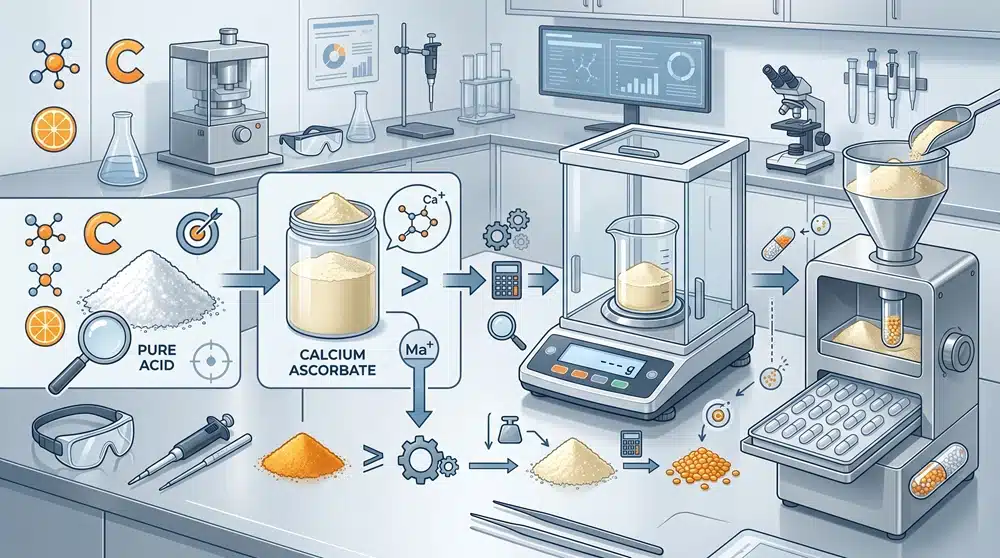
Vì canxi ascorbate chứa cả ascorbate và canxi, nên nó không phải là chất thay thế theo tỷ lệ 1:1 tính theo trọng lượng thành phần. Nếu một công thức cần cung cấp 500 mg vitamin C dưới dạng axit ascorbic, thì có thể cần khoảng 550–560 mg canxi ascorbate, tùy thuộc vào kết quả phân tích và Giấy chứng nhận phân tích của nhà cung cấp. Lượng này sẽ bổ sung khoảng 50–60 mg canxi vào công thức.
| Tuyên bố về hàm lượng Vitamin C | Lượng axit ascorbic cần thiết (khoảng) | Lượng canxi ascorbate cần thiết (khoảng)* | Lượng canxi bổ sung (khoảng)* |
|---|---|---|---|
| 250 mg vitamin C | 250 mg | 275–285 mg | 25–30 mg |
| 500 mg vitamin C | 500 mg | 550–560 mg | 50–60 mg |
| 1.000 mg vitamin C | 1.000 mg | 1.100–1.125 mg | 100–110 mg |
*Các giá trị ghi trên nhãn cuối cùng phải tuân thủ theo Giấy chứng nhận phân tích (COA) của lô sản phẩm thực tế, kết quả định lượng, các quy định ghi nhãn tại địa phương và kết quả kiểm tra sản phẩm thành phẩm.
Bạn nên chọn cái nào?
Việc lựa chọn giữa Canxi Ascorbate và Axit Ascorbic phụ thuộc vào nhu cầu sức khỏe, khả năng dung nạp của hệ tiêu hóa và các yếu tố lối sống. Canxi Ascorbate là lựa chọn lý tưởng cho những người có dạ dày nhạy cảm, bị trào ngược axit hoặc cần bổ sung canxi, chẳng hạn như người cao tuổi hoặc những người có nguy cơ loãng xương. Tính chất nhẹ nhàng của nó phù hợp với các liệu trình dùng liều cao trong thời gian dài. Ascorbic Acid phù hợp hơn với những người ưu tiên chi phí, hiệu quả và sự tiện lợi, chẳng hạn như vận động viên hoặc thanh niên muốn tăng cường miễn dịch trong mùa lạnh. Những người có tiền sử sỏi thận hoặc lượng canxi nạp vào cơ thể cao nên tham khảo ý kiến của bác sĩ, vì cả hai dạng này đều tiềm ẩn rủi ro khi dùng liều cao. Các yếu tố di truyền, như rối loạn chuyển hóa oxalat, cũng có thể ảnh hưởng đến sự phù hợp.
Góc nhìn về công thức của nhà sản xuất
Từ góc độ của nhà sản xuất, lựa chọn tối ưu phụ thuộc vào dạng bào chế và định vị sản phẩm. Đối với các sản phẩm viên nén hoặc kẹo dẻo nhạy cảm về giá, axit ascorbic thường dễ được chấp nhận hơn vì cung cấp nhiều vitamin C hơn trên mỗi gam và được người tiêu dùng nhận diện mạnh mẽ. Đối với các viên nang cao cấp, gói bột hoặc công thức tăng cường miễn dịch hàng ngày dành cho người có dạ dày nhạy cảm, canxi ascorbate có thể hỗ trợ định vị sản phẩm là dạng đệm, không chứa axit.
Khi phát triển các công thức vitamin C mang thương hiệu riêng, các thương hiệu cũng cần xem xét các yếu tố như kích thước hạt, mật độ khối, tính hút ẩm, mùi vị, trọng lượng chất nạp vào viên nang, độ cứng của viên nén và việc kiểm soát độ ẩm trong quá trình đóng gói. Những yếu tố sản xuất này thường có tầm quan trọng không kém gì câu hỏi đơn giản: “Loại nào được hấp thu tốt hơn?”.
Những lời khuyên thiết thực về việc bổ sung dinh dưỡng
The Recommended Dietary Allowance (RDA) for vitamin C is 75 mg for women and 90 mg for men, with an upper limit of 2,000 mg daily to avoid side effects [7]. For Ascorbic Acid, split doses (e.g., 500 mg twice daily) enhance absorption and reduce stomach upset. Calcium Ascorbate can often be taken once daily due to its tolerability. Taking vitamin C with meals, particularly those containing bioflavonoids (e.g., citrus or berries), boosts antioxidant effects by up to 35% [8]. Store supplements in airtight containers away from heat and light, as vitamin C degrades with exposure. Avoid combining with antacids for Calcium Ascorbate, as they may alter calcium absorption. Always consult a doctor for doses above 1,000 mg or if taking medications like statins or bisphosphonates.
Các yếu tố cần lưu ý về sản xuất và chất lượng dành cho người mua B2B
Đối với các thương hiệu thực phẩm chức năng, canxi ascorbat và axit ascorbic cũng cần được so sánh với tư cách là nguyên liệu sản xuất. Một công thức trông có vẻ lý tưởng trên giấy tờ có thể thất bại trong quá trình sản xuất nếu tính lưu động của bột, độ nhạy cảm với độ ẩm, kích thước hạt hoặc tính chất nén không phù hợp với dạng bào chế.
| Yếu tố sản xuất | Axit ascorbic | Canxi ascorbat | Đề xuất B2B |
|---|---|---|---|
| Hỗn hợp bột | Hàm lượng hoạt chất cao, vị chua gắt, cần kiểm soát độ ẩm và quá trình oxy hóa. | Hương vị được cân bằng, trọng lượng liều cao hơn, định vị chung là sản phẩm cao cấp. | Sử dụng bao bì chống ẩm và kiểm tra độ đồng nhất của hỗn hợp. |
| Viên nang | Hàm lượng hoạt chất trong mỗi viên nang cao hơn, nhưng độ axit có thể ảnh hưởng đến vị trí phân bố. | Lượng chất bổ sung lớn hơn cho cùng một tuyên bố về hàm lượng vitamin C. | Kiểm tra mật độ khối trước khi chốt kích thước viên nang. |
| Máy tính bảng | Hiệu quả về chi phí nhưng có thể cần các tá dược phù hợp để nén viên và tan rã. | Thích hợp cho viên nén vitamin C có lớp phủ; có thể cần kích thước viên nén lớn hơn. | Tiến hành thử nghiệm nén thí điểm để đánh giá độ cứng, độ dễ vỡ và tốc độ hòa tan. |
| Kẹo dẻo | Phổ biến và tiết kiệm nhưng làm tăng độ chua. | Độ axit thấp hơn nhưng có thể làm tăng lượng khoáng chất và chi phí. | Cân bằng độ pH, che lấp hương vị và tương tác giữa các khoáng chất. |
| Tài liệu chất lượng | COA, SDS, TDS, hàm lượng, kim loại nặng, giới hạn vi sinh vật, dư lượng dung môi (nếu có). | Các tài liệu tương tự, kèm theo kết quả xét nghiệm canxi và hàm lượng khoáng chất. | Yêu cầu cung cấp COA dành riêng cho lô hàng và xác nhận tiêu chuẩn USP/FCC/EP nếu có tuyên bố. |
Đối với các dự án B2B, nhà cung cấp cần xác nhận xem nguyên liệu có đáp ứng tiêu chuẩn chất lượng được yêu cầu hay không, chẳng hạn như Tiêu chuẩn Thực phẩm (Food Grade), USP, EP, BP hoặc FCC, đồng thời xác nhận liệu có sẵn tài liệu chứng minh về hàm lượng kim loại nặng, vi sinh vật, chất gây dị ứng, tình trạng không biến đổi gen (non-GMO) và các yêu cầu về nước xuất xứ hay không.
Kết luận
Cả Canxi Ascorbate và Axit Ascorbic đều là những nguồn vitamin C hiệu quả, nhưng sự khác biệt về độ axit, giá thành và các dưỡng chất bổ sung giúp đáp ứng những nhu cầu riêng biệt. Axit Ascorbic mang lại hiệu quả vượt trội và giá cả phải chăng, nhưng có thể gây kích ứng dạ dày nhạy cảm hoặc men răng. Canxi Ascorbate là một lựa chọn nhẹ nhàng hơn với lợi ích cho sức khỏe xương, mặc dù có giá thành cao hơn và nồng độ vitamin C thấp hơn. Bằng cách đánh giá sức khỏe tiêu hóa, lượng canxi trong chế độ ăn uống và mục tiêu sức khỏe của bạn, bạn có thể chọn dạng phù hợp nhất. Hãy tham khảo ý kiến của chuyên gia y tế để đảm bảo việc bổ sung an toàn và phù hợp với cá nhân, đặc biệt là khi dùng liều cao hoặc có bệnh lý sẵn có.
Câu hỏi thường gặp
Canxi ascorbate có phải là vitamin C không?
Canxi ascorbat là một dạng của vitamin C. Đây không phải là axit ascorbic tinh khiết; mà là một dạng ascorbat khoáng có chất đệm, cung cấp ascorbat cùng với một lượng nhỏ canxi.
Vitamin C có giống canxi không?
Không. Vitamin C và canxi là hai chất dinh dưỡng khác nhau. Canxi ascorbate chứa cả hai chất này, nhưng chủ yếu được sử dụng như một thành phần cung cấp vitamin C trong các sản phẩm bổ sung.
Vitamin C dạng đệm có tốt hơn axit ascorbic không?
Vitamin C dạng đệm không phải lúc nào cũng “tốt hơn”, nhưng những người bị kích ứng dạ dày do axit ascorbic có tính axit có thể dung nạp loại này tốt hơn. Đối với nhiều người dùng, axit ascorbic vẫn hiệu quả, giá cả phải chăng và được hấp thu tốt.
Trong canxi ascorbat có bao nhiêu canxi?
Canxi ascorbat thường cung cấp khoảng 90–110 mg canxi trên mỗi 1.000 mg thành phần, tuy nhiên, lượng chính xác cần được xác nhận qua Giấy chứng nhận phân tích của nhà cung cấp.
Những ai cần thận trọng khi sử dụng canxi ascorbate?
Những người bị tăng canxi máu, bệnh thận, có tiền sử sỏi oxalat canxi, tăng chức năng tuyến cận giáp hoặc có lo ngại về thời điểm dùng thuốc nên tham khảo ý kiến của chuyên gia y tế trước khi sử dụng ascorbate canxi liều cao.
Canxi ascorbate có giúp hấp thu sắt không?
Vitamin C giúp tăng cường sự hấp thu sắt không heme. Canxi có thể làm giảm sự hấp thu sắt khi tiêu thụ với lượng lớn, nhưng hàm lượng canxi trong một khẩu phần thông thường của canxi ascorbate thường ở mức vừa phải. Nếu lo ngại về tình trạng thiếu sắt, hãy tuân theo lời khuyên của bác sĩ.
Tài liệu tham khảo
- Văn phòng Phụ gia Dinh dưỡng thuộc Viện Y tế Quốc gia Hoa Kỳ (NIH) – Tờ thông tin về Vitamin C
- Viện Linus Pauling – Các mẫu đơn bổ sung
- Dickerson và cộng sự, 2024, Tạp chí Nutrients – So sánh giữa axit ascorbic và canxi ascorbat
- Bản ghi trên PubMed về bài báo của Dickerson và cộng sự, 2024
- Bài tổng quan Cochrane – Vitamin C trong phòng ngừa và điều trị cảm lạnh thông thường
- Tạp chí JAMA Internal Medicine – Việc bổ sung axit ascorbic và tỷ lệ mắc sỏi thận ở nam giới
- Ferraro và các cộng sự, Lượng vitamin C tổng thể, từ chế độ ăn uống và từ thực phẩm bổ sung, và nguy cơ mắc sỏi thận mới phát hiện
- NCBI Bookshelf – Lượng tiêu thụ tham chiếu về vitamin C
- Bộ luật về Hóa chất Thực phẩm
- FDA GINAS – Canxi ascorbat
- Nhà cung cấp nguyên liệu vitamin Gensei
- Nguyên liệu Vitamin C Gensei

Warren Wan là một chuyên gia dày dạn với kinh nghiệm phong phú trong chuỗi cung ứng thực phẩm bổ sung, sở hữu kinh nghiệm thực tiễn sâu rộng trong nghiên cứu, phát triển, kiểm soát quy trình và tìm nguồn cung ứng toàn cầu các thành phần cốt lõi như peptit collagen, protein từ nước hầm xương và keratin. Với tư cách là tác giả của chuyên mục này, ông cam kết loại bỏ những lớp bao bọc tiếp thị, biến những kiến thức khoa học phức tạp về thành phần và các tiêu chuẩn kiểm soát chất lượng sản xuất thành những nội dung phổ biến khoa học dễ hiểu nhưng sâu sắc, giúp độc giả hiểu rõ sự thật đằng sau các nhãn mác và đưa ra những lựa chọn sức khỏe hợp lý hơn.