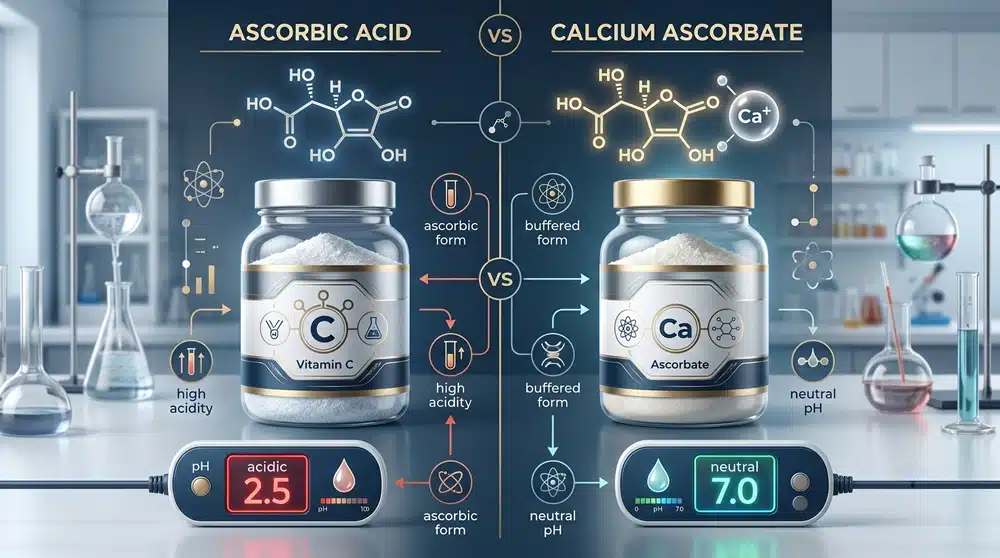
Quick Answer: Calcium ascorbate is a buffered, mineral-salt form of vitamin C, while ascorbic acid is pure vitamin C in its acidic form. Choose ascorbic acid when you want the most concentrated and cost-effective vitamin C; choose calcium ascorbate when stomach comfort, lower acidity, or a calcium-containing formula matters more.
Vitamin C is a vital nutrient essential for immune function, collagen synthesis, and antioxidant protection. When choosing a vitamin C supplement, the comparison of Calcium Ascorbate vs Ascorbic Acid is critical, as each form offers unique properties. Ascorbic Acid is the pure, acidic form of vitamin C, widely used for its potency and affordability. Calcium Ascorbate, a buffered, non-acidic alternative, combines vitamin C with calcium to reduce digestive irritation. This article provides an in-depth comparison of their composition, benefits, drawbacks, side effects, raw material sources, supplement forms, and practical considerations to guide your decision.
What is Ascorbic Acid?
Featured Summary: Ascorbic acid is pure L-vitamin C (C6H8O6), a water-soluble antioxidant and enzyme cofactor. It is highly potent, usually affordable, and well absorbed at moderate doses, but its low pH may irritate sensitive stomachs or tooth enamel when used in high-dose chewable products.
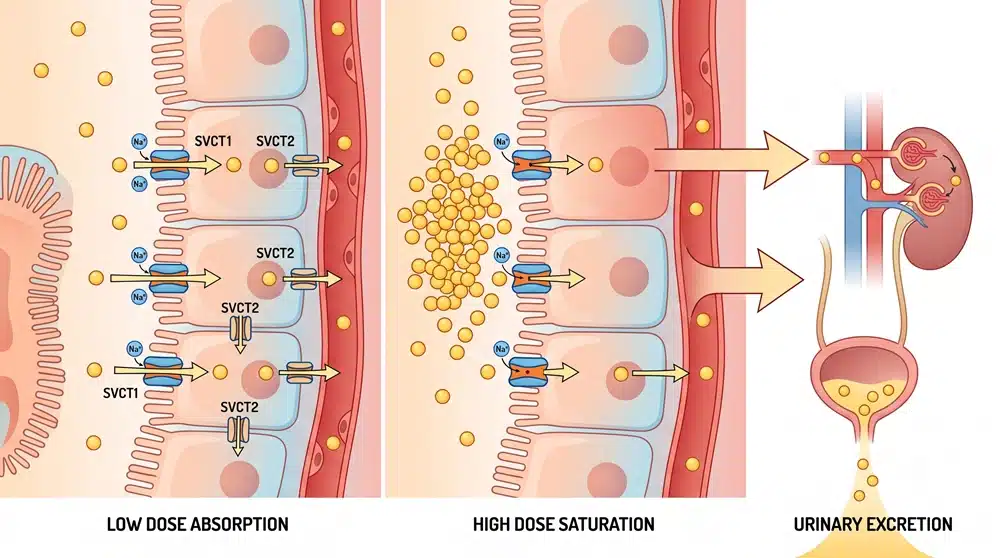
Ascorbic Acid (C6H8O6) is the chemical name for pure vitamin C, a water-soluble vitamin naturally present in foods like citrus fruits, kiwi, bell peppers, and broccoli. In supplements, it’s synthesized from glucose, typically derived from corn, through a fermentation process involving bacteria like Gluconobacter oxydans. This results in a highly acidic compound (pH 2.1–2.5) absorbed in the small intestine via sodium-dependent vitamin C transporters (SVCT1 and SVCT2). Its bioavailability is excellent at moderate doses (100–200 mg), but absorption efficiency decreases at higher doses due to transporter saturation. Ascorbic Acid’s simplicity makes it a staple in nutritional supplements, valued for its direct delivery of vitamin C.
What is Calcium Ascorbate?
Featured Summary: Calcium ascorbate is vitamin C buffered with calcium, not “calcium instead of vitamin C.” It supplies ascorbate plus a small amount of calcium, making it less acidic than ascorbic acid and often easier to tolerate in capsules, powders, and daily immune-support formulas.
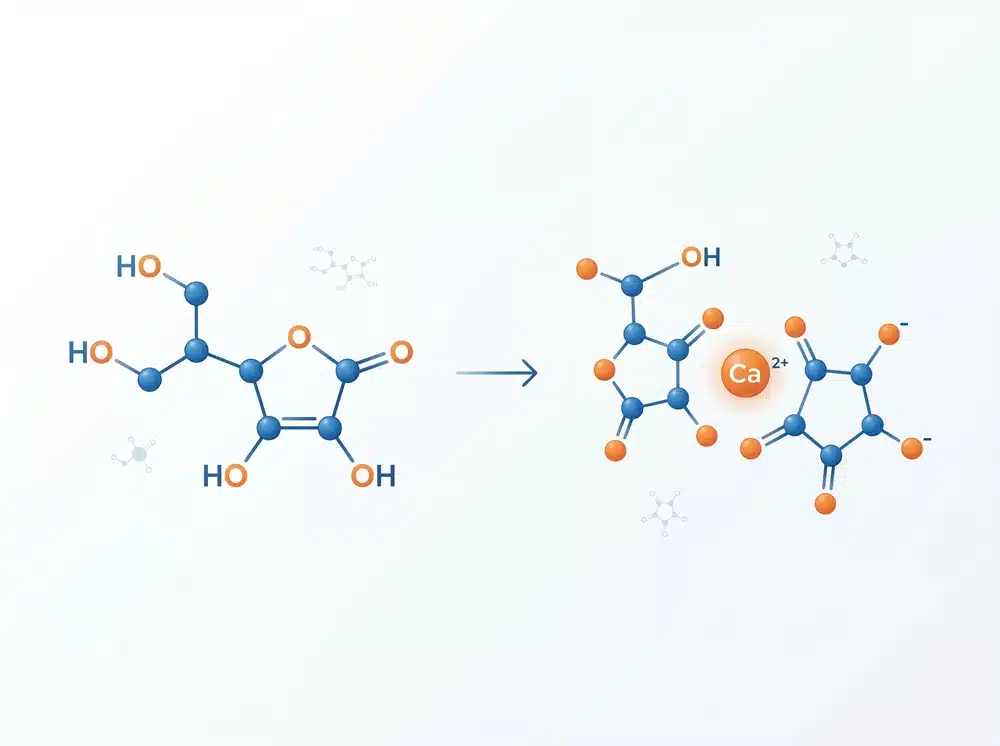
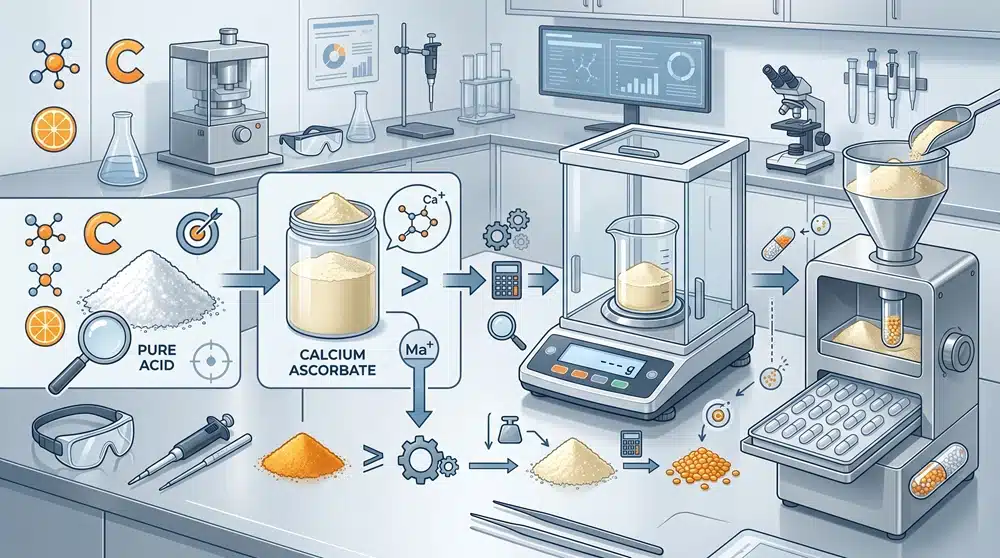
Calcium Ascorbate ((C6H7O6)2Ca) is a buffered form of vitamin C created by combining Ascorbic Acid with calcium carbonate, neutralizing its acidity to a pH of approximately 6.8–7.4. This compound delivers both vitamin C and a small amount of calcium (about 100 mg per 1,000 mg of Calcium Ascorbate). The raw material for Calcium Ascorbate starts with Ascorbic Acid, sourced similarly from corn-derived glucose, with calcium carbonate often obtained from limestone or oyster shells. Its bioavailability is comparable to Ascorbic Acid, though the calcium content may slightly slow absorption. Calcium Ascorbate is favored in supplements designed for sensitive digestive systems or those seeking additional calcium benefits.
Raw Materials and Supplement Forms
Ascorbic Acid
- Raw Materials: Primarily synthesized from corn-derived glucose through a multi-step process involving hydrogenation and microbial fermentation. Non-GMO corn is increasingly used to meet consumer demand for cleaner labels.
- Supplement Forms: Available as tablets, capsules, powders, chewables, gummies, and effervescent tablets. It’s also used in fortified foods, beverages, and intravenous vitamin C therapies for clinical settings.
Calcium Ascorbate
- Raw Materials: Starts with Ascorbic Acid (from corn glucose) and calcium carbonate, sourced from mined limestone or marine-derived sources like oyster shells. High-purity calcium carbonate ensures minimal contaminants.
- Supplement Forms: Found in tablets, capsules, powders, and some chewables. It’s less common in gummies due to its neutral taste and higher cost. Often used in premium or specialty supplements targeting digestive comfort or bone health.
Is Calcium Ascorbate the Same as Vitamin C or Calcium?
No. Calcium ascorbate is a form of vitamin C, but it is not the same thing as calcium. Chemically, it is an ascorbate salt that combines ascorbic acid with calcium. This means it can contribute to both vitamin C intake and calcium intake, but it should still be counted primarily as a vitamin C ingredient when designing supplement facts panels.
For practical label calculations, 1,000 mg of calcium ascorbate generally provides about 890-910 mg of ascorbic acid and 90-110 mg of calcium, according to the Linus Pauling Institute. This is why calcium ascorbate tablets or capsules may need to be slightly larger than pure ascorbic acid products when delivering the same amount of vitamin C.
Best for search intent: Users asking “is vitamin C calcium the same?” usually need a simple answer: vitamin C and calcium are different nutrients, and calcium ascorbate is a buffered vitamin C ingredient that contains a small amount of calcium.
Benefits of Ascorbic Acid
Ascorbic Acid is a potent antioxidant, neutralizing reactive oxygen species (ROS) that contribute to cellular damage and chronic diseases like cardiovascular disease and cancer. It supports immune function by enhancing neutrophil activity and lymphocyte proliferation, with studies showing a 50% reduction in cold duration at doses of 1,000–2,000 mg daily [1]. It’s a cofactor in collagen synthesis, critical for skin elasticity, joint health, and wound healing, with research indicating improved wound closure rates at 500 mg/day [2]. Ascorbic Acid also enhances non-heme iron absorption by reducing it to a more absorbable form, benefiting those with iron deficiency anemia. Its widespread availability and low cost (often $0.02–$0.05 per gram) make it a budget-friendly option for supplementation.

Benefits of Calcium Ascorbate
Calcium Ascorbate delivers the same vitamin C benefits with added advantages due to its buffered nature. Its neutral pH minimizes gastrointestinal irritation, making it suitable for individuals with acid reflux, ulcers, or irritable bowel syndrome. The calcium component supports bone mineralization, with studies suggesting that 100–200 mg of supplemental calcium daily can improve bone density in postmenopausal women [3]. Calcium Ascorbate’s gentler profile allows for higher doses without the digestive upset common with Ascorbic Acid, making it ideal for chronic supplementation in conditions like scurvy prevention or immune support. Its stability also makes it a preferred choice in formulations requiring longer shelf life.
What Does Human Research Say About Calcium Ascorbate vs Ascorbic Acid?
Most human research shows that standard ascorbic acid is an effective and well-absorbed form of vitamin C. The NIH Office of Dietary Supplements notes that ascorbic acid in supplements has bioavailability equivalent to naturally occurring ascorbic acid in foods, and that only a limited number of studies have compared different supplemental vitamin C forms.
A 2024 preliminary human study published in Nutrients compared ascorbic acid and calcium ascorbate ingestion in healthy adults. The study reported that 500 mg of calcium ascorbate may promote some immune-related benefits compared with 500 mg of ascorbic acid, including differences in vitamin C metabolism markers and immune biomarkers. However, the authors described the work as preliminary, so it should be presented as emerging evidence rather than a definitive claim.
Practical interpretation: for most general wellness formulas, both forms are valid vitamin C sources. Calcium ascorbate becomes more compelling when the product positioning emphasizes stomach comfort, buffered vitamin C, daily compliance, or premium immune-support blends.
Drawbacks of Ascorbic Acid
The acidity of Ascorbic Acid can cause gastrointestinal side effects, such as heartburn, nausea, or diarrhea, particularly at doses exceeding 2,000 mg daily. A 2019 study found that 15% of users reported stomach discomfort at doses above 1,000 mg [4]. Prolonged use of chewable Ascorbic Acid supplements may erode tooth enamel due to its low pH, with dental research recommending rinsing after consumption [5]. Individuals with GERD, peptic ulcers, or Barrett’s esophagus may find it intolerable. High doses (above 2,000 mg) can increase urinary oxalate levels, raising kidney stone risk by 20–30% in susceptible individuals, particularly men [6].
Drawbacks of Calcium Ascorbate
Calcium Ascorbate’s lower vitamin C potency (approximately 82% vitamin C by weight compared to 100% for Ascorbic Acid) requires larger doses to achieve equivalent effects, increasing pill size or cost. Supplements are typically 10–25% more expensive ($0.03–$0.07 per gram) due to the buffering process. Excessive calcium intake from high doses (e.g., >2,500 mg daily) could lead to hypercalcemia, especially in individuals with high dietary calcium or conditions like hyperparathyroidism. Symptoms include constipation, fatigue, or kidney issues. The larger molecular structure may also result in bulkier tablets, which some users find less convenient.
Side Effects Comparison: Calcium Ascorbate vs Ascorbic Acid
| Factor | Ascorbic Acid | Calcium Ascorbate | What It Means |
|---|---|---|---|
| Stomach comfort | More acidic; may cause heartburn, nausea, cramps, or diarrhea at high doses. | Buffered and usually gentler for acid-sensitive users. | Choose calcium ascorbate for GERD-prone or sensitive-stomach positioning. |
| Vitamin C potency by weight | Nearly 100% vitamin C compound. | Usually about 890-910 mg ascorbic acid per 1,000 mg ingredient. | Calcium ascorbate may require larger tablets or capsule fills for the same vitamin C claim. |
| Mineral contribution | No calcium contribution. | Adds roughly 90-110 mg calcium per 1,000 mg ingredient. | Useful for some formulas, but must be counted when total calcium intake matters. |
| Kidney stone caution | High supplemental vitamin C may increase urinary oxalate in susceptible people. | Also delivers vitamin C; high total intake still needs caution, especially with kidney stone history. | Keep the adult UL of 2,000 mg/day in mind unless supervised by a clinician. |
| Drug/nutrient interactions | High-dose vitamin C may interact with some therapies; vitamin C enhances non-heme iron absorption. | Calcium may interact with tetracyclines, bisphosphonates, or thyroid medication timing. | Advise users on medication to consult a healthcare professional. |
| Best formulation fit | Budget tablets, gummies, powders, fortified foods, high-potency vitamin C. | Buffered capsules, premium immune formulas, sensitive stomach products. | Selection depends on audience, dosage, cost, and dosage-form constraints. |
Dosage Conversion: How Much Calcium Ascorbate Equals 500 mg Vitamin C?
Because calcium ascorbate contains both ascorbate and calcium, it is not a 1:1 replacement by ingredient weight. If a formula needs to deliver 500 mg of vitamin C as ascorbic acid, it may require approximately 550-560 mg of calcium ascorbate, depending on the supplier’s assay and Certificate of Analysis. The same amount would add roughly 50-60 mg of calcium to the formula.
| Target Vitamin C Claim | Approx. Ascorbic Acid Needed | Approx. Calcium Ascorbate Needed* | Approx. Calcium Added* |
|---|---|---|---|
| 250 mg vitamin C | 250 mg | 275-285 mg | 25-30 mg |
| 500 mg vitamin C | 500 mg | 550-560 mg | 50-60 mg |
| 1,000 mg vitamin C | 1,000 mg | 1,100-1,125 mg | 100-110 mg |
*Final label values should follow the actual batch COA, assay, local labeling rules, and finished-product testing.
Which One Should You Choose?
The choice between Calcium Ascorbate and Ascorbic Acid hinges on health needs, digestive tolerance, and lifestyle factors. Calcium Ascorbate is ideal for those with sensitive stomachs, acid reflux, or a need for supplemental calcium, such as older adults or those at risk of osteoporosis. Its gentler profile suits long-term, high-dose regimens. Ascorbic Acid is better for those prioritizing cost, potency, and convenience, such as athletes or young adults boosting immunity during cold season. Individuals with a history of kidney stones or high calcium intake should consult a healthcare provider, as both forms carry risks at megadoses. Genetic factors, like oxalate metabolism disorders, may also influence suitability.
Manufacturer’s Formulation Perspective
From a manufacturer’s perspective, the best choice depends on dosage form and product positioning. For cost-sensitive tablets or gummies, ascorbic acid is usually easier to justify because it provides more vitamin C per gram and has strong consumer recognition. For premium capsules, powder sticks, or daily immune formulas aimed at sensitive stomach users, calcium ascorbate can support a buffered, non-acidic positioning.
When building private label vitamin C formulas, brands should also review particle size, bulk density, hygroscopicity, taste, capsule fill weight, tablet hardness, and packaging moisture control. These manufacturing variables often matter as much as the simple “which is better absorbed?” question.
Practical Tips for Supplementation
The Recommended Dietary Allowance (RDA) for vitamin C is 75 mg for women and 90 mg for men, with an upper limit of 2,000 mg daily to avoid side effects [7]. For Ascorbic Acid, split doses (e.g., 500 mg twice daily) enhance absorption and reduce stomach upset. Calcium Ascorbate can often be taken once daily due to its tolerability. Taking vitamin C with meals, particularly those containing bioflavonoids (e.g., citrus or berries), boosts antioxidant effects by up to 35% [8]. Store supplements in airtight containers away from heat and light, as vitamin C degrades with exposure. Avoid combining with antacids for Calcium Ascorbate, as they may alter calcium absorption. Always consult a doctor for doses above 1,000 mg or if taking medications like statins or bisphosphonates.
Manufacturing and Quality Considerations for B2B Buyers
For supplement brands, calcium ascorbate and ascorbic acid should also be compared as manufacturing raw materials. A formula that looks ideal on paper can fail in production if the powder flow, moisture sensitivity, particle size, or compression behavior does not match the dosage form.
| Manufacturing Factor | Ascorbic Acid | Calcium Ascorbate | B2B Recommendation |
|---|---|---|---|
| Powder blends | High potency, sharp acidic taste, moisture and oxidation control required. | Buffered taste, larger dose weight, generally premium positioning. | Use moisture-barrier packaging and verify blend uniformity. |
| Capsules | Better potency per capsule but acidity may influence positioning. | Larger fill weight for the same vitamin C claim. | Check bulk density before finalizing capsule size. |
| Tablets | Cost-effective but may require suitable excipients for compression and disintegration. | Useful for buffered vitamin C tablets; larger tablet size may be needed. | Run pilot compression testing for hardness, friability, and dissolution. |
| Gummies | Common and economical but contributes acidity. | Less acidic but can increase mineral load and cost. | Balance pH, flavor masking, and mineral interactions. |
| Quality documents | COA, SDS, TDS, assay, heavy metals, microbial limits, residual solvents where applicable. | Same documents plus calcium assay and mineral contribution. | Request batch-specific COA and confirm USP/FCC/EP grade if claimed. |
For B2B projects, the supplier should confirm whether the ingredient meets the requested grade such as Food Grade, USP, EP, BP, or FCC, and whether documentation is available for heavy metals, microbiology, allergens, non-GMO status, and country-of-origin requirements.

Conclusion
Calcium Ascorbate and Ascorbic Acid are both effective vitamin C sources, but their differences in acidity, cost, and additional nutrients cater to distinct needs. Ascorbic Acid offers unmatched potency and affordability but may irritate sensitive stomachs or enamel. Calcium Ascorbate provides a gentler alternative with bone health benefits, though at a higher cost and lower vitamin C concentration. By evaluating your digestive health, dietary calcium intake, and wellness goals, you can select the optimal form. Consult a healthcare professional to ensure safe, personalized supplementation, especially for high doses or pre-existing conditions.
FAQs
Is calcium ascorbate the same as vitamin C?
Calcium ascorbate is a form of vitamin C. It is not pure ascorbic acid; it is a buffered mineral ascorbate that provides ascorbate plus a small amount of calcium.
Is vitamin C the same as calcium?
No. Vitamin C and calcium are different nutrients. Calcium ascorbate contains both, but it is primarily used as a vitamin C ingredient in supplements.
Is buffered vitamin C better than ascorbic acid?
Buffered vitamin C is not automatically “better,” but it may be better tolerated by people who experience stomach irritation from acidic ascorbic acid. Ascorbic acid remains effective, affordable, and well absorbed for many users.
How much calcium is in calcium ascorbate?
Calcium ascorbate generally provides about 90-110 mg calcium per 1,000 mg ingredient, though the exact amount should be confirmed from the supplier’s Certificate of Analysis.
Who should be careful with calcium ascorbate?
People with hypercalcemia, kidney disease, a history of calcium oxalate stones, hyperparathyroidism, or medication timing concerns should ask a healthcare professional before using high-dose calcium ascorbate.
Does calcium ascorbate help iron absorption?
Vitamin C improves non-heme iron absorption. Calcium can reduce iron absorption at high intakes, but the calcium amount in typical calcium ascorbate servings is usually modest. For iron-deficiency concerns, follow medical advice.
References
- NIH Office of Dietary Supplements – Vitamin C Fact Sheet
- Linus Pauling Institute – Supplemental Forms
- Dickerson et al., 2024, Nutrients – Ascorbic Acid vs Calcium Ascorbate
- PubMed record for Dickerson et al., 2024
- Cochrane Review – Vitamin C for preventing and treating the common cold
- JAMA Internal Medicine – Ascorbic Acid Supplements and Kidney Stone Incidence Among Men
- Ferraro et al., Total, Dietary, and Supplemental Vitamin C Intake and Risk of Incident Kidney Stones
- NCBI Bookshelf – Dietary Reference Intakes for Vitamin C
- Food Chemicals Codex
- FDA GINAS – Calcium Ascorbate
- Gensei Vitamin Raw Materials Supplier
- Gensei Vitamin C Raw Material

Warren Wan is a seasoned expert with extensive experience in the dietary supplement supply chain, possessing rich practical experience in the research, development, process control, and global sourcing of core ingredients such as collagen peptides, bone broth protein, and keratin. As the author of this column, he is dedicated to stripping away the marketing packaging, transforming obscure ingredient science and production quality control standards into easy-to-understand, hardcore science popularization, helping readers understand the truth behind the labels and make more rational health choices.