
Bạn vừa hoàn thành xuất sắc buổi tập luyện, và các cơ bắp đang khao khát một liều protein nhanh chóng để thúc đẩy quá trình phục hồi. Bạn mở túi tập thể dục ra, nhưng việc lựa chọn giờ đây không còn đơn giản như trước. Bạn sẽ chọn chiếc bình lắc quen thuộc cùng một muỗng bột protein, hay những viên nang protein với thiết kế sang trọng, tiện lợi và đơn giản?
Đây không chỉ đơn thuần là vấn đề sở thích; mà còn là việc tìm ra công cụ phù hợp nhất với lối sống và mục tiêu tập luyện cụ thể của bạn. Trong hướng dẫn này, chúng tôi sẽ phân tích chi tiết mọi điều bạn cần biết, so sánh viên nang protein với bột protein dựa trên các yếu tố quan trọng nhất: sự tiện lợi, chi phí, liều lượng và khả năng hấp thu. Đến cuối bài viết, bạn sẽ biết chính xác lựa chọn nào phù hợp nhất với mình.
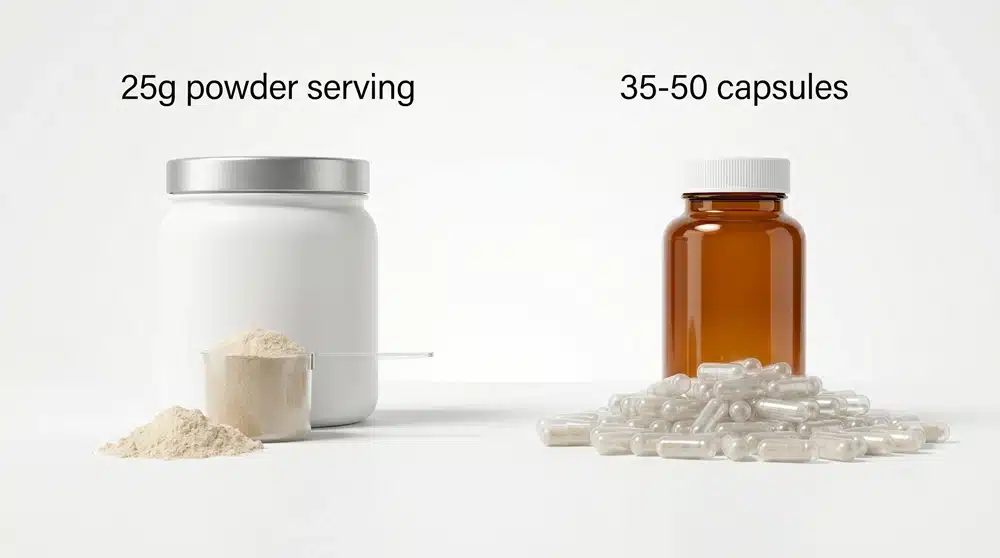
Câu trả lời ngắn gọn: Bột protein là lựa chọn tốt hơn khi bạn cần một khẩu phần đầy đủ từ 20–30 g để phục hồi, duy trì cơ bắp hoặc để đạt được chi phí thấp nhất trên mỗi gam. Viên nang protein phù hợp nhất khi đi du lịch, để tránh mùi vị hoặc với các công thức chuyên biệt có liều lượng thấp, nhưng số lượng viên nang là yếu tố hạn chế: một muỗng bột protein 25 g có thể cần đến hàng chục viên nang.
Viên nang protein là gì?
Hãy xem viên nang protein như một giải pháp tiện lợi nhất để mang theo bên mình. Chúng đơn giản là những liều lượng bột protein đã được định lượng sẵn — thường là whey, collagen hoặc hỗn hợp có nguồn gốc thực vật — được bọc trong vỏ gelatin dễ tiêu hóa hoặc vỏ thực vật. Điểm hấp dẫn chính của sản phẩm này chính là sự tiện lợi tuyệt đối.
Viên uống protein có thật không? Có — nhưng liều lượng mới là yếu tố hạn chế
Đúng vậy, viên nén và viên nang protein thực sự tồn tại. Chúng thường chứa whey, collagen, protein đậu Hà Lan, axit amin hoặc hỗn hợp bột protein bên trong vỏ gelatin hoặc vỏ thực vật. Câu hỏi quan trọng không phải là liệu chúng có hiệu quả hay không, mà là liệu viên nang có thể chứa đủ lượng protein để đáp ứng mục tiêu của bạn hay không.
Một viên nang cỡ 00 thông thường có thể chứa khoảng 0,5–0,7 g bột, tùy thuộc vào mật độ khối và kích thước hạt. Điều đó có nghĩa là để đạt được mục tiêu 25 g protein, có thể cần khoảng 35–50 viên nang trước khi tính đến trọng lượng của tá dược hoặc vỏ viên nang. Đây là lý do tại sao viên nang rất phù hợp cho các công thức liều thấp, các sản phẩm bổ sung collagen, hỗn hợp axit amin hoặc các gói mang theo khi đi du lịch, nhưng chúng hiếm khi thay thế được một ly protein lắc đầy đủ sau khi tập luyện.
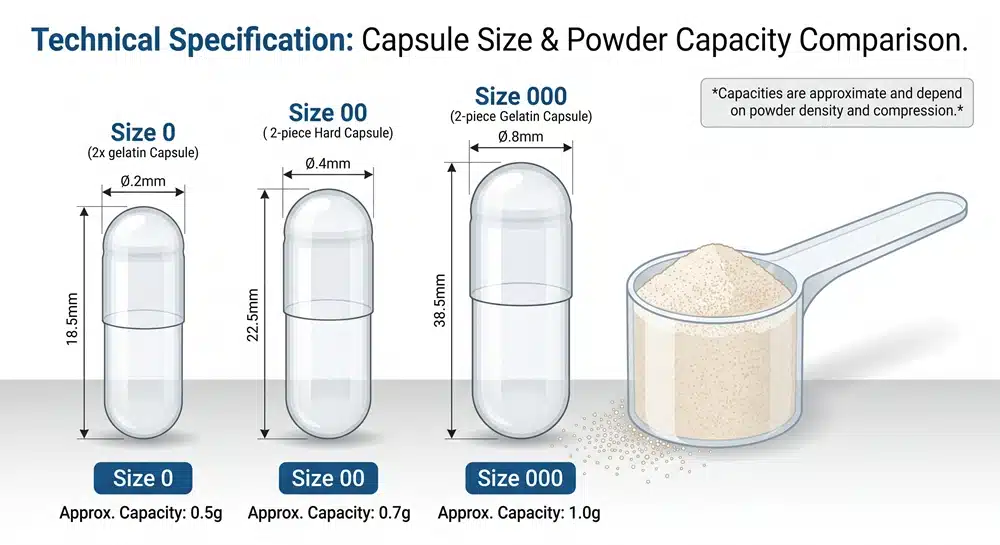
| Kích thước viên nang | Ước tính lượng chất độn điển hình* | 25 g protein tương đương bao nhiêu? | Bài học thực tiễn |
|---|---|---|---|
| Cỡ 0 | Khoảng 0,5 g bột | ~50 viên nang | Thích hợp cho các công thức dinh dưỡng cô đặc, không phải là khẩu phần protein đầy đủ. |
| Cỡ 00 | Khoảng 0,5–0,7 g bột | ~35–50 viên nang | Đây là kích cỡ phổ biến của các sản phẩm bổ sung, nhưng vẫn chưa hiệu quả đối với các khẩu phần protein từ 20–30 g. |
| Kích cỡ 000 | Tối đa khoảng 1 g bột, tùy thuộc vào mật độ | ~25 viên trở lên | Có dung lượng lớn hơn nhưng thường quá cồng kềnh để sử dụng thoải mái hàng ngày. |
*Trọng lượng đóng gói thực tế phụ thuộc vào mật độ bột, kích thước hạt, độ ẩm, độ chảy và việc công thức có yêu cầu sử dụng tá dược hay không. Các thương hiệu nên tiến hành các đợt đóng gói thử nghiệm trước khi chính thức xác định các thông tin trên nhãn sản phẩm.
Ưu điểm:
- Sự tiện lợi tối đa: Không cần pha trộn, không gây bừa bộn. Chỉ cần uống cùng với nước.
- Vô vị: Rất phù hợp cho những ai không thích hương vị hoặc kết cấu của sữa lắc protein.
- Liều lượng chính xác: Mỗi viên nang chứa một lượng protein cụ thể và đã được đo lường chính xác, giúp bạn không còn phải đoán mò khi bổ sung dinh dưỡng.
- Thân thiện với du lịch: Dễ dàng mang theo trong túi xách, xe hơi hoặc túi quần mà không lo bị đổ.
Một chuyên gia tư vấn thường xuyên đi công tác hàng tuần thấy rằng việc mang theo một hộp bột protein cồng kềnh là điều không thể. Thay vào đó, cô luôn để sẵn một lọ nhỏ viên nang protein trong hành lý xách tay. Cô có thể uống chúng trên máy bay hoặc ngay tại phòng khách sạn chỉ với một ly nước, nhờ đó không bao giờ bỏ lỡ mục tiêu bổ sung protein hàng ngày. Đối với cô, sự tiện lợi tuyệt đối này quan trọng hơn tất cả mọi thứ khác.
Nhược điểm:
- Hàm lượng protein thấp hơn mỗi khẩu phần: Hạn chế chính là thể tích vật lý. Một viên nang chỉ có thể chứa một lượng nhỏ bột protein, do đó để đạt được một khẩu phần 20–30 g có thể cần đến hàng chục viên nang. Đối với phần lớn vận động viên, điều này khiến viên nang trở nên bất tiện khi dùng làm nguồn protein chính. Viên nang protein không tự động “yếu hơn” so với bột. Nếu chất lượng thành phần và tổng lượng protein bằng nhau, cơ thể vẫn sẽ phân giải protein thành các axit amin. Vấn đề nằm ở tính thực tiễn khi sử dụng: viên nang rất tiện lợi về mặt mang theo và giúp tránh được mùi vị khó chịu, nhưng lại kém hiệu quả trong việc cung cấp protein với liều lượng cao.
- Chi phí có thể cao hơn: Nếu tính theo trọng lượng, viên nang thường đắt hơn bột rời.
- Tốc độ hấp thu chậm hơn: Lớp vỏ bọc cần phải tan ra trước khi protein có thể được hấp thu, do đó quá trình này có thể diễn ra chậm hơn một chút so với loại sữa lắc pha sẵn.
Một vận động viên thể hình muốn bổ sung 30 gam protein ngay sau buổi tập tạ nặng sẽ thấy việc dùng viên nang là không thực tế. Để đạt được mục tiêu này, anh ta có thể phải nuốt hơn 30 viên nang, điều này vừa bất tiện vừa tốn thời gian so với việc uống một ly sinh tố protein hấp thu nhanh.
Bột protein là gì?
Bột protein là loại thực phẩm bổ sung truyền thống giúp phát triển và phục hồi cơ bắp. Đây là nguồn protein đã được sấy khô — thường được chiết xuất từ váng sữa, casein, đậu nành hoặc đậu Hà Lan — và xay mịn thành dạng bột lỏng. Sản phẩm này được thiết kế để pha trộn với chất lỏng như nước hoặc sữa để tạo thành thức uống protein.
Ưu điểm:
- Hàm lượng protein cao trong mỗi khẩu phần: Chỉ cần một muỗng là bạn đã dễ dàng nạp được 20-30 gam protein.
- Hiệu quả về chi phí: Tính theo mỗi gam, bột dạng thùng thường rẻ hơn viên nang.
- Hấp thu nhanh: Đặc biệt, protein whey được tiêu hóa rất nhanh, khiến nó trở thành lựa chọn lý tưởng cho quá trình phục hồi sau khi tập luyện.
- Đa năng: Có thể dùng để làm sinh tố, nước ép trái cây hoặc thậm chí thêm vào các món ăn như cháo yến mạch và các loại bánh nướng.
Tại sao một muỗng lại phù hợp hơn với dinh dưỡng thể thao
Đối với những người tiêu dùng năng động, ưu điểm lớn nhất của dạng bột là chỉ cần một muỗng là đã có thể cung cấp đủ một khẩu phần protein hoàn chỉnh. Tuyên bố chính thức của Hiệp hội Dinh dưỡng Thể thao Quốc tế (ISSN) nêu rõ rằng lượng protein tổng thể khoảng 1,4–2,0 g/kg/ngày là đủ cho hầu hết những người tập luyện, trong khi Văn phòng Bổ sung Dinh dưỡng thuộc Viện Y tế Quốc gia Hoa Kỳ (NIH) lưu ý rằng protein chất lượng cao thường được tiêu thụ thành nhiều liều lặp lại xung quanh các khung giờ tập luyện. Một khẩu phần bột từ 20–30 g phù hợp với mô hình này một cách tự nhiên hơn nhiều so với một lọ đầy viên nang.
Một vận động viên cử tạ vừa kết thúc buổi tập chân cường độ cao cần bổ sung dinh dưỡng cho cơ bắp một cách nhanh chóng. Bằng cách pha một muỗng bột whey với nước, anh ta sẽ ngay lập tức nạp vào cơ thể 25 gam protein hấp thu nhanh để tối ưu hóa quá trình phục hồi – một liều lượng mà nếu dùng viên nang thì sẽ khó có thể đạt được trong khoảng thời gian ngắn như vậy.
Nhược điểm:
- Cần chuẩn bị: Bạn cần một bình lắc hoặc máy xay sinh tố để trộn đều hỗn hợp.
- Có thể gây bừa bộn: Việc múc và trộn bột đôi khi có thể dẫn đến tình trạng bột bị đổ ra ngoài và phải dọn dẹp bụi bẩn.
- Các vấn đề về hương vị/cấu trúc: Một số người có thể không thích hương vị hoặc kết cấu của một số loại bột protein.
Một người đi làm vội vã chuẩn bị ra khỏi nhà cố gắng pha nhanh một ly sinh tố. Bột không tan hết, để lại những cục vón, và một ít bột bay ra khỏi bình, bám vào bộ quần áo công sở màu tối của họ. Việc phải chuẩn bị trước và nguy cơ làm bẩn quần áo khiến buổi sáng của họ thêm căng thẳng.
So sánh trực tiếp: 5 điểm khác biệt chính
| Tính năng | Viên nang protein | Bột protein | Người chiến thắng |
|---|---|---|---|
| Lượng protein trên mỗi đơn vị | Thông thường khoảng 0,5–0,7 g cho mỗi viên nang cỡ 00, tùy thuộc vào mật độ bột. | Thông thường khoảng 20–30 g mỗi muỗng. | Bột protein |
| Đáp ứng nhu cầu thực tiễn | Để đạt được mục tiêu 25 g, có thể cần khoảng 35–50 viên nang. | Một muỗng thường đủ cho một phần ăn đầy đủ. | Bột protein |
| Sự tiện lợi | Không cần lắc, vẫn đậm đà hương vị, dễ mang theo. | Cần có nước/sữa và một chiếc bình lắc hoặc máy xay sinh tố. | Viên nang protein |
| Giá mỗi gam | Thường cao hơn do vỏ viên nang, chất độn, bao bì và hàm lượng protein thấp hơn trong mỗi lọ. | Thường có giá thấp hơn khi được bán trong thùng hoặc túi. | Bột protein |
| Thời điểm hấp thu | Vỏ phải tan rã trước khi chất bên trong phân tán; gelatin và HPMC có thể có hành vi khác nhau. | Khi trộn vào, sản phẩm đã hòa tan trong chất lỏng, nên rất tiện lợi khi tập luyện. | Bột protein dùng sau khi tập luyện |
| Hương vị và kết cấu | Đối với hầu hết người dùng, sản phẩm này không có mùi vị và không có mùi. | Có thể có vấn đề về độ ngọt, hương vị hoặc kết cấu. | Viên nang protein |
| Ví dụ ứng dụng B2B tiêu biểu nhất | Các sản phẩm dành cho du lịch, viên nang collagen, thực phẩm bổ sung axit amin, công thức chuyên biệt hoặc hỗn hợp protein liều thấp. | Dinh dưỡng thể thao, hỗ trợ bữa ăn, các phần ăn giàu protein, sản phẩm dành cho gia đình và định vị giá trị. | Tùy thuộc vào chiến lược sản phẩm |
Góc nhìn của nhà sản xuất: Tại sao viên nang và bột protein lại có đặc tính khác nhau
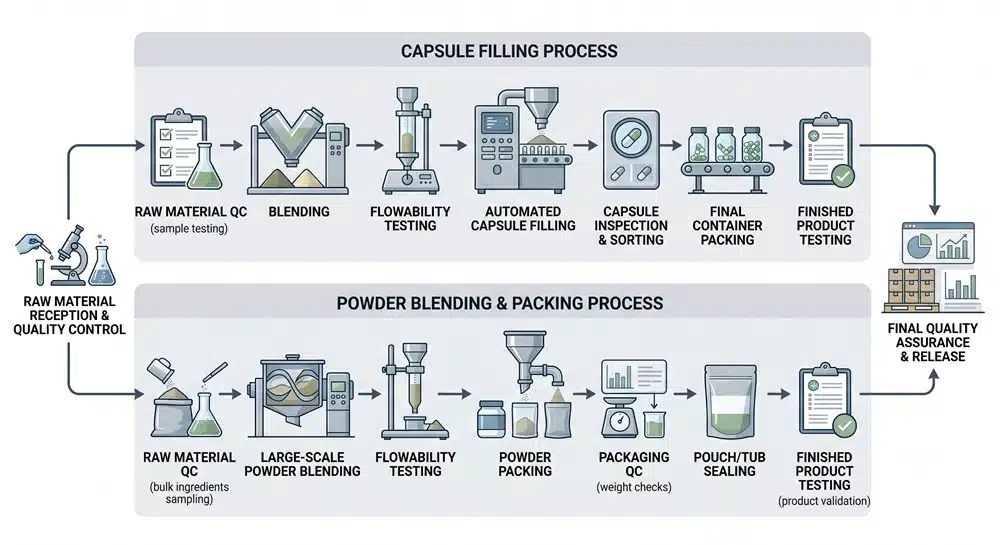
Từ góc độ sản xuất thực phẩm bổ sung, việc lựa chọn giữa dạng viên nang và dạng bột cũng là một quyết định liên quan đến kiểm soát quy trình. Viên nang đòi hỏi hỗn hợp bột phải chảy đều đặn vào các vỏ viên nang nhỏ. Nếu bột protein có mật độ thể tích thấp, khả năng chảy kém, dễ tạo bụi hoặc nhạy cảm với độ ẩm, sự dao động về trọng lượng nạp sẽ khó kiểm soát hơn và số lượng viên nang trên mỗi khẩu phần sẽ tăng lên nhanh chóng.
Thực phẩm bổ sung dạng bột giải quyết vấn đề liều lượng cao một cách hiệu quả hơn, nhưng lại đặt ra những thách thức khác: che lấp hương vị, khả năng phân tán tức thì, tính đồng nhất của hỗn hợp, độ chính xác khi múc, kiểm soát hiện tượng vón cục và bao bì chống ẩm. Nói cách khác, viên nang không chỉ đơn thuần là “bột cao cấp được bọc trong vỏ”; chúng được sử dụng hiệu quả nhất khi liều lượng mục tiêu đủ nhỏ để phù hợp với dạng viên nang.
Đối với các thương hiệu, quyết định thực tiễn là: nên sử dụng viên nang khi tính tiện lợi và độ chính xác quan trọng hơn liều lượng tính theo gam; nên sử dụng bột khi cam kết về sản phẩm phụ thuộc vào việc cung cấp 20–30 g protein cho mỗi khẩu phần. Một chuyên gia có trình độ Nhà sản xuất thực phẩm bổ sung protein có thể kiểm tra mật độ khối, khả năng chảy, tính chất khi ẩm và tính khả thi của các thông tin ghi trên nhãn trước khi ra mắt sản phẩm.
Lưu ý về quy định: Hoạt động sản xuất thực phẩm chức năng tại Hoa Kỳ phải tuân thủ các yêu cầu về Thực hành sản xuất tốt (GMP) theo 21 CFR Phần 111, bao gồm các biện pháp kiểm soát sản xuất, thông số kỹ thuật và hồ sơ sản xuất chính.
Ai nên sử dụng viên nang protein?
Mặc dù bột có thể chiếm ưu thế ở một số khía cạnh, nhưng viên nang protein lại là giải pháp lý tưởng cho những lối sống cụ thể mà sự tiện lợi là yếu tố được ưu tiên hàng đầu. Dưới đây là những đối tượng được hưởng lợi nhiều nhất:
- Người xây dựng thương hiệu: Đối với các doanh nhân muốn thâm nhập thị trường, viên nang mang lại những cơ hội độc đáo. Hợp tác với một công ty cung cấp các dịch vụ như sản xuất thực phẩm chức năng theo nhãn hiệu riêng hoặc công thức chế phẩm bổ sung tùy chỉnh giúp bạn tạo ra một sản phẩm phù hợp với một nhóm khách hàng ngách coi trọng tính chính xác và sự tiện lợi.
- Những người bận rộn với công việc hoặc thường xuyên đi công tác: Đối với những người luôn bận rộn di chuyển, tầm quan trọng của một dạng bào chế tiện lợi là không thể phủ nhận. Các sản phẩm bổ sung dạng viên nang có thể dễ dàng bỏ vào cặp tài liệu hoặc hành lý xách tay mà không lo bị vương vãi hay rắc rối như bột, giúp bạn duy trì thói quen chăm sóc sức khỏe của mình ở bất cứ đâu trên thế giới.
- Người không thích sinh tố: Nhiều người cảm thấy khó chịu với mùi vị, kết cấu hoặc chất tạo ngọt trong bột protein. Viên nang là một lựa chọn thay thế hoàn toàn không mùi, không vị. Khi chọn sản phẩm, bạn nên tìm kiếm thương hiệu hợp tác với một nhà sản xuất hàng đầu Nhà sản xuất thực phẩm bổ sung dạng viên nang để đảm bảo họ sử dụng nguyên liệu chất lượng cao.
Chi phí trên mỗi gam: Công thức đơn giản
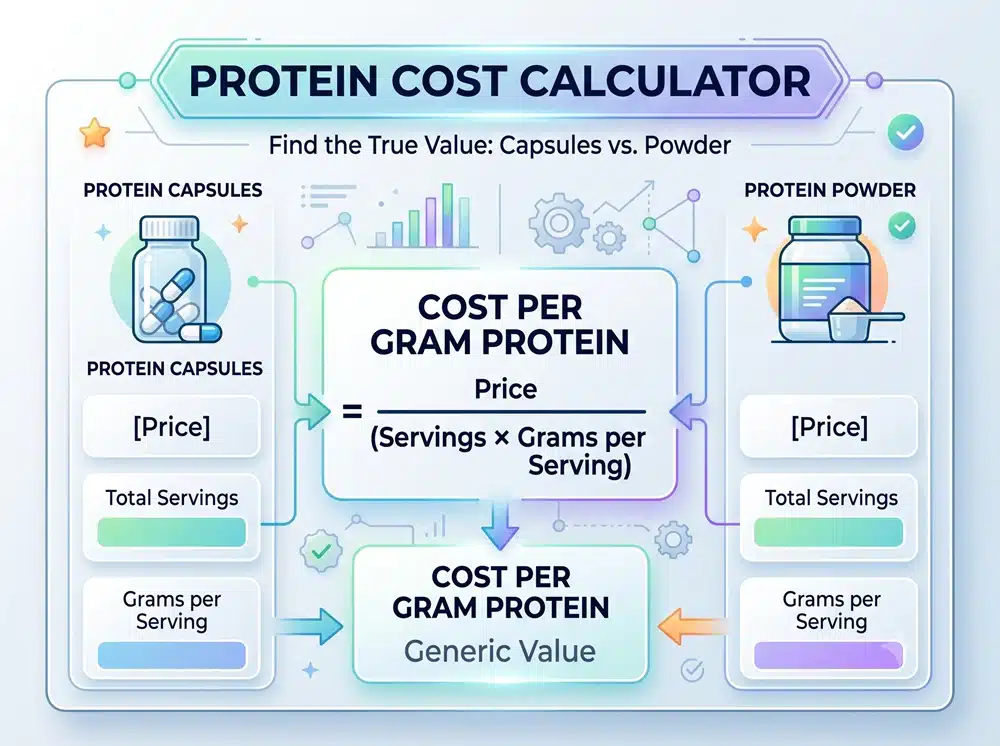
Để so sánh viên nang protein và bột protein một cách công bằng, đừng so sánh giá chai với giá hộp. Hãy so sánh chi phí trên mỗi gam protein thực tế:
Chi phí cho mỗi gam protein = Giá sản phẩm ÷ (số phần ăn trong mỗi hộp × lượng protein tính theo gam trên mỗi phần ăn)
Ví dụ: nếu một gói bột protein có giá $40 và cung cấp 30 phần, mỗi phần chứa 25 g protein, thì chi phí là $40 ÷ 750 g = khoảng $0,053 cho mỗi gam protein. Nếu một lọ viên nang có giá $25 và chứa 180 viên, mỗi viên chứa 0,6 g bột, thì tổng lượng bột là khoảng 108 g, tương đương $0,23 cho mỗi gam trước khi điều chỉnh theo độ tinh khiết thực tế của protein. Trong trường hợp đó, để đạt mục tiêu 25 g protein sẽ cần khoảng 42 viên nang và chi phí sẽ cao hơn nhiều so với bột.
Hãy áp dụng công thức này với giá sản phẩm, hàm lượng protein, khẩu phần và trọng lượng chất chứa trong viên nang của riêng bạn trước khi đưa ra các tuyên bố cuối cùng.
Ai nên sử dụng bột protein?
Bột protein vẫn là tiêu chuẩn hàng đầu trong ngành và điều đó hoàn toàn có lý do. Sản phẩm này mang đến sự kết hợp hoàn hảo giữa giá trị, tính linh hoạt và hiệu quả, một điều khó có sản phẩm nào sánh kịp. Đây là lựa chọn hàng đầu cho:
- Người đầu bếp sáng tạo: Bột protein không chỉ dùng để pha sinh tố. Tính đa năng của nó thực sự phát huy tác dụng trong nhà bếp, nơi bạn có thể xay cùng sinh tố trái cây, trộn vào cháo yến mạch để có bữa sáng no bụng, hoặc thậm chí dùng thay thế bột mì trong các công thức làm bánh kếp và bánh nướng xốp tốt cho sức khỏe.
- Vận động viên hay người tập thể hình: Sau một buổi tập luyện cường độ cao, cơ bắp cần một lượng lớn protein hấp thu nhanh để phục hồi và phát triển. Chỉ một muỗng bột protein whey đã cung cấp 20–30 gam protein, hiệu quả hơn nhiều so với việc uống hàng chục viên nang, khiến nó trở thành lựa chọn hàng đầu không thể bàn cãi cho quá trình phục hồi chuyên sâu.
- Người tiêu dùng tiết kiệm: Nếu xét về chi phí trên mỗi gam protein, bột protein rõ ràng là lựa chọn tối ưu. Đối với bất kỳ ai, từ sinh viên đến các gia đình đang cố gắng tiết kiệm chi phí mua sắm thực phẩm, việc mua protein đóng gói dạng thùng lớn là cách tiết kiệm nhất để bổ sung dinh dưỡng cho chế độ ăn uống.
Danh sách kiểm tra về an toàn, nhãn mác và tuân thủ
Dù bạn chọn viên nang hay bột protein, sản phẩm nên được lựa chọn dựa trên chất lượng thành phần, tính minh bạch về liều lượng, việc kiểm soát chất gây dị ứng, cũng như các kết quả kiểm nghiệm của bên thứ ba hoặc kiểm nghiệm từng lô (nếu có thể). Thực phẩm chức năng được quản lý theo các quy định khác với thực phẩm thông thường và thuốc, và Cục Quản lý Thực phẩm và Dược phẩm Hoa Kỳ (FDA) không phê duyệt hầu hết các loại thực phẩm chức năng trước khi chúng được đưa ra thị trường.
- Đối với viên nang: Kiểm tra chất liệu vỏ viên nang. Viên nang gelatin có thể không phù hợp với các tiêu chuẩn dành cho người ăn chay thuần, người ăn chay, halal hoặc kosher, trong khi viên nang chay làm từ HPMC có thể hỗ trợ tốt hơn cho các tuyên bố về sản phẩm có nguồn gốc thực vật.
- Đối với bột: kiểm tra các chất gây dị ứng như sữa, đậu nành, trứng và gluten; đường bổ sung; chất tạo ngọt; và xem sản phẩm có được kiểm nghiệm về kim loại nặng, vi sinh vật và tính xác thực hay không.
- Đối với chế độ ăn giàu protein: Người tiêu dùng mắc bệnh thận, đang mang thai, đang dùng thuốc hoặc có các vấn đề sức khỏe khác nên tham khảo ý kiến của chuyên gia y tế có chuyên môn trước khi thay đổi lượng protein tiêu thụ.
Kết luận: Lựa chọn đúng đắn là một quyết định cá nhân
Cuối cùng, cuộc tranh luận giữa viên nang protein và bột protein không phải là để tìm ra một lựa chọn “tốt nhất” duy nhất, mà là để tìm ra lựa chọn phù hợp nhất với bạn.
Nếu cuộc sống của bạn được định hình bởi lịch trình bận rộn, những chuyến đi liên miên và nhu cầu về sự tiện lợi tối đa, thì sự đơn giản của viên nang protein chính là lựa chọn hoàn hảo. Tuy nhiên, nếu ưu tiên của bạn là tối đa hóa lượng protein nạp vào, tiết kiệm chi phí và có sự linh hoạt để thỏa sức sáng tạo trong bếp, thì bột protein truyền thống vẫn là lựa chọn tốt nhất dành cho bạn.
Bằng cách cân nhắc các yếu tố như sự tiện lợi, chi phí, liều lượng và tính linh hoạt so với lối sống cũng như mục tiêu rèn luyện sức khỏe của bản thân, bạn có thể tự tin đưa ra lựa chọn phù hợp nhất để hỗ trợ hành trình của mình.
Câu hỏi thường gặp
Có loại viên nang chứa protein không?
Đúng vậy. Viên nén và viên nang protein hiện có trên thị trường, thường chứa whey, collagen, protein đậu, axit amin hoặc bột protein hỗn hợp được đóng gói trong vỏ viên nang gelatin hoặc vỏ viên nang thuần chay. Hạn chế chính của chúng nằm ở liều lượng, chứ không phải là sự tồn tại của sản phẩm.
Viên nang protein có hiệu quả như bột protein không?
Chúng có thể mang lại hiệu quả nếu tổng lượng protein và chất lượng protein là như nhau. Trên thực tế, dạng bột thường hiệu quả hơn khi cần bổ sung liều cao vì mỗi khẩu phần có thể cung cấp 20–30 g protein.
Một muỗng bột protein tương đương với bao nhiêu viên nang protein?
Nếu một muỗng cung cấp 25 g protein và một viên nang chứa khoảng 0,5–0,7 g bột, bạn có thể cần khoảng 35–50 viên nang để tương đương với một muỗng, tùy thuộc vào công thức sản phẩm.
Viên nang protein có được hấp thu chậm hơn so với dạng bột không?
Viên nang phải tan ra trước khi chất bên trong được giải phóng. Điều này có thể khiến chúng kém tiện lợi hơn một chút so với thức uống protein đã pha sẵn khi sử dụng ngay sau khi tập luyện, mặc dù lượng protein tiêu thụ hàng ngày vẫn là yếu tố quan trọng nhất.
Ai nên sử dụng viên nang protein?
Viên nang là lựa chọn lý tưởng nhất dành cho những người thường xuyên đi du lịch, những người nhạy cảm với hương vị, các sản phẩm bổ sung protein liều thấp, viên nang collagen, hỗn hợp axit amin, hoặc các thương hiệu phát triển các sản phẩm tiện lợi dành cho phân khúc thị trường ngách.
Ai nên sử dụng bột protein?
Bột protein là lựa chọn tốt hơn cho các vận động viên, người tập thể hình, người tiêu dùng quan tâm đến chi phí và bất kỳ ai cần một khẩu phần protein đầy đủ từ 20–30 g với chi phí trên mỗi gam thấp hơn.
được trích dẫn
- Tuyên bố chính thức của ISSN: Protein và tập luyện thể dục:https://pubmed.ncbi.nlm.nih.gov/28642676/
- NIH ODS: Thực phẩm bổ sung dành cho tập luyện và thành tích thể thao:https://ods.od.nih.gov/factsheets/ExerciseAndAthleticPerformance-Consumer/
- Tờ thông tin dành cho các chuyên gia y tế của NIH ODS:https://ods.od.nih.gov/factsheets/ExerciseAndAthleticPerformance-HealthProfessional/
- Câu hỏi và trả lời của FDA về thực phẩm chức năng:https://www.fda.gov/food/dietary-supplements/questions-and-answers-dietary-supplements
- Thực phẩm chức năng theo quy định của FDA:https://www.fda.gov/food/dietary-supplements
- 21 CFR Phần 111:https://www.ecfr.gov/current/title-21/chapter-I/subchapter-B/part-111
- USP Độ tan rã và độ hòa tan của thực phẩm chức năng:https://www.uspnf.com/sites/default/files/usp_pdf/EN/USPNF/revisions/2040disintegrationanddissolution.pdf
- Chất liệu vỏ viên nang ảnh hưởng đến quá trình hòa tan:https://pmc.ncbi.nlm.nih.gov/articles/PMC3940125/
- Bảng kích thước viên nang LFA:https://www.lfacapsulefillers.com/capsule-size-chart/
- Thông tin về kích cỡ của Capsule Connection:https://capsuleconnection.com/capsule-sizing-info

Warren Wan là một chuyên gia dày dạn với kinh nghiệm phong phú trong chuỗi cung ứng thực phẩm bổ sung, sở hữu kinh nghiệm thực tiễn sâu rộng trong nghiên cứu, phát triển, kiểm soát quy trình và tìm nguồn cung ứng toàn cầu các thành phần cốt lõi như peptit collagen, protein từ nước hầm xương và keratin. Với tư cách là tác giả của chuyên mục này, ông cam kết loại bỏ những lớp bao bọc tiếp thị, biến những kiến thức khoa học phức tạp về thành phần và các tiêu chuẩn kiểm soát chất lượng sản xuất thành những nội dung phổ biến khoa học dễ hiểu nhưng sâu sắc, giúp độc giả hiểu rõ sự thật đằng sau các nhãn mác và đưa ra những lựa chọn sức khỏe hợp lý hơn.


