
You’ve just crushed your workout, and your muscles are crying out for a quick protein fix to kickstart recovery. You head to your gym bag, but the choice isn’t as simple as it used to be. Do you reach for the trusty shaker bottle and a scoop of protein powder, or the sleek, convenient simplicity of protein capsules?
This isn’t just a matter of preference; it’s about finding the right tool for your specific lifestyle and fitness goals. In this guide, we’ll break down everything you need to know, comparing protein capsules versus powder on the key factors that matter most: convenience, cost, dosage, and absorption. By the end, you’ll know exactly which option is right for you.
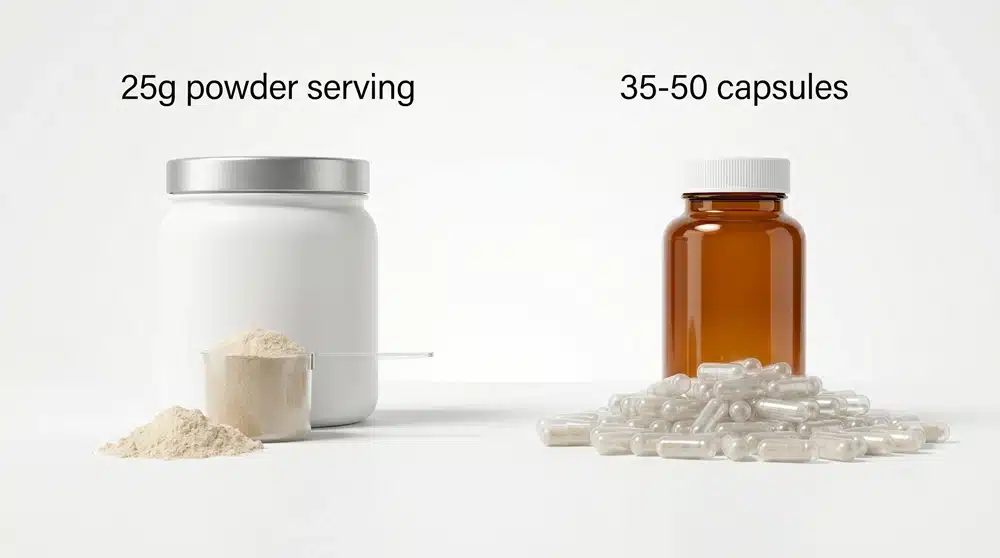
Quick answer: Protein powder is the better choice when you need a full 20-30 g serving for recovery, muscle maintenance, or the lowest cost per gram. Protein capsules are best for travel, taste avoidance, or low-dose niche formulas, but capsule volume is the limiting factor: one 25 g protein scoop can require dozens of capsules.
What Are Protein Capsules?
Think of protein capsules as the ultimate grab-and-go solution. They are simply pre-measured doses of protein powder—often whey, collagen, or a plant-based blend—enclosed in a digestible gelatin or vegetarian casing. The primary appeal lies in their sheer convenience.
Are Protein Pills Real? Yes—But Dosage Is the Limitation
Yes, protein pills and protein capsules do exist. They usually contain whey, collagen, pea protein, amino acids, or a blended protein powder inside a gelatin or vegetarian shell. The important question is not whether they work, but whether the capsule can hold enough protein for your goal.
A common size 00 capsule can hold roughly 0.5-0.7 g of powder depending on bulk density and particle size. That means a 25 g protein target may require about 35-50 capsules before considering excipients or capsule shell weight. This is why capsules are practical for low-dose formulas, collagen add-ons, amino acid blends, or travel packs, but they rarely replace a full post-workout protein shake.
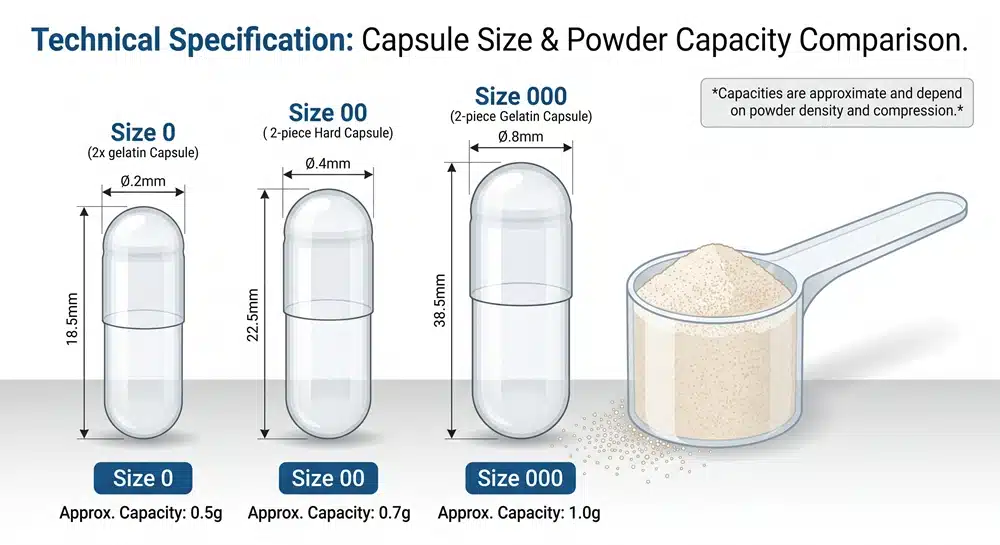
| Capsule size | Typical fill estimate* | How many for 25 g protein? | Practical takeaway |
|---|---|---|---|
| Size 0 | About 0.5 g powder | ~50 capsules | Useful for compact formulas, not full protein servings. |
| Size 00 | About 0.5-0.7 g powder | ~35-50 capsules | Common supplement size, but still inefficient for 20-30 g protein servings. |
| Size 000 | Up to about 1 g powder depending on density | ~25+ capsules | Higher capacity but often too large for comfortable daily use. |
*Actual fill weight depends on powder density, particle size, moisture, flowability, and whether the formula requires excipients. Brands should run pilot fills before finalizing label claims.
Pros:
- Ultimate Convenience: No mixing, no mess. Just swallow with water.
- Tasteless: Ideal for those who dislike the flavor or texture of protein shakes.
- Precise Dosage: Each capsule contains a specific, measured amount of protein, taking the guesswork out of supplementation.
- Travel-Friendly: Easy to carry in a bag, car, or pocket without worrying about spills.
A consultant who travels weekly finds it impossible to pack a bulky tub of protein powder. Instead, she keeps a small bottle of protein capsules in her carry-on. She can take them on the plane or in her hotel room with a simple glass of water, never missing her protein goal. For her, the absolute convenience outweighs everything else.
Cons:
- Lower Protein Per Serving: The main limitation is physical volume. A capsule can only hold a small amount of protein powder, so reaching a 20-30 g serving may require dozens of capsules. For most athletes, this makes capsules inconvenient as a primary protein source.Protein capsules are not automatically “weaker” than powder. If the ingredient quality and total grams of protein are equal, the body still digests protein into amino acids. The problem is serving practicality: capsules are excellent for portability and taste avoidance, but inefficient for high-dose protein delivery.
- Potentially Higher Cost: On a gram-for-gram basis, capsules are often more expensive than bulk powder.
- Slower Absorption: The casing needs to dissolve before the protein can be absorbed, which can be slightly slower than a pre-mixed shake.
A bodybuilder aiming for 30 grams of protein immediately after a heavy lifting session would find capsules impractical. To reach his goal, he might have to swallow more than 30 capsules, which is inconvenient and slow compared to drinking one fast-absorbing protein shake.
What Is Protein Powder?
Protein powder is the classic supplement for muscle growth and recovery. It is a dehydrated protein source—most commonly from whey, casein, soy, or pea—ground into a loose powder. It’s designed to be mixed with a liquid like water or milk to create a protein shake.
Pros:
- High Protein Per Serving: It’s easy to get 20-30 grams of protein in a single scoop.
- Cost-Effective: On a per-gram basis, bulk powder is almost always cheaper than capsules.
- Fast Absorption: Whey protein, in particular, is digested very quickly, making it ideal for post-workout recovery.
- Versatile: Can be used to make shakes, smoothies, or even be added to foods like oatmeal and baked goods.
Why One Scoop Fits Sports Nutrition Better
For active consumers, the biggest advantage of powder is that one scoop can realistically deliver a complete protein serving. The International Society of Sports Nutrition position stand notes that an overall protein intake of about 1.4-2.0 g/kg/day is sufficient for most exercising individuals, while the NIH Office of Dietary Supplements notes that high-quality protein is often consumed in repeated doses around training windows. A powder serving of 20-30 g fits this pattern far more naturally than a bottle full of capsules.
A weightlifter finishing a heavy leg day needs to replenish his muscles fast. By mixing a single scoop of whey powder with water, he immediately consumes 25 grams of fast-absorbing protein to maximize his recovery, a dosage that would be impractical to get from capsules in that timeframe.
Cons:
- Requires Preparation: You need a shaker bottle or blender to mix it properly.
- Can Be Messy: Scooping and mixing powder can sometimes lead to spills and a dusty cleanup.
- Flavor/Texture Issues: Some people may not enjoy the taste or texture of certain protein powders.
A commuter rushing to get out the door tries to quickly mix a shake. The powder doesn’t fully dissolve, leaving clumps, and a puff of powder escapes the container onto their dark work clothes. The need for preparation and the potential for mess adds stress to their morning.
The Head-to-Head Comparison: 5 Key Differences
| Feature | Protein Capsules | Protein Powder | Winner |
|---|---|---|---|
| Protein per unit | Usually about 0.5-0.7 g per size 00 capsule, depending on powder density. | Commonly 20-30 g per scoop. | Protein powder |
| Serving practicality | A 25 g target may require roughly 35-50 capsules. | One scoop usually covers the full serving. | Protein powder |
| Convenience | No shaker, no flavor, easy to carry. | Needs water/milk and a shaker or blender. | Protein capsules |
| Cost per gram | Often higher because of capsule shells, filling, packaging, and lower protein per container. | Usually lower when sold in tubs or pouches. | Protein powder |
| Absorption timing | The shell must disintegrate before contents disperse; gelatin and HPMC can behave differently. | Already dispersed in liquid when mixed, making it practical around workouts. | Protein powder for post-workout use |
| Taste and texture | Tasteless and odorless for most users. | May have sweetness, flavor, or texture issues. | Protein capsules |
| Best B2B use case | Travel products, collagen capsules, amino acid add-ons, niche formulas, or low-dose protein blends. | Sports nutrition, meal support, high-protein servings, family-size products, and value positioning. | Depends on product strategy |
Manufacturer’s View: Why Protein Capsules and Powders Behave Differently
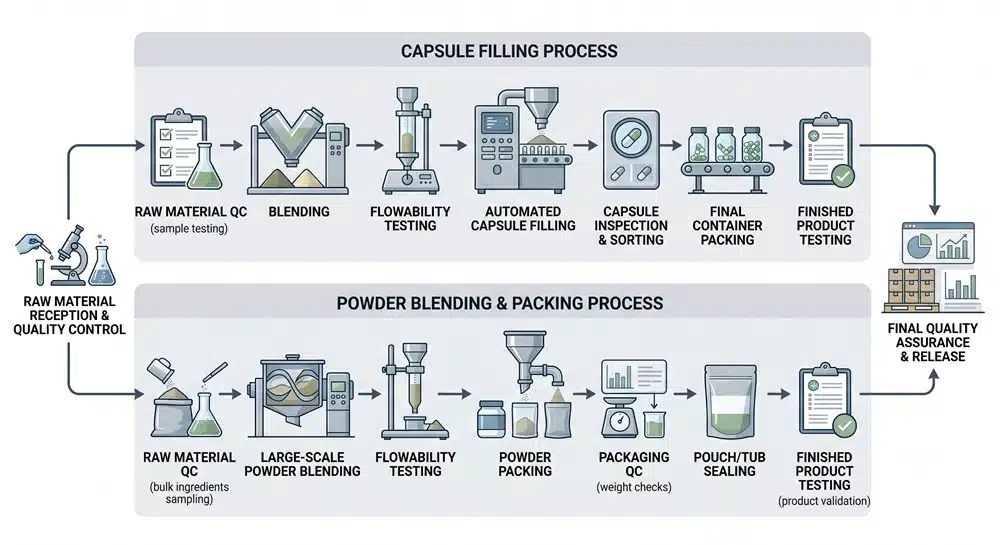
From a supplement manufacturing perspective, the capsule-vs-powder decision is also a process-control decision. Capsules require the powder blend to flow consistently into small capsule bodies. If a protein powder has low bulk density, poor flowability, high dusting, or moisture sensitivity, fill weight variation becomes harder to control and the number of capsules per serving increases quickly.
Powder supplements solve the high-dose problem more efficiently, but they create different challenges: flavor masking, instant dispersion, blend uniformity, scoop accuracy, clumping control, and moisture-resistant packaging. In other words, capsules are not simply “premium powder in a shell”; they are best used when the target dose is small enough for the capsule format.
For brands, the practical decision is: use capsules when convenience and precision matter more than gram-level dose; use powder when the product promise depends on delivering 20-30 g of protein per serving. A qualified protein supplement manufacturer can test bulk density, flowability, moisture behavior, and label-claim feasibility before launch.
Regulatory note: U.S. dietary supplement manufacturing is subject to 21 CFR Part 111 current good manufacturing practice requirements, including production controls, specifications, and master manufacturing records.
Who Should Choose Protein Capsules?
While powder may win in a few categories, protein capsules are the ideal solution for specific lifestyles where convenience is the undisputed champion. Here’s who benefits most:
- The Brand Builder: For entrepreneurs looking to enter the market, capsules offer unique opportunities. Working with a company that offers services like private label supplements or custom supplement formulation allows you to create a targeted product for a niche audience that values precision and ease of use.
- The Busy Professional or Frequent Traveler: For those constantly on the move, the value of a convenient dosage form cannot be overstated. Encapsulated supplements can be tossed into a briefcase or carry-on without the mess or hassle of powders, ensuring you can maintain your routine anywhere in the world.
- The Person Who Dislikes Shakes: Many people are sensitive to the taste, texture, or sweeteners in protein powders. Capsules offer a perfectly tasteless and odorless alternative. When choosing a product, it’s wise to look for a brand that partners with a top-tier capsule supplement manufacturer to ensure they use high-quality ingredients.
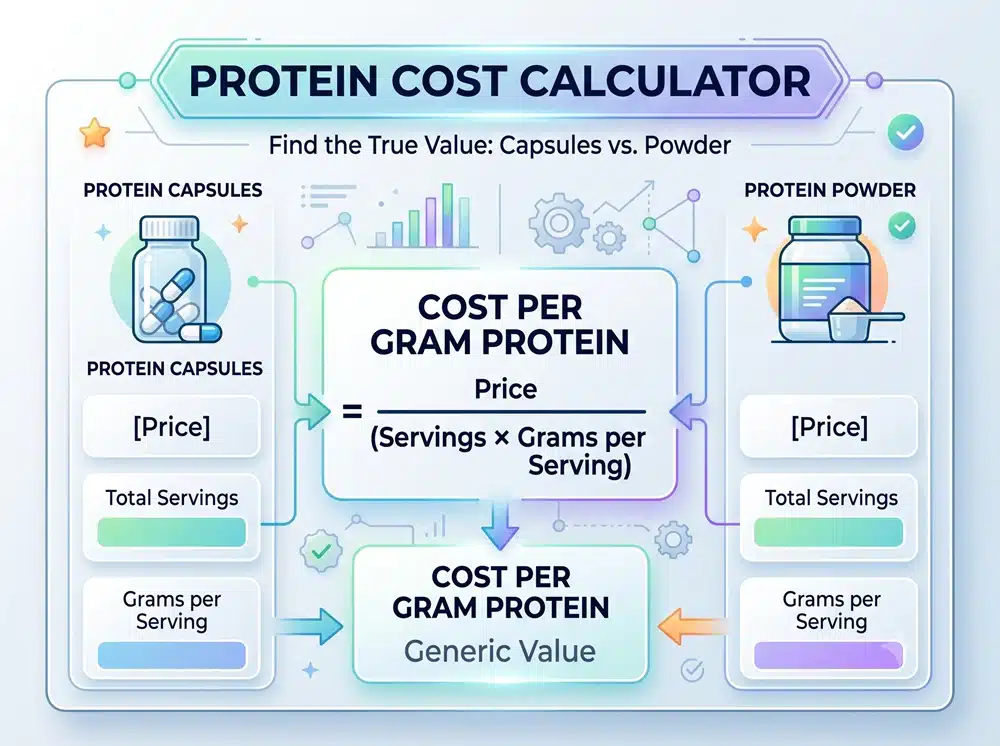
Cost per Gram: The Simple Formula
To compare protein capsules and powder fairly, do not compare bottle price to tub price. Compare cost per gram of actual protein:
Cost per gram of protein = Product price ÷ (servings per container × protein grams per serving)
Example: if a protein powder costs $40 and provides 30 servings at 25 g protein each, the cost is $40 ÷ 750 g = about $0.053 per gram of protein. If a capsule bottle costs $25 and contains 180 capsules with 0.6 g powder each, it provides about 108 g total powder, or $0.23 per gram before adjusting for actual protein purity. In that scenario, a 25 g protein target would require about 42 capsules and cost much more than powder.
Use this formula with your own product price, protein assay, serving size, and capsule fill weight before making final claims.
Who Should Choose Protein Powder?
Protein powder remains the industry standard for a reason. It offers a powerful combination of value, flexibility, and performance that is hard to beat. It’s the top choice for:
- The Creative Cook: Protein powder isn’t just for shakes. Its versatility shines in the kitchen, where it can be blended into fruit smoothies, mixed into oatmeal for a filling breakfast, or even used as a flour substitute in recipes for healthy pancakes and muffins.
- The Athlete or Bodybuilder: After a strenuous workout, muscles need a high dose of fast-absorbing protein to repair and grow. A single scoop of whey protein powder delivers 20-30 grams of protein far more efficiently than swallowing dozens of capsules, making it the undisputed champion for serious recovery.
- The Budget-Conscious Consumer: When it comes to cost per gram of protein, powder is the clear winner. For anyone from a student to a family trying to manage their grocery bills, buying protein in a bulk tub is the most economical way to supplement their diet.
Safety, Label, and Compliance Checklist
Whether you choose protein capsules or powder, the product should be selected based on ingredient quality, dosage transparency, allergen control, and third-party or batch testing where possible. Dietary supplements are regulated differently from conventional foods and drugs, and the FDA does not approve most dietary supplements before they are sold.
- For capsules: check the capsule shell material. Gelatin capsules may not fit vegan, vegetarian, halal, or kosher positioning, while HPMC vegetarian capsules can better support plant-based claims.
- For powders: check allergens such as milk, soy, egg, and gluten; added sugars; sweeteners; and whether the product has heavy metal, microbial, and identity testing.
- For high-protein diets: consumers with kidney disease, pregnancy, medication use, or medical conditions should speak with a qualified healthcare professional before changing protein intake.
Conclusion: The Right Choice is a Personal One
Ultimately, the debate between protein capsules and powder isn’t about finding a single “best” option—it’s about finding the best option for you.
If your life is defined by a busy schedule, constant travel, and a need for ultimate convenience, the simplicity of protein capsules is a perfect fit. However, if your priorities are maximizing protein intake, keeping costs low, and having the flexibility to get creative in the kitchen, then traditional protein powder remains your best bet.
By weighing the factors of convenience, cost, dosage, and versatility against your own lifestyle and fitness goals, you can confidently make the choice that will best support your journey.
Frequently Asked Questions
Do protein pills exist?
Yes. Protein pills and capsules exist, usually as whey, collagen, pea protein, amino acid, or blended protein powders inside gelatin or vegetarian capsule shells. Their main limitation is dose, not existence.
Are protein capsules as effective as protein powder?
They can be effective if the total protein amount and protein quality are the same. In practice, powder is usually more effective for high-dose goals because it can deliver 20-30 g in one serving.
How many protein capsules equal one scoop of protein powder?
If a scoop provides 25 g protein and one capsule contains about 0.5-0.7 g powder, you may need roughly 35-50 capsules to match one scoop, depending on the formula.
Do protein capsules absorb slower than powder?
Capsules must first disintegrate before the contents disperse. This can make them slightly less practical for immediate post-workout use than a pre-mixed protein shake, although total daily protein intake remains the key factor.
Who should choose protein capsules?
Capsules are best for frequent travelers, flavor-sensitive users, low-dose protein add-ons, collagen capsules, amino acid blends, or brands building niche convenience products.
Who should choose protein powder?
Protein powder is better for athletes, bodybuilders, budget-conscious consumers, and anyone who needs a full protein serving of 20-30 g at a lower cost per gram.
referenced
- ISSN Position Stand: Protein and Exercise:https://pubmed.ncbi.nlm.nih.gov/28642676/
- NIH ODS: Dietary Supplements for Exercise and Athletic Performance:https://ods.od.nih.gov/factsheets/ExerciseAndAthleticPerformance-Consumer/
- NIH ODS Health Professional Fact Sheet:https://ods.od.nih.gov/factsheets/ExerciseAndAthleticPerformance-HealthProfessional/
- FDA Q&A on Dietary Supplements:https://www.fda.gov/food/dietary-supplements/questions-and-answers-dietary-supplements
- FDA Dietary Supplements:https://www.fda.gov/food/dietary-supplements
- 21 CFR Part 111:https://www.ecfr.gov/current/title-21/chapter-I/subchapter-B/part-111
- USP <2040> Disintegration and Dissolution of Dietary Supplements:https://www.uspnf.com/sites/default/files/usp_pdf/EN/USPNF/revisions/2040disintegrationanddissolution.pdf
- Capsule shell material impacts dissolution:https://pmc.ncbi.nlm.nih.gov/articles/PMC3940125/
- LFA Capsule Size Chart:https://www.lfacapsulefillers.com/capsule-size-chart/
- Capsule Connection sizing information:https://capsuleconnection.com/capsule-sizing-info

Warren Wan is a seasoned expert with extensive experience in the dietary supplement supply chain, possessing rich practical experience in the research, development, process control, and global sourcing of core ingredients such as collagen peptides, bone broth protein, and keratin. As the author of this column, he is dedicated to stripping away the marketing packaging, transforming obscure ingredient science and production quality control standards into easy-to-understand, hardcore science popularization, helping readers understand the truth behind the labels and make more rational health choices.


