Introduction: The “Visual Revolution” in Supplements
Walk down any modern supplement aisle, and you will notice a shift. Gone are the days when shelves were dominated solely by dusty, opaque white tablets. Today’s premium brands are embracing a new standard of aesthetics and efficacy: Liquid-Filled Hard Capsules (LFHC).
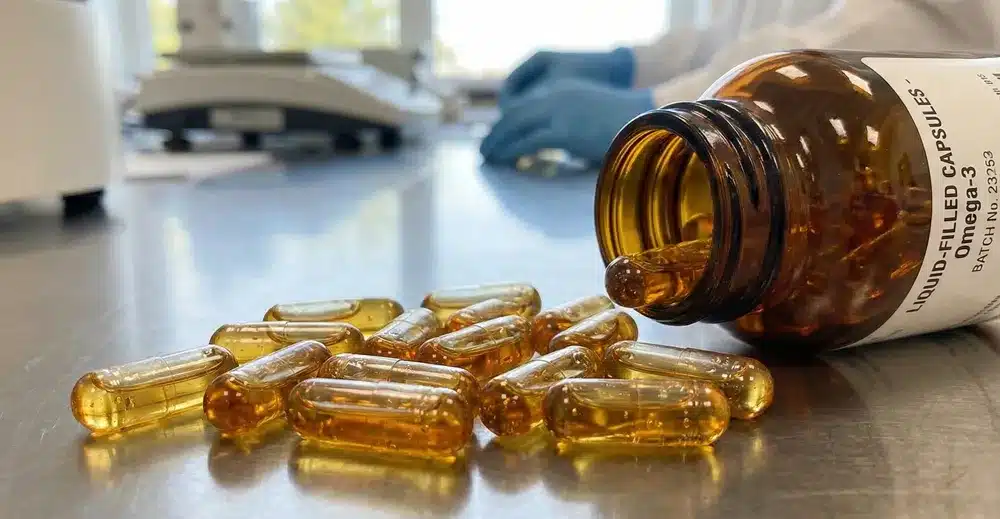
What exactly are they? At its core, a liquid-filled hard capsule is a standard two-piece hard shell (made of either Gelatin or vegetarian HPMC) that has been filled with dietary oils or liquid extracts instead of dry powder. Once filled, the cap and body are hermetically sealed using advanced liquid capsule technology—often visible as a colored “band” around the center—to prevent leakage and ensure tamper resistance.
More Than Just Good Looks While their crystal-clear appearance and vibrant colors make them highly “Instagrammable” and marketable, the real value lies inside. This delivery system bridges the gap between traditional capsules and softgels. It solves complex formulation challenges, such as improving the bioavailability of poorly soluble ingredients and allowing for unique combinations like “Capsule-in-Capsule” technology.
Whether you are a procurement officer looking for a safer alternative to softgels, or a brand owner seeking to differentiate your product line, understanding this technology is crucial. In this guide, we will dive deep into the manufacturing science, the critical difference between banding vs. sealing, and why LFHC might be the superior choice for your next formulation.
Why Choose Liquid? The Key Benefits
Why are top-tier brands migrating from powders to liquids? It is not just about aesthetics. Liquid-Filled Hard Capsules (LFHC) offer functional advantages that can significantly improve the efficacy and marketability of a supplement product.
Here are the four critical reasons to consider this technology for your next formulation:
1. Superior Bioavailability (The “Absorption” Factor) Many popular ingredients—such as Curcumin, CoQ10, Vitamin D, and Carotenoids—are hydrophobic (they do not mix well with water) and have poor absorption rates in powder form.
- The Solution: By pre-dissolving these ingredients in a lipid (oil) carrier, LFHC technology creates a “self-emulsifying” system. When the shell dissolves in the stomach, the oily liquid disperses quickly, allowing the body to absorb the nutrient much more efficiently than it would a dry crystal. This makes liquid capsules the gold standard for fat-soluble vitamins and botanical extracts.
2. Maximum Protection Against Oxidation Oxygen is the enemy of potency. Ingredients like Fish Oil, Krill Oil, and Vitamin E can go rancid (oxidize) quickly when exposed to air.
- The Technology: The liquid filling process typically involves Nitrogen Flushing. This removes oxygen from the capsule before sealing, creating an anaerobic (oxygen-free) environment. Combined with the hermetic seal (banding), this offers superior protection for sensitive ingredients compared to standard two-piece powder capsules which are not air-tight.
3. Rapid Onset of Action Speed matters, especially for products like pain relief, sleep aids, or energy boosters.
- The Speed: Unlike compressed tablets, which contain binders that must be mechanically broken down by stomach acid, or softgels that have thicker shells, Liquid-Filled Hard Capsules feature thin walls that dissolve rapidly (often within minutes). Once the shell breaks, the liquid payload is immediately released and ready for absorption.
4. Brand Differentiation & Anti-Counterfeiting In a crowded market, standing out on the shelf is vital.
- Premium Aesthetics: The combination of a crystal-clear shell and vibrant liquid (or suspended beadlets) screams “Premium Quality” to consumers.
- Anti-Counterfeiting: The specialized banding technology (the colored seal around the middle) is difficult to replicate without expensive machinery. This makes LFHC products much harder for counterfeiters to copy, protecting your brand reputation.
The Technology Behind the Leak
How do you keep liquid inside a two-piece capsule that is designed to slide apart? It seems physically impossible. Yet, millions of liquid capsules are shipped globally every day without a single leak.
The secret lies in a combination of strict formulation rules and precision sealing engineering.
1. The First Rule: No Water Allowed (The Formulation Constraint) Before we talk about machinery, we must talk about chemistry.
- The Constraint: Standard capsule shells (both Gelatin and HPMC) are water-soluble. If you fill them with water or an aqueous solution, the shell will dissolve from the inside out within minutes.
- The Solution: Liquid-filled capsules must use Lipophilic (Oil-based) or Non-aqueous carriers. Common carriers include MCT Oil, Sunflower Oil, Olive Oil, or specialized semi-solids (like PEG). This ensures the liquid sits passively inside the shell without attacking the wall integrity.
2. Method A: Banding (The “Visible Shield”) This is the most common and recognizable form of liquid encapsulation.
- How it works: After the liquid is filled and the cap is placed on the body, the capsule moves to a Banding Machine. A thin layer of gelatin or HPMC solution (often colored) is applied to the gap between the cap and the body.
- The Result: This band dries to form a hardened, raised ring that physically bonds the two pieces together.
- Key Advantage:
- Tamper Evidence: The band makes it impossible to open the capsule without destroying it.
- Branding: You can use a contrasting color (e.g., a Blue band on a Clear capsule) to create a unique visual identity.
3. Method B: Fusion / Microspray Sealing (The “Invisible Weld”) Also known as LEMS (Liquid Encapsulation Microspray Sealing), this is a sleeker, more modern approach.
- How it works: Instead of adding a band, the machine sprays a tiny amount of a water/alcohol mist exactly into the gap between the cap and body. This micro-spray slightly melts the capsule material at the junction. The machine then gently heats the capsule, fusing the cap and body into a single, seamless piece.
- The Result: A perfectly smooth capsule with no raised ridge. It looks like a one-piece unit.
- Key Advantage:
- Clean Aesthetics: Preferred by minimalist brands who want a pure, unadulterated look.
- Gas Barrier: The fusion creates an incredibly tight hermetic seal, offering slightly better oxygen protection than banding in some tests.
4. Nitrogen Flushing: The Invisible Guardian Regardless of the sealing method (Banding or Fusion), the filling process almost always happens under a Nitrogen Blanket.
- Why? As the liquid enters the capsule, it displaces the air inside. By pumping in nitrogen during filling, manufacturers force out the oxygen. This ensures that the bubble of gas floating at the top of your liquid capsule is inert nitrogen, not reactive oxygen, keeping your oil fresh for years.
Beadlets & Capsule-in-Capsule
If standard liquid capsules are the “sports cars” of the supplement world, then Beadlet-in-Oil and Capsule-in-Capsule technologies are the “concept cars.” They represent the absolute cutting edge of visual marketing and delivery system engineering.
These formats do more than just look expensive—they solve complex pharmacokinetic problems that traditional capsules cannot touch.
1. Beadlets in Liquid (The “Snow Globe” Effect) Imagine a clear capsule filled with golden oil, inside of which float hundreds of tiny, colorful spheres.
- The Technology: This format combines a liquid phase (usually Omega-3s or MCT oil) with solid sustained-release pellets (beadlets) suspended inside.
- The Benefit:
- Dual Release Profile: The outer liquid releases immediately for rapid absorption, while the coated beadlets dissolve slowly over hours. This is perfect for “Energy” products (MCT oil for instant fuel + Caffeine beadlets for sustained energy without the crash).
- Visual Impact: The contrast between the liquid and the colored beads creates a mesmerizing “Snow Globe” effect that stands out instantly on a shelf or Instagram feed.
2. Capsule-in-Capsule Technology (DuoCap / Cap-in-Cap) As the name suggests, this is a smaller capsule (usually Size 3 or 4) inserted inside a larger liquid-filled capsule (Size 00).
- How it works:
- Outer Chamber: Filled with liquid.
- Inner Chamber: Contains powder, pellets, or another liquid.
- The “Killer App” – Probiotics: This is the most famous application. The outer liquid contains Prebiotics (or an oil carrier), while the inner capsule protects sensitive Probiotics. The outer liquid acts as a secondary moisture barrier, keeping the bacteria inside dormant and stable until digestion.
- Solving Incompatibility: Some ingredients hate each other. For example, a high-pH mineral might degrade a low-pH vitamin if mixed in a powder blend. By separating them into two physical chambers, you can deliver incompatible ingredients in a single dose without them reacting.
3. Why Brands Are Switching to Hybrids?
- Market Differentiation: In a sea of white pills, a Capsule-in-Capsule product looks like advanced medical technology. It justifies a higher retail price point.
- IP Protection: Manufacturing these capsules requires highly specialized, expensive machinery. This creates a high barrier to entry, making it nearly impossible for “copycat” brands to knock off your unique product quickly.
The Battle: Liquid-Filled Hard Capsules vs. Softgels
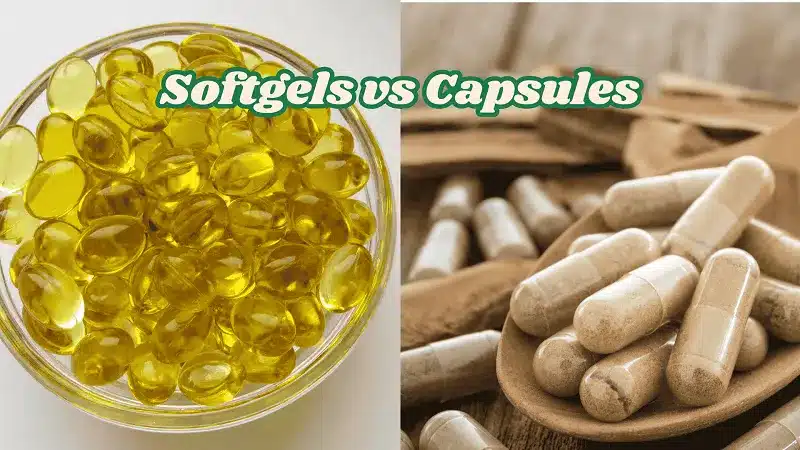
For decades, the Softgel (Soft Gelatin Capsule) was the undisputed king of liquid delivery systems. It is iconic, easy to swallow, and trusted. However, as formulation science advances, Softgels are revealing their limitations—particularly regarding stability and clean-label trends.
Enter the challenger: Liquid-Filled Hard Capsules (LFHC).
While both deliver oils effectively, their structural engineering is fundamentally different. Here is the hardcore comparison to help you decide which vessel is right for your product.
The Ultimate Comparison Matrix
| Feature | Traditional Softgels | Liquid-Filled Hard Capsules (LFHC) | The Winner |
| Shell Material | Mostly Gelatin (Veggie exists but is expensive/complex). | HPMC (Vegetarian) or Gelatin. | LFHC (Native Vegetarian friendly). |
| Plasticizers | Required (Glycerin/Sorbitol) to keep it soft. | None (Zero plasticizers needed). | LFHC (Cleaner label). |
| Moisture/Oxygen Barrier | Low. Plasticizers make the shell porous, allowing moisture/oxygen migration. | High. HPMC is a denser polymer with better barrier properties. | LFHC (Better stability). |
| Heat Tolerance | Low. Melts/clumps above 35°C (95°F). | High. HPMC withstands up to 80°C without deformation. | LFHC (Safer for global shipping). |
| Wall Thickness | Thick (>0.25mm) for structural integrity. | Thin (~0.1mm) for rapid dissolution. | LFHC (Faster release). |
| Manufacturing MOQ | Huge. Typically 300,000+ caps per run due to die roll setup. | Flexible. Feasible for runs as low as 50,000 caps. | LFHC (Better for startups/SKU testing). |
| Leaking Risk | Very Low (One-piece construction). | Low (Requires precise banding/sealing). | Softgels (Historically slightly safer). |
| Cost | 💰 Low to Moderate. | 💰💰 Moderate to High. | Softgels (Cheaper for mass volume). |
Key Technical Differences Explained
1. The “Plasticizer Problem” (Clean Label)
This is the biggest scientific argument for LFHC.
- Softgels: To make the shell soft, manufacturers must add plasticizers (like Glycerin or Sorbitol), often up to 30% of the shell weight.
- The Risk: These plasticizers act as channels. They allow moisture to enter the capsule and, worse, allow the active ingredients to migrate into the shell.
- LFHC Advantage: Hard capsules (especially HPMC) are rigid polymers requiring zero plasticizers. This creates a denser, non-porous barrier that keeps the oil inside and the moisture outside.
2. Supply Chain Agility (The MOQ Issue)
For a new brand or a niche product, Softgels can be a logistical nightmare.
- Softgels: Require massive “Rotary Die” machines that take hours to set up and waste huge amounts of gelatin during startup. This forces factories to demand high Minimum Order Quantities (MOQs), often 300k to 500k units.
- LFHC: Uses standard encapsulation machines (with liquid pump modifications). Setup is fast, waste is low. You can economically produce a batch of 50,000 units, making it perfect for market testing or seasonal limited editions.
3. Thermal Stability (Shipping to Hot Climates)
If you export to Southeast Asia, the Middle East, or ship during summer:
- Softgels: Are notorious for melting and sticking together into a giant “clump” in hot trucks.
- LFHC (HPMC): Are incredibly robust. They maintain their shape and do not stick even at high temperatures, significantly reducing product returns due to heat damage.
Strategic Procurement Guide
Making the switch from powders or traditional softgels to Liquid-Filled Hard Capsules (LFHC) is a strategic decision. It impacts your cost of goods sold (COGS), your supply chain, and your brand positioning.
Use this simple “Procurement Checklist” to determine if LFHC is the right fit for your next project.
✅ Go with LFHC (Liquid-Filled Hard Capsules) IF:
- You need a Vegetarian/Vegan Product: HPMC hard shells are naturally plant-based and stable. (Vegetarian softgels exist but are often expensive and prone to leaking).
- You are Launching a “Premium” SKU: You want a high retail price point and need the product to look expensive (e.g., Beadlet-in-Oil or DuoCap technology).
- Your Order Quantity is Lower (MOQ < 100k): You want to test a new concept without committing to a massive 300,000+ softgel run.
- Your Ingredient is Heat/Moisture Sensitive: You are shipping to hot regions or using hygroscopic ingredients that degrade in softgel shells.
- You Need Rapid Prototyping: LFHC manufacturing setup is faster, allowing for quicker speed-to-market.
🛑 Stick to Traditional Softgels IF:
- You are Selling a Commodity: You are producing a generic Vitamin D3 or Fish Oil where price is the only factor that matters to your customer.
- You Have Massive Volume: You need millions of units per month and require the absolute lowest unit cost.
- No Vegetarian Claim Needed: Your market accepts bovine gelatin without hesitation.
Conclusion: The Future is Clear (and Liquid)
The supplement industry is moving away from “mystery powders” toward transparency—both literally and figuratively.
Liquid-Filled Hard Capsules represent the convergence of aesthetics and performance. They solve the age-old problems of bioavailability and stability while offering a visually stunning delivery system that consumers love to share on social media.
While they may cost slightly more than a generic tablet or softgel, the ROI comes in the form of:
- Higher Perceived Value (Premium pricing).
- Better Consumer Compliance (Easier to swallow, works faster).
- Stronger Brand Loyalty (Unique look, harder to counterfeit).
In a crowded marketplace, the brand that looks different and works better wins. Liquid encapsulation is your tool to achieve both.
🚀 Ready to Upgrade Your Formulation?
Are you still relying on old-school tablets or unstable softgels? It’s time to modernize your product line.
At Gensei, we specialize in advanced Liquid-Filled Hard Capsule manufacturing. Whether you need a custom Beadlet-in-Oil formula or a robust HPMC liquid solution, our R&D team is ready to help.
👉 Get a price estimate within 24 hours.
👉 Not sure if your oil fits in a hard shell? Let our experts evaluate your formula for free.
References:
- NCBI. Liquid filled hard capsule bioavailability ncbi. https://pubmed.ncbi.nlm.nih.gov/33645480/
- ACG. Use of Hard Capsules as Container in Lipid Based Formulations. Available at: https://www.acg-world.com/
- Altasciences. Liquid-Flled Capsules: An Attractive, Marketable Solution. Available at: https://www.altasciences.com/