
If you’ve ever stood in the soup aisle or stared at a recipe wondering if that carton of chicken broth is “close enough” to the bone broth your favorite wellness influencer drinks, you aren’t alone. While they all look like a simple bowl of savory liquid, the differences between broth vs. stock vs. bone broth are hidden in the ingredients and the clock.
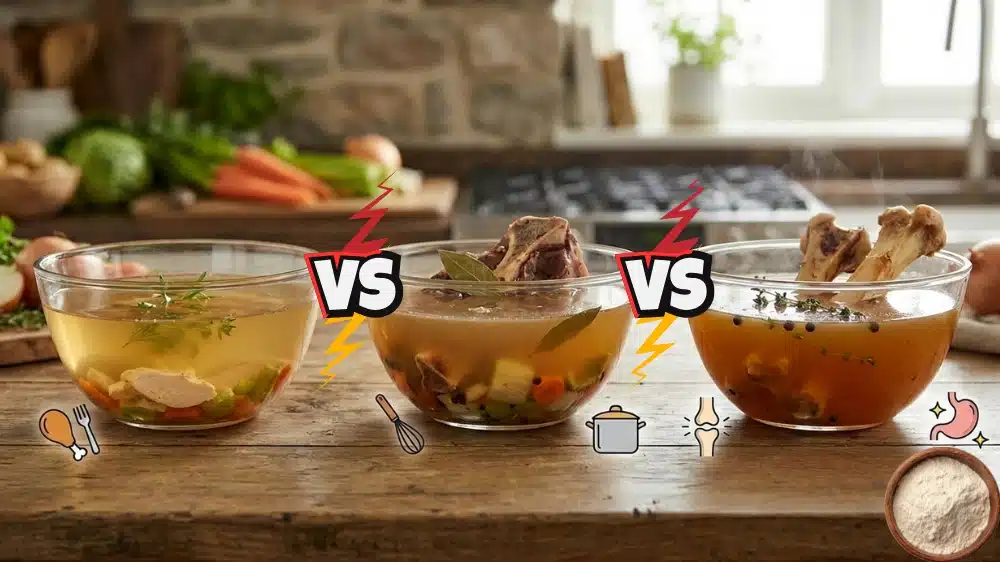
Understanding these distinctions isn’t just about making a better soup; it’s about knowing which one provides the gelatin, minerals, and bioavailable peptides your body needs for gut, joint, and skin support. In this guide, we’ll break down exactly how they differ, which one to choose for your next meal, and how modern bone broth collagen is changing the way we approach daily nutrition.
What is Broth?
In the debate of broth vs stock vs bone broth, broth is the sprint runner of the group. Traditionally, broth is a thin, savory liquid made by simmering meat (rather than bones) in water, often alongside a aromatic medley of vegetables like carrots, celery, and onions.
Because meat cooks relatively quickly, broth doesn’t require a whole day on the stove. This short cooking window keeps the flavor profile light, bright, and distinctively “meaty” without the heavy, gelatinous mouthfeel found in its counterparts.
Key Characteristics of Broth
- Cooking Time: Short and sweet—typically ranging from 45 minutes to 2 hours.
- Texture: Very thin and liquid. Even when refrigerated, it remains a clear liquid rather than turning into a “jelly.”
- Flavor: Clean and seasoned. Since broth is often intended to be eaten as-is, it is usually salted and seasoned during the simmering process.
Best Used For:
If you are looking for a base for a light soup (like classic chicken noodle) or a flavorful liquid to cook your quinoa or risotto in, broth is your best friend. It provides an immediate punch of flavor without overpowering the other ingredients in your dish. It’s also the go-to choice for a soothing, warm drink when you’re feeling under the weather but want something easy on the stomach.
What is Stock?
If broth is the “sprinter” of the kitchen, stock is the marathon runner. In the world of professional cooking, stock is considered the “foundation” (or fond in French) because it provides the structure and mouthfeel for almost every classic sauce, gravy, and stew.
The primary difference in the broth vs stock vs bone broth debate here is the ingredient list. While broth relies on meat, stock is made by simmering animal bones—often roasted first to deepen the flavor—along with a mirepoix (onions, carrots, and celery).
Key Characteristics of Stock
- Cooking Time: Moderate—usually simmering for 4 to 6 hours. This is just enough time to begin extracting the collagen from the bones, but not quite as long as the extraction process for bone broth.
- Texture: Rich and full-bodied. Because of the collagen content, a good stock will have a slightly viscous mouthfeel and may become “jello-like” when chilled in the refrigerator.
- Flavor: Deep but neutral. Unlike broth, stock is traditionally left unseasoned or unsalted. This allows chefs to boil it down into a concentrated glaze (demi-glace) without it becoming too salty.
Best Used For:
Stock is the ultimate culinary workhorse. Use it when you want to add “body” and a velvety texture to a dish rather than just a thin liquid flavor. It is the secret behind a perfect Thanksgiving gravy, a rich beef stew, or a restaurant-quality pan sauce. Because it is usually unsalted, it gives you total control over the final seasoning of your meal.
What is Bone Broth?
In the comparison of broth vs stock vs bone broth, bone broth is the ultimate “slow and low” masterpiece. While the name suggests it might be a type of broth, it is technically an ultra-long-simmered stock. The goal here shifts from simple culinary flavor to maximum nutrient extraction.
Bone broth is made by simmering animal bones and connective tissues—often with a splash of an acidic medium like apple cider vinegar to help break down the hard minerals—for an extended period. This process transforms a simple liquid into a functional superfood.
Key Characteristics of Bone Broth
- Cooking Time: The ultimate test of patience—typically simmering for 12 to 48 hours.
- Texture: Highly gelatinous. A high-quality bone broth should “wiggle” like jelly when cold. This is a visual indicator of high collagen and protein content.
- The Science of the Simmer: The extended heat and acidity break down the collagen found in bones and cartilage into gelatin and bioavailable peptides. This process also releases vital amino acids like glycine, proline, and hydroxyproline, which are rarely found in high concentrations in standard muscle meats.
Why It’s Called a “Powerhouse”
Bone broth has gained “liquid gold” status in the wellness community for several reasons:
- Gut Health: It contains glutamine, an amino acid that helps support and maintain the integrity of the gut lining, often associated with “leaky gut” support.
- Joint & Bone Support: By providing the raw building blocks of connective tissue (Type II collagen and glucosamine), it helps maintain the “cushion” in our joints.
- Skin Elasticity: Because it is a rich source of collagen, it supports the structural framework of the skin, helping to maintain a firm and hydrated appearance from the inside out.
Best Used For:
Bone broth is best enjoyed as a warm, sipping beverage to start your day or as a nutrient-dense base for medicinal soups. Because it is so concentrated, it is also the ideal candidate for dehydration into bone broth collagen powders, offering a versatile way to get these benefits without keeping a pot on the stove for two days.
Comparison Table: At a Glance
To make things as simple as possible, here is a quick cheat sheet summarizing the broth vs stock vs bone broth debate. Whether you are meal prepping for the week or looking to boost your daily collagen intake, this breakdown will help you grab exactly what you need.
| Feature | Broth | Stock | Bone Broth |
| Main Ingredient | Meat (with some veggies/aromatics) | Bones (with mirepoix) | Bones + Connective Tissue |
| Simmer Time | 45 minutes to 2 hours | 4 to 6 hours | 12 to 48 hours |
| Texture | Thin, clear, and liquid | Medium, full-bodied, slightly thick | Thick, highly gelatinous when cold |
| Seasoning | Usually salted and seasoned | Unsalted / Neutral | Lightly seasoned, often with an acid (like vinegar) |
| Primary Goal | Direct flavor for light soups and sipping | Culinary texture and foundation for sauces | Maximum nutrient density and collagen extraction |
Choosing the Best Format: Liquid vs. Powder
Now that we’ve settled the broth vs stock vs bone broth debate, a new question arises for those looking to tap into the health benefits of bone broth: Should you buy it in its traditional liquid form, or opt for a modern powder?
Both have their place in a well-rounded kitchen and wellness routine, but they serve very different lifestyle needs.
1. Liquid Bone Broth: The Traditional Approach
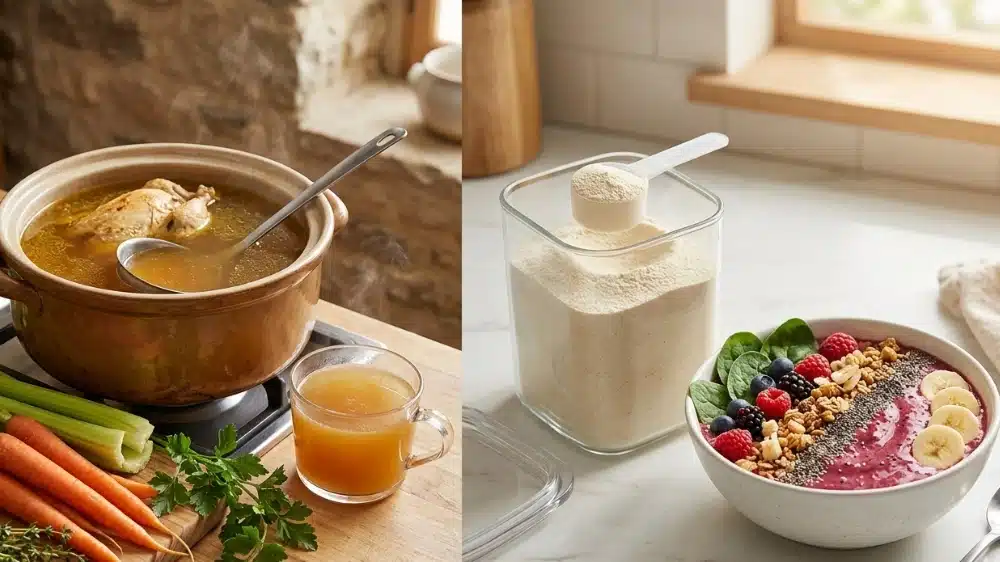
Whether simmering it yourself on the stove or buying it in a carton or frozen pouch, liquid bone broth offers the classic, savory experience.
- The Pros: It provides a comforting, traditional taste that is perfect for sipping hot out of a mug. It is also the ideal 1:1 replacement for stock or water in culinary applications like soups, stews, and cooking grains.
- The Cons: Liquid broth is heavy, takes up significant space in the fridge or freezer, and has a very short shelf-life once opened (usually 3 to 5 days). It also requires heating, making it less convenient for a busy, on-the-go lifestyle.
2. Bone Broth Powder (Collagen Peptides): The Modern Solution
For those prioritizing health benefits over culinary application, bone broth collagen powder is a game-changer. Through advanced manufacturing processes, the liquid broth is dehydrated and processed into highly bioavailable peptides.
- The Pros: Powder is the ultimate convenience. It offers a highly concentrated source of amino acids in a shelf-stable format that lasts for months. Because it is often unflavored or subtly flavored, it is incredibly versatile—you can seamlessly blend it into smoothies, coffee, oatmeal, or even baked goods without altering the taste of your meal.
- The Cons: It doesn’t provide the same culinary bulk or liquid volume for cooking traditional soup recipes.
The Verdict: If your primary goal is making a delicious Sunday roast or a pot of soup, go with liquid. If your goal is to consistently support your gut, joint, and skin health with a daily dose of bioavailable protein, powder is the undisputed champion of convenience.
Recommended Brands for Every Need
Finding the right product depends entirely on your lifestyle, culinary goals, and how you plan to incorporate these nutrients into your routine. Whether you want a warm mug of soup or a versatile powder for your morning smoothie, here are some top choices on the market and the best situations to use them.
| Brand & Specialty | Product Details & Advantage | Ideal Use Case |
|---|---|---|
| Kettle & Fire Shelf-Stable Liquid | Maximum Pantry Convenience Utilizes organic ingredients and grass-fed bones simmered slowly for nutrient density. Their specialized packaging maintains freshness for months without refrigeration. | Perfect for sipping straight from a mug or using as an elevated, ready-to-pour cooking liquid for dinners. |
| Bonafide Provisions Frozen Liquid | The Homemade Standard Simmered and immediately frozen to avoid shelf-stabilizing preservatives. Created by clinical nutritionists to ensure a highly gelatinous and nutrient-rich profile. | Purists with ample freezer space who demand an authentic, uncompromised culinary and nutritional experience. |
| Bare Bones Instant Packets | Portability & Speed Dehydrated bone broth mixes designed to dissolve instantly in hot water, mirroring the savory profile of liquid broth in a compact format. | Busy professionals and travelers needing a quick collagen and protein boost at the office or on the road. |
| Dr. Kellyann Functional Powder | Naturopathic Formulations Targeted powdered broth specifically engineered for metabolic health, gut-reset protocols, and structured weight management cleanses. | Individuals following specific dietary plans or medical-grade functional wellness protocols. |
| Gensei Premium Peptides | Professional-Grade Purity Advanced bone broth collagen processed into highly bioavailable peptides. Provides a concentrated source of amino acids essential for connective tissue and gut integrity. | Seamless integration into daily wellness routines, functional beverages, and high-performance powder blends. |
FAQs
Conclusion
When it comes to the debate of broth vs stock vs bone broth, the “best” choice depends entirely on your goal for the day. While all three are staples of a healthy kitchen, they serve different masters:
- Choose Broth for immediate, light flavor in quick soups or as a simple, savory beverage.
- Choose Stock when you are building a culinary masterpiece like a rich gravy or a velvety sauce that requires body and structure.
- Choose Bone Broth when you want a nutritional powerhouse. If your goal is to support your gut lining, improve joint mobility, or enhance skin elasticity, the long-simmered extraction of collagen and amino acids is unrivaled.
In our modern, fast-paced world, most of us don’t have 48 hours to keep a pot simmering on the stove. This is where the transition from liquid to high-purity powder becomes essential.
By choosing a professional-grade option like Gensei, you can bypass the days of simmering while still receiving a concentrated dose of highly bioavailable bone broth collagen peptides. Whether you are formulating a new health blend or simply upgrading your daily wellness routine, Gensei provides the stable, high-quality supply needed to support your body’s connective tissues and digestive system from the inside out.
Whether you are looking to integrate premium bone broth collagen into your wellness routine or seeking a stable B2B supply for your brand, Gensei provides the purity and bioavailability your project demands.
Contact Our Specialistsreferences
- National Center for Biotechnology Information (NCBI) – Role of Collagen in Bone Health https://www.ncbi.nlm.nih.gov/pmc/articles/PMC5793325/
- PubChem Compound Summary – Glycine https://pubchem.ncbi.nlm.nih.gov/compound/Glycine
- National Library of Medicine – Proline and Hydroxyproline Metabolism https://pubmed.ncbi.nlm.nih.gov/22134220/
- Clinical Education on Gut Permeability (NCBI) https://www.ncbi.nlm.nih.gov/pmc/articles/PMC4369670/
- The Journal of Clinical and Aesthetic Dermatology – Collagen for Skin Elasticity https://www.ncbi.nlm.nih.gov/pmc/articles/PMC6835901/
- FDA – Dietary Supplement Guidance https://www.fda.gov/food/dietary-supplements
- National Institutes of Health (NIH) – Collagen Supplement Fact Sheet https://ods.od.nih.gov/factsheets/list-all/
- World Health Organization (WHO) – Guidelines on Food Fortification https://www.who.int/publications/i/item/9241594012

Warren Wan is a seasoned expert with extensive experience in the dietary supplement supply chain, possessing rich practical experience in the research, development, process control, and global sourcing of core ingredients such as collagen peptides, bone broth protein, and keratin. As the author of this column, he is dedicated to stripping away the marketing packaging, transforming obscure ingredient science and production quality control standards into easy-to-understand, hardcore science popularization, helping readers understand the truth behind the labels and make more rational health choices.