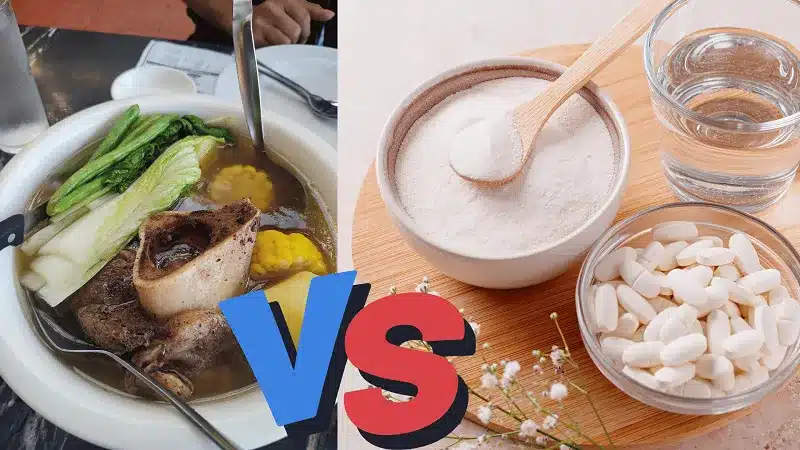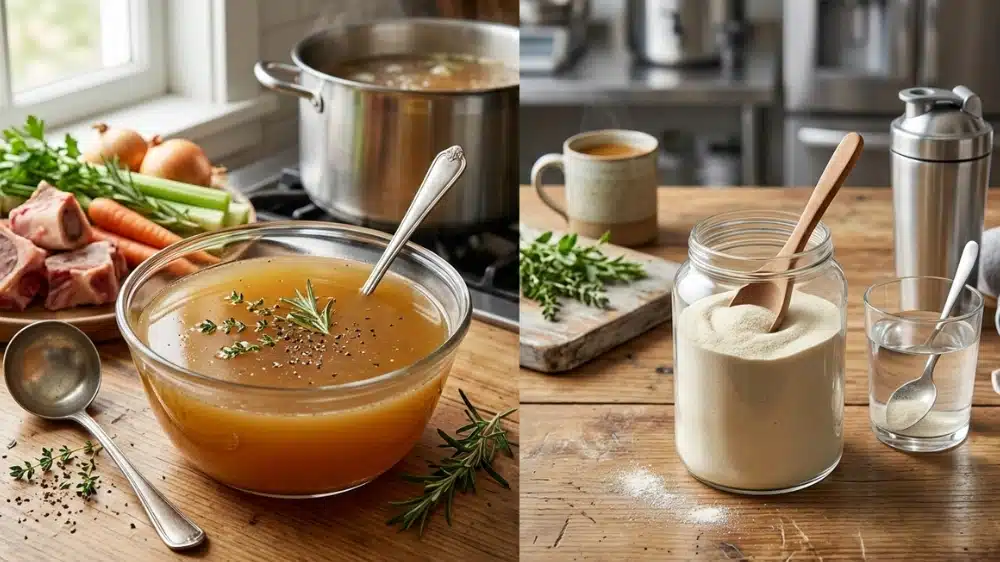
Have you ever stood in the grocery store, staring at shelves packed with bone broth, wondering which one to grab? I’ve been there, torn between chicken and beef, trying to figure out which is the magic elixir for my health goals. Bone broth has become a wellness darling, praised for everything from soothing sore throats to boosting skin glow. But when it comes to chicken bone broth vs beef bone broth, how do you choose? Let’s dive into the simmering world of bone broth, exploring what makes each unique, their health benefits, and whether you might want to sip both. Spoiler: there’s no one-size-fits-all answer, but I’ll help you find what’s best for you.
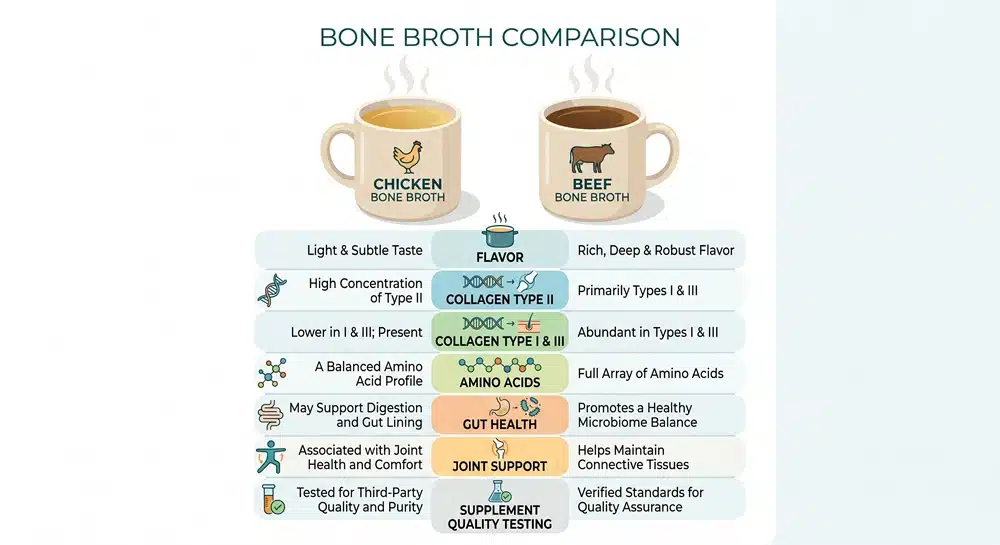
Quick answer: Chicken bone broth is usually the better choice for a lighter flavor, faster cooking, and cartilage-focused formulas, while beef bone broth is usually better for a richer taste and bovine collagen positioning. However, the “best” broth depends less on the animal source alone and more on the amino acid profile, protein level, sodium, heavy-metal testing, and whether the product is liquid broth, powder, or hydrolyzed bone broth protein.
ما هو مرق العظام؟
مرق العظام مثل عناق دافئ في كوب، يتم تحضيره عن طريق غلي عظام الحيوانات - مثل الدجاج أو اللحم البقري أو لحم الخنزير أو حتى السمك - مع الخضار والأعشاب وقليل من الخل لمدة 12 إلى 24 ساعة أو أكثر. تستخرج هذه العملية البطيئة كنزًا دفينًا من العناصر الغذائية: الكولاجين والأحماض الأمينية والجيلاتين والمعادن مثل الكالسيوم والمغنيسيوم. وعلى عكس المرق العادي، الذي يُصنع من اللحم ويُطهى على نار هادئة لبضع ساعات فقط، فإن وقت الطهي الطويل الذي يستغرقه مرق العظام يجعله مصدرًا قويًا للعناصر الغذائية. كما أنه ليس مجرد مرق - حيث يتم طهي المرق لمدة 4-6 ساعات، بينما مرق العظام يبذل جهداً إضافياً لاستخراج كل ما هو جيد.
لماذا هذه الضجة؟ مرق العظام هو مرق عظام متعدد الاستخدامات مكونات المكملات الغذائية, used in everything from soups to smoothies. It’s a staple in sports nutrition for its muscle-supporting amino acids and is often touted for its role in المكملات الغذائية الصحية للمفاصل. سواء كنت تحتسيه لتهدئة نزلة برد أو تستخدمه كقاعدة لحساء دسم، فإن مرق العظام هو أفضل ما في المطبخ.
الأساسيات مرق عظام الدجاج مقابل مرق عظام البقر
دعنا ننتقل إلى لحم (أو عظام) المسألة: كيف يتراكم مرق عظام الدجاج واللحم البقري من الناحية الغذائية؟ كلاهما مليء بالعناصر الغذائية، ولكن تختلف خصائصهما بطرق قد تؤثر على اختيارك.
المقارنة الغذائية
Nutrition in bone broth is not fixed. It changes with the bone cut, cartilage level, cooking or hydrolysis time, concentration ratio, sodium addition, and whether the final product is a ready-to-drink broth or a spray-dried bone broth protein powder. The comparison below summarizes common differences, but supplement brands should verify the final decision with a lot-specific Certificate of Analysis (COA), especially for amino acids, protein, sodium, ash, and heavy metals.
| العامل | مرق عظام الدجاج | مرق عظام اللحم البقري | أفضل حالة استخدام |
|---|---|---|---|
| Typical flavor | Lighter, cleaner, easier to use in soups, sauces, and sipping products. | Richer, deeper, more savory, better for hearty recipes and premium broth positioning. | Chicken for versatility; beef for rich flavor. |
| Common collagen positioning | Often associated with cartilage-derived type II collagen when chicken feet, sternum, or cartilage-rich parts are used. | Often associated with bovine type I and III collagen sources from bones and connective tissue. | Chicken for joint/cartilage messaging; beef for skin/gut/collagen peptide positioning. |
| Protein per cup | Often around 9-12 g per cup, but varies by recipe and concentration. | Often around 8-10 g per cup, but varies by recipe and concentration. | Always verify the nutrition label or COA. |
| Amino acid profile | Published commercial sample data found chicken broth slightly higher than beef in glycine, proline, hydroxyproline, leucine, isoleucine, and valine. | Published commercial sample data found beef broth slightly higher in hydroxylysine. | Do not rely on animal source alone; request an amino acid COA. |
| Minerals and sodium | Depends heavily on formulation, added salt, concentration, and filtration. | Depends heavily on formulation, added salt, concentration, and filtration. | Check sodium, ash content, calcium, magnesium, and potassium per serving. |
| Industrial quality concern | Microbiology, sodium, spray-drying stability, poultry-source traceability, and allergen/label claims. | Heavy metal testing, bovine-source traceability, grass-fed claims, spray-drying stability, and microbiology. | Both require batch-level COA and contaminant testing. |
- البروتين: يتفوق مرق عظام الدجاج على مرق عظام البقر بكمية بروتين أكبر بقليل، حوالي 12 جرامًا لكل 250 مل مقارنةً باللحم البقري الذي يحتوي على 10 جرامات. وهذا يجعله خياراً رائعاً لأولئك الذين يركزون على تعافي العضلات، خاصة في التغذية الرياضية.
- الكولاجين: Beef bone broth, often made from denser bones, tends to have more collagen, particularly types I and III, which are key for skin and صحة القناة الهضمية. Chicken bone broth is rich in type II collagen, a star in joint health supplements.
- الأحماض الأمينية: يحتوي مرق الدجاج على مستويات أعلى من الأحماض الأمينية المتفرعة السلسلة (BCAAs) مثل الليوسين، والتي تدعم نمو العضلات. أما مرق اللحم البقري فيحتوي على كمية أكبر من الجلايسين والبرولين، مما يساعد على إصلاح الأمعاء والنوم.
- الإلكتروليتات: يحتوي مرق عظام الدجاج على المزيد من الشوارد المرطبة مثل البوتاسيوم والمغنيسيوم، مما يجعله مفضلًا للترطيب.
- الأحماض الدهنية: مرق عظام اللحم البقري من الماشية التي تتغذى على العشب غالبًا ما يكون لديه نسبة أوميغا 3 إلى أوميغا 6 أفضل، مما قد يقلل من الالتهاب مقارنة بمرق الدجاج من الطيور التي تتغذى على الحبوب.
السعرات الحرارية في كلاهما منخفضة، وعادةً ما تتراوح بين 30-60 لكل كوب، حسب طريقة التحضير. قد يحتوي المرق المصنوع في المنزل على إضافات أقل، في حين أن الإصدارات التي يتم شراؤها من المتجر يمكن أن تختلف في محتوى الصوديوم والبروتين.
Why the Amino Acid COA Matters More Than the Animal Source
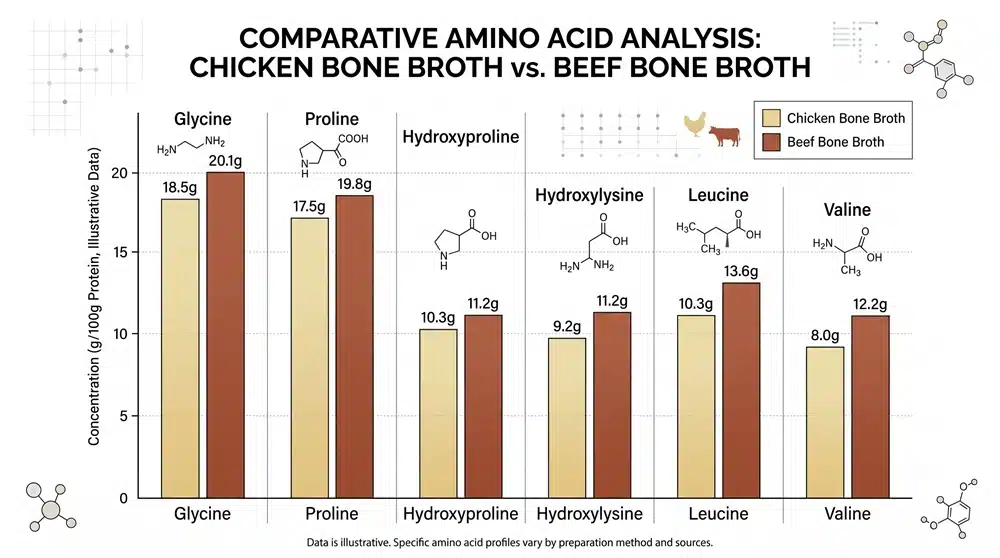
Many articles simplify the comparison by saying “chicken is for joints” and “beef is for gut and skin.” That is directionally useful, but it is not enough for dietary supplement formulation. A 2019 commercial bone broth analysis by Shaw and Flynn quantified 19 amino acids in beef, chicken, and turkey bone broth samples and showed that the final amino acid profile can differ from common marketing assumptions.
For example, in the commercial samples analyzed, chicken bone broth was slightly higher than beef bone broth in glycine, proline, hydroxyproline, leucine, isoleucine, and valine, while beef bone broth was slightly higher in hydroxylysine. This does not mean every chicken broth is superior. It means the animal source alone is not a reliable specification. For supplement brands, the correct question is not only “chicken or beef?” but “what does the lot-specific COA show?”
| Amino Acid, mg/g product | مرق عظام اللحم البقري | مرق عظام الدجاج | Practical Interpretation |
|---|---|---|---|
| جلايسين | 3.709 ± 0.059 | 4.063 ± 0.027 | Chicken was higher in this sample set; verify by COA. |
| برولين | 2.211 ± 0.034 | 2.440 ± 0.078 | Chicken was higher in this sample set; relevant to collagen positioning. |
| هيدروكسي برولين | 1.967 ± 0.314 | 2.158 ± 0.017 | Chicken was higher in this sample set; useful as a collagen marker. |
| Hydroxylysine | 0.285 ± 0.006 | 0.276 ± 0.003 | Beef was slightly higher in this sample set. |
| لوسين | 0.726 ± 0.011 | 1.053 ± 0.036 | Chicken was higher, but bone broth is still not a complete sports protein. |
| Valine | 0.487 ± 0.008 | 0.645 ± 0.022 | Chicken was higher, supporting the need for full amino acid testing. |
Source note: Values are from Shaw & Flynn, 2019, using commercial bone broth samples. They should be cited as an example from published analysis, not as a universal guarantee for every product.
أوجه التشابه والاختلاف في مرق عظم الدجاج مقابل مرق عظم البقر الفوائد الصحية؟

ويشترك كلا المرقين في مجموعة أساسية من الفوائد، لكن خصائصهما الغذائية الفريدة من نوعها تمنح كل منهما بعض المزايا المميزة.
المزايا المشتركة
- صحة الأمعاء: يساعد الجيلاتين والأحماض الأمينية الموجودة في كلا المرقين على إصلاح بطانة الأمعاء، مما قد يخفف من مشاكل مثل متلازمة تسرب الأمعاء. وهذا يجعلها مكونات مكملات غذائية قيّمة لصحة الجهاز الهضمي.
- الصحة المشتركة: يدعم الكولاجين الغضاريف والأنسجة الضامة، مما يقلل من آلام المفاصل وتيبسها.
- صحة البشرة: يعزز الكولاجين مرونة البشرة وترطيبها، مما يقلل من التجاعيد.
- دعم المناعة: تعمل العناصر الغذائية مثل الأحماض الأمينية والمعادن على تقوية الجهاز المناعي، مما يساعد على مكافحة نزلات البرد والالتهابات.
مزايا فريدة من نوعها
مرق عظام الدجاج:
- الصحة المشتركة: غنية بـ كولاجين الدجاج من النوع الثاني, فهو فعال بشكل خاص لصحة المفاصل. نشرت دراسة في المغذيات found that type II collagen can reduce knee pain in osteoarthritis patients.
- صحة البشرة: قد يحسن هذا النوع من الكولاجين من ترطيب البشرة ويقلل من التجاعيد، مما يجعله معززاً طبيعياً لجمال البشرة.
- تعافي العضلات: يدعم المحتوى العالي من BCAA نمو العضلات وإصلاحها، وهو مثالي للرياضيين أو أولئك الذين يحبون التغذية الرياضية.
مرق عظام اللحم البقري:
- صحة الأمعاء: مستويات الجلايسين المرتفعة تعزز إنتاج حمض المعدة وإصلاح بطانة الأمعاء، مما يجعلها أفضل اختيار لصحة الجهاز الهضمي.
- النوم والحالة المزاجية: Glycine may shorten sleep onset and improve sleep quality, while also boosting serotonin for better mood.
- مستويات الطاقة: توفر العظام الأكثر كثافة المزيد من المعادن، مما قد يعزز الطاقة والتغذية بشكل عام.
وتعتمد هذه الفوائد على عوامل مثل جودة العظام ووقت الطهي. وغالباً ما تنتج العظام التي تتغذى على الأعشاب أو التي تربى في المراعي مرقاً أكثر كثافة من حيث المغذيات.
مذاق مرق عظام الدجاج واللحم البقري واستخداماته في الطهي
يمكن أن يكون المذاق عاملاً حاسماً عند الاختيار بين مرق عظام الدجاج واللحم البقري. إليك كيفية المقارنة بينهما:
- مرق عظام الدجاج: إن نكهته الخفيفة والرقيقة تجعله حرباء المطبخ. استخدمه في الشوربات والصلصات والريزوتو أو حتى العصائر للحصول على دفعة مغذية دون أن يطغى على المكونات الأخرى. كما أنه رائع للاحتساء مع قليل من الملح والفلفل.
- مرق عظام اللحم البقري: جريئة وقوية، وهي مثالية للأطباق القوية مثل يخنة اللحم البقري أو الفلفل الحار أو حساء البصل الفرنسي. قد يكون مذاقه الغني أقل تنوعاً في الوصفات الخفيفة ولكنه يتألق في الأطعمة المريحة.
لقد وجدتُ أن مرق عظام الدجاج هو المفضل لديّ لتحضير الحساء السريع في ليالي الأسبوع، بينما يرفع مرق عظام اللحم البقري من مستوى وصفات الطهي البطيء في عطلة نهاية الأسبوع. قد يعتمد اختيارك على ما إذا كنت تفضل النكهة الخفيفة أو القوية.
هل من الأفضل استخدامهما معاً؟
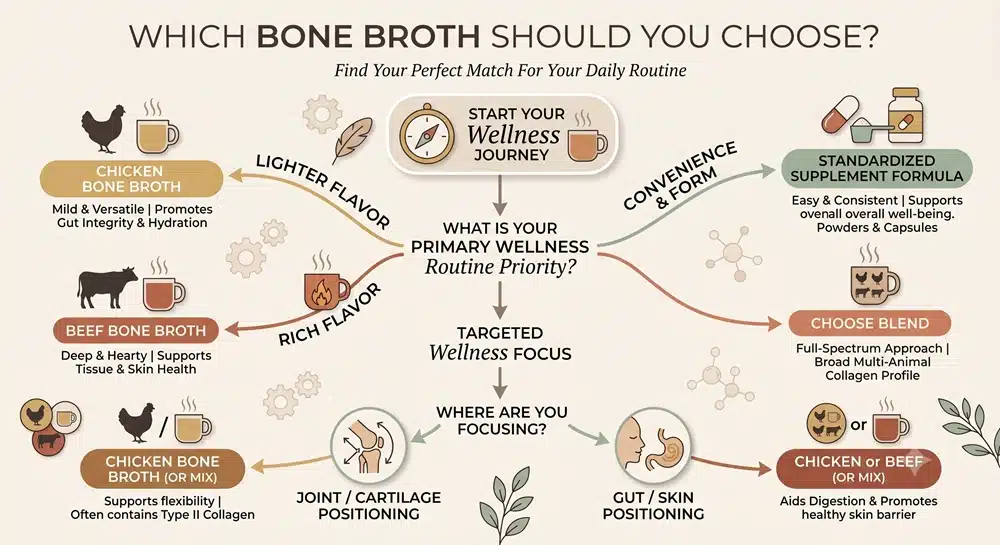
لماذا تختار بينما يمكنك الحصول على الاثنين معاً؟ يمكن أن يوفر الجمع بين مرق عظام الدجاج واللحم البقري مزيجاً متوازناً من العناصر الغذائية. على سبيل المثال، يمكنك الحصول على الكولاجين من النوع الثاني الداعم للمفاصل من الدجاج والجلايسين الذي يشفي الأمعاء من اللحم البقري. هذا النهج يشبه إنشاء صيغة مخصصة لصحتك، حيث يمزج بين أفضل ما في العالمين.
من الناحية العملية، يمكنك استخدام مرق عظام الدجاج للأطباق الخفيفة واللحم البقري للأطباق الأكثر دسمًا، أو مزجهما في الوصفات للحصول على نكهة دقيقة. حتى أن بعض الشركات تقدم منتجات مرق العظام المخلوطة، وغالبًا ما يتم تسويقها على أنها تحتوي على ببتيد الكولاجين العظمي البقري للحصول على فوائد صحية إضافية.
في النهاية، يعود القرار في النهاية إلى أهدافك. إذا كنت تركّز على صحة المفاصل، فاختر الدجاج. أما إذا كنت تركز على صحة الأمعاء أو النوم بشكل أفضل، فقد يكون لحم البقر هو اختيارك. أو، إذا كنت مثلي تحب التنويع، احتفظ بكليهما في مخزنك لوصفات مختلفة واحتياجات صحية مختلفة.
From a Manufacturer’s Perspective: How to Evaluate Bone Broth Powder Quality
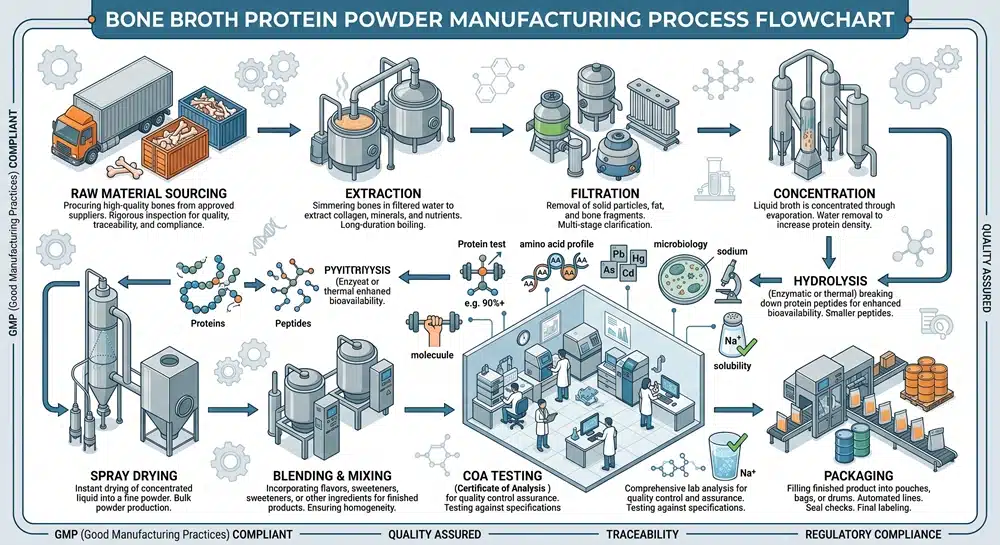
For consumers, the choice between chicken and beef bone broth may come down to taste and health goals. For supplement brands, the decision is more technical. A premium bone broth powder should be evaluated by source traceability, amino acid profile, protein level, ash content, sodium level, solubility, flavor masking, microbial limits, and heavy-metal testing.
In industrial production, bones and connective tissues are extracted, filtered, concentrated, and often spray-dried into powder. A well-controlled process should protect protein quality while removing excess fat, controlling odor, and keeping the finished powder stable in tubs, sachets, capsules, or functional beverage blends.
| مقياس الجودة | What to Ask the Supplier | ما أهمية ذلك |
|---|---|---|
| Raw material source | Grass-fed bovine, pasture-raised chicken, antibiotic-free claim, country of origin, animal health documentation. | Supports label claims, traceability, and premium positioning. |
| Protein and amino acid profile | Protein by Kjeldahl or Dumas; full amino acid COA including glycine, proline, hydroxyproline, leucine, valine, and isoleucine. | Prevents vague collagen claims and supports formulation accuracy. |
| Ash and sodium | Total ash, sodium per serving, calcium, magnesium, potassium, phosphorus. | High ash or sodium can make a product look “mineral-rich” but reduce consumer suitability. |
| Hydrolysis and solubility | Degree of hydrolysis, molecular weight distribution, instantization, dispersibility, and sediment testing. | Critical for ready-to-mix powders, sachets, coffee creamers, soups, and stick packs. |
| المعادن الثقيلة | Batch-level ICP-MS testing for lead, cadmium, arsenic, and mercury. | Animal bones can naturally accumulate environmental contaminants, so testing is essential for trust. |
| علم الأحياء الدقيقة | Total plate count, yeast and mold, E. coli, Salmonella, Staphylococcus aureus, and coliforms. | Required for shelf-stable powders and global export documentation. |
| Sensory profile | Color, odor, flavor, aftertaste, and masking compatibility. | Determines whether the ingredient works in vanilla, chocolate, coffee, soup, or savory formulas. |
صنع مرق العظام الخاص بك
هل تريد تجربة صنع مرق العظام؟ الأمر أسهل مما تعتقد، على الرغم من أنه يستغرق وقتاً طويلاً. إليك هذا الدليل السريع:
وصفة مرق عظام الدجاج
- المكونات:: 2-3 رطل من عظام الدجاج (الذبيحة والرقبة والقدمين) و1 بصلة و2 جزر و2 سيقان كرفس و2 ملعقة كبيرة خل التفاح والأعشاب (أوراق الغار والزعتر) والماء.
- الخطوات: ضع العظام في قدر أو طباخ بطيء، وأضف الخضار والخل والأعشاب. تُغطى بالماء. يُغلى المزيج ثم يُترك على نار هادئة لمدة 12-24 ساعة. تُصفى وتُخزن.
وصفة مرق عظام اللحم البقري
- المكونات:: 2-3 رطل من عظام اللحم البقري (النخاع والمفاصل)، 1 بصلة، 2 جزر، 2 سيقان كرفس، 2 ملعقة كبيرة خل التفاح، أعشاب، ماء.
- الخطوات: تُشوى العظام اختياريًا على درجة حرارة 400 درجة فهرنهايت لمدة 30 دقيقة. ضعها في قدر وأضف الخضار والخل والأعشاب. تُغطى بالماء. تُطهى على نار هادئة لمدة 24-48 ساعة. تُصفى وتُخزن.
يضمن استخدام عظام عالية الجودة تتغذى على العشب أو المراعي أو عظام المراعي الحصول على مرق غني بالعناصر الغذائية وخالٍ من الإضافات.
Home Broth vs Industrial Bone Broth Protein Powder
Homemade bone broth is excellent for cooking and daily sipping, but it is not standardized. Two home batches can differ in protein, sodium, gelatin strength, fat level, flavor, and amino acid concentration. Industrial bone broth protein powder is designed for consistency: the manufacturer can test each lot, control moisture, reduce microbial risk, and provide a COA for protein, amino acids, heavy metals, and microbiology.
- Choose homemade broth if you want fresh flavor, culinary flexibility, and a whole-food kitchen ritual.
- Choose bone broth powder if you need measured protein, stable shelf life, repeatable formulation, and easier use in supplement products.
- Choose a chicken + beef blend if the goal is to cover a broader collagen-positioning story: chicken for cartilage/type II messaging and beef for bovine type I/III collagen positioning.
الأسئلة الشائعة
Is chicken or beef bone broth better?
Neither is universally better. Chicken bone broth is usually lighter in flavor and useful for cartilage-focused formulas, while beef bone broth is richer and works well for bovine collagen positioning. For supplement brands, the better choice depends on the COA: protein, amino acids, sodium, ash, microbiology, and heavy-metal results.
أي مرق العظام يحتوي على أكبر قدر من الكولاجين؟
Beef bone broth is often marketed as collagen-rich because bovine bones and connective tissues are dense sources of type I and III collagen. However, liquid broth collagen content is highly variable. Chicken broth made with feet, sternum, or cartilage-rich parts can also be high in collagen-derived amino acids. Check the protein and hydroxyproline data on the COA.
Is chicken bone broth better for weight loss?
Chicken bone broth can be helpful in weight-management diets because it is light, warm, savory, and often low in calories while providing some protein. But it does not directly cause fat loss. Weight management still depends on total calories, protein intake, activity, and dietary consistency.
Can I use chicken bone broth instead of beef bone broth?
Yes, for many soups, sauces, grains, and sipping recipes, chicken bone broth can replace beef bone broth. Expect a lighter taste and less roasted depth. For bold dishes such as beef stew, chili, gravy, or French onion soup, beef bone broth usually gives a richer flavor.
Is bone broth the same as regular chicken or beef broth?
Not exactly. Regular broth is usually cooked for a shorter time and may be made with more meat than bones. Bone broth is typically simmered much longer with bones and connective tissue, which can extract more gelatin and collagen-derived amino acids. Exact nutrition still depends on the recipe.
Should bone broth powder be tested for heavy metals?
Yes. Because bones can accumulate environmental elements, bone broth ingredients should be tested for lead, cadmium, arsenic, and mercury. For supplement products, request a batch-specific COA, preferably using validated methods such as ICP-MS, along with microbiology and protein data.
Is bone broth a complete protein?
Bone broth can contribute protein, but collagen-derived protein is naturally low in certain essential amino acids, especially tryptophan. It should not replace complete protein sources such as whey, beef protein, eggs, dairy, fish, or legumes if the goal is complete muscle-building nutrition.
Can brands blend chicken and beef bone broth?
Yes. A 1:1 or customized blend can create a broader collagen-positioning story by combining chicken-based cartilage/type II messaging with bovine type I and III collagen positioning. For private-label products, confirm flavor, solubility, sodium, and amino acid targets before finalizing the formula.
الخاتمة
في مواجهة مرق عظم الدجاج مقابل مرق عظم البقر، لا يوجد فائز واضح - فكلاهما قوة غذائية ذات نقاط قوة فريدة من نوعها. مرق عظام الدجاج هو حليفك لصحة المفاصل وتوهج البشرة واستعادة العضلات، بينما يتألق مرق عظام اللحم البقري لصحة الأمعاء والنوم والطاقة. يعتمد اختيارك لأحدهما أو لكليهما أو لمزيج منهما على ذوقك وأهدافك الصحية وأسلوبك في الطهي. لذا، احصل على كوب وجرّب الاثنين معاً واكتشف أي مرق عظام يجعل جسمك وذوقك يغني.
المراجع
Current target page – Chicken Bone Broth vs Beef Bone Broth: https://collagensei.com/chicken-bone-broth-vs-beef-bone-broth/
Harvard Health – Savoring the benefits of bone broth: https://www.health.harvard.edu/diet-and-nutrition/savoring-the-benefits-of-bone-broth-worth-a-taste
Shaw & Flynn, 2019 – Amino acid content of beef, chicken, and turkey bone broth: https://www.westmont.edu/sites/default/files/users/user1231/V19No4/Nick%20Flynn_final.pdf
Alcock et al., 2019 – Bone broth unlikely to provide reliable concentrations of collagen precursors: https://pubmed.ncbi.nlm.nih.gov/29893587/
Verywell Health – Bone broth benefits and limitations: https://www.verywellhealth.com/bone-broth-7967614
FDA – Environmental contaminants in food and dietary supplements: https://www.fda.gov/food/chemical-contaminants-pesticides/environmental-contaminants-food
FDA – Testing results for arsenic, lead, cadmium and mercury: https://www.fda.gov/food/environmental-contaminants-food/testing-results-arsenic-lead-cadmium-and-mercury
NSF – Supplement and vitamin certification: https://www.nsf.org/consumer-resources/articles/supplement-vitamin-certification
Hsu et al., 2017 – Essential and toxic metals in animal bone broths: https://pubmed.ncbi.nlm.nih.gov/28804437/
Schwartz & Park, 2012 – Hydrolyzed chicken sternal cartilage extract: https://pubmed.ncbi.nlm.nih.gov/22956862/

W. Wenyang is a seasoned expert with extensive experience in the dietary supplement supply chain, possessing rich practical experience in the research, development, process control, and global sourcing of core ingredients such as collagen peptides, bone broth protein, and keratin. As the author of this column, he is dedicated to stripping away the marketing packaging, transforming obscure ingredient science and production quality control standards into easy-to-understand, hardcore science popularization, helping readers understand the truth behind the labels and make more rational health choices.