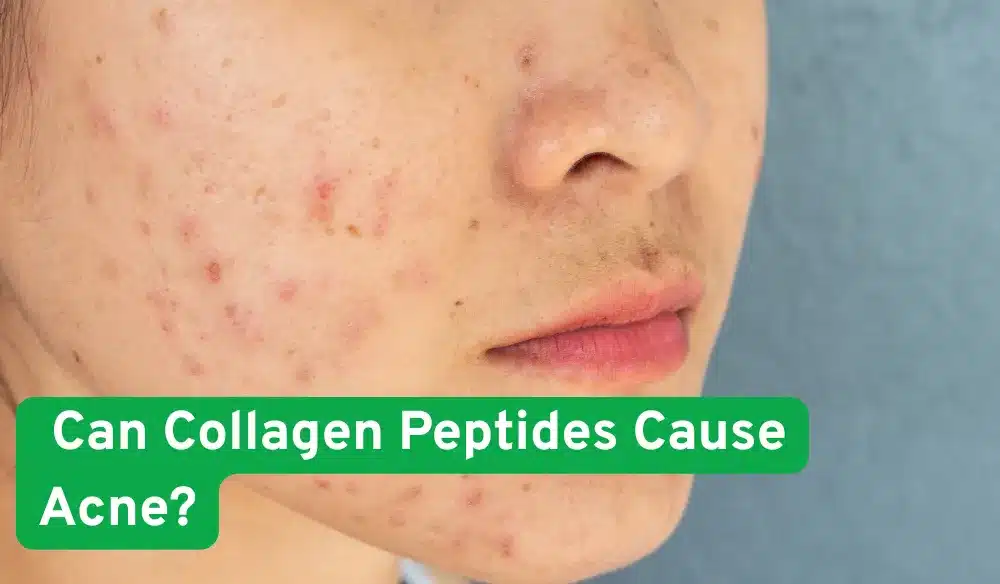
Many wellness enthusiasts invest in collagen peptides with the promise of a “lit-from-within” glow and diminished fine lines, only to be met with an unwelcome surprise: sudden breakouts. This “Beauty Paradox”—where a supplement intended to perfect your skin seemingly sabotages it—often leads to the frustrating question of whether collagen is the direct cause of acne. While pure collagen peptides are structurally composed of skin-friendly amino acids and are generally non-comedogenic, the reality is more nuanced; the culprit is rarely the protein itself, but rather the hidden additives, high-glycemic sweeteners, or specific metabolic sensitivities that can trigger an inflammatory response in certain individuals.
Debunking the Myth: Does Collagen Directly Cause Acne?
From a purely biological standpoint, pure collagen peptides are remarkably skin-friendly. They are composed primarily of three key amino acids—proline, glycine, and hydroxyproline—which are the very building blocks your body naturally uses to repair skin tissue and maintain elasticity. Because these are endogenous (naturally occurring) substances, your immune system typically recognizes them as “self” rather than “invaders,” making a direct allergic or inflammatory acne response extremely rare.+1
However, the “collagen-acne” debate often centers on a specific hormone: Insulin-like Growth Factor 1 (IGF-1). While dairy is a well-known trigger for raising IGF-1 levels (which can stimulate sebum production and clog pores), high-quality collagen peptides generally have a low glycemic index and do not cause the same insulin spikes. Unless you are consuming an excessive amount of protein that triggers a systemic metabolic shift, pure hydrolyzed collagen is not a direct comedogenic agent. In most cases, the “breakout” isn’t a reaction to the collagen itself, but rather a sensitivity to how your body processes a sudden influx of specific amino acids or, more likely, a reaction to the non-collagen ingredients in your supplement’s formula.
5 Hidden Reasons Why Your Collagen Supplement Causes Breakouts
If pure collagen isn’t the enemy, why is your skin reacting? The answer usually lies in the fine print of the ingredient label or how your specific body chemistry interacts with the supplement. Here are the five most common culprits:
A. Artificial Sweeteners & Fillers
To make collagen powders palatable, manufacturers often add maltodextrin, sucralose, or erythritol. Maltodextrin, in particular, has a higher glycemic index than table sugar, which can cause rapid insulin spikes. These spikes signal your body to produce more androgen hormones and sebum, leading directly to clogged pores. Furthermore, artificial sweeteners can disrupt your gut microbiome, which is intrinsically linked to skin inflammation.
B. High Sugar Content
Many “flavored” collagen sticks (like vanilla or berry) are packed with cane sugar or corn syrup to mask the natural earthy taste of bovine or marine peptides. Constant consumption of these high-sugar powders creates a pro-inflammatory environment in the body. This inflammation often manifests as cystic acne—the painful, deep-seated bumps that are notoriously hard to treat.
C. Source Sensitivity & Quality Control
Not all collagen is created equal. Marine collagen may trigger reactions in those with mild shellfish sensitivities, while bovine collagen from non-grass-fed cows may contain trace amounts of hormones or antibiotics used in industrial farming. Low-quality processing can also leave behind residual proteins that your immune system flags as irritants, sparking a “breakout” that is actually a localized allergic response.
D. Gut Microbiome Disruption (The Gut-Skin Axis)
Collagen is a complex protein. If your digestive system is compromised (e.g., low stomach acid or Leaky Gut Syndrome), these long-chain peptides may not be fully broken down. Undigested food particles can trigger systemic inflammation, which travels through the “Gut-Skin Axis” and shows up on your face as redness or pustules. If you notice bloating alongside your acne, your gut is likely the middleman.
E. Vitamin B12 Overload
Many “Beauty Blends” capitalize on the “more is better” philosophy by adding 1,000% or more of your daily value of Vitamin B12. While B12 is essential, clinical studies have shown that high doses can alter the gene expression of skin bacteria (Cutibacterium acnes), causing them to pump out inflammatory molecules that trigger acne flares. If your collagen is part of a “multi-nutrient” formula, check the B12 levels immediately.
How to Identify if Your Collagen is the Problem
Distinguishing between a coincidental breakout and a direct reaction to your supplement is crucial. Before you toss your expensive tub of peptides, follow these diagnostic steps to find the truth.
The “Elimination and Reintroduction” Test
The most reliable way to identify a dietary trigger is a controlled elimination diet specifically for your supplements.
- The Pause (14 Days): Stop taking your collagen supplement entirely for two weeks. This is usually enough time for your body to clear out residual additives and for existing inflammation to subside.
- The Observation: During these 14 days, keep your skincare routine and other dietary habits exactly the same. If your skin clears up significantly, you’ve found your primary suspect.
- The Reintroduction: Resume taking the collagen at half the recommended dose. If deep, cystic bumps or clusters of whiteheads reappear within 48 to 72 hours, your body is likely reacting to an ingredient in that specific formula.
“Purging” vs. “Reaction”: Clearing the Confusion
A common misconception in the beauty world is that your skin is simply “purging” toxins when you start collagen. It is vital to clarify: Collagen does not cause skin purging.
- Skin Purging: This only happens with active ingredients that increase cell turnover (like Retinol, AHAs, or BHAs). It brings pre-existing clogs to the surface faster.
- Reaction/Breakout: Collagen does not speed up cell turnover. Therefore, any new bumps you see are a reaction, not a “purge.” If your skin is getting worse, it is not “getting the bad stuff out”—it is signaling that something in the supplement (likely a filler or a high B12 dose) is irritating your system.
Location Matters
Pay attention to where the acne appears. Reactions to supplements often manifest as inflammatory acne along the jawline, chin, or neck—areas typically associated with hormonal and metabolic fluctuations. If you are seeing new, painful bumps in these zones shortly after starting a “beauty blend,” the supplement is likely the trigger.
Expert Tips: Choosing an Acne-Safe Collagen
You don’t have to give up on the bone-strengthening and skin-plumping benefits of collagen just because one product caused a breakout. By becoming a savvy label-reader, you can find a supplement that nourishes your skin without clogging your pores. Here is the expert-approved checklist for selecting an acne-safe collagen:
Prioritize “Clean Labels” (Less is More)
The golden rule for acne-prone individuals is to choose unflavored, single-ingredient peptides. Avoid products that boast “Natural Berry Flavor” or “Creamy Vanilla,” as these almost always contain hidden maltodextrin, stevia, or gums that can trigger insulin spikes and gut irritation.
- The Goal: The ingredient list should ideally say only one thing: Hydrolyzed Bovine (or Marine) Collagen Peptides.
Demand Third-Party Testing
In a largely unregulated supplement industry, cross-contamination is a real risk. Look for reputable seals such as NSF Certified for Sport, Informed-Choice, or USP.
- Why it matters for acne: These certifications ensure the product is free from banned substances and hormonal contaminants that could disrupt your endocrine system and lead to “hormonal acne” along the jawline.
“Hydrolyzed” is Non-Negotiable
Always opt for Hydrolyzed Collagen Peptides. The process of hydrolysis breaks down large protein chains into much smaller units called “peptides.”
- The “3000 Dalton” Rule: Look for a molecular weight of 3,000 Daltons or less. Smaller molecules are highly “bioavailable,” meaning they are absorbed directly into the bloodstream rather than sitting in the gut where they could cause fermentation or inflammatory bypass.
Watch Out for “Beauty Blends”
Be wary of all-in-one “Glow Powders.” While Biotin and Vitamin B12 sound like skin-savers, high doses of these (common in collagen mixes) are clinically linked to acne flares in many people. If you want to supplement these vitamins, do so separately so you can control the dosage.
Conclusion: Achieving the Glow Without the Breakout
The “Beauty Paradox” of collagen peptides is a frustrating experience, but it doesn’t mean you have to abandon the supplement altogether. As we have explored, the primary culprits behind post-collagen breakouts are rarely the amino acids themselves, but rather the hidden sugars, high-dose B-vitamins, or poor-quality fillers that sneak into many popular formulas. By shifting your focus to high-quality, hydrolyzed, single-ingredient peptides, you can effectively support your skin’s elasticity and hydration without the unwanted side effect of inflammatory acne.
Remember, your skin is a reflection of your internal environment. If you’ve experienced a reaction, take it as a valuable signal from your body to simplify your supplement routine. Start with a “clean” formula, monitor your gut health, and give your skin the time it needs to adjust. With the right approach, you can truly enjoy the systemic benefits of collagen—stronger hair, firmer skin, and healthier joints—while keeping your complexion clear and radiant.
faq
References
American Academy of Dermatology Association. (n.d.). Can the right diet get rid of acne? Retrieved from https://www.aad.org/public/diseases/acne/causes/diet
Choi, F. D., Sung, C. T., Juhasz, M. L., & Mesinkovska, N. A. (2019). Oral collagen supplementation: A systematic review of dermatological applications. Journal of Drugs in Dermatology: JDD, 18(1), 9–16. https://jddonline.com/articles/oral-collagen-supplementation-a-systematic-review-of-dermatological-applications-S1545961619P0009X/
Kang, D., Shi, B., Erfe, M. C., Craft, N., & Li, H. (2015). Vitamin B12 modulates the transcriptome of the skin microbiota in acne pathogenesis. Science Translational Medicine, 7(293), 293ra103. https://doi.org/10.1126/scitranslmed.aab1102
Salem, I., Ramser, A., Isham, N., & Ghannoum, M. A. (2018). The gut microbiome as a major regulator of the gut-skin axis. Frontiers in Microbiology, 9, 1459. https://doi.org/10.3389/fmicb.2018.01459
NSF International. (n.d.). Dietary Supplement Certification and Safety. Retrieved from https://www.nsf.org/consumer-resources/health-beauty/dietary-supplements