I. Introduction
Walking down the supplement aisle or browsing health food stores online can be a confusing experience. You see tubs labeled “Hydrolyzed Collagen,” others labeled “Beef Gelatin,” and often, they both promise similar benefits: glowing skin, stronger joints, and better gut health. But if they come from the same source, why are they packaged differently?
The confusion is understandable. Both supplements share an identical amino acid profile and originate from the same raw material—animal connective tissue. However, the way they are processed creates two distinct products with very different behaviors in your kitchen and your body.
Understanding the nuances of collagen peptides vs gelatin is crucial for choosing the right product for your specific health goals. Whether you are looking to dissolve a scoop into your morning coffee for anti-aging benefits or create gut-healing gummies, knowing the difference will ensure you get the results you are looking for. In this guide, we will break down the science, the benefits, and the best uses for each, helping you decide exactly which form of collagen belongs in your daily routine.

II. The Science: Does Gelatin Have Collagen?
Before diving into which one to buy, it is helpful to understand the science behind the supplement. A very common question people search for is: does gelatin have collagen?
The short answer is: Yes. In fact, gelatin is simply cooked collagen.
To visualize this, imagine raw collagen in animal hides or bones as a complex, triple-helix rope. It is incredibly strong and insoluble in water.
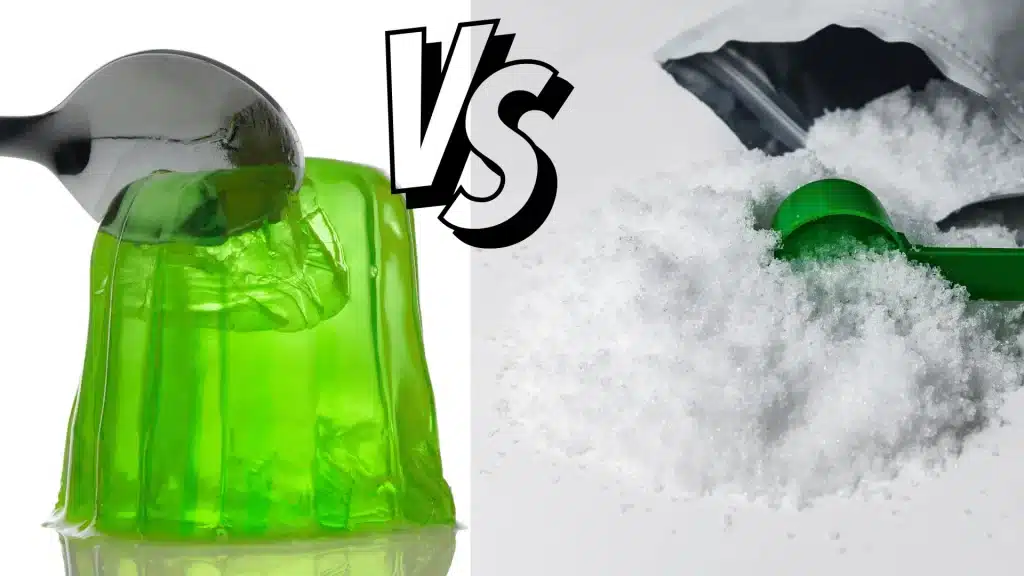
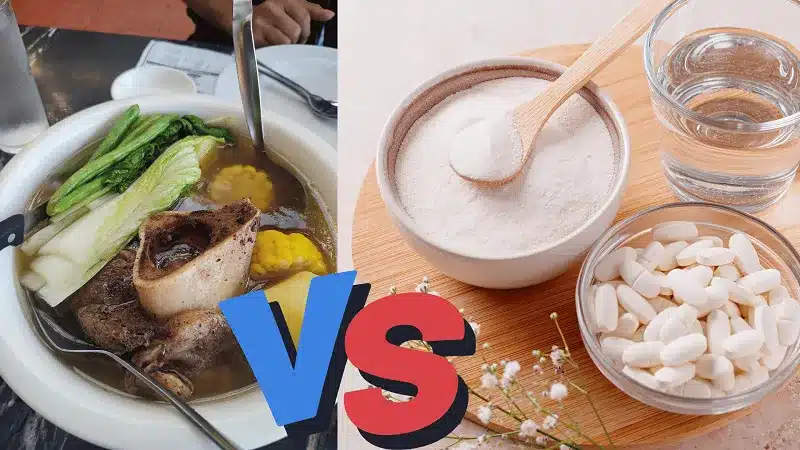
- Gelatin is created when you slow-cook that “rope” (collagen) for a long time. The heat partially unravels the triple helix chains, breaking them into shorter, distinct strands. This is why bone broth gels when it cools—that is the gelatin at work.
- Collagen Peptides (also known as Hydrolyzed Collagen) take this process one step further. Manufacturers use enzymes to cut those gelatin strands into tiny, microscopic particles (peptides).
So, when you consume gelatin, you are consuming 100% real collagen protein, just in a less processed structural form compared to peptides.
III. The Breakdown: Collagen vs Gelatin
While they are nutritionally similar, the user experience of collagen vs gelatin is entirely different. Choosing the wrong one can lead to ruined recipes or a clumpy mess in your morning coffee.
The main difference lies in their molecular weight and solubility. Because collagen peptides are broken down into such small molecules, your body can absorb them rapidly, and they dissolve instantly in liquids. Gelatin, having larger protein chains, retains the unique ability to “gel” and typically takes longer to digest.
Here is a quick reference guide to help you understand the practical differences:
| Feature | Collagen Peptides (Hydrolyzed) | Beef Gelatin |
| Solubility | Dissolves instantly in hot or cold liquids. | only dissolves in hot liquids; gels when cooled. |
| Texture | Indiscernible; does not thicken liquids. | Thick, jelly-like texture when cooled. |
| Digestibility | Very fast absorption; easy on the stomach. | Slower digestion; coats the digestive tract. |
| Best Used For | Coffee, smoothies, water, baked goods. | Gummies, marshmallows, soups, puddings. |
| Key Benefit | Versatility and convenience. | Gut restoration and culinary uses. |
By looking at collagen or gelatin through this lens, you can see that neither is “better”—they just serve different purposes in your kitchen and your body.
IV. Is Gelatin Good for You? The Unique Benefits
While collagen peptides often steal the spotlight for skin and anti-aging, gelatin is the unsung hero of digestive health. A common question among health enthusiasts is: is gelatin good for you in the same way that peptides are?
The answer is yes, but for slightly different reasons. While gelatin provides the same amino acids (glycine, proline, and hydroxyproline) needed for skin elasticity and joint repair, its physical properties offer unique health bonuses that peptides cannot match. Because gelatin has not been fully broken down, it behaves differently in the digestive tract.

The “Gelling” Power
Gelatin is a hydrophilic colloid, meaning it attracts and holds water. When you consume it, it can help move food through the digestive tract more easily. More importantly, this gelling action is believed to coat the mucosal lining of the stomach, which is why it is often the go-to supplement for those managing “Leaky Gut” syndrome or general digestive distress.
Here are the specific advantages of gelatin that make it a pantry staple:
- Gut Barrier Support: Its unique texture may help reinforce the gut lining, potentially reducing intestinal permeability.
- Increased Satiety: Because gelatin gels in the stomach and takes longer to digest than peptides, it can promote a feeling of fullness. This makes it an excellent addition to a weight management plan.
- Culinary Creativity: You cannot make healthy fruit gummies, homemade marshmallows, or thicken a soup with peptides. Gelatin allows you to turn your supplements into snacks.
V. Beef Gelatin vs Collagen Peptides: Choosing the Source
When shopping, you will frequently see the terms “Bovine” or “Beef” on labels. Understanding the comparison of beef gelatin vs collagen peptides is essential for selecting a high-quality product.
In the current market, the vast majority of collagen supplements are bovine-sourced (derived from cows), specifically from the hide. Whether you are looking at a tub of beef gelatin or a canister of collagen peptides, they likely started as the same raw material.
- The Nutritional Profile: Both forms deliver a potent dose of protein. The amino acid profile remains largely intact regardless of whether you choose beef gelatin vs collagen peptides. You are getting the building blocks for your own body’s collagen production in both forms.
- The Critical Difference: The choice is not about nutrition, but about application.
- If you want to “drink” your collagen in cold water or coffee on the go → Peptides are the superior choice due to solubility.
- If you want to “eat” your collagen or use it to slow down digestion → Beef Gelatin is the winner.
Always ensure that whether you choose gelatin or peptides, the product is “Grass-Fed” and “Pasture-Raised” to ensure you are avoiding antibiotics and hormones often found in grain-fed cattle.
VI. Collagen or Gelatin: How to Decide?
Ultimately, the choice between collagen or gelatin comes down to your lifestyle and how you prefer to take your supplements. Since both offer the same amino acid profile and health benefits—supporting skin elasticity, joint mobility, and bone strength—the deciding factor is convenience vs. function.
Use this simple checklist to make your decision:
Choose Collagen Peptides IF:
- You value convenience: You want to stir it into your morning coffee, tea, or water bottle and go.
- You dislike textures: You want a supplement that is flavorless and dissolves completely without thickening your drink.
- Your focus is purely systemic: Your primary goals are reducing wrinkles, relieving joint pain, or post-workout recovery.
- You have a sensitive stomach: You need the most pre-digested, easy-to-absorb form of protein.
Choose Beef Gelatin IF:
- You enjoy cooking: You want to make healthy, high-protein gummies, marshmallows, custards, or thicken soups and stews.
- You are targeting gut health: You are specifically looking to coat the digestive tract to manage inflammation or leaky gut issues.
- You want appetite control: You want a supplement that makes you feel fuller for longer.
Can’t decide? Many health enthusiasts keep both in their pantry: peptides for the morning coffee, and gelatin for weekend baking or evening gut-healing rituals.
VII. Frequently Asked Questions (FAQ)
Conclusion
When weighing collagen vs gelatin, remember that there is no “wrong” choice—only the choice that fits your routine.
If you are looking for a quick, invisible boost to your protein intake for skin and joints, Collagen Peptides are the modern, convenient winner. However, if you are looking to nurture your digestive tract or get creative in the kitchen, traditional Beef Gelatin is an indispensable tool.
Both are powerhouses of nutrition that have been missing from the modern diet. By reintroducing them, you are providing your body with the essential building blocks it needs to repair, regenerate, and thrive.
Referance
1. Supporting the claim: “Gelatin increases satiety (fullness) more than other proteins.”
- Where to use: In Section IV (Is Gelatin Good for You?), when discussing weight management and appetite control.
- Study Title: Single-protein casein and gelatin diets affect energy expenditure similarly but substrate balance and appetite differently in adults
- Source: American Journal of Clinical Nutrition (PubMed)
- Key Finding: The study found that gelatin consumption resulted in a stronger suppression of hunger compared to casein protein.
- URL: https://pubmed.ncbi.nlm.nih.gov/19864402/
2. Supporting the claim: “Gelatin protects the gut lining and helps with digestive issues.”
- Where to use: In Section IV, when discussing the “gelling” effect and Leaky Gut.
- Study Title: Protection of gastric mucosal integrity by gelatin and simple proline-containing peptides
- Source: Pathophysiology (PubMed)
- Key Finding: Validates that gelatin and its specific peptides (proline) have a protective effect on the mucosal lining of the stomach.
- URL: https://pubmed.ncbi.nlm.nih.gov/10825688/
3. Supporting the claim: “Collagen Peptides are absorbed better/faster into the bloodstream.”
- Where to use: In Section III (The Breakdown) or Section V (Beef Gelatin vs Collagen Peptides).
- Study Title: Textural and functional properties of gelatin and hydrolyzed collagen (General consensus study) OR Oral Ingestion of Hydrolyzed Collagen
- Source: Journal of Agricultural and Food Chemistry
- Key Finding: Hydrolyzed collagen (peptides) shows higher bioavailability and peak concentration in the blood compared to non-hydrolyzed forms.
- URL: https://pubmed.ncbi.nlm.nih.gov/27852613/ (Example of bioavailability study).
4. General Authority Links
- Source: Healthline (High Domain Authority)
- Title: Collagen vs. Gelatin: Which One Should You Choose?
- URL: https://www.healthline.com/nutrition/collagen-vs-gelatin