
Introduction
At first glance, a steaming mug of bone broth and a bowl of classic chicken broth might look nearly identical. However, beneath the surface lies a world of difference in how they are made, what they offer your body, and how they perform in the kitchen. Whether you are searching for a savory base for your next soup or a nutrient-dense superfood to support your gut and joints, understanding the difference between bone broth and chicken broth is the first step. In this guide, we’ll break down the nutritional profiles, cooking methods, and distinct benefits of each so you can decide once and for all: which is better for your lifestyle?
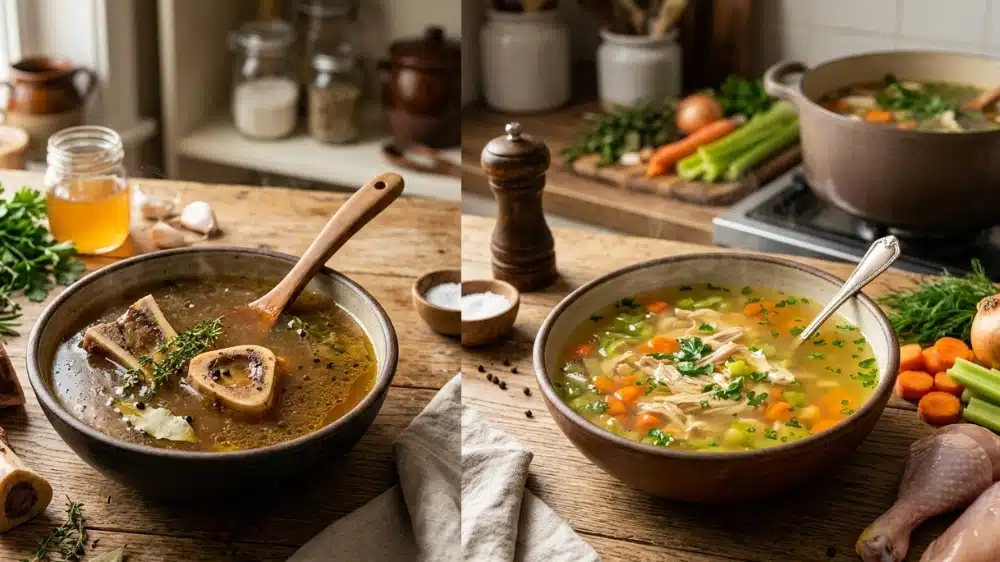
What is Chicken Broth?
To understand the difference between the two, we have to start with the most common pantry staple: chicken broth. If you’ve ever opened a standard blue or red carton to start a batch of chicken noodle soup, you’re already familiar with this kitchen workhorse.
At its core, chicken broth is a savory liquid made by simmering chicken meat (and sometimes a small amount of bone) in water, typically alongside a “mirepoix” (a mix of onions, carrots, and celery) and various aromatic herbs.
The Preparation Process
What defines chicken broth most specifically is the cooking time. Because it is primarily meat-based, it only needs a relatively short simmer—usually between 45 minutes and 2 hours. This is just enough time to cook the chicken through and allow the meat to release its signature light, salty, and poultry-forward flavor into the water.
It is a thin, clear liquid that remains fluid even when chilled in the refrigerator.
It has a light, clean, and subtle taste that complements other ingredients without overpowering them.
Focused on the muscle meat of the bird rather than the connective tissues.
Best Culinary Uses
Because of its mild profile and thin texture, chicken broth is the ultimate “utility player” in the kitchen. It is perfect for:
- Quick Soups: When you want a light base that lets the vegetables and noodles shine.
- Deglazing: Picking up those flavorful browned bits (fond) from the bottom of a pan.
- Cooking Grains: Using broth instead of water for rice, quinoa, or couscous adds a layer of depth to side dishes.
- Poaching: Keeping chicken breasts or fish moist and flavorful during the cooking process.
In short, chicken broth is about flavor and convenience. It provides a quick burst of savory goodness without the heavy nutritional density or “jelly-like” texture associated with long-simmered alternatives.
What is Bone Broth?
While chicken broth is the sprint of the culinary world, bone broth is the marathon. Despite its name, bone broth is technically a highly concentrated stock that has been pushed to its absolute limit through extended cooking times and specific ingredient selection.
At its core, bone broth is made by simmering animal bones (typically roasted first for flavor) and connective tissues in water. Unlike standard broth, the goal here isn’t just to flavor the water; it is to structurally break down the solid components to extract every bit of nutritional value hidden within.
The “Low and Slow” Extraction
The defining characteristic of true bone broth is the simmer time. While a standard broth is finished in a couple of hours, bone broth requires a minimum of 12 to 24 hours—and sometimes up to 48 hours for beef bones.
To assist this process, a small amount of an acid (like apple cider vinegar) is often added to the water. This helps demineralize the bones and break down the tough collagen fibers in the ligaments and tendons, releasing them into the liquid.
The Science of the “Gel”
If you’ve done it right, bone broth behaves differently than any other liquid. Because of the prolonged heat, the collagen extracted from the bones transforms into gelatin. When the broth is hot, it feels silky and “rich” on the tongue. However, once it hits the refrigerator, a high-quality bone broth will set into a firm, jelly-like consistency. This “gel test” is the gold standard for determining a broth’s nutrient density.
Viscous and rich when warm; gelatinous and thick when chilled.
Deep, earthy, and intensely savory (umami) with a much heavier “mouthfeel” than chicken broth.
Packed with bioavailable amino acids (like glycine and proline), minerals, and gelatin.
Best Functional Uses
Bone broth has transitioned from a kitchen staple to a functional superfood. While you can certainly use it in cooking, it is most often used for:
- Sipping: Consumed warm in a mug, much like tea or coffee, as a morning ritual.
- Gut Health Support: The gelatin is often praised for its ability to support the lining of the digestive tract.
- Recovery: Used by athletes and those focused on wellness to support joint health and connective tissue repair.
- High-Protein Cooking: Adding a massive protein boost to sauces or gravies that chicken broth simply can’t match.
In short, bone broth is an extraction of vitality. It’s less about a quick flavor fix and more about a slow, deliberate process of capturing the deep nutrition found in the skeletal system.
The Core Difference Between Bone Broth and Chicken Broth
Now that we’ve explored each liquid individually, let’s look at the head-to-head comparison. Understanding the difference between bone broth and chicken broth essentially comes down to three main pillars: what goes in the pot, how long it stays there, and the resulting nutritional density.
1. Ingredients: Meat vs. Bone
The most fundamental difference is the “raw material” used.
- Chicken Broth: Primarily uses the muscle meat of the bird. While some bones may be present, the goal is to extract flavor from the meat itself.
- Bone Broth: Exclusively focuses on the bones, marrow, and connective tissues (like joints and skin). Often, these bones are roasted beforehand to enhance the flavor and color.
2. Time and Technique: The Extraction Process
In the world of food science, the difference is defined by the degree of extraction.
- Chicken Broth: This is a relatively fast process. Because meat can become tough and flavorless if over-boiled, it is simmered just long enough to create a tasty liquid—usually 1 to 2 hours.
- Bone Broth: This is a slow, methodical extraction. To break down the dense structure of a bone and access the nutrients inside, you need sustained heat for 12 to 24+ hours. Without this time investment, you aren’t making bone broth; you’re just making a light stock.
3. Nutritional Density: The “Gelatin” Factor
This is where the functional benefits really diverge.
- Chicken Broth: It is a great source of hydration and minerals, but it is relatively low in protein (averaging 3-5 grams per cup).
- Bone Broth: Because of the long simmer time, the collagen in the connective tissues undergoes a process called denaturation, turning into gelatin. This results in a much higher protein content (often 9-10 grams per cup) and a rich profile of amino acids like glycine and proline.
| Feature | Chicken Broth | Bone Broth |
|---|---|---|
| Primary Ingredient | Chicken Meat | Animal Bones & Connective Tissue |
| Simmer Time | 45 minutes – 2 hours | 12 – 24+ hours |
| Main Objective | Culinary Flavor | Nutritional Extraction |
| Consistency | Thin & Watery | Viscous (Gelatinous when cold) |
| Protein Content | Low (~3g – 5g) | High (~9g – 10g+) |
| Key Nutrients | Minerals & Flavor | Collagen, Gelatin, Amino Acids |
In summary, the difference between bone broth and chicken broth isn’t just about taste—it’s about the physical structure of the liquid. One is a light, flavor-enhancing tool for cooking, while the other is a dense, nutrient-rich liquid designed for health and recovery.
Which is Better for You?
The answer to “which is better” isn’t found in a lab, but rather in your specific goals for the day. While bone broth often steals the spotlight in wellness circles, chicken broth remains a heavyweight in the culinary world. Here is how to choose based on your needs:
For Gut, Joint, and Skin Support: The Winner is Bone Broth
If your primary goal is functional nutrition, bone broth is the clear victor. Because it is simmered long enough to extract collagen and gelatin, it provides the structural building blocks your body needs.
- The Gut: The gelatin in bone broth can help support the mucosal lining of the digestive tract.
- The Joints: It contains glucosamine and chondroitin, compounds often found in joint-support supplements.
- The Skin: The high amino acid content—specifically glycine and proline—supports the body’s natural collagen production, which is essential for skin elasticity.
For Culinary Precision and Speed: The Winner is Chicken Broth
Sometimes, “more” isn’t “better.” If you are making a delicate risotto or a light lemon-herb soup, the heavy, gelatinous nature of bone broth might actually overpower your dish.
- Texture: Chicken broth provides a clean, watery base that doesn’t turn into jelly when it cools, making it better for sauces you want to keep light.
- Flavor Balance: Its subtle poultry flavor acts as a canvas for other spices and ingredients rather than being the “main event” itself.
- Efficiency: If you are cooking at home and don’t have 24 hours to wait, a high-quality chicken broth gets the job done in a fraction of the time.
The “Wildcard” Alternative: Mushroom and Vegetable Broths
While the debate usually centers on animal-based liquids, it is worth noting that umami-rich vegetable broths (especially those made with dried shiitake mushrooms or seaweed) offer a different kind of nutritional profile. While they lack collagen, they are packed with phytonutrients and antioxidants. If you are looking to reduce meat consumption while still enjoying a savory, warming liquid, a concentrated mushroom “broth” is an excellent middle ground.
Select this concentrated elixir when you seek a meal replacement, a post-workout recovery drink, or a targeted health boost for your digestive system and skin.
Choose this light, classic staple when your focus is on the culinary craft, preparing quick weekday meals, or when you require a transparent flavor base for your recipes.
Recommended Broth Brands for Every Situation
Choosing the right brand depends on whether you are looking for a convenient kitchen staple or a functional health supplement. Based on market leaders in 2026, here are several top-tier options tailored to different needs:
| Brand & Identity | Distinguishing Quality | Ideal Application |
|---|---|---|
| Kettle & Fire The Best All-Around Bone Broth | Shelf-stable convenience using grass-fed beef and organic chicken bones, simmered for 20+ hours to achieve gold-standard purity. |
Best For
Daily sipping or as a high-protein base for gourmet home cooking.
|
| Bonafide Provisions The “Gel Test” Winner | Frozen at peak freshness to retain maximum natural gelatin, offering a traditional, homemade texture that passes the “gel test.” |
Best For
Targeted gut health support and a truly home-cooked experience.
|
| Swanson The Reliable Culinary Classic | A household favorite for consistent, nostalgic flavor. Budget-friendly and widely available for traditional recipes. |
Best For
Large-batch cooking and budget-conscious holiday meal prep.
|
| Gourmend Foods The Digestive Specialist | Low-FODMAP certified, utilizing green leek tops and specific herbs to provide rich flavor without common IBS triggers like garlic or onion. |
Best For
Individuals with sensitive stomachs or strict elimination diets.
|
| Bare Bones The On-the-Go Professional | Innovative powder “stick packs” providing 10 grams of protein and zero sugar in a highly portable, travel-friendly format. |
Best For
Travelers, hikers, or office workers seeking a nutrient-dense desk snack.
|
| Pacific Foods The Organic Versatile Choice | A well-balanced middle ground with consistent organic certification across both chicken and bone broth varieties. |
Best For
Home cooks who prioritize organic standards and a predictable flavor profile.
|
fAQs
Conclusion
When deciding between bone broth vs. chicken broth, the choice ultimately comes down to your immediate goal. If you are looking for a light, flavorful base to deglaze a pan or whip up a quick weeknight soup, a high-quality chicken broth is your best friend. It provides the classic savory notes we love without the heavy texture.
However, if you are looking to turn your nutrition into a functional tool for recovery, bone broth is the undisputed champion. Its long-simmered extraction of collagen, gelatin, and amino acids offers a level of support for your gut, joints, and skin that standard broth simply cannot match.
Elevate Your Formulas: Discover Gensei Bone Broth Collagen
While sipping liquid broth is a wonderful ritual, it isn’t always the most practical way for modern consumers to get a consistent, high-dose of nutrients. For health enthusiasts and supplement manufacturers alike, the future of this “liquid gold” lies in its most concentrated form: bone broth collagen peptides.
If you are looking for a premium ingredient to support gut, joint, and skin health, Gensei offers high-quality bone broth collagen that bridges the gap between traditional wisdom and modern science.
Why Choose Gensei Bone Broth Collagen?
- Highly Bioavailable Peptides: Gensei derives its collagen directly from animal bones and connective tissues, processing them into low-molecular-weight peptides. This means the nutrients are “pre-digested” for your body, ensuring rapid absorption and maximum impact on your connective tissues.
- Concentrated Amino Acid Profile: Unlike standard broth, which can vary in protein content, Gensei’s bone broth collagen powder provides a standardized, concentrated source of essential amino acids like glycine, proline, and hydroxyproline—the primary building blocks for your body’s own collagen production.
- Versatility in Application: Whether you are formulating a post-workout protein blend, a skin-focused beauty beverage, or a gut-healing functional snack, Gensei’s powder is designed to integrate seamlessly. It offers a shelf-stable solution that delivers the full nutritional promise of bone broth without the need for hours of simmering.
- A Partner You Can Trust: Partnering with Gensei ensures a stable and reliable supply chain of high-quality raw materials. As a specialized manufacturer, Gensei prioritizes purity and efficacy, helping you bring superior health products to a discerning market.
By choosing Gensei, you aren’t just buying an ingredient; you are investing in a legacy of food quality and safety that empowers people to live healthier, more vibrant lives.
| ✓ | Green Flag: “Grass-Fed” or “Pasture-Raised” bones listed as the primary ingredient. |
| ✓ | Green Flag: Apple Cider Vinegar in the ingredient list (aids in mineral extraction). |
| ✕ | Red Flag: High levels of “Natural Flavors,” “Yeast Extract,” or “Maltodextrin.” |
| ✕ | Red Flag: Sodium content exceeding 600mg per serving in a “health” broth. |
Whether you are seeking premium raw materials or a dedicated partner for custom nutraceutical manufacturing, our expertise in bioavailability and quality compliance ensures your brand leads the market.
Consult Our Specialistsreferences
- USDA FoodData Central – The official US database for nutritional composition; use this to back up protein and mineral claims.
- National Institutes of Health (NIH) – Office of Dietary Supplements – A premier source for data on minerals and amino acids found in animal-based products.
- Harvard T.H. Chan School of Public Health – Collagen – Provides a scientific overview of collagen types and their roles in the human body.
- PubMed – Amino Acid Bioavailability Studies – Link to this for technical discussions on how the body processes glycine and proline.
- FDA – Food Labeling & Nutrition – Essential for the section regarding “Label Transparency” and what constitutes a “high protein” claim.
- Electronic Code of Federal Regulations (eCFR) – Broth Standards – For the legal definitions of “broth” vs. “stock” in commercial manufacturing.
- Monash University – Low FODMAP Certification – The global authority for the section on Gourmend Foods and IBS-friendly diets.
- Culinary Institute of America (CIA) – The Science of Stock – Use this for the “Culinary Craft” and simmer time comparison sections.
- The Arthritis Foundation – Collagen and Joint Health – A non-profit source supporting the benefits of gelatin and collagen for connective tissues.
- World Health Organization (WHO) – Healthy Diet Fact Sheets – A high-authority link for the “Functional Wellness” and general nutritional boost sections.

Warren Wan is a seasoned expert with extensive experience in the dietary supplement supply chain, possessing rich practical experience in the research, development, process control, and global sourcing of core ingredients such as collagen peptides, bone broth protein, and keratin. As the author of this column, he is dedicated to stripping away the marketing packaging, transforming obscure ingredient science and production quality control standards into easy-to-understand, hardcore science popularization, helping readers understand the truth behind the labels and make more rational health choices.