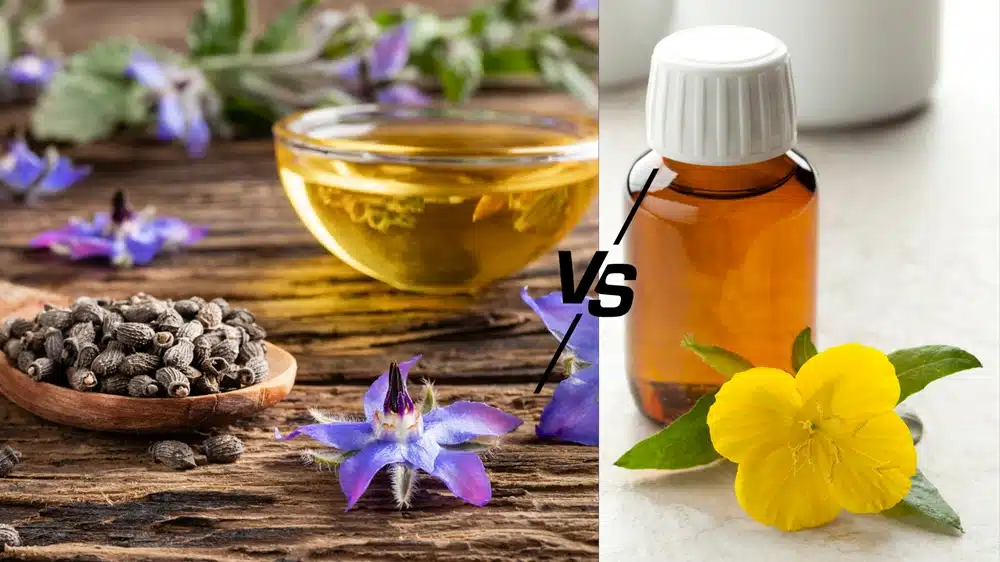
In the world of natural health and skincare, Evening Primrose Oil (EPO) and Borage Oil are two of the most popular oils known for their therapeutic and beautifying properties. Both oils are derived from plants and are rich in essential fatty acids that promote skin health, reduce inflammation, and support overall wellbeing. However, while they share some similarities, they also have distinct differences in their composition and effects. This article compares Evening Primrose Oil and ボラージオイル, helping you understand their benefits and how each oil can contribute to better health.
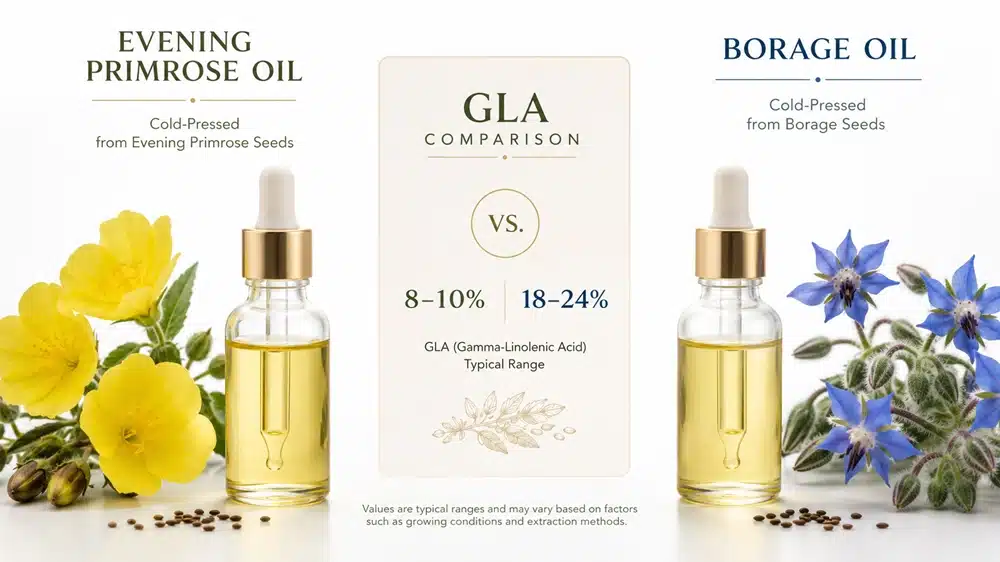
Quick verdict: ボラージオイル usually delivers more gamma-linolenic acid (GLA) per capsule because borage seed oil commonly contains about 18-27% GLA, while evening primrose oil is typically lower in GLA. 月見草 oil is often chosen for gentle daily skin and women’s wellness formulas, while borage oil is preferred when a higher-GLA, more concentrated softgel formula is required. For borage oil, buyers should always verify PA-free status and oxidation-control testing.
Evening Primrose Oil vs Borage Oil at a Glance
| Comparison point | 月見草オイル | ボラージオイル |
|---|---|---|
| Botanical source | Seeds of オオエノテラ | Seeds of ボラゴ・オフィシナリス |
| Main active fatty acid | Gamma-linolenic acid (GLA), an omega-6 fatty acid | Gamma-linolenic acid (GLA), usually at a higher level |
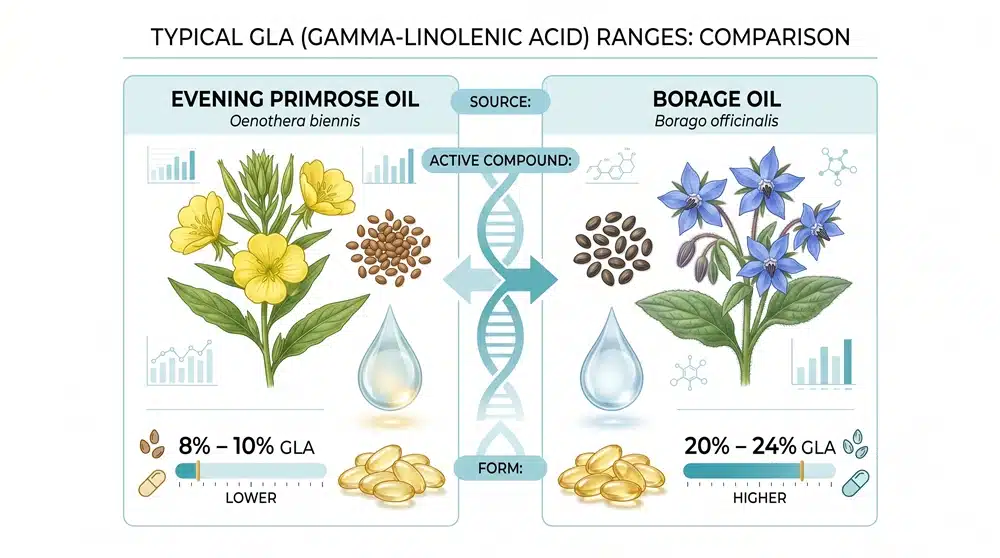
| Typical GLA range | Commonly around 7-14% of total fatty acids | Commonly around 18-27% of total fatty acids |
| Best-fit formula positioning | Gentle daily skin, beauty-from-within and women’s wellness formulas | High-GLA skin, joint comfort and premium beauty oil softgel formulas |
| Common dosage format | 500 mg or 1000 mg softgels; topical oil blends and creams | 500 mg or 1000 mg softgels; higher-GLA oil blends |
| Key quality concern | Oxidation control, accurate GLA assay and clean-label carrier system | PA-free verification, oxidation control and accurate GLA assay |
| Buyer takeaway | Choose when brand story focuses on gentle skin hydration and women’s wellness. | Choose when the formula needs more GLA per serving and strong quality documentation. |
月見草オイル:ホルモンバランサーと肌の鎮静剤
月見草オイルは、北アメリカ原産のOenothera biennisの種子から抽出されます。このオイルは、皮膚細胞の健康維持と炎症の抑制に重要な役割を果たすオメガ6脂肪酸であるガンマリノレン酸(GLA)を多く含むことで知られています。EPOは何世紀にもわたり、ホルモンバランスのサポート、さまざまな皮膚疾患の治療、更年期障害やPMSに関連する症状の緩和のために使用されてきた。
月見草オイルの主な効能のひとつは、抗炎症作用です。EPOは一般的に、湿疹、乾癬、ニキビなどの症状を緩和するために使用されます。GLAの含有量は、赤み、炎症、腫れを抑え、より滑らかで健康的な肌を促進します。EPOはまた、肌の保湿力を高めるので、乾燥肌や敏感肌の方には特に効果的です。定期的に使用することで、肌が柔らかくなり、時間の経過とともに小じわが目立たなくなる可能性があります。
イブニングプリムローズオイルは、肌の健康だけでなく、ホルモンのアンバランスの管理にも役立ちます。PMSや更年期障害の症状がある女性は、気分の落ち込みやほてり、吹き出物などの症状を緩和するために、EPOをよく利用します。このオイルは、ホルモンレベルを調整し、様々な身体機能のコントロールを助けるプロスタグランジンの生成をサポートすることによって働きます。
ボラージオイル:抗炎症と癒しのオイル
ボラージオイル は、鮮やかな青い花で知られるボラゴ・オフィシナリス(Borago officinalis)の種子から抽出されます。ボラージオイルもガンマリノレン酸(GLA)の優れた供給源ですが、月見草オイルに比べてGLAの含有量が格段に高く、この必須脂肪酸を最も豊富に含む天然供給源のひとつです。ボラージオイルには他にも、リノール酸やオレイン酸などの有益な脂肪酸が含まれており、肌のバリア機能をサポートし、うるおいの維持を助けます。
ボラージオイルはGLAを多く含むため、炎症を抑え、炎症や炎症を起こした皮膚の治癒を促進するのに特に効果的である。ボラージオイルは湿疹、乾癬、皮膚炎、酒さなどの治療に広く使われています。ボラージオイルには肌の水分バリア機能を高める働きがあるため、乾燥肌や年齢肌の方に最適です。肌の弾力性と保湿力を高めることで、小じわを目立たなくする効果があります。
最も強力なもののひとつ ボラージオイルの効能 その治癒効果にあります。皮膚の再生を促進するため、傷や瘢痕、妊娠線の治療を目的としたスキンケア製品に頻繁に使用されます。外用用途に加え、ボラージオイルは関節の健康維持や炎症軽減をサポートするサプリメントとして摂取されることもあり、特にリウマチ性関節炎などの症状に効果的です。.
月見草オイルとボラージオイルの主な違い
| 寸法 | 月見草オイル | ボラージオイル | What this means for brands and consumers |
|---|---|---|---|
| GLA concentration | Usually lower; often used as a gentle GLA source. | Usually higher; borage oil is one of the richest natural sources of GLA. | Borage oil can deliver more GLA in the same capsule size, while EPO may fit a softer women’s wellness positioning. |
| Skin positioning | Often used for dry, sensitive and barrier-support skincare concepts. | Often used for higher-GLA skin comfort and premium beauty oil formulas. | For topical claims, keep language around hydration, barrier support and skin comfort rather than disease treatment. |
| Women’s wellness positioning | Commonly associated with PMS and menopause support, although evidence is mixed. | Less commonly positioned as a hormonal-support oil. | EPO may match women’s wellness branding, but claims should be evidence-based and compliant. |
| Joint comfort positioning | Can be included in general wellness formulas, but it is not usually the strongest GLA option. | Often selected when a high-GLA oil is needed for joint comfort positioning. | Use structure/function language such as “supports joint comfort” rather than disease claims. |
| Safety focus | Generally focused on oxidation, allergens and medication cautions. | Must include PA-free verification because borage plants can contain pyrrolizidine alkaloids. | For B2B purchasing, require a COA confirming PA-free status and fatty acid profile. |
| Manufacturing focus | Protect from heat, light and oxygen; suitable for softgels and topical oils. | Same oxidation controls, plus stronger raw-material qualification for PA control. | Nitrogen flushing, amber packaging and peroxide/anisidine testing help preserve oil quality. |
Evidence and Safety: What Research Actually Shows
Both evening primrose oil and borage oil are valued because they provide gamma-linolenic acid (GLA), but the strength of evidence differs by use case. For consumer education and compliant supplement marketing, it is important to separate “skin comfort and barrier support” from disease-treatment claims.
For eczema, a Cochrane review concluded that oral evening primrose oil and oral borage oil did not show meaningful benefit compared with placebo in the reviewed trials. Therefore, brands should avoid presenting either oil as a treatment for eczema, psoriasis, dermatitis or rheumatoid arthritis. A more compliant approach is to describe these oils as sources of essential fatty acids that may help support normal skin barrier function, skin hydration and general wellness.
Evening primrose oil has also been studied for PMS, menopause symptoms and other health concerns, but NCCIH notes that evidence is insufficient for many of these uses. This does not make EPO irrelevant; it means the article should use careful language such as “traditionally used,” “studied for,” or “may support,” instead of promising symptom relief.
For borage oil, the most important safety point is pyrrolizidine alkaloid (PA) control. Borage leaves and flowers can contain PAs, and high-quality borage seed oil used in dietary supplements should be refined and verified as PA-free. For B2B buyers, the supplier should provide a current COA showing fatty acid profile, GLA percentage, peroxide value, anisidine value, heavy metals, microbiology and PA-free status.
どちらを選ぶべきか?
イブニングプリムローズオイルとボラージオイルのどちらを選ぶかは、その人の健康状態やスキンケアのニーズに大きく左右されます。
軽度の肌荒れや乾燥、PMSや更年期障害のようなホルモンのアンバランスが気になる場合は、月見草オイルの方が良いかもしれません。抗炎症作用があり、ホルモンバランスを整える働きがあるため、このような悩みを持つ女性には最適です。
湿疹、酒さ、皮膚炎など、より重度の皮膚疾患を治療したい場合や、関節リウマチのような症状に対してより強力な抗炎症オイルが必要な場合は、ボラージオイルがより強力な選択肢となります。GLAの濃度が高いため、皮膚の治癒や関節の炎症を抑えるのに特に効果的です。
イブニングプリムローズオイルはホルモンのサポートと肌全般への効果を、ボラージオイルは炎症と肌再生により的を絞ったトリートメントを提供します。
From a Softgel Manufacturer’s View: How to Protect GLA Oil Quality
As a manufacturer of oil-based softgel supplements, the key challenge with both evening primrose oil and borage oil is not only choosing the right botanical oil. It is protecting the GLA-rich oil from oxidation during sourcing, encapsulation, drying, packaging and storage.
GLA oils are polyunsaturated and can be sensitive to oxygen, heat and light. For this reason, premium EPO and borage oil softgels should be produced with controlled processing temperatures, oxygen exposure control, nitrogen flushing when appropriate, and packaging that protects the oil from light and air. Antioxidant systems such as mixed tocopherols may also be used depending on the formula and market requirements.
For private label brands, the most important manufacturing documents include the raw material COA, fatty acid profile, GLA assay, peroxide value, anisidine value, heavy metal test, microbiology report, allergen statement and stability data. For borage oil formulas, PA-free documentation should be treated as a non-negotiable specification.
If you are developing a beauty-from-within or joint-comfort softgel formula with evening primrose oil, borage oil or a blended GLA oil system, work with a softgel manufacturer that can review capsule size, fill weight, antioxidant system, shell type, label claims and packaging from the beginning of the project.
結論
Evening primrose oil and borage oil are both valuable sources of GLA, but they are not identical ingredients. Evening primrose oil is a familiar choice for gentle skin and women’s wellness positioning, while borage oil is usually selected when a formula needs a higher GLA concentration in a smaller serving size.
For consumers, the best choice depends on the goal: daily skin hydration and comfort may fit evening primrose oil, while a higher-GLA supplement may point toward borage oil. For brands, the decision should also include quality documentation, PA-free verification for borage oil, oxidation control, softgel stability and compliant label language.
In short: choose evening primrose oil for gentle, familiar wellness positioning; choose borage oil for high-GLA potency; and choose a qualified softgel manufacturer when product stability, documentation and market-ready formulation matter.
FAQ: Evening Primrose Oil vs Borage Oil
Which has more GLA, evening primrose oil or borage oil?
Borage oil usually has more GLA. Borage seed oil is commonly standardized around 18-27% GLA, while evening primrose oil is typically lower.
Is borage oil better than evening primrose oil?
Not always. Borage oil is better when the formula needs more GLA per serving. Evening primrose oil may be better for gentle daily skin and women’s wellness positioning.
Can evening primrose oil and borage oil be used together?
They can be blended in some softgel or topical formulas, but total GLA intake, label claims and target users should be reviewed by a qualified formulator.
ボラージオイルは安全ですか?
High-quality borage seed oil should be refined and verified as PA-free. Buyers should ask for a COA confirming fatty acid profile, oxidation values, heavy metals, microbiology and PA-free status.
Can these oils treat eczema or psoriasis?
They should not be marketed as treatments for eczema, psoriasis or any disease. Evidence for oral evening primrose oil and borage oil in eczema is not strong, so compliant content should focus on essential fatty acid support, skin barrier support and general wellness.
Which oil is better for private label softgels?
For a familiar beauty and women’s wellness product, evening primrose oil may be easier to position. For a high-GLA product, borage oil may be more efficient, provided PA-free and oxidation-control specifications are verified.
参照
- NCCIH: Evening Primrose Oil – Usefulness and Safety
- FDA: Structure/Function Claims
- EFSA: Risks related to pyrrolizidine alkaloids in food
- USP: Evening Primrose Oil Capsules Monograph Preview

W. Wenyang is a seasoned expert with extensive experience in the dietary supplement supply chain, possessing rich practical experience in the research, development, process control, and global sourcing of core ingredients such as collagen peptides, bone broth protein, and keratin. As the author of this column, he is dedicated to stripping away the marketing packaging, transforming obscure ingredient science and production quality control standards into easy-to-understand, hardcore science popularization, helping readers understand the truth behind the labels and make more rational health choices.