
Đối với các thương hiệu thực phẩm chức năng và chăm sóc da, việc lựa chọn này cũng liên quan đến quyết định về công thức. Vitamin C có thể xuất hiện dưới dạng sản phẩm chăm sóc da bôi ngoài da và thực phẩm chức năng, trong khi axit azelaic chủ yếu là thành phần trong sản phẩm chăm sóc da bôi ngoài da và có thể rơi vào phạm vi tuyên bố có tác dụng dược lý nếu được định vị để điều trị mụn trứng cá, bệnh rosacea hoặc các bệnh lý khác. Hướng dẫn này so sánh hai thành phần này từ góc độ người tiêu dùng, công thức và đánh giá các tuyên bố về tác dụng.
Axit azelaic là gì?
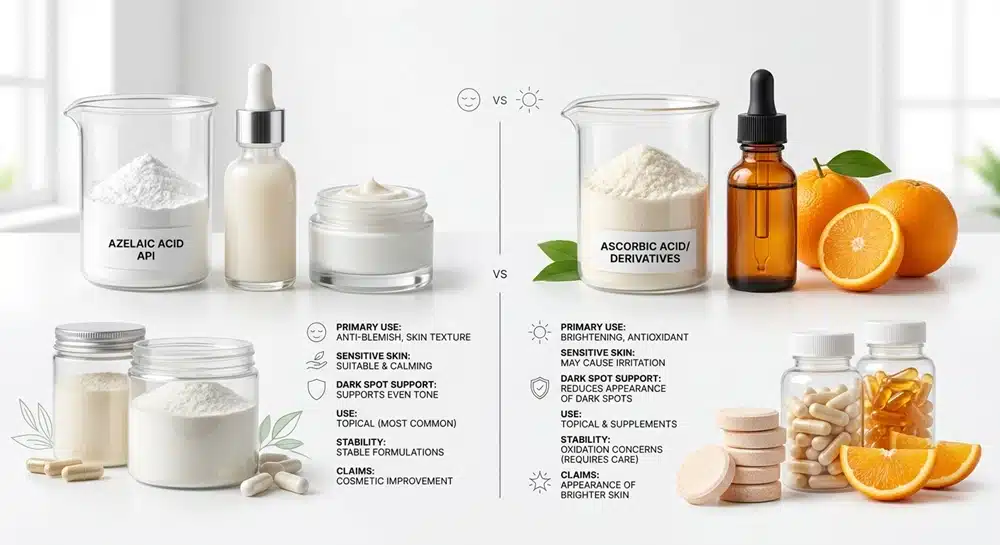
Axit azelaic là một loại axit dicarboxylic được sử dụng trong các sản phẩm chăm sóc da bôi ngoài da. Trong các công thức dành cho làm đẹp, thành phần này thường được sử dụng để cải thiện tình trạng da không đều màu, mẩn đỏ rõ rệt, kết cấu da thô ráp và các vết thâm sau mụn. Trong bối cảnh y tế hoặc dược phẩm, các sản phẩm chứa axit azelaic có thể được sử dụng để điều trị mụn trứng cá hoặc bệnh rosacea; tuy nhiên, các thương hiệu cần thận trọng để không biến các thông điệp tiếp thị mỹ phẩm thành những tuyên bố về điều trị bệnh, trừ khi sản phẩm đó đã được định vị và phê duyệt hợp pháp cho mục đích sử dụng đó.
Trong lĩnh vực phát triển sản phẩm mỹ phẩm, axit azelaic thường được đánh giá cao vì có thể phù hợp với các quy trình chăm sóc da nhạy cảm, da dầu, da hỗn hợp và da dễ bị ửng đỏ khi cơ sở công thức được thiết kế nhằm mang lại cảm giác thoải mái. Những thách thức chính trong quá trình bào chế bao gồm độ hòa tan, kết cấu, hiện tượng vón cục, cảm giác sần sùi, tính tương thích về pH và cảm giác châm chích tiềm ẩn trong các công thức có nồng độ cao.
Vitamin C là gì?
Vitamin C là một chất dinh dưỡng tan trong nước và là chất chống oxy hóa được sử dụng rộng rãi trong chăm sóc da. Trong các sản phẩm chăm sóc da bôi ngoài da, các dạng phổ biến bao gồm axit L-ascorbic và các dẫn xuất của vitamin C như natri ascorbyl phosphate, ascorbyl glucoside, magiê ascorbyl phosphate và tetrahexyldecyl ascorbate. Trong thực phẩm chức năng, vitamin C thường được sử dụng dưới dạng axit ascorbic, ascorbat natri, canxi ascorbat hoặc các hỗn hợp vitamin C có chất đệm.
Vitamin C đóng vai trò quan trọng trong quá trình tổng hợp collagen bình thường của cơ thể, và vitamin C bôi ngoài da thường được sử dụng trong các công thức nhằm cải thiện tình trạng da xỉn màu, không đều màu và lão hóa do ánh nắng. Tuy nhiên, axit L-ascorbic tinh khiết có thể không ổn định và có thể gây kích ứng cho làn da nhạy cảm khi sử dụng ở môi trường pH thấp hoặc nồng độ cao. Các yếu tố như bao bì, độ pH, tiếp xúc với oxy, tiếp xúc với ánh sáng và các đồng yếu tố chống oxy hóa đều có vai trò quan trọng.
Axit azelaic so với vitamin C: Những điểm khác biệt chính
| Yếu tố | Axit azelaic | Vitamin C | Điểm chính về công thức |
|---|---|---|---|
| Vị trí chính | Tông da không đều, da ửng đỏ rõ rệt, vết thâm sau mụn, kết cấu da | Độ sáng, hỗ trợ chống oxy hóa, da xỉn màu, lão hóa do ánh sáng có thể nhìn thấy | Sử dụng axit azelaic cho các công thức làm dịu và cân bằng da; sử dụng vitamin C cho các dòng sản phẩm chống oxy hóa và làm sáng da. |
| Các vấn đề về da phù hợp nhất | Da dễ bị ửng đỏ, dễ nổi mụn, da nhạy cảm hoặc da không đều màu | Da xỉn màu, đốm nâu, các dấu hiệu ban đầu của lão hóa do ánh nắng, quy trình chăm sóc da chống oxy hóa | Hãy kết hợp thành phần chủ đạo với mối quan tâm hàng đầu của người tiêu dùng. |
| Các định dạng chủ đề điển hình | Tinh chất, kem gel, kem dưỡng, sản phẩm điều trị dạng huyền phù | Tinh chất, bột tăng cường, kem, ống tinh chất, hỗn hợp chất chống oxy hóa | Các công thức chứa axit azelaic cần được kiểm soát về kết cấu; các công thức chứa vitamin C cần được kiểm soát về độ ổn định. |
| Khả năng tương thích | Thường được kết hợp với niacinamide, panthenol, centella hoặc các thành phần dưỡng ẩm nhẹ nhàng | Thường được kết hợp với vitamin E, axit ferulic, axit hyaluronic hoặc các dẫn xuất của niacinamide | Tránh cho quá nhiều hoạt chất dễ gây kích ứng vào một sản phẩm. |
| Những lo ngại về tính ổn định | Quá trình kết tinh, độ sạn, hiện tượng xù lông, độ pH và cảm giác khi chạm vào | Quá trình oxy hóa, sự thay đổi màu sắc, độ pH, tiếp xúc với ánh sáng và không khí | Yêu cầu các bài kiểm tra chất lượng khác nhau và các lựa chọn đóng gói khác nhau. |
| Việc sử dụng thực phẩm chức năng | Thông thường không phải là thành phần chủ chốt trong thực phẩm bổ sung | Thường có dạng viên nang, viên nén, kẹo dẻo, bột, dung dịch và các hỗn hợp chức năng | Vitamin C có thể được sử dụng trong các dòng sản phẩm bổ sung; còn axit azelaic chủ yếu được dùng tại chỗ. |
| Rủi ro khi yêu cầu bồi thường | Nên thận trọng nếu sản phẩm tuyên bố có tác dụng điều trị mụn trứng cá, bệnh rosacea hoặc nám da | Cần thận trọng nếu tuyên bố có thể đảo ngược quá trình lão hóa, phục hồi làn da hoặc điều trị bệnh | Hãy sử dụng các thuật ngữ liên quan đến hình thức và cấu trúc/chức năng một cách cẩn thận tùy theo từng loại sản phẩm. |
Cái nào hiệu quả hơn trong việc điều trị các đốm đen và tình trạng da không đều màu?
Cả axit azelaic và vitamin C đều có thể hữu ích trong các quy trình chăm sóc da nhằm cải thiện tình trạng da không đều màu và các đốm sậm màu. Vitamin C thường được lựa chọn để cung cấp tác dụng chống oxy hóa, làm sáng da và cải thiện tình trạng da xỉn màu, trong khi axit azelaic thường được ưu tiên sử dụng khi da không đều màu kèm theo hiện tượng ửng đỏ rõ rệt, da dễ nổi mụn hoặc da nhạy cảm.
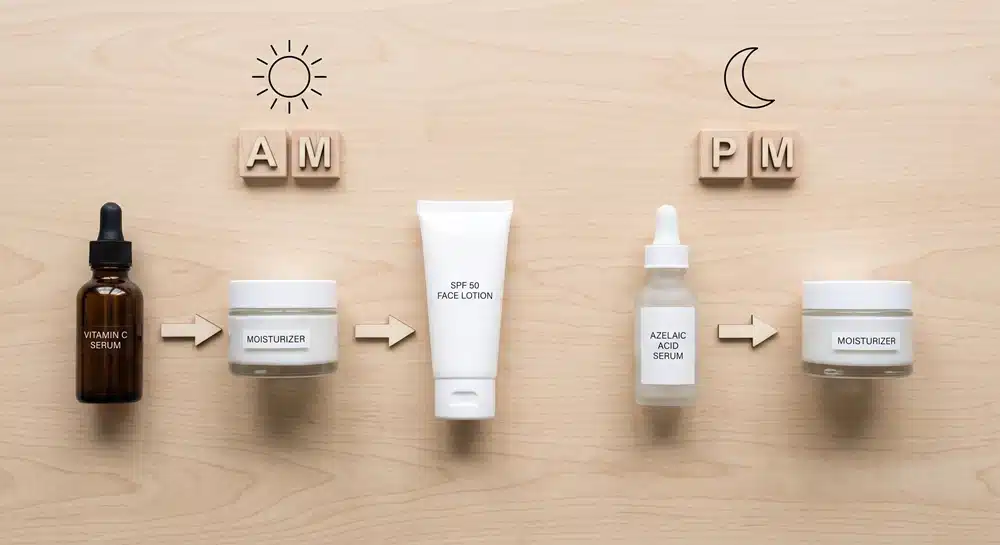
Câu trả lời thực tiễn hay nhất: Hãy chọn vitamin C khi mục tiêu chính là tác dụng chống oxy hóa giúp da sáng mịn và rạng rỡ vào ban ngày; hãy chọn axit azelaic khi mục tiêu chính là làm mờ vết thâm sau mụn, chăm sóc làn da dễ bị ửng đỏ hoặc thực hiện quy trình điều chỉnh tông màu da nhẹ nhàng hơn. Đối với nhiều người dùng, một quy trình chăm sóc da kết hợp cả hai thành phần này vào các thời điểm khác nhau trong ngày có thể thực tế hơn so với việc chỉ chọn một trong hai.
Loại nào phù hợp hơn cho da dễ bị mụn trứng cá hay da dễ bị các khuyết điểm?
Đối với làn da dễ bị mụn, axit azelaic thường là thành phần bôi ngoài da phù hợp hơn vì nó thường được đề cập trong lĩnh vực da liễu khi nói đến làn da dễ bị mụn và dễ bị bệnh rosacea. Tuy nhiên, các nội dung quảng cáo mỹ phẩm hướng đến người tiêu dùng nên tránh khẳng định rằng một sản phẩm mỹ phẩm thông thường có thể điều trị mụn hoặc bệnh rosacea, trừ khi sản phẩm đó được phép lưu hành trên thị trường với mục đích đó.
Vitamin C vẫn có thể hữu ích trong các quy trình chăm sóc da dễ nổi mụn khi mối quan tâm chính của người tiêu dùng là làn da xỉn màu hoặc tình trạng da không đều màu sau khi hết mụn; tuy nhiên, một số loại serum vitamin C có độ pH thấp hoặc nồng độ cao có thể gây cảm giác châm chích hoặc kích ứng đối với những người có làn da nhạy cảm. Đối với các quy trình chăm sóc da nhạy cảm, da dầu hoặc da dễ nổi mụn, các thương hiệu nên xem xét sử dụng các dẫn xuất vitamin C ít gây kích ứng hơn hoặc tách riêng việc sử dụng các hoạt chất mạnh.
Có thể sử dụng axit azelaic và vitamin C cùng lúc không?
Đúng vậy, nhiều người có thể kết hợp axit azelaic và vitamin C trong cùng một quy trình chăm sóc da, nhưng quy trình này cần được thiết kế dựa trên mức độ dung nạp của da. Cách đơn giản nhất là sử dụng vitamin C vào buổi sáng và axit azelaic vào buổi tối. Những người đã có kinh nghiệm có thể kết hợp cả hai trong cùng một quy trình, nhưng nên chỉ sử dụng từng sản phẩm một và ngừng sử dụng ngay nếu da xuất hiện dấu hiệu kích ứng.
| Tùy chọn định kỳ | Cách sử dụng | Phù hợp nhất cho | Lưu ý |
|---|---|---|---|
| Chế độ sinh hoạt riêng biệt cho buổi sáng và buổi chiều | Uống vitamin C vào buổi sáng, dùng axit azelaic vào buổi tối | Hầu hết người dùng, đặc biệt là những người mới bắt đầu | Hãy thoa kem chống nắng mỗi sáng. |
| Cách phối lớp trang phục theo thói quen | Trước tiên là vitamin C, đợi cho đến khi được hấp thu, sau đó mới dùng axit azelaic | Người dùng có kinh nghiệm với làn da chịu được | Hãy thực hiện thử nghiệm trên vùng da nhỏ và tránh sử dụng đồng thời retinoid hoặc các axit tẩy tế bào chết. |
| Các ngày xen kẽ | Một số buổi sáng, hãy dùng vitamin C và vào những ngày xen kẽ, hãy dùng axit azelaic | Da nhạy cảm hoặc dễ kích ứng | Việc bắt đầu từ từ có thể giúp giảm nguy cơ kích ứng. |
| Sản phẩm kết hợp duy nhất | Sử dụng công thức được thiết kế để chứa cả hai thành phần này | Các thương hiệu đang tìm kiếm một thói quen tiêu dùng đơn giản | Yêu cầu phải tiến hành các thử nghiệm về độ ổn định, độ pH và cảm quan một cách kỹ lưỡng. |
Hướng dẫn công thức dành cho các thương hiệu mỹ phẩm chăm sóc da và thực phẩm chức năng
So sánh giữa axit azelaic và vitamin C không chỉ là một câu hỏi về chăm sóc da dành cho người tiêu dùng. Đây còn là vấn đề liên quan đến công thức sản phẩm và định vị các tuyên bố quảng cáo của các thương hiệu. Một dự án liên quan đến vitamin C có thể là sản phẩm bôi ngoài da, thực phẩm chức năng hoặc cả hai. Trong khi đó, một dự án liên quan đến axit azelaic thường là sản phẩm bôi ngoài da, và các tuyên bố quảng cáo phải tuân thủ khung quy định cho phép về mỹ phẩm hoặc dược phẩm đối với thị trường mục tiêu.
| Kịch bản thương hiệu | Hướng dẫn được khuyến nghị | Tại sao nó lại phù hợp | Các bước kiểm tra chính |
|---|---|---|---|
| Tinh chất chống oxy hóa làm sáng da | Công thức có thành phần chính là vitamin C | Sản phẩm nhận được sự công nhận mạnh mẽ từ người tiêu dùng nhờ định vị về hiệu ứng phát sáng và khả năng chống oxy hóa | Thử nghiệm độ ổn định, bao bì, pH, quá trình oxy hóa, kích ứng |
| Tinh chất làm mờ vết đỏ và vết thâm sau mụn | Công thức có thành phần chính là axit azelaic | Rất phù hợp để điều chỉnh vùng da nhạy cảm và không đều màu | Kết cấu, hiện tượng xù lông, cảm giác sần sùi, cảm giác châm chích, đánh giá tuyên bố |
| Sản phẩm dành cho da nhạy cảm | Axit azelaic + các hoạt chất hỗ trợ hàng rào bảo vệ da | Có thể được định vị xoay quanh sự điềm tĩnh dễ nhận thấy và sự cân bằng về tông màu | Hướng dẫn về sản phẩm không chứa hương liệu, thử nghiệm trên vùng da nhỏ, tính tương thích với chất bảo quản |
| Thực phẩm bổ sung giúp làm đẹp từ bên trong | Khái niệm về thực phẩm bổ sung vitamin C hoặc vitamin C kết hợp với collagen | Vitamin C, với tư cách là một chất dinh dưỡng trong chế độ ăn, hỗ trợ quá trình tổng hợp collagen bình thường | Thông tin về thành phần, liều lượng, nội dung mô tả cấu trúc/chức năng, kiểm tra hàm lượng kim loại nặng và vi lượng |
| Bộ sản phẩm chăm sóc da kết hợp hai bước | Sản phẩm chứa vitamin C dùng vào buổi sáng và sản phẩm chứa axit azelaic dùng vào buổi tối | Giảm bớt sự phức tạp về khả năng tương thích và nâng cao tính rõ ràng của các quy trình thường ngày | Hướng dẫn rõ ràng, bản sao trên thùng carton, thông tin về độ ổn định cho từng SKU |
Các tiêu chuẩn chất lượng cần kiểm tra
Đối với các dự án bổ sung vitamin C, các thương hiệu cần xem xét dạng hoạt tính, phương pháp định lượng, hàm lượng hoạt chất, giới hạn vi sinh vật, kim loại nặng, độ ẩm, kích thước hạt, độ hòa tan, ảnh hưởng đến hương vị và khả năng bảo vệ của bao bì. Vitamin C rất nhạy cảm với quá trình oxy hóa, do đó việc kiểm tra bao bì và thời hạn sử dụng đặc biệt quan trọng đối với các sản phẩm dạng bột, kẹo dẻo và dung dịch.
Đối với các dự án chăm sóc da sử dụng axit azelaic hoặc vitamin C dạng bôi ngoài da, hãy yêu cầu cung cấp dữ liệu về độ ổn định, kết quả kiểm nghiệm vi sinh, thử nghiệm thách thức chất bảo quản, hồ sơ pH, độ nhớt, theo dõi sự thay đổi màu sắc, tính tương thích của bao bì và đánh giá cảm quan. Đối với các công thức chứa axit azelaic, cũng cần kiểm tra độ sạn, hiện tượng kết tinh và hiện tượng vón cục. Đối với các công thức chứa vitamin C, cần theo dõi quá trình oxy hóa, sự thay đổi màu sắc và khả năng duy trì hiệu lực.

Tuân thủ và các giới hạn về yêu cầu bồi thường
Đối với mỹ phẩm, hãy tập trung vào các tuyên bố liên quan đến ngoại hình như “giúp cải thiện tình trạng da không đều màu”, “giúp làm sáng da xỉn màu” hoặc “giúp giảm tình trạng da ửng đỏ”. Tránh các tuyên bố chẩn đoán, điều trị, chữa khỏi, làm giảm hoặc phòng ngừa bệnh tật, trừ khi sản phẩm đó được tiếp thị hợp pháp dưới dạng thuốc tại thị trường mục tiêu.
Đối với thực phẩm chức năng, các tuyên bố về vitamin C phải có cơ sở khoa học, trung thực và không gây hiểu lầm. Các cách diễn đạt an toàn hơn có thể bao gồm “hỗ trợ quá trình tổng hợp collagen bình thường”, “hỗ trợ khả năng chống oxy hóa” hoặc “hỗ trợ sức khỏe hệ miễn dịch” khi có cơ sở khoa học và phù hợp. Tránh ngụ ý rằng thực phẩm bổ sung vitamin C có thể điều trị mụn trứng cá, bệnh rosacea, nám da, vết thương hoặc bất kỳ bệnh nào khác.
Câu hỏi thường gặp
Axit azelaic có giống vitamin C không?
Không. Axit azelaic và vitamin C là hai thành phần khác nhau. Axit azelaic chủ yếu được sử dụng trong các sản phẩm chăm sóc da bôi ngoài da nhằm cải thiện tông màu da, giảm đỏ da và điều trị da dễ nổi mụn, trong khi vitamin C là một chất dinh dưỡng và chất chống oxy hóa trong chăm sóc da, được sử dụng cả dưới dạng bôi ngoài da lẫn bổ sung qua chế độ ăn uống.
Tôi có thể dùng vitamin C cùng với axit azelaic không?
Nhiều quy trình chăm sóc da có thể kết hợp cả hai thành phần này. Một cách tiếp cận đơn giản là dùng vitamin C vào buổi sáng và axit azelaic vào buổi tối. Những người có làn da nhạy cảm nên chỉ sử dụng một sản phẩm tại một thời điểm, thực hiện thử nghiệm trên vùng da nhỏ và tránh kết hợp quá nhiều hoạt chất mạnh trong cùng một quy trình chăm sóc da.
Cái nào tốt hơn cho tình trạng tăng sắc tố da?
Cả hai đều có thể giúp cải thiện tình trạng da không đều màu. Vitamin C thường được lựa chọn để làm sáng da nhờ tác dụng chống oxy hóa, trong khi axit azelaic có thể được ưu tiên sử dụng khi tình trạng tăng sắc tố đi kèm với hiện tượng đỏ da rõ rệt, vết thâm sau mụn hoặc da nhạy cảm.
Loại nào tốt hơn cho da dễ bị mụn?
Axit azelaic thường là thành phần bôi ngoài da phù hợp hơn cho các quy trình chăm sóc da dễ bị mụn, nhưng các thương hiệu mỹ phẩm nên tránh đưa ra các tuyên bố về điều trị bệnh trừ khi sản phẩm đó được pháp luật cho phép sử dụng với mục đích đó. Vitamin C vẫn có thể hỗ trợ quy trình làm sáng da để cải thiện tình trạng sạm da sau mụn.
Nên dùng vitamin C hay axit azelaic trước?
Nếu kết hợp các sản phẩm trong cùng một quy trình chăm sóc da, hãy thoa sản phẩm có kết cấu lỏng hơn trước. Nhiều loại serum chứa vitamin C thường được thoa trước các sản phẩm có chứa axit azelaic có kết cấu kem đặc hơn. Để giảm nguy cơ kích ứng, hãy chia việc sử dụng các sản phẩm này ra thành hai lần: sáng và tối.
Vitamin C có thể thay thế axit azelaic không?
Không hẳn vậy. Vitamin C và axit azelaic đều có tác dụng làm sáng da và cải thiện tình trạng da không đều màu, nhưng hai thành phần này có những ưu điểm riêng. Vitamin C mạnh hơn trong vai trò là thành phần chống oxy hóa giúp cải thiện kết cấu da, trong khi axit azelaic thường phù hợp hơn với các liệu trình chăm sóc da bị ửng đỏ và dễ nổi mụn.
Các thương hiệu thực phẩm chức năng có được phép sử dụng axit azelaic trong thực phẩm chức năng không?
Axit azelaic thường không được coi là thành phần chủ chốt trong các sản phẩm thực phẩm chức năng. Đối với các sản phẩm làm đẹp từ bên trong, vitamin C, peptit collagen, axit hyaluronic, biotin và các thành phần thực phẩm chức năng khác đã được chứng minh hiệu quả thường được sử dụng phổ biến hơn. Các thương hiệu nên rà soát tình trạng của các thành phần và các tuyên bố liên quan dựa trên thị trường mục tiêu trước khi ra mắt sản phẩm.

Kết luận
Axit azelaic và vitamin C đều hữu ích, nhưng chúng giải quyết những vấn đề khác nhau về công thức và định vị sản phẩm. Vitamin C là lựa chọn ưu việt hơn về khả năng chống oxy hóa và làm sáng da, cũng như trong việc phát triển thực phẩm chức năng. Axit azelaic là lựa chọn ưu việt hơn cho các công thức bôi ngoài da nhằm cải thiện tình trạng da ửng đỏ, da dễ nổi mụn và các vấn đề về sắc tố da sau khi mụn. Đối với các thương hiệu, chiến lược thành công là không đưa ra những tuyên bố quá mức. Hãy chọn thành phần phù hợp, kết hợp với dạng bào chế thích hợp, kiểm tra độ ổn định và đảm bảo mọi tuyên bố đều phù hợp với danh mục sản phẩm.
Tài liệu tham khảo
- FDA: Các phương pháp điều trị nếp nhăn và các sản phẩm chống lão hóa khác
- FDA: Các tuyên bố trên nhãn mỹ phẩm
- FTC: Hướng dẫn tuân thủ đối với các sản phẩm chăm sóc sức khỏe
- Văn phòng Phụ gia Dinh dưỡng thuộc Viện Y tế Quốc gia Hoa Kỳ (NIH): Tờ thông tin về Vitamin C
- Pullar và các cộng sự. Vai trò của vitamin C đối với sức khỏe làn da
- King và các cộng sự. Tổng quan hệ thống về hiệu quả của axit azelaic
- Feng và các cộng sự. Cơ chế tác dụng và ứng dụng lâm sàng của axit azelaic

Warren Wan là một chuyên gia dày dạn với kinh nghiệm phong phú trong chuỗi cung ứng thực phẩm bổ sung, sở hữu kinh nghiệm thực tiễn sâu rộng trong nghiên cứu, phát triển, kiểm soát quy trình và tìm nguồn cung ứng toàn cầu các thành phần cốt lõi như peptit collagen, protein từ nước hầm xương và keratin. Với tư cách là tác giả của chuyên mục này, ông cam kết loại bỏ những lớp bao bọc tiếp thị, biến những kiến thức khoa học phức tạp về thành phần và các tiêu chuẩn kiểm soát chất lượng sản xuất thành những nội dung phổ biến khoa học dễ hiểu nhưng sâu sắc, giúp độc giả hiểu rõ sự thật đằng sau các nhãn mác và đưa ra những lựa chọn sức khỏe hợp lý hơn.


