
Đối với các chủ thương hiệu thực phẩm chức năng, việc lựa chọn giữa viên nang mềm và viên nang cứng không chỉ là quyết định liên quan đến trải nghiệm của người tiêu dùng. Điều này còn quyết định liệu công thức có thể chứa dầu hay bột hay không, tốc độ giải phóng thành phần bên trong nhanh đến mức nào, vật liệu vỏ nào là phù hợp, những kiểm tra chất lượng nào là cần thiết, cũng như bao bì phải bảo vệ sản phẩm như thế nào trong quá trình bảo quản và vận chuyển.
Viên nang mềm là loại viên nang một mảnh được thiết kế dành cho dầu, các hoạt chất tan trong lipid và các chất lỏng hoặc bán rắn. Viên nang cứng là loại vỏ hai mảnh, chủ yếu được thiết kế để chứa bột, hạt, viên nén và một số hệ thống chứa chất lỏng có kiểm soát. Hướng dẫn này so sánh viên nang mềm và viên nang cứng từ cả góc độ người tiêu dùng lẫn nhà sản xuất, bao gồm khả năng hấp thu, tính tương thích của thành phần, thử nghiệm tan rã, chi phí, số lượng đặt hàng tối thiểu (MOQ) và việc lựa chọn dạng bào chế cho các dự án thực phẩm chức năng mang thương hiệu riêng.
- Các ứng dụng tốt nhất: Viên nang mềm thường phù hợp hơn với các thành phần dạng dầu và tan trong chất béo, trong khi viên nang cứng thường phù hợp hơn với các hỗn hợp bột khô.
- Sự giải phóng và sự hấp thu: Viên nang mềm có thể giải phóng chất lỏng bên trong nhanh hơn, nhưng tốc độ hấp thu phụ thuộc vào thành phần và công thức.
- Chiến lược thương hiệu: Đối với các thương hiệu thực phẩm chức năng, dạng bào chế tối ưu được xác định dựa trên tính chất hóa học của hoạt chất, khả năng tương thích với chất độn, thử nghiệm độ ổn định, bao bì, số lượng đặt hàng tối thiểu (MOQ) và vị trí in nhãn.
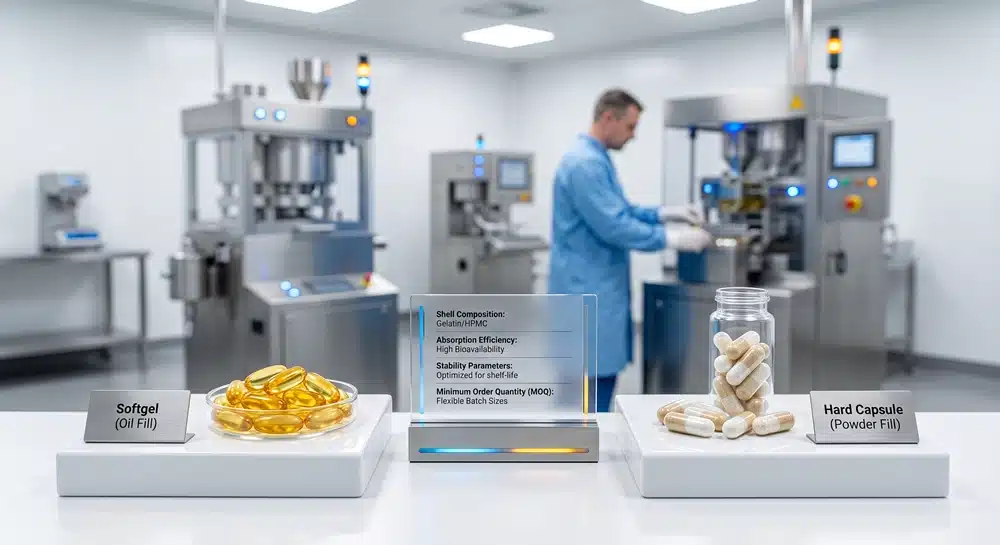
I. Định nghĩa và Giải thích
Viên nang mềm là loại viên nang một mảnh chứa chất lỏng, dầu, hỗn dịch hoặc chất lỏng bán rắn bên trong lớp vỏ gelatin dẻo hoặc làm từ nguồn gốc thực vật. Viên nang cứng là loại vỏ hai mảnh, chủ yếu chứa bột, hạt hoặc viên nén. Viên nang mềm thường phù hợp với các công thức tan trong chất béo và có gốc dầu; viên nang cứng thường phù hợp với các hỗn hợp khô, chứa nhiều thành phần.
Viên nang mềm, còn được gọi là viên nang gelatin mềm hoặc viên nang mềm, là dạng bào chế linh hoạt gồm một mảnh duy nhất. Vỏ viên nang thường được làm từ gelatin, nước và chất làm dẻo như glycerin hoặc sorbitol, mặc dù các hệ thống viên nang mềm dành cho người ăn chay có thể sử dụng tinh bột hoặc các chất tạo màng khác. Chất chứa bên trong thường là dầu, dung dịch lipid, hỗn dịch hoặc chất nền bán rắn.
Viên nang cứng là loại vỏ gồm hai phần: nắp và thân. Chúng thường được làm đầy bằng bột, hạt, viên nén hoặc hạt nhỏ. Vỏ làm từ gelatin, HPMC và pullulan là những lựa chọn phổ biến, tùy thuộc vào việc sản phẩm được định vị là sản phẩm tiêu chuẩn, dành cho người ăn chay hay sản phẩm cao cấp có nhãn sạch.
Viên nang mềm có được coi là viên nang không?
Đúng vậy. Viên nang mềm được coi là một loại viên nang, nhưng chúng không giống với viên nang vỏ cứng. Trong các tìm kiếm của người tiêu dùng, thuật ngữ “viên nang” thường dùng để chỉ viên nang vỏ cứng gồm hai phần, trong khi “viên nang mềm” dùng để chỉ viên nang một phần chứa chất lỏng bên trong.
Từ góc độ sản xuất, điểm khác biệt quan trọng không nằm ở từ “viên nang” mà là quy trình chiết rót. Viên nang mềm được tạo hình, nạp chất lỏng và niêm phong trong một quy trình liên tục sử dụng khuôn quay, trong khi viên nang cứng được sản xuất dưới dạng vỏ rỗng gồm nắp và thân, sau đó mới được nạp chất lỏng trên dây chuyền nạp viên nang. Sự khác biệt này ảnh hưởng đến độ ẩm của vỏ, thời gian sản xuất, dụng cụ gia công, kiểm soát rò rỉ và độ ổn định của sản phẩm thành phẩm.
II. Viên nang mềm so với viên nang cứng: Khả năng hấp thu
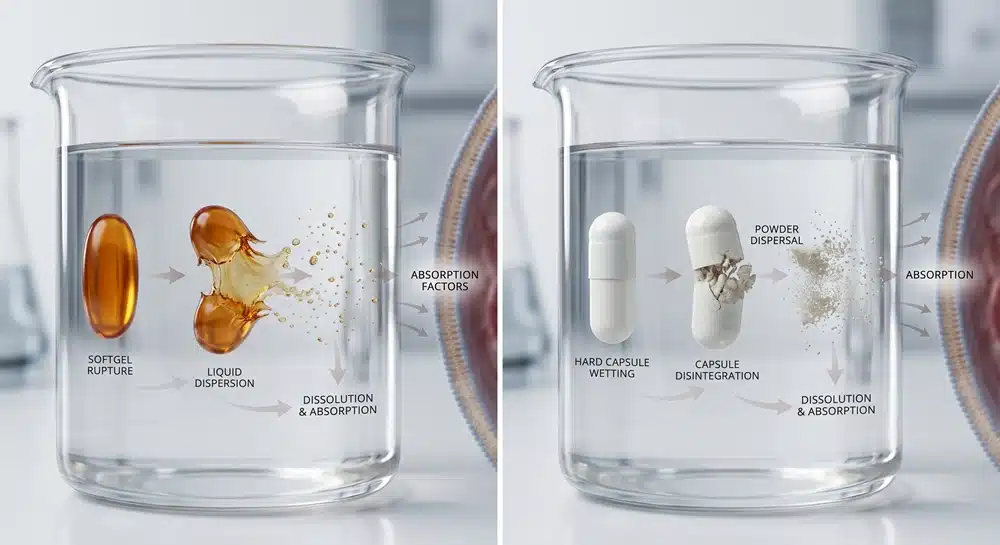
Viên nang mềm thường giải phóng chất lỏng bên trong nhanh hơn vì hoạt chất đã được phân tán trong chất mang dạng lỏng hoặc lipid. Đây là lý do tại sao viên nang mềm thường được lựa chọn để đóng gói dầu cá, omega-3, vitamin D, vitamin E, CoQ10, lutein, dung dịch phân tán dầu curcumin và các thành phần ưa lipid khác.
Tuy nhiên, việc vỏ viên nén vỡ nhanh hơn không tự động đồng nghĩa với hiệu quả lâm sàng cao hơn. Mức độ hấp thu thực tế phụ thuộc vào độ hòa tan của hoạt chất, kích thước hạt, dầu mang, hệ thống chất nhũ hóa, thời điểm dùng thuốc, cũng như việc công thức có vượt qua các thử nghiệm phân rã và hòa tan trong các điều kiện quy định hay không. Đối với các dự án B2B, các tuyên bố về khả năng hấp thu cần được chứng minh bằng dữ liệu cụ thể của sản phẩm thay vì dựa trên các giả định chung chung về dạng bào chế.
Viên nang cứng có thể giải phóng hoạt chất chậm hơn so với viên nang mềm khi được nạp bằng bột có độ đặc cao, các hoạt chất khó thấm ướt hoặc các hỗn hợp có hàm lượng hoạt chất cao. Tuy nhiên, chúng vẫn có thể hoạt động hiệu quả khi bột được nghiền mịn đúng cách, trộn với các tá dược phù hợp và được xác nhận thông qua thử nghiệm độ tan rã. Đối với các dược liệu khô, axit amin, khoáng chất, men vi sinh và các công thức thể thao đa thành phần, viên nang cứng thường mang lại sự cân bằng tốt hơn giữa độ ổn định, chi phí và tính linh hoạt trong ghi nhãn.
III. Viên nang mềm so với viên nang cứng: Lợi ích
Lợi ích của viên nang mềm:
- Rất phù hợp với các thành phần có nguồn gốc từ dầu và tan trong chất béo.
- Vỏ mềm mịn, dẻo dai, được nhiều người tiêu dùng đánh giá là dễ nuốt.
- Nắp đậy kín khí giúp giảm thiểu mùi của dầu cá và các loại dầu thực vật.
- Rất hữu ích để che bớt mùi vị nồng.
- Thiết kế ngoại hình cao cấp dành cho các dòng sản phẩm làm đẹp, omega và các công thức chuyên biệt.
Lợi ích của viên nang:
- Có thể linh hoạt sử dụng cho bột khô, hạt, viên nén và các hỗn hợp nhiều thành phần.
- Giảm độ phức tạp trong quy trình sản xuất đối với nhiều công thức.
- Việc lựa chọn kích thước viên nang và vật liệu vỏ trở nên dễ dàng hơn.
- Thích hợp để làm vỏ nang HPMC dành cho người ăn chay và thuần chay.
- Thường là lựa chọn tốt hơn khi số lượng đặt hàng tối thiểu (MOQ) thấp hơn và quá trình phát triển ở quy mô thử nghiệm diễn ra nhanh hơn.
For supplement brands, the practical benefit of softgels is formula protection for lipophilic actives such as fish oil, vitamin D, CoQ10, evening primrose oil, borage oil, and oil-soluble botanical extracts. The hermetic shell can reduce odor exposure and oxidation when paired with suitable antioxidants and barrier packaging. Hard capsules offer a different advantage: they are more flexible for dry powder blends, botanical extracts, amino acids, minerals, probiotics, and multi-ingredient sports nutrition formulas. Brands developing dry blends can review our Sản xuất thực phẩm bổ sung dạng viên nang khả năng, trong khi các dự án sử dụng dầu lại phù hợp hơn với Sản xuất viên nang mềm.
IV. Viên nang mềm: Cách sử dụng
Thông thường, viên nang mềm nên được nuốt nguyên viên cùng với nước. Không nên nhai, cắt, nghiền nát hoặc hòa tan viên nang mềm trừ khi nhãn sản phẩm có ghi rõ như vậy. Việc nhai viên nang mềm có thể làm dầu hoặc chất lỏng bên trong thoát ra sớm, gây ra vị khó chịu, mùi khó chịu, rò rỉ và lượng thuốc hấp thu không đồng đều.
Đối với các chất dinh dưỡng tan trong chất béo như vitamin D, vitamin E, omega-3, CoQ10 hoặc các carotenoid, việc uống viên nang mềm cùng với bữa ăn có chứa một lượng chất béo nhất định có thể giúp hỗ trợ quá trình hấp thu bình thường. Viên nang cứng cũng nên được sử dụng theo hướng dẫn trên nhãn sản phẩm. Một số sản phẩm viên nang có thể được mở ra và trộn với thức ăn, nhưng tuyệt đối không nên áp dụng cách này đối với các công thức giải phóng chậm, công thức bao tan trong ruột, công thức chứa men vi sinh hoặc các công thức nhạy cảm với hương vị.
V. Thuốc viên nang mất bao lâu để phát huy tác dụng?
Thời gian cần thiết để một sản phẩm dạng viên nang “phát huy tác dụng” phụ thuộc vào hoạt chất, liều lượng, tình trạng ăn uống, thời gian tan rã và chỉ số sinh học được đo lường. Một viên nang chứa caffeine có thể mang lại cảm giác rõ rệt ngay trong ngày, trong khi các sản phẩm vitamin, khoáng chất, collagen hoặc men vi sinh có thể cần vài tuần sử dụng đều đặn trước khi người dùng có thể đánh giá được kết quả.
Viên nang mềm thường giải phóng chất lỏng bên trong nhanh hơn so với viên nang cứng chứa bột, nhưng không có khoảng thời gian chung nào áp dụng cho tất cả các công thức. Phương pháp tốt nhất dành cho các thương hiệu thực phẩm chức năng là xác minh quá trình tan rã và hòa tan trong các điều kiện thử nghiệm được xác định rõ ràng, đồng thời tránh đưa ra các tuyên bố không có cơ sở trên nhãn sản phẩm như “có tác dụng ngay lập tức” hoặc “hấp thu hoàn toàn”.
Viên nang mềm có tác dụng nhanh hơn viên nang thông thường không?
Viên nang mềm có thể phát huy tác dụng nhanh hơn khi hoạt chất được hòa tan hoặc phân tán trong chất mang lỏng và sản phẩm được thiết kế để giải phóng nhanh. Tuy nhiên, chỉ riêng dạng bào chế thôi thì không đảm bảo tác dụng sinh học sẽ nhanh hơn. Độ hòa tan của hoạt chất, liều lượng, dầu mang, điều kiện tiêu hóa và các thử nghiệm cụ thể đối với sản phẩm mới là những yếu tố quyết định đến đặc tính giải phóng và hấp thu cuối cùng.
VI. Những nhược điểm của viên nang mềm là gì?
Viên nang mềm không phải là lựa chọn lý tưởng cho mọi công thức. Những nhược điểm chính của chúng bao gồm quy trình sản xuất phức tạp hơn, thời gian sấy khô lâu hơn, yêu cầu về khuôn mẫu và số lượng đặt hàng tối thiểu (MOQ) cao hơn, nhạy cảm hơn với nhiệt độ và độ ẩm, cũng như không tương thích với một số thành phần nhạy cảm với độ ẩm hoặc có tính phản ứng.
Thực trạng sản xuất: Viên nang mềm đòi hỏi các công đoạn chuẩn bị vỏ gelatin hoặc vỏ thực vật, đánh giá khả năng tương thích với chất lỏng, đóng viên bằng khuôn quay, sấy lắc, sấy khay, kiểm tra chất lượng và thử nghiệm rò rỉ. Giai đoạn sấy khô và cân bằng độ ẩm của vỏ là những nguyên nhân chính khiến viên nang mềm có thể có thời gian sản xuất dài hơn và số lượng đặt hàng tối thiểu cao hơn so với viên nang cứng. Trong quá trình vận chuyển vào mùa hè hoặc bảo quản ở môi trường có độ ẩm cao, viên nang mềm cũng có thể cần các tiêu chuẩn cao hơn về chai, vỉ, chất hút ẩm và thùng carton để giảm nguy cơ dính, biến dạng hoặc rò rỉ.
Viên nang cứng cũng có những hạn chế. Các công thức có liều lượng rất cao có thể đòi hỏi phải dùng nhiều viên nang cho mỗi lần dùng. Các loại bột có tính chảy kém, tính hút ẩm cao, mùi nồng hoặc mật độ thể tích thấp có thể cần tối ưu hóa tá dược, quá trình tạo hạt hoặc sử dụng dạng bào chế khác. Đối với các loại bột có liều lượng cao, Sản xuất thực phẩm bổ sung dạng bột có thể thực tế hơn so với cả viên nang mềm lẫn viên nang cứng.
VII. Viên nang mềm có tốt cho sức khỏe không?
Viên nang mềm có thể là một dạng thực phẩm bổ sung lành mạnh và phù hợp khi công thức, chất liệu vỏ nang, tá dược, quy trình kiểm soát sản xuất và chương trình kiểm nghiệm được thiết kế một cách khoa học. Mức độ an toàn của viên nang mềm phụ thuộc vào hoạt chất, liều lượng, thành phần gây dị ứng, kiểm soát quá trình oxy hóa, kiểm nghiệm vi sinh, giới hạn kim loại nặng và việc tuân thủ các yêu cầu cGMP đối với thực phẩm bổ sung.
Các thương hiệu nên tránh ngụ ý rằng viên nang mềm luôn tốt cho sức khỏe hơn viên nang cứng. Một cách diễn đạt phù hợp hơn là: viên nang mềm có thể hữu ích trong việc cung cấp các chất dinh dưỡng dạng dầu và tan trong chất béo, trong khi viên nang cứng có thể hữu ích cho các công thức bột khô. Dạng bào chế cần phù hợp với thành phần và mục đích sử dụng.
VIII. So sánh trực tiếp: Bảng ưu và nhược điểm
Bảng sau đây tóm tắt kết quả so sánh:
| Khía cạnh | Viên nang mềm | Viên nang cứng | Ghi chú về quyết định trong lĩnh vực B2B |
|---|---|---|---|
| Cấu trúc | Vỏ dẻo liền khối | Vỏ gồm hai phần: nắp và thân | Hữu ích cho các câu hỏi về định nghĩa: viên nang mềm là một loại viên nang, nhưng không phải là viên nang cứng. |
| Hình thức điền thông thường | Dầu, dung dịch lipid, huyền phù, chất bán rắn | Bột, hạt, viên nén, hạt nhỏ; một số hệ thống chiết rót chất lỏng | Phải lựa chọn dạng bào chế phù hợp với trạng thái của hoạt chất. |
| Thành phần phù hợp nhất | Dầu cá, vitamin D, vitamin E, CoQ10, các chiết xuất thực vật tan trong dầu | Thành phần thực vật, axit amin, khoáng chất, men vi sinh, peptit collagen, hỗn hợp khô | Tránh ép các loại bột khô có tính hút ẩm vào viên nang mềm. |
| Mô hình phát hành | Thường nhanh hơn khi đổ chất lỏng | Tùy thuộc vào vỏ viên, khả năng thấm ướt của bột, tá dược, độ tan rã | Không được khẳng định rằng sản phẩm được hấp thu nhanh hơn một cách phổ quát nếu không có dữ liệu về công thức. |
| Quy trình sản xuất | Chuẩn bị khối gel, đóng gói bằng khuôn quay, sấy khô, kiểm tra | Trộn bột, chiết rót vào viên nang, đánh bóng, phát hiện kim loại, đóng gói | Viên nang mềm thường đòi hỏi việc kiểm soát quy trình chuyên sâu hơn. |
| Các thử nghiệm kiểm soát chất lượng chính | Khối lượng đóng gói, độ ẩm vỏ, kiểm tra rò rỉ, độ tan rã, thử nghiệm peroxide/anisidine đối với dầu | Biến động trọng lượng, độ tan rã, vi sinh vật, kim loại nặng, định lượng | Sử dụng các thông số kỹ thuật phát hành dành riêng cho từng sản phẩm. |
| Nhu cầu về bao bì | Khả năng bảo vệ cao hơn trước nhiệt độ cao, độ ẩm, hiện tượng dính và quá trình oxy hóa | Chai/vỉ được lựa chọn dựa trên độ ổn định của thành phần và mức độ nhạy cảm với độ ẩm | Các viên nang mềm có thể cần các biện pháp kiểm soát khí hậu và vận chuyển chặt chẽ hơn. |
| Chi phí / Số lượng đặt hàng tối thiểu (MOQ) | Thường cao hơn do chi phí khuôn mẫu, sấy khô và thiết bị chuyên dụng | Thường có độ cao thấp hơn và linh hoạt hơn cho các đợt phóng thử nghiệm | Viên nang thường là lựa chọn phù hợp hơn cho các thử nghiệm thị trường ở giai đoạn đầu. |
| Kịch bản thương hiệu tốt nhất | Thực phẩm bổ sung cao cấp dạng dầu, đáp ứng nhu cầu che lấp mùi vị | Công thức khô đa thành phần đòi hỏi liều lượng linh hoạt và số lượng đặt hàng tối thiểu (MOQ) thấp hơn | Hãy tham khảo đánh giá về công thức trước khi đưa ra quyết định. |
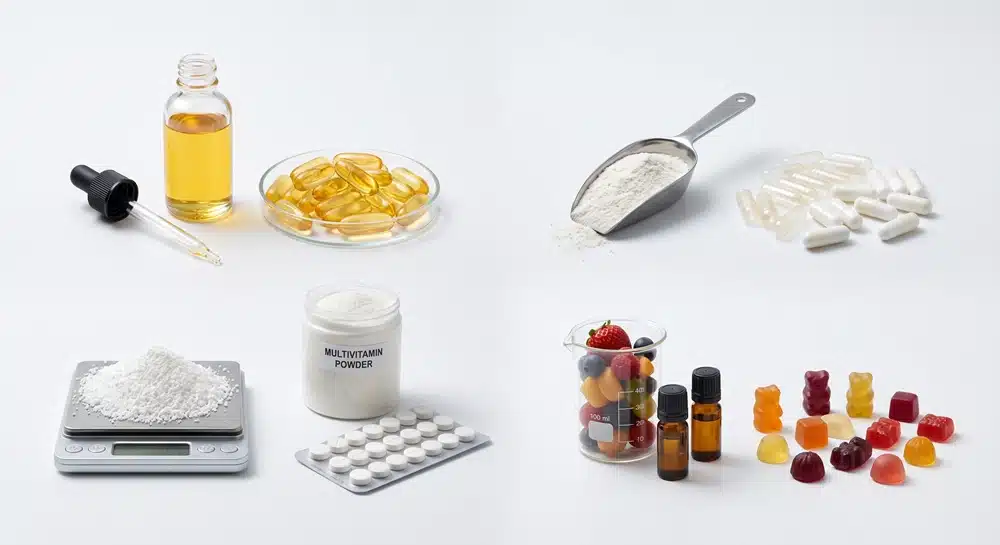
IX. Ma trận lựa chọn dạng bào chế trong lĩnh vực B2B
X. Sản xuất và Kiểm soát chất lượng: Những điều các thương hiệu cần tìm hiểu trước khi lựa chọn
Trước khi xác nhận thiết kế viên nang mềm hoặc viên nang cứng, các thương hiệu thực phẩm chức năng nên yêu cầu thực hiện đánh giá khả thi, bao gồm các yếu tố như dạng của hoạt chất, liều lượng mục tiêu, mật độ nạp, khẩu phần dự kiến, vật liệu vỏ, vị trí ghi thông tin về chất gây dị ứng, nguy cơ oxy hóa, tính hút ẩm, bao bì và các tuyên bố tiếp thị.
Một chương trình thử nghiệm trước khi đưa ra thị trường toàn diện có thể bao gồm các thử nghiệm xác định thành phần, định lượng, giới hạn vi sinh vật, kim loại nặng, độ tan rã, sự dao động về trọng lượng chất nạp hoặc trọng lượng viên nang, theo dõi độ ổn định và tính tương thích của bao bì. Đối với viên nang mềm gốc dầu, chỉ số peroxide, chỉ số anisidine và các biện pháp kiểm soát quá trình oxy hóa có thể rất quan trọng. Đối với viên nang cứng, độ chảy của bột, mật độ khối, hàm lượng độ ẩm và độ dao động trọng lượng viên nang thường có liên quan hơn.
Quá trình sản xuất phải tuân thủ các yêu cầu về Thực hành sản xuất tốt (cGMP) đối với thực phẩm chức năng, bao gồm nhân sự có trình độ, hồ sơ sản xuất theo lô, các biện pháp kiểm soát sản xuất, các biện pháp kiểm soát đóng gói và việc lập hồ sơ theo các quy định áp dụng tại 21 CFR Phần 111.
XI. Kết luận
Viên nang mềm và viên nang cứng đều là những dạng bào chế bổ sung dinh dưỡng hữu ích, nhưng chúng giải quyết các vấn đề công thức khác nhau. Viên nang mềm thường là lựa chọn tốt hơn cho các công thức có thành phần dầu, tan trong chất béo, nhạy cảm với mùi và thuộc phân khúc cao cấp. Viên nang cứng thường là lựa chọn tốt hơn cho các công thức dạng khô, chứa nhiều thành phần, có số lượng đặt hàng tối thiểu (MOQ) thấp và linh hoạt cho các sản phẩm mang thương hiệu riêng.
Lựa chọn tốt nhất không dựa trên một khẳng định chung chung rằng một dạng bào chế nào đó là “tốt hơn”. Điều này phụ thuộc vào tính chất hóa học của thành phần, liều lượng mục tiêu, đặc tính giải phóng, khả năng tương thích với vỏ bao, yêu cầu về độ ổn định, điều kiện đóng gói và kế hoạch ra mắt thương mại. Các thương hiệu có thể sử dụng giải pháp của Gensei hỗ trợ phát triển công thức theo yêu cầu để đánh giá xem một công thức nên được phát triển dưới dạng viên nang mềm, viên nang cứng, viên nén, kẹo dẻo, dung dịch hay bột.
XII. Câu hỏi thường gặp về viên nang mềm và viên nang cứng
Tài liệu tham khảo
- Tạp chí về tá dược và hóa chất thực phẩm. “Viên nang mềm chứa gelatin và không chứa gelatin: Một bài tổng quan.” Có thể truy cập tại: https://jefc.scholasticahq.com/article/25162-gelatin-and-non-gelatin-soft-gel-capsules-a-review.pdf
- Dược điển Hoa Kỳ (USP). “Chương chung Sự phân hủy và tan rã của thực phẩm chức năng.” Có tại: https://www.uspnf.com/sites/default/files/usp_pdf/EN/USPNF/revisions/genChapter2040.pdf
- Bộ luật Liên bang Điện tử (eCFR). “21 CFR Phần 111 – Thực hành sản xuất tốt hiện hành trong các hoạt động sản xuất, đóng gói, dán nhãn hoặc lưu trữ thực phẩm chức năng.” Có tại: https://www.ecfr.gov/current/title-21/chapter-I/subchapter-B/part-111
- Cơ quan Quản lý Thực phẩm và Dược phẩm Hoa Kỳ (FDA). “Các tuyên bố về cấu trúc/chức năng.” Có tại: https://www.fda.gov/food/nutrition-food-labeling-and-critical-foods/structurefunction-claims
- PubMed. Mã PMID tham khảo: 22814927. Có thể truy cập tại: https://pubmed.ncbi.nlm.nih.gov/22814927/

Warren Wan là một chuyên gia dày dạn với kinh nghiệm phong phú trong chuỗi cung ứng thực phẩm bổ sung, sở hữu kinh nghiệm thực tiễn sâu rộng trong nghiên cứu, phát triển, kiểm soát quy trình và tìm nguồn cung ứng toàn cầu các thành phần cốt lõi như peptit collagen, protein từ nước hầm xương và keratin. Với tư cách là tác giả của chuyên mục này, ông cam kết loại bỏ những lớp bao bọc tiếp thị, biến những kiến thức khoa học phức tạp về thành phần và các tiêu chuẩn kiểm soát chất lượng sản xuất thành những nội dung phổ biến khoa học dễ hiểu nhưng sâu sắc, giúp độc giả hiểu rõ sự thật đằng sau các nhãn mác và đưa ra những lựa chọn sức khỏe hợp lý hơn.


