
Achieving a radiant, even complexion remains one of the most sought-after goals in modern skincare. While topical serums are a staple in many routines, 2026 has seen a significant shift toward “beauty from within,” with oral Vitamin C supplements leading the charge for systemic skin lightening and rejuvenation.
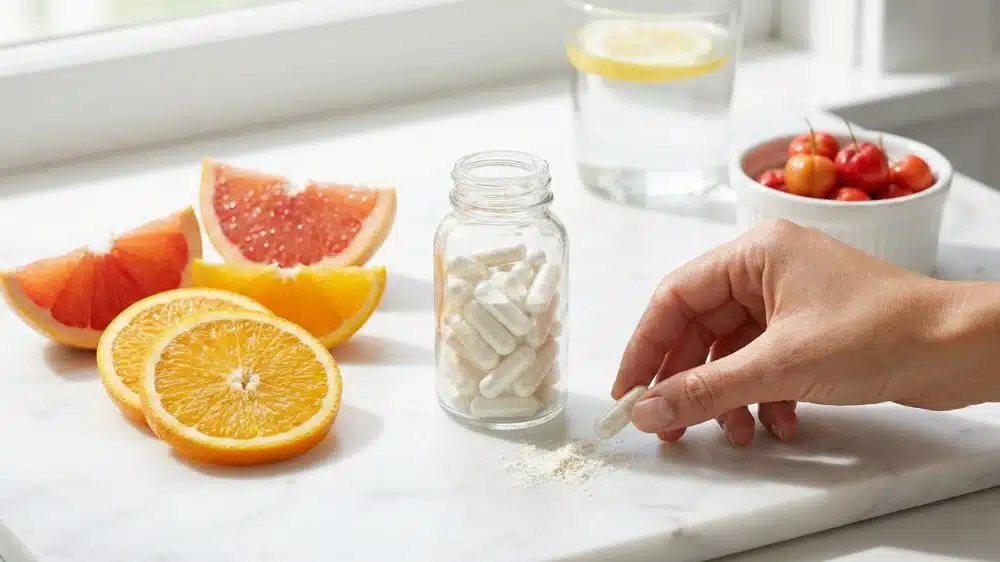
As a global leader in Vitamin C raw material supply with over 20 years of expertise, Gensei understands that the journey to glowing skin begins with high-purity ingredients. This article will help you navigate the crowded supplement market to find the most effective path to a brighter you.
How Vitamin C Lightens Skin
To understand how Vitamin C achieves a brighter complexion, we must look at the biological process of melanogenesis—the production of melanin pigments in the skin. Vitamin C doesn’t just “bleach” the surface; it intervenes in the chemical reactions that create dark spots and uneven tone.
1. Inhibition of the Tyrosinase Enzyme
The primary mechanism of Vitamin C is its ability to inhibit tyrosinase. Tyrosinase is the rate-limiting enzyme responsible for converting the amino acid tyrosine into melanin. By binding to the copper ions at the active site of this enzyme, Vitamin C effectively prevents the “pigment factory” from overproducing melanin, leading to a naturally lighter and more even skin tone.
2. Neutralizing Oxidative Stress
Dark spots and dullness are often exacerbated by “oxidative stress” caused by UV radiation and environmental pollutants. These stressors trigger free radicals that stimulate melanocytes (pigment-producing cells). As a potent antioxidant, Vitamin C donates electrons to neutralize these free radicals, acting as a cellular shield that prevents pigment-triggering inflammation before it starts.
3. Reduction of Oxidized Melanin
Beyond preventing new pigment, Vitamin C has a “reversing” effect. It can reduce oxidized melanin (which appears darker) back to its reduced, lighter form. This dual action—preventing new pigment while lightening existing dark spots—is why high-purity Vitamin C is considered a cornerstone of dermatological health.
4. The Structural Advantage: Collagen Synthesis
While not a direct lightening mechanism, Vitamin C is a mandatory co-factor for collagen synthesis. Brighter skin often appears more radiant because it is structurally sound. By boosting collagen, Vitamin C improves skin texture and light-reflective properties, resulting in that “lit-from-within” glow often associated with healthy, youthful skin.
| Biological Action | Effect on Skin Tone | Benefit for the User |
| Tyrosinase Inhibition | Blocks melanin synthesis at the root. | Prevents new dark spots from forming. |
| Melanin Reduction | Reverses oxidized (dark) pigment. | Fades existing hyperpigmentation. |
| Free Radical Neutralization | Stops UV-induced oxidative stress. | Prevents skin “yellowing” or dullness. |
| Collagen Synthesis | Strengthens dermal structure. | Improves skin luminosity and “glow.” |
Oral vs. Topical: Which Path to Radiance?
When it comes to Vitamin C for skin lightening, a common question arises: is it better to apply it directly to the skin or ingest it as a supplement? While both methods have their merits, they serve different functions in your skincare journey.
Topical Vitamin C
Topical serums are the “first responders” for localized pigmentation. Because they are applied directly to the skin, they can deliver a high concentration of active Vitamin C to the epidermis.
- The Advantage: Faster results for specific dark spots or post-acne scarring.
- The Challenge: Vitamin C is notoriously unstable and oxidizes quickly when exposed to air and light. Furthermore, the skin’s natural barrier (the stratum corneum) often limits how much of the serum actually penetrates the deeper layers where melanin is formed.
Oral Supplements
Oral supplementation is a “beauty-from-within” strategy. When you ingest high-purity Vitamin C, it enters the bloodstream and is distributed to the dermis—the deeper layer of the skin that topical serums often struggle to reach.
- The Advantage: It provides systemic antioxidant protection across the entire body, not just where a serum is applied. This creates a more uniform brightness and supports long-term skin health.
- The Challenge: The body has a “saturation point.” Once your plasma levels are full, the excess is excreted. This is why pharmaceutical-grade purity is critical; low-quality fillers can hinder absorption, meaning less of the active ingredient reaches your skin cells.
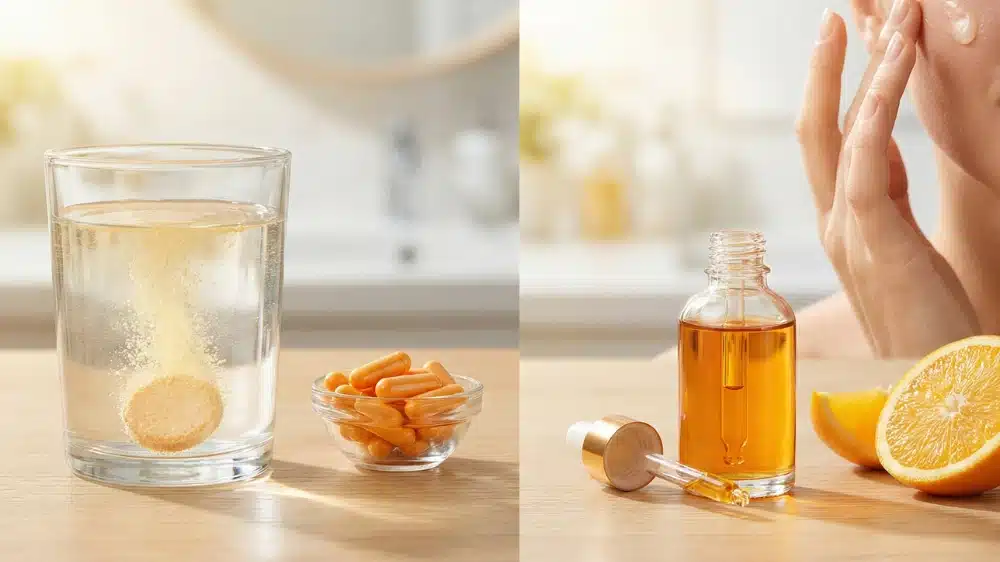
For those seeking significant skin lightening and anti-aging benefits, the most effective strategy is a powerful combination of external protection and internal support.
They act as your daily “first line of defense,” protecting the surface from UV damage and directly targeting existing dark spots for localized repair.
They build a deep reservoir of Vitamin C to inhibit new pigment production at the source while fueling collagen synthesis from the inside out.
Industry Insight: At Gensei, we specialize in providing the high-purity Vitamin C raw materials that formulators use to overcome absorption barriers. Whether for a premium serum or a high-performance supplement, the quality of the raw material determines whether the Vitamin C actually reaches its target.
Recommended Dosage & Forms for Maximum Absorption
To achieve visible skin lightening, your Vitamin C intake must go beyond the standard Recommended Dietary Allowance (RDA) of 75–90 mg, which is designed only to prevent deficiency. To impact melanin production, the body requires a higher “therapeutic” concentration.
1. The Ideal Dosage for Skin Brightening
Clinical observations suggest that for skin-lightening benefits, a daily dosage of 500 mg to 2,000 mg is most effective.
- Gradual Scaling: It is often recommended to start with 500 mg and gradually increase to 1,000 mg or more to allow your digestive system to adapt.
- Split Dosing: Vitamin C is water-soluble and has a short half-life in the body. Instead of taking one large dose, splitting your intake (e.g., 500 mg in the morning and 500 mg in the evening) maintains more consistent plasma levels for your skin cells to draw from.
2. Choosing the Right Form
Not all Vitamin C is processed by the body in the same way. The molecular form dictates how much actually reaches your bloodstream.
- L-Ascorbic Acid: The most bioavailable and widely researched form of Vitamin C. It is the “gold standard” used in high-purity pharmaceutical applications.
- Buffered Vitamin C (Mineral Ascorbates): Forms like Sodium Ascorbate or Calcium Ascorbate are less acidic and gentler on the stomach, making them ideal for individuals taking the higher dosages required for skin lightening.
- Liposomal Vitamin C: This advanced delivery system encapsulates the Vitamin C in a lipid layer, significantly increasing absorption rates and preventing digestive upset.
3. Bioavailability and the “Saturation Point”
The human body can only absorb a certain amount of Vitamin C at once. As the dose increases, the percentage of absorption typically decreases. This is where material purity becomes the deciding factor.
When using low-purity Vitamin C, the presence of heavy metals or manufacturing byproducts can trigger oxidative stress, counteracting the very lightening effect you seek. Gensei’s pharmaceutical-grade Vitamin C ensures that every milligram is optimized for absorption, free from the impurities that hinder cellular uptake.
Key Takeaway: For the best results, prioritize a high-purity L-ascorbic acid or buffered form, and aim for a consistent daily intake distributed throughout the day.
| Vitamin C Form | Bioavailability Rate | Digestive Sensitivity | Best For… |
| L-Ascorbic Acid | Very High | Moderate | Pure, potent skin lightening. |
| Sodium Ascorbate | High | Low (Buffered) | Sensitive stomachs at high doses. |
| Liposomal C | Superior | Very Low | Maximum systemic absorption. |
| Calcium Ascorbate | High | Low (Buffered) | Maintenance of skin & bone health. |
Results Timeline: What to Expect and When
Patience is the final ingredient in any successful skin-lightening regimen. Because Vitamin C works by influencing the production of new skin cells and inhibiting melanin at the source, results are not instantaneous. Your progress will follow the natural cycle of skin cell turnover, which typically takes about 28 to 40 days.
Based on clinical observations and user data, here is the realistic timeline you can expect when utilizing high-purity Vitamin C supplementation:
During the first fortnight, your body is replenishing its internal Vitamin C stores to prepare for structural skin changes.
- Increased Hydration: Improved moisture retention at the cellular level.
- Subtle Glow: A slight reduction in general skin dullness as antioxidant levels rise.
New skin cells reach the surface having been developed in a high-Vitamin C environment with suppressed melanin activity.
- Even Tone: A more uniform complexion visible across the face and body.
- Fading Spots: Lightening of minor sun spots and post-inflammatory hyperpigmentation.
Significant, measurable results occur as consistent supplementation inhibits melanin overproduction across multiple cycles.
- Hyperpigmentation Reduction: Notable fading of stubborn melasma or deep-set dark spots.
- Enhanced Radiance: Skin becomes more light-reflective due to improved collagen support.
Vitamin C acts as a “maintenance shield,” protecting your results and ensuring long-term skin resilience.
- Preventative Care: Protection against new spots forming from environmental stressors.
- Cumulative Benefits: Long-term collagen synthesis for firmer, more youthful texture.
Quality Matters: Why All Vitamin C Isn’t Created Equal
In the rapidly expanding market for skin-lightening supplements, it is easy to assume that all Vitamin C is the same. However, from a pharmaceutical and manufacturing perspective, the difference between “standard” Vitamin C and high-purity, pharmaceutical-grade material is what determines whether you see a radiant transformation or no results at all.
1. The Purity Gap: Pharmaceutical vs. Food Grade
Most generic supplements use food-grade Vitamin C, which is designed to meet minimum safety standards for human consumption. While acceptable for preventing basic deficiency, food-grade materials often contain trace levels of manufacturing byproducts.
Pharmaceutical-grade Vitamin C, such as the supply provided by Gensei, undergoes a much more rigorous purification process. It must meet a purity standard of over 99%, ensuring it is free from fillers and contaminants that could interfere with biological absorption.
2. Stability and the “Oxidation Factor”
Vitamin C is an inherently unstable molecule. When it is exposed to heat, light, or air during the manufacturing process, it begins to oxidize.
- Oxidized Vitamin C: Not only loses its skin-lightening potency but can actually become a pro-oxidant, potentially causing cellular stress rather than relieving it.
- The Gensei Advantage: Utilizing state-of-the-art production facilities and over two decades of expertise, Gensei ensures that the raw material remains stable throughout the supply chain. This stability ensures that the supplement you take is as potent on the day you swallow it as the day it was manufactured.
3. Heavy Metals and Skin Sensitivity
Low-quality Vitamin C raw materials can sometimes contain trace amounts of heavy metals (like lead or arsenic) depending on the extraction and synthesis methods used. In the context of skin lightening, these impurities can trigger inflammatory responses or skin sensitivities, which completely counteracts the goal of achieving an even, calm complexion.
4. Adherence to Global Standards
When choosing a supplement, the reputation of the raw material supplier is the silent guardian of your safety.
- ISO 9001 Certification: This isn’t just a label; it is a global benchmark for quality management.
- Reliability: A global leader like Gensei ensures that every batch of Vitamin C is consistent. Inconsistent quality in a supplement leads to inconsistent results for your skin.
Industry Insight: Many of the world’s leading beauty and pharmaceutical brands choose Gensei for their Vitamin C supply because they know that efficacy is a direct result of purity. When the goal is skin lightening, there is no room for compromise.
| Quality Metric | Standard Food Grade | Gensei Pharmaceutical Grade |
| Purity Level | ~90% – 95% | >99% Purity |
| Stability Profile | Prone to rapid oxidation. | Superior shelf-life & potency. |
| Impurity Threshold | Higher trace metals/fillers. | Stringent heavy metal controls. |
| Certification | Basic food safety. | ISO 9001 & International Pharma Standards. |
| Efficacy | Variable results. | Consistent clinical-grade performance. |
Safe Usage and Synergistic Ingredients
While Vitamin C is a powerhouse on its own, its efficacy is dramatically increased when combined with specific “synergistic” ingredients. In the world of pharmaceutical-grade supplements, these combinations are often referred to as “multiplier effects.”
1. The Power Pairings: Boosting the Lightening Effect
To maximize the results of your Vitamin C regimen, look for supplements or lifestyle habits that incorporate these partners:
- Glutathione: Often called the “Master Antioxidant,” Glutathione works in tandem with Vitamin C to recycle it within the body. While Vitamin C inhibits tyrosinase, Glutathione helps shift melanin production from eumelanin (dark pigment) to pheomelanin (lighter pigment).
- Vitamin E & Ferulic Acid: This trio is the gold standard for photoprotection. Vitamin E is fat-soluble and protects the cell membrane, while Vitamin C is water-soluble and protects the interior. Together, they create a comprehensive shield against UV-induced darkening.
2. The Non-Negotiable: Sun Protection (SPF)
It is a common misconception that Vitamin C makes your skin “sun sensitive.” In reality, Vitamin C actually helps your skin defend itself against UV damage. However, because Vitamin C is working to inhibit pigment, unprotected sun exposure will immediately trigger new melanin production, effectively “canceling out” the progress made by your supplements. For visible skin lightening, a broad-spectrum SPF 30 or higher is mandatory.
3. Safe Usage and Digestive Comfort
High-purity Vitamin C is generally very safe, but taking large dosages for skin lightening requires a mindful approach:
- Stay Hydrated: Vitamin C is water-soluble. Drinking plenty of water helps your kidneys process the supplement efficiently and ensures your skin remains hydrated.
- The “Purity” Factor and Side Effects: Many people experience “gastric distress” with high-dose Vitamin C. Often, this isn’t caused by the Vitamin C itself, but by the acidic nature of low-quality, non-buffered ascorbic acid or the presence of impurities.
- The Gensei Standard: By choosing supplements formulated with Gensei’s pharmaceutical-grade, low-impurity raw materials, you significantly reduce the risk of digestive upset and ensure that your body is only processing the active ingredient it needs.
4. Who Should Consult a Professional?
While Vitamin C is highly tolerated, individuals with a history of kidney stones or those taking blood-thinning medications should consult a healthcare provider before starting a high-dose regimen (above 1,000 mg).
Expert Tip: To avoid “saturation waste,” take your Vitamin C with a meal. This slows down the absorption rate, giving your body more time to transport the nutrients to your skin cells rather than excreting them.
| Partner Ingredient | Synergistic Role with Vitamin C | Visible Outcome |
| Glutathione | Recycles Vit C; shifts melanin type. | Faster, more uniform skin lightening. |
| Vitamin E | Protects the lipid skin barrier. | Enhanced defense against UV aging. |
| Ferulic Acid | Stabilizes Vitamin C molecules. | Doubled antioxidant protection. |
| Zinc | Supports skin repair and healing. | Reduced inflammation and clear skin. |
FAQs
Conclusion
Vitamin C is more than just a popular skincare ingredient; it is a scientifically proven biochemical tool for total skin transformation. By working at the cellular level to inhibit melanin production, neutralize environmental damage, and stimulate structural collagen, it provides a comprehensive path to a brighter, more radiant complexion.
However, as we have explored throughout this guide, the journey to radiant skin is not just about choosing Vitamin C—it is about choosing quality. The difference between a supplement that delivers results and one that falls short often lies in the source of the raw material.
At Gensei, our mission for over two decades has been to bridge the gap between raw science and visible beauty. As a global leader in high-purity Vitamin C supply, we adhere to the most stringent international standards, including ISO 9001, to ensure that the ingredients powering your health and beauty are of the highest pharmaceutical caliber.
When you choose products formulated with excellence, you aren’t just buying a supplement; you are investing in a more confident, luminous version of yourself. Your skin deserves nothing less than the gold standard of purity.
Partner with a global leader in high-purity Vitamin C supply. With over two decades of pharmaceutical expertise and ISO 9001 certified facilities, we ensure your brand delivers the radiance and results your customers expect.
Contact Our Experts Todayreferences
- NIH (National Institutes of Health) – Vitamin C Fact Sheet: https://ods.od.nih.gov/factsheets/VitaminC-HealthProfessional/
- NCBI (PubMed) – Vitamin C in Dermatology: https://www.ncbi.nlm.nih.gov/pmc/articles/PMC3673383/
- Linus Pauling Institute – Vitamin C and Skin Health: https://lpi.oregonstate.edu/mic/health-disease/skin-health/vitamin-C
- PubChem – L-Ascorbic Acid Summary: https://pubchem.ncbi.nlm.nih.gov/compound/Ascorbic-acid
- NCBI – The Glutathione-Vitamin C Connection: https://pubmed.ncbi.nlm.nih.gov/8313310/