Alpha-Lipoic Acid vs CoQ10: Quick Answer
Alpha-lipoic acid is usually the better choice for antioxidant support, metabolic wellness, healthy glucose metabolism positioning and nerve health formulas. CoQ10 is usually the better choice for heart health, mitochondrial energy, healthy aging and premium softgel products. For advanced mitochondrial support formulas, ALA and CoQ10 can also be combined, but brands must evaluate dosage form, absorption, stability, cost and compliant claim language before production.
Introduction
Alpha-lipoic acid and Coenzyme Q10 are two popular antioxidant ingredients used in dietary supplements, but they are not the same ingredient and should not be positioned in the same way. For consumers, the question is often simple: “Which one should I take?” For supplement brands, however, the better question is: which ingredient fits your product positioning, dosage form, claim strategy, cost structure, and OEM production route?
Alpha-lipoic acid, often abbreviated as ALA, is commonly used in formulas positioned around antioxidant support, metabolic wellness, nerve health, and cellular energy metabolism. Coenzyme Q10, often called CoQ10, is more commonly associated with heart health, mitochondrial support, cellular energy production, and healthy aging.
At Gensei, we work with supplement brands that need ingredient sourcing, formula direction, and OEM production coordination for antioxidant, heart health, metabolic support, and healthy aging products. In practice, Alpha-lipoic acid and CoQ10 are both mature ingredients in the global supplement supply chain. The real challenge for many brands is not finding a “secret” technology, but choosing the right ingredient form, dosage format, supplier documentation, claim direction, and manufacturing partner for the target market.
This guide compares Alpha-lipoic acid vs CoQ10 from a practical supplement development perspective. Instead of only discussing general health benefits, we will look at ingredient positioning, evidence strength, dosage form selection, formulation challenges, OEM considerations, and practical product development ideas for supplement brands.
Quick Comparison: Alpha-Lipoic Acid vs CoQ10
| Comparison Point | Alpha-Lipoic Acid | Coenzyme Q10 | Brand Decision |
|---|---|---|---|
| Best-known role | Antioxidant support, metabolic wellness, nerve health and cellular redox balance | Heart health, mitochondrial energy, lipid antioxidant protection and healthy aging | Use ALA for metabolic and nerve-support positioning; use CoQ10 for heart and energy positioning. |
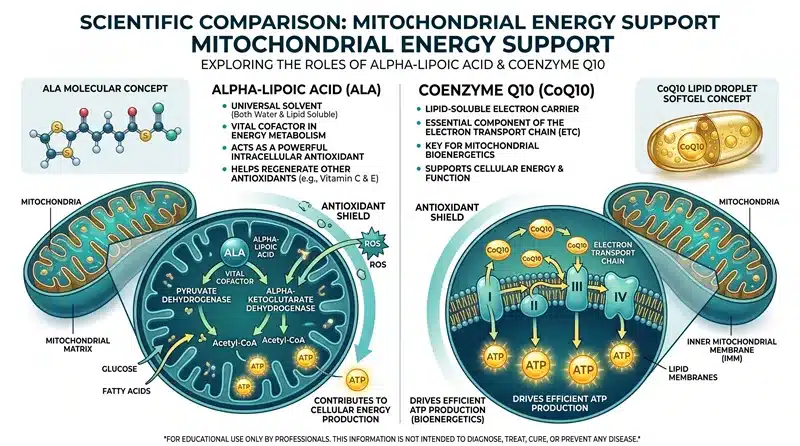
| Biological positioning | Involved in mitochondrial enzyme systems and antioxidant recycling | Participates in mitochondrial electron transport and ATP production | Both fit mitochondrial formulas, but they support different parts of the story. |
| Common ingredient forms | R/S alpha-lipoic acid, R-alpha-lipoic acid, stabilized R-ALA salts | Ubiquinone, ubiquinol, solubilized CoQ10, emulsified or microencapsulated CoQ10 | Ingredient form affects price, claim positioning, stability and dosage form. |
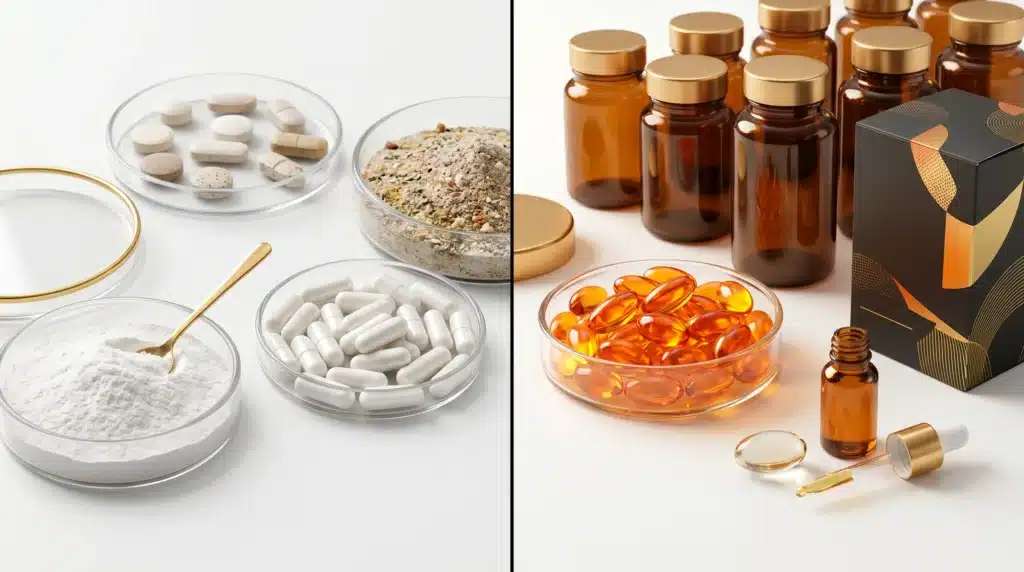
| Best dosage formats | Capsules, tablets, powder blends and combination formulas | Softgels, oil-based capsules, premium capsules, gummies with dispersion technology | ALA is easier in dry formats; CoQ10 often benefits from oil-based or enhanced delivery systems. |
| Main manufacturing challenge | Sulfur-like odor, taste masking, flowability, stability and blend compatibility | Poor water solubility, absorption, oxidation control, suspension uniformity and oil dispersion | ALA projects need sensory and powder-handling control; CoQ10 projects need delivery-system planning. |
| Best product concept | Metabolic support capsule, antioxidant complex, nerve health formula | Heart health softgel, healthy aging formula, mitochondrial energy product | Choose by target claim, dosage form, consumer awareness and target price. |
What Is Alpha-Lipoic Acid?
Alpha-lipoic acid is a naturally occurring compound involved in mitochondrial energy metabolism. It is often described as an antioxidant because it participates in redox reactions and is connected with cellular oxidative balance. In supplement products, ALA is commonly positioned for antioxidant defense, metabolic wellness, nerve health, and healthy glucose metabolism support.
For supplement brands, ALA is attractive because it is versatile. It can be used as a standalone capsule ingredient or combined with other nutrients in formulas targeting metabolic wellness, antioxidant support, healthy aging, or nerve health. Compared with some premium branded ingredients, ALA is also relatively familiar in the raw material market, which makes it suitable for both private label products and customized formulas.
However, ALA is not always the easiest ingredient to formulate. Depending on the raw material grade and final dosage form, brands and OEM partners may need to manage odor, taste, powder flow, excipient compatibility, dosage strength, and long-term stability. These issues are especially important when ALA is used in powders, chewables, gummies, or drink mixes.
From a product development perspective, ALA is usually a stronger fit for capsules, tablets, and powder blends than for oil-based softgel products. It may also be used in combination formulas with ingredients such as acetyl-L-carnitine, B vitamins, chromium, cinnamon extract, magnesium, or other antioxidant nutrients, depending on the target market and local regulatory requirements.
What Is Coenzyme Q10?
Coenzyme Q10 is a fat-soluble, vitamin-like compound naturally present in the body. It plays a role in mitochondrial energy production and also functions as an antioxidant in lipid environments. In dietary supplements, CoQ10 is widely used in formulas positioned for heart health, cellular energy, mitochondrial support, and healthy aging.
For supplement brands, CoQ10 is a premium ingredient with strong consumer recognition. It is especially common in softgels because its fat-soluble nature makes oil-based delivery more practical. CoQ10 can also be formulated into capsules, gummies, and powders, but brands should pay close attention to dispersion, content uniformity, bioavailability positioning, and finished-product stability.
The key challenge with CoQ10 is absorption. Standard CoQ10 is poorly soluble in water, so the formulation format can significantly influence product performance, consumer perception, and marketing positioning. For this reason, many brands choose oil-based softgels, emulsified systems, or other advanced delivery technologies when developing CoQ10 products.
Ingredient Forms: R-ALA, Standard ALA, Ubiquinone and Ubiquinol
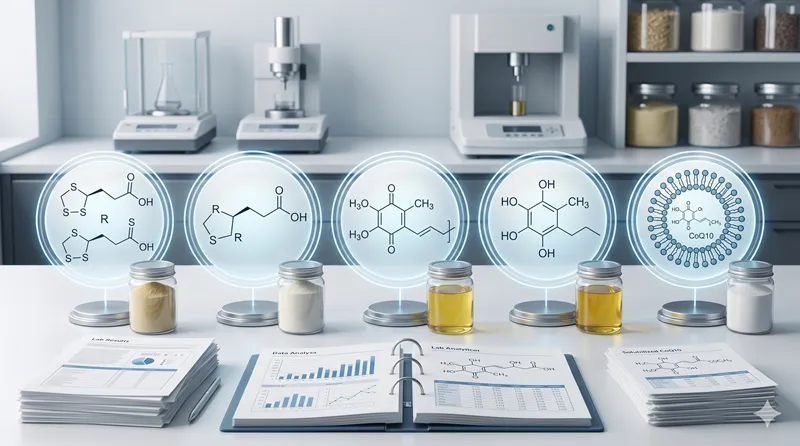
For supplement brands, the ingredient name on the label is only the starting point. The commercial form of the raw material can affect price, stability, supplier availability, dosage form, consumer positioning and documentation requirements.
| Ingredient Form | What It Means | Best Use Case | Manufacturing Note |
|---|---|---|---|
| Standard alpha-lipoic acid | Commonly supplied as a racemic R/S mixture | Cost-effective antioxidant, metabolic support and nerve health formulas | Good starting point for capsules and tablets; evaluate odor, flowability and stability. |
| R-alpha-lipoic acid | The naturally occurring enantiomer of lipoic acid | Premium ALA formulas and advanced mitochondrial support products | Often higher cost; brands should check assay, stability and supplier documentation carefully. |
| Ubiquinone | The oxidized form of CoQ10 and the most common commercial form | Mainstream CoQ10 softgels, heart health products and healthy aging formulas | Usually more cost-effective; works well in oil-based softgels or enhanced delivery systems. |
| Ubiquinol | The reduced form of CoQ10, often marketed as a premium form | Premium healthy aging, advanced energy and high-end CoQ10 products | May require more careful oxidation control, packaging and stability review. |
| Solubilized or microencapsulated CoQ10 | CoQ10 processed to improve dispersion or delivery positioning | Capsules, powders, gummies, stick packs and advanced delivery products | Useful when softgels are not the desired format, but cost and process feasibility must be reviewed. |
For brands, the practical decision is not simply “R-ALA vs ALA” or “ubiquinone vs ubiquinol.” The better question is whether the ingredient form supports the product’s price point, dosage form, label claim, stability target and consumer education strategy.
Evidence and Claim Positioning: What Can Supplement Brands Say Safely?
When developing an Alpha-lipoic acid or CoQ10 supplement, brands should separate scientific research from marketing claims. Both ingredients have been studied in relation to specific health conditions, but dietary supplement marketing should avoid disease treatment claims unless permitted by the relevant regulatory framework.
Alpha-Lipoic Acid Evidence Positioning
ALA has been studied in relation to glucose metabolism, oxidative stress, and nerve-related outcomes. Some research has explored its role in people with diabetes-related complications, but public health sources also note that evidence remains mixed for many diabetes-related outcomes. Therefore, supplement brands should avoid disease treatment claims such as “treats diabetes,” “reverses neuropathy,” or “lowers blood sugar in diabetic patients.”
A safer structure/function positioning may include:
- Supports antioxidant defense
- Helps support healthy glucose metabolism
- Supports nerve health
- Supports cellular energy metabolism
- Helps maintain healthy oxidative balance
CoQ10 Evidence Positioning
CoQ10 has been studied for heart health, mitochondrial function, migraine-related outcomes, statin-associated muscle symptoms, and blood pressure. However, evidence varies by condition, and some public health sources describe the evidence as limited or inconsistent for certain uses. For supplement brands, this means CoQ10 is best positioned as a heart health, energy, and mitochondrial support ingredient rather than a disease-treatment ingredient.
A safer structure/function positioning may include:
- Supports heart health
- Supports cellular energy production
- Supports mitochondrial function
- Helps maintain antioxidant protection in lipid environments
- Supports healthy aging and vitality
Evidence Strength and Safer Claim Direction
ALA and CoQ10 both have scientific research behind them, but supplement brands should avoid overstating disease-related outcomes. A practical way to build compliant copy is to separate scientific interest from commercial label language.
| Research Area | Ingredient | Safer Structure/Function Direction | High-Risk Claim to Avoid |
|---|---|---|---|
| Oxidative stress and antioxidant defense | ALA or CoQ10 | Supports antioxidant defense and helps maintain healthy oxidative balance | Prevents oxidative-stress-related disease |
| Glucose metabolism | ALA | Supports healthy glucose metabolism already within the normal range | Treats diabetes or lowers blood sugar in diabetic patients |
| Nerve health | ALA | Supports nerve health and cellular function | Reverses neuropathy or repairs nerve damage |
| Heart health | CoQ10 | Supports heart health and cellular energy production | Cures heart failure or prevents cardiovascular disease |
| Statin-related positioning | CoQ10 | Supports CoQ10 levels and muscle energy metabolism | Treats statin-induced muscle pain or replaces medication |
| Mitochondrial energy | ALA + CoQ10 | Supports mitochondrial function and cellular energy metabolism | Treats chronic fatigue, mitochondrial disease or neurological disease |
Claims Brands Should Avoid
Supplement brands should avoid claims that suggest the product can diagnose, treat, cure, or prevent disease. Examples of risky claims include:
- “Treats diabetes”
- “Reverses neuropathy”
- “Cures heart failure”
- “Lowers blood pressure”
- “Prevents cardiovascular disease”
- “Replaces statin medication”
- “Treats anxiety”
- “Repairs nerve damage”
A better approach is to use compliant structure/function language, support claims with appropriate substantiation, and include the required dietary supplement disclaimer when applicable.
Gensei’s Practical Experience with ALA and CoQ10 Projects
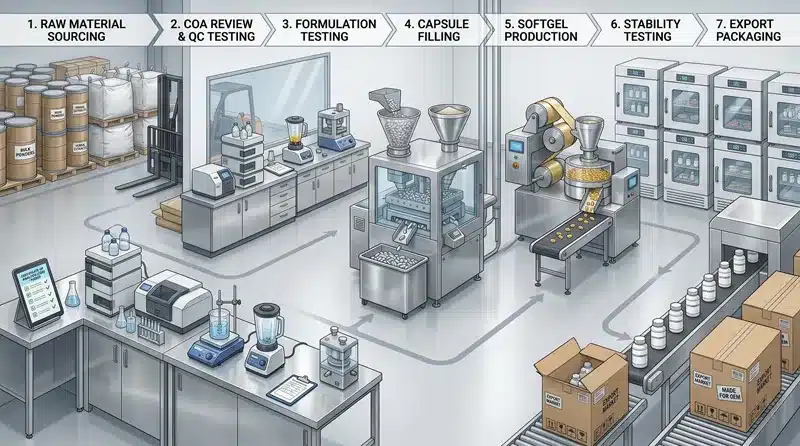
Alpha-lipoic acid and CoQ10 are not new or rare ingredients. In China’s supplement supply chain, the basic raw material supply and finished-product OEM technologies for these two ingredients are already relatively mature. For most supplement brands, the value is not in claiming that one factory has a completely unique process. The real value is in making the right commercial and technical decisions before production begins.
Practical Project Example: When a Two-Product Bundle Works Better Than One Complex Formula
In some ALA + CoQ10 projects, brands initially want to put every active ingredient into one capsule or powder. In practice, this can create avoidable problems: ALA may require odor and flowability control, while CoQ10 may require oil dispersion or enhanced delivery technology. When the target claims include both metabolic support and heart health, a two-product bundle can sometimes be more realistic than a single overloaded formula.
For example, a brand may launch one ALA-based capsule focused on antioxidant and metabolic wellness, together with one CoQ10 softgel focused on heart health and cellular energy. This approach can reduce formulation conflict, improve consumer education, create a higher perceived value bundle and make OEM partner selection easier.
This is why Gensei evaluates ingredient form, dosage form, MOQ, supplier documents, label claim strategy and production route before recommending a final formula direction.
From our work in ingredient trading and OEM project coordination, Gensei usually helps brands evaluate five practical questions.
First, which ingredient better matches the product positioning? ALA is usually more suitable for metabolic support, antioxidant support, and nerve health formulas. CoQ10 is usually more suitable for heart health, cellular energy, mitochondrial support, and healthy aging products.
Second, which dosage form is more realistic? ALA is commonly developed into capsules, tablets, or powder blends. CoQ10 is often better suited for softgels or oil-based capsules because it is fat-soluble and has bioavailability considerations.
Third, what quality documents are needed? Brands often need COA, specification sheets, allergen statements, GMO statements, heavy metal reports, microbial test results, residual solvent information, and other documentation depending on the target market.

Fourth, which OEM partner is suitable for the project? Different OEM factories may have different strengths in capsules, tablets, softgels, gummies, powders, packaging, MOQ, testing, and export documentation. Gensei can help brands communicate requirements and match projects with suitable production resources.
Fifth, how should the formula be positioned compliantly? ALA and CoQ10 should not be marketed with disease-treatment claims. Instead, brands should use safer structure/function language such as “supports antioxidant defense,” “supports heart health,” “supports cellular energy production,” or “helps maintain healthy glucose metabolism.”
For ALA products, the most common development direction is capsule or tablet manufacturing. Brands should pay attention to raw material odor, flowability, dosage strength, excipient compatibility, and packaging protection from moisture and heat. For powder products, taste masking and flavor design may also be important.
For CoQ10 products, the most common premium direction is softgel manufacturing. Since CoQ10 is fat-soluble, brands often consider oil-based delivery systems, oxidation control, suspension uniformity, and softgel appearance. CoQ10 can also be used in capsules, gummies, or powders, but these formats may require more attention to dispersion and content uniformity.
Gensei’s role is to help supplement brands make these decisions more efficiently. We do not position ALA or CoQ10 as “one-size-fits-all” ingredients. Instead, we help brands compare ingredient form, dosage form, supplier documents, OEM feasibility, cost structure, and market positioning before moving into production.
Formulation Considerations for Alpha-Lipoic Acid
ALA is a strong candidate for capsule and tablet formulas, but brands should consider several practical points before finalizing the product.
1. Taste and Odor Management
ALA may have a characteristic sulfur-like odor or taste. This is usually less problematic in capsules and tablets, but it can become more noticeable in powders, chewables, gummies, or drink mixes. If the product is intended as a powder supplement, brands may need flavor masking, encapsulation, or a carefully designed flavor system.
If your ALA project is planned as a powder, stick pack or drink mix, flavor masking and moisture control should be evaluated early. Learn more about our Powder Supplement Manufacturing capabilities for functional powder blends.
2. Capsule and Tablet Compatibility
ALA is commonly used in capsule and tablet products. For capsules, the formulation team should evaluate bulk density, flowability, excipient selection, and fill weight. For tablets, compression behavior, disintegration, and coating may need extra attention.
3. Combination Formula Design
ALA is often combined with other antioxidant or metabolic-support ingredients. Potential formula partners may include:
- Acetyl-L-carnitine
- B vitamins
- Chromium
- Cinnamon extract
- Berberine
- Magnesium
- Taurine
- Green tea extract
- CoQ10
However, combination formulas should be reviewed carefully for dosage balance, claim compliance, ingredient interactions, cost control, and target consumer suitability.
4. Stability and Packaging
Like many active supplement ingredients, ALA should be protected from unnecessary exposure to heat, moisture, and oxygen. Finished products should be packaged in suitable bottles, blisters, sachets, or jars depending on the dosage form and shelf-life requirements. Stability testing is recommended before commercial launch.
Formulation Considerations for CoQ10
CoQ10 has strong market appeal, but it requires more formulation planning than many standard powdered ingredients.
1. Fat-Soluble Nature
CoQ10 is fat-soluble and poorly soluble in water. This is one reason softgels are a popular dosage form for CoQ10 supplements. Oil-based systems may help brands create a more premium product and communicate a clearer formulation story to consumers.
2. Ubiquinone vs Ubiquinol
CoQ10 is commonly available as ubiquinone and ubiquinol. Ubiquinone is the oxidized form and is often more common in standard CoQ10 products. Ubiquinol is the reduced form and is frequently marketed as a more advanced or premium option. The best choice depends on budget, target market, claim strategy, stability requirements, and desired product positioning.
For entry-level or mainstream products, ubiquinone may be sufficient. For premium healthy aging or advanced mitochondrial support products, ubiquinol may support a higher-end positioning, provided the formulation and packaging are designed to protect ingredient stability.
3. Softgel Manufacturing
Softgels are one of the strongest formats for CoQ10 products. A typical CoQ10 softgel may include CoQ10 dispersed in an oil carrier, sometimes with additional antioxidants or lipid-based excipients. Brands should evaluate:
Because CoQ10 is fat-soluble and often positioned as a premium heart health or healthy aging ingredient, brands should evaluate whether a softgel format is the most realistic commercial route. For a deeper manufacturing overview, read our Softgel Manufacturing Process guide.
- CoQ10 concentration
- Oil carrier selection
- Suspension uniformity
- Oxidation control
- Capsule shell compatibility
- Color and appearance
- Stability under storage conditions
4. Gummies and Powders
CoQ10 gummies and powders are possible, but they require more advanced formulation work. Since CoQ10 is not naturally water-soluble, OEM partners may need emulsification, microencapsulation, or other dispersion technologies. Without proper formulation, the product may face problems with poor uniformity, sedimentation, unpleasant texture, or weak absorption positioning.
Which Ingredient Is Better for Different Product Concepts?
For Heart Health Supplements
CoQ10 is usually the better fit. It has stronger consumer recognition in the heart health category and aligns naturally with cardiovascular wellness, mitochondrial support, and energy production. A CoQ10 softgel is often a strong product format for this category.
Recommended format: Softgel or oil-based capsule
Possible positioning: Heart health, cellular energy, healthy aging
Possible formula partners: Vitamin E, omega-3, resveratrol, magnesium, or plant sterols, depending on the product concept and regulatory market
For Metabolic Support Supplements
Alpha-lipoic acid is usually the better fit. ALA is commonly positioned around glucose metabolism, antioxidant balance, and metabolic wellness. It is suitable for capsules, tablets, and powder blends.
Recommended format: Capsule, tablet, or powder blend
Possible positioning: Healthy glucose metabolism, antioxidant support, metabolic wellness
Possible formula partners: Chromium, cinnamon extract, berberine, B vitamins, or magnesium
For Nerve Support Supplements
ALA is often the stronger choice for nerve support positioning. It can be combined with B vitamins, acetyl-L-carnitine, or other nerve-support nutrients. Brands should avoid disease claims and focus on structure/function language such as “supports nerve health.”
Recommended format: Capsule or tablet
Possible positioning: Nerve health, antioxidant defense, cellular function
Possible formula partners: Vitamin B1, vitamin B6, vitamin B12, acetyl-L-carnitine, benfotiamine
For Mitochondrial Energy Supplements
Both ALA and CoQ10 can be useful. CoQ10 directly fits the mitochondrial energy category, while ALA can support antioxidant and metabolic positioning. A combination formula may be attractive for premium energy, healthy aging, or longevity-style products.
Recommended format: Capsule, softgel combination, or two-product bundle
Possible positioning: Mitochondrial support, energy metabolism, healthy aging
Possible formula partners: PQQ, acetyl-L-carnitine, NAD+ precursors, B vitamins, magnesium
For brands building a cellular energy formula around CoQ10 and carnitine, our guide to Coenzyme Q10 and L-Carnitine can help you structure the ingredient story more clearly.
For Beauty and Healthy Aging Supplements
CoQ10 is often easier to position for healthy aging and skin-related antioxidant support, especially in premium softgels or beauty-from-within formulas. ALA can also be included as an antioxidant ingredient, but the final formula should be designed around a clear claim strategy.
Recommended format: Softgel, capsule, or beauty blend
Possible positioning: Healthy aging, antioxidant support, skin wellness
Possible formula partners: Collagen peptides, vitamin C, hyaluronic acid, vitamin E, astaxanthin
Can Alpha-Lipoic Acid and CoQ10 Be Used Together?
Yes, Alpha-lipoic acid and CoQ10 can be used together in supplement formulas, especially when the product concept focuses on antioxidant support, mitochondrial function, cellular energy or healthy aging. They are not the same ingredient: ALA is more connected with redox balance, metabolic support and nerve health positioning, while CoQ10 is more connected with mitochondrial electron transport, ATP production, heart health and lipid antioxidant protection.
From a consumer education perspective, brands can explain the combination as a “mitochondrial antioxidant support” strategy. From a manufacturing perspective, however, combining ALA and CoQ10 is not always simple because the two ingredients have different formulation needs.
- ALA side: usually easier in capsules, tablets or powder blends, but odor, taste, flowability and stability must be managed.
- CoQ10 side: often works best in softgels or oil-based systems, but can also be used in capsules, gummies or powders if dispersion or delivery technology is available.
- Combination challenge: the brand must decide whether the finished product should be a dry capsule, softgel, advanced capsule, powder, gummy or two-product bundle.
For many brands, a two-SKU system may be more practical than forcing both ingredients into one format: for example, an ALA metabolic support capsule plus a CoQ10 heart health softgel.
For example:
- A capsule formula may combine ALA, CoQ10, acetyl-L-carnitine, and B vitamins for mitochondrial support.
- A softgel formula may focus mainly on CoQ10, vitamin E, and an oil carrier.
- A two-product bundle may use ALA capsules for metabolic support and CoQ10 softgels for heart and energy support.
For many brands, the best strategy is not simply to combine as many ingredients as possible into one formula. The better strategy is to match the ingredient system with the target customer, dosage form, cost structure, and product positioning.
Dosage Form Recommendations
| Product Goal | Better Ingredient Fit | Recommended Dosage Form | Manufacturing Notes |
|---|---|---|---|
| Heart health | CoQ10 | Softgel | Oil-based delivery and oxidation control are important |
| Energy and mitochondrial support | CoQ10 or ALA + CoQ10 | Softgel or capsule | Consider combination formula or premium delivery system |
| Metabolic support | ALA | Capsule, tablet, powder | Manage taste, odor, and claim compliance |
| Nerve support | ALA | Capsule or tablet | Often combined with B vitamins or acetyl-L-carnitine |
| Healthy aging | CoQ10 or ALA + CoQ10 | Softgel, capsule, beauty formula | Position around antioxidant and cellular energy support |
| Powder supplement | ALA | Powder blend | Flavor masking may be needed |
| Gummy supplement | CoQ10 with advanced formulation | Gummy | Requires dispersion or encapsulation technology |
Product Development Ideas for Supplement Brands
1. ALA Metabolic Support Capsule
A simple ALA capsule can be positioned for antioxidant and metabolic support. Brands may combine ALA with chromium, cinnamon extract, magnesium, or B vitamins, depending on the target market. This type of formula is suitable for private label capsule manufacturing and can be developed as a daily wellness product.
Suggested positioning: Supports healthy glucose metabolism and antioxidant defense
Suggested format: Vegetarian capsule or standard capsule
Development focus: Powder flow, capsule fill weight, excipient compatibility, document review, stability
2. CoQ10 Heart Health Softgel
A CoQ10 softgel is one of the most commercially familiar formats for heart health and energy products. The oil-based format also gives brands a clear formulation story.
Suggested positioning: Supports heart health and cellular energy production
Suggested format: Softgel
Development focus: Oil carrier, dispersion uniformity, oxidation control, softgel appearance, shelf-life testing
CoQ10 softgel concepts are often paired with lipid antioxidant ingredients. For related raw material sourcing, review our Vitamin E Manufacturer page for tocopheryl acetate and mixed tocopherol ingredient options.
3. ALA + CoQ10 Mitochondrial Energy Formula
A combination formula may be attractive for healthy aging, active lifestyle, and mitochondrial support categories. This concept may include ALA, CoQ10, acetyl-L-carnitine, PQQ, and B vitamins.
Suggested positioning: Supports mitochondrial function, cellular energy, and antioxidant balance
Suggested format: Capsule or two-product bundle
Development focus: Ingredient compatibility, dosage balance, label claim review, product cost control
Many mitochondrial energy formulas also include carnitine-family ingredients. If your formula includes acetyl-L-carnitine, compare positioning and use cases in our L-Carnitine vs Acetyl L-Carnitine guide.
4. CoQ10 Beauty-from-Within Formula
CoQ10 can be included in beauty and healthy aging formulas, especially when paired with collagen, vitamin C, vitamin E, hyaluronic acid, or astaxanthin. This can help brands develop a premium antioxidant beauty product.
Suggested positioning: Supports healthy aging and antioxidant protection
Suggested format: Softgel, capsule, or beauty blend
Development focus: Ingredient synergy, sensory profile, packaging, premium positioning
How Gensei Helps Brands Develop ALA and CoQ10 Products
For brands planning to launch Alpha-lipoic acid or CoQ10 supplements, Gensei can support the project from ingredient sourcing to OEM coordination. Depending on the product concept, we can help evaluate raw material options, dosage form feasibility, supplier documentation, formula direction, and suitable OEM production routes.
For example, if a brand wants to develop a metabolic support product, ALA capsules or tablets may be a practical starting point. If a brand wants to develop a heart health or healthy aging product, CoQ10 softgels may provide a stronger consumer-facing product format. If the target is a premium mitochondrial energy formula, ALA and CoQ10 may be combined with other ingredients such as acetyl-L-carnitine, PQQ, B vitamins, or vitamin E, depending on the desired positioning and regulatory market.
Because ALA and CoQ10 are mature supplement ingredients, successful product development depends less on exaggerated technical claims and more on execution details: choosing the right raw material, confirming documentation, controlling formula cost, selecting a suitable OEM partner, designing compliant claims, and matching the final dosage form with consumer expectations.
Gensei can assist with:
- ALA raw material sourcing
- CoQ10 raw material sourcing
- Ingredient comparison and formula direction
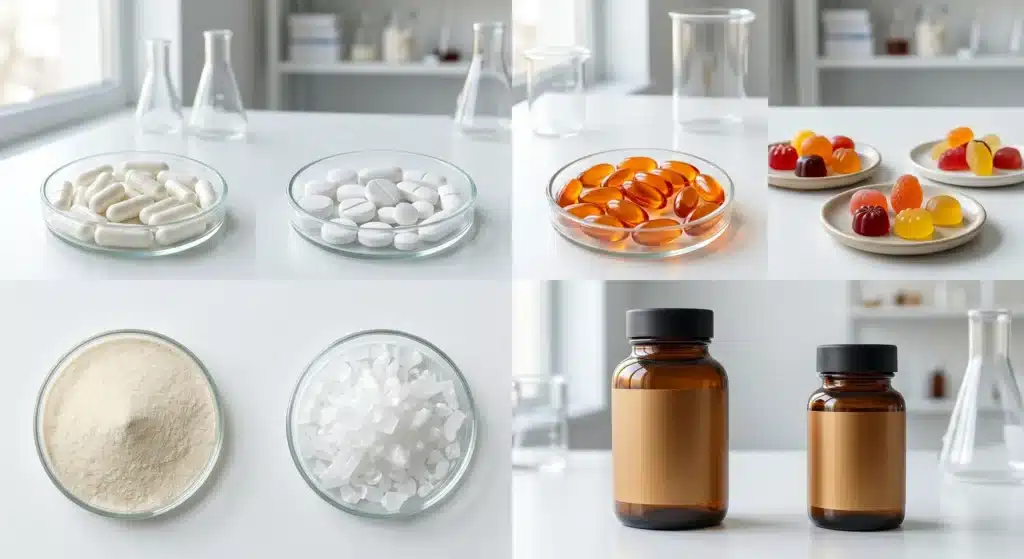
- Capsule, tablet, powder, gummy, and softgel OEM coordination
- Supplier document collection and review
- COA and specification sheet communication
- MOQ and cost structure comparison
- Packaging direction and product positioning
- Structure/function claim wording review
- Export-oriented supplement project communication
Which One Should Your Brand Choose?
Choose Alpha-lipoic acid if your product is focused on:
- Metabolic wellness
- Antioxidant support
- Nerve health
- Capsule or powder formats
- Cost-effective combination formulas
- Healthy glucose metabolism support positioning
Choose CoQ10 if your product is focused on:
- Heart health
- Cellular energy
- Mitochondrial support
- Healthy aging
- Softgel products
- Premium antioxidant formulas
- High consumer recognition
Choose both if your product is focused on:
- Mitochondrial energy
- Healthy aging
- Antioxidant networks
- Premium wellness formulas
- Multi-ingredient cellular support
The best choice depends on more than the ingredient name. Brands should consider dosage form, target claims, raw material cost, consumer awareness, formula complexity, regulatory risk, and manufacturing feasibility.
Manufacturing and Supply Chain Checklist Before Launch
Before launching an ALA or CoQ10 supplement, brands should confirm the following:
- Target positioning: Is the product for heart health, metabolic support, nerve support, energy, or healthy aging?
- Dosage form: Capsule, tablet, softgel, powder, gummy, or liquid?
- Ingredient form: Standard ALA, R-ALA, ubiquinone, ubiquinol, or enhanced CoQ10 delivery system?
- Claim language: Are all claims structure/function compliant and properly substantiated?
- Formula compatibility: Are all active ingredients stable and compatible in the selected dosage form?
- Supplier documents: Are COA, specification sheet, allergen statement, GMO statement, heavy metal test, microbial test, and other required documents available?
- Sensory profile: Are taste, odor, color, and texture acceptable?
- Testing plan: Will the product require assay, microbial testing, heavy metal testing, stability testing, or other quality checks?
- Packaging: Does the packaging protect the formula from heat, moisture, light, and oxygen?
- OEM feasibility: Does the selected OEM partner have suitable experience with the required dosage form?
- Commercial feasibility: Does the final formula meet target cost, MOQ, margin, and retail price expectations?
- Market differentiation: Why should customers choose this product over generic ALA or CoQ10 supplements?
Before confirming mass production, brands should review documentation, testing requirements and stability plans. You can also learn more about our Supplement Quality Control process and R&D Center support.
Develop an ALA or CoQ10 Supplement with Gensei
If you are planning to develop an Alpha-lipoic acid, CoQ10, or antioxidant supplement product, Gensei can help you compare ingredient options, evaluate dosage forms, source raw materials, review supplier documents, and coordinate OEM production resources.
Whether your project is an ALA capsule, CoQ10 softgel, antioxidant powder blend, gummy supplement, or mitochondrial support formula, our team can help you move from ingredient selection to practical product development.
Contact Gensei to discuss your custom supplement project.
FAQ
Is Alpha-lipoic acid better than CoQ10?
Not necessarily. Alpha-lipoic acid is usually better suited for metabolic support, antioxidant support, nerve health, and capsule or powder formulas. CoQ10 is usually better suited for heart health, cellular energy, mitochondrial support, healthy aging, and softgel products.
Is CoQ10 better for softgels?
Yes, CoQ10 is a strong fit for softgels because it is fat-soluble and commonly formulated in oil-based systems. Softgels also help create a premium product image for heart health, energy, and healthy aging formulas.
Is Alpha-lipoic acid better for capsules?
In many cases, yes. ALA is commonly used in capsules, tablets, and powder blends. Capsules are often the simplest and most practical format for ALA products because they help reduce taste and odor issues.
Can Alpha-lipoic acid and CoQ10 be combined?
Yes. ALA and CoQ10 can be combined in formulas positioned for mitochondrial support, antioxidant balance, and healthy aging. However, brands should evaluate dosage form, stability, cost, and claim strategy before combining them.
Which ingredient is better for heart health supplements?
CoQ10 is usually the better fit for heart health positioning because of its role in cellular energy and its strong consumer recognition in the cardiovascular wellness category. Brands should still avoid disease-treatment claims and use compliant structure/function language.
Which ingredient is better for metabolic support supplements?
Alpha-lipoic acid is usually the better fit for metabolic support formulas. Brands should use compliant wording such as “supports healthy glucose metabolism” rather than disease treatment claims.
What is the difference between ubiquinone and ubiquinol?
Ubiquinone is the oxidized form of CoQ10 and is commonly used in many standard products. Ubiquinol is the reduced form and is often marketed as a premium form. The right choice depends on target price, stability, dosage form, and brand positioning.
What is the difference between R-alpha-lipoic acid and standard alpha-lipoic acid?
Standard alpha-lipoic acid supplements commonly use a racemic R/S mixture, while R-alpha-lipoic acid refers to the naturally occurring enantiomer. R-ALA is often used in premium formulas, but brands should check stability, assay, supplier documentation and cost before choosing it.
Should Alpha-lipoic acid be taken with CoQ10 or separately?
For consumer use, this depends on personal routine and healthcare guidance. From a formulation perspective, ALA and CoQ10 can be combined, but their different solubility and dosage-form needs may make a capsule-plus-softgel bundle more practical than a single complex formula.
Is CoQ10 better as ubiquinone or ubiquinol?
Ubiquinone is widely used, cost-effective and common in mainstream CoQ10 supplements. Ubiquinol is often positioned as a premium form. The best choice depends on brand positioning, price target, stability requirements, packaging and delivery system.
Why is CoQ10 commonly used in softgels?
CoQ10 is fat-soluble and poorly soluble in water, so oil-based softgels are a practical commercial format. Softgels can also help support a premium product image for heart health, energy and healthy aging formulas.
Why is ALA commonly used in capsules?
ALA is often easier to formulate in capsules or tablets because these formats help reduce odor and taste issues. Capsules also make it easier to manage dosage strength, powder flow and excipient compatibility.
What claims should supplement brands avoid?
Brands should avoid claims that imply disease treatment, prevention, or cure. For example, avoid statements such as “treats diabetes,” “cures heart disease,” or “reverses neuropathy.” Safer structure/function claims include “supports heart health,” “supports antioxidant defense,” and “helps maintain healthy glucose metabolism.”
What documents should brands request for ALA or CoQ10 raw materials?
Common documents may include COA, specification sheet, allergen statement, GMO statement, heavy metal test report, microbial test report, residual solvent information, flow chart, stability information, and other documents required by the target market or customer.
Can Gensei help with both raw materials and OEM production?
Yes. Gensei can help brands source ALA and CoQ10 raw materials, evaluate formula direction, communicate with OEM partners, review supplier documents, and coordinate supplement development projects across capsules, tablets, powders, gummies, and softgels.
References and Further Reading
- National Center for Complementary and Integrative Health: Diabetes and Dietary Supplements — What You Need To Know
- National Center for Complementary and Integrative Health: Coenzyme Q10
- U.S. Food and Drug Administration: Structure/Function Claims
- U.S. Food and Drug Administration: Notifications for Structure/Function and Related Claims in Dietary Supplement Labeling
- Linus Pauling Institute, Oregon State University: Lipoic Acid
- Linus Pauling Institute, Oregon State University: Coenzyme Q10
- Mantle D, Dybring A. Bioavailability of Coenzyme Q10: An Overview of the Absorption Process and Subsequent Metabolism. Antioxidants. 2020.
- Shay KP, Moreau RF, Smith EJ, Smith AR, Hagen TM. Alpha-lipoic acid as a dietary supplement: Molecular mechanisms and therapeutic potential. Biochimica et Biophysica Acta. 2009.
- NCBI Bookshelf: Coenzyme Q10 — StatPearls
- Linus Pauling Institute: Lipoic Acid
- NCBI Bookshelf: Coenzyme Q10
- NCCIH: Coenzyme Q10
- NCCIH: Diabetes and Dietary Supplements
- FDA: Structure/Function Claims
- FDA: Notifications for Structure/Function and Related Claims in Dietary Supplement Labeling
- Mantle D. et al. Bioavailability of Coenzyme Q10: An Overview of the Absorption Process and Subsequent Metabolism
- Silvestri S. et al. Coenzyme Q10 and α-lipoic acid: antioxidant and pro-oxidant effects

Warren Wan is a seasoned expert with extensive experience in the dietary supplement supply chain, possessing rich practical experience in the research, development, process control, and global sourcing of core ingredients such as collagen peptides, bone broth protein, and keratin. As the author of this column, he is dedicated to stripping away the marketing packaging, transforming obscure ingredient science and production quality control standards into easy-to-understand, hardcore science popularization, helping readers understand the truth behind the labels and make more rational health choices.