
Kurzantwort: Nachtkerzenöl vs. Fischöl
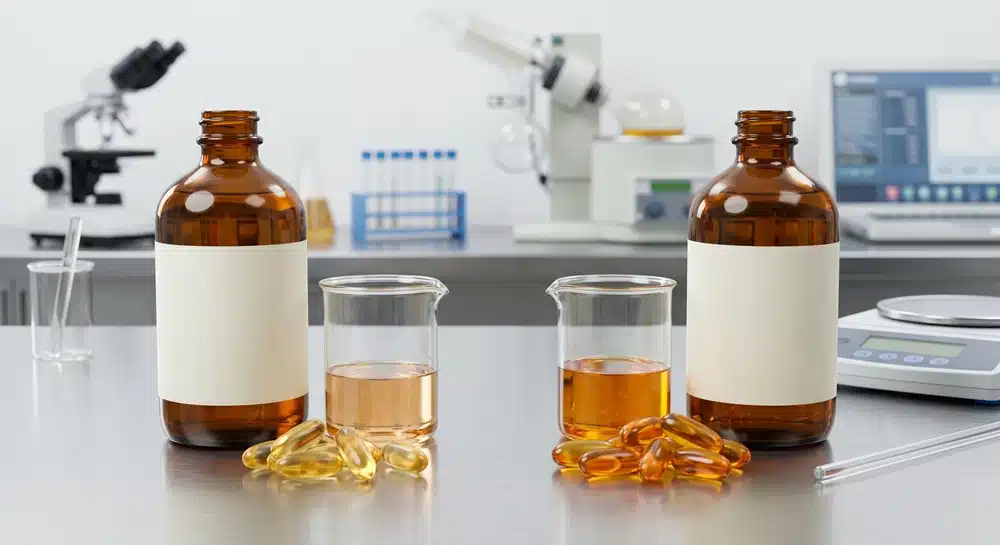
Nachtkerzenöl und Fischöl sind keine direkten Ersatzprodukte. Nachtkerzenöl wird vor allem wegen seiner Gamma-Linolensäure (GLA) geschätzt, einer Omega-6-Fettsäure, die in Produkten für die Hautpflege, das Wohlbefinden von Frauen und zur Entzündungshemmung eingesetzt wird. Fischöl wird vor allem wegen EPA und DHA geschätzt, zwei langkettigen Omega-3-Fettsäuren, die in Präparaten zur Unterstützung des Herz-Kreislauf-Systems, des Gehirns, der Augen und der Gelenke verwendet werden.
Für Verbraucher lautet die einfache Antwort: Entscheiden Sie sich für Nachtkerzenöl, wenn das Produkt die Hautbarriere stärken oder das Wohlbefinden von Frauen fördern soll; entscheiden Sie sich für Fischöl, wenn es um die Zufuhr von EPA/DHA und die Unterstützung der Omega-3-Versorgung geht.
Für Hersteller von Nahrungsergänzungsmitteln lautet die entscheidende Frage nicht: “Welches Öl ist gesünder?”, sondern: Welche Ölquelle passt zu Ihrem Produktversprechen, Ihrer Darreichungsform, Ihrem Oxidationsschutzkonzept, dem Analysezertifikat Ihres Lieferanten, Ihrem Nachhaltigkeitskonzept und Ihrem Zielmarkt?
Beide Öle eignen sich für die Verwendung in Softgels, stellen jedoch unterschiedliche Herausforderungen bei der Herstellung dar. Bei Fischöl müssen Oxidation, Geruch, Schwermetalle, PCB, Dioxine sowie der EPA-/DHA-Gehalt sorgfältig kontrolliert werden. Bei Nachtkerzenöl sind eine GLA-Standardisierung, eine Qualitätskontrolle der Kaltpressung, die Überprüfung des Peroxidwerts sowie der Schutz vor Hitze, Licht und Sauerstoff erforderlich.
Ursprung und Produktion
Nachtkerzenöl (EPO) wird aus den Samen der Nachtkerzenpflanze (Oenothera biennis) gewonnen, die in Nordamerika beheimatet ist, aber heute in vielen Teilen der Welt vorkommt. Das Öl wird durch ein Kaltpressverfahren gewonnen, wodurch die Wirkstoffe, vor allem die Gammalinolensäure (GLA), eine Art Omega-6-Fettsäure, erhalten bleiben. Das Öl hat eine helle, goldene Farbe und einen milden Geschmack.
Fischöl hingegen wird aus dem Gewebe von Fettfischen wie Lachs, Makrele, Sardinen und Sardellen gewonnen. Fischöl enthält hohe Konzentrationen an Omega-3-Fettsäuren, insbesondere EPA (Eicosapentaensäure) und DHA (Docosahexaensäure), die beide für die Gesundheit von Gehirn, Herz und Augen wichtig sind. Fischöl wird in der Regel durch verschiedene Verfahren gewonnen, darunter Pressung, Destillation oder Molekularfiltration, wodurch Unreinheiten und Verunreinigungen entfernt werden können.
Nachtkerzenöl vs. Fischöl: Vergleich der B2B-Rezepturen
| Faktor | Nachtkerzenöl | Fischöl | Anmerkung zur Formulierung |
| Wichtigste Fettsäuren | GLA und Linolsäure | EPA und DHA | EPO ist ein Omega-6-Öl; Fischöl ist ein Omega-3-Öl. Sie nehmen unterschiedliche Produktpositionen ein. |
| Optimale Positionierung | Hautpflege, Wellness für Frauen, Schönheit von innen, Unterstützung des Hormonhaushalts | Unterstützung für Herz, Gehirn, Augen und Gelenke sowie Omega-3-Fettsäuren | Verwenden Sie eine sicherere Struktur-Funktions-Sprache; vermeiden Sie Aussagen zur Behandlung von Krankheiten. |
| Gängige Darreichungsform | Kapseln, flüssiges Öl, Schönheitsölmischungen | Kapseln, flüssiges Öl, Omega-3-Präparate | Beides sind Inhaltsstoffe auf Ölbasis, die sich gut für Softgel-Projekte eignen. |
| Qualitätsmerkmale | GLA-Gehalt, Peroxidzahl, Säurezahl, Kaltpressqualität | EPA/DHA-Gehalt, PV, p-AV, TOTOX, Schwermetalle, PCB, Dioxine | Vor Produktionsbeginn ist eine COA-Prüfung unerlässlich. |
| Risiken in der Fertigung | Oxidation, Ranzigkeit, Hitze-/Lichteinwirkung, Schwankungen im GLA-Gehalt | Oxidation, Fischgeruch, Verunreinigungsrisiko, Leckagerisiko | Die Verpackung und die Antioxidationssysteme spielen eine wichtige Rolle. |
| Bericht zur Nachhaltigkeit | Pflanzliches Samenöl | Öl aus Meeresquellen; Algenöl ist eine pflanzliche Alternative | Bei der Beschaffung von Fischöl sollten Rückverfolgbarkeit und Nachhaltigkeit berücksichtigt werden. |
| Beste Markenstrategie | Schönheit, Wellness für Frauen, Softgels für die Hautpflege | Omega-3, Herzgesundheit, aktives Altern, Unterstützung der Gelenke | Im Hinblick auf die Omega-3-6-9-Zusammensetzung lassen sich beide sorgfältig kombinieren. |
Können Nachtkerzenöl und Fischöl kombiniert werden?
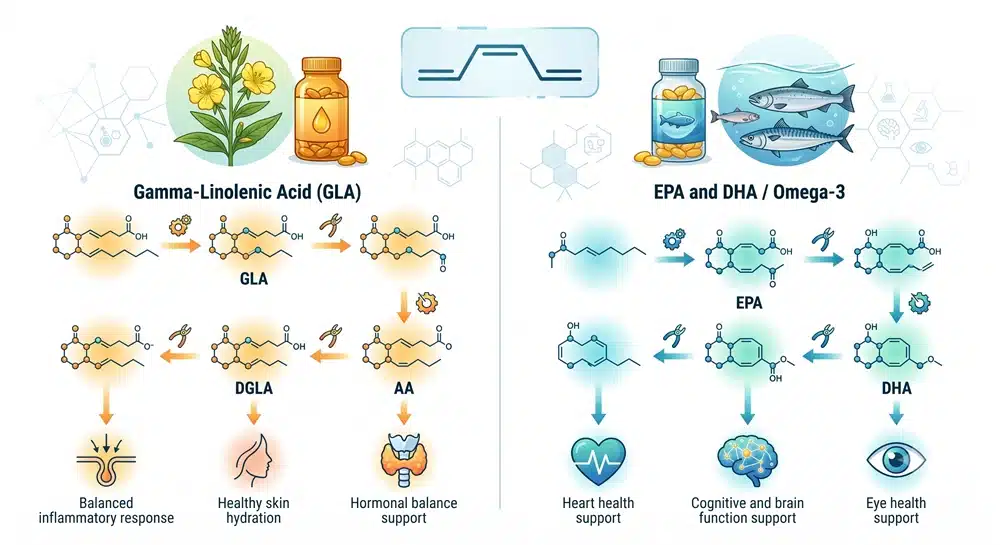
Ja. Nachtkerzenöl und Fischöl können im Rahmen desselben Nahrungsergänzungskonzepts verwendet werden, da sie unterschiedliche Fettsäuren liefern. Nachtkerzenöl liefert GLA, während Fischöl EPA und DHA liefert. Dies macht die Kombination attraktiv für Marken, die Omega-3-6-9-Kapseln, Formeln für Schönheit von innen, Produkte für aktives Altern oder Nahrungsergänzungsmittel für das Wohlbefinden von Frauen entwickeln.
Die Kombination der beiden Öle ist jedoch nicht nur eine Marketingentscheidung. Aus produktionstechnischer Sicht muss die Rezeptur hinsichtlich Fettsäureverhältnis, Füllgewicht, Kapselgröße, Oxidationsrisiko, Geschmacksprofil und Verpackungsschutz überprüft werden.
Beispielsweise möchte eine Marke möglicherweise ein Softgel herstellen, das Folgendes enthält:
– Nachtkerzenöl, standardisiert auf GLA,
– Fischöl, standardisiert auf EPA und DHA,
– Vitamin E oder gemischte Tocopherole als Antioxidantien,
– sowie eine Softgel-Hülle, die das Auslaufen verhindert und die Ölfüllung vor Sauerstoff schützt.
Die Herausforderung liegt in der Stabilität. Mehrfach ungesättigte Öle reagieren empfindlich auf Sauerstoff, Hitze und Licht. Eine Rezeptur, die auf dem Etikett attraktiv aussieht, kann dennoch scheitern, wenn die Ölmischung einen unangenehmen Geruch entwickelt, die Peroxidwerte ansteigen oder die Kapselhülle nicht mit der Füllung kompatibel ist.
Aus diesem Grund sollten Hersteller von Nahrungsergänzungsmitteln die Kombination aus EPO und Fischöl als Entwicklungsprojekt betrachten und nicht nur als einfache Mischung von Inhaltsstoffen.
Gesundheitliche Vorteile
Nachtkerzenöl:
- Gesundheit der Haut: EPO wird häufig zur Verbesserung von Hauterkrankungen wie Ekzemen, Schuppenflechte und Akne eingesetzt. Das im Öl enthaltene GLA wirkt entzündungshemmend und fördert die Hautreparatur. Viele Menschen verwenden EPO, um ihre Haut mit Feuchtigkeit zu versorgen und das Auftreten von feinen Linien und Falten zu reduzieren.
- Hormonelle Unterstützung: Nachtkerzenöl wird häufig zur Behandlung von Symptomen im Zusammenhang mit dem prämenstruellen Syndrom (PMS) und den Wechseljahren verwendet. Man geht davon aus, dass es zum Hormonausgleich beiträgt, indem es die Produktion von Prostaglandinen beeinflusst, die eine Rolle bei der Regulierung von Entzündungen und Schmerzen spielen. EPO kann zur Linderung von Symptomen wie Stimmungsschwankungen, Brustspannen und Hitzewallungen beitragen.
- Entzündungshemmend: Aufgrund seines hohen GLA-Gehalts ist EPO in der Lage, systemische Entzündungen zu reduzieren. Dies macht es zu einer nützlichen Ergänzung für Personen mit Erkrankungen wie rheumatoider Arthritis oder anderen entzündlichen Erkrankungen.
- Herzgesundheit: Einige Untersuchungen deuten darauf hin, dass EPO die kardiovaskuläre Gesundheit unterstützen kann, indem es den Cholesterinspiegel senkt und die Blutzirkulation verbessert, obwohl dieser Nutzen im Vergleich zu Fischöl weniger gut belegt ist.
Fischöl:
- Herzgesundheit: Einer der wichtigsten Vorteile von Fischöl ist seine Fähigkeit, die Gesundheit des Herzens zu unterstützen. EPA und DHA sind dafür bekannt, dass sie Entzündungen in den Arterien verringern, den Triglyceridspiegel senken und die Blutzirkulation verbessern. Es hat sich gezeigt, dass die Einnahme von Fischöl das Risiko von Herz-Kreislauf-Erkrankungen, einschließlich Herzinfarkten und Schlaganfällen, verringert.
- Gesundheit des Gehirns: DHA ist ein wichtiger Strukturbestandteil des Gehirns und spielt eine Schlüsselrolle für die kognitive Funktion. Studien zeigen, dass DHA das Gedächtnis, die Konzentration und die allgemeine Gesundheit des Gehirns verbessern kann. Es ist besonders wichtig für Säuglinge, Kinder und ältere Erwachsene. Die Einnahme von Fischöl während der Schwangerschaft kann auch die Entwicklung des fötalen Gehirns unterstützen.
- Gesundheit der Augen: DHA ist für die Erhaltung der Gesundheit der Netzhaut in den Augen unerlässlich. Die regelmäßige Einnahme von Fischöl wird mit einem geringeren Risiko der altersbedingten Makuladegeneration (AMD) in Verbindung gebracht, einer der Hauptursachen für Erblindung bei älteren Erwachsenen. Es kann auch bei trockenen Augen und anderen Sehproblemen helfen.
- Entzündungshemmend und stimmungsregulierend: Wie EPO hat auch Fischöl entzündungshemmende Eigenschaften, die bei Erkrankungen wie rheumatoider Arthritis helfen können. Darüber hinaus hat sich gezeigt, dass das in Fischöl enthaltene EPA die psychische Gesundheit unterstützt und möglicherweise die Symptome von Depressionen, Angstzuständen und bipolaren Störungen lindert.
Nachhaltigkeit und Umweltauswirkungen
Nachtkerzenöl ist ein Pflanzenöl und gilt daher als nachhaltiger als Öle tierischen Ursprungs. Der Anbau der Nachtkerzenpflanze hat nicht dieselben Auswirkungen auf die Umwelt wie der Fischfang, insbesondere was die Überfischung und die Zerstörung des marinen Ökosystems betrifft. Wie bei allen landwirtschaftlichen Erzeugnissen werden jedoch auch für den Anbau der Nachtkerze Land, Wasser und Energie benötigt.
Fischöl hingegen wirft Bedenken hinsichtlich Überfischung und der Dezimierung der Meeresfauna auf. Während viele Fischölhersteller Fisch aus nachhaltiger Fischerei verwenden, bestehen nach wie vor Bedenken hinsichtlich der Umweltauswirkungen der Großfischerei. Für diejenigen, die eine umweltfreundlichere Alternative zu herkömmlichem Fischöl suchen, sind Omega3-Öle auf Algenbasis (wie DHA Algenöl) werden als pflanzliche und nachhaltigere Alternative immer beliebter.
Überlegungen zur Herstellung von Softgel-Kapseln mit EPO und Fischöl

Nachtkerzenöl und Fischöl eignen sich beide für Softgel-Herstellung, erfordern jedoch eine sorgfältige Kontrolle während der Herstellung, Abfüllung, Trocknung und Verpackung.
Für EPO, Fischöl oder Omega-3-6-9-Produkte, Herstellung von Softgel-Kapseln ist oft die praktischste Form für eine präzise Ölbefüllung, Geruchskontrolle und den Schutz der Haltbarkeit.Bei Fischöl-Kapseln sind Oxidation, Geruch, EPA/DHA-Gehalt und die Prüfung auf Schadstoffe die wichtigsten technischen Aspekte. Bei einem hochwertigen Fischöl-Projekt sollten die Peroxidzahl, die p-Anisidin-Zahl, der TOTOX-Wert, Schwermetalle, PCBs, Dioxine sowie die Rückverfolgbarkeit der Herkunft überprüft werden.
Bei Nachtkerzenöl-Kapseln sind die wichtigsten Aspekte die GLA-Standardisierung, die Säurezahl, die Peroxidzahl, die Kaltpressqualität sowie der Schutz vor Hitze und Sauerstoff. Da Nachtkerzenöl ebenfalls ein mehrfach ungesättigtes Öl ist, kann es ranzig werden, wenn die Lieferkette oder die Verpackung nicht ordnungsgemäß kontrolliert werden.
Bei Softgels mit gemischten Ölen sollten Marken außerdem Folgendes prüfen:
– Füllgewicht und Kapselgröße,
– Ölviskosität,
– Shell-Kompatibilität,
– Leckagerisiko,
– Antioxidationssystem,
– Optionen zur Stickstoffspülung oder Sauerstoffregulierung,
– Flaschen- vs. Blisterverpackung,
– sowie beschleunigte Stabilitätsprüfungen.
Bei Premium-Rezepturen können Blisterverpackungen oder sauerstoffundurchlässige Flaschen bessere Ergebnisse liefern als einfache Kunststoffflaschen. Wenn das Produkt sowohl EPO als auch Fischöl enthält, sollte die Entscheidung über die Verpackung vor der Produktionssteigerung getroffen werden und nicht erst, nachdem die Rezeptur endgültig festgelegt wurde.
Qualitätscheckliste vor dem Kauf von EPO- oder Fischöl-Inhaltsstoffen
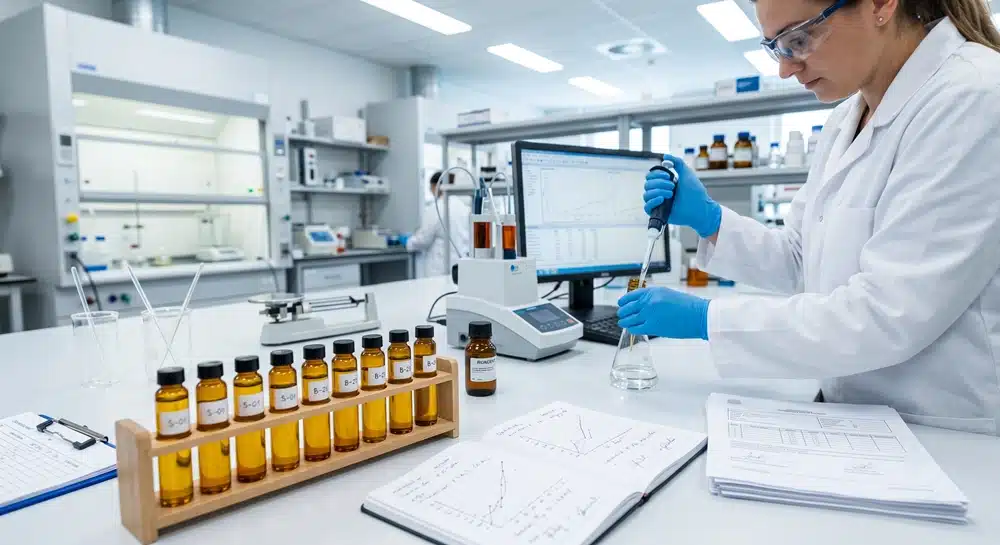
Für Hersteller von Nahrungsergänzungsmitteln ist das Analysezertifikat (COA) wichtiger als die Bezeichnung des Inhaltsstoffs. Bevor Sie Nachtkerzenöl oder Fischöl kaufen, sollten Sie Unterlagen anfordern, die die Identität, die Wirksamkeit, den Oxidationsgrad, eventuelle Verunreinigungen und die Lagerungsbedingungen bestätigen.
Zu Nachtkerzenöl, Rezension:
– GLA-Anteil,
– Linolsäuregehalt,
– Peroxidzahl,
– Säurezahl,
– Extraktionsverfahren,
– Allergenkennzeichnung,
– Herkunftsland,
– gegebenenfalls Prüfung auf Pestizide und Lösungsmittel,
– und Lagerbedingungen.
Zu Fischöl, siehe:
– EPA-Inhalt,
– DHA-Gehalt,
– Gesamtgehalt an Omega-3-Fettsäuren,
– Peroxidzahl,
– p-Anisidin-Wert,
– TOTOX-Wert,
– Schwermetalle,
– Leiterplatten,
– Dioxine,
– Rückverfolgbarkeit von Fischarten und Herkunft,
– Desodorierungsgrad,
– sowie, sofern verfügbar, Prüfungen durch unabhängige Dritte.
Ein kostengünstiges Öl ist nicht immer billiger in der Herstellung. Eine schlechte Rohstoffqualität kann zu Geruchsbeschwerden, undichten Kapseln, nicht bestandenen Stabilitätstests, einer kürzeren Haltbarkeit und einer höheren Rücklaufquote führen.
Nebenwirkungen und Überlegungen
Sowohl Nachtkerzenöl als auch Fischöl gelten im Allgemeinen als sicher, wenn sie in angemessenen Dosen eingenommen werden, können aber bei manchen Menschen Nebenwirkungen verursachen.
Nachtkerzenöl kann manchmal leichte Magen-Darm-Beschwerden, Kopfschmerzen oder Hautreaktionen hervorrufen. Es besteht auch das Risiko einer Wechselwirkung mit blutverdünnenden Medikamenten. Daher ist es wichtig, vor der Einnahme einen Arzt zu konsultieren, insbesondere wenn Sie gerinnungshemmende Medikamente einnehmen.
Fischöl kann einen fischigen Nachgeschmack, Aufstoßen oder Verdauungsbeschwerden verursachen, insbesondere wenn es in großen Mengen eingenommen wird. Bei manchen Menschen kann es zu allergischen Reaktionen auf fischhaltige Produkte kommen. Wie bei EPO kann Fischöl auch mit blutverdünnenden Medikamenten in Wechselwirkung treten und das Risiko von Blutungen erhöhen.
Abschließende Empfehlung für Ergänzungsmarken
Nachtkerzenöl und Fischöl dienen unterschiedlichen Strategien zur Nahrungsergänzung. Nachtkerzenöl eignet sich besser für die Hautpflege, das Wohlbefinden von Frauen, Schönheit von innen heraus und die Positionierung auf GLA-Basis. Fischöl eignet sich besser für die Zufuhr von EPA/DHA, die Omega-3-Versorgung, aktives Altern, die Unterstützung der Gelenke und die Positionierung im Bereich des Herz-Kreislauf-Wohlbefindens.
Für Marken hängt die beste Wahl von der gewünschten Wirkungsaussage, der Ölqualität, der Darreichungsform, den Ergebnissen des Analysezertifikats, dem Oxidationsstatus, dem Nachhaltigkeitskonzept und der Zielgruppe ab.
Wenn Sie ein Softgel-, Flüssigöl- oder Omega-3-6-9-Produkt entwickeln, sollten Sie Ihre Entscheidung nicht allein von der Beliebtheit der Inhaltsstoffe abhängig machen. Prüfen Sie vor der Markteinführung das Fettsäureprofil, die Stabilitätsanforderungen, die Verpackungsform und die Herstellbarkeit.
Benötigen Sie Hilfe bei der Entwicklung eines Nahrungsergänzungsmittels auf Ölbasis?
Gensei bietet Unterstützung bei der Herstellung von Nachtkerzenöl-Kapseln, Fischöl-Kapseln, Omega-3-6-9-Mischformeln, flüssigen Ölprodukten, Nahrungsergänzungsmitteln unter Eigenmarken sowie bei Projekten zur Entwicklung maßgeschneiderter Rezepturen. Senden Sie uns Ihr gewünschtes Fettsäureprofil, die Darreichungsform, die Kapselgröße, den Verpackungsplan und die Marktpositionierung, damit wir vor Produktionsbeginn die Machbarkeit prüfen können.
FAQs
Ist Nachtkerzenöl dasselbe wie Fischöl?
Nein. Nachtkerzenöl ist ein Pflanzenöl, das reich an Omega-6-Fettsäuren ist, insbesondere an GLA. Fischöl ist ein Meeresöl, das reich an Omega-3-Fettsäuren ist, vor allem an EPA und DHA. Sie werden für unterschiedliche Ernährungsziele eingesetzt.
Was ist besser: Omega-3-Öl oder Nachtkerzenöl?
Keines der beiden ist in jeder Hinsicht besser. Omega-3-Fischöl eignet sich besser für die Positionierung in Bezug auf EPA/DHA, während Nachtkerzenöl besser für die Positionierung in Bezug auf GLA, Hautpflege und das Wohlbefinden von Frauen geeignet ist. Die richtige Wahl hängt vom Ziel des Produkts ab.
Können Nachtkerzenöl und Fischöl zusammen eingenommen werden?
Sie können im Rahmen desselben Nahrungsergänzungskonzepts zum Einsatz kommen, da sie unterschiedliche Fettsäuren liefern. Bei Fertigprodukten sollten Marken vor einer Kombination die Gesamtdosierung, die Oxidationsstabilität, die Qualität des Analysezertifikats (COA) sowie mögliche Aspekte der Verbrauchersicherheit prüfen.
Ist Nachtkerzenöl ein Omega-3-Fettsäure?
Nein. Nachtkerzenöl ist hauptsächlich ein Omega-6-Öl. Seine wichtigste aktive Fettsäure ist Gamma-Linolensäure, kurz GLA. Fischöl ist die bekanntere Quelle für die Omega-3-Fettsäuren EPA und DHA.
Was sollten Marken vor dem Kauf von Fischöl prüfen?
Marken sollten den Gehalt an EPA, DHA und Omega-3-Fettsäuren insgesamt, die Peroxidzahl, die p-Anisidin-Zahl, den TOTOX-Wert, Schwermetalle, PCBs, Dioxine, die Fischarten, den Grad der Desodorierung sowie die Rückverfolgbarkeitsunterlagen überprüfen.
Was sollten Marken vor dem Kauf von Nachtkerzenöl prüfen?
Marken sollten den GLA-Gehalt, die Peroxidzahl, die Säurezahl, das Extraktionsverfahren, gegebenenfalls die Pestizid- oder Lösungsmitteluntersuchungen, Angaben zu Allergenen, die Herkunft sowie die Lagerbedingungen überprüfen.
Welche Darreichungsform eignet sich am besten für EPO oder Fischöl?
Softgels sind oft die praktischste Darreichungsform, da sie ölhaltige Inhaltsstoffe schützen, den Geschmack überdecken und eine präzise Dosierung ermöglichen. Flüssige Öle sind ebenfalls geeignet, allerdings gewinnen die Verpackung und die Oxidationskontrolle nach dem Öffnen an Bedeutung.
Dürfen für diese Produkte Angaben zur Behandlung von Krankheiten gemacht werden?
Nein. Auf den Etiketten von Nahrungsergänzungsmitteln sollten Angaben vermieden werden, die eine Diagnose, Behandlung, Heilung oder Vorbeugung von Krankheiten versprechen. Zu den sichereren Formulierungen im Zusammenhang mit Struktur und Funktion gehören Begriffe wie „unterstützt die Hautgesundheit“, „unterstützt das Wohlbefinden von Frauen“, „unterstützt die Omega-3-Zufuhr“ oder „unterstützt das Herz-Kreislauf-Wohlbefinden“, sofern diese angemessen und belegt sind.
Referenzen
- NCCIH. Nachtkerzenöl: Nutzen und Sicherheit.
https://www.nccih.nih.gov/health/evening-primrose-oil - NIH-Büro für Nahrungsergänzungsmittel. Omega-3-Fettsäuren – Informationsblatt für medizinisches Fachpersonal.
https://ods.od.nih.gov/factsheets/Omega3FattyAcids-HealthProfessional/ - NCCIH. Omega-3-Nahrungsergänzungsmittel: Was Sie wissen müssen.
https://www.nccih.nih.gov/health/omega3-supplements-what-you-need-to-know - GOED. Freiwillige Monografie zu Omega-3-EPA- und DHA-Ölen.
https://goedomega3.com/storage/app/media/Monograph/GOED%20Monograph%20-%202022%2001%2006%20-%20FINAL.pdf - Bannenberg et al. Gehalt an langkettigen mehrfach ungesättigten Omega-3-Fettsäuren und Oxidationszustand von Fischölpräparaten in Neuseeland. Scientific Reports.
https://www.nature.com/articles/s41598-017-01470-4 - FDA. Struktur/Funktions-Ansprüche.
https://www.fda.gov/food/nutrition-food-labeling-and-critical-foods/structurefunction-claims - FDA. Fragen und Antworten zu Nahrungsergänzungsmitteln.
https://www.fda.gov/food/information-consumers-using-dietary-supplements/questions-and-answers-dietary-supplements

Warren Wan ist ein versierter Experte mit umfassender Erfahrung in der Lieferkette für Nahrungsergänzungsmittel und verfügt über fundierte praktische Kenntnisse in den Bereichen Forschung, Entwicklung, Prozesskontrolle und weltweite Beschaffung von Kerninhaltsstoffen wie Kollagenpeptiden, Knochenbrüheprotein und Keratin. Als Autor dieser Kolumne hat er es sich zur Aufgabe gemacht, den Marketing-Hype zu durchschauen und komplexe wissenschaftliche Erkenntnisse über Inhaltsstoffe sowie Standards der Produktionsqualitätskontrolle in leicht verständliche, fundierte Wissenschaftspopularisierung zu verwandeln, um den Lesern zu helfen, die Wahrheit hinter den Etiketten zu erkennen und rationalere Gesundheitsentscheidungen zu treffen.


