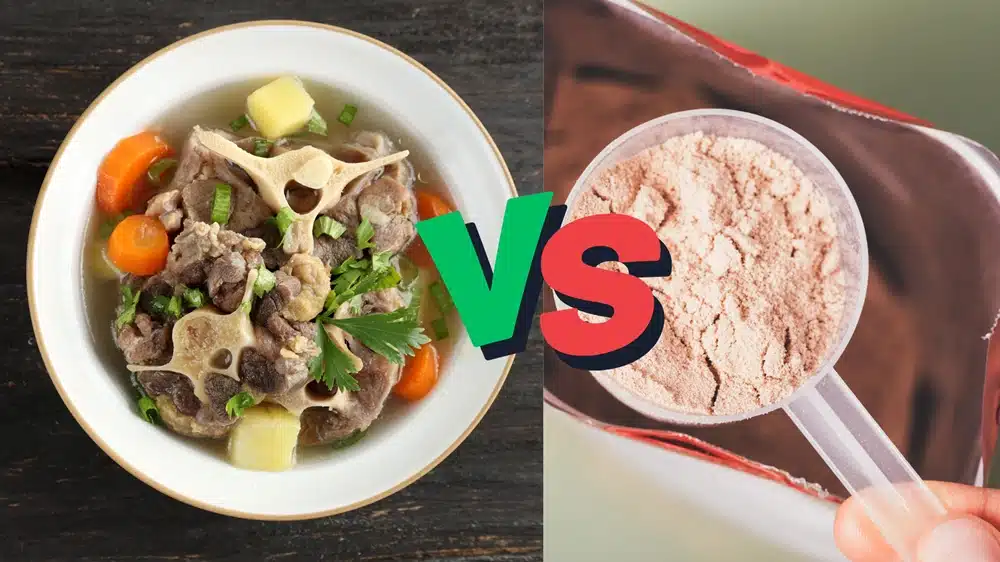
For consumers, the best choice depends on budget, digestion, travel habits, macro targets and ingredient tolerance. For supplement brands, the decision is more commercial: powder, RTD and liquid shot formats have different requirements for flavor systems, protein source, packaging, shelf life, quality testing, MOQ, cost per serving and claim review.
If you are developing a protein product, Collagensei can help compare powder supplement manufacturing, liquid supplement manufacturing and protein supplement manufacturing options before you commit to a formula.
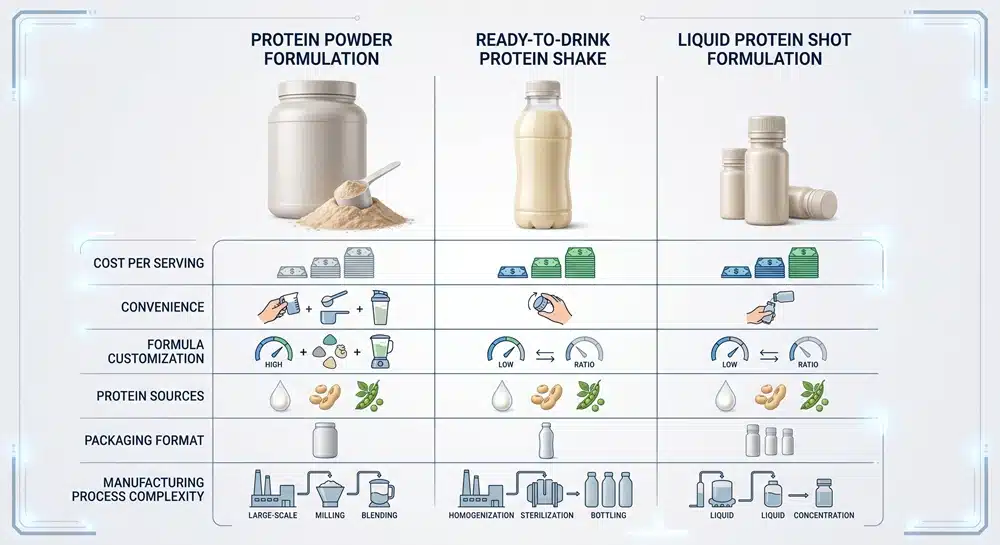
Quick Comparison: Liquid Protein vs Powder
| Factor | Protein Powder | Ready-to-Drink Protein Shake | Liquid Protein Shot |
|---|---|---|---|
| Best fit | Daily protein intake, macro control, value-driven products | Travel, busy routines, retail convenience and meal support | Compact serving, collagen peptides or specialized liquid delivery |
| Cost per gram of protein | Usually lowest | Usually higher because of packaging and processing | Often high because of small format and specialized ingredients |
| Customization | High: serving size, flavor, mixability and ingredient stack can be adjusted | Medium to low: formula is fixed once filled | Low: compact format limits dose and ingredient complexity |
| Convenience | Requires mixing | Grab-and-go | Very portable |
| Formula risks | Clumping, poor solubility, gritty texture, moisture sensitivity | Flavor stability, protein sedimentation, heat treatment, packaging compatibility | High sweetness or acidity, limited protein dose, claim mismatch |
| B2B launch complexity | Moderate | High | Medium to high depending on formula and packaging |
What Counts as a Liquid Protein Supplement?
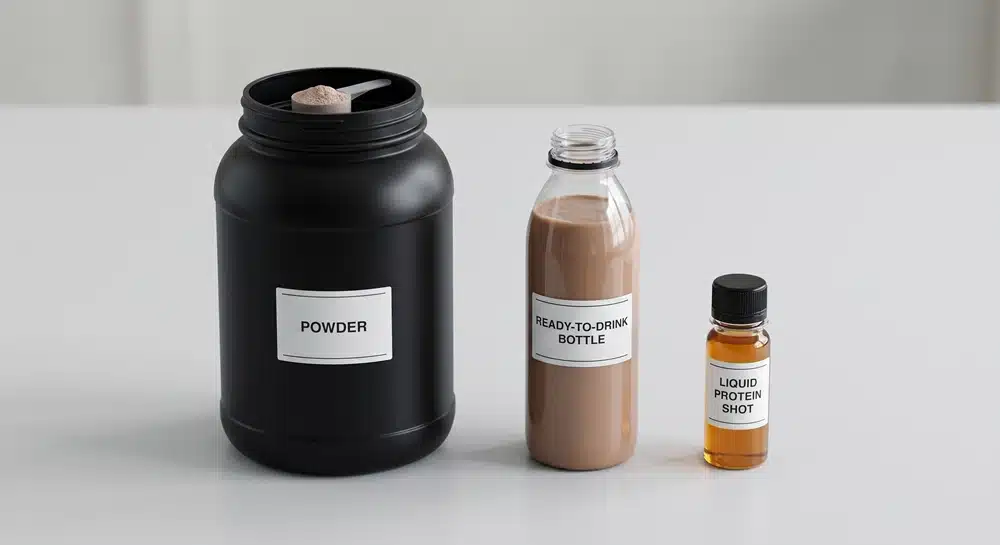
The term liquid protein supplement can refer to several very different products. This is why search results and consumer questions often become confusing. A bottled whey or plant protein shake is not the same as a collagen shot, and neither one is the same as a powder that has been mixed with water at home.
Ready-to-drink protein shakes
Ready-to-drink protein shakes are pre-mixed beverages, usually sold in bottles, cartons or cans. They may use milk protein, whey protein, casein, soy, pea, rice, collagen or blended protein systems. They are designed for convenience and taste consistency, but they also require more attention to shelf stability, packaging, pH, heat processing, sedimentation, sweeteners and finished product testing.
Liquid protein shots
Liquid protein shots are small-volume products that often use hydrolyzed collagen peptides or amino acid blends. They can be useful when a brand wants a compact serving format, but they need careful positioning. Collagen is a valuable structural protein source, but it is not a complete protein for all use cases because it lacks or is low in some essential amino acids.
Protein powder mixed into liquid
Protein powder becomes a liquid when the consumer mixes it with water, milk or another beverage. However, from a manufacturing and labeling perspective, powder and RTD products are different formats with different quality control and packaging requirements.
Protein Powder vs Ready-to-Drink Shakes: Which Is Better?
For most daily users, protein powder is better for value, flexibility and long-term macro control. For people who do not want to measure, mix or wash a shaker bottle, an RTD protein shake may be better because it removes friction and improves consistency. For brands, the better format depends on the target consumer, channel, price point and operational capability.
| Use Case | Better Format | Why |
|---|---|---|
| Lowest cost per serving | Protein powder | Dry blending and larger pack sizes usually reduce cost per gram of protein. |
| Travel or commuting | RTD protein shake | No shaker, no water source and no cleanup are required. |
| Precise macro control | Protein powder | Consumers can adjust serving size and mixing liquid. |
| Retail impulse purchase | RTD protein shake | Convenience stores, gyms and grab-and-go retail favor ready-to-drink products. |
| High-protein daily routine | Protein powder | Powder is usually easier to scale economically for repeat daily use. |
| Collagen beauty or joint-positioned format | Liquid shot or powder | Both can work, but claims must avoid disease treatment language and match evidence. |
Does Liquid Protein Absorb Faster Than Powder?
Liquid products may feel easier to consume because they are already mixed, but “faster absorption” should not be used as a blanket marketing claim. Absorption depends on the protein type, processing, dose, amino acid profile, gastric emptying, meal context and individual tolerance. Hydrolyzed ingredients may be easier to disperse or digest for some people, but that does not automatically make every liquid protein product more effective than powder.
For content and label claims, use cautious wording such as “convenient ready-to-drink format,” “pre-mixed for easy use,” or “formulated for smooth texture.” Avoid broad claims such as “absorbs instantly,” “works faster,” or “superior recovery” unless the exact finished product has substantiation.
Which Format Is Easier on Digestion?
Digestive tolerance varies by person. Some consumers tolerate RTD shakes because the texture is smooth and the serving is pre-mixed. Others prefer powder because they can choose water, dairy milk or plant milk and adjust the serving size. Digestive discomfort may come from lactose, sugar alcohols, gums, high serving size, added fiber, sweeteners, rapid intake or a protein source that does not suit the user.
| Potential Issue | Powder Consideration | RTD / Liquid Consideration | B2B Formulation Action |
|---|---|---|---|
| Lactose sensitivity | Whey isolate or non-dairy proteins may be considered. | Milk-based RTD shakes may still contain dairy components. | Clarify protein source and allergen labeling early. |
| Thick texture | Powder can be adjusted by changing liquid volume. | RTD texture is fixed after production. | Run sensory samples for viscosity, mouthfeel and aftertaste. |
| Sweetener tolerance | Consumers can choose unflavored or lightly sweetened powders. | RTD products often rely on a fixed sweetener system. | Review sugar alcohols, high-intensity sweeteners and label positioning. |
| Large protein dose | Serving can be split. | Serving is usually fixed per bottle. | Set a realistic serving size and avoid excessive claim language. |
Is Protein Powder or Ready-to-Drink Better for Muscle Support?
Both protein powder and ready-to-drink protein shakes can support protein intake when they provide an appropriate amount of high-quality protein and fit into a balanced diet. The key is not the physical format alone. Brands should compare total protein per serving, essential amino acid profile, leucine content, digestibility, sugar level, calories, serving size and how the product will be used.
For muscle support positioning, whey protein powder and whey-based RTD shakes can both be relevant. Collagen-based shots should be positioned differently. Collagen peptides can support collagen-specific nutrition concepts, but they should not be marketed as equivalent to a complete protein for muscle protein synthesis unless paired with a suitable amino acid strategy and substantiation.
Cost, Shelf Life and Packaging: Why Brands Choose Powder or Liquid
From a brand owner’s perspective, format choice affects margins, MOQ, shipping weight, storage requirements, packaging cost, retail channel and consumer repeat purchase behavior.
Protein powder manufacturing considerations
- Protein source: whey concentrate, whey isolate, casein, pea, soy, rice, collagen or blended protein.
- Flavor system: cocoa, vanilla, fruit, coffee, unflavored or functional flavor profiles.
- Mixability: solubility, dispersibility, clumping risk and foam behavior.
- Packaging: tubs, jars, pouches, sachets and stick packs.
- Testing: protein content, microbiology, heavy metals, moisture and active ingredient verification where applicable.
Ready-to-drink protein manufacturing considerations
- Protein stability in liquid over shelf life.
- Texture, sedimentation, separation and viscosity control.
- pH, flavor stability, sweetness and aftertaste.
- Heat processing or other preservation strategy depending on product design.
- Packaging compatibility, filling process, storage and transport conditions.
How Supplement Brands Should Choose Between Liquid Protein and Powder
For brands, the best format is not simply the one consumers say they prefer. It is the one that can be manufactured consistently, priced profitably, supported with compliant claims and delivered through the intended sales channel.
| Brand Goal | Recommended Format | Reason | Key Manufacturing Questions |
|---|---|---|---|
| Affordable daily protein line | Powder | Better cost structure and flexible packaging. | Protein source, flavor, serving size, packaging, MOQ. |
| Convenience retail product | RTD shake | Easy to sell in gyms, convenience stores and travel contexts. | Shelf life, packaging, stability, logistics, taste testing. |
| Beauty or collagen concept | Powder, RTD or shot | Depends on desired serving size and consumer ritual. | Collagen dose, amino acid positioning, flavor masking, claim review. |
| Low-sugar sports nutrition | Powder or RTD | Both can work, but sweetener strategy is critical. | Sweetener tolerance, aftertaste, calories, label claims. |
| Trial or travel packs | Sachets, stick packs or RTD | Single-serve formats reduce friction and support sampling. | Packaging cost, fill accuracy, shelf stability, retail display. |
Before scaling a launch, brands should review the formula with a manufacturing partner that understands custom supplement formulation, protein source selection, flavor development, powder blending, liquid processing and finished product testing.
Quality Specifications to Check Before Production
A strong protein supplement brief should define the finished product specifications before sampling begins. This helps reduce reformulation, delayed production and claim risk.
- Protein source: whey, casein, milk protein, pea, soy, rice, collagen or blend.
- Protein per serving: target grams per serving and acceptable assay range.
- Amino acid profile: especially when making muscle support or complete protein claims.
- Allergens: milk, soy and other major allergen considerations.
- Sugar and sweeteners: sugar level, sugar alcohol use and high-intensity sweetener choice.
- Microbiology: finished product microbiological specifications.
- Heavy metals: testing plan appropriate for protein source and target market.
- Label claims: structure/function claims, protein claims, calorie claims and serving instructions.
- Packaging: moisture barrier for powders, bottle/carton compatibility for liquids and retail requirements.
RFP Questions to Ask a Protein Supplement Manufacturer
Use these questions when comparing powder and liquid protein manufacturers:
- Do you manufacture both powder and liquid protein supplements, or only one format?
- What protein sources can you support: whey, milk protein, pea, soy, rice, collagen or blends?
- Can you help compare cost per serving across powder, RTD and shot formats?
- What MOQ applies to each format and packaging type?
- Do you provide flavor development and sensory samples?
- How do you evaluate solubility, viscosity, sedimentation or clumping?
- What testing is included in the finished product COA?
- Can you support allergen review and label claim review?
- What lead time should we expect for sampling, pilot production and commercial production?
- What documentation is available for GMP, batch records and quality control?
Red Flags When Comparing Protein Supplement Formats
- Claims that a liquid protein “absorbs instantly” without product-specific substantiation.
- Positioning collagen shots as a complete muscle-building protein without amino acid context.
- No clear testing plan for heavy metals, microbiology or protein content.
- No explanation of flavor stability, sedimentation or shelf-life approach for liquid products.
- No discussion of allergen labeling for dairy or soy proteins.
- No cost-per-serving comparison before choosing packaging and format.
Where Collagensei Fits
Collagensei supports supplement brands that need practical guidance across protein powders, collagen powders, RTD liquid concepts, liquid shots and private label protein supplements. Our team can help review ingredient options, formula feasibility, packaging direction, testing needs and manufacturing route before launch.
To start a project, prepare your target market, protein source preference, serving size, desired claims, flavor direction, packaging format and target order quantity. Then contact the team through Collagensei contact page for a project review.
FAQ
Are protein shakes better than powder?
Ready-to-drink protein shakes are better for convenience, travel and consistent taste. Protein powder is usually better for cost, customization and daily macro control.
Is powder protein better than liquid protein?
Powder protein is often better for value and formulation flexibility. Liquid protein is better when the user values convenience and does not want to mix a shake.
What is the difference between protein powder and a protein shake?
Protein powder is a dry format that the consumer mixes before use. A protein shake can mean either a powder mixed at home or a pre-made ready-to-drink product.
Is ready-to-drink protein good for travel?
Yes, RTD protein shakes are convenient for travel because they do not require mixing or cleanup. Brands should still consider shipping weight, retail price and packaging stability.
Can liquid protein help with muscle support?
Liquid protein products can help support protein intake if they provide enough high-quality protein and fit into the user’s total diet and training routine. The exact formula matters more than the liquid format alone.
Are collagen protein shots the same as whey protein?
No. Collagen and whey have different amino acid profiles. Collagen can be useful for collagen-focused products, but whey and other complete protein sources are usually more appropriate for complete protein positioning.
Should supplement brands launch powder or RTD first?
Many brands start with powder because it is usually less complex and easier to customize. RTD can be powerful for convenience retail, but it typically requires more development work, packaging planning and stability review.
References
- eCFR: 21 CFR Part 111 – Current Good Manufacturing Practice for Dietary Supplements
- FDA: Structure/Function Claims
- FTC: Health Products Compliance Guidance
- American Heart Association: Protein – What’s Enough?
- Mayo Clinic Press: Ingredients to look for in a protein powder
- Harvard T.H. Chan School of Public Health: Protein
- PMC: Protein supplementation – the double-edged sword

Warren Wan is a seasoned expert with extensive experience in the dietary supplement supply chain, possessing rich practical experience in the research, development, process control, and global sourcing of core ingredients such as collagen peptides, bone broth protein, and keratin. As the author of this column, he is dedicated to stripping away the marketing packaging, transforming obscure ingredient science and production quality control standards into easy-to-understand, hardcore science popularization, helping readers understand the truth behind the labels and make more rational health choices.