

Berberine HCl vs Glycine: Differences, Evidence, Safety and Supplement Uses
Berberine HCl vs Glycine Berberine is not an amino acid. Berberine HCl is a salt form of berberine, a plant-derived
Vitamins, minerals, single nutrients, herbal extracts and mushrooms
Berberine HCl vs Glycine Berberine is not an amino acid. Berberine HCl is a salt form of berberine, a plant-derived

P5P, also called pyridoxal 5′-phosphate or PLP, is one of the active coenzyme forms of vitamin B6. It participates in

Vitamin E and retinol are not the same ingredient. Vitamin E is a family of fat-soluble antioxidants commonly used in
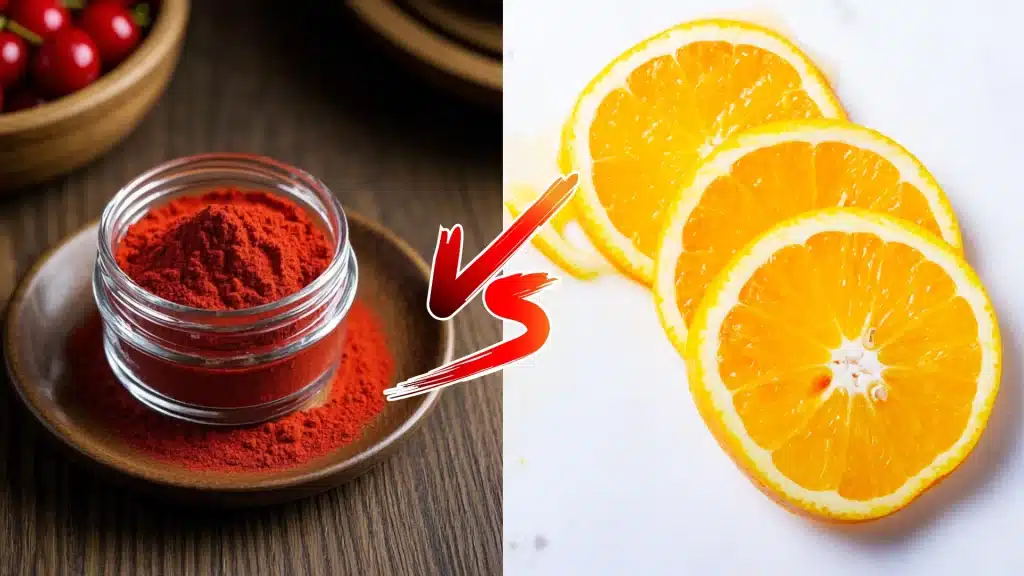
Acerola cherry powder and ascorbic acid can both provide vitamin C, but they are not interchangeable ingredients. Ascorbic acid offers

NAC and NAG are not interchangeable. NAC is N-acetyl-L-cysteine, a sulfur-containing cysteine derivative used in glutathione-related and supplement formulation contexts.

Quick Answer “Natural” vitamin A is not automatically safer, better absorbed or more effective than “synthetic” vitamin A. The more

Vitamin E and alpha-lipoic acid are not interchangeable antioxidants. Vitamin E is an essential fat-soluble nutrient, while alpha-lipoic acid is

Vegan vitamin D3 and conventional vitamin D3 are both cholecalciferol. The main difference is source: vegan D3 is commonly sourced

L-cysteine is a sulfur-containing amino acid used directly in proteins and metabolic pathways. N-acetyl-L-cysteine (NAC) is an acetylated derivative that

Quick answer: Yes, most adults can consume vitamin A and vitamin E together through food or standard multivitamin amounts. However,