
This guide explains how P5P, magnesium, and zinc may fit together in supplement formulations, when consumers usually take them, what safety limits matter, and what supplement brands should check before sourcing raw materials or launching a finished product.
For custom vitamin, mineral, sleep, mood, or daily wellness products, GENSEI can support custom supplement formulation, capsule supplement manufacturing, sleep supplement manufacturing, and ingredient sourcing.

What Is P5P?
P5P, short for pyridoxal-5-phosphate, is an active coenzyme form of vitamin B6. Vitamin B6 is involved in amino acid metabolism, neurotransmitter synthesis, glycogen metabolism, and many enzyme-dependent reactions. P5P is often selected in supplement formulas because it is already in a phosphorylated coenzyme form, while standard pyridoxine must be converted in the body before it can be used.
For supplement brands, the most important point is not simply that P5P is “active.” The finished formula still needs the right dose, compatible minerals, stable excipients, accurate label claims, and market-specific compliance review.
What Does Magnesium Do in a Supplement Formula?
Magnesium is an essential mineral involved in hundreds of enzymatic reactions. In dietary supplements, it is commonly used in formulas positioned for normal muscle function, nerve function, energy metabolism, electrolyte balance, relaxation support, and sleep routine support. The exact consumer experience depends on magnesium form, dose, diet, health status, and individual tolerance.
Common magnesium forms include magnesium glycinate or bisglycinate, citrate, malate, oxide, taurate, and threonate. Each form differs in elemental magnesium content, capsule fill weight, taste, cost, solubility, digestive tolerance, and positioning.
P5P and Magnesium: How They Work Together
P5P and magnesium are frequently paired because they support overlapping metabolic pathways. P5P participates in neurotransmitter and amino acid metabolism, while magnesium contributes to normal neuromuscular function and energy metabolism. This makes the pair relevant for supplement brands developing sleep routine, stress lifestyle, energy metabolism, sports recovery, or daily wellness products.
| Formulation Goal | Why P5P May Be Included | Why Magnesium May Be Included | Claim Boundary |
|---|---|---|---|
| Sleep routine support | Supports vitamin B6-dependent neurotransmitter pathways | Supports normal muscle and nerve function | Use “supports relaxation” or “supports sleep quality,” not “treats insomnia” |
| Stress lifestyle formulas | Supports normal nervous system function | Supports normal neuromuscular function and magnesium status | Use “stress response support,” not “reduces anxiety” |
| Energy metabolism | Supports amino acid and energy metabolism | Supports ATP-related metabolic processes | Use “supports energy metabolism,” not “eliminates fatigue” |
| Sports recovery formulas | Supports protein and amino acid metabolism | Supports muscle function and electrolyte balance | Avoid recovery promises that imply injury treatment |
| Daily mineral-vitamin blends | Complements B-complex positioning | Provides a core mineral for daily wellness | Keep claims general and substantiated |
Should You Take P5P in the Morning or at Night?
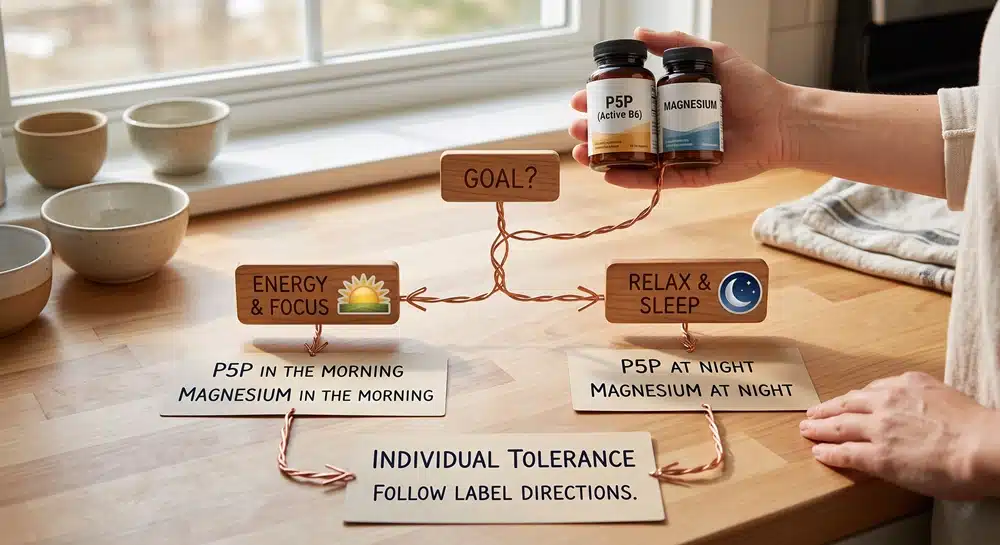
The best time to take P5P depends on formula purpose and individual response. Some consumers prefer P5P in the morning because B vitamins are often associated with energy metabolism. Others use low-dose P5P in evening formulas with magnesium because the combination is common in sleep and relaxation products.
For consumer-facing content, a balanced answer is safest: P5P can be taken in the morning or at night, but people who feel more alert after B vitamins may prefer morning use. People using a nighttime formula should start with the label direction and avoid combining multiple high-dose B6 products.
Can You Take P5P with Magnesium Before Bed?
Yes, many products combine P5P with magnesium for evening use. However, “before bed” positioning should be written carefully. Magnesium may support relaxation as part of a sleep routine, but the formula should not be described as a treatment for insomnia, anxiety, depression, restless legs, or any medical condition.
For brands, a practical bedtime formula should consider magnesium form, total elemental magnesium, P5P dose, capsule count, digestive tolerance, and interaction language. Magnesium glycinate or bisglycinate is often used for sleep-positioned formulas because it is gentle and easy to position, while magnesium citrate may be better known for digestive support but can be less ideal for some nighttime users.
P5P, Zinc and Magnesium: When Does Zinc Make Sense?
Zinc is often added to P5P and magnesium formulas when the product is positioned for daily wellness, immune function support, men’s health, hormone support within compliant boundaries, or sports nutrition. Zinc also needs careful formulation because excessive zinc intake can cause nausea and may interfere with copper status over time.
| Ingredient | Role in Formula | Key Formulation Checks | Common Risk |
|---|---|---|---|
| P5P | Active vitamin B6 form for B6-dependent pathways | Potency, stability, dose, total B6 from all sources | High or stacked B6 intake may increase neuropathy risk |
| Magnesium | Mineral for normal nerve, muscle, and metabolic function | Elemental magnesium, mineral form, capsule count, GI tolerance | Too much supplemental magnesium can cause diarrhea or interact with medications |
| Zinc | Trace mineral for immune and metabolic support | Elemental zinc, form, copper balance, total daily intake | High zinc intake may cause nausea or copper imbalance |
Dosage Considerations for P5P and Magnesium Formulas
Dose decisions should be based on target market regulations, Dietary Reference Intakes, label serving size, intended use, and total daily intake from all ingredients. Brands should avoid copying competitor doses without checking the regulatory and safety context.
- P5P / vitamin B6: Verify the amount as vitamin B6 activity and check total B6 across the full formula. Avoid stacking high-dose B6 across multiple products.
- Magnesium: Label magnesium as elemental magnesium, not simply the weight of the magnesium compound. Check the supplemental magnesium upper limit in the target market.
- Zinc: Keep zinc within market-specific daily intake guidance and consider copper balance for long-term-use formulas.
- Serving size: Magnesium often requires more space than vitamins. Capsules may need multiple units per serving, while powders can handle higher mineral loads.
- Claim review: Dose alone does not justify disease claims. Use structure/function language that is truthful, not misleading, and supported by evidence.
Safety Notes and Interactions
P5P and magnesium are common dietary supplement ingredients, but they still require safety review. Consumers who are pregnant, breastfeeding, under 18, managing kidney disease, using prescription medication, or experiencing neurological symptoms should consult a qualified healthcare professional before use.
- Vitamin B6 / P5P: Long-term high intake of vitamin B6 can be associated with sensory neuropathy symptoms such as tingling, burning, or numbness. Brands should include responsible directions and avoid encouraging multiple B6 products at once.
- Magnesium: Supplemental magnesium can cause diarrhea, nausea, or abdominal discomfort in some users. People with impaired kidney function should be especially cautious.
- Medication spacing: Magnesium may interfere with the absorption of some medications, including certain antibiotics, bisphosphonates, and thyroid medication. Consumers should follow professional guidance for timing.
- Zinc: High zinc intake may cause nausea and can affect copper status. Long-term formulas should be reviewed for mineral balance.

Best Supplement Formats for P5P and Magnesium
| Format | Best Use Case | Advantages | Limitations |
|---|---|---|---|
| Capsules | Premium sleep, stress, or daily wellness formulas | Clean label, easy launch, good for P5P and chelated minerals | Higher magnesium doses may require multiple capsules |
| Tablets | High-volume mineral-vitamin products | Cost efficient and compact | Requires careful compression and disintegration testing |
| Powders | Higher-dose magnesium blends, nighttime drink mixes | Handles larger mineral loads and flavor systems | Needs taste masking and solubility work |
| Gummies | Consumer-friendly daily wellness products | Strong retail appeal | Mineral loading, taste, and stability can be challenging |
| Stick packs | Sleep routine or travel-friendly mineral blends | Convenient single serving and easy sampling | Requires flavor, moisture, and packaging control |
Brands comparing formats can also review GENSEI’s tablet supplement manufacturing, powder supplement manufacturing, and gummy supplement manufacturing capabilities.
Quality Specifications to Check Before Sourcing
For a P5P, magnesium, and zinc formula, raw material quality affects label accuracy, stability, consumer tolerance, and regulatory risk. Before purchasing ingredients or requesting a production quote, brands should verify the following:
- COA with identity, assay, and specification limits for P5P, magnesium, and zinc ingredients.
- Elemental mineral calculation for magnesium and zinc compounds.
- Heavy metals, microbial limits, residual solvents if relevant, and allergen status.
- Particle size, flowability, bulk density, and compatibility with capsule, tablet, powder, or gummy production.
- Stability data or rationale for P5P potency through shelf life.
- GMP production controls, batch records, and finished-product testing plan.
- Label claim review for the target market before printing packaging.
RFP Questions for Supplement Brands
When you contact a supplier or contract manufacturer, use these questions to reduce formulation and compliance risk:
- Can you provide P5P, magnesium, and zinc COAs with current lot numbers?
- How do you calculate elemental magnesium and elemental zinc for Supplement Facts?
- Which magnesium forms do you recommend for capsules, tablets, powders, or gummies?
- Can you support low-dose P5P evening formulas without over-positioning sleep claims?
- What testing do you recommend for heavy metals, microbiology, potency, and stability?
- Can you review label claims for the US, EU, UK, Canada, or Australia?
- What is the MOQ by dosage form and packaging type?
- Can you provide pilot samples before full production?
How GENSEI Can Support P5P and Magnesium Supplement Projects
GENSEI supports supplement brands with raw material sourcing, formula development, dosage form selection, production, packaging, and quality documentation. For P5P and magnesium formulas, we can help brands compare magnesium forms, choose a practical serving size, review claim language, and select a manufacturing format that fits cost, MOQ, and launch timeline.
Explore our vitamin raw materials, mineral nutrition ingredients, stress and mood supplement manufacturing, or contact us through the GENSEI contact page to discuss your project.
FAQ
Can I take P5P with magnesium?
Yes, P5P and magnesium are commonly combined in dietary supplement formulas. P5P supports vitamin B6-dependent pathways, while magnesium supports normal nerve and muscle function. Consumers should follow the product label and ask a healthcare professional if they use medication or have kidney disease.
Can I take P5P at night?
P5P can be taken at night in some formulas, especially when paired with magnesium for a sleep routine product. However, some people prefer B vitamins earlier in the day. If P5P feels stimulating, morning use may be better.
Is P5P better in the morning or at night?
There is no single best time for everyone. Morning use may suit energy metabolism formulas, while evening use may suit low-dose formulas positioned for relaxation or sleep routine support. Consistency and tolerance matter more than a universal schedule.
Does P5P help with sleep?
P5P is involved in neurotransmitter pathways that may be relevant to sleep physiology, but it should not be presented as a treatment for insomnia. For sleep products, use cautious structure/function language such as “supports a healthy sleep routine” or “supports relaxation.”
What is magnesium P5P?
“Magnesium P5P” usually means a dietary supplement combining magnesium with P5P, the active coenzyme form of vitamin B6. Some formulas also include zinc, vitamin D, glycine, L-theanine, or botanical ingredients depending on the product concept.
Can I take P5P, zinc, and magnesium together?
Many formulas combine P5P, zinc, and magnesium. The key is to check total daily intake, mineral balance, and product directions. Brands should be especially careful with total zinc, total vitamin B6, and the elemental magnesium amount.
What should you not mix with magnesium?
Magnesium may interfere with the absorption of certain antibiotics, bisphosphonates, and thyroid medication if taken too close together. Consumers using prescription medication should ask a healthcare professional how to space magnesium supplements.
Can P5P cause side effects?
Vitamin B6, including P5P, can cause problems if total intake is too high or if multiple B6 products are stacked. Possible symptoms of excess intake include tingling, burning, or numbness. Stop use and seek professional advice if neurological symptoms occur.
References
- NIH Office of Dietary Supplements: Vitamin B6 Fact Sheet for Health Professionals
- NIH Office of Dietary Supplements: Magnesium Fact Sheet for Health Professionals
- NIH Office of Dietary Supplements: Zinc Fact Sheet for Health Professionals
- FDA: Questions and Answers on Dietary Supplements
- FTC: Health Products Compliance Guidance
- Pouteau et al. Superiority of Magnesium and Vitamin B6 Over Magnesium Alone on Severe Stress in Healthy Adults with Low Magnesemia
- Noah et al. Magnesium and Vitamin B6 Supplementation on Mental Health and Quality of Life
- Ge et al. Association of Pyridoxal 5′-Phosphate with Sleep-Related Problems
- Therapeutic Goods Administration: Vitamin B6 and Peripheral Neuropathy Safety Alert

Warren Wan is a seasoned expert with extensive experience in the dietary supplement supply chain, possessing rich practical experience in the research, development, process control, and global sourcing of core ingredients such as collagen peptides, bone broth protein, and keratin. As the author of this column, he is dedicated to stripping away the marketing packaging, transforming obscure ingredient science and production quality control standards into easy-to-understand, hardcore science popularization, helping readers understand the truth behind the labels and make more rational health choices.


