
Quick Answer: Sodium Ascorbate vs Ascorbic Acid for Supplement Brands
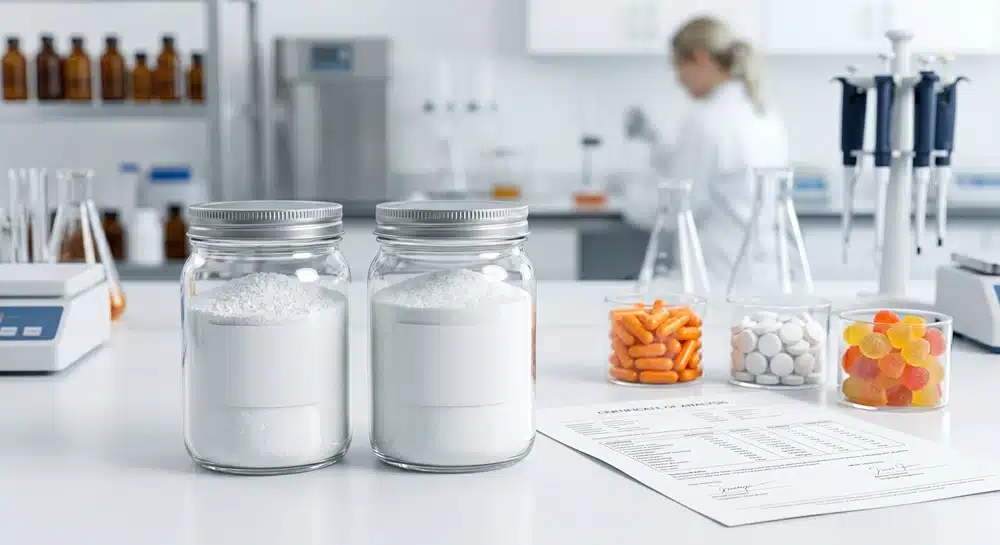
Ascorbic acid and sodium ascorbate are both forms of vitamin C, but they behave differently in formulation.
Ascorbic acid is the pure acidic form of vitamin C. It is usually the most cost-effective option, has a high vitamin C contribution by weight, and works well in tablets, capsules, powders, effervescent products, and basic daily vitamin C formulas.
Sodium ascorbate is a buffered mineral salt of vitamin C. It is less acidic and often better suited for chewables, gummies, powders, and products designed for consumers who prefer a gentler vitamin C format. However, it adds sodium to the formula, which matters for label design, serving size, and sodium-sensitive consumers.
For supplement brands, the better question is not simply “Which form is better?” The better question is:
Which vitamin C form fits your dosage form, pH target, taste profile, sodium limit, active vitamin C claim, manufacturing process, and price point?
What is Ascorbic Acid?
Ascorbic acid is the standard isolated form of vitamin C. In supplement manufacturing, it is widely used because it is cost-effective, highly recognizable to consumers, and provides a high amount of active vitamin C by weight.
Ascorbic acid is commonly used in:
– Capsules
– Tablets
– Powders and sachets
– Effervescent tablets
– Drink mixes
– Functional food and beverage applications
From a formulation perspective, ascorbic acid has two major advantages: cost efficiency and potency density. Because it does not include a mineral carrier such as sodium or calcium, it is efficient when the brand wants to deliver a high vitamin C claim in a smaller serving size.
The main challenge is acidity. Ascorbic acid has a sharp acidic taste and can be irritating for some consumers at higher doses. In chewables, gummies, powders, and liquids, brands may need flavor masking, sweetener balancing, pH adjustment, or buffered vitamin C alternatives to improve sensory experience.
What is Sodium Ascorbate?
Sodium ascorbate is a buffered form of vitamin C made by combining ascorbic acid with sodium. It provides vitamin C in the form of an ascorbate salt and is generally less acidic than ascorbic acid.
Sodium ascorbate is commonly used in:
– Buffered vitamin C formulas
– Chewable tablets
– Gummies
– Powders
– Capsules
– Liquid or drink mix applications
– Products positioned around digestive comfort
The main advantage of sodium ascorbate is formulation comfort. Because it is less acidic, it may be easier to use in products where taste, mouthfeel, and stomach comfort matter. This can be useful for chewables, gummies, and powders that consumers take daily.
The main drawback is sodium contribution. As a practical rule, 1,000 mg of sodium ascorbate provides about 889 mg of ascorbic acid and about 111 mg of sodium. That means brands must calculate both the vitamin C claim and the sodium contribution before finalizing the Supplement Facts panel.
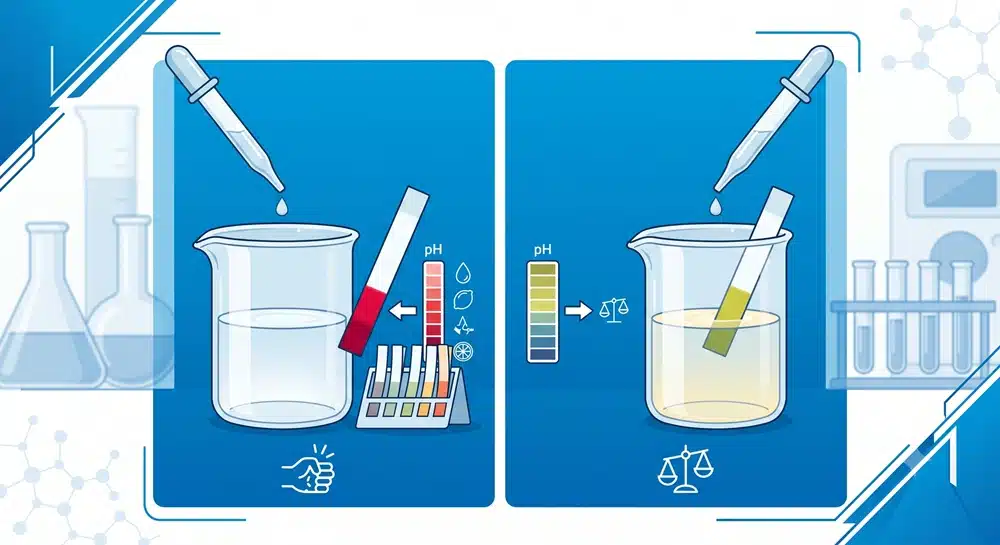
Sodium Ascorbate vs Ascorbic Acid: B2B Formulation Comparison
| Factor | Ascorbic Acid | Sodium Ascorbate | Formulation Note for Supplement Brands |
| Chemical Form | Pure vitamin C | Buffered sodium salt of vitamin C | Both deliver vitamin C, but sodium ascorbate includes sodium and has different formulation behavior. |
| Acidity / pH | More acidic | Less acidic / buffered | Sodium ascorbate is often better for gentler-tasting chewables, gummies, and powders. |
| Active Vitamin C by Weight | High | Lower than pure ascorbic acid because part of the weight is sodium | Do not label equal mg amounts as equal vitamin C unless you calculate active vitamin C contribution. |
| Sodium Contribution | No sodium | About 111 mg sodium per 1,000 mg sodium ascorbate | Important for sodium-sensitive consumers and Supplement Facts design. |
| Taste Profile | Sharp, sour, acidic | Milder and less acidic | Sodium ascorbate can reduce acid bite in gummies, chewables, and powders. |
| Cost | Usually more cost-effective | Usually more expensive per unit of active vitamin C | Ascorbic acid is often better for budget tablets and powders. |
| Best Dosage Forms | Capsules, tablets, powders, effervescent formulas | Chewables, gummies, buffered powders, sensitive-stomach formulas | Choose based on pH, taste, serving size, and positioning. |
| Brand Positioning | Simple, affordable, high-potency vitamin C | Buffered, gentle, premium vitamin C | The “best” form depends on audience and dosage form. |
Active Vitamin C and Sodium Calculation
Sodium ascorbate is not 100% ascorbic acid by weight. This matters when a product label promises a specific amount of vitamin C.
Practical calculation:
– 1,000 mg sodium ascorbate provides about 889 mg ascorbic acid equivalent.
– 1,000 mg sodium ascorbate also contributes about 111 mg sodium.
– To deliver 500 mg vitamin C from sodium ascorbate, the formula may need about 562 mg sodium ascorbate.
– That 562 mg sodium ascorbate contributes about 62 mg sodium.
Formula:
Required sodium ascorbate amount = Target vitamin C amount / 0.889
Approximate sodium contribution = Sodium ascorbate amount x 0.111
This calculation should be confirmed against the supplier specification and COA before final label design.
Formulation Notes From a Manufacturer’s Perspective
1. Choose ascorbic acid when cost and potency density matter
Ascorbic acid is usually the stronger choice for simple, cost-effective vitamin C tablets, capsules, sachets, and powders. It helps brands deliver a clear vitamin C claim without adding sodium or increasing the serving size.
However, brands should manage acidity. In chewable tablets, gummies, and drink powders, ascorbic acid can create a strong sour taste and may require flavor masking, acid balance, or buffering.
2. Choose sodium ascorbate when comfort and taste matter
Sodium ascorbate is often better for formulas positioned as buffered, gentle, or easier on the stomach. It can be useful when the product is a chewable, gummy, powder, or liquid where acidity and taste are important.
However, sodium ascorbate is not automatically better. It adds sodium and may increase formula cost. For products targeting low-sodium consumers, ascorbic acid or another vitamin C form may be more appropriate.
3. Gummies and chewables need extra formulation control
Vitamin C gummies and chewables are not just about choosing a vitamin C form. Brands also need to control:
– pH
– Water activity
– Heat exposure during processing
– Flavor masking
– Sweetener balance
– Texture stability
– Packaging moisture protection
– Vitamin C overage to support shelf-life
Ascorbic acid may create a sharper sour profile. Sodium ascorbate can be milder, but the sodium contribution and active vitamin C equivalence must be calculated carefully.

4. Powders and drink mixes need taste and solubility testing
Both forms can be used in powder products, but the final consumer experience can differ. Ascorbic acid gives a stronger tart flavor, while sodium ascorbate is often milder. For drink mixes, brands should run small-batch testing for taste, solubility, sediment, color change, and stability under expected storage conditions.
Quality Checklist Before Sourcing Vitamin C Ingredients

Before purchasing ascorbic acid or sodium ascorbate, supplement brands should request and review:
– Certificate of Analysis, COA
– Assay / active content
– Identity testing method
– Heavy metals testing
– Microbial limits
– Residual solvents, if applicable
– Moisture / loss on drying
– pH specification
– Particle size or mesh size
– Bulk density
– Solubility
– Country of origin
– Allergen statement
– GMO status
– Vegan / vegetarian statement
– Halal or kosher status, if needed
– Storage conditions
– Shelf-life and retest date
For finished products, brands should also confirm that the contract manufacturer follows dietary supplement cGMP requirements, establishes specifications, and keeps batch records for identity, purity, strength, and composition.
Claim and Labeling Considerations
Vitamin C products should avoid disease-treatment claims. Instead of saying the product prevents colds, treats disease, reduces chronic disease risk, or cures deficiency without medical context, use structure/function-style language that is truthful and substantiated.
Safer label language may include:
– Supports immune health
– Supports collagen formation
– Provides antioxidant support
– Supports normal connective tissue health
– Helps protect cells from oxidative stress
For U.S. dietary supplements, structure/function claims require appropriate substantiation, FDA notification within 30 days after marketing, and the required dietary supplement disclaimer on the label.
Which Vitamin C Form Should Your Brand Choose?
Choose ascorbic acid if your brand needs:
– A cost-effective vitamin C formula
– High vitamin C potency in a smaller serving size
– Capsules or tablets
– Basic vitamin C powders
– Effervescent formulas
– A no-sodium vitamin C option
– Simple immune support or antioxidant positioning
Choose sodium ascorbate if your brand needs:
– A buffered vitamin C formula
– A gentler taste profile
– Chewables or gummies
– Powders or liquids for sensitive consumers
– A premium “gentle vitamin C” positioning
– Less acidity in the finished product
Consider another vitamin C form if your brand needs:
– Low-sodium buffered vitamin C: consider calcium ascorbate or another mineral ascorbate.
– Premium absorption positioning: consider liposomal vitamin C, but confirm the evidence, cost, and manufacturing requirements.
– Whole-food positioning: consider acerola cherry or other natural vitamin C sources, while checking active vitamin C standardization and cost.
Final Recommendation for Supplement Brands
Ascorbic acid and sodium ascorbate are both useful vitamin C ingredients, but they are not interchangeable from a manufacturing perspective.
Ascorbic acid is usually the best starting point for cost-effective, high-potency vitamin C tablets, capsules, powders, and effervescent products.
Sodium ascorbate is usually better when the product needs a buffered, less acidic, gentler-tasting vitamin C format, especially in chewables, gummies, powders, and sensitive-stomach positioning.
For B2B formulation, the final decision should be based on active vitamin C claim, sodium contribution, dosage form, pH, taste, stability, cost, COA results, and label strategy.
Need Help Developing a Vitamin C Product?
If you are developing a vitamin C capsule, tablet, gummy, powder, liquid, or private-label immune support supplement, send us your target dose, dosage form, claim direction, and market positioning. Our formulation team can help you compare ascorbic acid, sodium ascorbate, calcium ascorbate, liposomal vitamin C, and natural vitamin C sources for your project.
FAQs About Sodium Ascorbate vs Ascorbic Acid
Is sodium ascorbate the same as ascorbic acid?
No. Sodium ascorbate is a sodium salt of ascorbic acid. Both provide vitamin C, but sodium ascorbate is buffered and less acidic, while ascorbic acid is the pure acidic form of vitamin C. In formulation, the difference matters because sodium ascorbate adds sodium and provides less active vitamin C by weight than pure ascorbic acid.
Which is better for supplement manufacturing?
Ascorbic acid is usually better for cost-effective capsules, tablets, powders, and high-potency vitamin C products. Sodium ascorbate is usually better for buffered vitamin C products, chewables, gummies, powders, and formulas where lower acidity or gentler taste is important.
Which form is better absorbed?
Both forms are generally effective sources of vitamin C. The practical difference for most supplement brands is not absorption alone, but tolerance, pH, sodium content, taste, cost, and dosage form. If a brand makes a superior absorption claim, it should be supported by reliable evidence and appropriate claim review.
How much sodium is in sodium ascorbate?
A practical rule is that 1,000 mg of sodium ascorbate provides about 111 mg of sodium and about 889 mg of ascorbic acid. This means a formula using sodium ascorbate must calculate both the vitamin C contribution and the sodium contribution before finalizing the Supplement Facts panel.
Is sodium ascorbate better for sensitive stomachs?
Sodium ascorbate is less acidic than ascorbic acid, so it may be better suited for products positioned around digestive comfort or buffered vitamin C. However, individual tolerance varies, and brands should avoid making medical claims unless they are reviewed and substantiated.
Is ascorbic acid better for low-sodium products?
Yes. Ascorbic acid contains no sodium, making it more appropriate for products designed for consumers who want to limit sodium intake. Sodium ascorbate can still be used, but the sodium amount should be calculated and considered in label design.
Which form is better for gummies?
Sodium ascorbate can be useful in gummies because it is less acidic and may be easier to balance for taste. Ascorbic acid can also be used, especially when a tart flavor is desired, but brands must manage acidity, heat exposure, moisture, texture, and vitamin C stability.
Which form is better for tablets and capsules?
Ascorbic acid is often the most practical option for tablets and capsules because it is cost-effective and provides a high amount of active vitamin C by weight. Sodium ascorbate can be used for buffered capsules or tablets, but the capsule size, tablet weight, sodium contribution, and cost should be calculated.
Can sodium ascorbate or ascorbic acid treat disease?
Dietary supplements should not claim to diagnose, treat, cure, or prevent disease. Safer structure/function-style language includes “supports immune health,” “supports collagen formation,” and “provides antioxidant support,” as long as the claim is truthful, substantiated, and appropriate for the market.
What should brands check before buying vitamin C ingredients?
Brands should review the COA, assay, identity testing, heavy metals, microbial limits, residual solvents if applicable, moisture, pH, particle size, bulk density, solubility, country of origin, allergen statement, GMO status, and storage conditions. For finished products, brands should also confirm cGMP manufacturing and finished product testing.
References with Links
- NIH Office of Dietary Supplements — Vitamin C Health Professional Fact Sheet https://ods.od.nih.gov/factsheets/VitaminC-HealthProfessional/
- Linus Pauling Institute — Supplemental Forms of Vitamin C https://lpi.oregonstate.edu/mic/vitamins/vitamin-C/supplemental-forms
- Linus Pauling Institute — Vitamin C https://lpi.oregonstate.edu/mic/vitamins/vitamin-C
- PubChem — Ascorbic Acid https://pubchem.ncbi.nlm.nih.gov/compound/Ascorbic-acid
- PubChem — Sodium Ascorbate https://pubchem.ncbi.nlm.nih.gov/compound/Sodium-Ascorbate
- FDA — Structure/Function Claims https://www.fda.gov/food/nutrition-food-labeling-and-critical-foods/structurefunction-claims
- FDA — Notifications for Structure/Function and Related Claims https://www.fda.gov/food/information-industry-dietary-supplements/notifications-structurefunction-and-related-claims-dietary-supplement-labeling
- eCFR — 21 CFR Part 111 Current Good Manufacturing Practice in Manufacturing, Packaging, Labeling, or Holding Operations for Dietary Supplements https://www.ecfr.gov/current/title-21/chapter-I/subchapter-B/part-111
- FDA — Small Entity Compliance Guide: Current Good Manufacturing Practice in Manufacturing, Packaging, Labeling, or Holding Operations for Dietary Supplements https://www.fda.gov/regulatory-information/search-fda-guidance-documents/small-entity-compliance-guide-current-good-manufacturing-practice-manufacturing-packaging-labeling
- USP — Dietary Supplement Manufacturing: USP Verified Mark https://www.usp.org/verification-services/verified-mark

Warren Wan is a seasoned expert with extensive experience in the dietary supplement supply chain, possessing rich practical experience in the research, development, process control, and global sourcing of core ingredients such as collagen peptides, bone broth protein, and keratin. As the author of this column, he is dedicated to stripping away the marketing packaging, transforming obscure ingredient science and production quality control standards into easy-to-understand, hardcore science popularization, helping readers understand the truth behind the labels and make more rational health choices.


