For consumers, the practical question is whether the formula improves combability, smoothness, body or breakage resistance without leaving hair stiff or coated. For formulators and buyers, the ingredient name alone is not enough: source material, hydrolysis process, peptide distribution, active solids, allergen documentation and product-specific testing determine how a commercial grade performs.
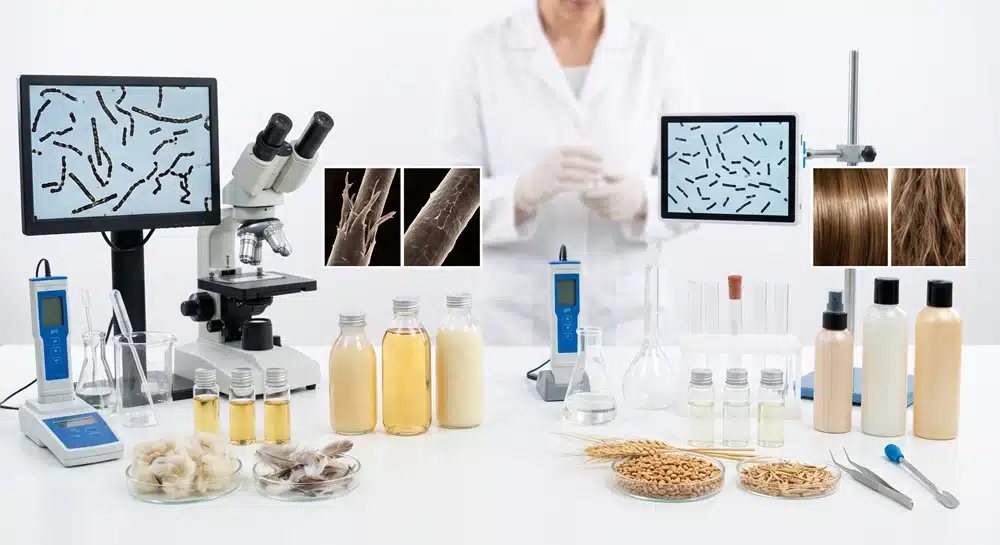
Hydrolyzed Keratin vs Wheat Protein at a Glance
| Factor | Hydrolyzed Keratin | Hydrolyzed Wheat Protein |
|---|---|---|
| Typical source | Animal keratin such as wool, feathers, horn or hoof | Wheat seed protein or gluten-derived material |
| Positioning | Hair-related structural protein and intensive conditioning | Plant-derived conditioning, film formation and moisture feel |
| Vegan status | Usually not vegan | Can support vegan positioning if the full formula and processing aids qualify |
| Key technical variable | Molecular-weight distribution and keratin source | Molecular weight, hydrolysis method, peptide aggregation and allergen control |
| Common cosmetic formats | Masks, conditioners, repair treatments and leave-ins | Shampoos, conditioners, volumizing products, styling products and skin care |
| Main qualification concern | Animal origin, BSE/TSE documentation, odor and batch consistency | Wheat allergen risk, residual higher-MW fractions, gluten-related documentation and cross-contact |
| Does it permanently repair hair? | No; benefits are cosmetic and temporary, although some systems show measurable mechanical improvements | No; it can condition and form a film but does not biologically rebuild the fiber |
What Is Hydrolyzed Keratin?
Keratin is a structural protein family found in animal hair, wool, feathers, nails, horns and related tissues. Native keratin is large, highly cross-linked and difficult to use in ordinary water-based formulas. Hydrolysis breaks it into smaller peptide fractions that are easier to disperse and formulate.
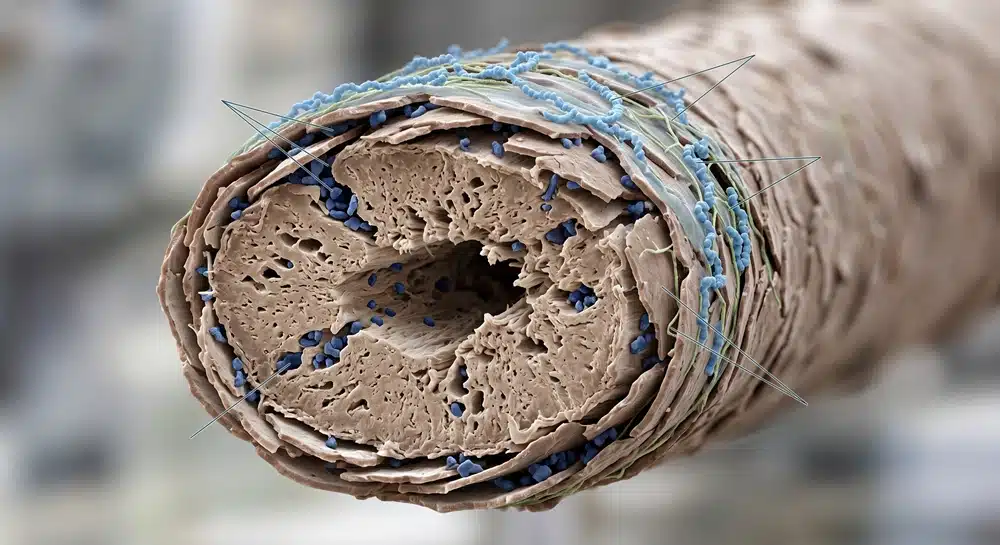
Commercial grades can differ substantially. Lower- and mid-molecular-weight keratin fractions may enter damaged regions of the hair fiber, while larger fractions tend to remain closer to the surface and provide film formation or substantivity. This is why brands should not assume that every ingredient labeled “Hydrolyzed Keratin” has the same penetration, sensory or strengthening profile.
For a broader identity, source and safety explanation, see what hydrolyzed keratin is.
What Is Hydrolyzed Wheat Protein?
Hydrolyzed wheat protein is produced by breaking wheat proteins into smaller peptides and amino-acid fragments. In cosmetics, it is used mainly as a hair-conditioning and skin-conditioning ingredient. Depending on the grade and formula, it can support film formation, water binding, improved feel, body and temporary smoothness.
Hydrolyzed wheat protein is not “plant keratin.” It does not have the same source or amino-acid distribution as animal keratin. Its value is based on the behavior of the specific hydrolysate in the finished formulation rather than on being chemically identical to the protein naturally present in hair.
How Molecular Weight Changes Hair Performance
“Hydrolyzed” does not describe one fixed peptide size. A hydrolysate can contain a distribution of small peptides, larger peptides and aggregates. Molecular-weight profile affects penetration, surface deposition, film formation and allergen considerations.
Hydrolyzed Keratin
A controlled study on relaxed textured hair found that low- and mid-molecular-weight keratin fractions penetrated more deeply into the hair fiber, while a high-molecular-weight fraction mainly adsorbed onto the surface. Some mid- and high-molecular-weight treatments improved mechanical properties under the tested conditions. The study supports a molecular-weight-dependent mechanism rather than the broad statement that all keratin peptides “repair hair from within.”
Hydrolyzed Wheat Protein
For hydrolyzed wheat protein, molecular weight is relevant to both performance and safety qualification. The Cosmetic Ingredient Review Expert Panel concluded that Hydrolyzed Wheat Protein and Hydrolyzed Wheat Gluten are safe in cosmetics when formulated to restrict the hydrolysates to an average molecular weight of 3,500 Da or less. Published allergy research has found that higher-molecular-weight peptide aggregates can have greater allergenic potential in susceptible individuals.
Brands should request the measurement method and distribution data, not just a marketing statement such as “low molecular weight.”
Which Is Better for Damaged Hair?
Hydrolyzed keratin is often the more direct choice when the product concept focuses on chemically treated, heat-damaged or fragile hair and the brand wants a keratin-related conditioning story. However, “hair-identical” positioning does not guarantee better results. The grade still needs to deposit effectively, remain compatible with the surfactant or conditioning system and perform at the selected active level.
Hydrolyzed wheat protein can also improve the feel and apparent body of damaged hair by forming a flexible surface film and supporting moisture retention. It may be a better fit when the brand prioritizes plant-derived positioning, lighter sensory performance or daily-use products.
Consumers looking for a use-focused discussion can review the hydrolyzed keratin for hair guide.
Which Is Better for Fine, Curly or Low-Porosity Hair?
| Hair or Product Goal | Starting Option | Formulation Note |
|---|---|---|
| Heavily damaged or chemically treated hair | Hydrolyzed keratin | Test peptide size, deposition, combability and breakage; avoid permanent-repair claims |
| Fine hair needing body | Hydrolyzed wheat protein | Use a lightweight grade and validate volume without stiffness or residue |
| Curly or textured hair with damage | Either or a carefully balanced combination | Balance protein deposition with emollients and humectants; test curl feel and breakage |
| Low-porosity hair | No universal winner | Heavy deposition can feel stiff or coated; finished-product testing matters more than the ingredient name |
| Vegan product positioning | Hydrolyzed wheat protein | Confirm the entire formula, processing aids and supplier declarations |
| Wheat-allergen-sensitive positioning | Hydrolyzed keratin or another non-wheat protein | Confirm animal origin and certifications; do not call the product hypoallergenic without substantiation |
Can Hydrolyzed Keratin and Wheat Protein Be Used Together?
Yes. They can be combined when the formulation objective benefits from both a keratin-related conditioning story and plant-protein film formation. A combination is not automatically superior, however. Protein systems can affect viscosity, charge balance, deposition, preservative performance, color and odor.
Formulators should compare the blend with each ingredient alone using wet and dry combing, breakage, tensile, sensory, residue and stability testing. A lower total protein level with a well-designed conditioning system may outperform a formula that simply contains more hydrolysate.
Do These Proteins Cause “Protein Overload”?
“Protein overload” is a consumer term rather than a standardized cosmetic diagnosis. Some users describe stiffness, dryness, tangling or a coated feel after frequent use of protein-rich products. These effects can result from excessive deposition, an unbalanced formula, product buildup or hair that does not benefit from the selected treatment frequency.
Brands should avoid universal schedules such as “use every two weeks.” Directions should be based on the complete product, active level and consumer-use study. Consumers should reduce frequency or stop use if a product makes the hair consistently stiff, brittle or uncomfortable.
Wheat Allergy, Gluten and Cosmetic Safety
Hydrolyzed wheat protein requires more careful allergy communication than generic “plant protein” wording suggests. Rare immediate hypersensitivity reactions and sensitization associated with some hydrolyzed wheat protein cosmetic products have been reported. Higher-molecular-weight aggregates and certain processing routes appear to be important risk factors.
This does not mean every cosmetic containing hydrolyzed wheat protein is unsafe. The CIR safety conclusion is tied to molecular-weight controls, and finished-product safety still depends on the exact grade, use concentration, exposure route and formulation. Buyers should request:
- Average molecular weight and distribution method
- Peptide-length or aggregation information where available
- Wheat allergen statement and cross-contact controls
- Gluten test method and reporting limit when a gluten-related claim is planned
- Hydrolysis method, including enzymatic, acid or deamidation-related processing
- Finished-product safety assessment and appropriate consumer warnings
Celiac disease is primarily triggered by ingestion, so a topical cosmetic exposure question is not identical to eating wheat. However, people with known wheat allergy or a history of cosmetic reactions should review the ingredient list and consult an appropriate clinician. “Gluten-free,” “allergen-free” and “hypoallergenic” should not be used solely because the protein has been hydrolyzed.
Source, Vegan, Halal and Kosher Considerations
Hydrolyzed keratin is usually animal-derived and therefore generally not vegan. Its halal or kosher status depends on the animal source, processing, manufacturing controls and current certification. Hydrolyzed wheat protein can support vegan positioning, but brands must still review processing aids, carriers, preservatives and the complete formula.
For hydrolyzed keratin, supplier files should identify the animal source, country of origin, traceability, BSE/TSE status and human-origin exclusion. For wheat protein, supplier qualification should cover wheat origin, GMO status where relevant, allergen segregation and gluten-related documentation.
Topical Hair-Care Evidence vs Oral Supplement Evidence
Most hair-fiber evidence for these ingredients concerns topical cosmetic systems. A peptide that conditions or penetrates a damaged hair fiber in a laboratory treatment does not automatically produce the same result when swallowed. Oral supplements require separate identity, digestibility, dose, safety and human evidence.
Brands developing ingestible beauty products should keep cosmetic and dietary-supplement claims separate. A custom formula supplement manufacturer should evaluate ingredient eligibility, target-market regulations, total protein dose, sensory properties and finished-product substantiation rather than copying shampoo claims onto a capsule or powder label.
How Brands Should Choose Between the Two Ingredients
| Decision Question | Choose Hydrolyzed Keratin When… | Choose Hydrolyzed Wheat Protein When… |
|---|---|---|
| What is the core positioning? | The concept emphasizes keratin-related hair conditioning or intensive damage care | The concept emphasizes plant-derived, lightweight or volumizing conditioning |
| What claim restrictions matter? | Animal-derived positioning is acceptable and source documents are available | Vegan positioning matters and wheat-allergen communication is manageable |
| What sensory target is needed? | More substantive conditioning is desired | Lighter film formation and body are desired |
| What testing is essential? | MW distribution, deposition, odor, BSE/TSE, breakage and combability | MW distribution, allergen controls, gluten documentation, film feel and residue |
| Can the formula use both? | Yes, after compatibility, stability, sensory and efficacy testing demonstrates a benefit | |
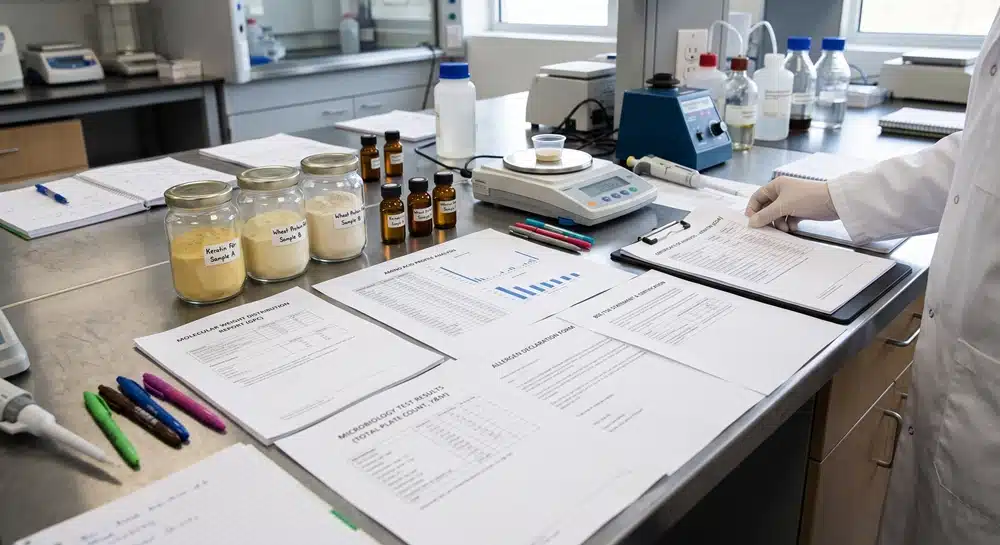
Supplier and COA Checklist
For Both Ingredients
- Exact INCI or ingredient identity and CAS/UNII documentation where applicable
- Source material and country of origin
- Hydrolysis process summary
- Average molecular weight, distribution and analytical method
- Active solids, protein or total nitrogen specification and calculation basis
- Amino-acid profile
- Moisture or loss on drying, ash, pH, solubility, color and odor
- Microbial limits, specified pathogens and preservative system for liquid grades
- Lead, cadmium, mercury and arsenic limits
- Stability, recommended storage, packaging, MOQ and lead time
Additional Checks for Hydrolyzed Keratin
- Animal species and tissue source
- BSE/TSE and human-origin exclusion statements
- Halal or kosher certification when claimed
- Batch odor and color consistency
Additional Checks for Hydrolyzed Wheat Protein
- Wheat allergen statement and manufacturing segregation
- Gluten test method and result when relevant
- Peptide aggregation and higher-MW fraction controls
- Enzymatic, acid or deamidation-related process information
For keratin sourcing, review the available bulk hydrolyzed keratin raw material information and request a current specification and batch COA for the exact grade.
Finished-Product Testing Checklist
- Accelerated and real-time stability in the intended package
- pH, viscosity, appearance, odor and color stability
- Preservative efficacy for water-containing formulas
- Wet and dry combability, breakage, tensile or hair-tress testing
- Consumer sensory evaluation for stiffness, coating, residue and volume
- Compatibility with surfactants, cationic conditioners, salts, silicones and botanical extracts
- Claim review based on the finished product, not only supplier literature
Teams that need help with ingredient selection, prototype development, compatibility and specifications can use GENSEI’s research and formulation support.
Cosmetic Claim and Labeling Considerations
In the United States, cosmetic claims must be truthful and not misleading. Appearance-focused claims such as “helps improve combability,” “helps hair feel smoother” or “reduces the appearance of damage” should be supported by appropriate finished-product evidence.
Claims to regrow hair, treat alopecia, repair living follicles or permanently change the structure or function of the body can cause a product to be regulated as a drug. Do not describe a cosmetic ingredient or ordinary cosmetic product as “FDA approved” or “FDA certified.”
Frequently Asked Questions
Is wheat protein the same as keratin?
No. Wheat protein is plant-derived, while true keratin is an animal structural protein. They have different amino-acid profiles, sources and claim considerations.
Is hydrolyzed keratin a protein?
Yes. It is a mixture of smaller peptides and amino-acid fragments produced by hydrolyzing keratin protein.
Which is better for hair: keratin or wheat protein?
There is no universal winner. Keratin may suit intensive damage-conditioning concepts, while wheat protein may suit lightweight, plant-derived or volumizing products. The finished formula and testing matter more than the ingredient name alone.
Is hydrolyzed wheat protein good for hair?
It can support film formation, moisture feel, body and temporary smoothness in a well-designed formula. Results depend on the grade, concentration and complete product.
Is hydrolyzed keratin vegan?
Usually not. True keratin is normally derived from animal material. Products marketed as “vegan keratin” are generally plant-protein or amino-acid alternatives.
Does hydrolyzed wheat protein contain gluten?
It is wheat-derived, but gluten content cannot be assumed from the word “hydrolyzed.” A gluten-related claim requires supplier documentation, an appropriate test method and a defined reporting limit.
Can keratin and wheat protein be used together?
Yes, but a combination should be justified by compatibility, sensory, stability and performance testing. More total protein does not automatically mean a better product.
Can either ingredient permanently repair split ends?
No. Cosmetic proteins may temporarily coat, smooth or reinforce damaged areas, but they cannot biologically restore a split hair fiber to its original state.
Final Recommendation
Choose hydrolyzed keratin when the concept requires a keratin-related structural story, stronger substantivity or intensive damage-care positioning and animal origin is acceptable. Choose hydrolyzed wheat protein when plant-derived positioning, lighter film formation, body or moisture feel are more important and the brand can manage wheat-allergen documentation.
For either ingredient, the commercial decision should be based on molecular-weight distribution, source, active content, allergen and origin documents, sensory performance, finished-product stability and claim substantiation. Do not select a raw material only because one protein is marketed as “repairing” and the other as “volumizing.”
References
- Cosmetic Ingredient Review: Safety Assessment of Keratin and Keratin-Derived Ingredients as Used in Cosmetics
- PubMed: Penetration of Different Molecular Weight Hydrolysed Keratins into Hair Fibres
- PubMed: Safety Assessment of Hydrolyzed Wheat Protein and Hydrolyzed Wheat Gluten as Used in Cosmetics
- PubMed: Higher Allergenicity of High Molecular Weight Hydrolysed Wheat Protein in Cosmetics
- FDA: Allergens in Cosmetics
- FDA: Cosmetics Labeling Claims
Disclaimer: This article is for ingredient education and product-development reference. It is not medical advice and does not replace an allergen, safety, regulatory or finished-product claims review for the intended market.

Warren Wan is a seasoned expert with extensive experience in the dietary supplement supply chain, possessing rich practical experience in the research, development, process control, and global sourcing of core ingredients such as collagen peptides, bone broth protein, and keratin. As the author of this column, he is dedicated to stripping away the marketing packaging, transforming obscure ingredient science and production quality control standards into easy-to-understand, hardcore science popularization, helping readers understand the truth behind the labels and make more rational health choices.