
Quick Answer: Evening Primrose Oil vs Fish Oil
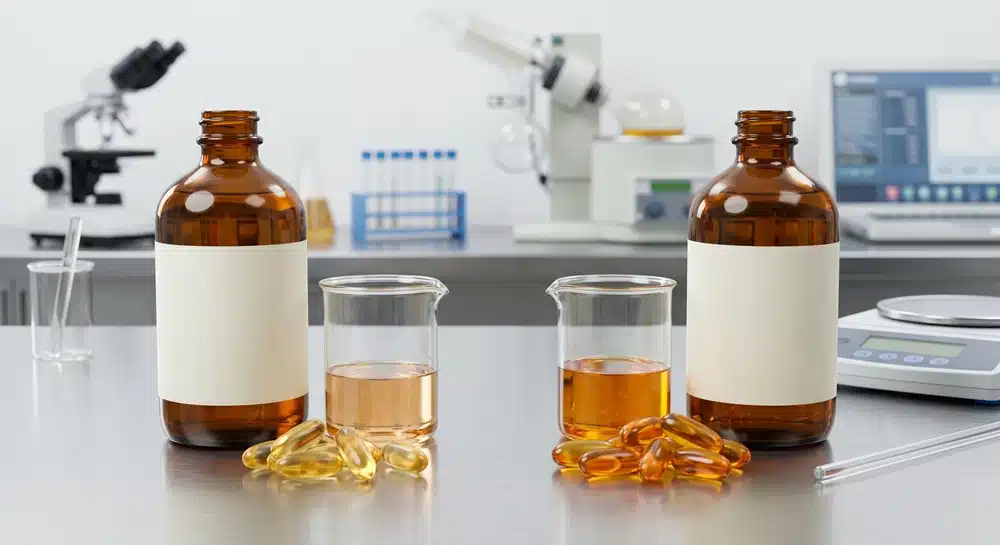
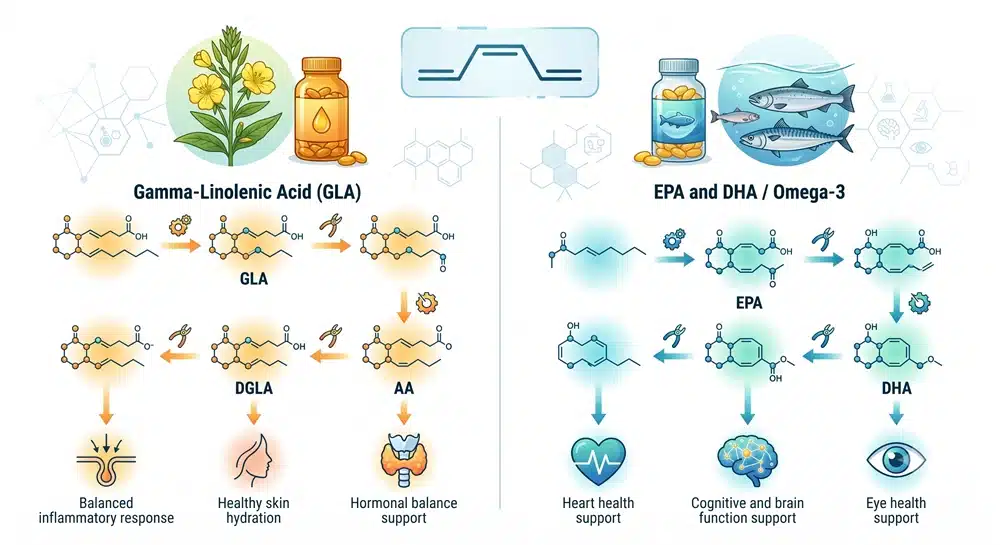
Evening primrose oil and fish oil are not direct substitutes. Evening primrose oil is mainly valued for gamma-linolenic acid (GLA), an omega-6 fatty acid used in skin, women’s wellness, and anti-inflammatory positioning. Fish oil is mainly valued for EPA and DHA, two long-chain omega-3 fatty acids used in cardiovascular, brain, eye, and joint support formulas.
For consumers, the simple answer is this: choose evening primrose oil when the product goal is skin barrier support or women’s wellness positioning; choose fish oil when the goal is EPA/DHA delivery and omega-3 support.
For supplement brands, the better question is not “which oil is healthier?” The better question is: which oil source fits your product claim, dosage form, oxidation control plan, supplier COA, sustainability story, and target market?
Both oils can work in softgels, but they create different manufacturing challenges. Fish oil requires careful control of oxidation, odor, heavy metals, PCBs, dioxins, and EPA/DHA potency. Evening primrose oil requires GLA standardization, cold-press quality control, peroxide value review, and protection from heat, light, and oxygen.
Origins and Production
Evening Primrose Oil (EPO) is derived from the seeds of the evening primrose plant, Oenothera biennis, which is native to North America but found in many parts of the world today. The oil is extracted through a coldpressing process, which helps preserve the active compounds, primarily gammalinolenic acid (GLA), a type of omega6 fatty acid. The oil has a light, golden color and a mild flavor.
Fish Oil, on the other hand, is sourced from the tissues of fatty fish like salmon, mackerel, sardines, and anchovies. Fish oil contains high concentrations of omega3 fatty acids, particularly EPA (eicosapentaenoic acid) and DHA (docosahexaenoic acid), both of which are critical for brain, heart, and eye health. Fish oil is typically extracted using various methods, including pressing, distillation, or molecular filtration, which helps remove impurities and contaminants.
Evening Primrose Oil vs Fish Oil: B2B Formulation Comparison
| Factor | Evening Primrose Oil | Fish Oil | Formulation Note |
| Main fatty acids | GLA and linoleic acid | EPA and DHA | EPO is an omega-6 oil; fish oil is an omega-3 oil. They serve different product positions. |
| Best positioning | Skin support, women’s wellness, beauty-from-within, hormonal balance support | Heart, brain, eye, joint, omega-3 support | Use safer structure/function language; avoid disease-treatment claims. |
| Common dosage form | Softgels, liquid oil, beauty oil blends | Softgels, liquid oil, omega-3 formulas | Both are oil-based ingredients and fit softgel projects well. |
| Quality markers | GLA content, peroxide value, acid value, cold-press quality | EPA/DHA potency, PV, p-AV, TOTOX, heavy metals, PCBs, dioxins | COA review is essential before production. |
| Manufacturing risks | Oxidation, rancidity, heat/light exposure, GLA variability | Oxidation, fishy odor, contaminant risk, leakage risk | Packaging and antioxidant systems matter. |
| Sustainability story | Plant-derived seed oil | Marine-sourced oil; algal oil is a plant-based alternative | Fish oil sourcing should address traceability and sustainability. |
| Best brand strategy | Beauty, women’s wellness, skin-focused softgels | Omega-3, heart health, active aging, joint support | For omega 3-6-9 positioning, the two can be combined carefully. |
Can Evening Primrose Oil and Fish Oil Be Combined?
Yes. Evening primrose oil and fish oil can be used in the same supplement concept because they provide different fatty acids. Evening primrose oil supplies GLA, while fish oil supplies EPA and DHA. This makes the combination attractive for brands developing omega 3-6-9 softgels, beauty-from-within formulas, active aging products, or women’s wellness supplements.
However, combining the two oils is not just a marketing decision. From a manufacturing perspective, the formula must be reviewed for fatty acid ratio, fill weight, capsule size, oxidation risk, flavor profile, and packaging protection.
For example, a brand may want to create a softgel that contains:
– evening primrose oil standardized for GLA,
– fish oil standardized for EPA and DHA,
– vitamin E or mixed tocopherols as antioxidant support,
– and a softgel shell designed to reduce leakage and protect the oil fill from oxygen.
The challenge is stability. Polyunsaturated oils are sensitive to oxygen, heat, and light. A formula that looks attractive on a label may still fail if the oil blend develops odor, peroxide values rise, or the capsule shell is not compatible with the fill.
For this reason, supplement brands should treat EPO + fish oil as a formulation project, not just a simple ingredient mix.
Health Benefits
Evening Primrose Oil:
- Skin Health: EPO is commonly used to improve skin conditions such as eczema, psoriasis, and acne. The GLA in the oil helps reduce inflammation and promotes skin repair. Many people use EPO to keep their skin moisturized and to reduce the appearance of fine lines and wrinkles.
- Hormonal Support: Evening Primrose Oil is often used to manage symptoms related to PMS (premenstrual syndrome) and menopause. It is believed to help balance hormones by affecting prostaglandin production, which plays a role in regulating inflammation and pain. EPO may help alleviate symptoms such as mood swings, breast tenderness, and hot flashes.
- AntiInflammatory: Due to its high GLA content, EPO is effective in reducing systemic inflammation. This makes it a beneficial supplement for individuals with conditions like rheumatoid arthritis or other inflammatory disorders.
- Heart Health: Some research suggests that EPO may support cardiovascular health by reducing cholesterol levels and improving blood circulation, though this benefit is less established compared to fish oil.
Fish Oil:
- Heart Health: One of the primary benefits of fish oil is its ability to support heart health. EPA and DHA are known to reduce inflammation in the arteries, lower triglyceride levels, and improve blood circulation. Fish oil supplementation has been shown to reduce the risk of cardiovascular diseases, including heart attacks and strokes.
- Brain Health: DHA is a major structural component of the brain, and it plays a key role in cognitive function. Studies show that DHA can improve memory, focus, and overall brain health. It is particularly important for infants, children, and older adults. Supplementing with fish oil during pregnancy can also support fetal brain development.
- Eye Health: DHA is essential for maintaining the health of the retina in the eyes. Regular intake of fish oil has been linked to a reduced risk of agerelated macular degeneration (AMD), a leading cause of blindness in older adults. It can also help with dry eyes and other visionrelated issues.
- AntiInflammatory and Mood Regulation: Like EPO, fish oil has antiinflammatory properties, which can help manage conditions like rheumatoid arthritis. Additionally, EPA in fish oil has been shown to support mental health, potentially alleviating symptoms of depression, anxiety, and bipolar disorder.
Sustainability and Environmental Impact
Evening Primrose Oil is a plantbased oil, and as such, it is considered more sustainable than animalderived oils. Growing the evening primrose plant does not have the same environmental impact as fishing, particularly in terms of overfishing and marine ecosystem degradation. However, like all agricultural products, it still requires land, water, and energy to cultivate.
Fish Oil, in contrast, raises concerns about overfishing and the depletion of marine life. While many fish oil manufacturers use fish sourced from sustainable fisheries, concerns about the environmental impact of largescale fishing still exist. For those seeking a more ecofriendly alternative to traditional fish oil, algaebased omega3 oils (such as DHA Algal Oil) are becoming increasingly popular as a plantbased and more sustainable option.
Softgel Manufacturing Considerations for EPO and Fish Oil

Evening primrose oil and fish oil are both suitable for softgel manufacturing, but they require careful control during formulation, filling, drying, and packaging.
For EPO, fish oil, or omega 3-6-9 products, softgel capsule manufacturing is often the most practical format for precise oil filling, odor control, and shelf-life protection.For fish oil softgels, the key technical concerns are oxidation, odor, EPA/DHA potency, and contaminant testing. A high-quality fish oil project should review peroxide value, p-anisidine value, TOTOX value, heavy metals, PCBs, dioxins, and source traceability.
For evening primrose oil softgels, the key concerns are GLA standardization, acid value, peroxide value, cold-press quality, and protection from heat and oxygen. Because EPO is also a polyunsaturated oil, it can become rancid if the supply chain or packaging is poorly controlled.
For mixed-oil softgels, brands should also evaluate:
– fill weight and capsule size,
– oil viscosity,
– shell compatibility,
– leakage risk,
– antioxidant system,
– nitrogen flushing or oxygen-control options,
– bottle vs blister packaging,
– and accelerated stability testing.
For premium formulas, blister packaging or oxygen-protective bottles may perform better than basic plastic bottles. If the product uses both EPO and fish oil, the packaging decision should be made before scale-up, not after the formula is finalized.
Quality Checklist Before Buying EPO or Fish Oil Ingredients

For supplement brands, the COA is more important than the ingredient name. Before purchasing evening primrose oil or fish oil, request documents that confirm identity, potency, oxidation status, contaminants, and storage requirements.
For evening primrose oil, review:
– GLA percentage,
– linoleic acid content,
– peroxide value,
– acid value,
– extraction method,
– allergen statement,
– country of origin,
– pesticide and solvent testing if applicable,
– and storage conditions.
For fish oil, review:
– EPA content,
– DHA content,
– total omega-3 content,
– peroxide value,
– p-anisidine value,
– TOTOX value,
– heavy metals,
– PCBs,
– dioxins,
– fish species and source traceability,
– deodorization level,
– and third-party testing if available.
A low-cost oil is not always cheaper in production. Poor raw material quality can lead to odor complaints, capsule leakage, failed stability testing, shorter shelf life, and higher customer returns.
Side Effects and Considerations
Both Evening Primrose Oil and Fish Oil are generally considered safe when taken in appropriate doses, but they may cause side effects in some people.
Evening Primrose Oil can sometimes cause mild gastrointestinal upset, headaches, or skin reactions. There is also a risk of interaction with bloodthinning medications, so it’s important to consult a healthcare provider before use, especially if you are on anticoagulants.
Fish Oil can cause a fishy aftertaste, burping, or digestive upset, especially when taken in large amounts. Some individuals may experience allergic reactions to fishbased products. As with EPO, fish oil can also interact with bloodthinning medications, increasing the risk of bleeding.
Final Recommendation for Supplement Brands
Evening primrose oil and fish oil serve different supplement strategies. Evening primrose oil is better suited for skin support, women’s wellness, beauty-from-within, and GLA-based positioning. Fish oil is better suited for EPA/DHA delivery, omega-3 support, active aging, joint support, and cardiovascular wellness positioning.
For brands, the best choice depends on the desired claim, oil quality, dosage form, COA results, oxidation status, sustainability story, and target customer.
If you are developing a softgel, liquid oil, or omega 3-6-9 product, do not choose based only on ingredient popularity. Review the fatty acid profile, stability requirements, packaging format, and manufacturing feasibility before launch.
Need Help Developing an Oil-Based Supplement?
Gensei can support evening primrose oil softgels, fish oil softgels, blended omega 3-6-9 formulas, liquid oil products, private label supplements, and custom formulation projects. Send us your target fatty acid profile, dosage form, capsule size, packaging plan, and market positioning to review feasibility before production.
FAQs
Is evening primrose oil the same as fish oil?
No. Evening primrose oil is a plant seed oil rich in omega-6 fatty acids, especially GLA. Fish oil is a marine oil rich in omega-3 fatty acids, mainly EPA and DHA. They are used for different supplement goals.
Which is better, omega-3 or evening primrose oil?
Neither is universally better. Omega-3 fish oil is better for EPA/DHA positioning, while evening primrose oil is better for GLA, skin support, and women’s wellness positioning. The right choice depends on the product goal.
Can evening primrose oil and fish oil be taken together?
They can appear in the same supplement concept because they provide different fatty acids. For finished products, brands should evaluate total dosage, oxidation stability, COA quality, and possible consumer safety considerations before combining them.
Is evening primrose oil an omega-3?
No. Evening primrose oil is mainly an omega-6 oil. Its key active fatty acid is gamma-linolenic acid, or GLA. Fish oil is the better-known source of omega-3 EPA and DHA.
What should brands test before buying fish oil?
Brands should review EPA, DHA, total omega-3 content, peroxide value, p-anisidine value, TOTOX value, heavy metals, PCBs, dioxins, fish species, deodorization level, and traceability documents.
What should brands test before buying evening primrose oil?
Brands should review GLA content, peroxide value, acid value, extraction method, pesticide or solvent testing if applicable, allergen statements, origin, and storage conditions.
Which dosage form is best for EPO or fish oil?
Softgels are often the most practical format because they protect oil-based ingredients, mask taste, and allow precise fill weights. Liquid oils can also work, but packaging and oxidation control become more important after opening.
Can these products make disease-treatment claims?
No. Dietary supplement labels should avoid claims that diagnose, treat, cure, or prevent disease. Safer structure/function language includes terms such as supports skin health, supports women’s wellness, supports omega-3 intake, or supports cardiovascular wellness, where appropriate and substantiated.
References
- NCCIH. Evening Primrose Oil: Usefulness and Safety.
https://www.nccih.nih.gov/health/evening-primrose-oil - NIH Office of Dietary Supplements. Omega-3 Fatty Acids – Health Professional Fact Sheet.
https://ods.od.nih.gov/factsheets/Omega3FattyAcids-HealthProfessional/ - NCCIH. Omega-3 Supplements: What You Need To Know.
https://www.nccih.nih.gov/health/omega3-supplements-what-you-need-to-know - GOED. Voluntary Monograph for Omega-3 EPA and DHA Oils.
https://goedomega3.com/storage/app/media/Monograph/GOED%20Monograph%20-%202022%2001%2006%20-%20FINAL.pdf - Bannenberg et al. Omega-3 Long-Chain Polyunsaturated Fatty Acid Content and Oxidation State of Fish Oil Supplements in New Zealand. Scientific Reports.
https://www.nature.com/articles/s41598-017-01470-4 - FDA. Structure/Function Claims.
https://www.fda.gov/food/nutrition-food-labeling-and-critical-foods/structurefunction-claims - FDA. Questions and Answers on Dietary Supplements.
https://www.fda.gov/food/information-consumers-using-dietary-supplements/questions-and-answers-dietary-supplements

Warren Wan is a seasoned expert with extensive experience in the dietary supplement supply chain, possessing rich practical experience in the research, development, process control, and global sourcing of core ingredients such as collagen peptides, bone broth protein, and keratin. As the author of this column, he is dedicated to stripping away the marketing packaging, transforming obscure ingredient science and production quality control standards into easy-to-understand, hardcore science popularization, helping readers understand the truth behind the labels and make more rational health choices.


