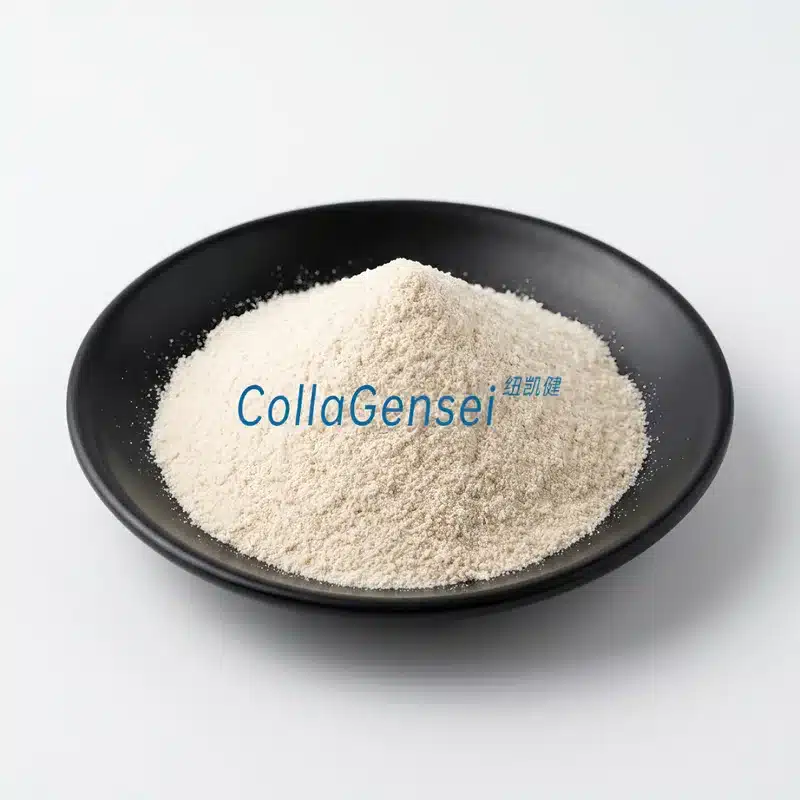
Bulk marine peptide ingredient manufacturing

Sea Cucumber Collagen Peptide Powder for Functional Nutrition

Source a sea cucumber-derived peptide ingredient for premium functional nutrition, beauty-from-within, healthy-aging and custom supplement formulations. Review the source identity, protein result, molecular-weight specification and reference-batch COA before purchase.

  • Sea cucumber-derived
  • 92.21% protein
  • ≤10,000 specification
  • 20 kg net per bag
  • Batch COA available
Sea cucumber collagen peptide powder for functional nutrition formulations
92.21% Protein result
Batch 20250925
≤10,000 Molecular-weight
specification
20 kg Net weight
per bag
SRC
Sea cucumber originSpecies, raw-material part and harvest status require separate traceability documents.
COA
Reference batch dataProtein, nitrogen, molecular-weight specification, density, metals and microbiology.
R&D
Finished-format evaluationPowders, capsules, tablets, drinks, gummies and marine premixes.
B2B
Ingredient and OEM supportSamples, documentation, bulk sourcing and custom finished-product pathways.
Sea cucumber collagen peptide powder with sea cucumber raw material
Protein result is not exact collagen purity The COA reports total protein, but not collagen content, peptide content, hydroxyproline or amino-acid composition.

Product identity

A sea cucumber-derived collagen peptide grade that still requires species and raw-material qualification

The signed certificate names the product Sea Cucumber Collagen Peptide and lists the origin as Sea Cucumber. It reports total protein, nitrogen, a molecular-weight specification, physical properties and batch safety data. It does not print the Latin species, raw-material part, harvest area, wild-caught or farmed status, hydrolysis process, collagen assay or peptide distribution.

How this page is positioned Sea Cucumber Collagen Peptide Powder for functional nutrition and premium supplement development. Exact species, body-wall or whole- animal sourcing, hydrolysis method, collagen percentage, water solubility, saponins, polysaccharides and clinical-effect claims should only be used when supported by separate current documents.
COA product nameSea Cucumber Collagen PeptideCAS No. 9064-67-9
OriginSea CucumberLatin species not printed
Protein92.21%Kjeldahl result
Nitrogen15.92%Specification: ≥15.0%
Molecular weightPassSpecification: ≤10,000
Reference batch20250925800 kg batch quantity
Marine source and allergen review: This is a marine animal-derived ingredient and is not vegan. The COA does not establish a final-market fish or shellfish allergen label. Request the species, source-part, allergen, cross-contact, traceability and any CITES-related documentation required for the destination market.

Composition and peptide interpretation

Use the reference COA without converting total protein into unverified bioactive claims

The current evidence supports a high total-protein result, a molecular-weight specification and batch safety data. More specific collagen, peptide, saponin, polysaccharide and performance claims require additional assays.

Protein Content 92.21%

Total protein measured by the Kjeldahl method. It is not an exact collagen-purity or peptide-content result.

Molecular Weight ≤10,000

This is the printed specification and the batch result is Pass. No numeric average or distribution is shown.

Bulk Density 0.34 g/ml

Useful for initial capsule-volume and powder-handling calculations, but not proof of flowability or fill consistency.

Qualification questionWhat the current COA establishesWhat should be requested
Species and source identityOrigin listed only as Sea CucumberLatin species, harvest/farming area, wild/farmed and traceability declarations
Raw-material partNot printedBody wall, intestine, whole animal or other source-part declaration
Collagen and peptide profile92.21% total protein; ≤10,000 specificationCollagen, peptide content, hydroxyproline, amino acids and MW distribution
Saponin / polysaccharide positioningNot tested on the COAValidated saponin, sulfated-polysaccharide or mucopolysaccharide assays
Water and beverage performance1% warm-water sensory preparation onlySolubility, turbidity, foam, color, sedimentation, heat and pH testing
Test itemSpecificationReference resultMethod
AppearanceWhite or light-yellow powder; no caking or foreign mattersPass1% warm-water sensory observation
OdorCharacteristic taste and smell; no particular smellPass1% warm-water sensory assessment
Protein≥90%92.21%Kjeldahl Method
Nitrogen≥15.0%15.92GB5009.5
Molecular Weight≤10,000PassGB31645-2018
Ash≤2.0%0.79GB5009.4
Loss on Drying≤10%5.96GB5009.3 - Method I
Lead≤1.0 ppmPassICP-MS
Arsenic≤1.0 ppmPassICP-MS
Cadmium≤0.1 ppmPassICP-MS
Mercury (Hg)≤0.1 ppmPassICP-MS
Chromium≤2.0 ppmPassGB5009.123
Total Bacteria Count≤1,000 CFU/g300U.S.P. / N.F.
Coliform GroupNegative / 10 gPassU.S.P. / N.F.
E. coliNegative / 10 gPassU.S.P. / N.F.
Mold & Yeast≤100 CFU/g20U.S.P. / N.F.
Salmonella / Staph. aureusNegativePassU.S.P. / N.F.
Mesh Size100% through 60 meshPassIn-house
Bulk Density≥0.30 g/ml0.34U.S.P. / N.F.

Formulation applications

Build around premium marine-peptide manufacturing decisions

The reference COA provides protein, density, mesh size and safety information. Solubility, taste, flow, heat stability and finished- product dosage still require bench and pilot testing.

01

Premium Functional Nutrition

For high-value marine-ingredient concepts requiring clear source identity, composition documents and premium-market positioning.

  • Species and traceability review
  • Target daily dose
  • Finished-label positioning
02

Beauty Powders & Sachets

For beauty-from-within powders combined with collagen, vitamin C, hyaluronic acid or other premium ingredients.

  • Marine odor and bitterness
  • Dispersibility and sediment
  • Blend uniformity
03

Healthy-Aging Capsules & Tablets

For multi-ingredient formulas where density, flowability, dose per unit and document matching determine feasibility.

  • Capsule-volume calculation
  • Flowability testing
  • Compression feasibility
04

Functional Drinks & Shots

For liquid concepts requiring validation under the intended concentration, pH, temperature, mixing and storage conditions.

  • Turbidity and clarity
  • Heat and pH stability
  • Finished-product sediment
05

Gummies & Marine Chews

For gummy and chew projects requiring marine-flavor masking, pH, heat, moisture and texture evaluation.

  • Flavor masking
  • Heat-process review
  • Texture and stability
06

Custom Marine Peptide Premixes

For combinations with marine collagen, elastin peptide, vitamins, minerals or other premium supplement ingredients.

  • Formula compatibility
  • Source and document alignment
  • Custom packaging route

Source, process and quality

Connect species traceability, peptide processing and final batch release

A professional supplier file should identify the exact sea cucumber species and raw-material part, explain hydrolysis and filtration, and link composition claims to current analytical records.

Industrial marine peptide hydrolysis and drying equipment

Marine Peptide Processing

Document raw-material cleaning, preparation, enzymatic hydrolysis, filtration, concentration, drying, sieving and powder handling for the approved grade.

In-house quality assurance laboratory

In-House QA Laboratory

Connect release decisions to protein, nitrogen, molecular-weight specification, moisture, ash, metals and microbiological results.

Step 01

Species & Source Review

Confirm Latin species, raw-material part, harvest or farming area, legal sourcing, traceability and any CITES requirements.

Step 02

Peptide & Composition Review

Confirm hydrolysis method, processing aids, molecular distribution, amino acids, collagen and any claimed secondary compounds.

Step 03

Batch COA Release

Release against the approved sensory, composition, metal and microbiological specification.

Related marine and specialty peptide ingredients

Route buyers by source identity and formulation objective

Keep sea cucumber requirements on this page and direct marine collagen, elastin and keratin needs to their dedicated technical pages.

Sea cucumber-derived

Sea Cucumber Collagen Peptide

A premium marine animal-derived peptide powder for functional-nutrition and supplement development.

Current product
Codfish skin

Marine Collagen Peptides

Marine-source collagen peptides for beauty powders, drinks and source-specific positioning.

View Marine Collagen
Bonito-derived

Elastin Peptide Powder

A marine peptide ingredient with measured peptide content and a defined low-molecular-weight fraction.

View Elastin Peptide
Feather-derived

Hydrolyzed Keratin Peptide

A structural-protein ingredient for beauty and pet skin-and-coat supplement concepts.

View Keratin Peptide

Documentation and procurement

Prepare procurement, R&D, quality and regulatory review before ordering

Confirm current document availability for the intended market, source claim, product positioning and finished format.

Current batch COA
Product specification
SDS / MSDS
Latin species declaration
Raw-material part declaration
Country / harvest area
Wild-caught / farmed statement
Traceability statement
CITES documents, if applicable
Manufacturing flow chart
Hydrolysis / enzyme statement
Molecular-weight distribution
Full amino-acid profile
Collagen / hydroxyproline data
Saponin / polysaccharide assay, if claimed
Allergen / cross-contact statement
Packaging, MOQ and lead time

B2B frequently asked questions

Questions from sea cucumber peptide buyers, formulators and quality teams

The answers separate facts printed on the reference COA from points that require species, process or composition documents.

The COA lists the origin only as Sea Cucumber. It does not print the Latin species, harvest area, wild/farmed status or whether body wall, intestine or whole animal is used.

No. It is a total-protein result by the Kjeldahl method. Exact collagen, peptide content, hydroxyproline and amino-acid composition require separate testing.

The COA prints a specification of ≤10,000 and a result of Pass under GB31645-2018. It does not provide a numeric average or distribution by molecular-weight band.

The sensory method prepares a 1% warm-water sample, but quantitative solubility, turbidity, sediment, foam and clarity are not reported. Test the actual finished formula.

Those components are not tested on the reference COA. Request validated assays before using saponin-, sulfated-polysaccharide- or mucopolysaccharide-rich positioning.

Sea cucumber is a marine animal-derived ingredient and is not vegan. Request the current allergen and cross-contact statement rather than assigning a final-market fish or shellfish label from this COA alone.

The reference COA lists 20 kg net per bag, 20.5 kg gross and an 800 kg batch quantity. Confirm MOQ, sample size, current stock, lead time, Incoterms and freight terms in the quotation.

Start a technical sourcing discussion

Request a current COA, sample or bulk quotation

Share your finished format, target market, estimated quantity and document requirements so the team can confirm the appropriate sea-cucumber peptide specification and supply pathway.

  • Current batch COA and specification review
  • Species, raw-material part and traceability discussion
  • Formulation sample coordination
  • Packaging, MOQ, lead time and freight confirmation

    Scroll to Top