
Bulk beef bone broth ingredient manufacturing
Beef Bone Broth Protein Powder for Functional Nutrition
Source a high-protein bovine ingredient for savory nutrition, protein powders, meal systems, functional foods and pet formulations. Review the reference-batch protein and sodium results, source documents and formulation performance before purchase.
- Bovine-derived ingredient
- 97.2% protein - dry basis
- 0.04% sodium
- 3,000-5,000 molecular weight
- Batch COA available
dry basis
by ICP-MS
result
Product identity
A high-protein bovine powder that still requires source, process and composition qualification
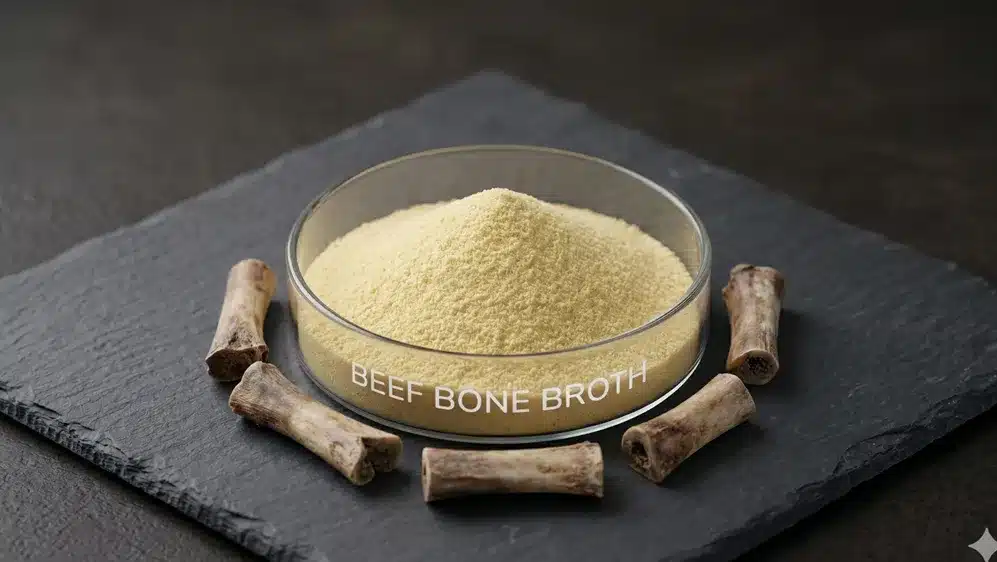
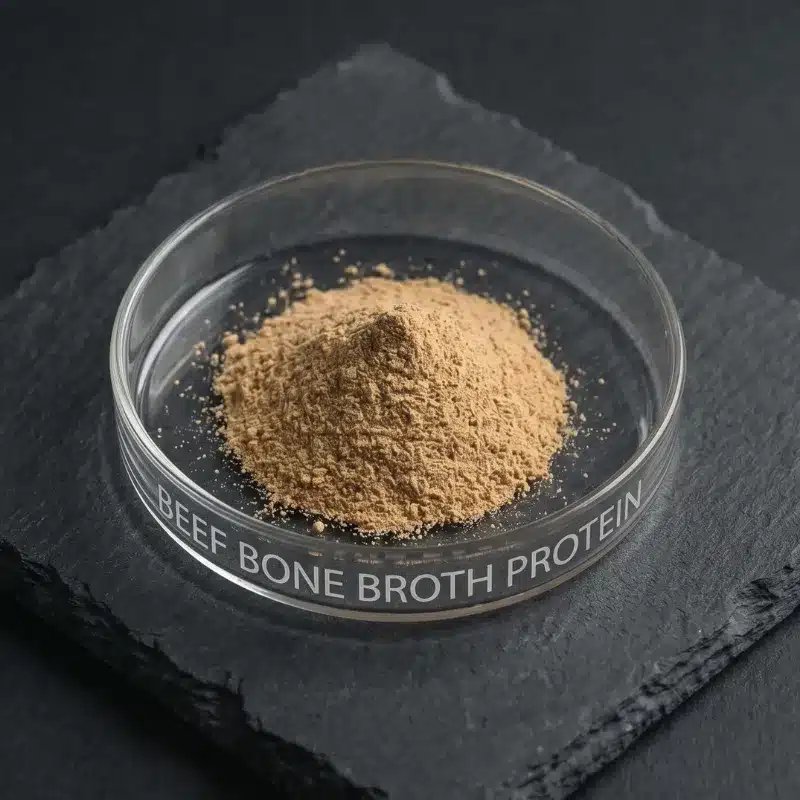
The signed certificate names the product Beef Bone Broth and reports 97.2% protein on a dry basis, 0.04% sodium and a 3,000-5,000 molecular-weight result. It does not identify the exact source tissues, ingredients, broth-cooking process, hydrolysis status, collagen content, amino-acid profile or sensory performance.
Product identity and composition
Use the reference COA as a starting point - not as proof of collagen, flavor or complete-protein performance
The page can accurately promote high protein content, measured sodium and commercial supplier capability. Finished claims require source, process, amino-acid and application data.
Dry-basis Kjeldahl result. This is the correct metric instead of “97.2% purity” or “protein yield.”
Reference-batch ICP-MS result. Finished-serving sodium still depends on the intended inclusion rate.
Collagen, hydroxyproline, amino acids, fat, carbohydrate and minerals are not printed on the COA.
| Qualification question | What the current COA establishes | What should be requested |
|---|---|---|
| Source identity | Beef Bone Broth product name only | Bovine source tissues, origin, veterinary, traceability and BSE/TSE declarations |
| Traditional broth vs hydrolysate | 97.2% protein and 3,000-5,000 molecular weight | Broth-cooking, extraction, concentration and hydrolysis process statements |
| Collagen positioning | No collagen or hydroxyproline result | Collagen assay, hydroxyproline and full amino-acid profile |
| Flavor and food use | Light-yellow granule specification | Broth note, bitterness, odor, flavor-masking and sensory-panel data |
| Powder performance | 60 mesh and 0.37 g/ml density | Solubility, foam, viscosity, turbidity, flowability and sedimentation tests |
| Test item | Specification | Reference result | Method |
|---|---|---|---|
| Characteristic | Light yellow granule; 60 mesh | Not separately printed | Sensual Test |
| Protein | NLT 97% | 97.2% - Dry Basis | Kjeldahl Method |
| Molecular Weight | 3,000-5,000 | 3,000-5,000 | Gel Chromatography Method |
| Ash | NMT 2.0% | 1.05% | U.S.P. / N.F. |
| Loss on Drying | NMT 8.0% | 5.98% | U.S.P. / N.F. |
| pH | 5.0-6.5 | 5.3 | Japanese Pharmacopoeia |
| Heavy Metals (Pb) | NMT 20.0 ppm | <20 ppm | Na2S Colorimetric |
| Arsenic (As2O3) | NMT 1.0 ppm | <1.0 ppm | Atomic Absorption Spectrometer |
| Chromium | <2.0 ppm | <2.0 ppm | Atomic Absorption Graphite Furnace |
| Melamine (Metabolites) | Negative | Not separately printed | HPLC |
| Bulk Density | >0.35 g/ml | 0.37 g/ml | U.S.P. / N.F. |
| Sodium | <0.7% | 0.04% | ICP-MS |
| Total Bacterial | <1,000 CFU/g | 300 | USP 2021 |
| Yeast and Mold | <100 CFU/g | 30 | USP 2021 |
| E. coli | Negative / 10 g | Negative | USP 2021 |
| Coliform Group | Negative / 10 g | Negative | USP 2021 |
| Lead | NMT 1.0 ppm | <1.0 ppm | ICP-MS |
| Mercury | NMT 0.1 ppm | <0.1 ppm | ICP-MS |
| Cadmium | NMT 0.1 ppm | <0.1 ppm | ICP-MS |
Formulation applications
Build around real broth, protein and food-system manufacturing decisions
The reference COA provides protein, sodium, molecular-weight, density and safety data. Finished-format suitability still depends on dispersibility, foam, viscosity, broth flavor, heat and storage tests.
Savory Broth Powders & Soup Mixes
For sipping broths, soup bases and savory powders where beef flavor, mouthfeel, heat and sodium contribution affect the formula.
- Broth and umami profile
- Hot-water dispersion
- Serving-level sodium
Protein Powders & Sachets
For functional powders where taste, color, dispersion, foam and serving size affect the finished product.
- Cold-water dispersion
- Foam and sediment
- Flavor-system compatibility
Paleo & Dairy-Free Nutrition
For animal-protein blends where the complete formula, amino-acid profile and destination-market positioning must be reviewed.
- Amino-acid qualification
- Protein-source positioning
- Finished-label review
Meal-Replacement Systems
For high-protein meal powders requiring complete nutrition, sensory control and compatibility with vitamins, minerals and fats.
- Amino-acid complementation
- Viscosity and mouthfeel
- Micronutrient compatibility
Protein Bars & Savory Snacks
For bars and functional foods where water activity, hardening, flavor and shelf-life texture must be assessed.
- Texture over shelf life
- Water activity
- Flavor and color interaction
Pet Foods & Pet Supplements
For pet powders, broths, chews and foods requiring palatability, species-market and regulatory review.
- Palatability testing
- Pet-market documentation
- Powder, broth or chew format
Source, process and quality
Connect bovine-source identity, broth processing and final batch release
A professional supplier file should identify the bovine tissues and supply chain, explain the broth-cooking, extraction or hydrolysis route, and link composition claims to current analytical documents.
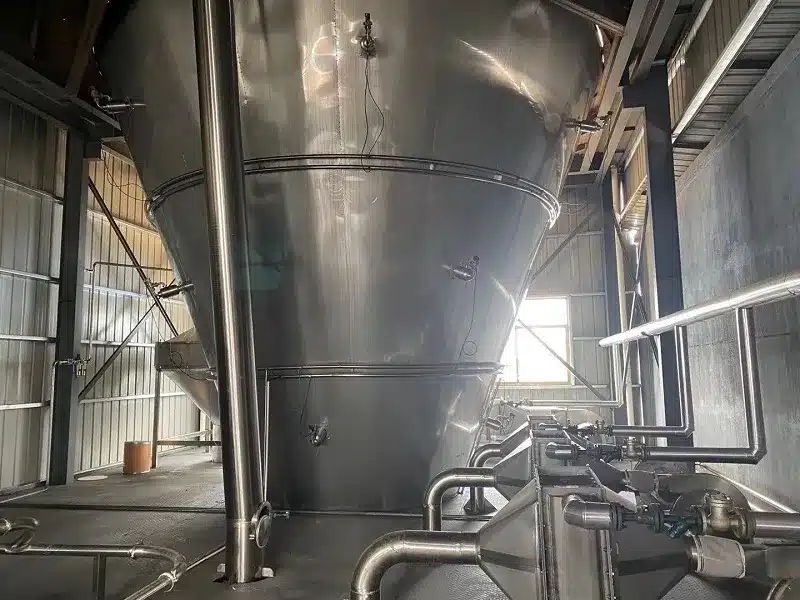
Broth Processing and Drying
Document source preparation, cooking or extraction, any hydrolysis, filtration, concentration, drying, sieving and powder handling for the approved grade.
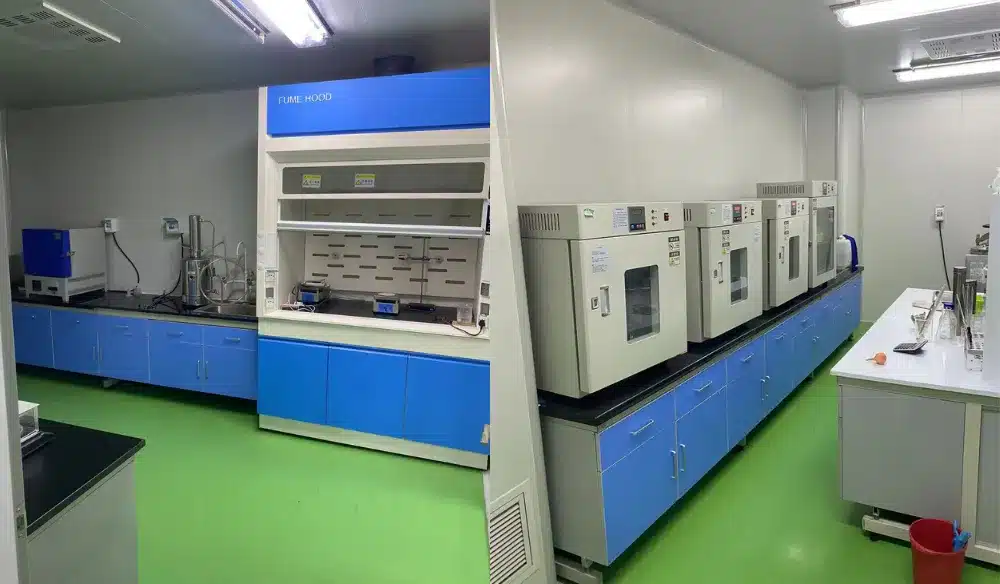
In-House QA Laboratory
Connect release decisions to protein, sodium, molecular-weight, moisture, ash, metals and microbiological results.
Bovine Source Review
Confirm species, source tissues, country of origin, veterinary documentation, traceability and BSE/TSE status.
Broth & Composition Review
Confirm cooking, extraction or hydrolysis process, amino-acid profile, collagen data and application performance.
Batch COA Release
Release against the approved composition, physical, metal and microbiological specification.
Related protein and collagen ingredients
Route buyers by raw-material identity and formulation objective
Keep beef bone broth searches on this page and direct beef isolate, bovine collagen and chicken broth needs to their dedicated technical pages.
Beef Bone Broth Protein
A high-protein bovine powder for savory nutrition, functional foods and supplement development.
Current productBeef Protein Isolate
A high-protein bovine powder for dairy-free nutrition and hybrid protein development.
View Beef Protein IsolateBovine Collagen Type I & III
Hydrolyzed collagen peptides for beauty, daily collagen and general supplement formulations.
View Bovine CollagenChicken Bone Broth Protein
A high-protein chicken-derived powder for savory and functional-nutrition concepts.
View Chicken Bone BrothDocumentation and procurement
Prepare procurement, R&D, quality and regulatory review before ordering
Confirm current document availability for the intended market, product identity and finished format.
B2B frequently asked questions
Questions from bone-broth buyers, formulators and quality teams
The answers also clarify the wholesale-supplier, China-supplier, manufacturer, bulk and OEM searches already appearing in GSC.
The COA names Beef Bone Broth but does not state bones, adhering meat, hide, tendon, cartilage, broth concentrate or another tissue composition. Request the source-tissue declaration before approval.
No. It is a dry-basis protein result by the Kjeldahl method. It should not be described as the purity of a single defined compound.
The COA reports a 3,000-5,000 molecular-weight result, but it does not print the cooking, extraction or hydrolysis process. Request the manufacturing flow before choosing the final description.
The reference COA does not report collagen content, hydroxyproline or a full amino-acid profile. Request additional testing if collagen-rich positioning is required.
The reference batch reports 0.04% sodium by ICP-MS. Calculate the finished-serving contribution at the intended inclusion rate before making a market-specific nutrition claim.
Solubility, turbidity, sedimentation, foam, viscosity and sensory performance are not reported on the COA. Test the ingredient in the intended formula and process.
The reference certificate records a 2,000 kg production batch but does not print packaging or MOQ. Confirm pack size, sample quantity, current stock, lead time, Incoterms and freight terms in the quotation.
Start a technical sourcing discussion
Request a current COA, sample or bulk quotation
Share your finished format, target market, estimated quantity and document requirements so the team can confirm the appropriate beef-broth specification and supply pathway.
- Current batch COA and specification review
- Bovine source, process and composition document discussion
- Formulation sample coordination
- Packaging, MOQ, lead time and freight confirmation