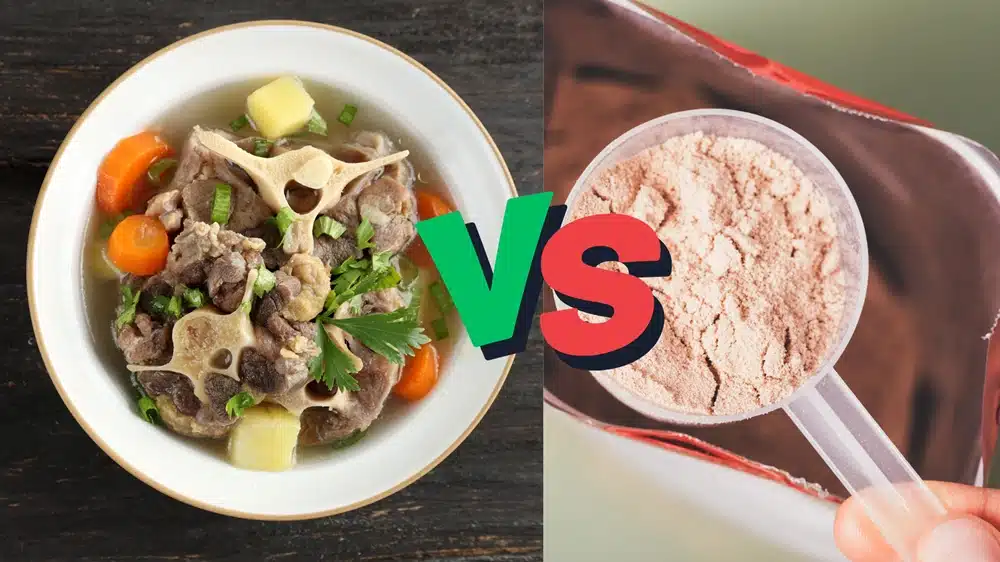
Việc lựa chọn giữa protein whey và protein thực vật không chỉ đơn thuần là một quyết định về dinh dưỡng.
Đối với một thương hiệu thực phẩm bổ sung, nguồn protein có thể ảnh hưởng đến thành phần axit amin, khẩu phần, hương vị, kết cấu, việc xác định các chất gây dị ứng, nguồn gốc nguyên liệu, chi phí mục tiêu, bao bì và quy trình sản xuất của sản phẩm thành phẩm.
Protein whey thường là điểm khởi đầu đơn giản hơn cho các công thức dinh dưỡng thể thao truyền thống, nơi mà việc định vị về hiệu suất, thành phần axit amin thiết yếu dồi dào và đặc tính quen thuộc của thức uống lắc là những ưu tiên hàng đầu.
Protein thực vật thường là lựa chọn chiến lược phù hợp hơn cho các ý tưởng sản phẩm thuần chay, không chứa sữa và dựa trên thực vật. Tuy nhiên, nguồn protein cụ thể, yêu cầu kỹ thuật của nhà cung cấp, công thức pha trộn, hệ thống hương vị và khẩu phần cần được đánh giá một cách tổng thể.
Không có loại nào tự động tốt hơn loại kia.
Đối với một thương hiệu đang phát triển một sản phẩm protein thương mại, câu hỏi hữu ích hơn là:
Hệ thống protein nào có thể đáp ứng được các yêu cầu về dinh dưỡng, trải nghiệm người tiêu dùng, định vị sản phẩm, chi phí mục tiêu và hiệu suất sản xuất theo bản mô tả sản phẩm này?
Hướng dẫn này giải thích cách đưa ra quyết định đó.
Các thương hiệu đã có ý tưởng sản phẩm cũng có thể tham khảo sản xuất thực phẩm bổ sung protein khả năng thực hiện các dự án tùy chỉnh về whey, protein thực vật, collagen, thực phẩm thay thế bữa ăn và các loại protein chuyên dụng.
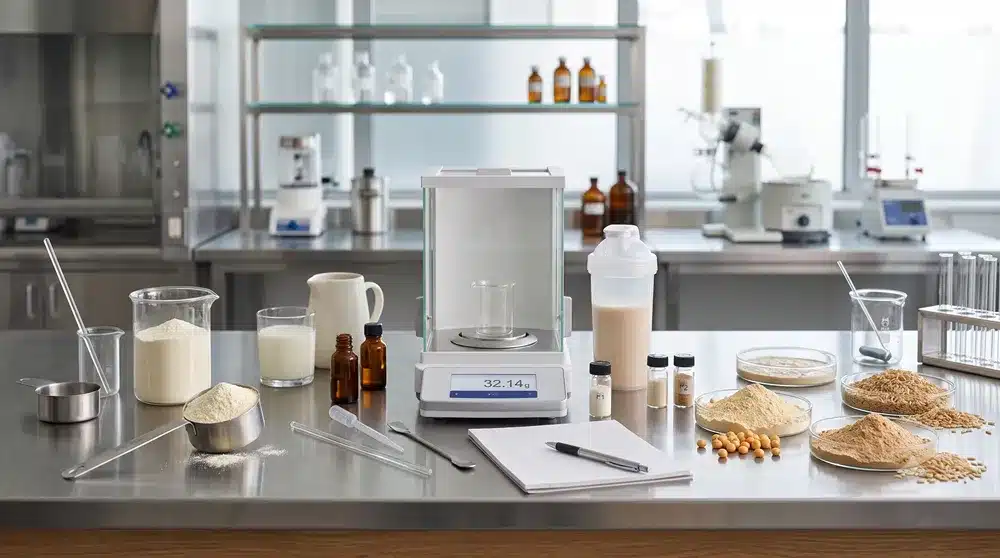
So sánh nhanh giữa protein whey và protein thực vật
| Yếu tố quyết định | Protein whey | Protein thực vật | Những câu hỏi mà thương hiệu nên đặt ra |
|---|---|---|---|
| Vị trí điển hình | Dinh dưỡng thể thao, hiệu suất, protein phổ biến | Dinh dưỡng thuần chay, không chứa sữa, dựa trên thực vật, phù hợp với lối sống | Đối tượng khách hàng mục tiêu là ai? |
| Hệ thống protein | WPC, WPI, sản phẩm thủy phân hoặc hỗn hợp whey | Đậu Hà Lan, gạo, đậu nành, cây gai dầu hoặc các hỗn hợp từ nhiều nguồn | Chính xác thì thành phần nào đang được so sánh? |
| Thành phần axit amin | Nói chung, giàu các axit amin thiết yếu và leucine | Phụ thuộc rất nhiều vào nguồn gốc và thành phần pha trộn | Chúng ta đã xem xét dữ liệu thực tế về các axit amin chưa? |
| Hương vị | Thường tương thích với các kiểu mái lợp truyền thống | Phụ thuộc rất nhiều vào nguồn cung và nhà cung cấp | Chất nền này đã được thử nghiệm ở liều lượng thương mại chưa? |
| Kết cấu | Thường dễ dàng hơn khi tạo thành các kết cấu sinh tố quen thuộc | Có thể cần tối ưu hóa kết cấu thêm | Sau khi trộn và để yên thì sẽ xảy ra điều gì? |
| Vị trí của các chất gây dị ứng | Có nguồn gốc từ sữa | Phụ thuộc vào nguồn | Những yêu cầu nào là thiết yếu? |
| Định vị thương hiệu thuần chay | Không | Đúng vậy, khi công thức hoàn chỉnh đáp ứng các điều kiện | Tất cả các nguyên liệu và yếu tố đầu vào trong quá trình chế biến có phù hợp không? |
| Mức độ phức tạp của công thức | Thường thì đơn giản hơn | Có thể cần tối ưu hóa hỗn hợp, hương vị và kết cấu | Mỗi thành phần được thêm vào giúp giải quyết vấn đề gì? |
| Đánh giá chi phí | Tính theo mỗi phần ăn đã hoàn thành | Tính theo mỗi phần ăn đã hoàn thành | Chi phí của toàn bộ công thức là bao nhiêu? |
| Phương pháp ra quyết định tối ưu | Thông số kỹ thuật + mẫu thử nghiệm + mô hình chi phí | Thông số kỹ thuật + mẫu thử nghiệm + mô hình chi phí | Mẫu thử nghiệm thực tế cho thấy điều gì? |
Điểm mấu chốt là một thương hiệu thực ra không phải đang lựa chọn giữa hai danh mục trừu tượng được gọi là sữa tách béo và cây trồng.
Đó là việc lựa chọn các nguyên liệu cụ thể, từ các nhà cung cấp cụ thể, theo một công thức cụ thể, dành cho một nhóm khách hàng mục tiêu cụ thể.
Sự khác biệt đó rất quan trọng.
Sự khác biệt thực sự không chỉ nằm ở dinh dưỡng
Hầu hết các so sánh giữa protein whey và protein thực vật đều tập trung vào những câu hỏi như:
- Thành phần nào chứa nhiều leucine hơn?
- Chất nào được hấp thu nhanh hơn?
- Cái nào tốt hơn? để phát triển cơ bắp?
- Cái nào dễ tiêu hóa hơn?
- Món nào là món thuần chay?
- Cái nào bền vững hơn?
Những câu hỏi này rất hữu ích cho người tiêu dùng.
Chúng chưa đủ để phát triển sản phẩm thương mại.
Một thành phần protein có thể trông rất hấp dẫn trên bảng tính dinh dưỡng nhưng vẫn có thể gây ra vấn đề trong sản phẩm thành phẩm.
Ví dụ:
- khẩu phần ăn trở nên quá lớn;
- hệ thống hương vị không thể kiểm soát được các nốt hương nền một cách đầy đủ;
- kết cấu trở nên giống như phấn hoặc quá đặc;
- trầm tích hình thành sau khi trộn;
- bột này tạo ra quá nhiều bọt bám dai;
- không thể đạt được mức chi phí mục tiêu;
- các yêu cầu mong muốn mâu thuẫn với hệ thống thành phần;
- hoặc một công thức hoạt động hiệu quả trong một nguyên mẫu nhỏ không dễ dàng áp dụng vào quy trình sản xuất và đóng gói dự kiến.
Đó là lý do tại sao chúng tôi khuyến nghị đánh giá một hệ thống protein thông qua bốn câu hỏi sau:
1. Liệu nó có đáp ứng được mục tiêu dinh dưỡng không?
Xem xét lại hàm lượng protein, thành phần axit amin, khẩu phần và định vị sản phẩm dự kiến.
2. Liệu nó có thể trở thành một sản phẩm mà người tiêu dùng thực sự ưa thích không?
Đánh giá hương vị, mùi thơm, kết cấu, độ cân bằng độ ngọt, khả năng hòa tan, bọt và độ lắng.
3. Sản phẩm này có thể được sản xuất một cách ổn định không?
Xem xét các thông số kỹ thuật về thành phần, tính chất của bột, yêu cầu về quá trình trộn, hình thức đóng gói, tài liệu về chất lượng và các biện pháp kiểm soát sản xuất.
4. Sản phẩm có thể đạt được mục tiêu kinh doanh không?
Hãy tính toán tổng chi phí của công thức thành phẩm — không chỉ tính riêng giá protein trên mỗi kilôgam.
Một loại bột protein thành công cần phải vượt qua cả bốn bài kiểm tra.
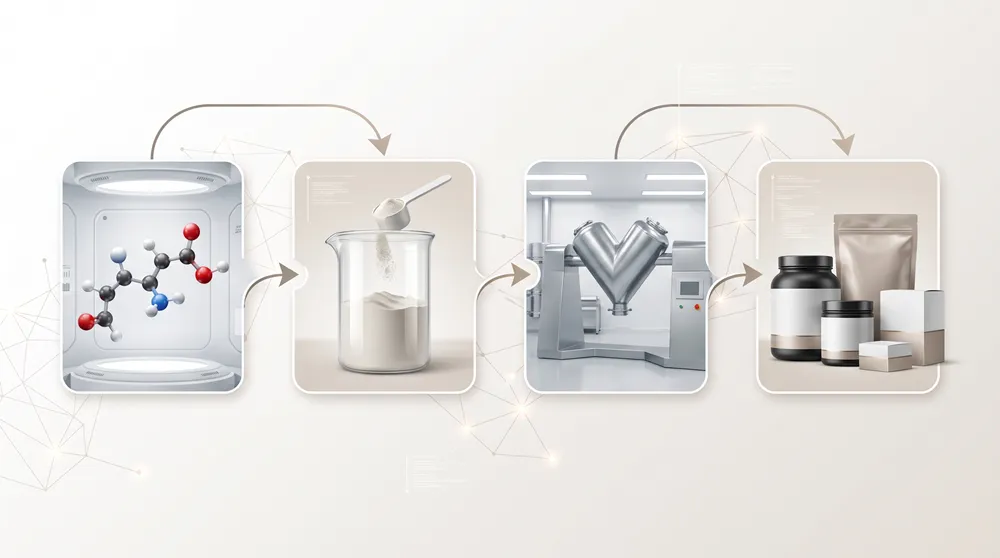
Hãy bắt đầu từ thành phần protein cụ thể, chứ không phải tên danh mục
Một trong những lý do khiến việc so sánh giữa whey và các nguồn thực vật trở nên dễ gây hiểu lầm là vì cả hai bên đều không chỉ đại diện cho một thành phần duy nhất.
Các loại protein whey phổ biến
Một công thức sữa whey có thể sử dụng:
- bột protein whey cô đặc (WPC);
- whey protein isolate (WPI);
- protein whey thủy phân;
- thành phần whey đã được cô đặc;
- hoặc sự kết hợp của các loại whey khác nhau.
Các thành phần này có thể khác nhau về nồng độ protein, hàm lượng lactose, hàm lượng chất béo, hương vị, khả năng phân tán, đặc tính chế biến và chi phí.
Do đó, ngay cả câu hỏi WPC hay WPI? có thể gây ra những hậu quả nghiêm trọng trước khi một thương hiệu xem xét sử dụng protein thực vật.
Các lựa chọn protein thực vật phổ biến
Protein thực vật là một nhóm còn rộng hơn nữa.
Các công thức thương mại có thể sử dụng:
- protein đậu Hà Lan;
- protein gạo;
- protein đậu nành;
- protein từ cây gai dầu;
- protein từ hạt bí ngô;
- protein từ đậu fava;
- protein khoai tây;
- hoặc các hỗn hợp protein thực vật từ nhiều nguồn khác nhau.
Các nghiên cứu so sánh các loại protein cô lập có bán trên thị trường đã phát hiện ra những khác biệt đáng kể về thành phần axit amin giữa các nguồn protein thực vật khác nhau.
Đối với các thương hiệu, các hoạt động thực tiễn
Đừng xây dựng công thức chỉ dựa trên tên gọi của một thành phần. Hãy xây dựng công thức dựa trên thông số kỹ thuật thực tế của thành phần đó và hiệu suất của mẫu thử.
Để có một so sánh cụ thể hơn giữa thực vật và các sản phẩm từ sữa, hãy tham khảo hướng dẫn của chúng tôi về Protein đậu Hà Lan so với protein whey.
Chất lượng protein: Hãy so sánh công thức sữa hoàn chỉnh, chứ không phải phân loại tiếp thị
Protein whey được sử dụng rộng rãi trong dinh dưỡng thể thao vì nó cung cấp đầy đủ các axit amin thiết yếu và thường chứa hàm lượng leucine cao.
Tuy nhiên, không nên rút ra kết luận thương mại rằng mọi hệ thống protein thực vật đều tự động không phù hợp với dinh dưỡng thể thao.
Các loại protein thực vật khác nhau có thành phần axit amin khác nhau, và chiến lược công thức có thể thay đổi các đặc tính dinh dưỡng của sản phẩm thành phẩm.
Ví dụ, một nghiên cứu ngẫu nhiên chéo được thực hiện vào năm 2024 đã so sánh protein whey cô lập với các hỗn hợp protein có nguồn gốc thực vật và phát hiện ra rằng, trong điều kiện nghiên cứu, hỗn hợp protein thực vật được bổ sung leucine đã kích thích quá trình tổng hợp protein cơ bắp ở mức độ tương tự như protein whey, trong khi hỗn hợp protein thực vật không được bổ sung leucine lại tạo ra phản ứng thấp hơn. Nghiên cứu này có thể truy cập tại PubMed.
Điều này... không Bột mean tpowder tương đương với whey.
Điều đó mang lại ý nghĩa thiết thực hơn cho các nhà phát triển sản phẩm:
Nguồn protein rất quan trọng, nhưng liều lượng, thành phần axit amin, công thức pha trộn và thiết kế công thức hoàn chỉnh cũng không kém phần quan trọng.
Khi đánh giá một hệ thống protein, các thương hiệu nên tự đặt câu hỏi:
- Phương pháp định lượng protein thực tế là gì?
- Hàm lượng axit amin là gì?
- Mỗi khẩu phần cung cấp bao nhiêu protein?
- Đây là protein từ một nguồn duy nhất hay là hỗn hợp?
- Công thức này có chứa các axit amin bổ sung không?
- Mục tiêu định vị sản phẩm là gì?
- Các bằng chứng hiện có có hỗ trợ cho thông điệp dự định truyền tải hay không?
Đơn vị phân tích chính xác là công thức hoàn chỉnh.
Tại sao Giấy chứng nhận nguồn gốc (COA) của nhà cung cấp lại quan trọng hơn bảng so sánh trên Internet
Các bảng so sánh chung rất hữu ích cho giai đoạn nghiên cứu ban đầu.
Những điều đó là chưa đủ để được phê duyệt thành phần.
Trước khi phê duyệt một thành phần protein, thương hiệu cần xem xét các tài liệu liên quan của nhà cung cấp, bao gồm (nếu có):
- Giấy chứng nhận phân tích;
- bảng thông số kỹ thuật;
- hàm lượng protein và phương pháp thử nghiệm;
- hàm lượng axit amin;
- tiêu chuẩn về độ ẩm;
- giới hạn vi sinh và kết quả;
- Thông số kỹ thuật và kết quả về kim loại nặng;
- Thông báo về chất gây dị ứng;
- quốc gia xuất xứ;
- nguồn nguyên liệu;
- các chứng chỉ liên quan;
- thông tin về hạt;
- mật độ khối;
- và dữ liệu về độ hòa tan hoặc khả năng phân tán (nếu có).
Các tài liệu cụ thể cần thiết sẽ phụ thuộc vào thành phần, thị trường mục tiêu, các tuyên bố về sản phẩm và thỏa thuận sản xuất.
Sau đó, tài liệu cần được liên kết với quá trình thử nghiệm nguyên mẫu thực tế.
Một bản thông số kỹ thuật chi tiết không tự động đảm bảo rằng sản phẩm hoàn thiện sẽ đạt chất lượng tốt.
Tương tự như vậy, một loại protein có vẻ phù hợp ở nồng độ thấp có thể biểu hiện khác đi khi được sử dụng với liều lượng cần thiết cho một công thức sữa công thức thương mại giàu protein.
Các thương hiệu muốn so sánh các nguồn thực vật riêng lẻ có thể tham khảo các hướng dẫn của chúng tôi về Protein gạo so với protein đậu Hà Lan và Protein gạo so với protein cây gai dầu.
Lượng chất rắn ẩn trong bột protein
Người tiêu dùng nhìn thấy:
25 g protein mỗi khẩu phần.
Một nhà phát triển công thức nhìn thấy:
**Nguồn protein**
- hệ thống hương vị
- hệ thống tạo ngọt
- hệ thống kết cấu
- hỗ trợ phân tán
- functional ingredients
- vitamins and minerals, when applicable
- other supporting ingredients
= total finished serving**
This is the hidden solids budget of the formula.
Suppose two protein ingredients have different protein concentrations.
To deliver the same declared protein target, one may require more physical powder than the other.
That can affect:
- total serving weight;
- scoop volume;
- servings per container;
- package size;
- flavor intensity;
- sweetness balance;
- viscosity;
- mouthfeel;
- powder flow;
- and formula cost.
Therefore, protein percentage should never be evaluated in isolation.

Tỷ lệ tải theo công thức GENSEI
To help compare prototype formulas, GENSEI recommends a simple internal analysis framework.
The Formula Load Ratio is a GENSEI comparison concept for prototype evaluation. It is not an official regulatory metric or industry standard.
Hệ số tải công thức
Total Finished Serving Weight ÷ Declared Protein per Serving
Consider two hypothetical formulas.
Công thức A
- Finished serving weight: 32 g
- Declared protein: 25 g
- Formula Load Ratio: 1.28
Công thức B
- Finished serving weight: 39 g
- Declared protein: 25 g
- Formula Load Ratio: 1.56
A higher ratio does not automatically make Formula B worse.
For example, a meal replacement or functional nutrition powder may intentionally include fiber, carbohydrates, fats, minerals, or other active ingredients.
The purpose of the ratio is to ask better questions:
- Why is the total serving larger?
- Is the additional weight nutritionally intentional?
- Is more protein base required because of the ingredient assay?
- Is the flavor correction system adding significant material?
- Is the product still compatible with the desired packaging format?
- How will the serving size affect consumer experience?
- Does the larger formula still meet the target cost?
The objective is not simply to produce the lowest ratio.
The objective is to understand what is consuming the formula’s solids budget and whether that trade-off is commercially justified.
Chi phí trên mỗi kilôgam so với chi phí trên mỗi phần ăn hoàn chỉnh
One of the biggest mistakes in protein sourcing is to compare ingredients only by price per kilogram.
The less expensive protein ingredient is not necessarily the less expensive finished product.
A basic calculation begins with:
Ingredient cost per serving = Ingredient dose in grams × price per kilogram ÷ 1,000
But a real commercial comparison needs to go further.
The complete formula can include:
- protein base;
- secondary protein sources;
- flavor system;
- sweeteners;
- masking system;
- texture system;
- functional ingredients;
- manufacturing;
- quality testing;
- packaging;
- freight and logistics.
Therefore, the correct commercial question is not:
Which protein costs less per kilogram?
It is:
Which complete protein system can reach the target product brief at an acceptable cost per finished serving?
Our guide on why protein powder costs are changing explains the interaction among raw materials, processing requirements, flavor systems, testing, packaging, freight, and MOQ considerations.
For custom projects, these variables should be evaluated during supplement formula development rather than after the packaging and retail price have already been fixed.
Hương vị và kết cấu: Thử nghiệm ở liều lượng thương mại dự kiến
Statements such as:
Whey is creamy.
and:
Plant protein is earthy.
are too broad to guide commercial formulation.
Sensory behavior depends on variables including:
- protein source;
- supplier;
- grade;
- processing method;
- concentration;
- water volume;
- flavor direction;
- sweetener system;
- other ingredients;
- and preparation method.
The correct test is not simply smelling the dry raw material.
It is evaluating a realistic prototype under intended consumer-use conditions.
For a ready-to-mix powder, that may mean controlling:
- serving size;
- water volume;
- water temperature;
- shaker bottle;
- shaking time;
- and evaluation time points.
Useful observations include:
- initial dispersion;
- visible clumping;
- foam immediately after shaking;
- foam persistence;
- sedimentation after standing;
- viscosity;
- chalkiness;
- grittiness;
- bitterness;
- earthy or beany notes;
- dairy notes;
- aftertaste;
- sweetness balance;
- overall acceptance.
Processing conditions can materially influence the functional performance of plant protein systems. Research on pea-rice protein blends, for example, has shown changes in functional properties including solubility under different processing conditions.
The protein source cannot predict the entire finished-product experience. The actual ingredient needs to be tested in the actual formula.**
This is particularly important for brands developing flavored protein powders, meal replacements, and functional drink mixes through a Nhà sản xuất thực phẩm bổ sung dạng bột.
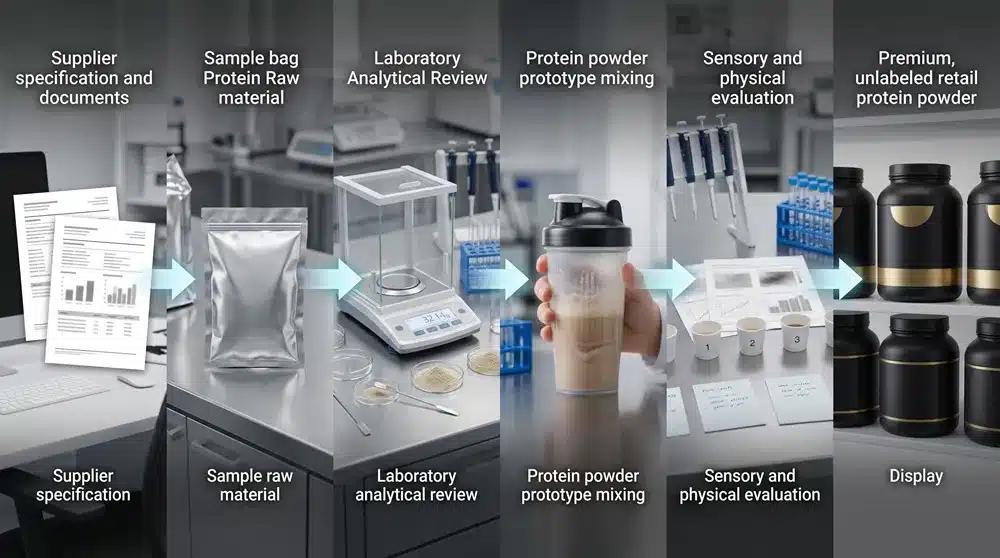
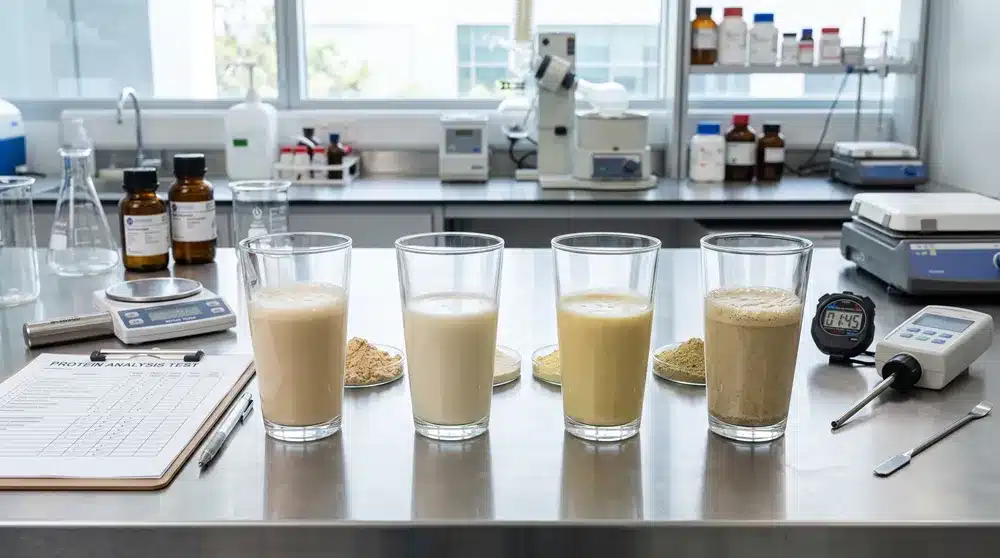
Một bài kiểm tra thực hành trên bàn thí nghiệm về protein tương ứng
Brands comparing whey and plant protein systems should use controlled prototype comparisons rather than relying only on theoretical ingredient data.
A simple comparison may include:
- System A: whey protein concentrate formula;
- System B: whey protein isolate formula;
- System C: pea protein isolate formula;
- System D: pea-and-rice protein blend.
The exact comparison should be selected according to the product brief.
Bước 1: Xác định một mục tiêu kinh doanh chung
For example, all formulas may target the same declared protein amount per serving.
The goal is not to make the formulas chemically identical.
The goal is to compare different routes to the same product objective.
Bước 2: Tiêu chuẩn hóa các điều kiện chuẩn bị
Keep conditions consistent:
- same liquid volume;
- same liquid temperature;
- same mixing equipment;
- same shaking duration;
- same resting period;
- same evaluation schedule.
Bước 3: Ghi chép kết quả kiểm tra thể lực
Depending on the project, evaluate:
- protein-base dose;
- total finished serving weight;
- Formula Load Ratio;
- dispersion time;
- clumping;
- foam;
- foam persistence;
- sedimentation;
- viscosity.
Bước 4: Sử dụng phương pháp đánh giá cảm giác có hệ thống
Score each prototype consistently for factors such as:
- aroma;
- bitterness;
- earthy or beany notes;
- chalkiness;
- grittiness;
- thickness;
- sweetness balance;
- aftertaste;
- overall acceptance.
Bước 5: Tính toán hiệu quả kinh tế ở cấp độ công thức
Compare:
- protein ingredient cost;
- flavor cost;
- sweetener cost;
- texture and masking system costs;
- total formula cost per serving.
The final comparison table should look more like this:
| System | Mục tiêu protein | Serving Weight | Hệ số tải công thức | Main Sensory Challenge | Formula Cost/Serving |
|---|---|---|---|---|---|
| WPC System | Same target | Test result | Calculated | Test result | Calculated |
| WPI System | Same target | Test result | Calculated | Test result | Calculated |
| Pea System | Same target | Test result | Calculated | Test result | Calculated |
| Plant Blend | Same target | Test result | Calculated | Test result | Calculated |
This approach turns a generic ingredient debate into an actual product-development decision.
Khi protein whey thường là lựa chọn khởi đầu tốt hơn
Whey protein is often the first route to evaluate when the product concept is built around:
- mainstream sports nutrition;
- performance positioning;
- a strong essential amino acid profile;
- familiar consumer expectations;
- traditional protein shake flavors;
- relatively high protein density.
However, choosing whey is only the beginning of formulation.
The brand still needs to decide:
- WPC, WPI, hydrolysate, or blend?
- What protein target?
- What serving size?
- What flavor direction?
- What price tier?
- What certifications?
- What packaging format?
- What supplier and quality documentation?
Vấn đề về chất gây dị ứng trong sữa
Whey is derived from milk. The U.S. FDA identifies whey as a milk protein, and milk is one of the major food allergens subject to labeling requirements in the United States. Brands targeting the U.S. market should review the relevant FDA food allergen guidance.
Whey protein isolate mayan some whey concentrate products, but lower lactose content does not make whey a non-milk ingredient.
Milk allergy and lactose intolerance are also different considerations and should not be treated as interchangeable.
Khi whey không còn hấp dẫn nữa
A whey system may not fit when:
- vegan positioning is essential;
- dairy-free positioning is essential;
- the brand requires a different ingredient story;
- the target consumer actively avoids dairy;
- or another protein platform better supports the intended product concept.
For products positioned outside traditional dairy protein, brands may also evaluate Protein bò tinh khiết so với whey hoặc Protein từ nước hầm xương so với whey.
Khi protein thực vật thường là điểm khởi đầu tốt hơn
Plant protein is generally the logical route when the product concept depends on:
- vegan positioning;
- plant-based positioning;
- dairy-free product strategy;
- alternative sports nutrition;
- lifestyle nutrition;
- plant-based meal replacements.
Its biggest strength is flexibility.
But flexibility also creates complexity.
1. Protein thực vật không phải là một thành phần duy nhất
A pea protein formula and a rice protein formula should not be treated as equivalent.
Neither should two pea protein ingredients from different suppliers automatically be assumed to perform identically.
2. Thiết kế axit amin cần được chú ý
Plant protein sources vary in amino acid composition. Where nutritional optimization is important, the actual data should be evaluated rather than relying on generic assumptions.
3. Hương vị phụ thuộc vào nguồn protein và cấp độ chất lượng; các nhà phát triển công thức có thể cần phải điều chỉnh:
- earthy notes;
- beany notes;
- bitterness;
- cereal-like notes;
- lingering aftertaste.
The exact intensity is ingredient-specific.
4. Cấu trúc có thể trở thành yếu tố hạn chế của sản phẩm
Potential challenges include:
- chalkiness;
- grittiness;
- viscosity;
- sedimentation;
- incomplete dispersion.
These should be measured at the intended dose.
5. Một sự kết hợp nên giải quyết được một vấn đề cụ thể
A multi-source blend may help improve the overall amino acid profile or meet a particular positioning target.
But additional protein sources also introduce more variables.
A blend should not exist simply because “five plant proteins” sounds more impressive than one.
Each ingredient should have a purpose.
For more detail on one of the most common strategies, see our guide to Bột protein từ đậu Hà Lan và gạo lứt.
Cách thiết kế hỗn hợp protein thực vật một cách hợp lý hơn
There is no universal pea-to-rice ratio that is automatically correct for every commercial formula.
A better workflow is:
Bước 1: Xác định bản tóm tắt sản phẩm
Set:
- target consumer;
- protein per serving;
- serving-size target;
- flavor;
- claims;
- packaging;
- target cost.
Bước 2: Xem xét dữ liệu cụ thể về từng thành phần
For every candidate protein, review:
- protein assay;
- amino acid information;
- sensory characteristics;
- relevant physical properties;
- quality specifications;
- certifications;
- pricing;
- MOQ;
- lead time.
Bước 3: Xác định yếu tố hạn chế thực tế
Ask what problem the blend needs to solve.
Is the problem:
- amino acid balance?
- taste?
- texture?
- protein density?
- cost?
- supply diversification?
- marketing positioning?
The blend design should respond to that constraint.
Bước 4: Tạo mẫu thử với nhiều tỷ lệ thực tế khác nhau
A ratio that looks attractive mathematically may not produce the best sensory result.
Test multiple realistic options.
Bước 5: Tính lại công thức đã hoàn thiện
After changing the blend ratio, recheck:
- protein delivery;
- amino acid contribution;
- total serving weight;
- Formula Load Ratio;
- taste;
- texture;
- physical performance;
- cost per serving.
The correct workflow is:
Model → prototype → test → adjust → recalculate → validate
Not:
Choose a popular ratio → copy it → manufacture.
Thương hiệu của bạn nên chọn loại protein nào?
Nên ưu tiên chọn Whey trong những trường hợp sau:
The project is focused on:
- traditional sports nutrition;
- mainstream gym consumers;
- familiar shake positioning;
- strong EAA and leucine positioning;
- classic chocolate, vanilla, or related protein shake concepts.
The development team should then determine the correct whey grade, dose, flavor system, packaging format, and target cost.
Nên ưu tiên chọn protein thực vật trong những trường hợp sau:
The product concept requires:
- vegan positioning;
- plant-based positioning;
- dairy avoidance;
- alternative lifestyle nutrition;
- vegan sports nutrition.
The next decision is not simply “plant protein.”
The team must determine:
- which source;
- single source or blend;
- what amino acid profile;
- what dose;
- what flavor;
- what texture target;
- what cost target.
Nên cân nhắc sử dụng collagen hoặc protein chuyên dụng trong những trường hợp sau:
The product is positioned primarily around:
- beauty nutrition;
- collagen supplementation;
- joint support;
- connective-tissue positioning;
- active-aging concepts;
- specialty protein categories.
Collagen peptides should not simply be presented as interchangeable with whey or plant protein because the amino acid profiles and product positioning are different.
Brands considering this direction can read our Protein whey so với peptit collagen comparison.
Một khung quyết định đơn giản về công thức protein
Before selecting the protein source, answer these seven questions.
1. Đối tượng khách hàng mục tiêu là ai?
A mandatory vegan requirement eliminates whey.
A traditional whey-based sports nutrition brief may point in a different direction from a lifestyle wellness product.
2. Sản phẩm cần truyền tải thông điệp gì?
Define the positioning first:
- sports performance;
- vegan;
- dairy-free;
- high protein;
- meal replacement;
- active aging;
- beauty nutrition.
3. Mục tiêu protein là gì?
This affects ingredient dose, serving size, flavor burden, packaging, and cost.
4. Cần có kinh nghiệm uống rượu như thế nào?
A thick meal replacement and a light protein drink are different formulation problems.
Define:
- water volume;
- texture;
- sweetness;
- flavor intensity;
- mixability expectations.
5. Chi phí mục tiêu là bao nhiêu?
Calculate the complete finished formula.
6. Hình thức đóng gói là gì?
A large serving powder in a tub has different physical constraints from sachets or smaller portable formats.
Protein-heavy products are generally better suited to powder formats when substantial protein doses are required. For more detail, see Viên nang protein so với bột.
7. Mô hình thử nghiệm cho thấy điều gì?
The final decision should combine:
- specification review;
- supplier documentation;
- nutritional modeling;
- physical testing;
- sensory evaluation;
- cost modeling.
The prototype—not the category stereotype—should have the final vote.
Những câu hỏi cần đặt ra trước khi phê duyệt một thành phần protein
Before commercial approval, ask:
Dinh dưỡng và Thông số kỹ thuật
- What is the current protein assay?
- What test method is used?
- Is amino acid data available?
- What dose is required to reach the finished-product target?
Khả năng cảm giác và thể chất
- What does the protein taste like at the intended commercial dose?
- Which off-notes appear?
- How does it disperse?
- Does it clump?
- How much foam develops?
- Does sediment form?
- How does viscosity change with concentration?
Cung ứng thương mại
- What is the MOQ?
- What is the lead time?
- How stable is supply?
- Is a second qualified source required?
- How sensitive is the formula to ingredient substitution?
Tài liệu về chất lượng
- Is a current COA available?
- Are the relevant microbiological results available?
- Are contaminant test results available where required?
- What allergen documentation is provided?
- What certifications support the intended claims?
- Is the country of origin documented?
These questions should be answered before a brand commits heavily to packaging inventory, final marketing claims, or a fixed launch schedule.
Protein từ váng sữa so với protein thực vật: Kết luận cuối cùng dành cho các thương hiệu thực phẩm bổ sung
There is no universal winner.
Whey protein is often the stronger starting point for conventional sports nutrition products where amino acid positioning, mainstream consumer familiarity, and a traditional protein shake experience are priorities.
Plant protein is generally the stronger strategic fit when vegan, plant-based, or dairy-free positioning is central to the product concept.
But the category decision is only the first step.
The final choice should consider:
Protein source
→ supplier specification
→ amino acid data
→ protein dose
→ total formula load
→ taste and texture
→ mixability
→ manufacturing fit
→ cost per finished serving
→ brand positioning
The most important lesson is this:
Do not choose a protein source only because it wins a generic nutrition comparison. Choose the protein system that survives the complete journey from specification sheet to finished product.
GENSEI helps supplement brands evaluate protein ingredients, review formulation requirements, develop custom powder formulas, coordinate sampling, and move qualified projects toward commercial manufacturing.
Whether your project starts with whey, pea, rice, a plant protein blend, collagen peptides, or another specialty protein strategy, the best starting point is a clear product brief.
Planning a protein powder project? Send us your target consumer, protein-per-serving target, flavor direction, claims, packaging format, expected order quantity, and target market. Our team can help evaluate the appropriate formulation and manufacturing route.
Tài liệu tham khảo
- Gorissen, S. H. M., et al. (2018). Protein content and amino acid composition of commercially available plant-based protein isolates.
PubMed: https://pubmed.ncbi.nlm.nih.gov/30167963/ - Lim, C., et al. (2024). Muscle Protein Synthesis in Response to Plant-Based Protein Isolates With and Without Added Leucine Versus Whey Protein in Young Men and Women. Current Developments in Nutrition, 8(6), 103769.
PubMed: https://pubmed.ncbi.nlm.nih.gov/38846451/ - van der Heijden, I., et al. (2024). Plant Protein Blend Ingestion Stimulates Post-Exercise Myofibrillar Protein Synthesis Rates Equivalently to Whey in Resistance-Trained Adults. Medicine & Science in Sports & Exercise.
Full Text: https://pmc.ncbi.nlm.nih.gov/articles/PMC11810040/ - Pietrysiak, E., Smith, D. M., Smith, B. M., & Ganjyal, G. M. (2018). Enhanced functionality of pea-rice protein isolate blends through direct steam injection processing. Food Chemistry, 243, 338–344.
PubMed: https://pubmed.ncbi.nlm.nih.gov/29146346/ - Viện Y tế Quốc gia, Văn phòng Phụ gia Dinh dưỡng. Dietary Supplements for Exercise and Athletic Performance: Fact Sheet for Health Professionals.
https://ods.od.nih.gov/factsheets/ExerciseAndAthleticPerformance-HealthProfessional/ - Cơ quan Quản lý Thực phẩm và Dược phẩm Hoa Kỳ. Have Food Allergies? Read the Label.
https://www.fda.gov/consumers/consumer-updates/have-food-allergies-read-label
Warren Wan là một chuyên gia dày dạn với kinh nghiệm phong phú trong chuỗi cung ứng thực phẩm bổ sung, sở hữu kinh nghiệm thực tiễn sâu rộng trong nghiên cứu, phát triển, kiểm soát quy trình và tìm nguồn cung ứng toàn cầu các thành phần cốt lõi như peptit collagen, protein từ nước hầm xương và keratin. Với tư cách là tác giả của chuyên mục này, ông cam kết loại bỏ những lớp bao bọc tiếp thị, biến những kiến thức khoa học phức tạp về thành phần và các tiêu chuẩn kiểm soát chất lượng sản xuất thành những nội dung phổ biến khoa học dễ hiểu nhưng sâu sắc, giúp độc giả hiểu rõ sự thật đằng sau các nhãn mác và đưa ra những lựa chọn sức khỏe hợp lý hơn.