
Specialty Ingredient
β-NAD Powder Manufacturer & Supplier
β-NAD (β-Nicotinamide Adenine Dinucleotide) is supplied as a powder for formulation development and commercial ingredient purchasing. Defined analytical specifications and batch documentation support material qualification before ordering.
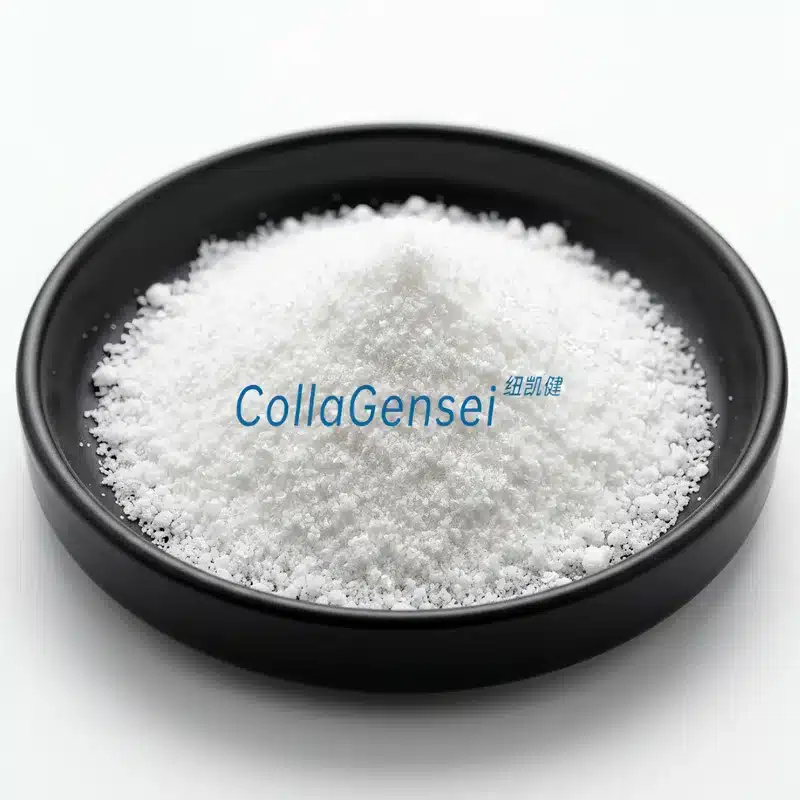
β-Nicotinamide Adenine Dinucleotide
β-NAD Product Identity
Material Selection
Distinguishing β-NAD from Related Ingredients
Ingredient qualification starts with the required chemical form. β-NAD is the oxidized form of nicotinamide adenine dinucleotide and should be specified independently from precursor ingredients or reduced NAD forms.
Direct NAD Material
β-NAD is chemically distinct from precursor ingredients such as NMN and NR. A formulation calling for direct β-NAD should therefore be matched to the intended ingredient identity rather than substituted on the basis of the broader NAD name.
Qualification Focus
Review identity, assay basis, purity, water content, contaminant controls and microbiological limits together with the intended dosage form and manufacturing process before approving a commercial lot.
Batch Information
Reference Batch Information
Standard: Enterprise standards.
Technical Data
β-NAD Powder Specification & COA Results
| Test Item | Specification | Test Method | Result |
|---|---|---|---|
| Physical & Chemical Properties | |||
| Appearance | White to off-white powder | Visual inspection | White powder |
| Solubility | Soluble in water | Visual inspection | Soluble in water |
| Purity | ≥99.0% | HPLC | 99.68% |
| Assay (dry basis) | 98.0%–102.0% | HPLC | 99.57% |
| Water content | ≤8.0% | Loss on drying | 6.39% |
| Heavy Metals | |||
| Pb | ≤0.5 ppm | GB 5009.12 | N.D. |
| As | ≤0.5 ppm | GB 5009.11 | Conform |
| Hg | ≤0.5 ppm | GB 5009.17 | N.D. |
| Cd | ≤0.5 ppm | GB 5009.15 | N.D. |
| Microbiological Controls | |||
| Total microbial count | <300 CFU/g | GB 4789.2 | Conform |
| E. coli | Not Detected | GB 4789.38 | N.D. |
| Yeast and mold | <10 CFU/g | GB 4789.15 | Conform |
| Salmonella | Not Detected | GB 4789.4 | N.D. |
| Staphylococcus aureus | Not Detected | GB 4789.10 | N.D. |
Application Formats
Formulation Considerations by Dosage Form
Dosage-form development should consider ingredient loading, processing exposure, moisture control and the stability requirements of the complete formulation.
Capsules
Evaluate target fill weight, excipient compatibility and powder handling within the complete capsule blend.
Tablets
Assess compression conditions, excipient selection and process exposure during tablet development.
Sachets & Powder Blends
Consider blend uniformity, moisture management and packaging protection for unit-dose dry formats.
Drink Powders
Evaluate water exposure after reconstitution, serving format and finished-product stability before finalizing the formulation.
Handling & Storage
Transport and Long-Term Storage
Transport
Keep sealed, dry and away from light for transportation under room temperature conditions.
Long-Term Storage
Keep sealed and dry for long-term storage.
Ingredient Supply Inquiry
Discuss Your β-NAD Requirements
Share the purchasing and formulation details needed to match the material, documentation and commercial information to your project.
Quantity & Destination
Provide the required quantity and destination market so current supply and quotation details can be prepared.
Application & Process
Share the intended dosage form and relevant processing conditions so material requirements can be reviewed in context.
Documentation & Purchasing
Identify the technical documents, packaging information and commercial details required for your qualification and purchasing process.