
Bulk chicken collagen ingredient
Chicken Sternum Collagen Type II Matrix for Joint Supplement Formulations
Source a chicken-cartilage-derived matrix containing measured protein, chondroitin sulfate and hyaluronic acid for joint health, mobility, active-aging and pet supplement concepts.
- Chicken sternum source
- 68.1% protein (collagen)
- 25.8% chondroitin sulfate
- 5.4% hyaluronic acid
- 20 kg net per carton
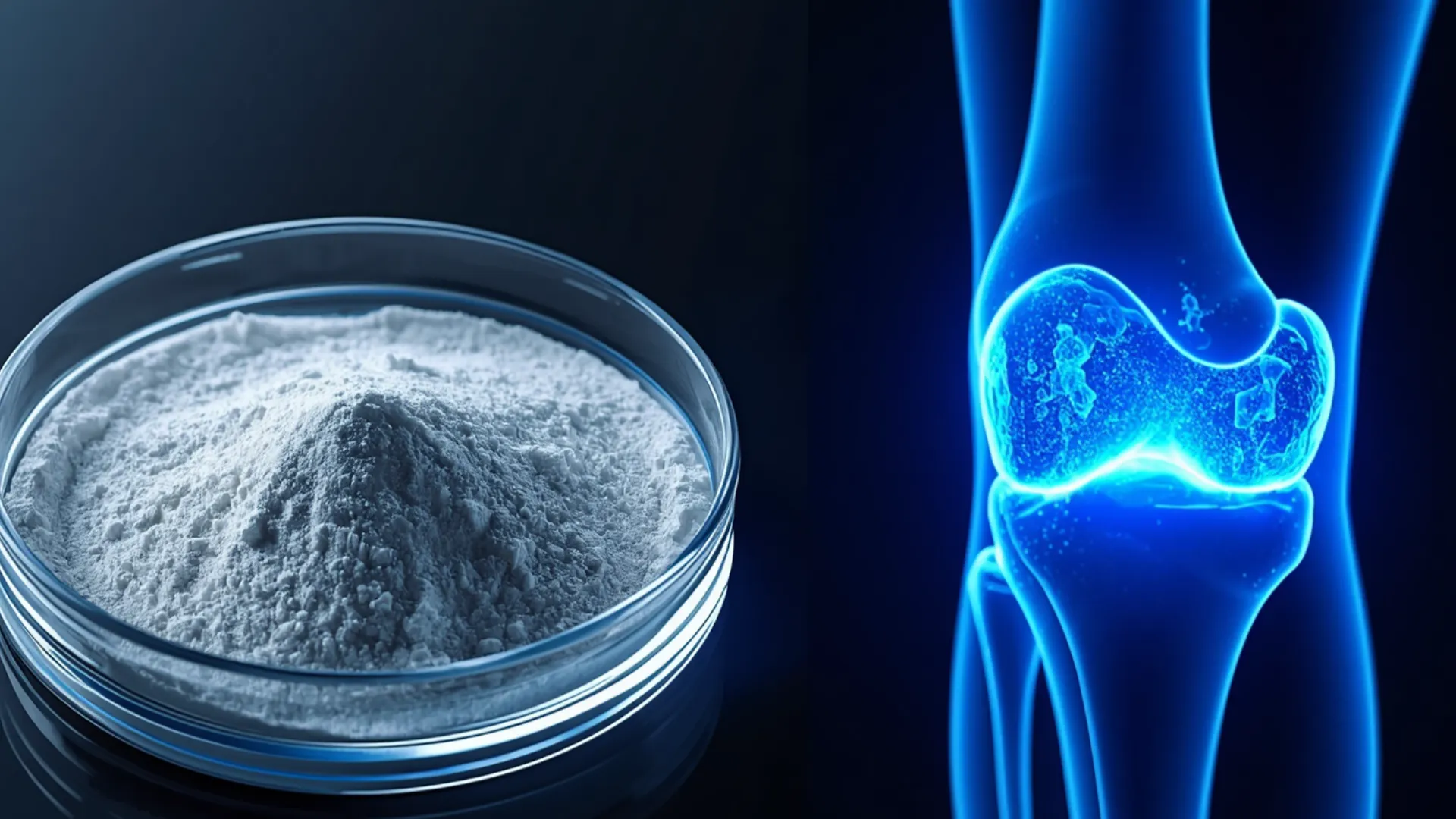
Batch 20250514
sulfate result
acid result
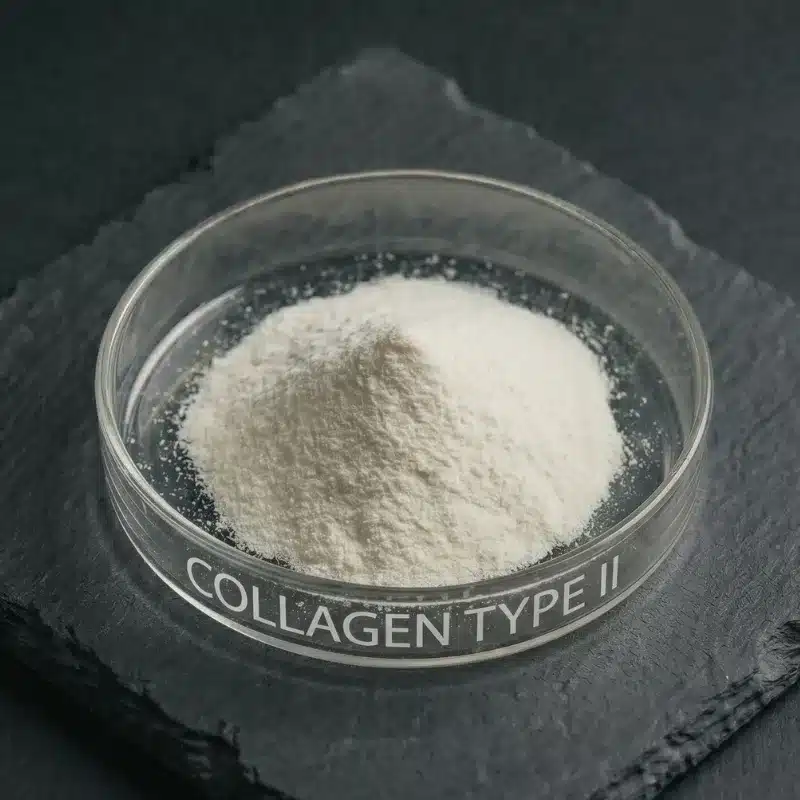
Product identity
A chicken sternum cartilage matrix - not an unsupported native-collagen claim
The signed reference certificate names the product “Collagen Type II” and lists chicken sternum as the origin. It reports Protein (Collagen), chondroitin sulfate and hyaluronic acid, but does not state “undenatured,” “native,” an exact Type II ratio, triple-helix retention or an assay method for native collagen.
Search-intent clarification
Chicken sternum matrix and undenatured Type II collagen are not interchangeable page concepts
Recent search visibility includes “chicken collagen manufacturer,” “chicken sternum collagen Type II,” and also native/undenatured queries. The page should answer the latter clearly without claiming a product identity that is not shown on the supplied COA.
| Decision point | This product page | Native / undenatured Type II page |
|---|---|---|
| Source | Chicken sternum cartilage | Often chicken sternum cartilage |
| Evidence shown here | Protein (collagen), chondroitin sulfate, HA, pH, density, mesh and microbiology | Native Type II content, structure retention, assay method and stability evidence |
| Current claim position | Chicken sternum Collagen Type II matrix | Native / undenatured only with supporting documentation |
| Typical formulation discussion | Capsule, tablet, powder, gummy and pet-joint formats | Product-specific low-dose and stability recommendations |
| Clinical language | Use only evidence applicable to this exact ingredient | Must remain product-specific and substantiated |
| Test item | Specification | Reference batch result |
|---|---|---|
| Appearance | White to off-white powder | Pass |
| Odor | Characteristic | Pass |
| Protein (Collagen) | ≥60.0% | 68.1% |
| pH | 4.0-7.5 | 5.8 |
| Chondroitin Sulfate | ≥25.0% | 25.8% |
| Hyaluronic Acid | ≥5.0% | 5.4% |
| Ash | ≤8.0% | 6.43% |
| Loss on Drying | ≤10.0% | 8.45% |
| Fat | ≤2.0% | Pass |
| Bulk Density | 0.4-0.5 g/ml | 0.46 g/ml |
| Heavy Metal | ≤10 PPM | Pass |
| Lead | ≤1.0 PPM | Pass |
| Arsenic | ≤2.0 PPM | Pass |
| Mercury | ≤0.5 PPM | Pass |
| Cadmium | ≤0.5 PPM | Pass |
| Particle Size | 100% through 80 mesh | Pass |
| Total Bacteria Count | ≤1,000 CFU/g | 300 |
| Yeast & Mold | ≤100 CFU/g | 30 |
| Salmonella | Negative | Pass |
| Staphylococcus aureus | Negative | Pass |
Formulation applications
Use the physical data for initial planning - then test the finished formula
The pH, 80-mesh specification and 0.46 g/ml bulk-density result can support early formulation calculations, but they do not guarantee capsule flow, tablet compression, gummy texture or beverage stability.
Joint Health & Mobility
For multi-component joint formulas built around a chicken-cartilage-derived matrix.
- Target serving size
- Supporting ingredient compatibility
- Finished-product claims review
Capsules & Tablets
For solid-dose projects where density, dose, excipients and compression behavior determine feasibility.
- Capsule fill calculation
- Flowability testing
- Tablet compression review
Powders & Sachets
For joint powders and stick packs requiring sensory, dispersion and serving-size evaluation.
- Dispersibility and sediment
- Odor and flavor masking
- Blend uniformity
Gummies & Chews
The reference pH is 5.8, but actual compatibility depends on acidification, heating, moisture and the gel system.
- Gel texture
- Heat and pH interaction
- Finished-product stability
Sports & Active Aging
For mobility-positioned products serving active adults and healthy-aging categories.
- Formula positioning
- Daily-dose strategy
- Label and market review
Pet Joint Supplements
For powders, chews and tablets requiring pet-market documentation, palatability and species-specific formulation review.
- Palatability testing
- Chew or tablet feasibility
- Destination-market requirements
Quality and traceability
Build the supplier file around chicken source, process identity and batch release
The strongest page evidence is not a generic certification logo. It is a clear link between chicken sternum sourcing, process records, assay documentation and the signed batch COA.
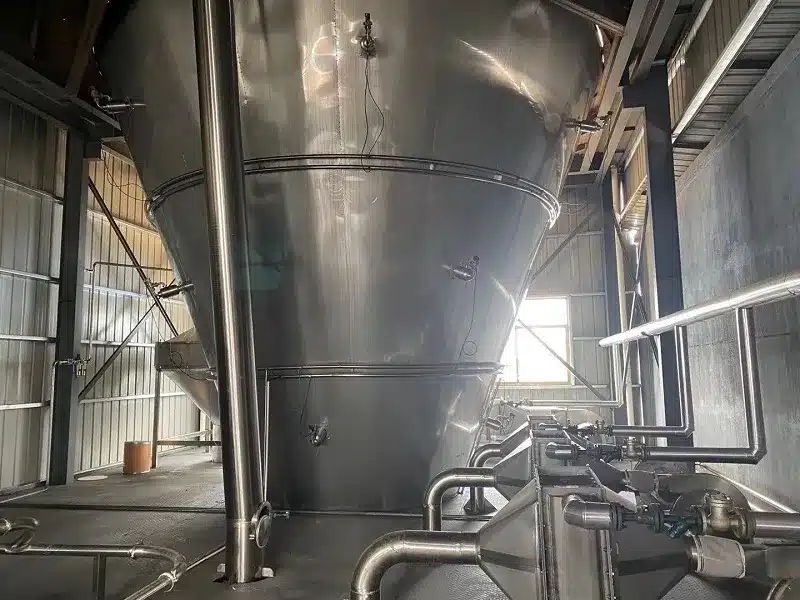
Processing and Drying Equipment
Document raw-material preparation, extraction, filtration, concentration, drying and particle-size controls for the approved specification.
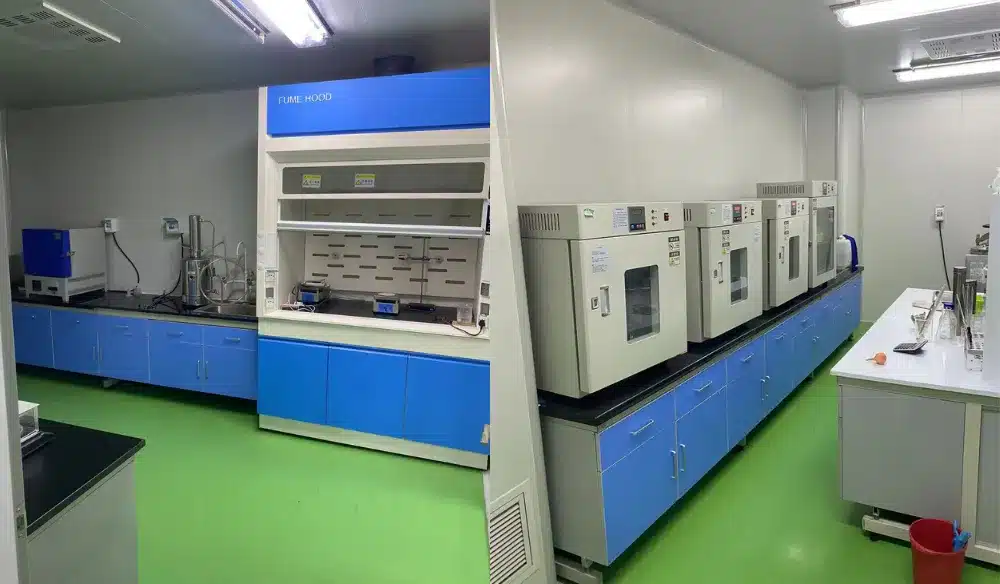
In-House QA Laboratory
Connect the batch release to composition, physical-property, heavy-metal and microbiological results.
Chicken Source Review
Confirm chicken sternum origin, supplier qualification, species declaration and any veterinary or country-of-origin documents required.
Process and Identity Review
Confirm whether the commercial specification is a cartilage powder, extract or hydrolyzed material. Do not add native/undenatured claims without supporting evidence.
Batch COA Release
Release against the approved composition, physical, heavy-metal and microbiological limits shown in the current specification.
Related collagen ingredients
Route buyers by source and formulation objective
Keep chicken sternum Type II searches on this page and send other collagen-source requirements to their dedicated product pages.
Collagen Type II Matrix
Protein, chondroitin sulfate and hyaluronic acid reported on one reference COA.
Current productBovine Collagen Type I & III
Hydrolyzed bovine collagen peptides for beauty, daily collagen and general supplement formats.
View Bovine CollagenMarine Collagen Peptides
Marine-source collagen peptides for beauty powders, drinks and source-specific positioning.
View Marine CollagenEggshell Membrane Collagen
A multi-component membrane matrix for mobility and healthy-aging supplement concepts.
View Eggshell MembraneDocumentation and procurement
Prepare procurement, quality and regulatory review before ordering
Confirm which supporting documents are available for the selected batch, destination market and intended label declaration.
B2B frequently asked questions
Questions from chicken collagen buyers, R&D and quality teams
The answers distinguish facts printed on the COA from terminology that requires separate proof.
The supplied COA does not state undenatured, native, triple-helix retention or a native Type II assay result. The page therefore positions the ingredient as a chicken sternum Collagen Type II matrix.
The COA item is written as “Protein (Collagen)” and the result is 68.1%. It does not print a native Type II ratio or a dedicated assay method.
The reference certificate reports all three within the chicken sternum ingredient: 68.1% Protein (Collagen), 25.8% chondroitin sulfate and 5.4% hyaluronic acid.
No. These values support initial calculations, but finished-form compatibility still requires testing for flow, compression, dispersion, pH interaction, heat, moisture, flavor and stability.
The reference COA lists 20 kg net and 23 kg gross per carton. Current MOQ, sample quantity, stock, lead time and freight terms should be confirmed in the quotation.
Yes. Available pathways include capsules, tablets, powders, gummies, pet supplements, joint-health products, custom formulation and private label support.
Start a technical sourcing discussion
Request a current COA, sample or bulk quotation
Share your finished format, target market, estimated quantity and documentation requirements so the team can confirm the correct chicken sternum specification and supply pathway.
- Current batch COA and specification review
- Chicken-source and assay-document discussion
- Formulation sample coordination
- Packaging, MOQ, lead time and freight confirmation